


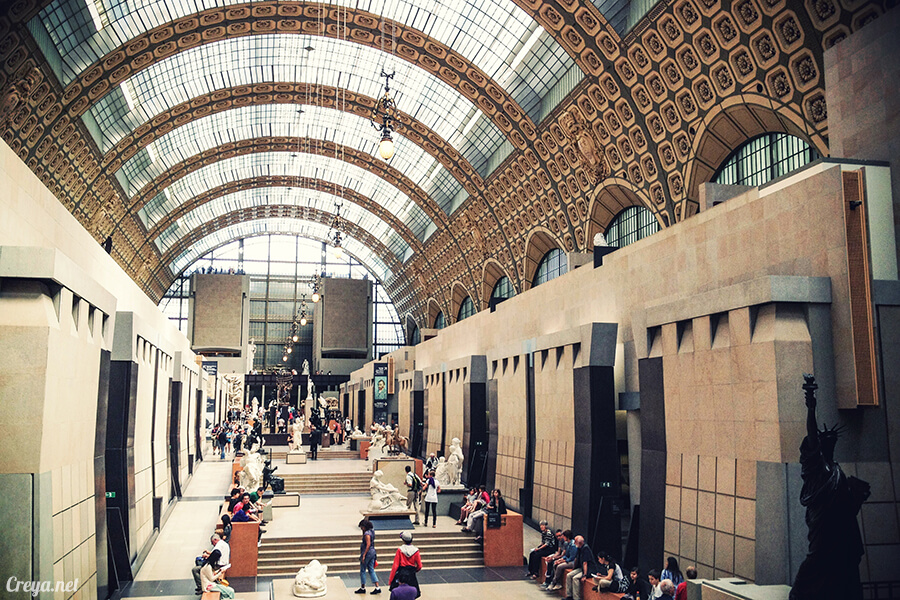
For these Europe-bound legs of mine—a journey destined from the moment I left Taiwan to go all-in, watch my bank balance count down, and yet still stubbornlytough it outand set off—the eighty-some unknown days stretching ahead of me from my first stop in Paris, France, were daunting. I’d be lying if I said I wasn’t anxious about that vulgar little tease called money. Since it refused to stay in my grasp, I had no choice but to tread carefully and count every penny. Looking back, I still regret missing certain places because of budget constraints, yet I also have to admire how I exhausted every possible option to achieve my dream of traveling around Europe. (Cue confetti.)
Paris’s free museum day seemed like a lucky day ordained by heaven itself for this bargain auntie.
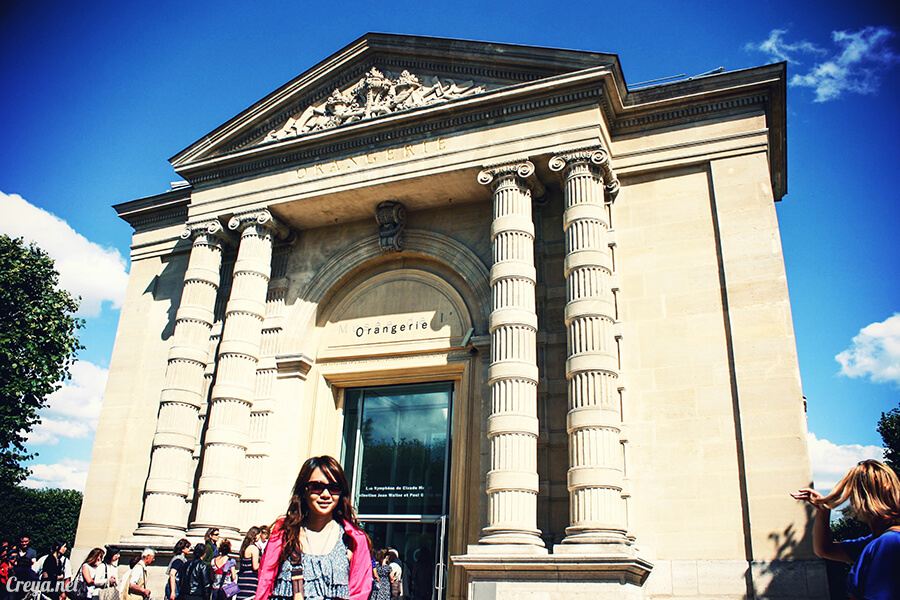
[ Let’s give this bargain auntie a warm welcome! (arm-slapping applause) (The blonde on the right isn’t talking to you, okay?) ]
Of course, seven-tenths of the credit also goes to my own effort—doing my homework before the trip and accidentally noticing“Free on the first Sunday of every month”Those words may have been tiny (pronounce that correctly, please), but they positively glowed. At that moment, I sincerely thanked the Republic of China’s 12-year basic education system for teaching me how to read them. Then I matched them against my flight to Paris on 6/29: Sunday, July 1, 2012. Ladies and gentlemen—this oddly specific date just happened to fall on my third day in Paris. Naturally, without a second thought, Igreedily filled that day’s itinerary with three classic temples of art: the Louvre, Musée de l’Orangerie, and Musée d’Orsay.。
★ Since 2016, the dates of Paris’s free museum days have varied by museum and gallery.For details, please see the official Paris tourism website.
Why not use that day to visit the Palace of Versailles? Or the Centre Pompidou? Silly you—becausethese three museums are very close together, positioned at either end of the Tuileries Garden and across the Seine in a golden triangle.With timing and geography this perfect, I could cover the most ground in one day and squeeze maximum value out of free museum day. (Picture an auntie clacking away at her abacus.) Back then, I clearly put more effort into penny-pinching than understanding the destination, but that unexpectedly led me to become completely captivated by the works inside the Orangerie and Musée d’Orsay.
Now this style is exactly my cup of tea!
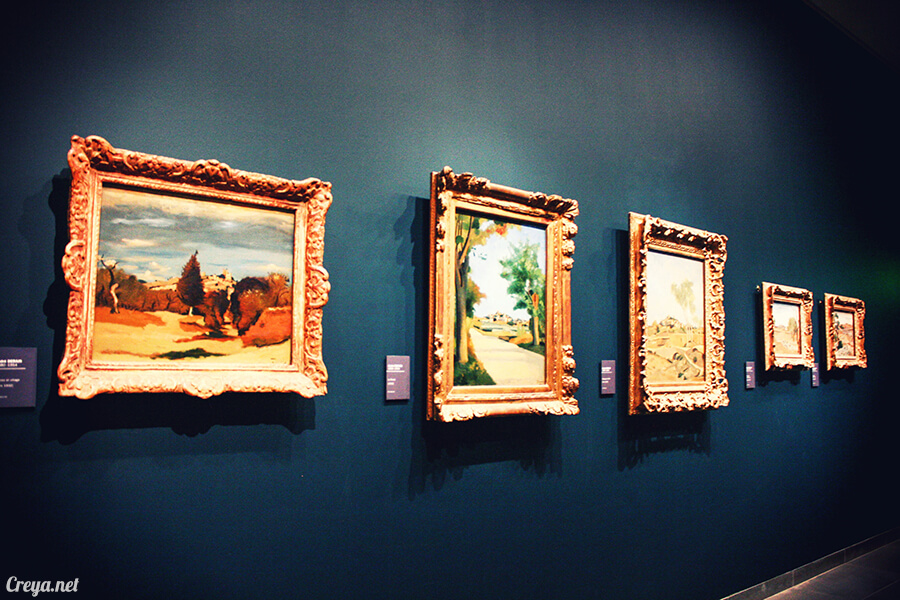
[ I’ll show you just a tiny bit for now and keep you in suspense. ]
Visiting the Louvre is, of course, all about meeting the three beauties hidden inside its glass pyramid (→See which three beauties are hidden in this golden palace.From the combined allure of its architecture and pyramid to collections so vast they could occupy you for two full days, the Louvre has beauty inside and out—not to mention its fame. Every traveler who sets foot in Paris willingly strips away a chunk of their time for it, while pocketing a precious little bragging right along the way.
Yet although the Louvre was once the royal palace of France, just as there is somehow no sun inside a sun cake, genuinely French artifacts are surprisingly scarce in its collections today. Compared with the Louvre, which wears French skin while its French soul has wandered off, the smaller Orangerie and Musée d’Orsay let you trulyadmire works by Impressionist masters who were either French through and through or spent the rest of their lives in France.And let’s set aside the painful question of the collections’ value for now—the value of someone else’s cultural treasures versus the price they paid for losing them is a century-old equation with no easy solution.The simple fact that “you can’t come to France and miss authentic French art and culture” is reason enough to add the Musée de l’Orangerie and Musée d’Orsay to your itinerary for a little cultural refinement.。
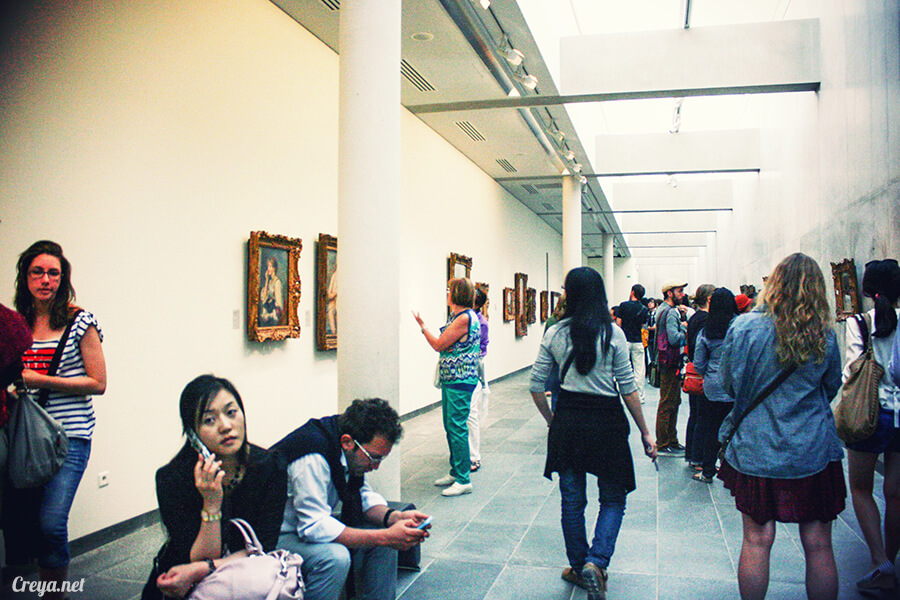
[ Art museums are magical places: even sitting on a bench and talking on the phone can suddenly look sophisticated. ]
Located on the Right Bank of the Seine, just like the Louvre, is theMusée de l’Orangerieinside the Tuileries Garden (→See this article for an introduction to Paris’s historic central axis.Walk from the Louvre toward the far end of the garden, and in under 20 minutes you’ll arrive at the Musée de l’Orangerie, a building originally used as a greenhouse for citrus trees. As long as you don’t visit on Tuesday, when it is closed, you can normally hand overthe €9 admission fee(information from 2016.9) and see genuine Impressionist and Post-Impressionist paintings with your own eyes.Monet, Picasso, Cézanne, and Renoir are all honored guests here.。
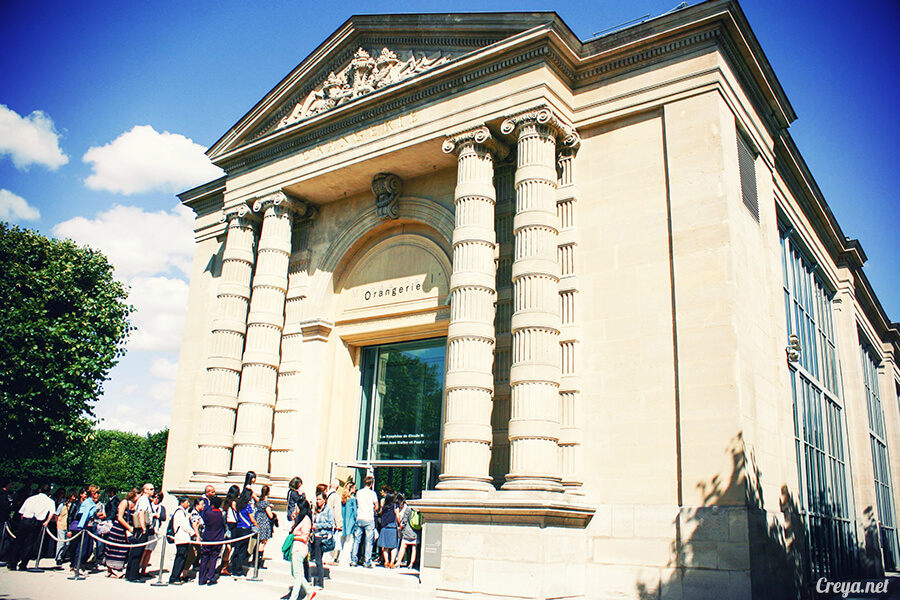
[ Hidden among the trees in the garden, the Musée de l’Orangerie isn’t actually that hard to find. Just look for the queue and join it. ]
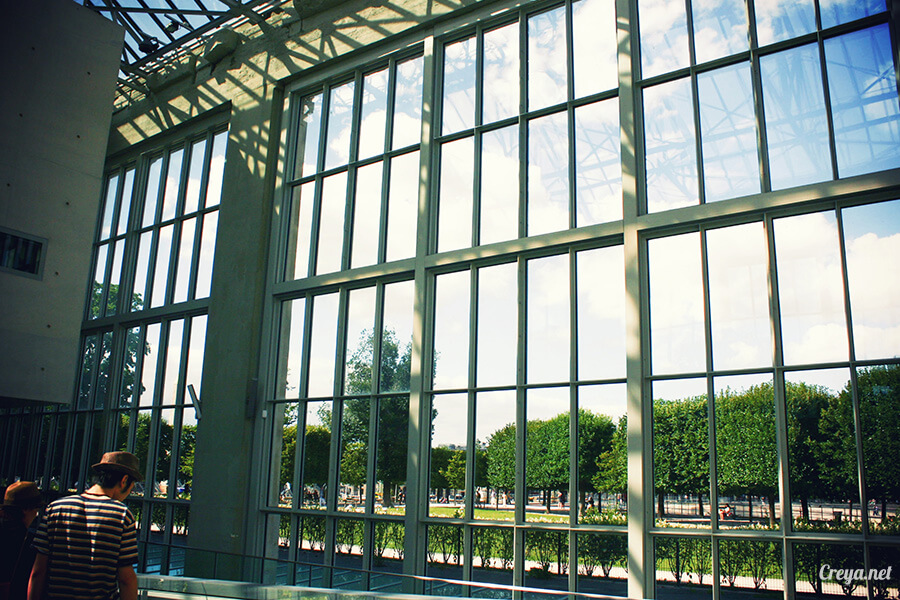
[ Those enormous greenhouse windows provide excellent natural light—and guarantee you can get a tan indoors. ]
The most famous work here is Monet’s Water Lilies: eight enormous paintings of water lilies in different moods, displayed on their own in two oval rooms. But what amazed me even more was discovering thatthe concept of 360-degree imagery had already been born a hundred years ago!What is Steve Jobs next to Monet?
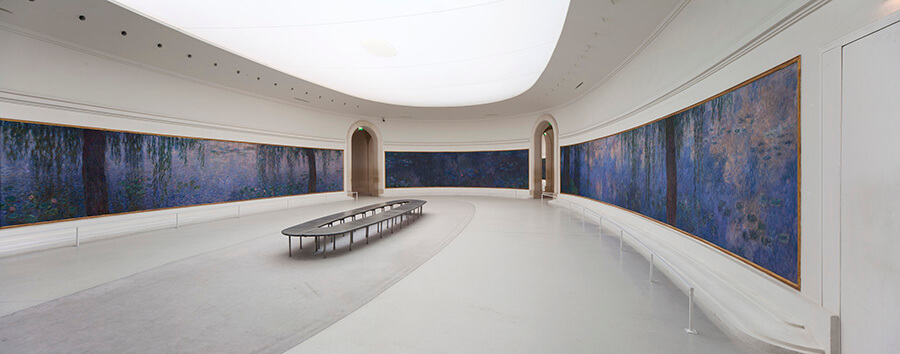
[ Photography wasn’t allowed in the Water Lilies rooms in 2012, perhaps so everyone could quietly experience the lily pond through all four seasons. ] (Image sourced from the internet)
Impressionism was born and raised in France.It was one result of artists searching for a new identity after the invention of the camera in the 19th century. Before cameras, one of painting’s main functions was to record everything before one’s eyes, so detailed, realistic classical painting remained dominant for a very long time. Even if a painter dawdled around for months before delivering the finished work—and the subject had already put on weight, gone gray, and become unrecognizable by then—you simply had to accept your fate. People had far more patience than clients do today.
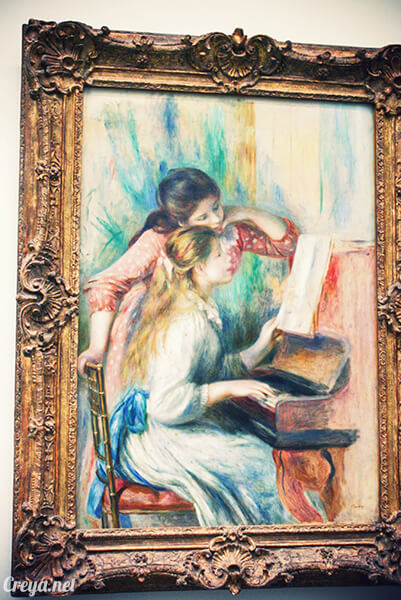
[ Renoir’s famous Young Girls at the Piano—so this is what Impressionism looks like. ]
But once a single press of a button could capture me, who would still want to sit indoors all day being stared at, unable even to scroll through their phone or watch TV? People gradually began to value the ideas and individuality expressed in paintings. As the physical sciences advanced, scientific concepts also entered art. For example, theseImpressionist painters began depicting how color and light changed. Because everyone perceives light and color a little differently, each artist could use color to tell their own story and convey a unique mood.。
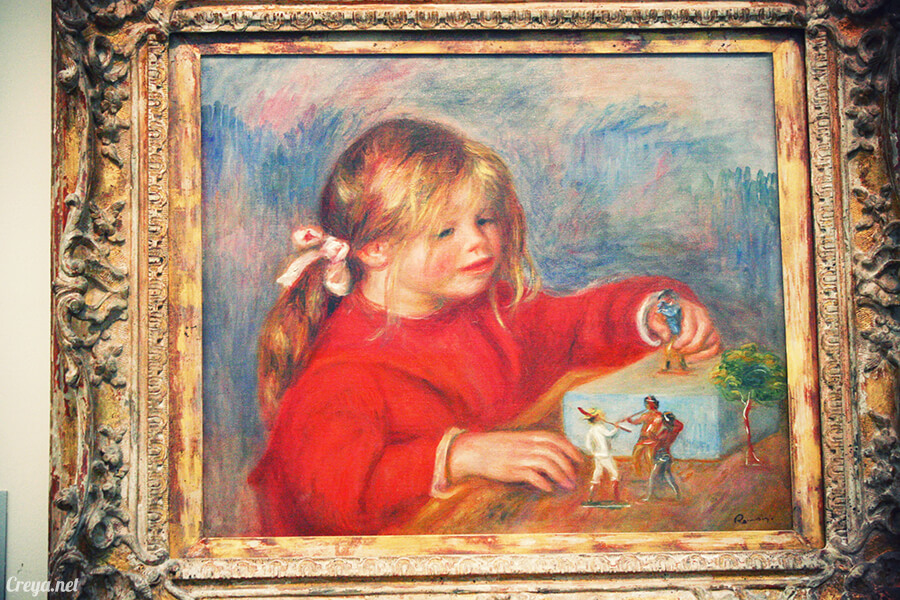
[ Monsieur Renoir’s Claude Renoir, jouant also made my personal chart, turning his nephew playing with a boy’s toy into such a feminine figure. ]
They still painted the things before their eyes realistically, but their brushwork no longer pursued the meticulous detail of the classical school, and their palettes were no longer rigidly fixed. Backed by physical science, they tried touse variations in color to depict what their eyes “felt.”This marked one beginning of modern art. It isn’t a question of classical art being better or Impressionism winning; it was more like a choice made as the times unfolded.
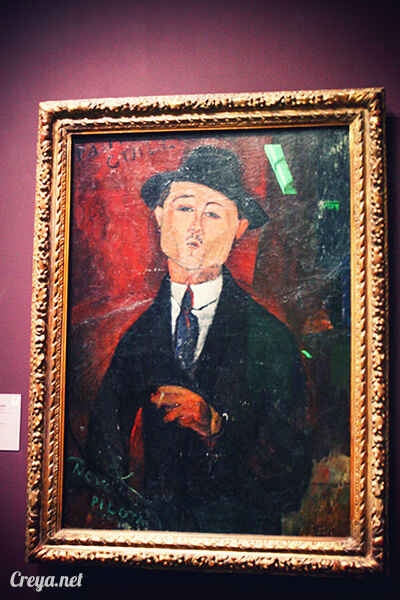
[ Modigliani’s Portrait of Paul Guillaume—I’d love to know what he actually looked like. ]
I love the colorful style of Impressionism. In every painting, you can try to guess the artist from the personality peeking through. Literary journalism, for instance, prioritizes conveying reality: most personal coloring must be stripped away so readers can get closer to the scene. Here in my own tiny corner of the blogging world, however, I use the same Chinese language in different combinations to take everyone traveling with me. I don’t want merely to recreate the scene as a chronological log; I would ratheradd my own perspective and narrative angle, stuff the world I see into my stomach, digest it, and spit it back out in my own flavor.(Why did that suddenly become so disgusting…?) Of course, everyone has their own tastes, and I’m perfectly happy to accept that.
Cross the Pont des Arts, covered in love locks, and then the Seine; 10 minutes later, you’ll reach the Left Bank’sMusée d’Orsay.Normally,a full-price ticket costs €9.5(information from 2016.9). Here, you must follow the pilgrimage crowds and savor the romance of queueing in Paris. If you happen not to encounter a queue, never mind—Paris will give you plenty more chances to enjoy this particular kind of romance.
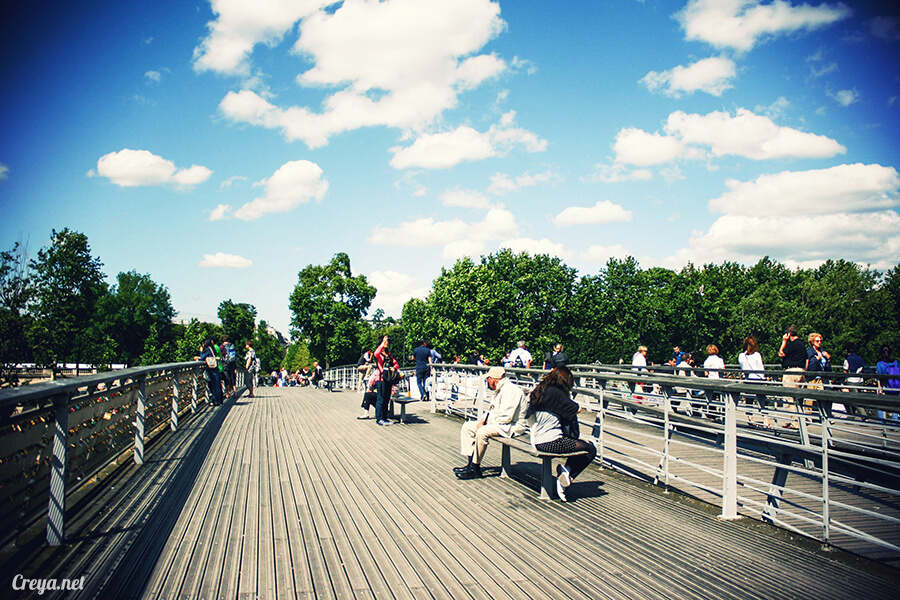
[ Art and culture are densely packed along both banks of the Seine, proving that plenty of treasures gather by the water. ]
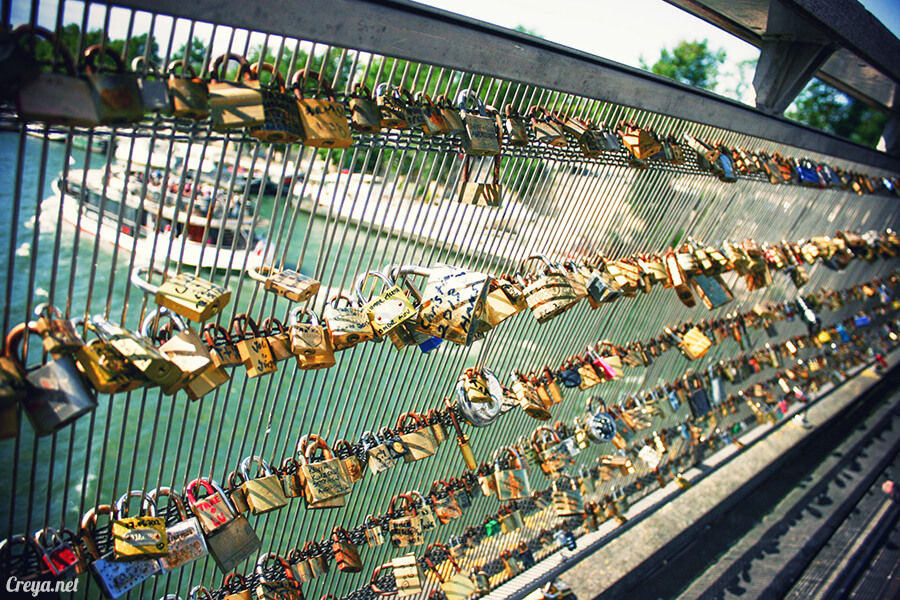
[ The Pont des Arts love locks before their collapse. I hear glass panels were later installed to keep them out—but love cannot be locked to the Seine if it is to be everywhere, don’t you agree? ]
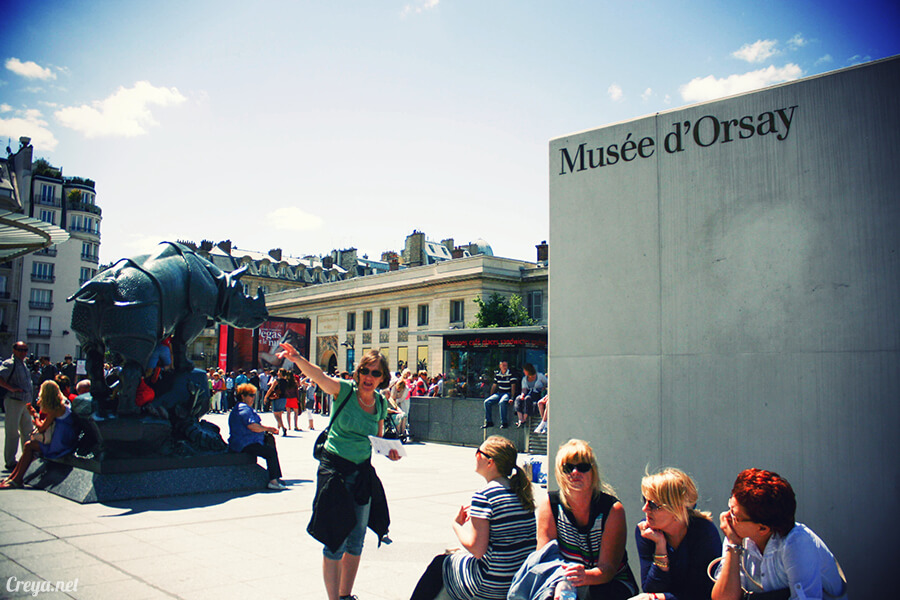
[ Outside the Musée d’Orsay: look how many bargain aunties a free museum day can lure out of the house. ]
The Musée d’Orsay was converted from the century-oldGare d’Orsay railway station.Its collections also include someImpressionist paintings and modern artworks.Van Gogh, Millet, Cézanne, Renoir—names that vaguely appeared in art class—will repeatedly summon memories buried who-knows-where in your mind.
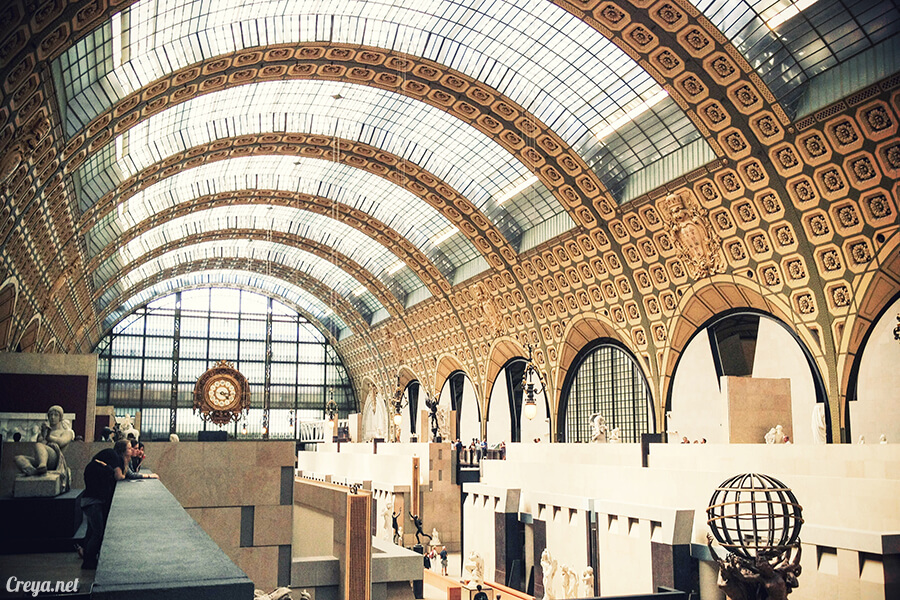
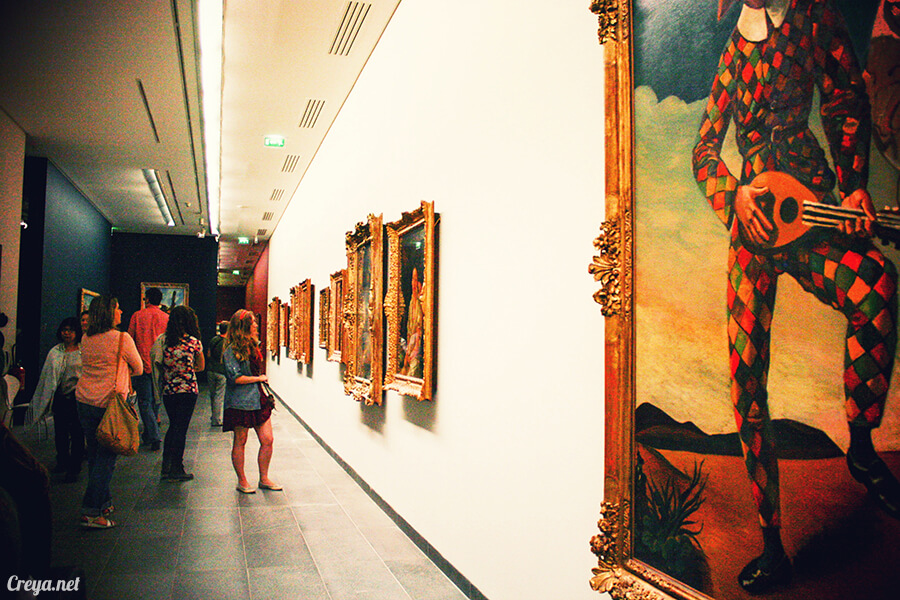
[ In 2012, photography was permitted only in the public area of the main hall. You can still see the form of the old Gare d’Orsay; although it wasn’t a large station, it was remarkably elegant. ]
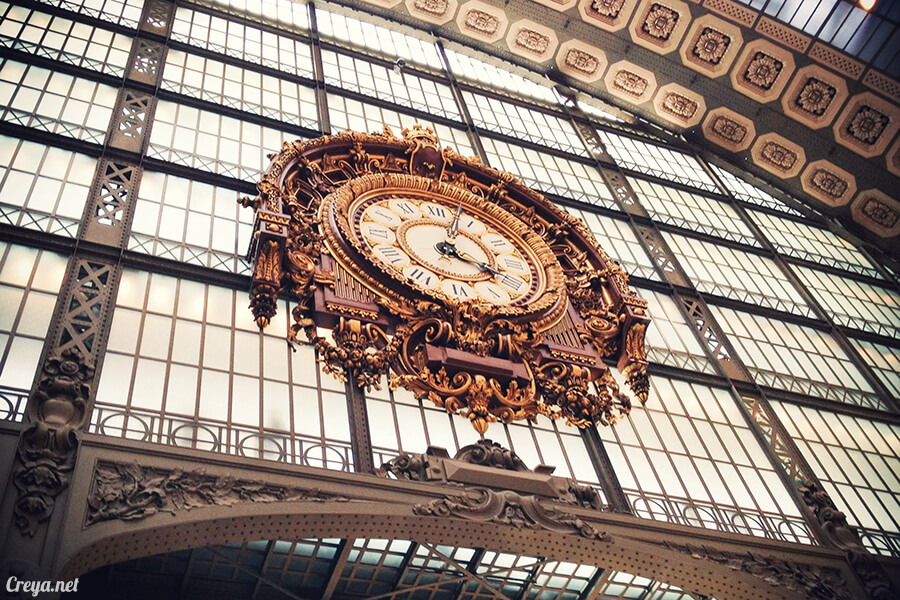
[ The great clock from the Gare d’Orsay’s original concourse has also been preserved. ]
Photography was prohibited inside the galleries at the time.But that allowed me to put down my camera and stop worrying about dodging the crowds to take a photo. All I had to do was stand before the paintings and feel the infinite worlds the artists had created with their brushstrokes on finite pieces of canvas: Van Gogh’s Self-Portrait and Starry Night Over the Rhône, Millet’s The Gleaners, Bonheur’s Ploughing in the Nivernais: The First Dressing—and many more Impressionist works that left me brimming with impressions.
As I focused on each painting hanging on the wall, I saw a texture that reproduced photographs and printed books could never convey.Only by studying them with your own eyes can you create your own feelings and impressions.。
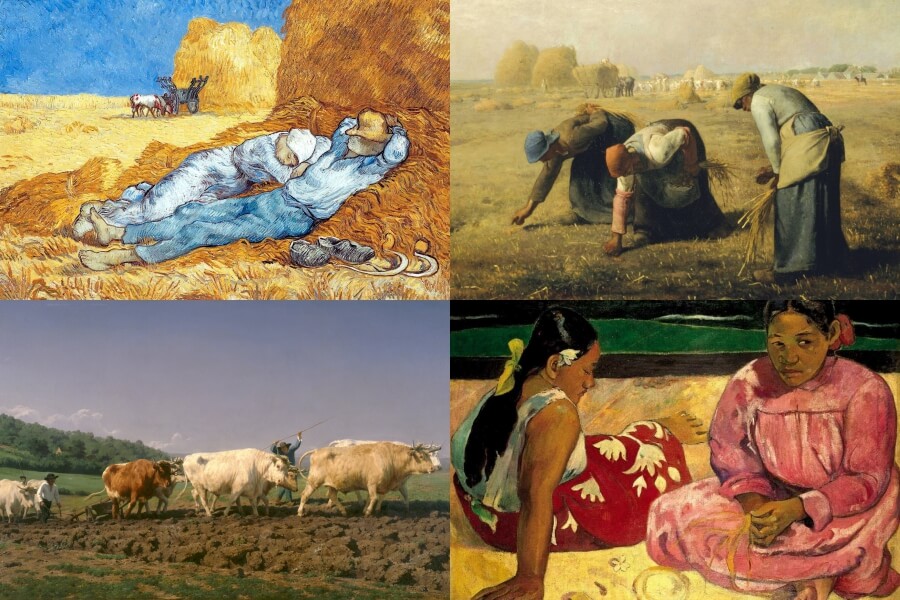
[ These familiar masterpieces appeared before me one after another. Viewing every brushstroke up close and seeing the colors without distortion, I could finally meet the artists across time and space with nothing between us. ](Image sourced from the internet)
And so, during that afternoon at the Orangerie and Musée d’Orsay, I painted an impression of Paris, France, that belonged to me alone.
Musée de l’Orangerie information (the following information is from 2016.9)
Admission:
Full price €9 / discounted ticket for visitors of all nationalities aged 18–25: €6.5
Combined Musée de l’Orangerie and Musée d’Orsay ticket: €16
The Paris Museum Pass is also available (For details, please see the official Paris Museum Pass website.)
Free admission:
The first Sunday of every month (For details about free museum days, please see the official Paris tourism website.)
Visitors under 18
Opening hours:
9:00 a.m.–6:00 p.m. (last admission at 5:15 p.m.; galleries cleared at 5:45 p.m.)
Closed:
Tuesday
French public holidays: 5/1, the morning of 7/1, and 12/25
Photography policy:Photography is permitted with the flash turned off; tripods and selfie sticks are prohibited.
Transport:Take Métro Line 1, 8, or 12 to Concorde station, then walk for seven to ten minutes.
Address:Orangerie Museum, Jardin Tuileries, 75001 Paris
(See the end of the article for the map.)
Musée d’Orsay information (the following information is from 2016.9)
Admission:
Full price €12 / discounted ticket for visitors of all nationalities aged 18–25: €9
Discounted ticket after 6:00 p.m. on Thursday: €9
Tuesday, Wednesday, Friday, Saturday, and Sunday at 4:30 p.m.
Combined Musée de l’Orangerie and Musée d’Orsay ticket: €16
The Paris Museum Pass is also available (For details, please see the official Paris Museum Pass website.)
Free admission:
The first Sunday of every month (For details about free museum days, please see the official Paris tourism website.)
Visitors under 18
Opening hours:
9:30 a.m.–6:00 p.m. (galleries cleared at 5:15 p.m.)
Open until 9:45 p.m. on Thursday (galleries cleared at 9:15 p.m.)
Closed:
Monday
French public holidays: 5/1 and 12/25
Photography policy:Photography is permitted with the flash turned off; tripods and selfie sticks are prohibited.
Transport:Take Métro Line 12 to Solférino station and walk for four to eight minutes, or take RER C to Musée d’Orsay station and walk for one minute.
Address:1, rue de la Légion d’Honneur, 75007 Paris
✈ Travel date: 2012/7/1
| Watch My Europe-Bound Legs Go | 9 Days in France Series
● France: Not What You Imagined?
● France Day 1 – What?! You Can’t Get By in English at Charles de Gaulle, France’s Biggest International Airport?
● France Day 1 – The Palace of Versailles in Paris, France: Unblocking the Historical Connections in My Brain
● France Day 2 – Only After Getting Thoroughly Lost Can You Savor the Old-World Charm of the Palais Garnier in Paris
● France Day 2 – The Historic Route Between the Arc de Triomphe and Champs-Élysées, and My Woeful Ignorance of History
● France Day 3 – The Louvre in Paris: That Faint Smile Hidden in a Golden Palace
● France Day 3 – My Own Impression of Paris! Impressionist Masterpieces at the Musée de l’Orangerie and Musée d’Orsay
● France Day 4 – Mont-Saint-Michel, France: So That’s Where the Hole in My Brain Came From
● France Day 5 – Two Holy Sites in One Day: Two Sides of Paris at Sacré-Cœur and Notre-Dame
● France Days 1–5 – The Eiffel Tower: Five Views of Paris’s Magic-Lamp Tower
● France Day 6 – Avignon, the Ancient Provençal City Even More Beautiful at Sunset
● France Day 7 – Strutting Through the Lavender Fields and Red Towns of Provence
● France Day 8 – Arles in Southern France: The Roman Empire Through My Eyes and Van Gogh’s Brush
● France Day 8 – Another Ancient Roman Town in Southern France: Does Nîmes Blend Old and New Any Better?
● France Day 9 – That Year, I Became Part of the Festival d’Avignon….
| Watch My Europe-Bound Legs Go | 85 Days Around Europe, 16 CountriesComplete List of More Articles


