


When I first met you ten years ago, I never imagined you would become someone who spends her time hiking through the mountains.
A friend I met as a student sent me that message, and my mind instantly spun back through everything that has happened over the past few years. Even I could never have predicted that, as a city girl who had been completely disconnected from outdoor life since childhood, I would one day come to love throwing myself into the wild and sleeping rough, and find that long-distance walking suited my rhythm better than any other way of travelling.
I never deliberately set out to enter the mountains. It was because I chose to walk trails across New Zealand and Japan’s Tohoku region that those long routes began to introduce me to the wilderness and give me a new understanding of cities and everyday life.
By stepping into the mountains, I discovered the simple purity of life and a happier version of myself. I also love stepping into crowds and encountering the cultures and ways of life shaped by different environments. I love walking while feeling out the transition and coexistence between the two. On the way from one town to the next, I might pass through wild forests or follow a highway; in the changing rhythm of each route, I always enjoy noticing their differences and connections.
The intensity of life on a long-distance trail stayed with me even after I returned to Taiwan. I wanted to keep that favourite rhythm alive in everyday life. Since walking had already planted itself so firmly in my heart, I wondered how wonderful it would be to turn that curious, exploratory gaze on my own home, Taiwan.

So, in my free time between work, I began following old paths and the routes opened up by earlier generations, imagining how the history between people and nature unfolded in the mountains. Starting in a town, crossing the hills on the outskirts, and arriving in the next town, I could spend a few short days walking through the paths that shaped the place where I grew up and feeling the changes between town and wilderness.

Salomon OUTline GTX® became my tool for exploration: a lightweight hiking shoe made for people who move between towns and mountains. It combines the easygoing look of a casual shoe with the protection of a hiking boot, letting me explore the hills freely and confidently while blending naturally into everyday crowds in town. It has the lively feeling of being ready to play outdoors for a while before heading back into the city.

Field-testing routes with my hiking companion, Salomon OUTline GTX®
I love day-long explorations that move between mountains and towns. For example:
Walking to the mountain town of Jiufen for a bowl of taro balls, because better food is always a good reason to walk
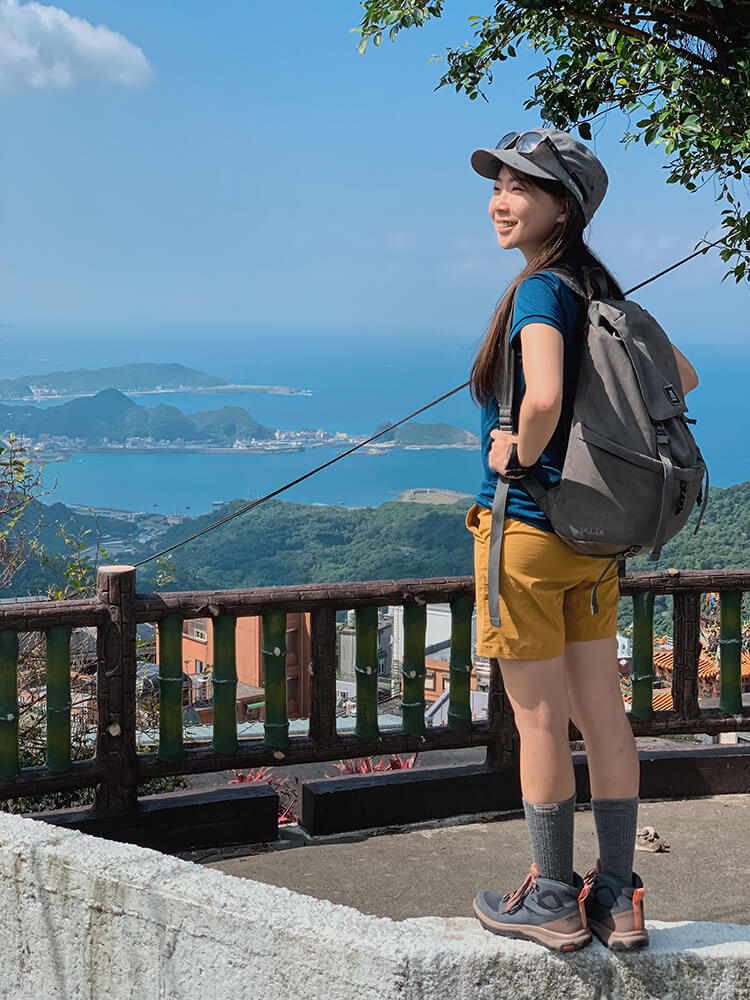
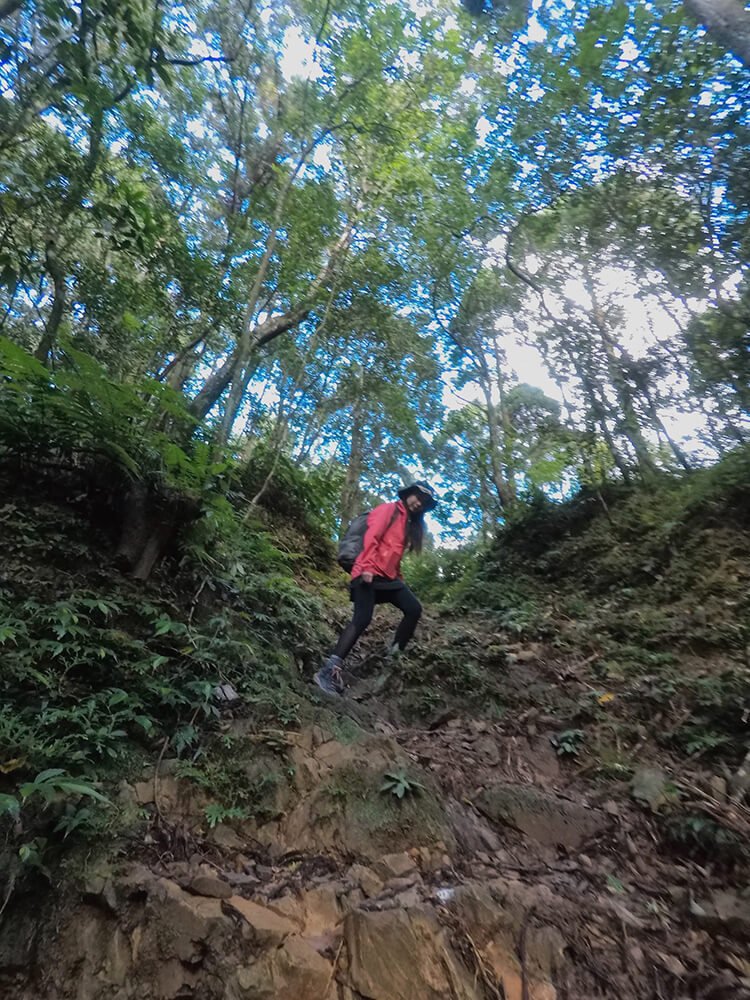
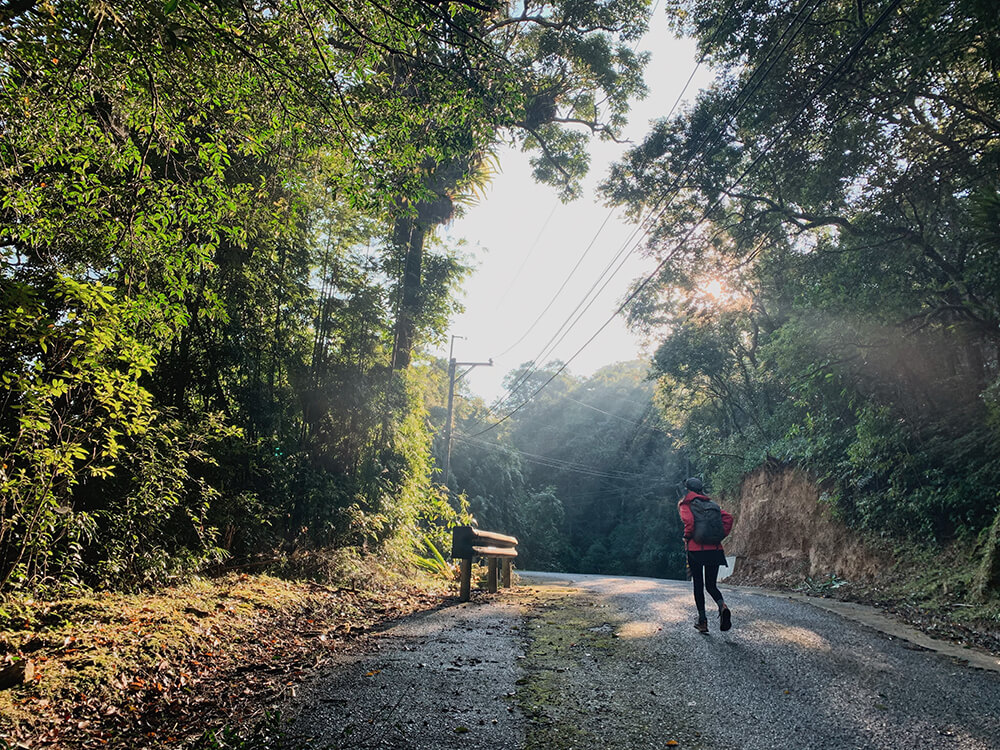
Starting from Houtong Station, I first rubbed noses with the resident cats, then followed the Dacukeng Old Trail. During the Qing dynasty, the Chaozhou Li family traced the stream upstream in search of the source of the gold mines. I continued on to Jiufen—but I was looking for taro balls, not gold. After wandering through the old street shops, I took the Xiaocukeng Old Trail, another once-prosperous mining route, back to Houtong Station. I said goodbye to the cats with one more round of rubbing and took the train home.




The Central Section of the Tamsui-Kavalan Trails — Wantan to Wai’ao
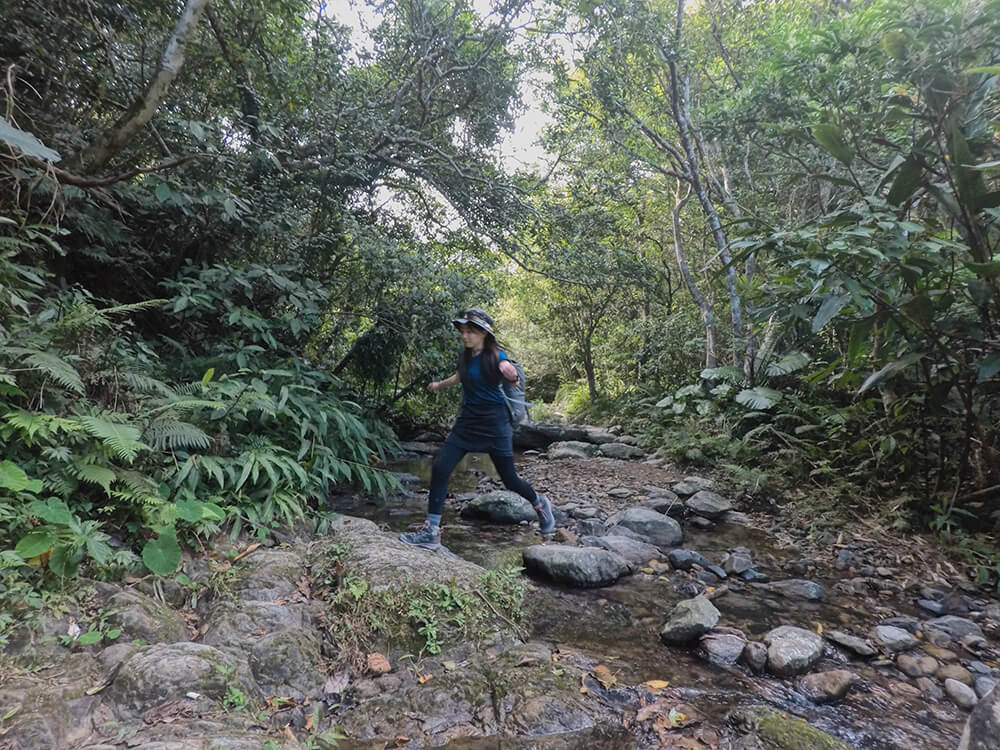
Or there was the day we ‘walked from the mountains to the beach, then returned to the city for an exhibition.’ We took the central section of the Tamsui-Kavalan Trails from remote Wantan in Shuangxi, New Taipei City, following the restored Wushan Ridge Trail, Pingxi Old Trail, and Shikong Old Trail along the upper Beishi River. We crossed cedar forests, streams, and paved roads, then passed old houses in the mountains as the route followed the dreams of Qing-era settlers opening up the land, all the way to the beach at Wai’ao in Yilan. On the way home, we took a local train to Taipei and visited an exhibition about Southeast Asian migrant workers at Songshan Cultural and Creative Park, seeing how different eras have shaped life and culture in the city and the mountains.

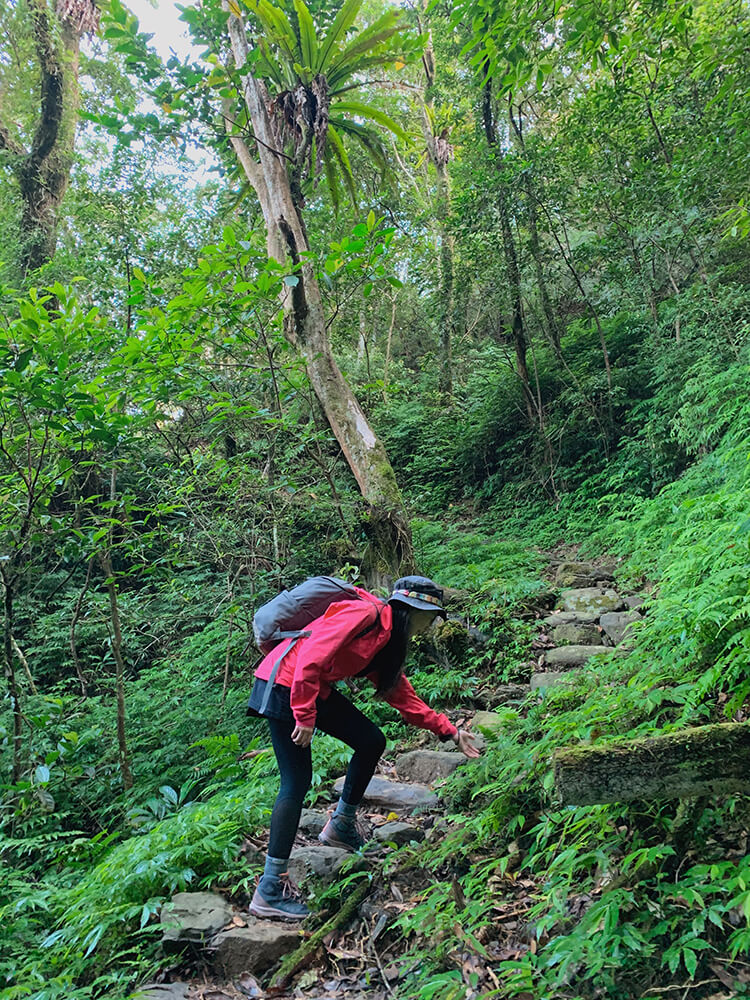

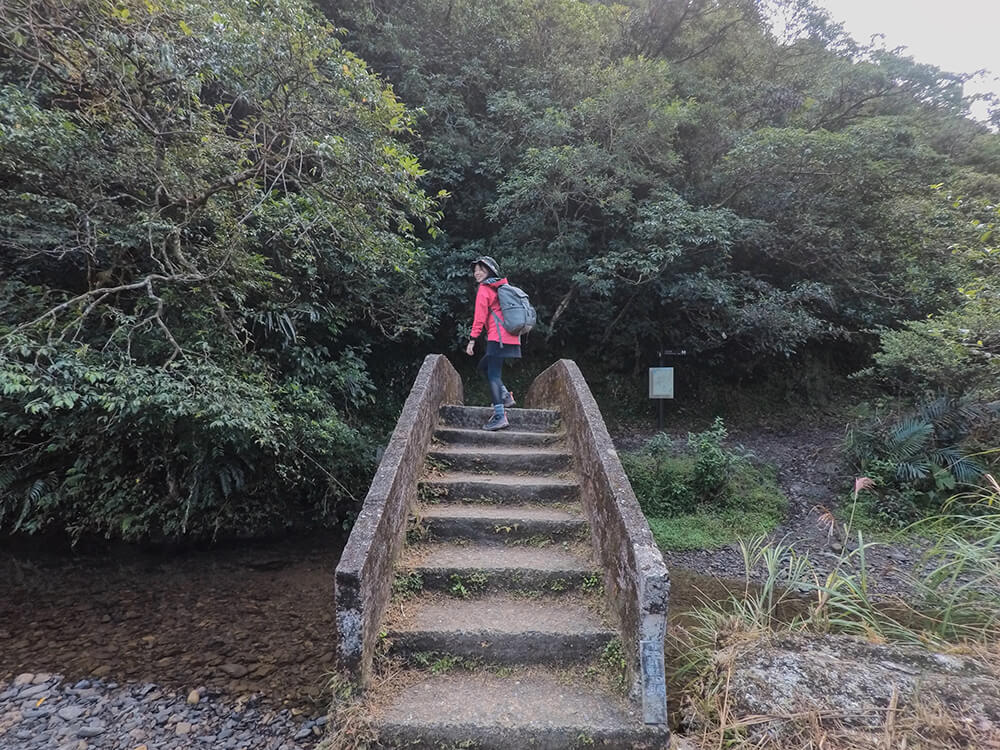

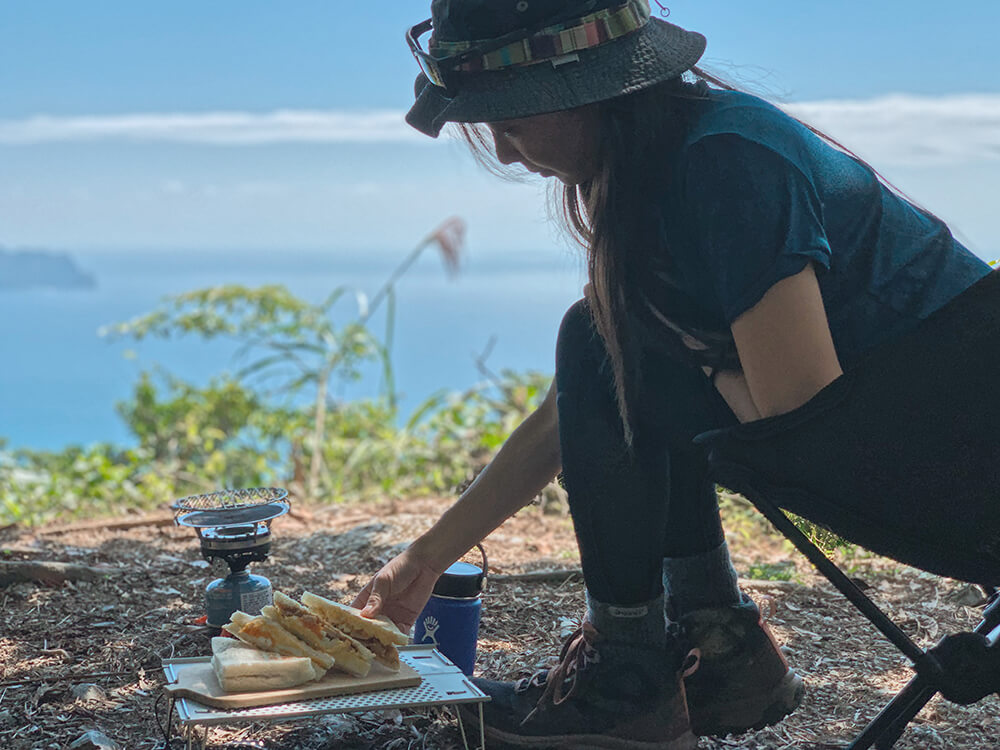
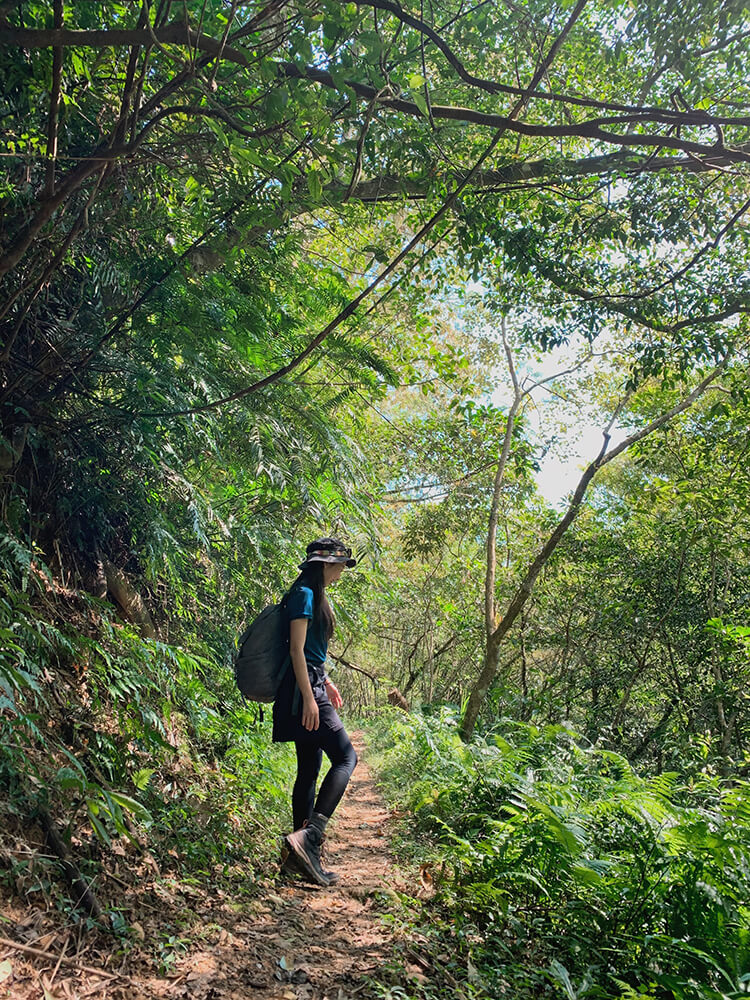

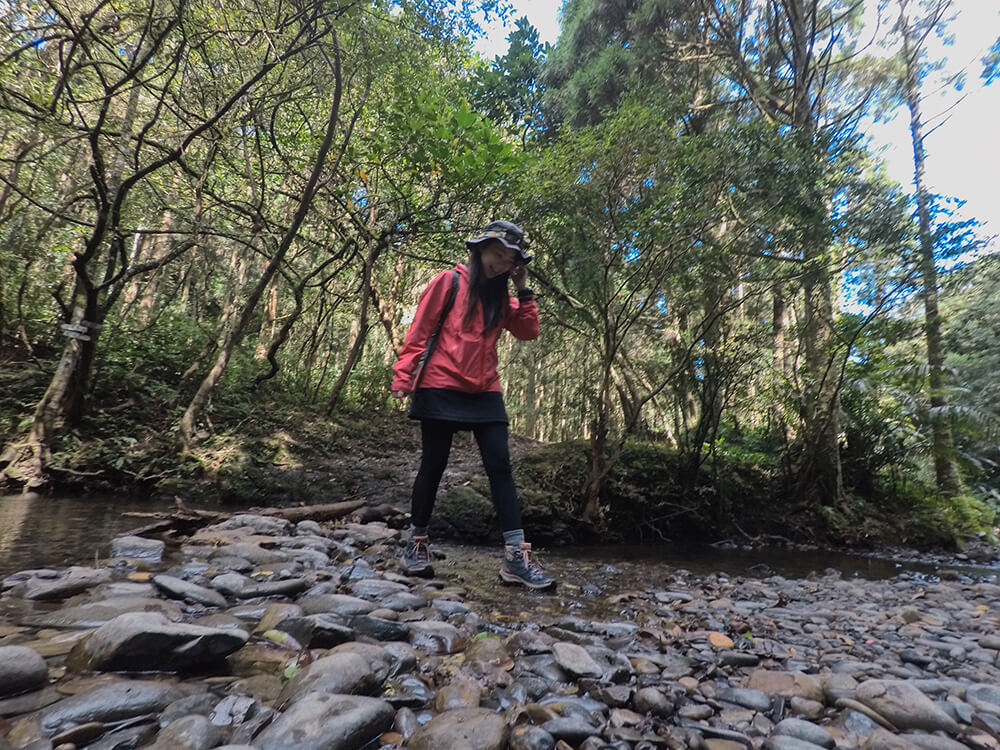
These two routes include stone steps accessible only on foot, dirt mountain paths, water crossings, ordinary paved roads, and town streets. In every setting, the Salomon OUTline GTX® hiking shoe consistently performed beautifully.
Its soft colour palette and casual, streamlined shape also let me move freely between my city and mountain lives, creating a practical Outdoor Urban look.
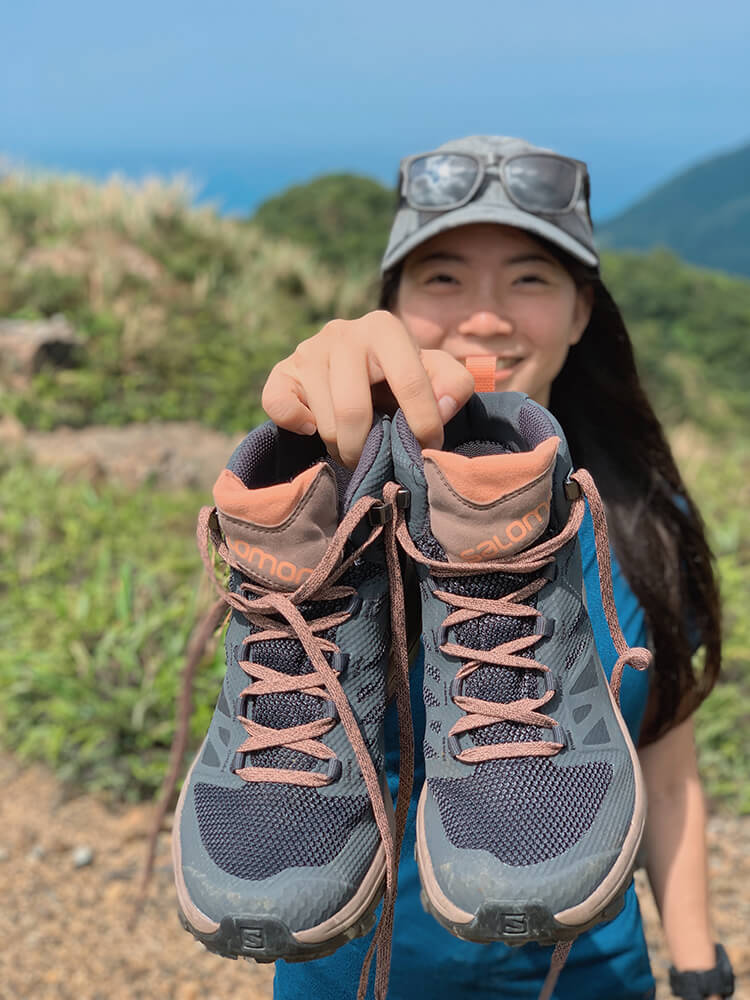

The easygoing look of a casual shoe
I used to wear running shoes whenever I walked around the city. But as my exercise habits gradually shifted from a lot of road running to hiking, my everyday life settled into a rhythm of half a day on a trail and half a day in the city. Whenever the Salomon X Ultra 3 GTX® I usually wore for long-distance walking appeared at a gathering with friends in town, people automatically assumed I had just come down from the mountain—or was about to rush off to one.
A smooth, seamless upper
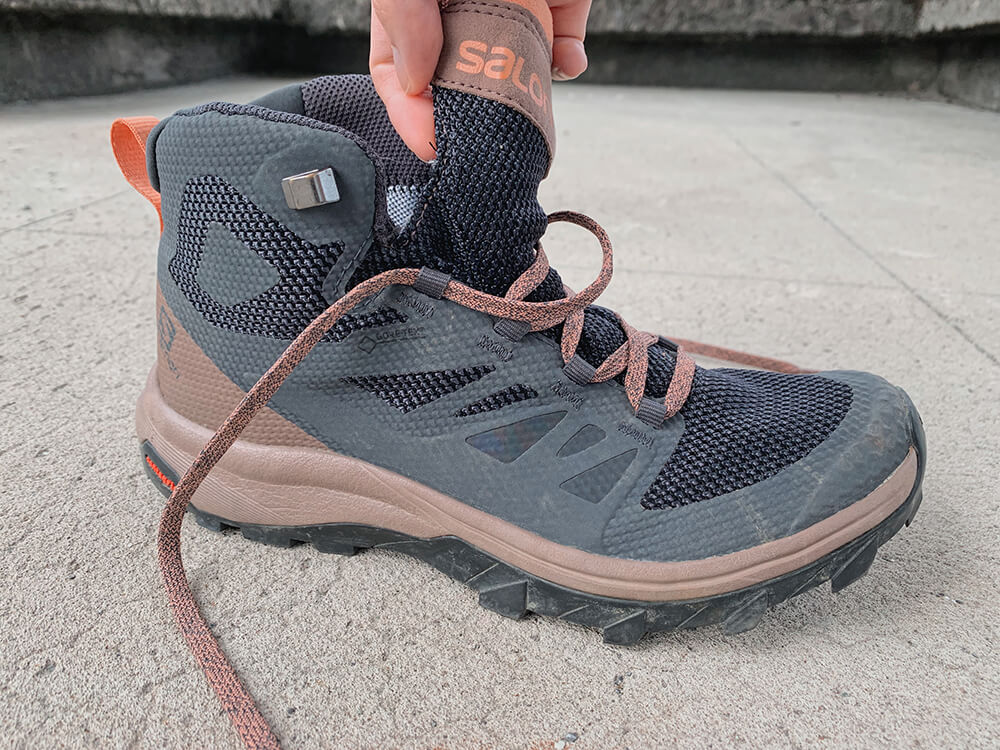
The streamlined look of the Salomon OUTline GTX® feels completely different from Salomon’s familiar, bold inverted-V lines. The sides use a heat-moulded construction with a smooth, stitch-free design and matching mesh, giving the OUTline a cleaner, sharper appearance.


The OUTline’s heat-moulded design also removes the little seams and grooves where dirt tends to collect, making it easier to clean. After walking the Tamsui-Kavalan Trails that day, I wiped the surface with an alcohol-free wet wipe and removed most of the mud. That kept me from bringing traces of the mountains onto public transport, so I could enter the city as if nothing had happened.

A discreet logo
The Salomon logo on the side of the OUTline is much smaller too, and the logo on the tongue is even tucked behind the laces.
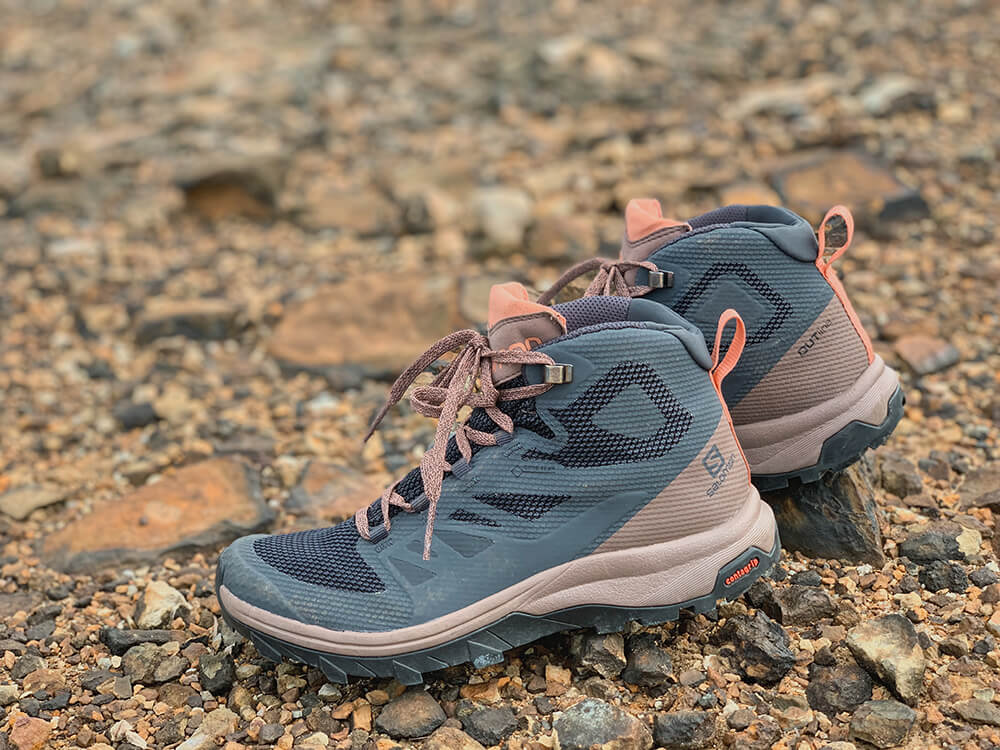

Casual laces in a matching colour
Unlike the Quicklace drawcords commonly found on Salomon shoes, the OUTline uses the same tying method as an ordinary shoe. Its flat, close-fitting laces add an even more casual, youthful touch to the overall look.

I used to wear Salomon shoes only when I went hiking. With its easygoing appearance, however, the Salomon OUTline GTX® is an Outdoor Urban shoe that makes it much easier to bring an outdoor-casual style into everyday life and move freely between city and trail.
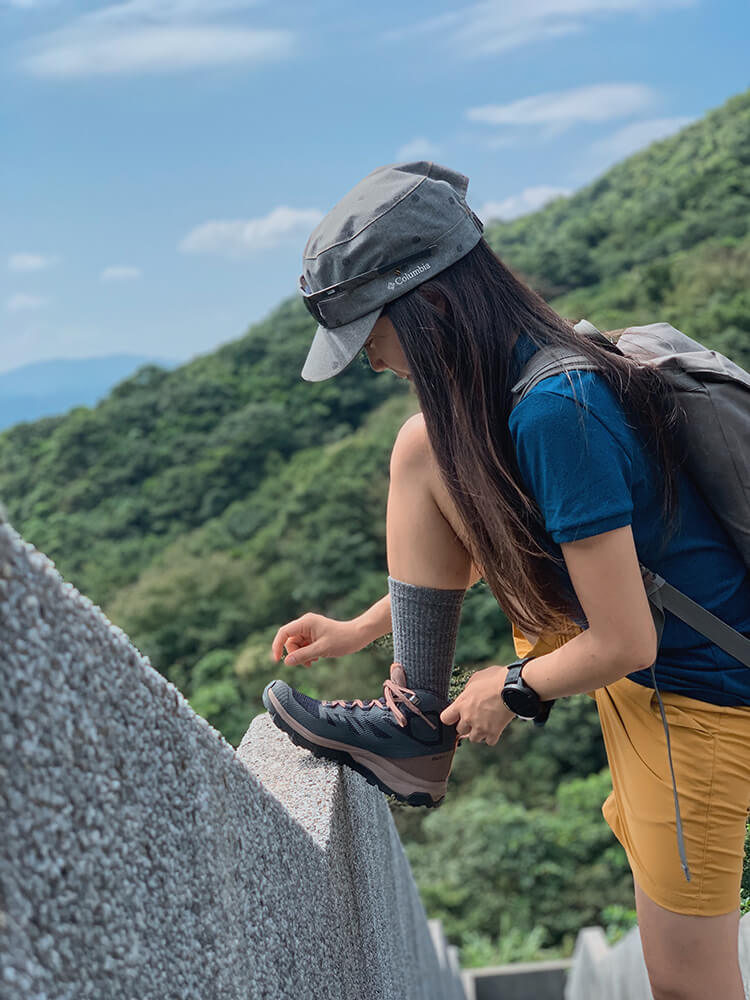
The protective functions of a hiking shoe
The Salomon OUTline GTX® is positioned as a hiking shoe, yet beneath its casual-sneaker exterior it has, like someone secretly eating three bowls of rice, the foot protection and trail grip that hiking demands. Its hiking-shoe character quietly reveals itself in details you might not notice at first.

A grippy, durable rubber outsole
The biggest difference from an ordinary casual sports shoe is the Salomon-patented Contagrip® rubber outsole on the OUTline. Its 5 mm-deep lugs are distributed and shaped specifically for lightweight outdoor hiking. On a fine day, whether I was walking the gravelly dirt of Xiaocukeng or the dirt and mud of the Tamsui-Kavalan Trails, the stable contact with the ground made me comfortable handing my body weight over to this companion.
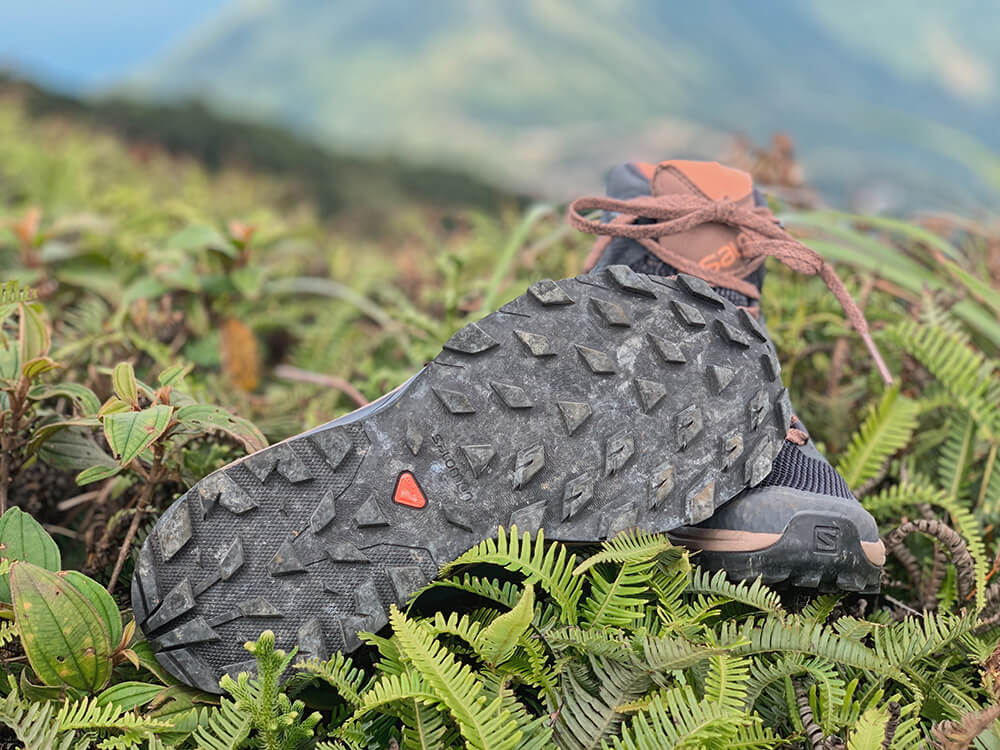

The Contagrip® outsole works with an EVA structure to absorb shock, so even on hard paved roads the shoes feel remarkably comfortable. They are suitable for moving between asphalt and mountain trails.

A protective toe cap
In the mountains, it is hard to avoid kicking branches or rocks—or tripping over them. The rubber protection around the toe of the Salomon OUTline GTX® gives your toes the shield they need.

Gore-Tex® waterproofing
Most Salomon hiking shoes sold in Taiwan come with Gore-Tex® waterproofing. As usual, a sock-like membrane wraps the inside, keeping your feet dry and comfortable in rain, puddles, shallow streams, mud, or dewy grass and forest. The tongue and upper of the high-cut Salomon OUTline GTX® are joined as one piece, so it can even handle water up to ankle height.
Between a technical hiking boot and a casual sports shoe
Overall, the Salomon OUTline GTX® sits between a technical hiking boot and a casual sports shoe in both weight and function. Compared with ordinary running and casual shoes, its grip, stability, and protection make hiking safer, while the Gore-Tex® waterproof surface works in rainy weather outdoors or in the city. Compared with the technical X Ultra 3 hiking line, however, the OUTline’s outsole lug pattern is simpler. It has an EVA-cushioning midsole but no additional midsole support plate, so you feel the contours of the ground more clearly and get slightly less grip. The difference is noticeable on wet slabs and muddy ground.

(The two shoes in the photo were borrowed from a shop so I could photograph unworn outsoles. Please forgive the different sizes—and imagine the scale accordingly.)
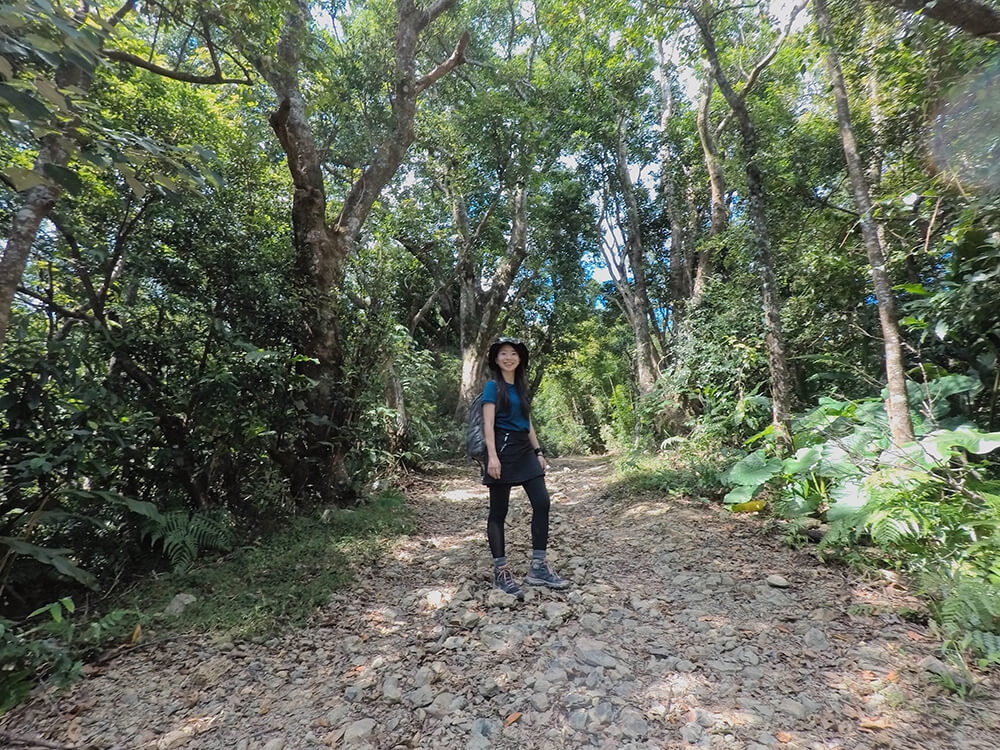
If you are used to professional hiking shoes with thick soles, the OUTline takes a little getting used to at first. For a lightweight, light-load hiking shoe, though, the Salomon OUTline GTX® handles most of the terrain you encounter on hills around the city with ease.
Leaping between city and mountain
As light as a running shoe
The Salomon OUTline GTX® is called a lightweight hiking shoe not only because it suits light one-day or short multi-day hikes carrying 7–9 kilograms, but also because its weight is surprisingly low. Even the high-cut women’s version weighs only 350 grams. The upper omits bulky seams and focuses on the functions most important for light hiking, allowing a hiking shoe with a rubber outsole to achieve such impressive lightness.

I felt the effect of shoe weight on this year’s Tohoku MCT trail. Carrying a full pack, I wore the X Ultra 3 for the entire route. One day, after dropping off my gear, I had to sprint a kilometre along the road to catch an island-hopping boat leaving in ten minutes. Even without a pack, my feet felt heavy and my stride could not match the lightness I was used to in running shoes. That was when I realised that although the X Ultra 3’s stable construction offers complete protection, it also brings extra weight. The effect of shoe weight on your stride really does matter—down to the foot.
The Salomon OUTline GTX®’s lightweight design gives it a running-shoe feel. For light hiking or walking through the city, it is comfortable while still feeling lively. Even if you are used to ordinary everyday shoes, switching to the Salomon OUTline GTX® takes little effort and almost no break-in time.
Swap in SIDAS insoles for an upgraded feel
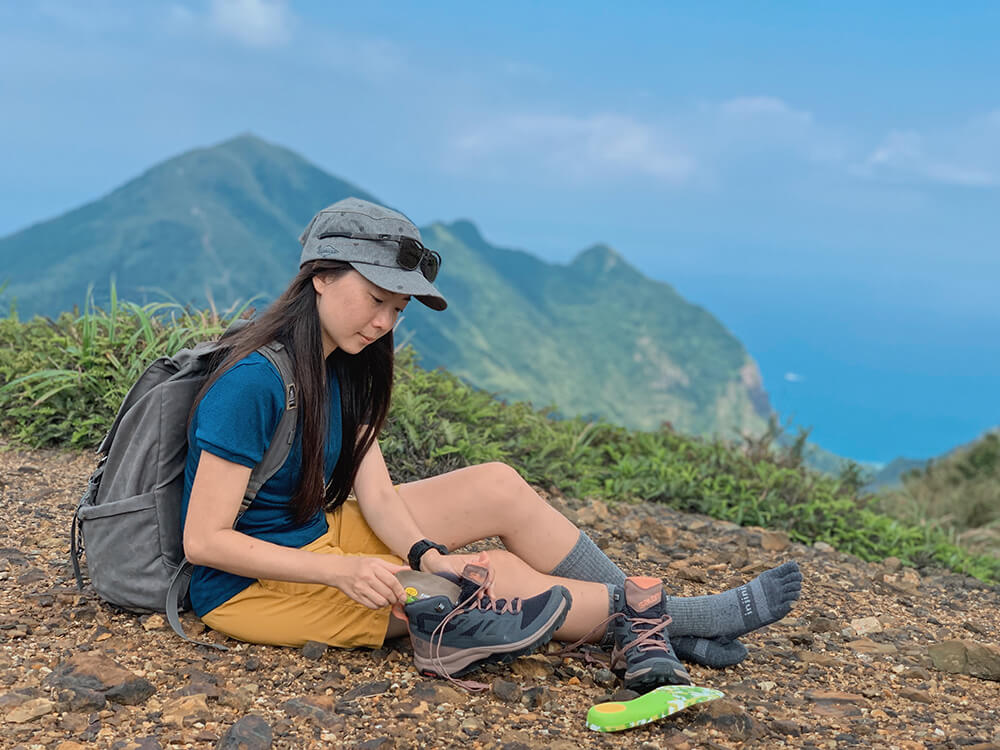
The OUTline comes with an Ortholite® EVA-foam insole. It is soft and springy, providing good shock absorption when you walk on hard surfaces such as asphalt.

When I leave town and enter a trail, however, I usually remove the original insoles and put in SIDAS insoles instead. This small change lets me choose arch support that fits me better and makes the shoe size work for my small feet. SIDAS also offers models designed for different sports, taking the feel underfoot up another level.

I pair the Salomon OUTline GTX® with SIDAS 3D insoles designed for hiking. They give my heel more cushioning and arch support, while the holes under the forefoot improve ventilation. Swapping the insoles myself also makes the OUTline’s leap from city to mountain more comfortable.
Choosing between high-cut and low-cut
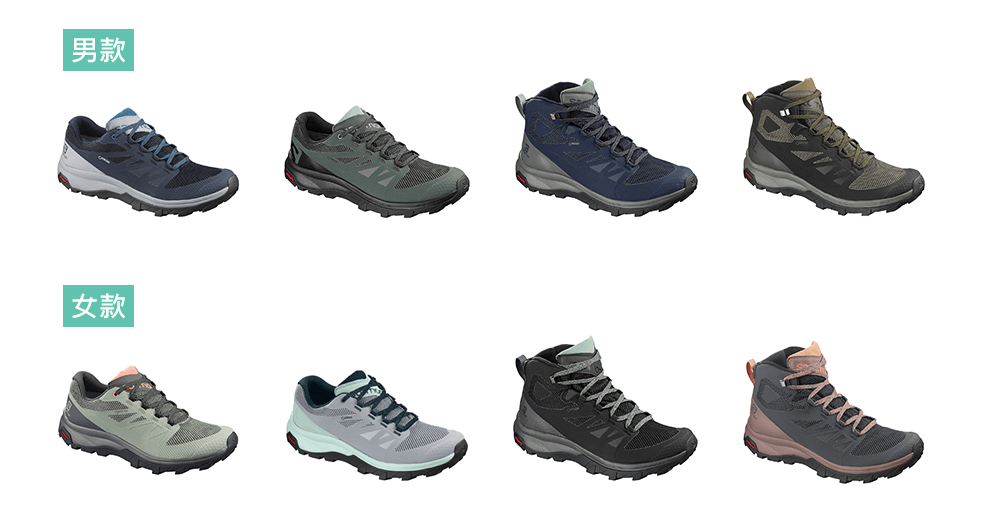
The Salomon OUTline GTX® comes in low- and high-cut versions. The low-cut model leaves the ankle exposed and feels closer to a casual sports shoe or a running shoe; the women’s low-cut version weighs as little as 300 grams. The high-cut model offers more ankle protection, tolerates deeper water, and extends warmth up to the ankle in cold weather. The metal lace hooks on either side can also be left untied at the highest position, creating a different styling option. When you leave the trail for the city, a quick adjustment can even change the ventilation inside the shoe.

Who is the Salomon OUTline GTX® for?
So, is the Salomon OUTline GTX® right for you? I originally set out to find a pair I could recommend to friends who were curious about trying hiking and trekking. After wearing them myself, though, I started imagining all kinds of people and situations for the Salomon OUTline GTX®. See if any of these sound like you or someone you know:

People who live between the outdoors and the city
People who often plan both city and countryside activities in a single day—for example, heading into town after a hike, going camping or for a walk straight after work, or, like me, choosing trails that pass through towns.
Hikers who are used to separating shoes by purpose
Frequent walkers often plan short, lightweight hikes in addition to long-distance trips with heavy packs. If you are used to choosing different shoes for different levels of intensity and situations—to reduce wear and get the right functions—then a lightweight hiking shoe is worth having.
Light hikers who mostly walk hills around town
You hike often, but mainly on small hills in the countryside.
Hikers with lightweight gear
If you carry no more than 7–9 kilograms and walk on relatively good surfaces such as small forest roads, you are also a good candidate for the OUTline.
People taking their first steps in the mountains
You are just beginning to try hiking on the hills around town, or hiking is only a small part of your life and you want shoes you can wear on ordinary days too.
Independent travellers who love exploring on foot
If you like visiting towns—or even shopping—on foot while travelling, this hiking shoe is a great fit for anyone who expects to walk a lot. It is easy to style, and if you suddenly decide to head into the countryside to see cherry blossoms or autumn leaves, you do not need to pack another pair of shoes.

Whether you choose the Salomon OUTline GTX® lightweight hiking shoe or a technical hiking boot, choose according to your own hiking frequency, trail complexity, pack weight, and habits. The right shoe for you is a good shoe. Try it on in a shop and walk around to test the feel, then find the companion that will explore with you.
More information about the Salomon OUTline GTX®
Salomon’s official OUTline GTX® product information and retailers across Taiwan
Salomon official online store
Salomon Taiwan Facebook page


