


Before setting off on my 85-day Euro Legs journey around Europe, I shut myself away at home for a week, poring over guidebooks and maps and filling spreadsheet cells with my route, schedule, and budget. I was terrified that three months would drain my travel funds, leave me hopelessly lost, and keep me from reaching the finish line on schedule.
But travel has a way of refusing to follow the script. Or perhaps, after spending my whole life dutifully following the rules, I had finally summoned courage from who-knows-where to venture alone onto another continent and into entirely different countries. So why not let go for once, be a little wilful, and simply follow my heart wherever it led?
My original itinerary had me heading out in the morning forArles in southern France, then reaching Nimes that afternoon—a forty-minute train ride away—before continuing to the Pont du Gard, which has stood for more than two thousand years.
But one wrong step in Arles and I ended up wandering around far longer than planned. Beneath its calm, time-worn character was such a sweet, fresh energy that I wanted to savour it a little longer. So I slowed down and explored every last corner of Arles, not leaving until I was completely satisfied—with no regrets whatsoever~ Only then did I set off for Nimes, breezily abandoning the Pont du Gard along the way.
After all, the commitments written on an itinerary are fixed and lifeless. What you feel in the moment is the truest expression of personal choice.
After leaving the ancient Roman town of Arles, I boarded an SNCF train and used the journey to give these Euro Legs of mine a rest. In under forty minutes,I had arrived in another ancient Roman town, Nimes, ready to see for myself whether, between these two different yet similar towns, Nimes was the better one.。

Nimes and Arles share similar histories. Celtic tribes settled and developed Nimes in the sixth century BC, and in 120 BC it peacefully welcomed the Roman legions and became one of their colonies. It reached its height in the second century AD, then declined after the Visigoth invasion in the fifth century. Following a stagnant period of isolation, perhaps one young person rose up to make a change, or perhaps the collective consciousness finally awakened. Whatever happened, Nimes eventually came alive again, growing wealthy through commerce and the export of fabric used for jeans (the word denim comes from de Nîmes, meaning “from Nimes”), and stepping into the light of modernity.
Occupation, colonisation, ascent to a peak, then destruction, silence, and rebirth—the tracks left by history rarely become lessons for later generations. Instead, the same cycle plays over and over again. Perhaps the only difference is how soon the young awaken and shorten the period of decline. Or perhaps we should wonder whether we might be one of those young people ourselves (but I want to be a young lady…) (How dare you!).
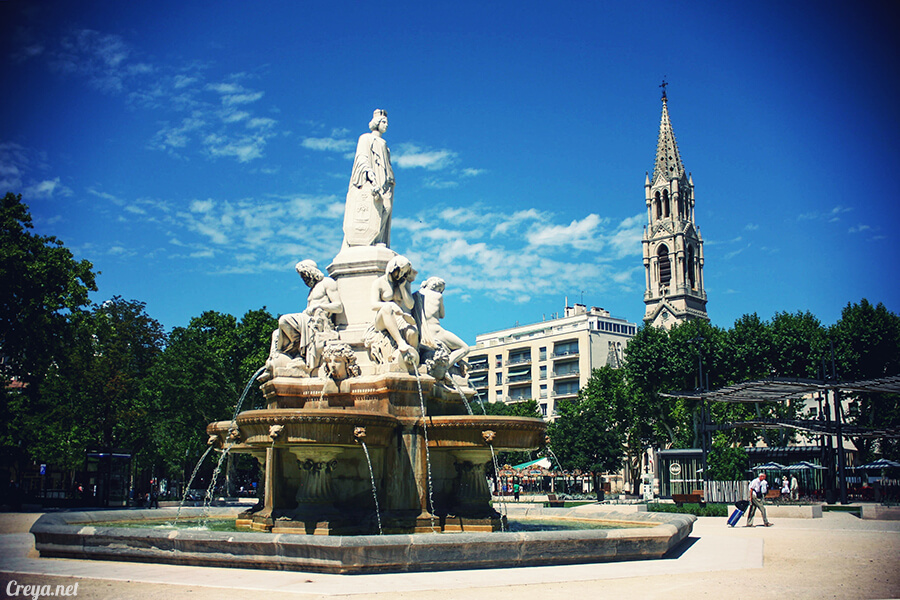
[ The Pradier Fountain in the park. The young woman above represents the city of Nimes, while the four streams of water below symbolise its four rivers. ]
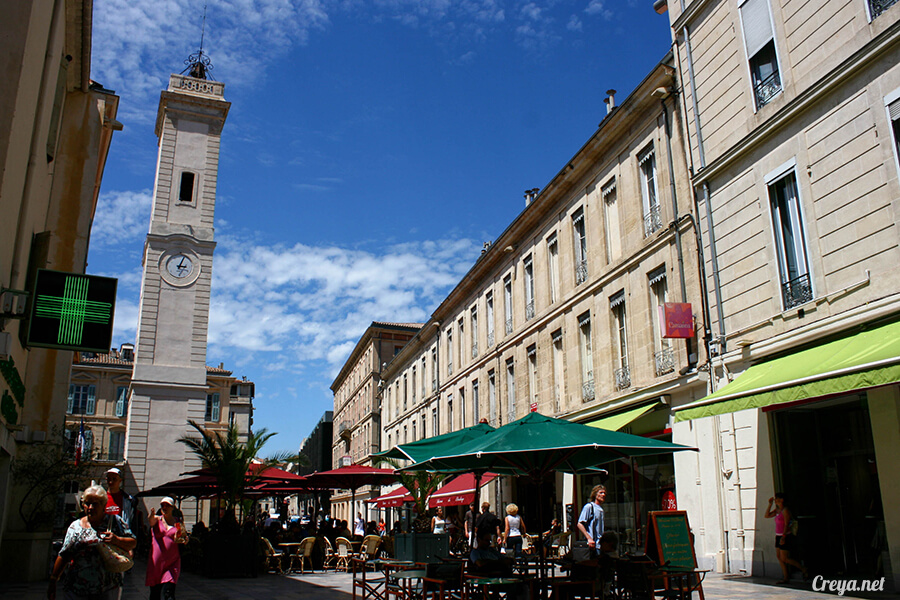
The straight boulevard outside Nimes railway station successfully pointed this directionally challenged traveller the right way, leading me to a patch of greenery where my walk through town began. It was a very modern, open park. Even the wooden decking and pergolas, disguised in earthy tones, could not conceal how new it was. The Information Centre, with its broad floor-to-ceiling windows, and the distinctly new-looking buildings all around repeatedly made it clear thatNimes had the air of being the capital of the Gard department in southern France.。
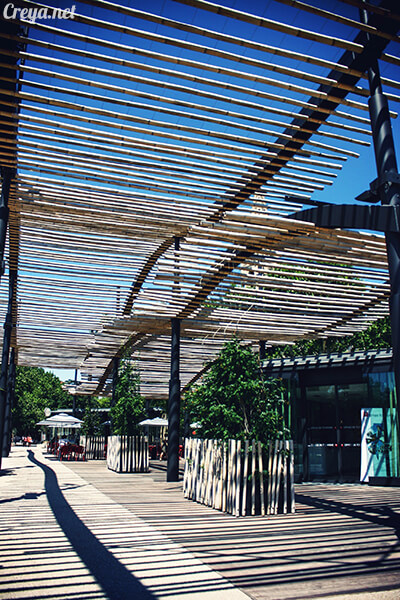
[ It made me feel as though I had arrived in a university town. ]
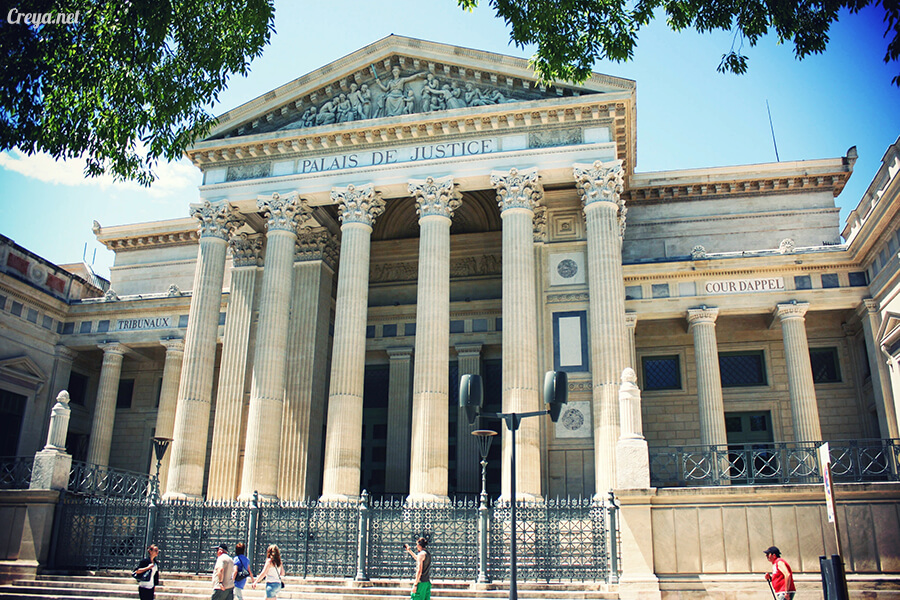
[ If you have a court date in Nimes, this is where you come! ]
Perhaps modern development is unavoidable, and the mingling of old and new has become one of Nimes’s defining features. Some people may like all that newness; I am not one of them. Still, I was veryrelieved to find that its ancient Roman remains have been carefully preserved to this day—indeed, they are among the best-preserved of their generation.
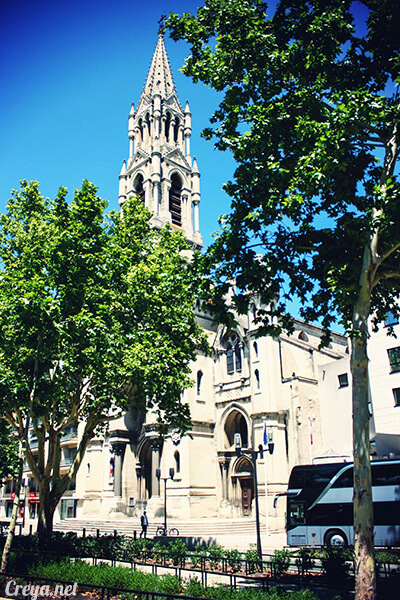
[ In Nimes, you can stumble upon yet another old-world church without even trying. ]
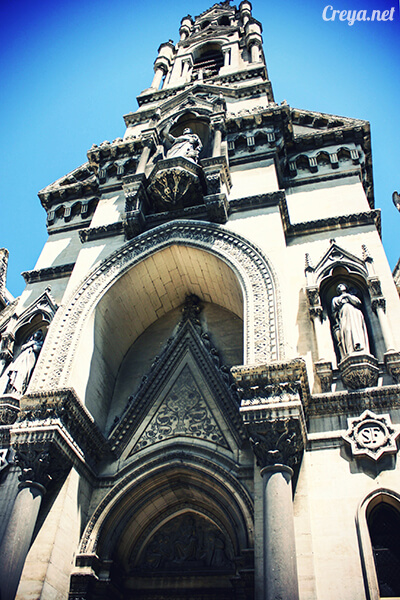
[ Saint Baudile Church, L’église Saint Baudile, in the city was built in the mid-19th century in the Gothic Revival style. ]
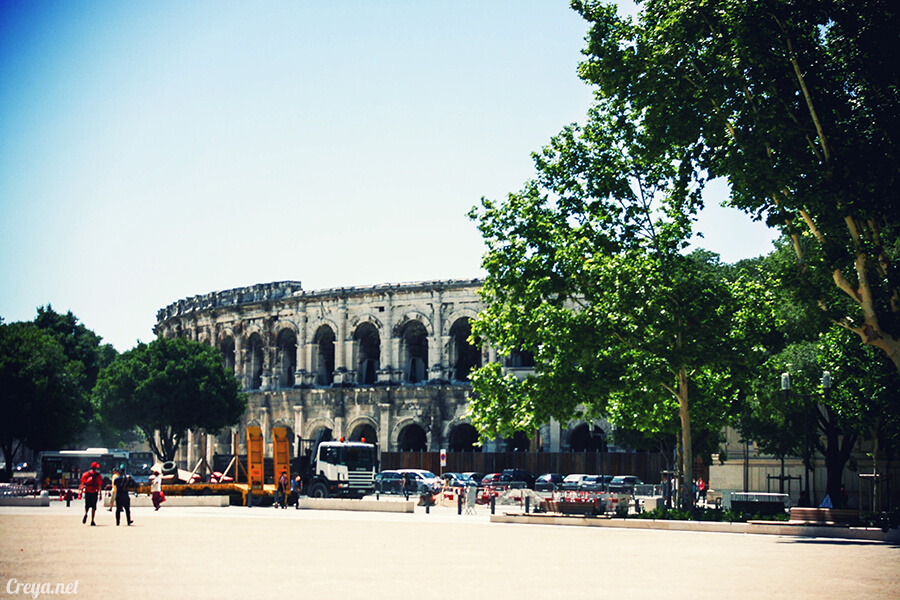
A few rich wafts of antiquity still drifted over from beside the shiny new park, coming from the 19th-century L’eglise Sainte Perpetue and the ancient Roman amphitheatre dating from the late first century. That day, between Arles and Nimes in southern France, I saw two amphitheatres in succession, briefly giving me the illusion that I was actually in Rome, Italy. Dating from the reign of Augustus, the Nimes amphitheatre is now the best-preserved surviving Roman amphitheatre. Bullfights are still held there twice a year, carrying on the tradition.
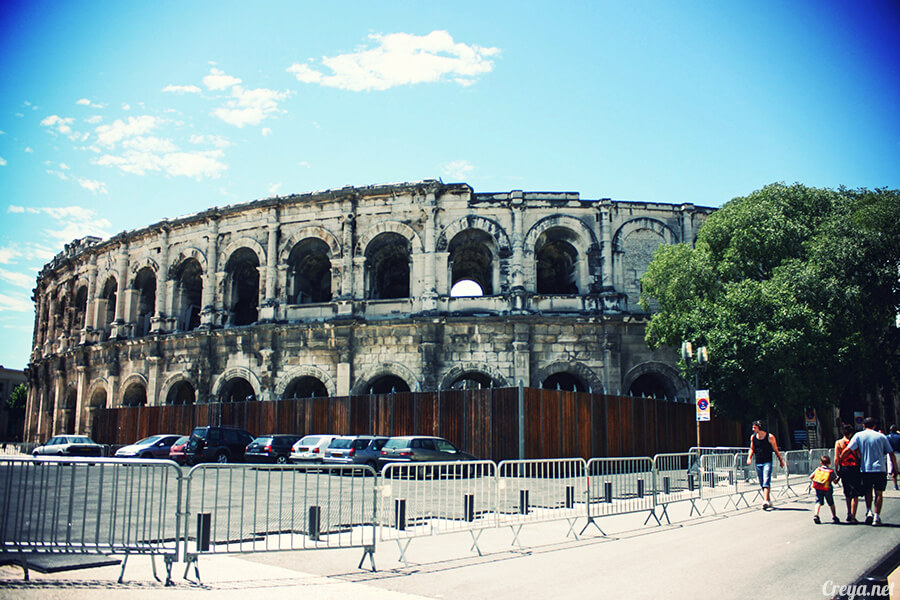
[ Who knew that in southern France, besides getting my fill of churches, I could also get my fill of amphitheatres? ]
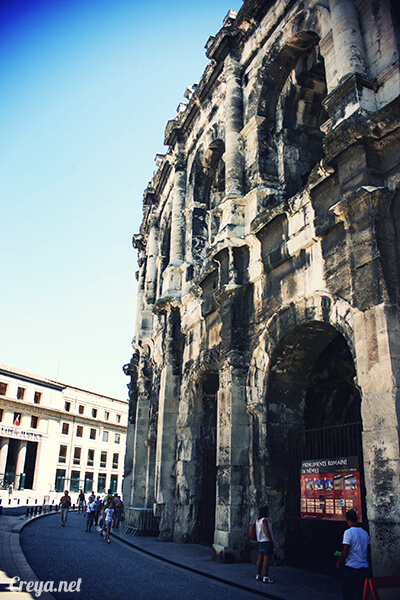
[ The Nimes amphitheatre does not occupy a huge area, but walking all the way around it somehow gave me the spiritual calm of a pilgrimage. ]
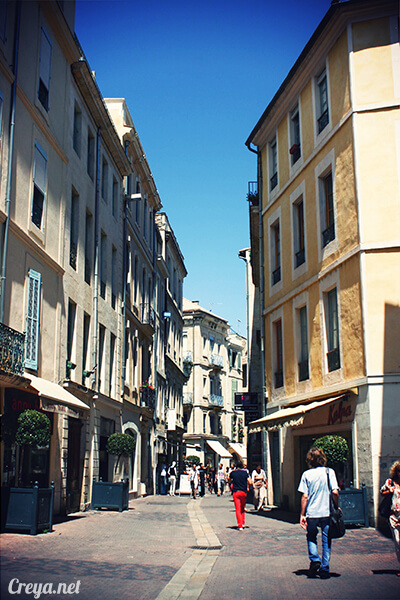
With little time to linger,I treated Nimes as a city-sized museum of history and art, admiring the old houses tucked among its modern buildings.
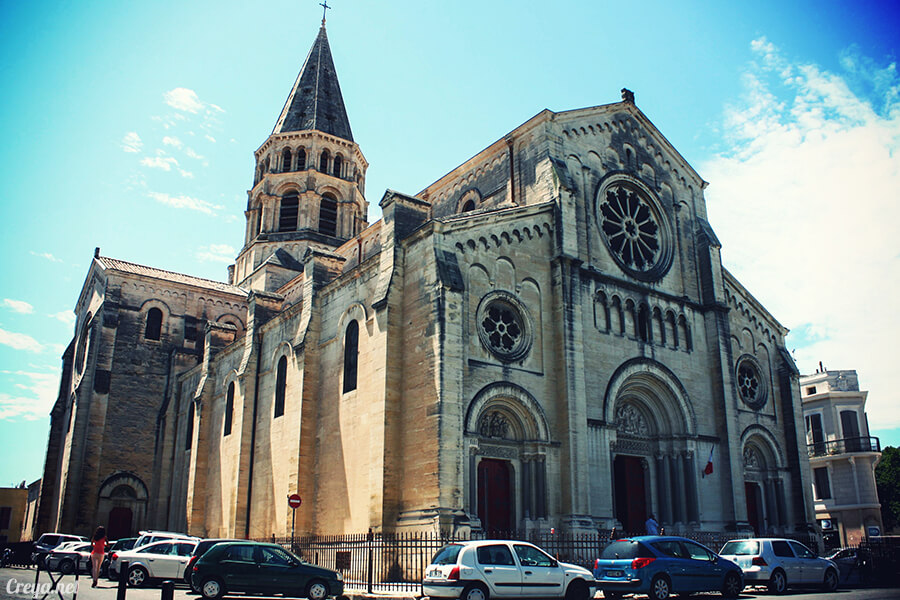
[ And just like that, it was back to all-you-can-see churches: the 19th-century Saint Paul Church, L’église Saint-Paul de Nimes. ]
Wandering into the heart of the old town, I found the fashionable Carré d’Art facing a first-century rectangular Roman temple that has since become a museum. It is the only fully preserved temple in the Roman world. For a moment, I could not quite believe that the building before me was real. A temple I had only ever seen in history textbooks was suddenly standing right there, yet the surrounding buildings seemed to exist in an entirely different time and space. It looked a little lonely and especially conspicuous, justlike a model displayed inside a glass case. Thousands of years of history continually intersect with the 21st century here. Everything in Nimes fits together just right, yet it also left me thoroughly disoriented.。
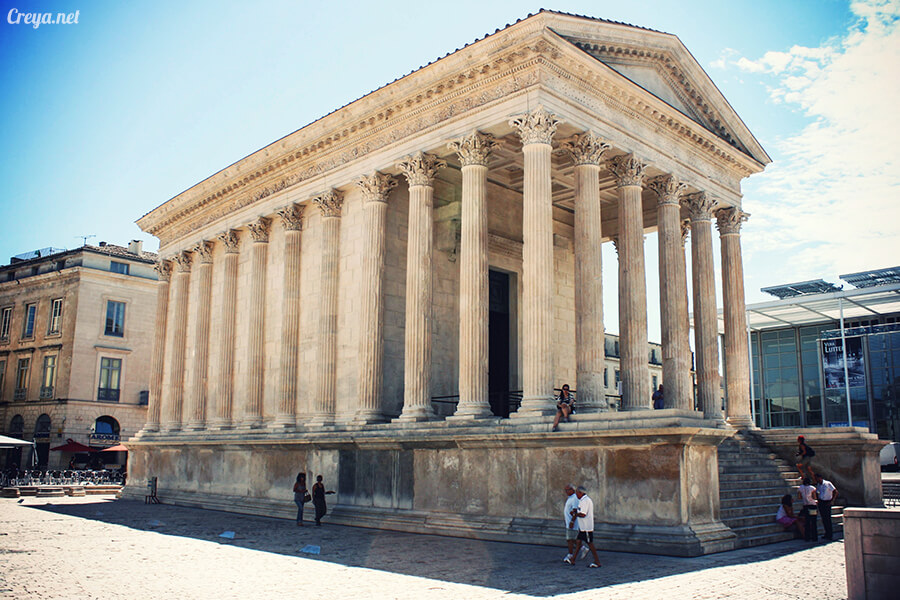
[ The first-century rectangular temple, la Maison Carrée, faces the 21st-century Carré d’Art museum behind it to the right. Inside, the temple has also become a dazzling museum filled with modern technology. ]
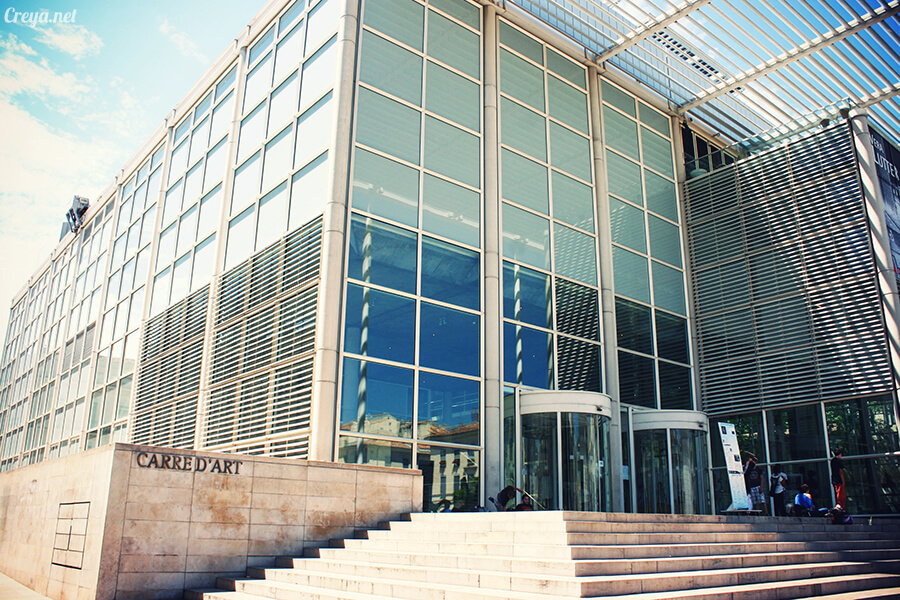
[ The glass-built Carré d’Art contemporary art museum snapped me straight back to the present. ]
My hour and a half in Nimes was far too rushed and hardly in-depth, but first impressions have a way of revealing your most instinctive, honest preferences.
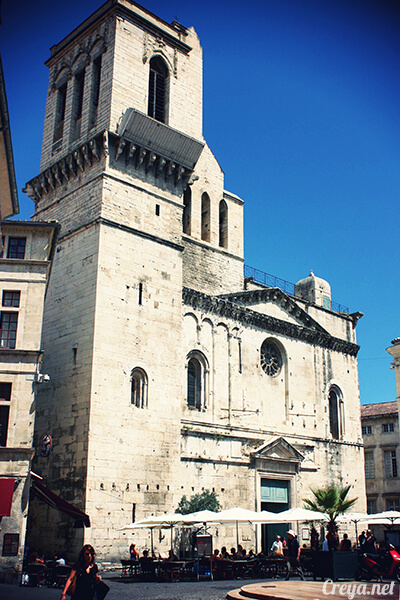
[ Nimes Cathedral—a solemn name that somehow sounds all wrong when Taiwanese people say it… ]
It was much like this85-day, 16-country Euro Legs journey. Although I never stayed long in any one town, these rapid overviews gave me a broad foundation of knowledge about many different towns and countries. Some places clicked with me within seconds of arrival and went straight onto the top of my revisit list. In others, the lovely people forged an unforgettable emotional bond with someone who was only passing through.
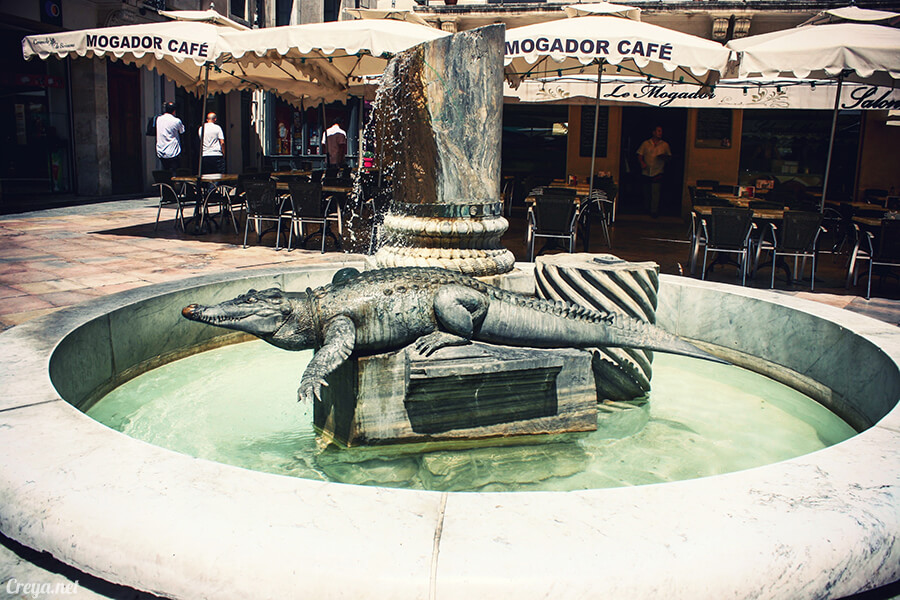
[ A crocodile fountain and palm tree in Place du Marché in the old town. This is the emblem of Nimes. It seems slightly at odds with warm southern France, but it actually comes from a story involving Augustus and Egypt. ]
Was Nimes the better one?
Perhaps becauseArlesstill occupied my heart, I shook my head. That was my answer. But perhaps you will spark a story of your own with Nimes and come away with an unforgettable impression.
✈ Travel date: 2012/7/6
| Follow My Euro Legs | 9 Days in France Series
● France: Not What You Expected?
● France Day 1 – What?! You Can’t Get By in English at Charles de Gaulle, France’s Largest International Airport?
● France Day 1 – The Palace of Versailles in Paris, France: Breaking Through the Blocked Historical Connections in My Head
● France Day 2 – Only After Getting Hopelessly Lost Can You Discover the Old-World Charm of the Palais Garnier in Paris
● France Day 2 – The Historic Road Between the Arc de Triomphe and the Champs-Élysées in Paris—and My Lamentable Ignorance of History
● France Day 3 – The Louvre in Paris: That Faint Smile Hidden Away in a Gilded House
● France Day 3 – My Own Impressions of Paris! Impressionist Masterpieces at the Musée de l’Orangerie and Musée d’Orsay
● France Day 4 – Mont Saint-Michel: So This Is Where the Hole in My Head Came From
● France Day 5 – Two Holy Sights in One Day: Two Sides of Paris at Sacré-Cœur and Notre-Dame
● France Days 1–5 – The Eiffel Tower: Five Views of Paris’s Magical Beacon
● France Day 6 – Avignon, the Ancient Provençal City Even More Beautiful at Sunset
● France Day 7 – A Carefree Stroll Through the Lavender Fields and Red Towns of Provence
● France Day 8 – Arles in Southern France: The Roman Empire Through My Eyes and Van Gogh’s Brush
● France Day 8 – Another Ancient Roman Town in Southern France: Is Old-Meets-New Nimes the Better One?
● France Day 9 – That Year, I Became Part of the Festival d’Avignon…
| Follow My Euro Legs | 85 Days, 16 Countries Across EuropeFull List of More Articles


