

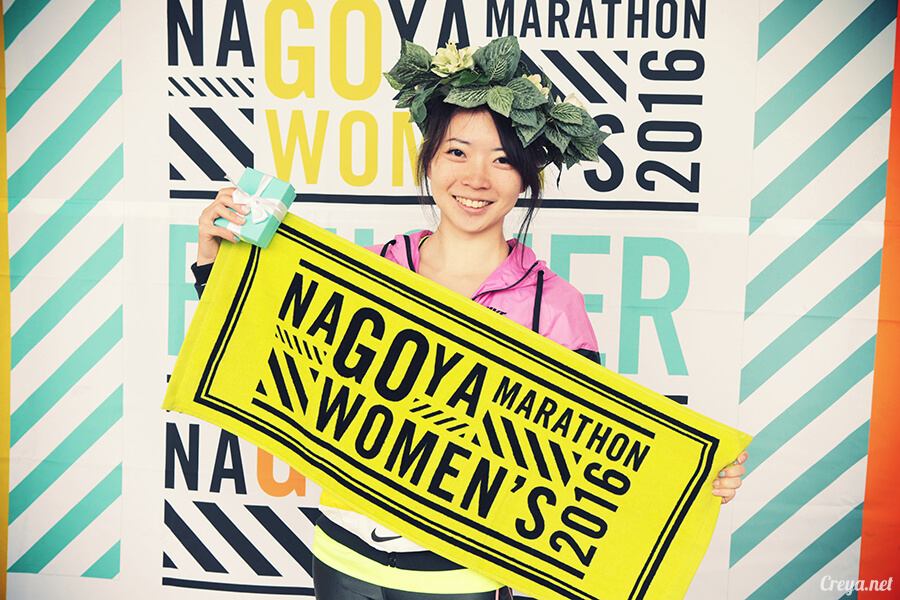
I ran across the finish line with a smile.
In the hours before I reached Nagoya Dome, I played out countless versions of that finish-line moment in my head. After all, this was my first full marathon, and over 42.195 km, I had plenty of time.
I thought I would crouch down and burst into tears, but I didn’t;
I thought I would tilt my head back and blow a kiss to the sky like the photos on the Nike Running website, but I didn’t do that either (because I forgot);
I thought some Japanese girls might rush over and give me a huge hug, but nobody had time for me;
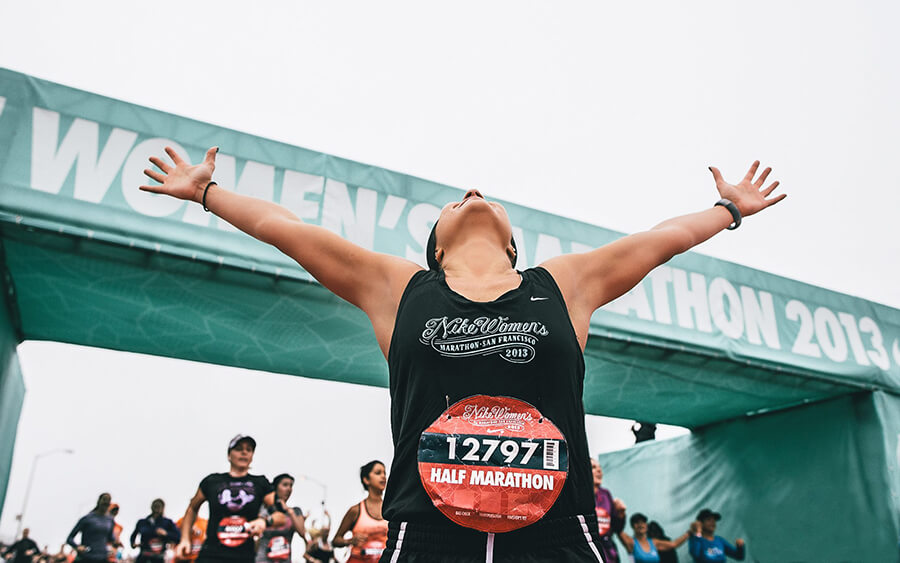
[ I’m entrusting my unrealized dream finish-line pose to you—here, take it. ](Image from the official Nike website)
I might have dragged my feet toward an endlessly distant finish line, limping in pain, because I had started the race with an injured leg, and every step hurt;
I even wondered whether I might not make it to the finish line at all…
But what I never imagined was that, after my legs had kept moving for more than four hours, I would still be smiling, happily accelerating across the finish line and using up every last bit of strength I had.
At the starting line, I didn’t even know why I was standing there. Flustered, lost, and afraid, I felt as though time had simply kept pushing me forward until I had no choice but to face this moment.
And so, since time immemorial,there has been a classic saying: “That’s ginseng for you~”—a pun on “That’s life.” It can’t be predicted, always catches us by surprise, and even likes to play jokes on us. But we can choose to enjoy the process and greet everything—the good and bad, joy and pain, passion and obstacles—with a smile.
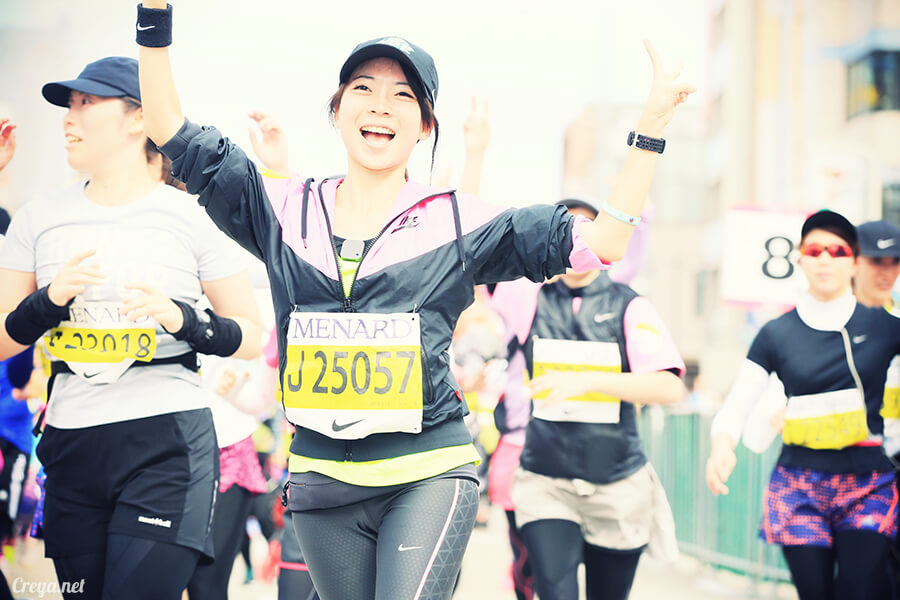
[ Finding the camera during a road race is another way to enjoy the journey. (Looking at the wrong one, aren’t I? Hehe.) ]
I’m not Xiaosheng. I write only occasionally, usually miss my deadlines, and waste precious minutes of your life.Before we begin, let’s listen to a song!(What? You thought we started ages ago? The best part is only just beginning!)
→ https://listenonrepeat.com/watch/?v=xFrGuyw1V8s#Abba_-_Dancing_Queen
(Don’t worry: clicking it will open a new window, and the song will keep playing on repeat. Leave it there while you finish this article. By the end, you’ll understand why.)
Nagoya Dome is the finish of the Nagoya Women’s Marathon, as well as the shopping area for merchandise and sponsor booths. For the three days before the official race, runners can enter during EXPO packet pickup and shop their hearts out to boost Japan’s GDP. It also gave me my first glimpse of the finish arch—in case I didn’t make it back on race day and never even found out what it looked like.
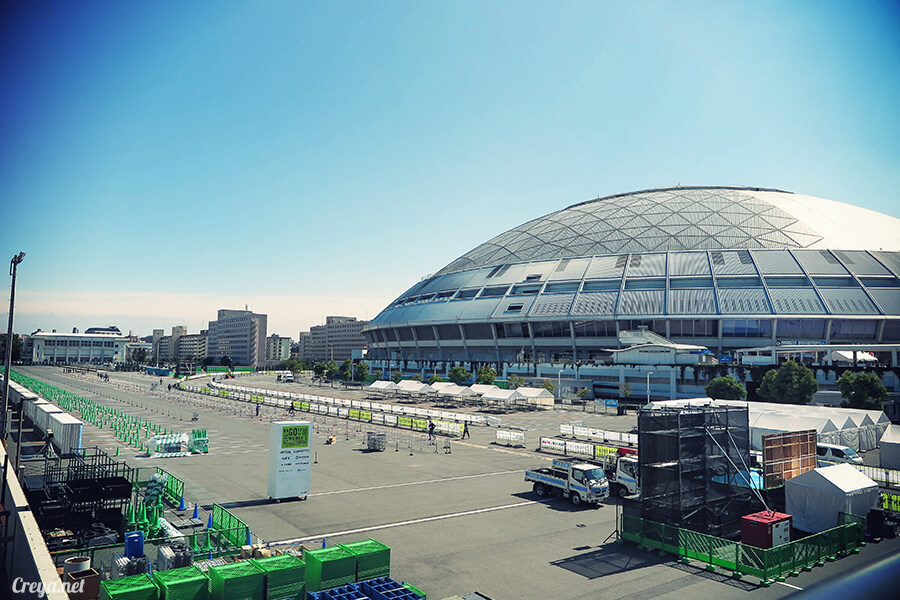
[ You don’t need to be a superstar holding a concert to take over Nagoya Dome. ]
I stood before the finish line for a long time, then climbed into the stands, still unable to take my eyes off it. The tangle of emotions was difficult to put into words. Traveling and running alone in Japan suddenly felt lonely, with nowhere for those feelings to go. Perhaps it would have helped to have someone beside me saying,“Oh my God! I’m so nervous. Are we really going to run this? Are we insane? Why on earth did we come?”Whether someone else said what was in my heart or I said it myself, either would have made me feel a little better.
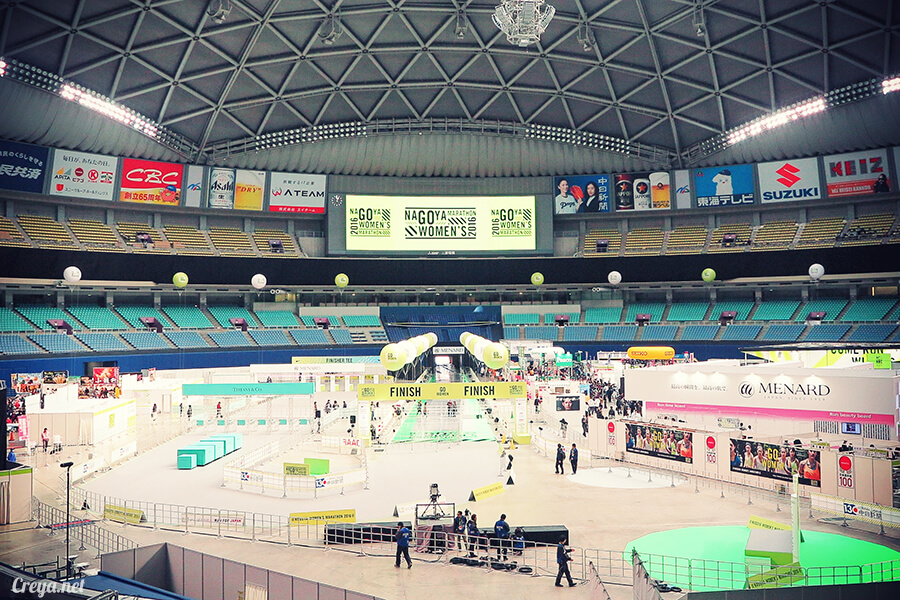
[ That day, this was the shared goal of all us girls. ]
That arch marked the end of my journey, the end of my eleven-day trip through Japan’s Hokuriku region, the ultimate goal of my full-marathon training, and the end of a chapter in my life. I had been running for three years and completed four half marathons—though I fainted in one and finished another weak after vomiting before the race. I had spent six months followingCoach Edison’sfull-marathon training plan—sometimes rather loosely—for six months.I seemed to have prepared for ages and trained thoroughly, yet somehow I still didn’t feel ready. I wasn’t sure whether it was mental, physical, or both.。
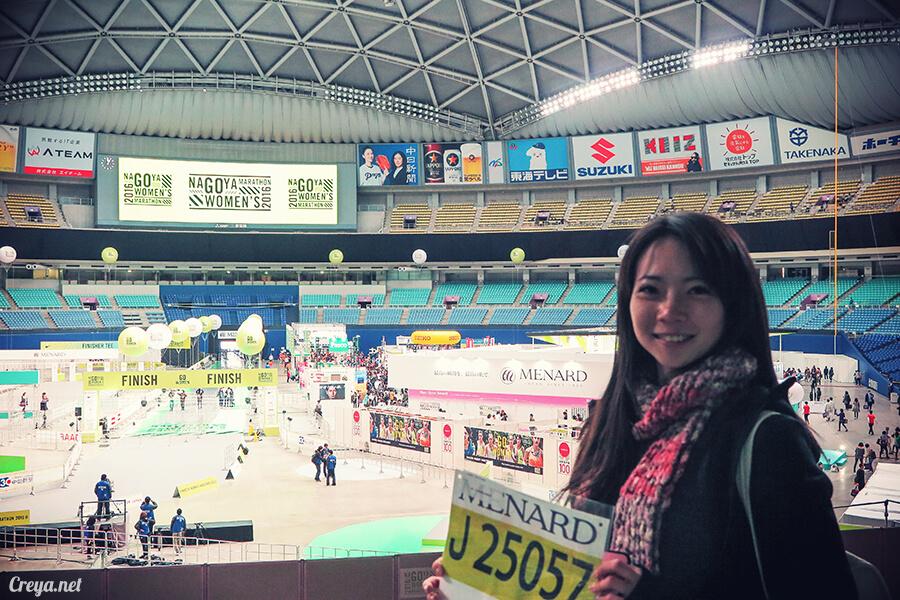
[ First, a photo with it, in case we never met again on race day. (The elderly passerby focused entirely on the background and couldn’t have cared less about my existence.) ]
Could I really run all the way back? Surely I would finish, right?The Nagoya Women’s Marathon has a relatively generous seven-hour cutoff.Perhaps I could finish by walking briskly the whole way, but would I return after seven long hours of misery, or could I finish pain-free?
A year earlier, at Nike WE RUN TPE, I had been so desperate to finish the half marathon in under two hours that I forced myself to attempt it despite being in poor physical condition. Instead, I put myself in danger, ending the whole farce by fainting (→ Looking back at the blood, sweat, and tears—and eight hard-earned lessons). So for my first full marathon, I didn’t give myself a specific target time.I asked for only two things: “Don’t faint” and “finish pain-free.”。
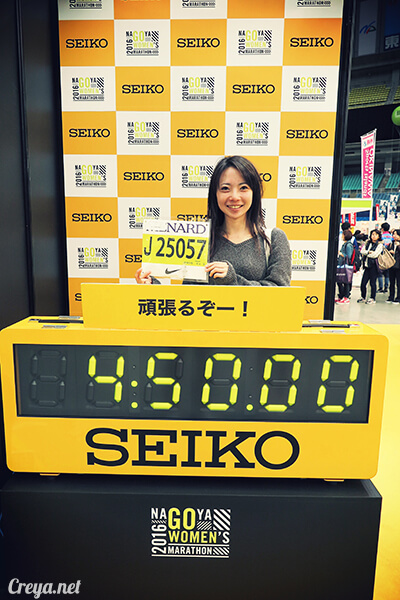
[ The photo stage at the EXPO. I still forced myself to pick a number that seemed achievable, though I wasn’t sure whether I was wildly overestimating myself. The moment I stepped onto the course, I forgot all about it. ]
Little did I know, every single step would hurt like hell!And it all began because I wore the wrong shoes and slipped in the snow inside Sweden’s Arctic Circle. Several hard falls onto my pelvis aggravated my existing scoliosis and compressed a nerve leading to my left leg. With my first full marathon approaching, I couldn’t stop training completely and properly rest. Even with a month of professional therapeutic massage from my dear mother alongside physical rehabilitation, there was only enough time to ease the pain slightly, not restore my former comfort.
Traveling around Japan for the ten days before the race made it even harder to continue rehabilitation. Even the onsen ryokan stay I had expected to be relaxing and restorative seemed to make the pain worse.
The injury in my left leg, which hurt even during ordinary walking,left me increasingly doubtful about the long 42 km ahead. It was a distance I had never reached, an unknown journey that drove me to question myself: Was I giving myself too much credit? Why did I think I could finish when the farthest I had ever run before the race was only 26.5 km?
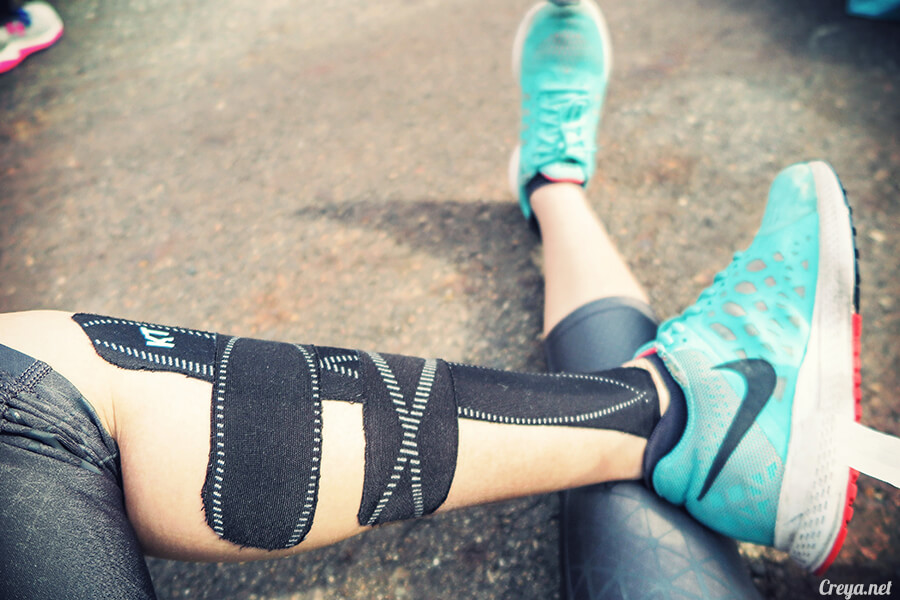
[ At the kinesiology-tape booth in the EXPO before the race, I wrapped an extra layer of skin around my leg and headed to the start like that. ]
Early on Sunday, March 13, 2016, tens of thousands of women gathered at Nagoya Dome, preparing to complete a full marathon.If we successfully completed 42.195 km within the seven-hour limit, we would receive that year’s limited-edition Tiffany & Co. necklace from a handsome man in a suit.。
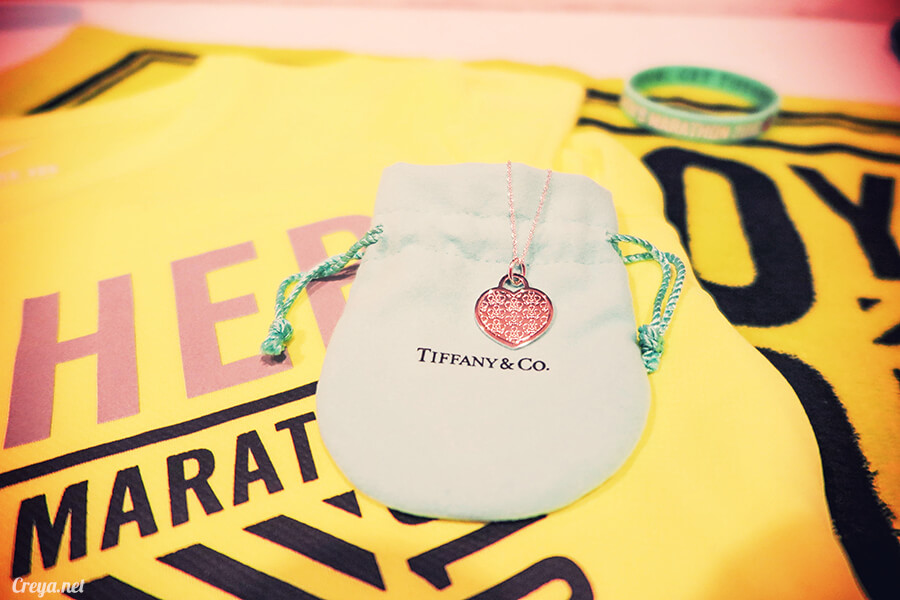
[ Yes! I was shallow enough to do it for her. ]
But when I woke up that morning, I had completely forgotten about the necklace. It had been one of the biggest attractions when I signed up,but once I stood on the course, it no longer mattered to me.
Before the start, fear outweighed anticipation. Dazed, I followed the crowd through bag drop and somehow arrived at my assigned starting block, J. I queued for the toilet for more than twenty minutes and, luckily, managed to empty my bowels just before the start, leaving me calm and ready to run.
I warmed up while staring blankly at the sea of people ahead.My body seemed ready, but my mind was not.。
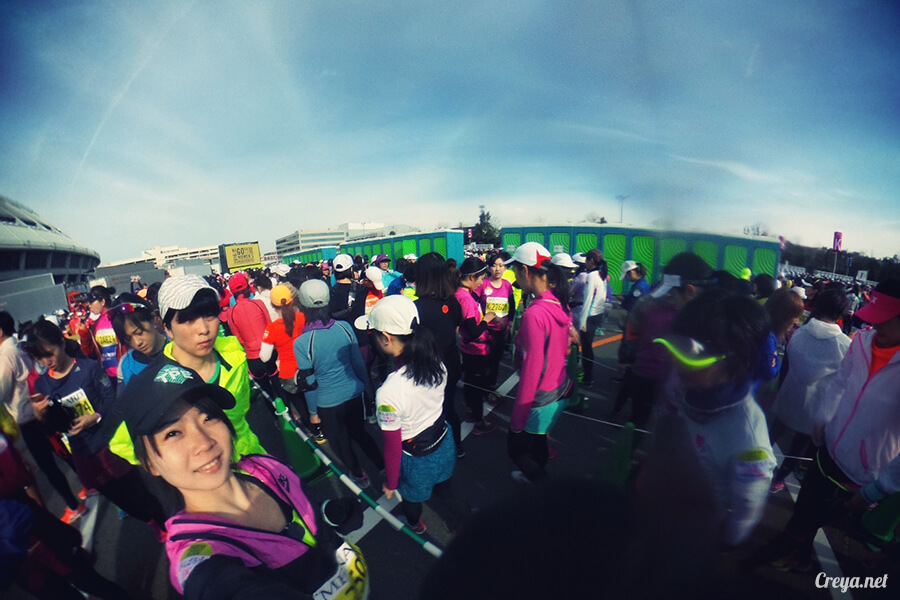
[ This was the only time I used the toilet throughout the entire race. (I genuinely wasn’t trying to take a photo with the girl behind me.) (Who are you?) ]
Suddenly,Coach Edison’swords came back to me:“It’s your first marathon. Enjoy what your body tells you with every kilometer!”Hey! That was it. This wasn’t a battle of numbers, and I had no basis—or need—to compare it with anything in the past. It was an ordeal, but not an exam or a test. It was a personal challenge, and every kilometer I completed on this course would be a breakthrough.
No matter how far I ran or how long it took me to finish,what my body told me through every kilometer forward would be the most fascinating part of this journey.Some of it might be joyful, bringing a sense of achievement from all my effort, but some would certainly be difficult and painful. Who knew what might happen? Not knowing was precisely what made it exciting! The clouds of negativity suddenly lifted, and I began looking forward to what each kilometer would bring.
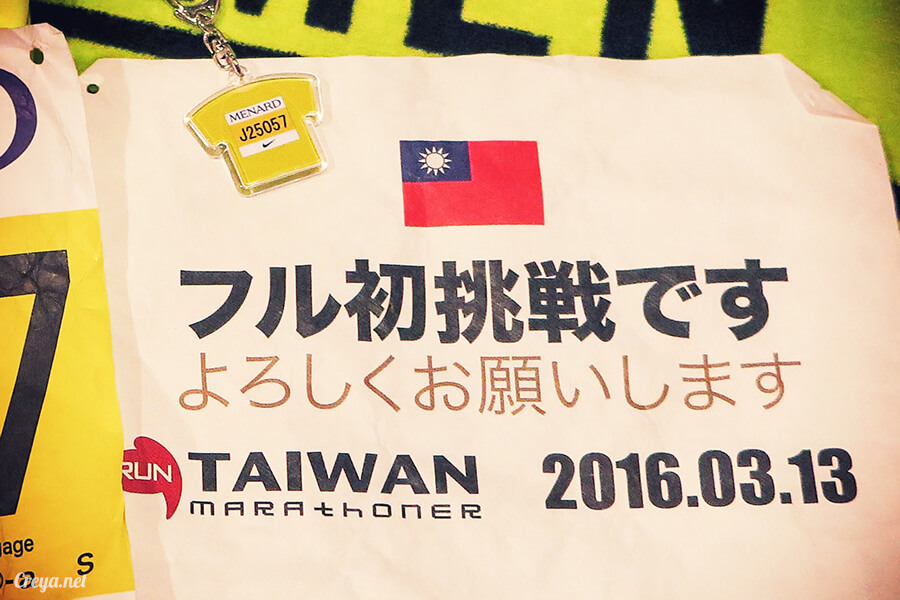
[ This first-marathon declaration was pinned to my back, custom-made for everyone by a helpful member of the Taiwanese Nagoya Women’s Marathon Facebook group. ]
At that moment, a Japanese girl gently tapped me on the shoulder from behind and said with a smile, “Good luck on your first marathon!”
I had a Japanese-language sign on my back saying this was my first marathon, made by a kind member of the Nagoya Facebook group. She had visited Taiwan several times and struck up a conversation with me. Her warm encouragement recharged me even more. Together, we greeted the starting signal and slowly moved forward through the starting arch. We memorized each other’s bib numbers, hoping to meet again at the finish, then set off on our separate journeys at our own pace.
A solo journey is never truly solitary. Everyone we meet along the way may cross paths with us and keep us company. Even if different paces gradually pull us apart, we have already left an unforgettable story in each other’s hearts—and perhaps someday, somewhere, we will meet again.
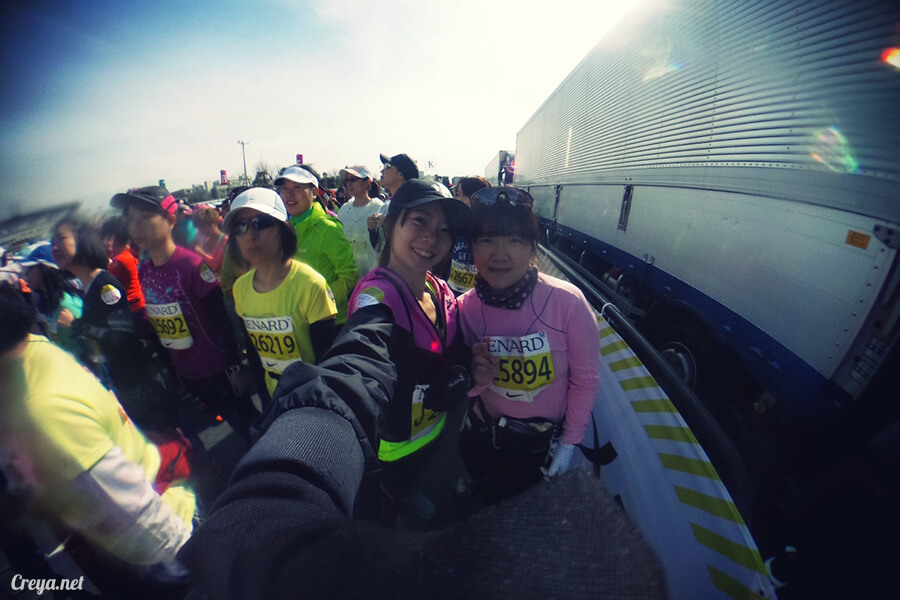
[ A fellow runner I met only briefly, who gave my journey such a warm beginning. ]
As with every road race,the first 5 kmwere somewhat crowded. Although the Nagoya Marathon assigns starting blocks according to each runner’s estimated finish time, those estimates were made six months earlier at registration. Some people may have miscalculated; others may have been injured. There were express trains constantly overtaking everyone, as well as local trains preparing to slow down and pull into the station shortly after departure.The greatest challenge in this section was maintaining my own pace without being influenced by other runners, while also squeezing through every available gap so I could run at the speed I wanted.
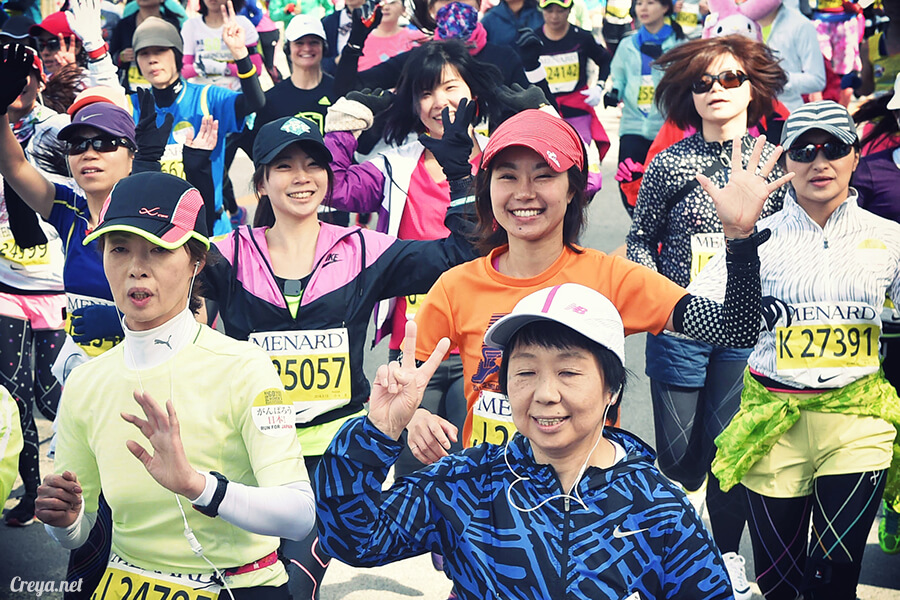
[ Running alongside so many Japanesewomen of every agereally is a privilege reserved for us girls. ]
One thing you never need to worry about at a race in Japan is hydration.On the Nagoya Women’s Marathon course, there was a refreshment station roughly every 5–6 km.In the past, however, I had never really understood how to hydrate properly. That was why I fainted from not drinking enough water at WE RUN TPE, then overcorrected on the Danda Forest Road by stopping for three minutes at every single station.
For this 42 km distance, I told myself to stop at every refreshment station. Even when I didn’t feel thirsty, I would drink at least a cup of water or sports drink.
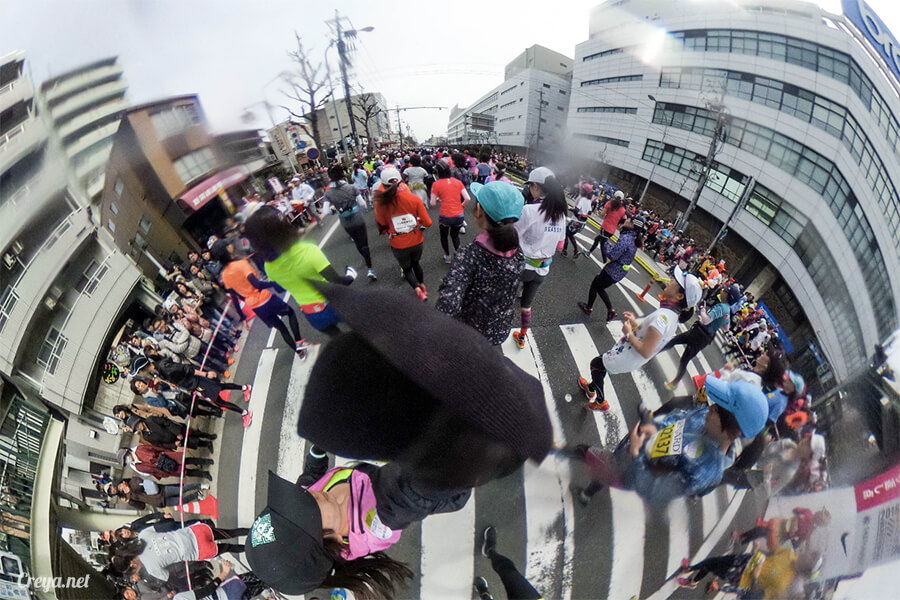
[ It felt wonderful to have so many people moving forward with me, but I also had to enter the water stations and grab supplies with this entire crowd. ]
I still hadn’t mastered the technique at the first water station. I rushed to grab water at the very first table, but the volunteers couldn’t prepare it quickly enough, so I actually stopped and waited for them to finish pouring. Then I immediately noticed that the following tables were overflowing with ready-filled cups and required no waiting. At that moment, I again rememberedCoach Edison’sreminder: “Get a firm grip on the cup before drinking so you don’t choke.” I saw a woman ahead pinch the rim of her paper cup into a point, allowing her to drink while running without spilling. I copied her excellent trick.
Every lesson learned from experience made the rest of the journey smoother.At every later water station, I knew I could wait until the third or fourth table before taking a cup, return to the course immediately so I didn’t block anyone, and pinch the rim into a point to sip slowly.I could slow my steps, but I absolutely would not stop.
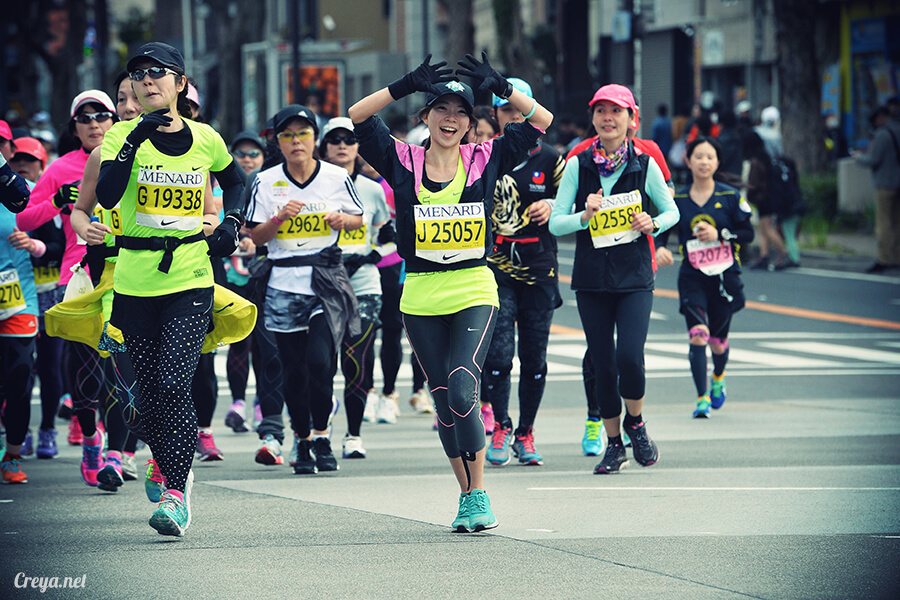
I watched the ponytails swaying on the women ahead, searched the crowd for Taiwanese runners, got distracted by elaborately dressed runners and cosplay costumes, and listened to the enthusiastic cheers and creative encouragement from spectators on both sides, taking in a road-running culture very different from Taiwan’s. All these fresh sights successfully distracted me from the kilometers and the pain in my leg, and before I knew it, I had smoothly reached 10 km.
[ The cheering crowds beside the course are the most moving sight at a Japanese marathon. Even if running isn’t your goal, you can still support someone else on theirs. ]
I had planned to eat one of the BCAA packets I carried every 10 km, and doing so could occupy a good portion of the following kilometer. (Running is actually a very busy activity.) There was the packet at 10 km, then an energy gel and yokan at 20 km. As I ate, I suddenly realized I had reached 21 km—a distance that always felt far away whenever I ran a half marathon. Yet this time I had completed it comfortably at a pace of around 6:30 per kilometer, and my legs were still moving!
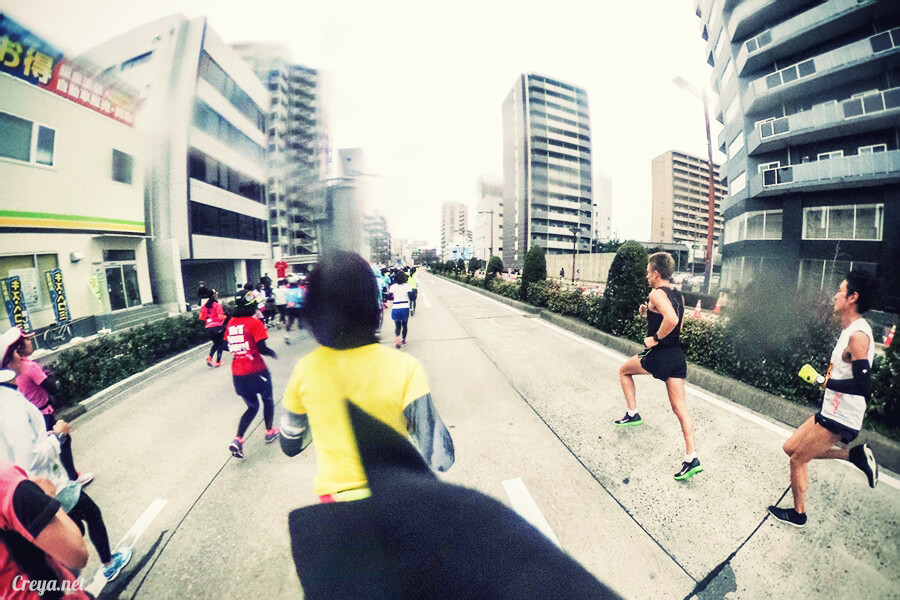
[ Just before the halfway point, male runners appeared on the course. They were in the city marathon held at the same place on the same day, though theirs was only a half marathon. The top one or two elite runners had already caught up with us! That’s just unfair~ ]
But the road is always full of temptations that mess with your head. When people brush past and overtake you, you unconsciously speed up to follow them. This was a test of patience. Each time I accelerated, an increasingly strange pain gradually spread through my left leg. So I quieted down and listened to what my body was telling me. A brief burst of speed might produce a short-term improvement in my time, but it could also push my body beyond what it could endure.
That was when I realized:“Everyone has a pace that suits them. Other people run faster because their abilities are different. All I need to do is complete the journey at the best pace I can manage. So what if I’m a little slower?”
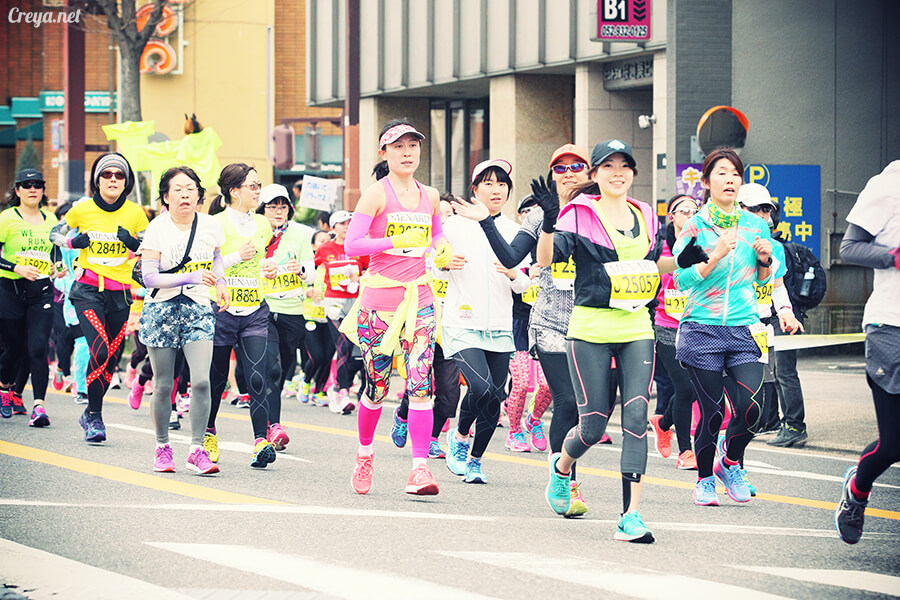
[ Moving forward with more than 19,000 women, each with her own pace but all sharing the same goal. ]
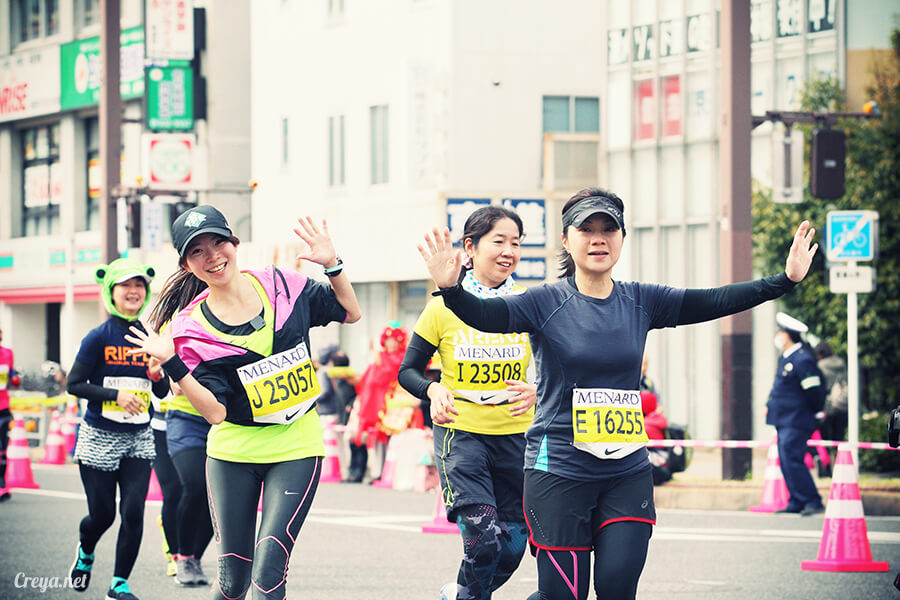
[ The fiercest competition on the course was probably the battle for camera time… ]
I restrained my impulse and kept talking to my left leg, promising that I would control my pace and not overload it. I also reminded myself:A marathon is a race that only begins in the second half. What I wanted to see was the view beyond 26.5 km, the part I had never experienced.
Then I stepped onto the timing mat at 30 km, a distance I had never reached before. I had surpassed my own limit, and every step my legs continued to take was pushing that limit farther.
I was so lucky, truly so lucky, to be standing in Nagoya, Japan, to be able to travel everywhere and run everywhere.These legs, capable of walking and running, had taken me to so many places.Thank you to my parents for giving me legs that could run and jump, and thank you for taking care of me. It sounded like a terribly old-fashioned award speech, but these were genuinely the thoughts running through my mind along the way.
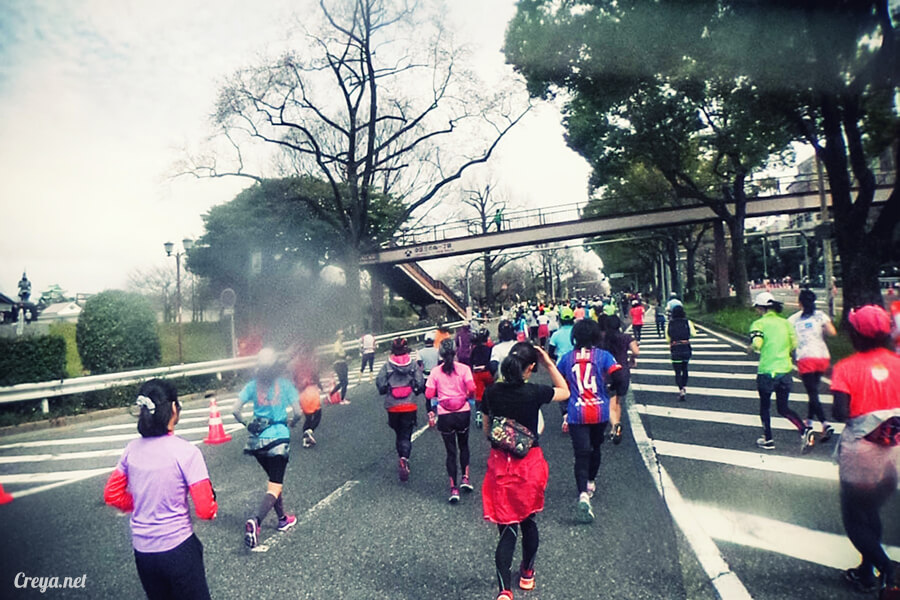
[ Traveling 42 km by full marathon gave me a complete tour of Nagoya’s cityscape. In the distance on the left is Nagoya Castle. ]
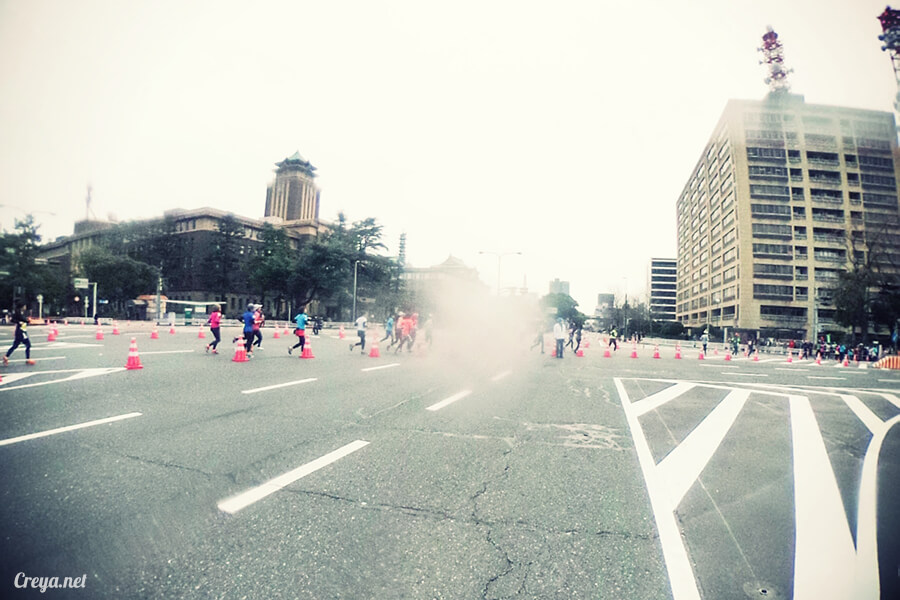
[ And here is City Hall. Nagoya isn’t particularly known for its downtown attractions, but it offers a comfortable running environment. ]
With 12 km remaining, I entered the stage where runners are famously prone to hitting the wall.I began picturing all those Monday evenings spent training withthe Rainbow Run running club.Every time we heardCoach Edisonannounce the day’s workout, we would groan in despair. Of course, there were also times when our bodies felt exhausted and powerless, butwith one another’s company, we always completed the sessions, time after time. Even though we ran at different speeds, we could always spot everyone working hard somewhere on the track, inspiring us to keep going.
And these 12 km were merely the distance I regularly completed at a steady pace withSister Hand-Chop.It was just like an ordinary training session. Of course I could finish it! I was running alone in Nagoya, Japan, yet at that moment it felt as though the entire running club was beside me. I followed their footsteps exactly as I did during our usual practices.
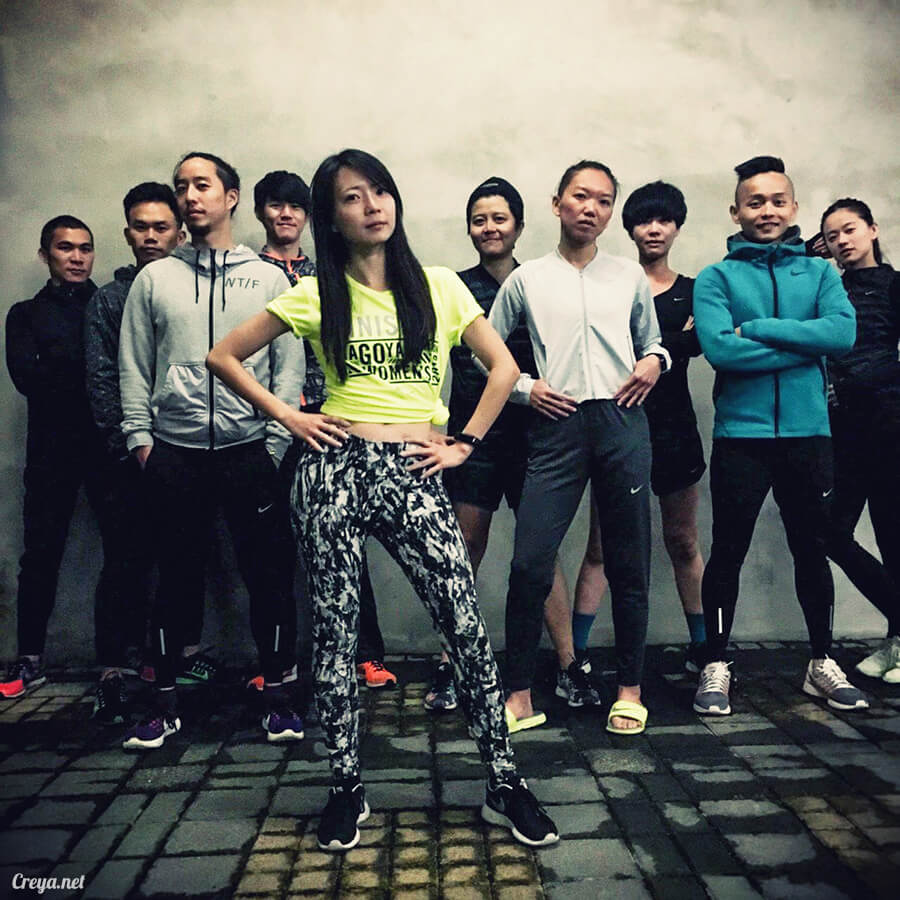
[ Thinking about our regular training runs and the friends I trained with gave me a powerful sense of companionship. ]
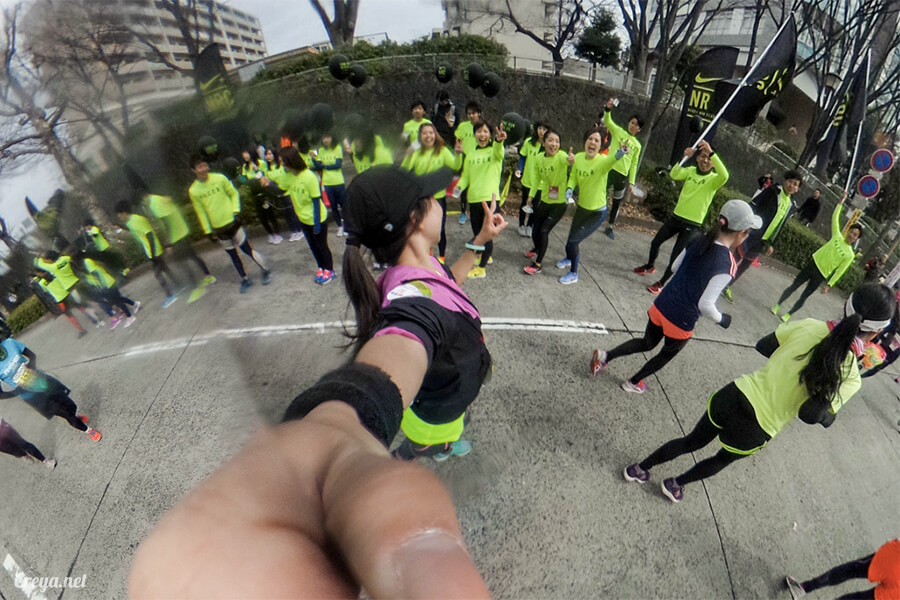
[ The Japanese pacers from NIKE+ RUNNING CLUB cheered enthusiastically. Nagoya doesn’t actually have an NRC; most of them had come all the way from Tokyo or Osaka specifically to support us. ]
My pace even increased to around 6:20 per kilometer, then to 6:10.Gradually accelerating in the second half waswhat Coach Edisoncalled the ideal pacing strategy.It was also what I hoped for myself, but never dared imagine—especially after my injury.
My body was gradually tiring, and the pain in my leg had never stopped. I didn’t know how much longer it could support me. More than once, I wondered whether I should stop briefly and walk, but as long as I could still run, I wouldn’t stop. I would run until I could run no more!
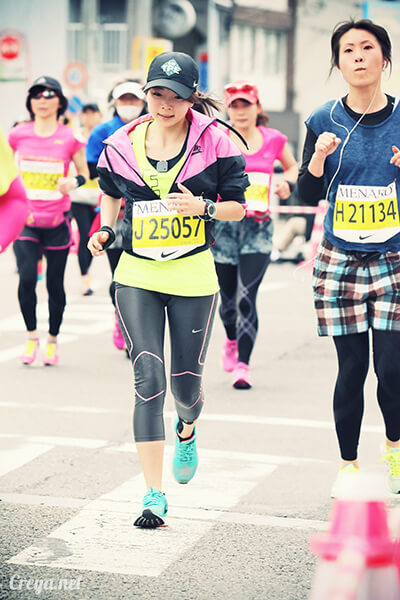
[ Throughout the course, I listened to the signals from my left leg, making tiny adjustments to my posture whenever necessary and finding the best way for us to coexist peacefully. ]
Only 5 km remained. Cries of “Ganbatte,” “last mile,” and “fight” never stopped along the way. Even though I couldn’t understand Japanese, I could feel these people giving everything they had to encourage the runners. All around me, runners kept moving forward one step at a time, refusing to give up even as they limped and their running form fell apart.
I also began shouting “Ganbatte!” at runners as I passed them. Whenever I saw a Taiwanese woman with Taiwan’s flag on her, I yelled, “We’re almost there! Keep going! Keep going!”I shouted to them, but it felt as though I was shouting to myself as well.。
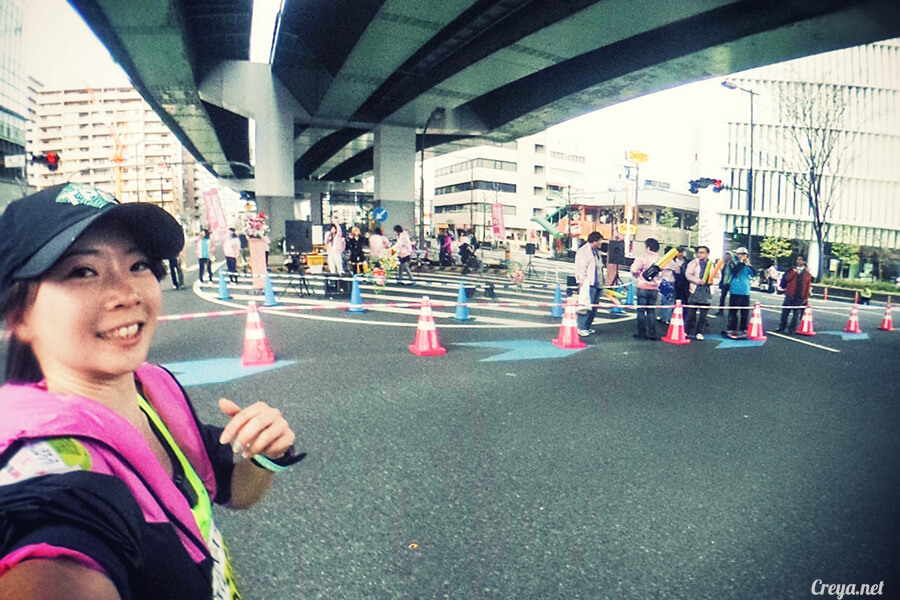
[ A band beneath the bridge cheered the runners on with music. Hearing the beat made my weary stride lengthen once again. ]
The Dome began to appear ahead. I couldn’t stop myself from charging forward. My watch now showed a pace somewhere in the five-minute range. Somehow, I no longer felt tired, but I knew the smile on my face was growing wider and wider.I knew I could do it. I was about to do it!
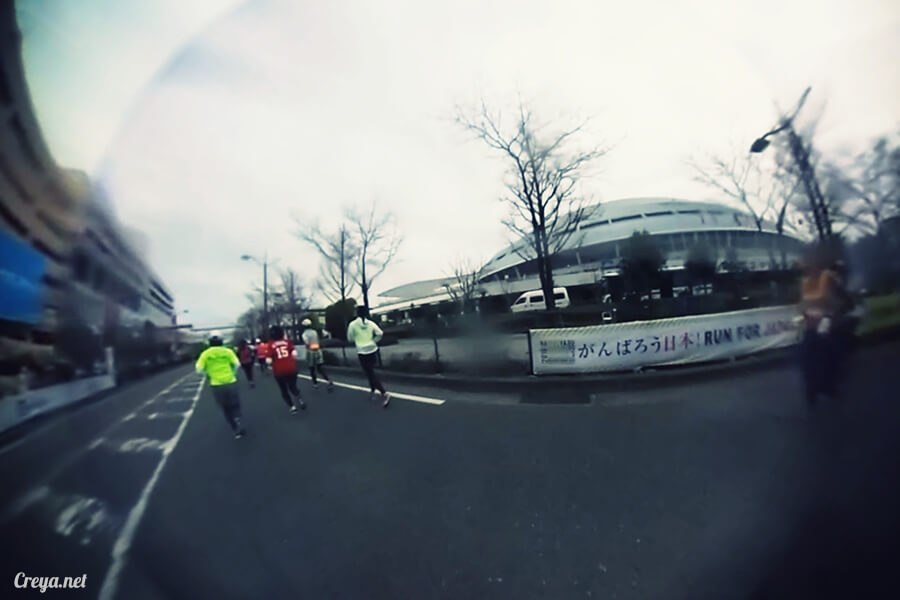
[ That’s the Dome! That’s the Dome! ]
Upbeat music drifted from the distance:
You can dance
You can jump
Having the time of your life
See that girl
Watch that scene
Dig in the dancing queen
ABBA’s “Dancing Queen.”The sound was coming from the finish inside the Dome. I followed the rhythm around the outside of Nagoya Dome, step by step, pursuing the source of the music. The singing grew closer and louder, and I moved nearer and nearer to the entrance.
Then I entered the Dome.It was as though the music were leading me down my own private runway as I crossed beneath the finish arch.
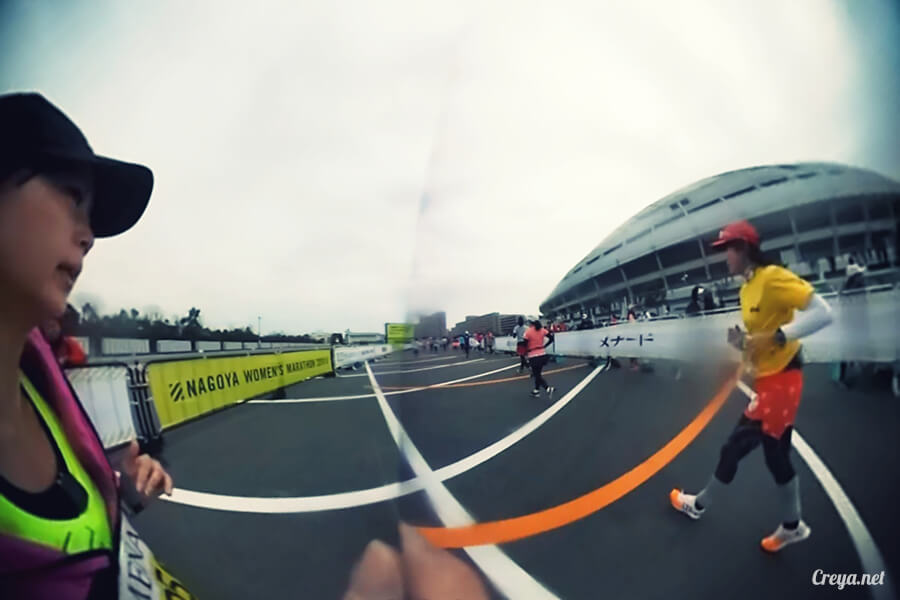
[ Even after you see the Dome, you still have to run around it for a while. ]
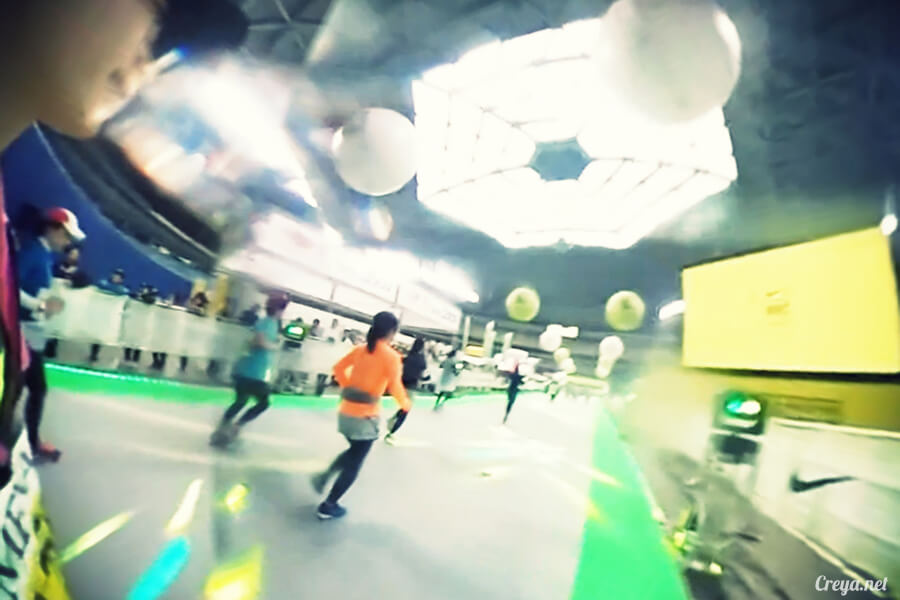
[ A frame captured from my video just before the finish. The violently shaking image from my all-out sprint somehow resembles the dreamlike view I saw through my own eyes. ]
I thought I would cry, but I didn’t.
I never imagined that I would charge toward the finish wearing such a huge smile, releasing the last of my strength and using every final scrap of willpower.
I was happy that I could still run, and proud of all my effort.The instant I reached the finish, the emotion inside me really did make me want to have a good cry, but my happiness far outweighed the urge to shed tears.
I was back! I had made it back to the finish! And I had returned happy the entire way. Truly—I never imagined I would enjoy this road race so much, my first 42 km journey.
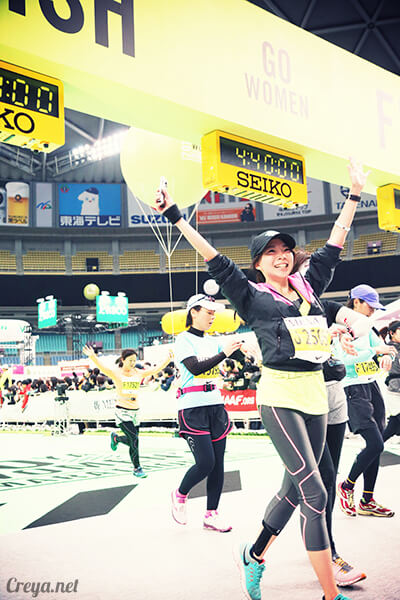
If you would like to run the final 1.195 km with me, first stop the “Dancing Queen” music, then play the 360-degree panoramic video below. You can join me virtually from the 41 km mark all the way to the finish. (Some computer and mobile browsers may not support it.)
Throughout these 42.195 km and 4 hours 27 minutes, every step hurt. If we are talking about “hitting the wall,” then the wall-like pain on the inside of my left leg had followed me from the very first step, constantly asking whether I wanted to stop and make myself more comfortable. My watch showed that I had taken about 52,000 steps, which meant I had felt pain 26,000 times—making every step of my first full marathon, the NAGOYA WOMEN’S MARATHON,something I felt with absolute clarity.。
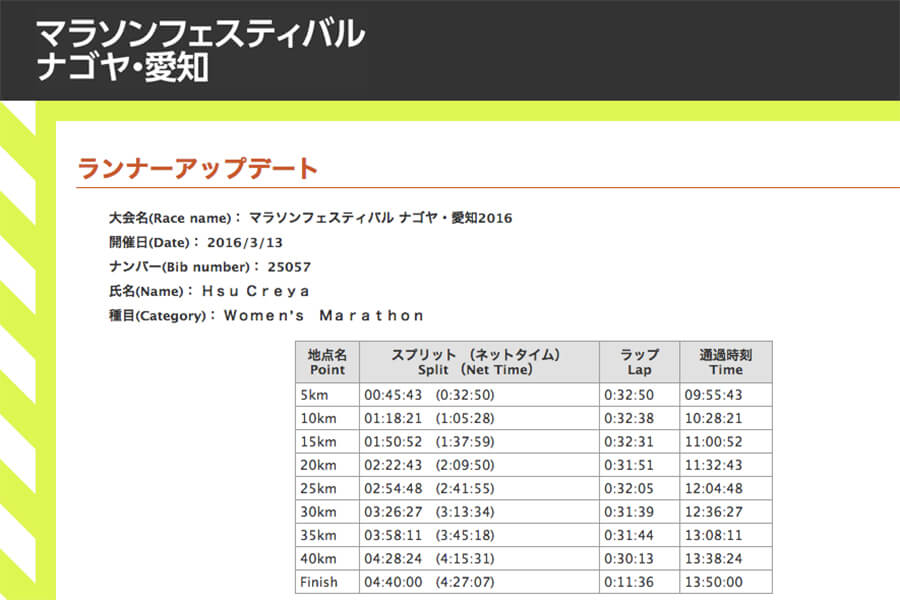
[ My official splits from my first full marathon. ]
Standing on that finish line marked the starting point of my next journey.
Only when I received my finisher’s necklace did I remember that the reward was the generous gift of a Tiffany necklace. Butit was no longer merely Tiffany. It was a necklace carrying the soul of a runner, and that gave it a unique meaning.。ABBA’s “Dancing Queen” was no longer merely an old song that had been popular before I was born. It had become the theme song of this important journey in my life.The opening bars alone were enough to give me goosebumps and send emotion surging through me.
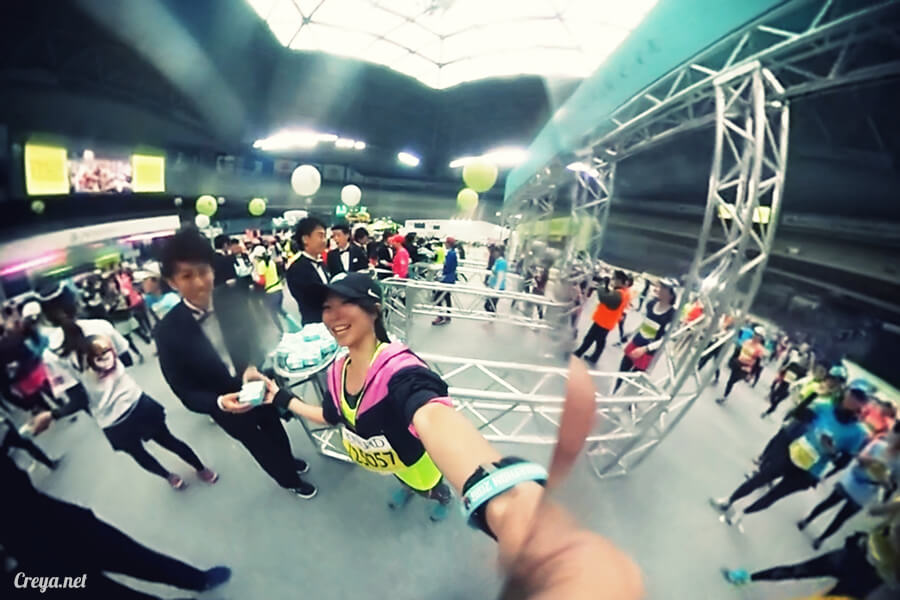
[ Receiving my Tiffany necklace from a young man in Nagoya, Japan—my first Tiffany. I didn’t need anyone else to get it for me; I ran there on my own two feet! ]
I shuffled around on legs that hurt even more after relaxing, yet I couldn’t bear to leave the venue.
I thought back to my confusion and self-doubt before the start, the nonstop cheers beside the course, and the support shared among the runners. After talking myself through one breakthrough after another, everything became clear. At last, I had returned to the finish, proud of all the effort I had made during this time.
When we face an unknown journey, it is perfectly normal to feel panic and fear. Precisely because we are afraid, we can see ourselves grow.
Once you take that first step, the obstacle is behind you. With every step forward, there is one less step of difficulty remaining.
The process will include hardship as well as joy. You may completely forget your original motivation, only to discover your own answer somewhere along the way.
My anxiety came from not believing in myself and feeling that I wasn’t ready.But there is never a moment when we are completely ready; we can only be more or less prepared. Everything we have done to prepare will reveal itself during the journey, but we can also keep learning along the way, adapt to each challenge, and overcome them one by one.
Whether running or traveling, every challenge will be difficult, but it will certainly be worth it.
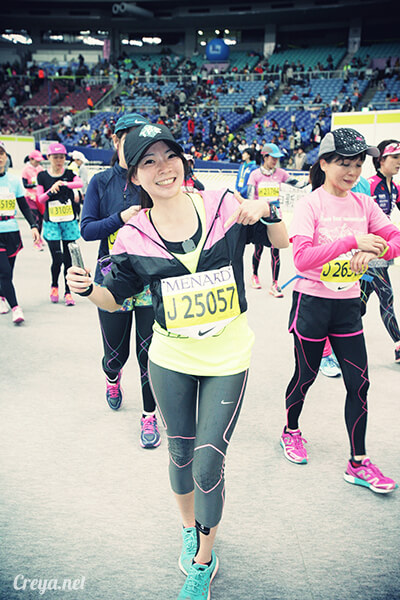
Back in the collection area, I unlocked my phone and found the running club’s group chat overflowing with live updates about my race.Rainbow RunThey truly had been running with me. I tried to find the Japanese girl I had met at the start. Although we never had the chance to embrace and congratulate each other, the memory was already in my heart.The road from 0 to 42 km may look long, but someone is always there beside you. Never underestimate what you might be capable of.
Olympic gold medalist Emil Zátopek once said, “If you want to run, run a mile. If you want to experience a different life, run a marathon.”
I have always felt that running is like a journey, while traveling is like an endurance race and a conversation with yourself. There are emotional twists and turns, but you always return with a wealth of experiences, and every view along the way becomes part of your life.
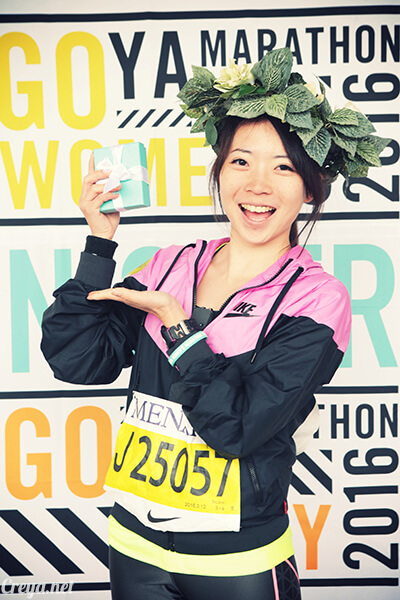
After the race, I returned to Taiwan intending to write down everything this journey had made me feel. But amid the rush before another trip abroad, I managed only a hasty first draft.Then I recently saw that registration had opened for the 2017 Nagoya Marathon—and that it would close on Monday, 9/19.That finally pushed me to sit down and properly organize my thoughts.
To my surprise, even after leaving it untouched for six months, my heart still surged with emotion. I listened to “Dancing Queen” over and over as I finished this article. (The website says it played 96 times.)
I don’t know whether you, having never personally taken part in this race, felt your emotions stirred while reading this article and listening to the song in your ears.
It’s fine if you didn’t, because you are meant to find your own theme song, run your own journey, and discover the switch that moves you whenever you think of it, hear it, see it, or smell it.
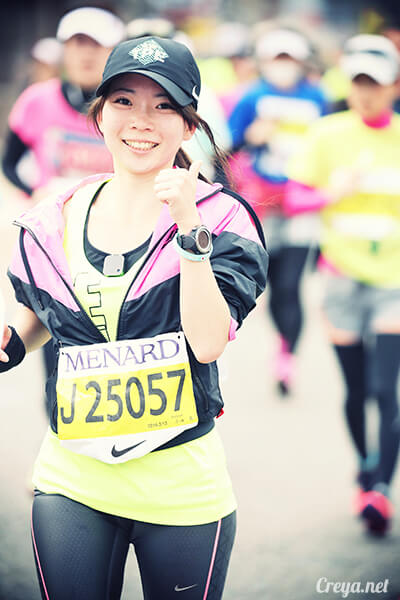
I’m not a diligent runner, nor am I particularly serious.
Even today, I’m still not sure whether I actually like running.
But I know I like who I am when I run—the version of me who experiences life with every ounce of her being.
Nagoya Women’s Marathon Information
→ See the official website for race information (Traditional Chinese version)
→ Registration information (English instructions)
→ 5 Reasons You Absolutely Must Run the Nagoya Women’s Marathon(Last year, I was commissioned by Sports Note to write that article. Somehow, I talked myself into wanting to run it~)
1. An excellent first marathon
The full marathon has a generous seven-hour time limit, and the course is flat and easy to run. Beginner runners have a very good chance of completing the entire distance—the completion rate reached 96.6% in 2015—making it ideal for a first marathon.
2. A women-only marathon
The course is almost entirely filled with women working toward the same goal. Everything, from the EXPO services to the finisher’s gifts, is tailored specifically for women. After the race, handsome men in tuxedos even welcome you at the finish and present you with your finisher’s towel and gift. It truly is a celebration made just for women.
3. An exclusive Tiffany finisher’s necklace
The Tiffany finisher’s necklace, specially designed and made for the Nagoya Marathon, is a dream item for many women. It is a memento earned through determination and your own two legs—something money simply cannot buy.
4. Enthusiastic cheering all along the course
The passionate spectators are among the most memorable parts of any Japanese marathon. People spontaneously come out to cheer enthusiastically for the runners, and the entire city joins in.
5. Nearby attractions worth visiting
Visit the World Heritage-listed gassho-style villages, Takayama Jinya, and Gujo Hachiman, then soak in a Hida Takayama hot spring to soothe body and mind. You’ll recharge inside and out and emerge as a brand-new person.
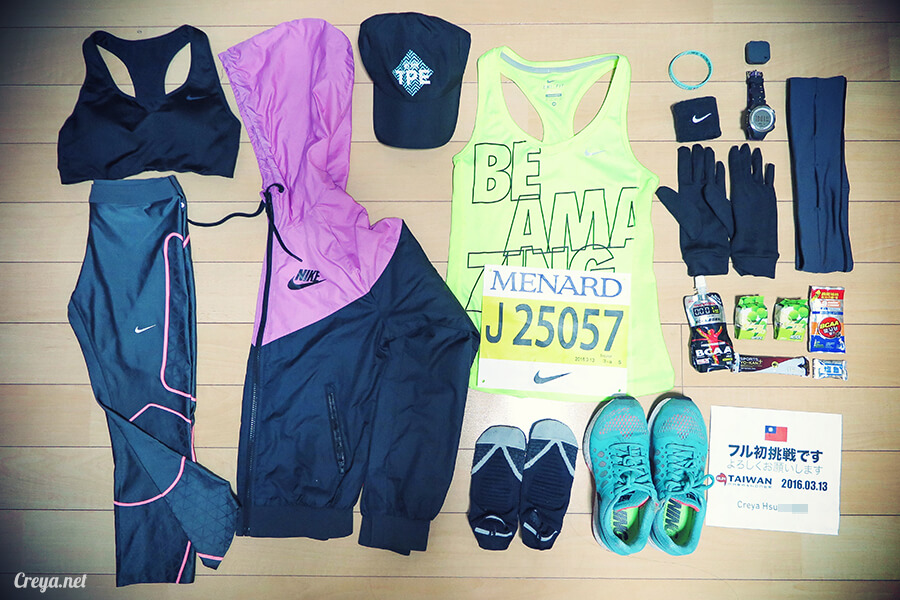
[ My complete running kit. ]
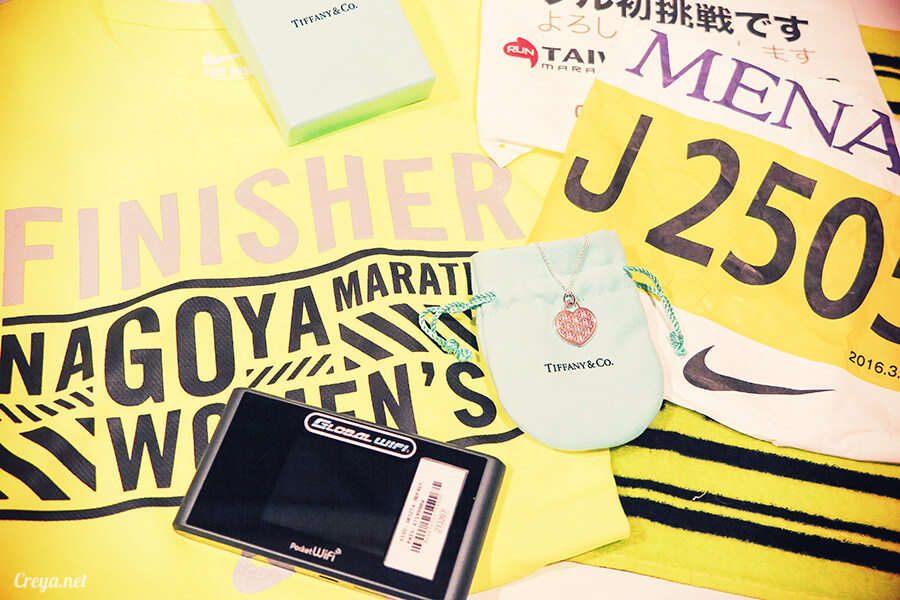
[ The gear that helped preserve wonderful memories of my first full marathon. Global WIFI let me contact my running club and friends in Taiwan immediately after finishing! ]
→ Simply click thisexclusive link to apply for Global Wifiand, whatever promotion is currently available, you’ll receive an additional 5% discount.


