


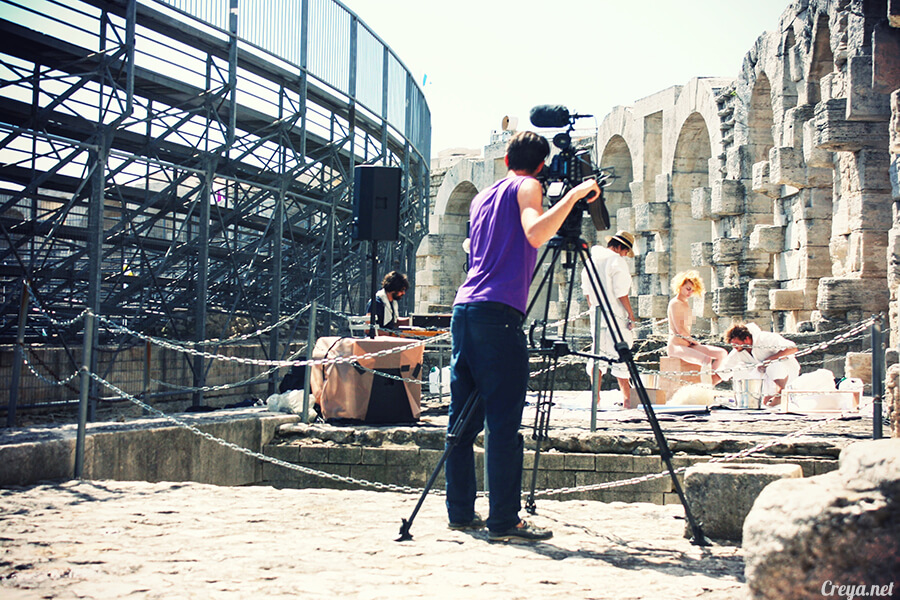
After drifting around for so long, the constant instability always made me crave a little steadiness. I like feeling as though I have a home wherever I go, even if only for a few days. Simply not having to pack everything up, lug around a thousand-ton suitcase, then dump it all out again in the same day is its own kind of blissful stability—though I still somehow end up dumping everything out every night.So I made Avignon my base for exploring southern France, heading off in a different direction each day.
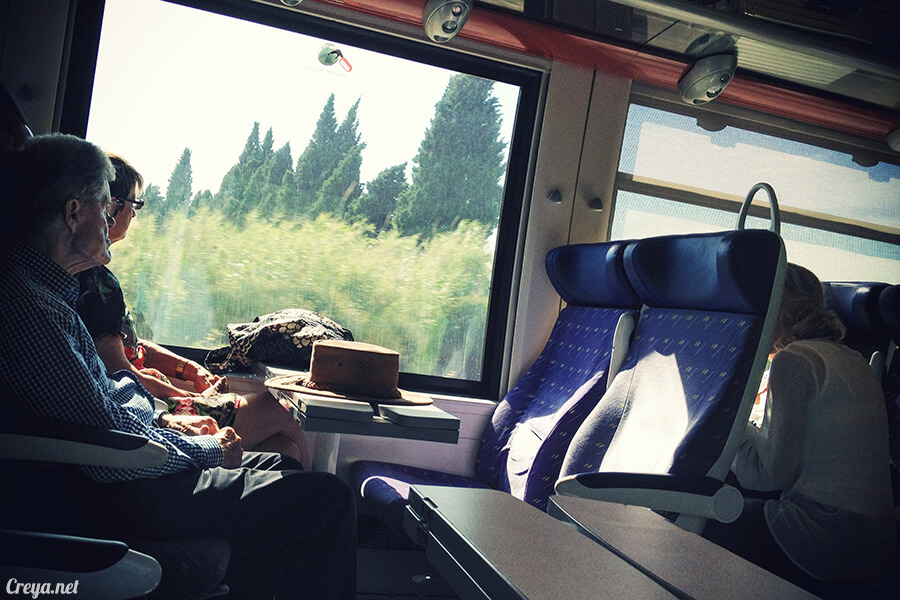
Armed with my French rail pass, I hopped aboard another train and travelled twenty minutes from Avignon toArles, a town dating back to the Roman Empire. What usually draws the world’s attention to Arles, however, is its appearance in several of Van Gogh’s paintings.
But to tell you the truth, what first drew me to Arles was the chance to see the real-life setting of Van Gogh’s Café Terrace at Night. I wanted to step inside the painting, the way film fans make pilgrimages to shooting locations. After all, for someone with little artistic sophistication who can barely remember any artists, Van Gogh is one of the rare few I can count on one hand.

Yet after exploring Arles,it was the remarkably well-preserved Roman arena that left the deepest impression on me. Arles was such a charming, relaxing little town, brimming with art and culture, that I could hardly bear to leave. If the thrifty auntie inside me hadn’t suddenly piped up—“You need to take more trains to get your money’s worth from that rail pass”—I might never have dragged myself away to visit Nimes. Otherwise, I genuinely would have spent the entire day here.
Which just goes to show:plans can never keep up with changes of heart. One of the gifts of travel is that broadening your horizons allows you to personally overturn the fixed impressions created by your once-limited tastes.。
The charming little town of Arles was once occupied and colonised by Celtic tribes and the Greeks. It did not begin entering its golden age until Julius Caesar entrusted it to one of his generals. Arles has also endured destruction and reconstruction, butstories that rise to a climax and then begin again are always the most compelling. Arles carries dazzling stories, the composure born of experience, a breath of freshness, and the resilience to emerge stronger and keep moving forward. It seemed to remind me that this journey I had taken after the upheaval in my love life would eventually become nourishment, giving me even greater strength.
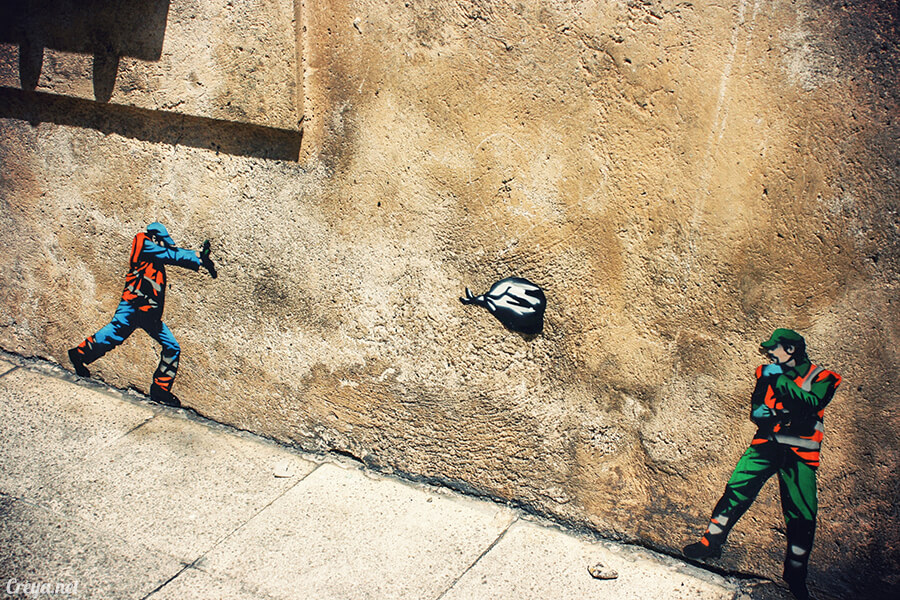
[ Even the corner of a wall held a surprise: a rubbish-bin version of Hou-liu-ken ]
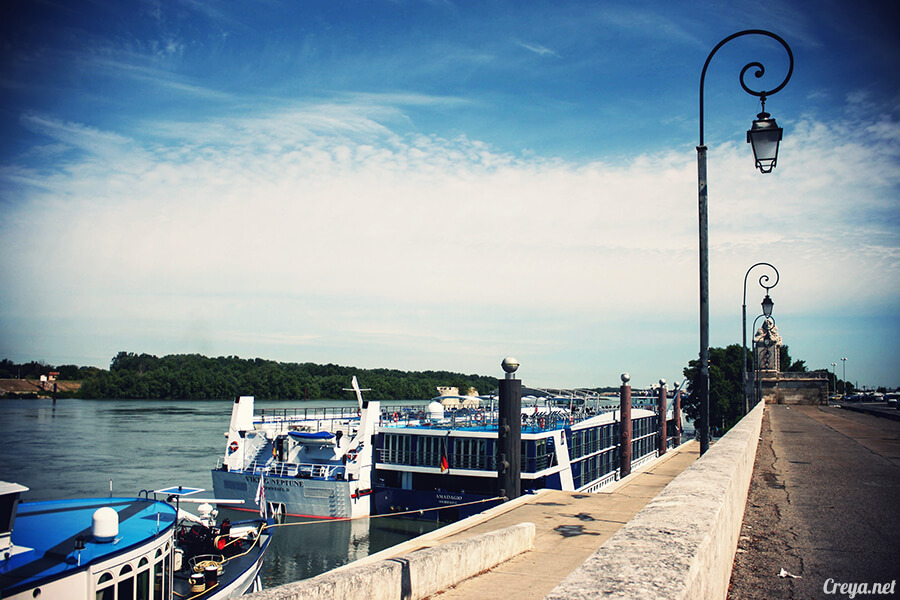
Walking from the station towards the town of Arles, I once again encountered the Rhône, which had followed me from Avignon. The train was like a time machine, carrying me away from the fourteenth-centurypapal city of Avignonand downstream along the Rhône to Roman-era Arles.
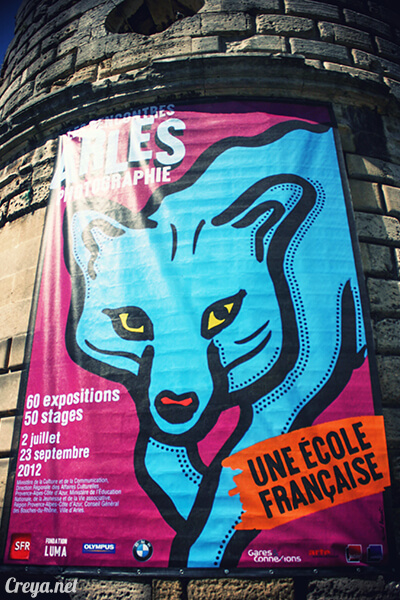
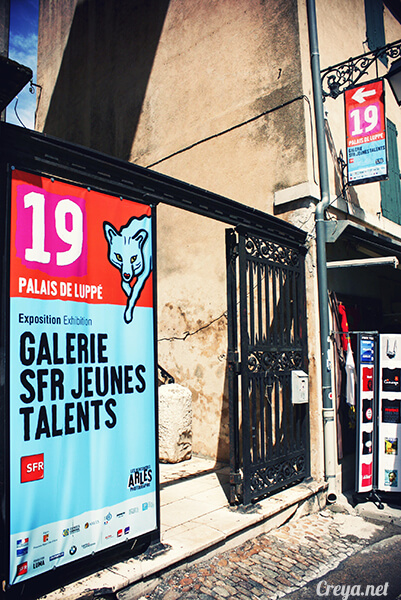
[ A huge photography exhibition poster in a contemporary design style hung above the city gate ]
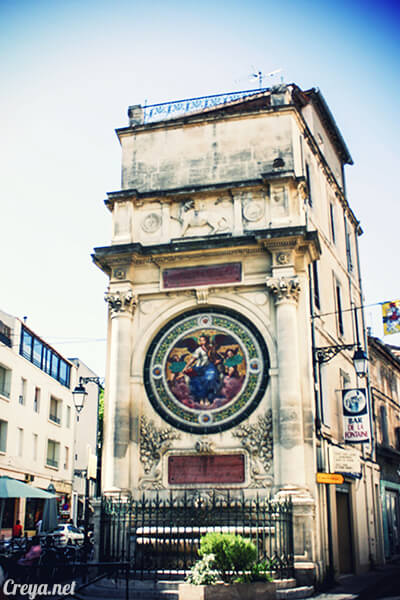
[ A mosaic on the clock tower by the city gate—the whole town was already overflowing with art, wasn’t it? ]
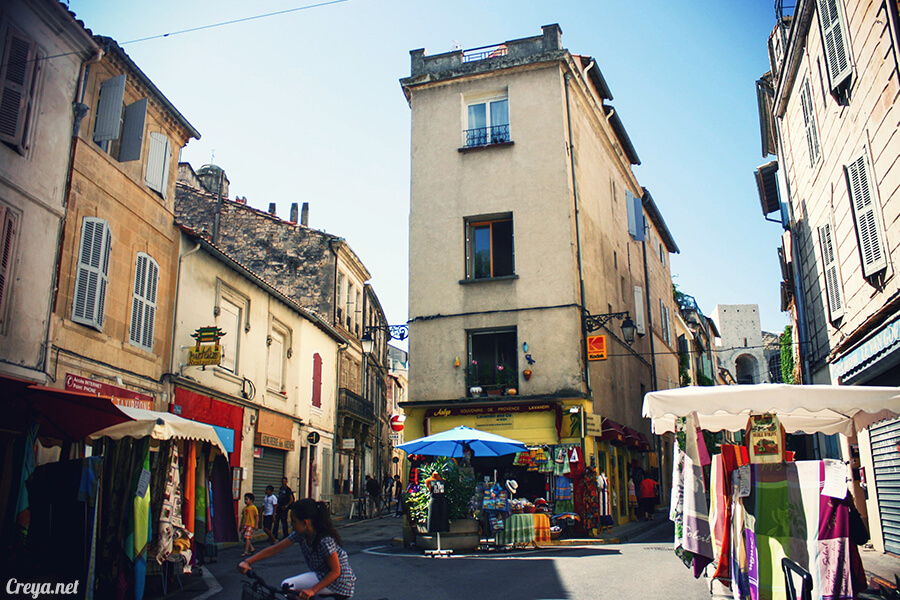
[ Most of the houses in Arles’ old town today were built during the seventeenth and eighteenth centuries ]
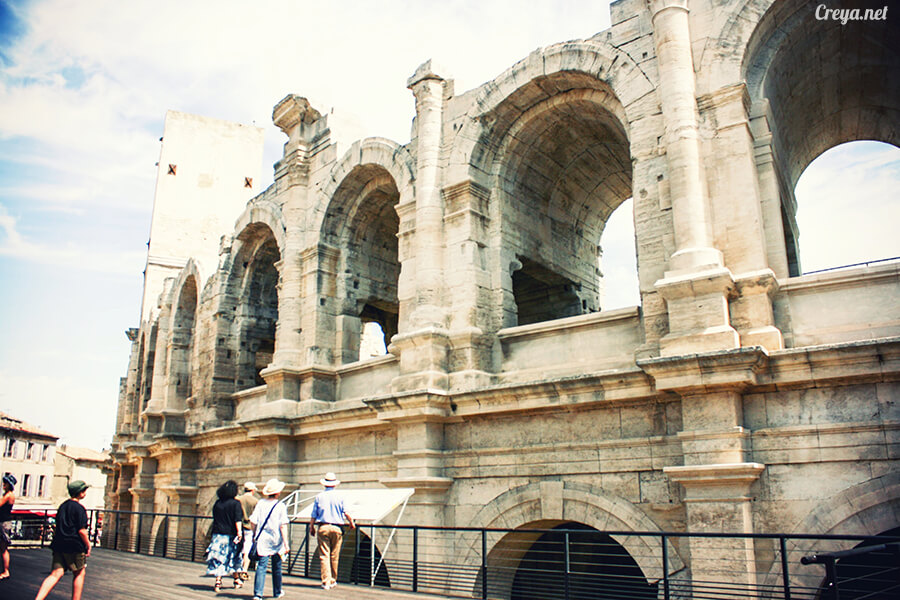
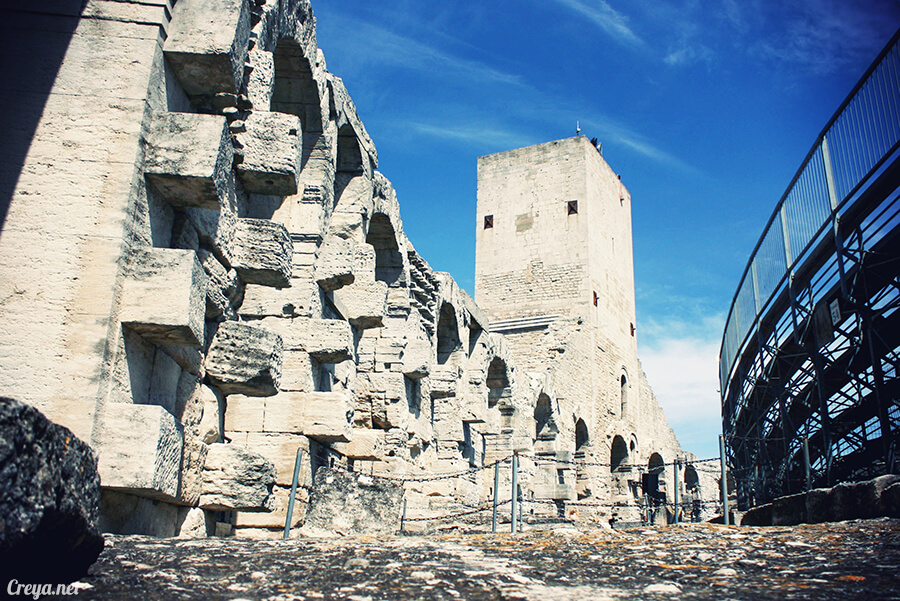
Arles is small and exquisite, with every attraction close at hand. After passing through the city gate and strolling along the narrow shopping streets, I seemed to cross space and time effortlessly and arrive at the ancient Roman amphitheatre. Unfortunately, the Arles Arena was playing coy, with more than half of it concealed behind renovations. But that is hardly unusual when travelling in Europe. These buildings are venerable old-timers, after all; they need to check in for regular maintenance and a little cosmetic work if they want to keep facing the public for centuries to come.
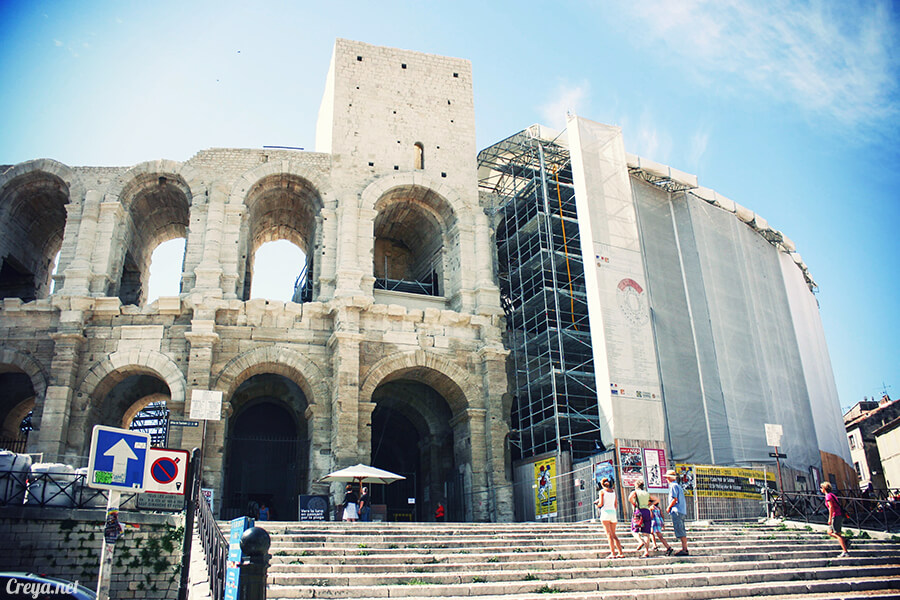
Whenever Julius Caesar developed conquered territory, he liked to copy and paste the important buildings of Rome into it.The Arles Arena is essentially a smaller version of the Colosseum in Rome, but unlike the Colosseum, this miniature dome in Arles still hosts bullfights today. During summer, it is also used for plays and concerts.
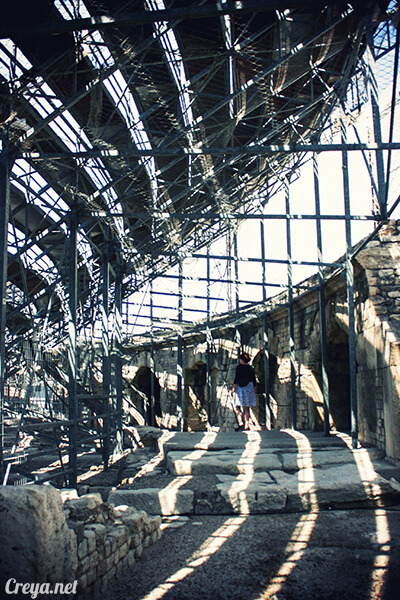
[ The light and shadows inside the arena were so mesmerising that even someone whose camera skills are broken could take good photos here—and I absolutely refuse to admit that it was my hands, not the camera, that were broken ]
The Arles Arena is not large, yet being surrounded by its stone tiers and arches is intensely powerful. Every tiny sound is amplified here: a family’s conversation at the far end, the workers talking in the square. Even though I could not understand them, it felt as though they were speaking to me, surrounding this solo traveller with the company of many people. Though if I had understood them, perhaps I could have picked up some juicy gossip too.
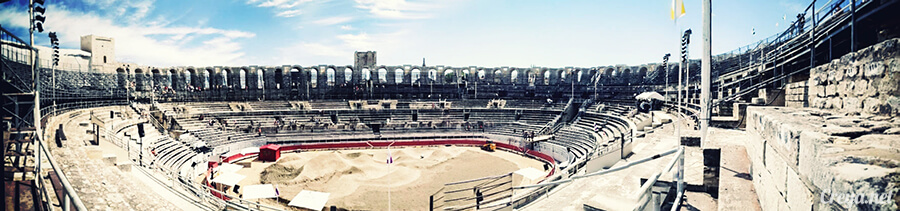
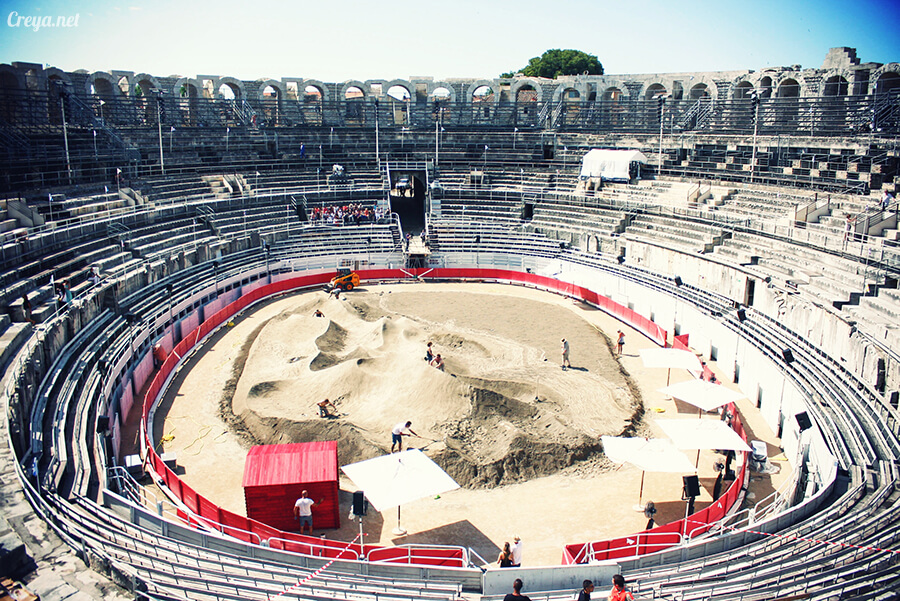
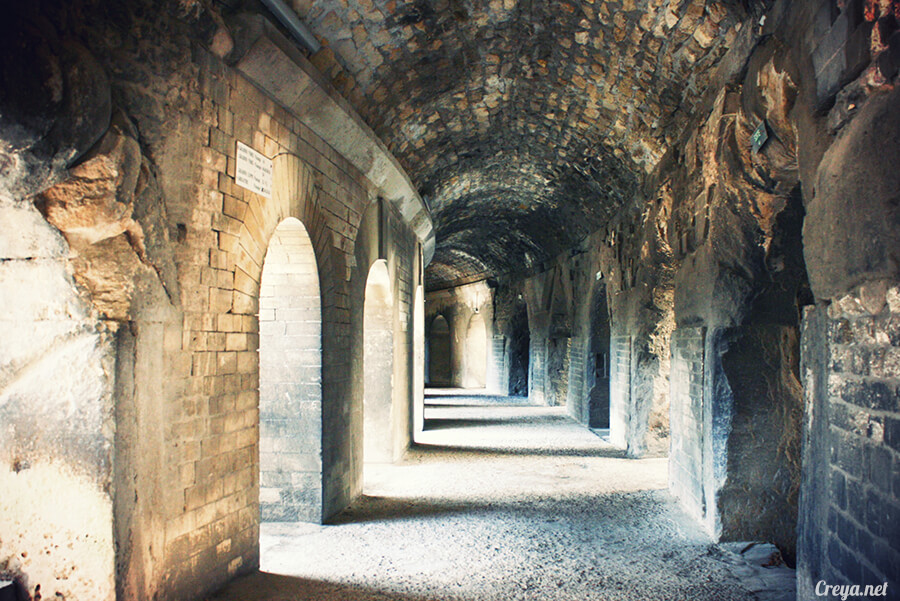
I wandered in circles along the passageways, enclosed by stone walls dating from the first century BC.I returned to the solitude of travelling alone, with no end and no destination. Circling the arena, any point could become a beginning. I had set foot on this path and followed the shifting patterns of sunlight, free to keep walking until I no longer wished to.
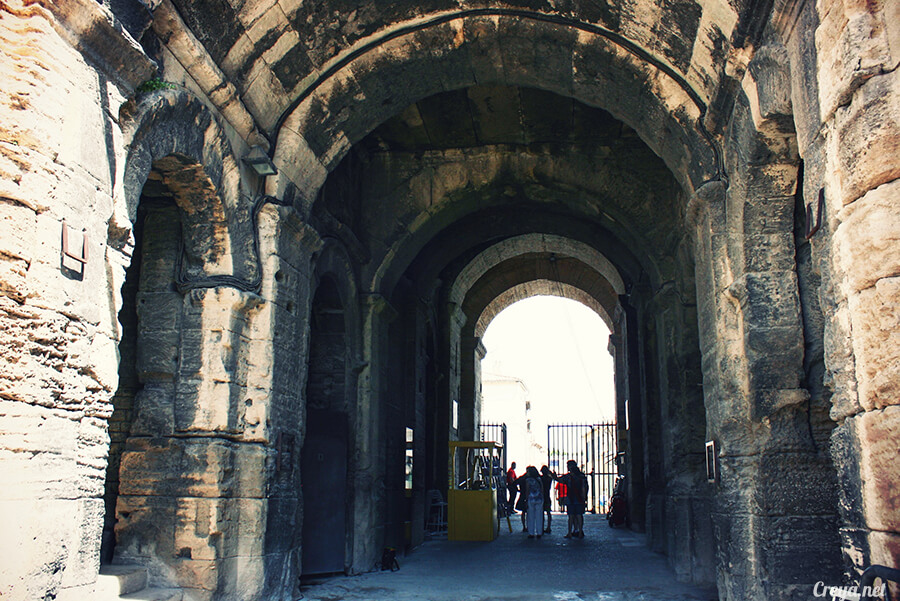
Passing through a corridor beneath the stairs, I happened to notice a small yellow booth. It looked like a kiosk selling postcards and souvenirs. Since I was already ambling around with nothing to hurry me, I wandered over for a closer look. It turned out to be a photography booth, displaying candid shots of ordinary visitors taken in the arena’s seating area.
Then, on that wall of photographs, I suddenly spotted a familiar figure seen from an unfamiliar angle.
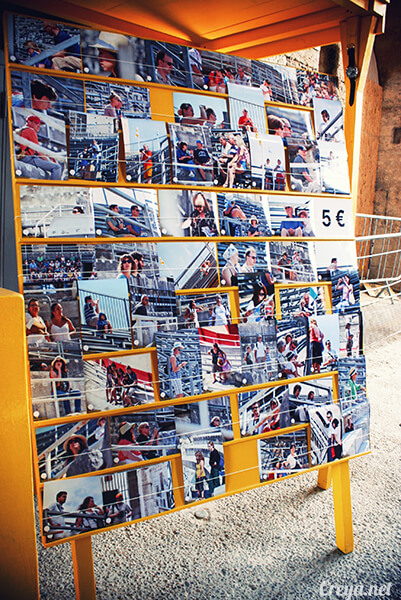
It was me!
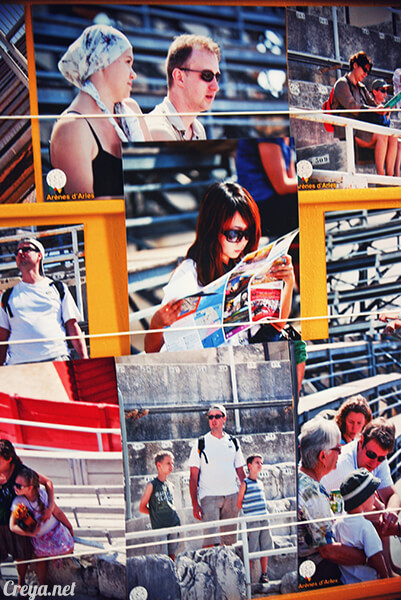
[ This is why you should pay more attention to the map, okay? Getting photographed scrolling on your phone makes you look like such a homebody ]
It was part of a photography event, a small interactive exhibition within the summer Rencontres d’Arles festival. When you travel alone, you rarely get photographs of yourself—especially back in 2012, when I did not even know whether selfie sticks had been invented yet. Having a passer-by take your picture depended entirely on luck, and getting one taken by a professional photographer was rarer still. I did not hesitate for long before pulling out money that most definitely was not in my round-Europe budget and buying this precious memory.
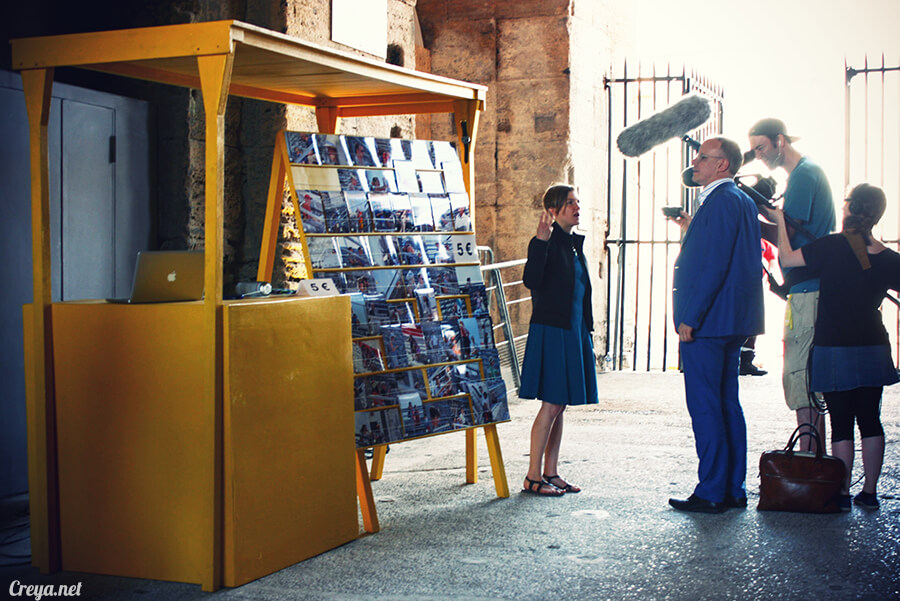
[ Right after I bought the photo, they were interviewed—so I bought it too soon, otherwise my picture might have appeared on television too?! ]
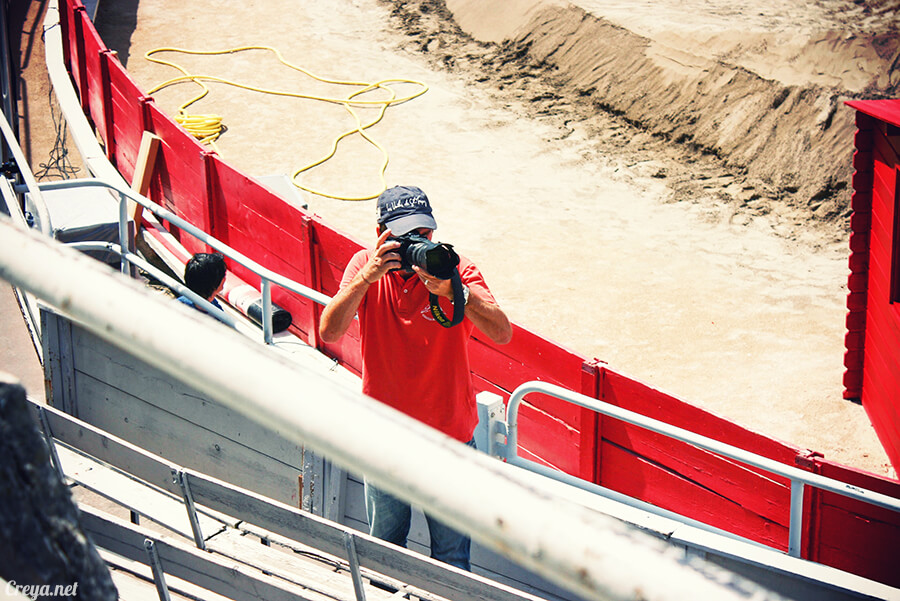
[ Caught you—so he’s the paparazzo! ]
Building my understanding of a town from scratch—every step, every glance and every passer-by I encounter—allows me to rapidly assemble my own sensory impression of it. To me, it is an adventure packed with stimulation. My impression of Arles was formed by the design posters I saw upon arrival, the market stalls and shops tucked into its lanes, the soft butter-yellow walls, the elderly couples approaching hand in hand or quietly browsing outside little shops, and the ancient Roman arena streaked with black. Artistic yet leisurely, with the atmosphere of a holiday retreat, Arles suited me perfectly.
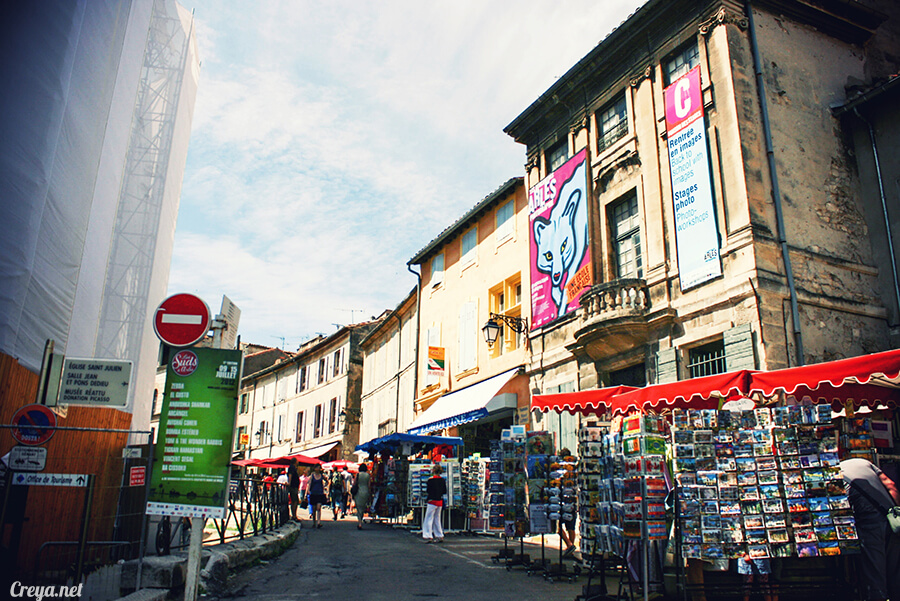
I passed the ground floor of an apartment building and noticed a poster outside similar to those on the city walls. There did not appear to be any English on it, so I could not work out what the exhibition was about. Just then, a young man and woman greeted me in English. It was rare to meet people in France who spoke English fluently, and after travelling alone all day, I had barely opened my mouth since leaving home that morning. Their warmth made Arles feel even more welcoming.
They invited me inside to see the photography exhibition. When I came across the series “My Room,” I could not help stopping to look. Perhaps a person’s tastes and personality are most clearly revealed within the private space where they feel safest. What kind of person would I become after this journey?
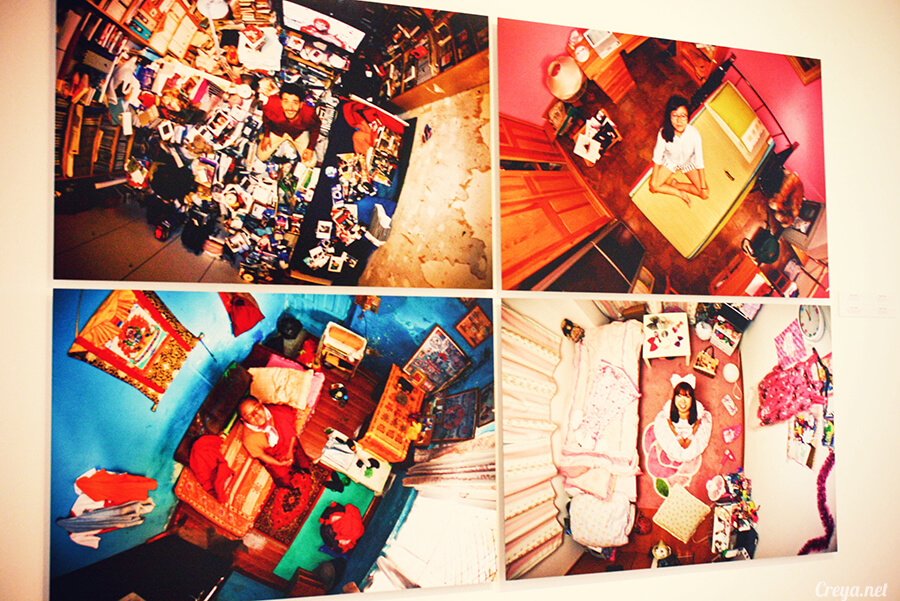
[ Works by French photographerBertrand Noël ]
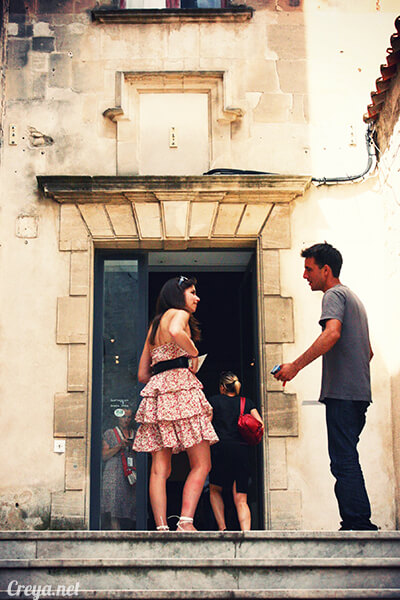
[ The young French man and woman who invited me inside—the man was actually the photographer behind the exhibition. Please, you two, don’t fight over me ]
Carrying those questions about myself, I walked to Place de la République in front of the town hall. Beside the pool beneath the monument, I spotted a joyful figure. Grinning happily, he leapt into the water and sent it splashing everywhere, then rolled and wriggled around in the sunshine. I looked around but could not see anyone who appeared to be his owner. Nobody was paying attention to this beaming dog as he behaved as though he owned the place. Watching his happiness, I found the corners of my own mouth lifting into a smile.
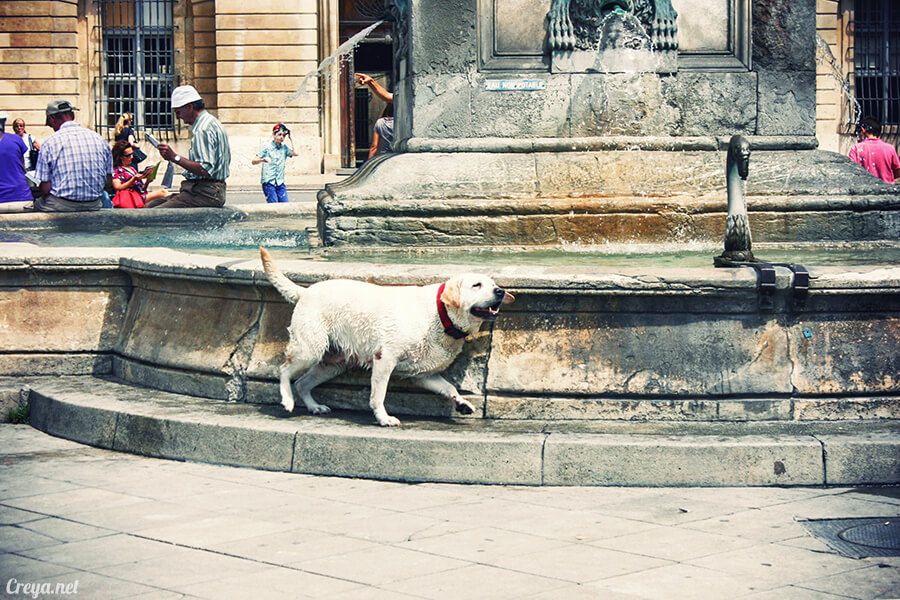
It was as though everything could be this easy, and life this simple.
Or perhaps, if we simplify our desires, happiness becomes simple too.
I do not think I have found the complete answer yet, but enjoying every happy moment would probably be my first response.
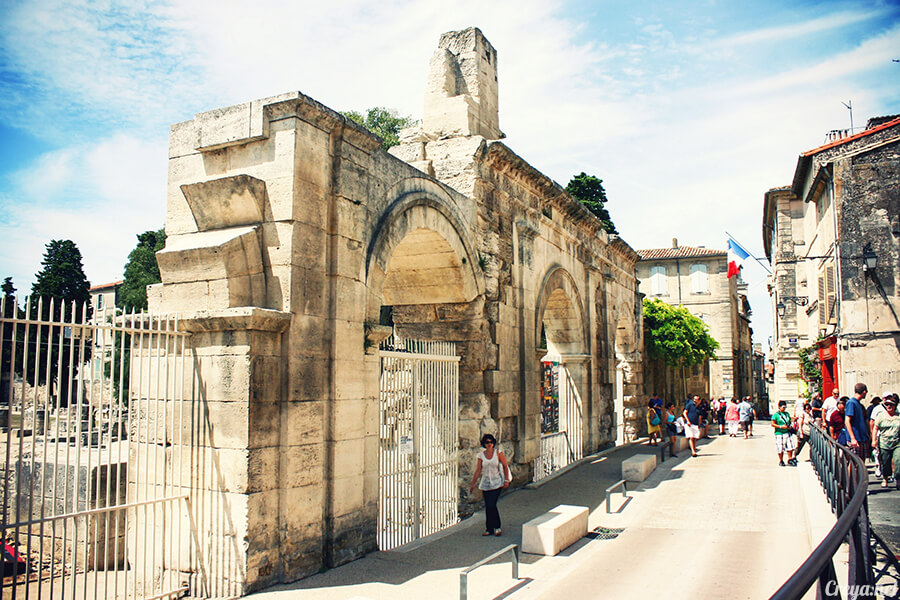
[ The ruins of the ancient Roman theatre, where performances are still occasionally staged ]
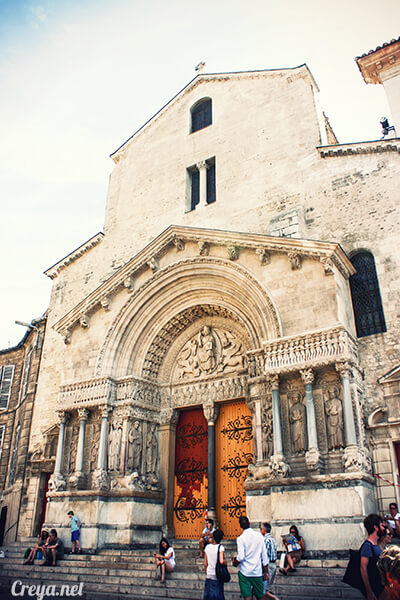
[ The ancient Roman Church of St. Trophime, listed as a World Heritage Site together with the arena and ancient theatre ]
The crowded Place du Forum was packed with pilgrims who had come for Van Gogh’s Café Terrace at Night. Unfortunately, the neighbouring businesses had squeezed in as many tables and chairs as possible, making it difficult to stand where Van Gogh once did and recreate the view.
But that no longer mattered. To me, Arles was no longer Van Gogh’s town. My reluctance to leave the arena, the warmth of the photography exhibitions and the smiling dog in the sunshine—these memories were my own Arles.
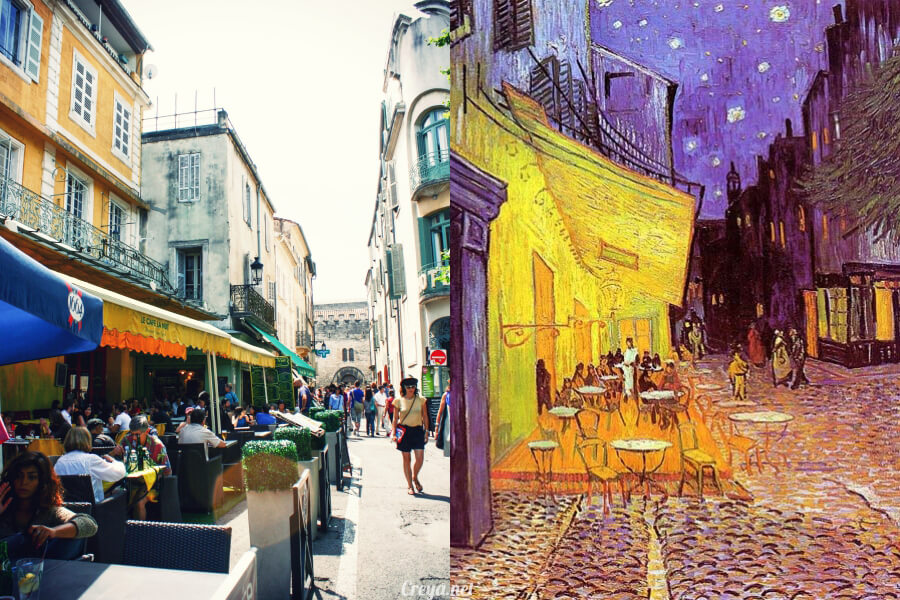
[ This view no longer exists—you would probably have to pay to sit inside the place with the blue awning—and even the paving looks completely different now…. ]
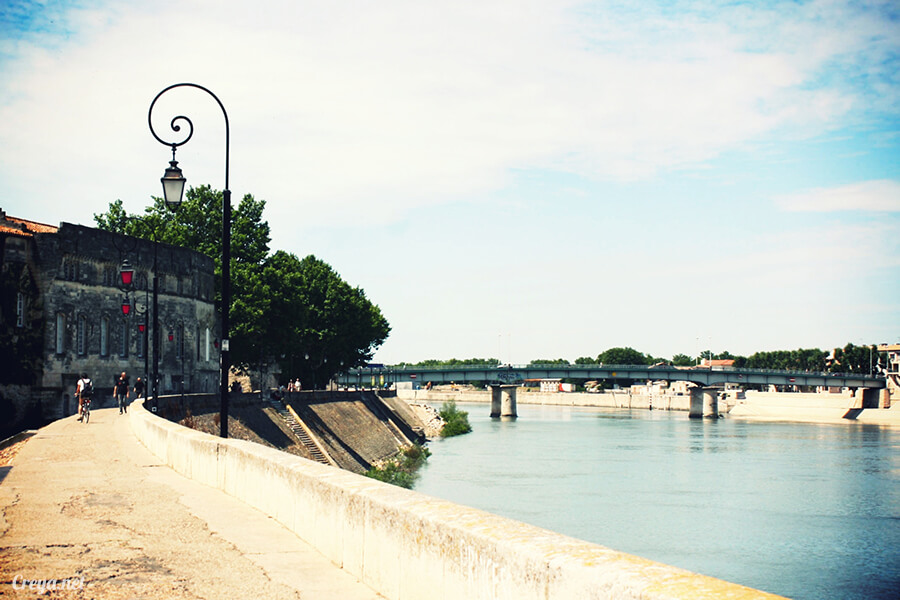
[ Van Gogh also painted a starry night over the Rhône. Given his creativity, I am convinced he could have turned Dajia Riverside Park into a million-dollar night view too ]
✈ Travel date: 2012/7/6
| Watch Me Trek Europe | France: 9-Day Series
● France: Not Quite What You Imagined?
● France Day 1 – What?! You Can’t Get By in English at Charles de Gaulle, France’s Largest International Airport?
● France Day 1 – The Palace of Versailles in Paris: Unblocking the Historical Connections in My Head
● France Day 2 – Only After Getting Thoroughly Lost Can You Discover the Old-World Charm of the Palais Garnier in Paris
● France Day 2 – The Historic Route Between the Arc de Triomphe and Champs-Élysées—and My Lamentable Ignorance of History
● France Day 3 – The Louvre in Paris: That Faint Smile Hidden Away in a Gilded Palace
● France Day 3 – My Own Impression of Paris: Impressionist Masterpieces at the Musée de l’Orangerie and Musée d’Orsay
● France Day 4 – Mont-Saint-Michel: So This Is Where the Hole in My Head Came From
● France Day 5 – Two Holy Sites in One Day: Two Sides of Paris at Sacré-Cœur and Notre-Dame
● France Days 1–5 – The Eiffel Tower: Five Views of Paris’s Magical Beacon
● France Day 6 – Avignon, the Ancient Provençal City That Grows More Beautiful at Sunset
● France Day 7 – A Carefree Romp Through the Lavender Fields and Red Towns of Provence
● France Day 8 – Arles in Southern France: The Roman Empire Through My Eyes and Van Gogh’s Brush
● France Day 8 – Another Roman Town in Southern France: Does Old Meet New Better in Nimes?
● France Day 9 – That Year, I Became Part of the Festival d’Avignon….
| Watch Me Trek Europe | 85 Days Around Europe, 16 CountriesComplete List of More Articles


