


Only three days into my first trip to Europe, I wanted to see everything, and everything seemed fresh and strange. My first stop, Paris, truly put my boundless energy for roaming around on full display: in just two days, Itraveled through time in the opulent Palace of Versailles to meet Louis XIV, cautiously stepped intothe Palais Garnier, birthplace of the eerie love story in The Phantom of the Opera 、followed a trail of history along the Right Bank of the Seine, down the Champs-Élysées and beneath the Arc de Triomphe, and saw the Eiffel Tower, a feat of modern craftsmanship forged from steel yet full of tenderness.
Just when I thought I had endured so many visual shocks that nothing could possibly astonish me anymore,the Louvre Museum in Paris showed me that France truly knows no limits.Inside this building decked in gold and silver lies the entire world—and three ladies so captivating that people willingly travel from afar just to follow them.
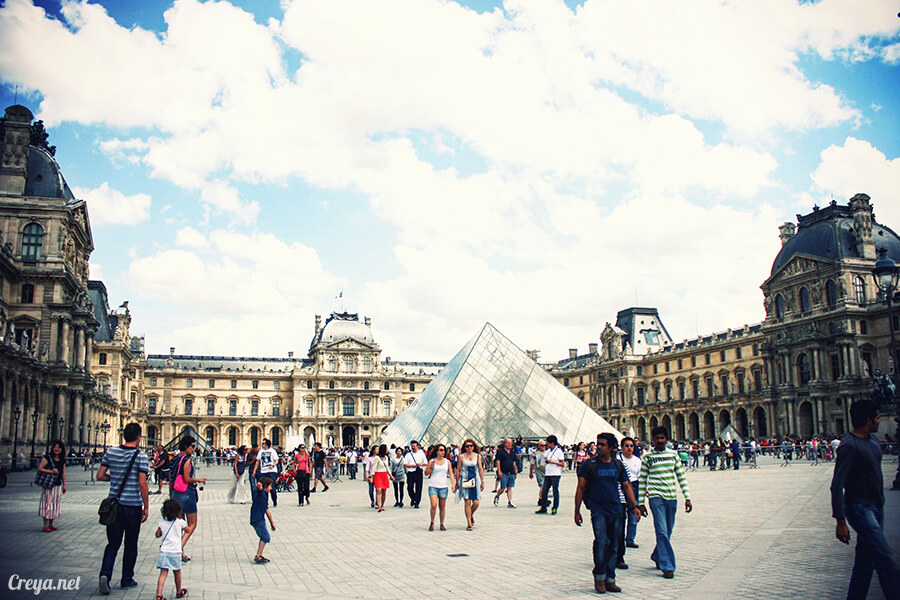
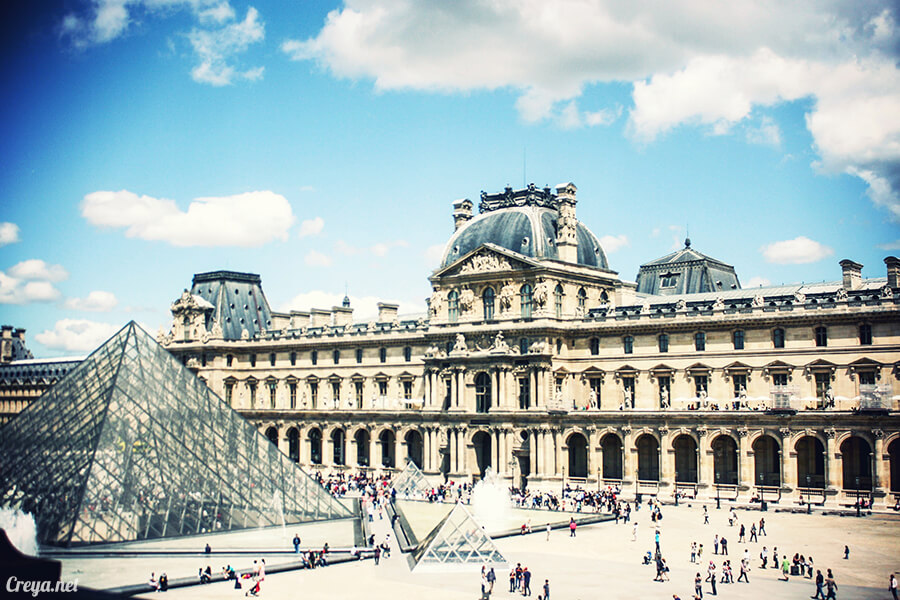
[ The Louvre is far less imposing in person than Versailles, but its pyramid and the three beauties hidden within prove that quality matters far more than quantity. ]
Getting into the Louvre is quite simple. Step one: get to Paris, France (what part of that is simple?). Take Métro Line 1 or 7 to Palais-Royal–Musée du Louvre, then walk three minutes to reach this former prison that later becamea sort of prison in its own rightfor monarchs and royals—a palace, in other words. (Am I going to be slapped for saying that?) It is open to visitors every day except Tuesday,with admission at 15 euros. Every Friday after 18:00, young people of all nationalities under 26 can wield youth as their greatest asset and visit the permanent collections for free(information as of 2016.9; admission was 10 euros in 2012).
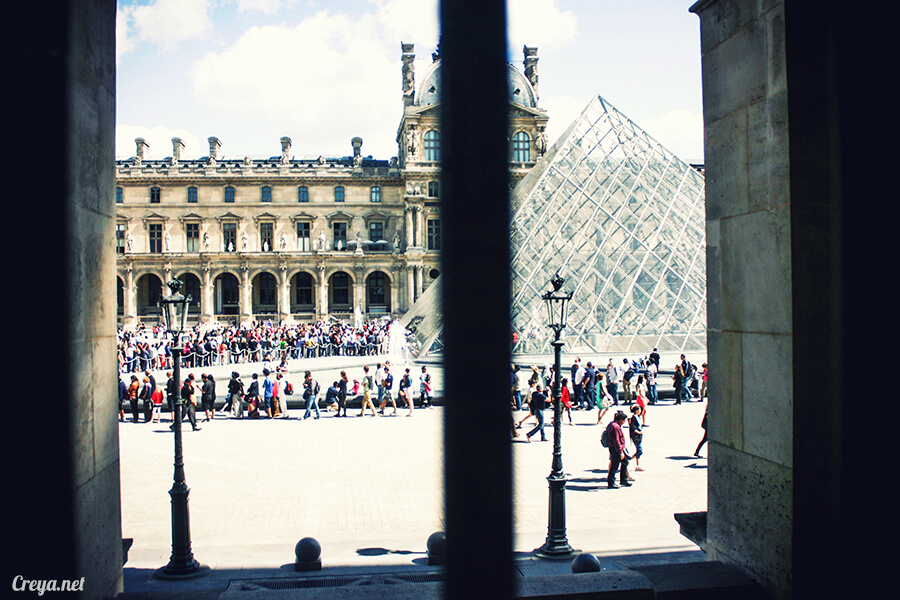
[ A prerequisite for visiting France: you must love queuing. ]
As luck would have it, when I visited Paris, I was still able to enjoythe wonderful policy of free museum admission on the first Sunday of every month (since 2016, this has been limited to the first Sunday of each month during the low season). With my belt tightened and every cent carefully counted, greedy little me planned an all-you-can-eat day covering the Louvre, Musée d’Orsay, and Musée de l’Orangerie. But the moment I entered my first stop, the Louvre, I realized that thistreasure trove would take more than two full days to explore properly—and here I was, foolishly dreaming that I could flip through an entire encyclopedia of Western art history in a few hours. If you ever wonder what keeps drawing endless streams of visitors to Paris, these museums are among the best possible answers.
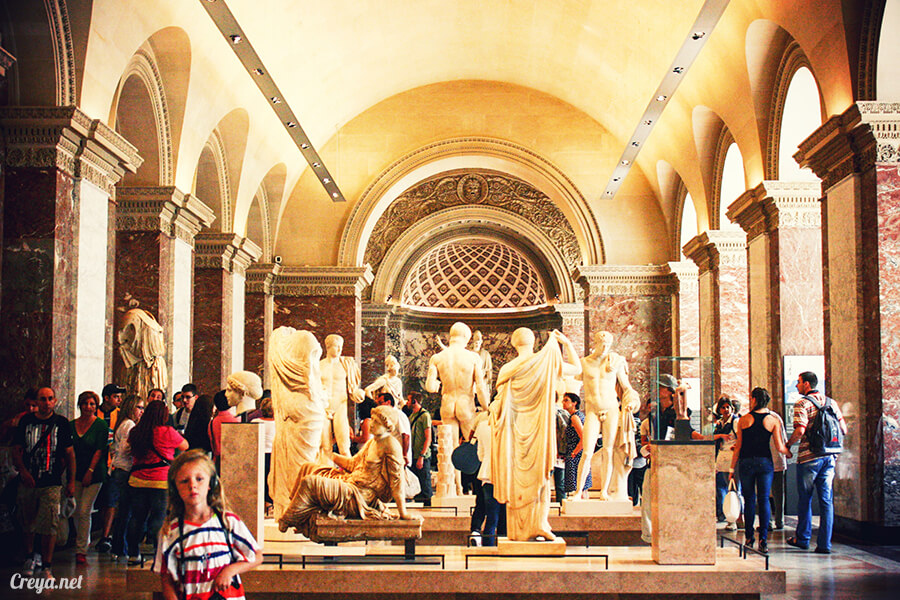
[ For example: lots of naked young hunks. ]
The once-mighty French Empire left modern France a rich gift of cultural heritage. My Europe-trotting legs had spent only two days walking around Paris, yet I had already traveled from the 16th century to the 19th. Even the montage of my life flashing before my eyes wouldn’t move this fast. These perfectly preserved traces of history are Paris’s secret weapon in becoming one of the world’s most visited cities. They reflect an admirable cultural awareness, but also a heaven-sent stroke of luck. Takethe Louvre, a Parisian landmark known to virtually everyone: it came chillingly close to vanishing from the face of the earth three separate times。
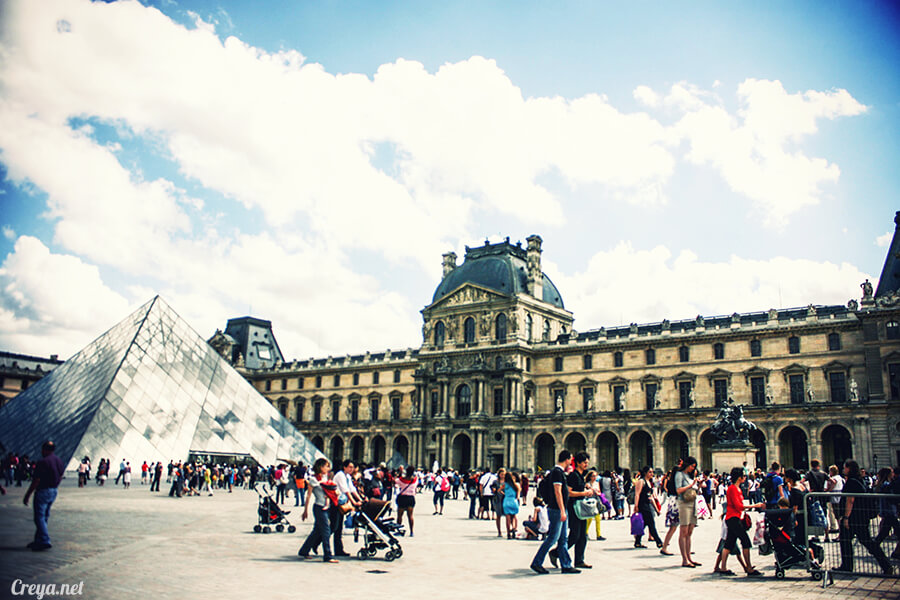
[ Any day now, these beautiful things could disappear forever. So why haven’t you set off yet? ]
In the mid-17th century, Louis XIV had already built the blindingly extravagant, shamelessly wealth-flaunting Palace of Versailles as his new royal residence, so the big boss briefly considered demolishing the Louvre. Thank goodness he later changed his mind, preserving it as a home for academies of scholarship, art, science, and more. Under Louis XV, however, the Louvre once again landed on the demolition list, only to be spared because there wasn’t enough money to tear it down. (Shouldn’t Mayor Ko be held responsible?) Then, when the short-lived Paris Commune collapsed in the 19th century, the Louvre once again became a target. Bitter over its defeat, the Commune decided to burn Paris’s most iconic buildings. The nearby Tuileries Palace, itself once a royal residence, was an unfortunate casualty; today, only its gardens remain as a memorial. Yetthe adjoining Louvre escaped with only its galleries and colonnades burned。
Compared with Taiwan, where buildings about to be designated as historic assets always seem toreceive the support of a mysterious fire, the Louvre somehow refused to burn down even when people tried. How could we Taiwanese look upon that with anything but envy?
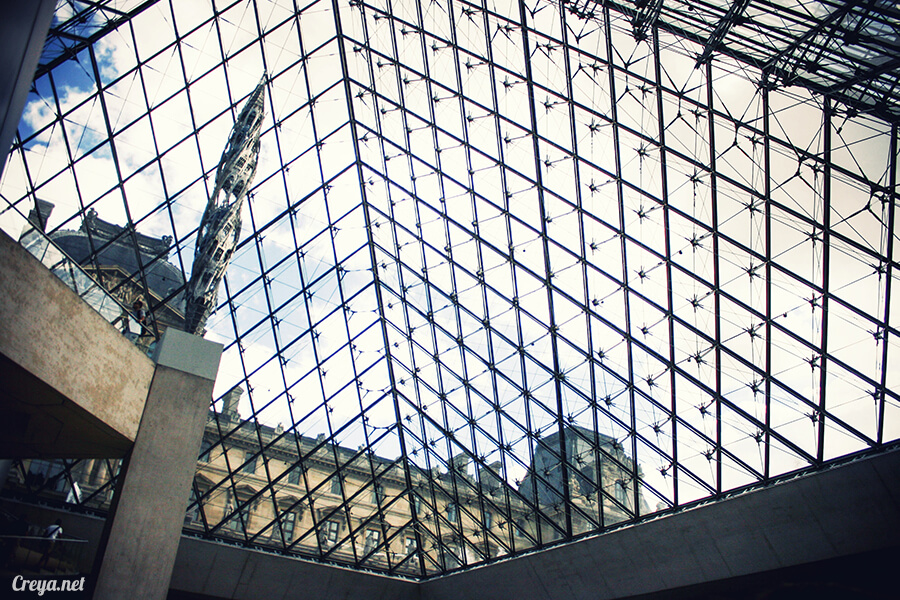
[ Still, I believe destiny accounts for three parts and effort for seven. Only by building a shared civic consciousness can the culture of our dear “Tai-wrong” be preserved. (Raises fist.) ]
However you look at it, the Louvre is no longer what it once was. As part of the French government’s 1981 renovation project, I. M. Pei inserted a strikingly modern glass pyramid into the Louvre’s central courtyard. It caused enormous controversy in French society at the time, yet who could have known it would become the museum’s greatest icon—and one reason the Louvre is now the world’s most visited art museum?
Good or bad has always been a subjective judgment. We never know what effects choosing change will bring; only years later, looking back, can we appreciate the subtle chain reaction set in motion by that decision. In the same way, four years later, when I think back on this journey that others once questioned as an escape from reality or a foolish dream,I remain grateful for the decision I made. Whenever I encounter difficulties, the version of me who once worked earnestly to make her dream real becomes my strongest source of encouragement。
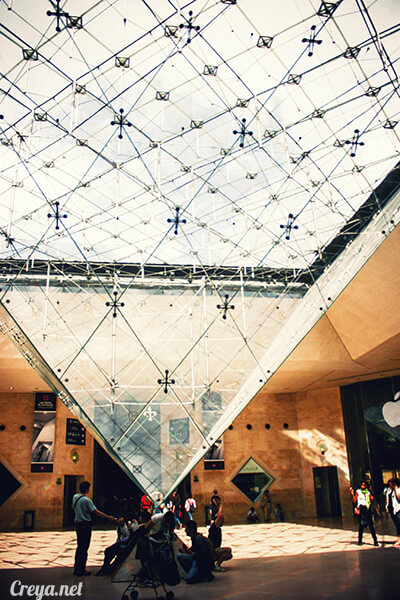
[ Today, the glass pyramid looks as though it had always belonged to the Louvre. ]
To me, this glass pyramid is a half-hidden diamond, set in perfect symmetry at the heart of the equally symmetrical Louvre Palace. It glitters translucently, telling us thatwe must venture inside and dig deeper to discover the other half of the jewel buried underground. The pyramid serves as the Louvre’s new entrance, bringing natural light into the old palace while creating more usable space underground.The image of an Egyptian pyramid also makes it feel as though we are about to enter in search of treasure, filling me with anticipation.
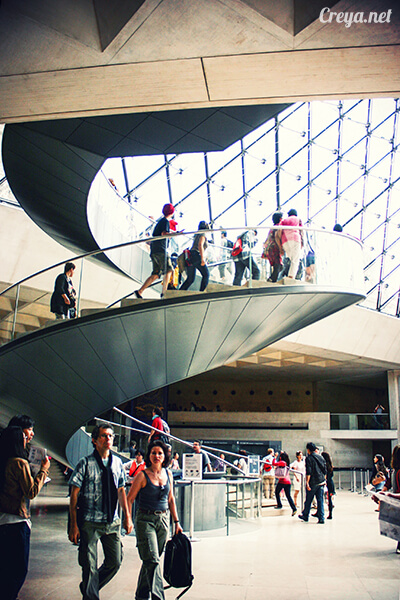
[ You can also admire I. M. Pei’s brilliant architectural design: relying solely on its spiral form, this 9-meter-high stainless-steel staircase stands without a single supporting column. ]
The Louvre even provides treasure maps. Its official website offers five ready-made themed routes, covering Greek sculpture, ancient Egypt, 17th-century French art, masterpieces from the collection, and 800 years of history. Chinese imperial palaces hid thousands of consorts; Western palaces hide ladies too. The three beauties tucked away in this gilded house are the treasures everyone follows the map to find, drawing crowds whose frenzy could probably be surpassed only by Pikachu.
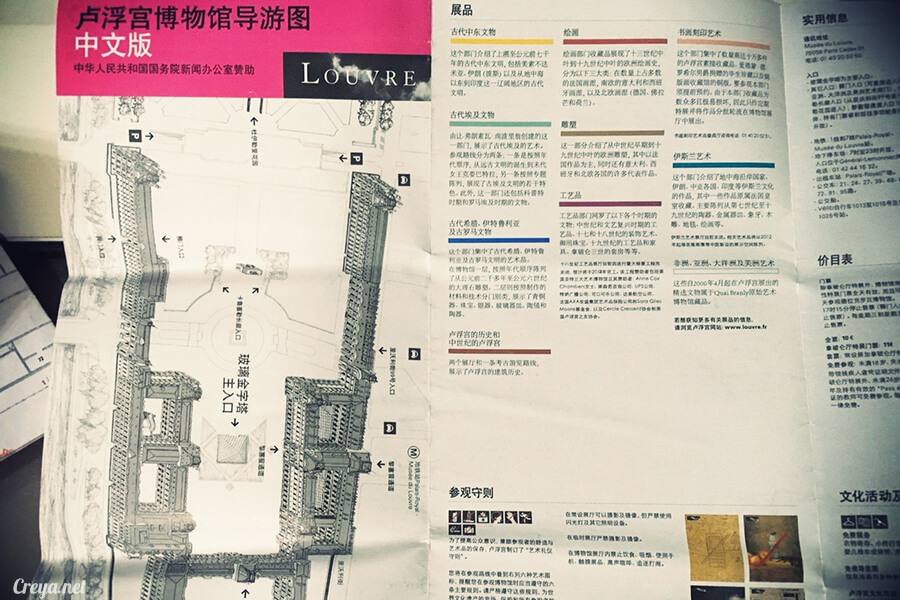
[ Unfortunately, among the printed floor-plan treasure maps available on site, the only languages we could more or less understand were English and Simplified Chinese. Each language edition is sponsored and printed by its respective country, and there wasn’t a Traditional Chinese version from Taiwan… ]
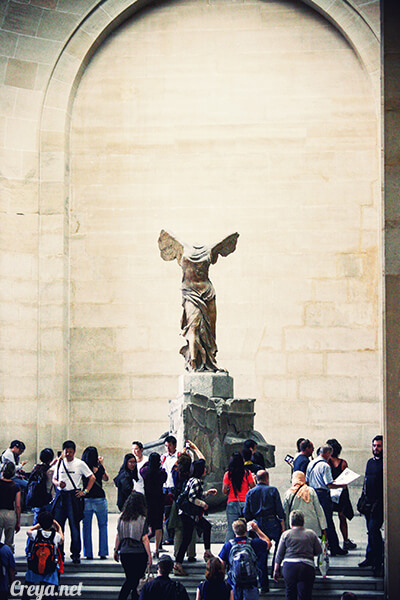
One of the three beauties stands at the top of a staircase:Winged Victory of Samothrace, an ancient Greek sculpture dating from before the 2nd century AD. Although no one has ever seen what this headless goddess Nike looked like, the curves of her figure alone are mesmerizing. (Does that mean everyone looks about the same with the lights off?!) (Hey now!)
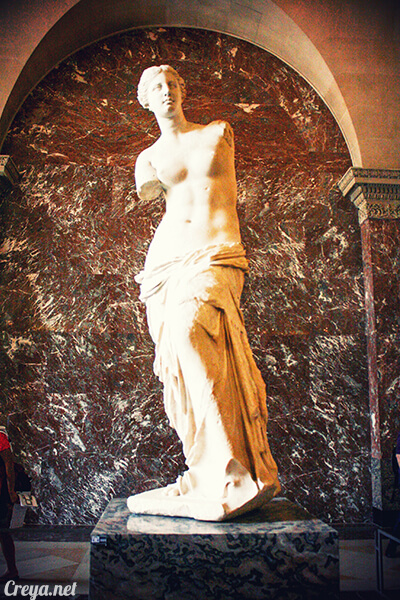
The armlessVenus de Miloalso makes the list of three beauties. She is the ancient goddess of beauty and wisdom—and beauty radiating from wisdom must be appreciated with the heart. (Silence.)
The greatest of the three is Leonardo da Vinci’s Mona Lisa, La Joconde, probably the most famous and fervently pursued woman in the world. Even though she is confined to that enormous wall, peering out through a tiny pane of glass and holding her perfectlypyramid-proportionedfigure steady for photographs with us mere mortals, she still wears that inscrutable hint of a smile. Wherever you stand, you feel as though her eyes meet yours. Perhaps that is the secret behind a woman’s power to captivate! (This quest to meet the three beauties truly taught me a valuable lesson. I gained so much.) It almost seems as though the entire Louvre, inside and out, was built for her. She is such a superstar that later generations even came wielding The Da Vinci Code in book and movie form to vie for her attention.
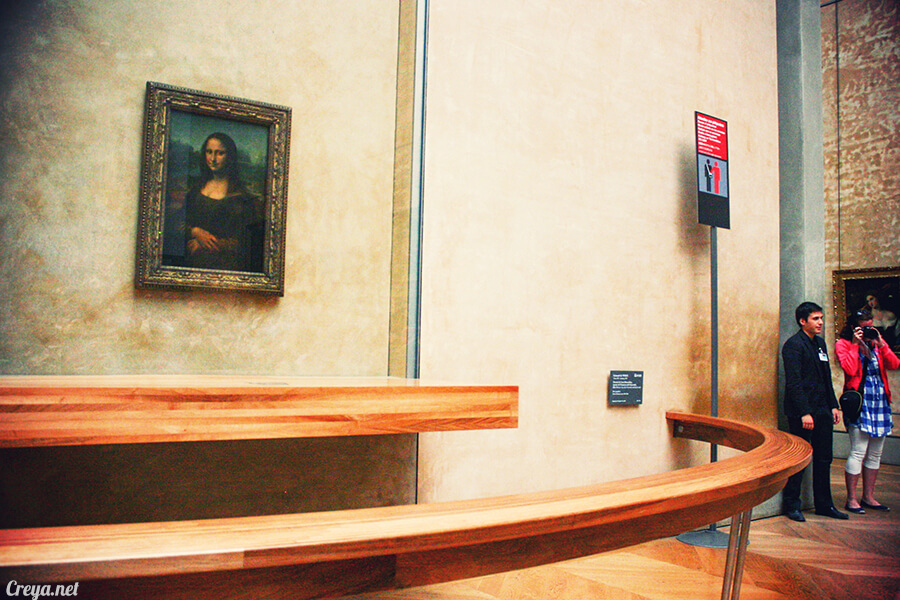
[ If you want a selfie with the Mona Lisa, you’ll have to wait for the crowd to inch forward before you can get close. Personal security guards stand watch beside her too. ]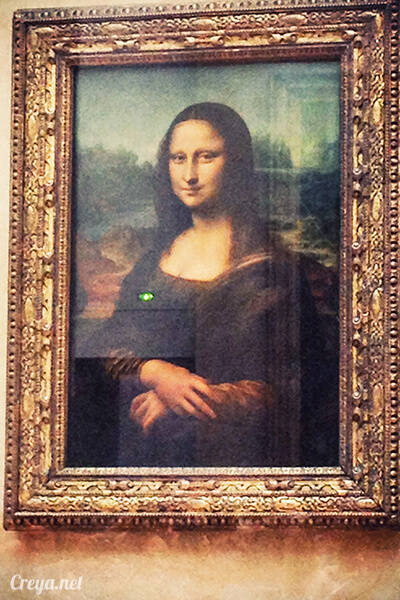
[ I squeezed my way into a pretty decent spot in the mosh pit myself. ]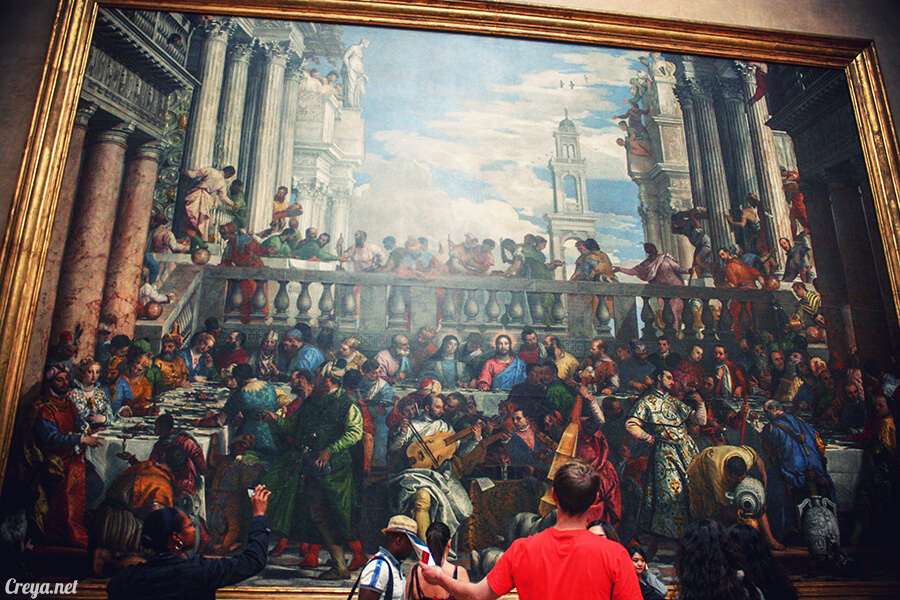
[ There always has to be someone who can hold her own. The only work capable of containing the Mona Lisa’s commanding presence is probably the museum’s largest painting, The Wedding at Cana. ]
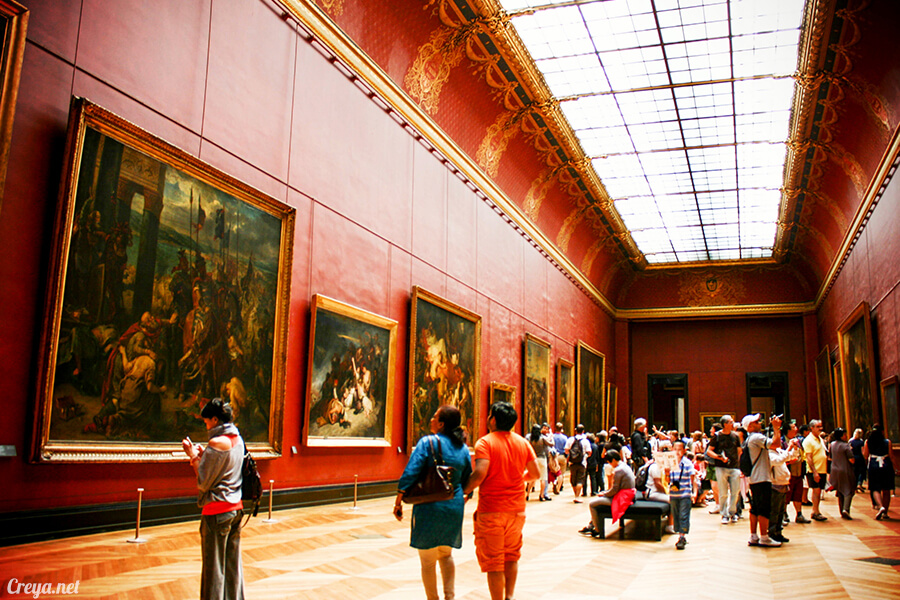
Art collected by generations of French kings, works confiscated from the nobility, and historical objects seized during Napoleon’s campaigns have enabled the Louvre to display cultural treasures from almost everywhere in the world except France. Three hours in the Louvre could never possibly be enough. All I could do was try my hardest to seize every fleeting glimpse.
The Louvre generously allows visitors to take photographs freely as long as the flash is turned off. I photographed each work I loved, one after another. Back home, staring at more than 400 photos on my computer, I realized that no matter how I photographed them, these artworks could never look as exquisitely beautiful as they did in books. I could capture their forms, but the images were merely copies. Only after learning the stories behind their creation did the connections formed in my mind become real;remembering myself walking through the palace, I realized that seeing them with my own eyes—and the emotions they stirred in that moment—was what would last forever。
That is the meaning of travel.
Visitor Information for the Louvre Museum, Musée du Louvre (information as of 2016.9)
Admission:15 euros (back in 2012, admission was 10 euros)
Free admission:
Every Friday after 18:00, visitors of all nationalities under 26 may visit the permanent collections free of charge with valid identification (in 2012, admission was free on the first Sunday of every month)
The first Sunday of every month from October 1 to March 31 (see the official Paris Tourist Office website for details about free museum days )
Opening hours:
Monday, Thursday, Friday, and Saturday, 9:00–18:00 (visitors are cleared from the galleries after 17:30)
Wednesday and Friday, 9:00–21:45 (visitors are cleared from the galleries after 21:30)
Closed:
Tuesday
French public holidays: 1/1, 5/1, and 12/25
See the official Chinese-language website for details
Transportation:Take Métro Line 1 or 7 to Palais-Royal–Musée du Louvre, then walk three minutes
Address:Musée du Louvre, 75058 Paris – France
✈ Travel date: 2012/7/1
| Watch My Europe-Trotting Legs | France in 9 Days Series
● France: Not Quite What You Imagined?
● France Day 1 – What?! You Can’t Get By in English at Charles de Gaulle, France’s Biggest International Airport?
● France Day 1 – The Palace of Versailles in Paris: Breaking Through the Blocked Historical Connections in My Head
● France Day 2 – Only After Getting Thoroughly Lost Can You Discover the Old-World Charm of the Palais Garnier in Paris
● France Day 2 – The Historic Path Between Paris’s Arc de Triomphe and Champs-Élysées, and My Lamentable Ignorance of History
● France Day 3 – The Louvre Museum in Paris: That Faint Smile Hidden in a Gilded House
● France Day 3 – My Own Impressions of Paris! Impressionist Masterpieces at the Musée de l’Orangerie and Musée d’Orsay
● France Day 4 – Mont-Saint-Michel, France: So That’s Where the Hole in My Head Came From
● France Day 5 – Two Sacred Sites in One Day: Two Sides of Paris at Sacré-Cœur and Notre-Dame
● France Days 1–5 – The Eiffel Tower: Five Views of Paris’s Magical Lighthouse
● France Day 6 – Avignon, an Ancient Provençal City Made Even More Beautiful by the Setting Sun
● France Day 7 – Taking One Gloriously Carefree Stroll Through Provence’s Lavender Fields and Red City
● France Day 8 – Arles in Southern France: The Roman Empire Through My Eyes and Van Gogh’s Brush
● France Day 8 – Another Ancient Roman Town in Southern France: Does Old-Meets-New Nîmes Have What It Takes?
● France Day 9 – That Year, I Became Part of the Festival d’Avignon in Southern France….
| Watch My Europe-Trotting Legs | 85 Days Across Europe, 16 CountriesComplete List of More Articles


