


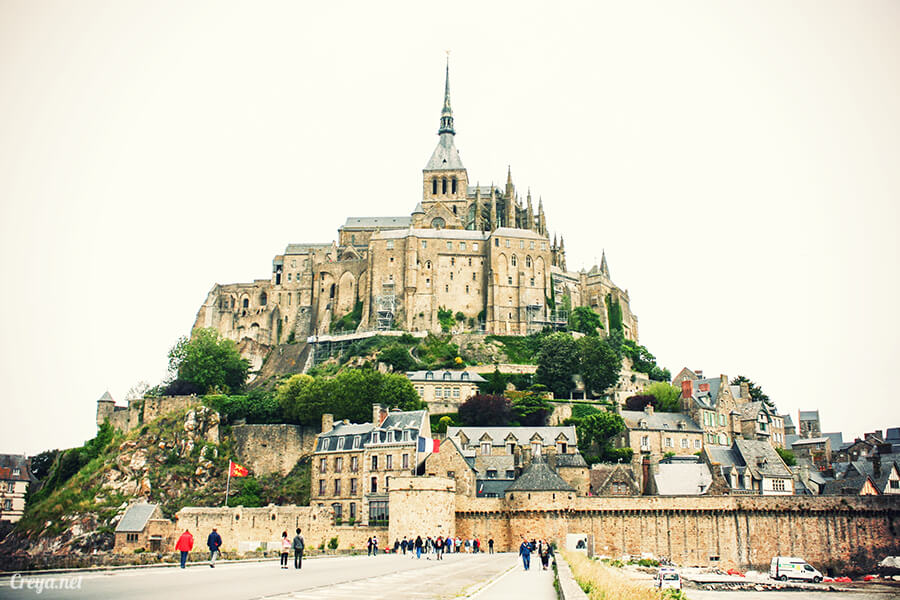
Only three days into my European leg-powered adventure, I was still bursting with energy, with plenty of strength left in my legs. At our first stop, central Paris, those daily eight-plus-hour marches across flat ground barely counted as a “warm-up.” Then, on day four, Mont Saint-Michel gave my legs a rude awakening.
Butthe view before me was simply too captivating, some mysterious Western force kept drawing me closer, and this surreal sight—an island one moment and part of the mainland the next—was utterly mesmerizing, so there was no way I was going to stop. Exploring this thousand-year-old World Heritage hill town was one of the things I enjoyed most during my time in Paris. After all, the town was only so big—there was finally no chance of getting lost! (Hey!)
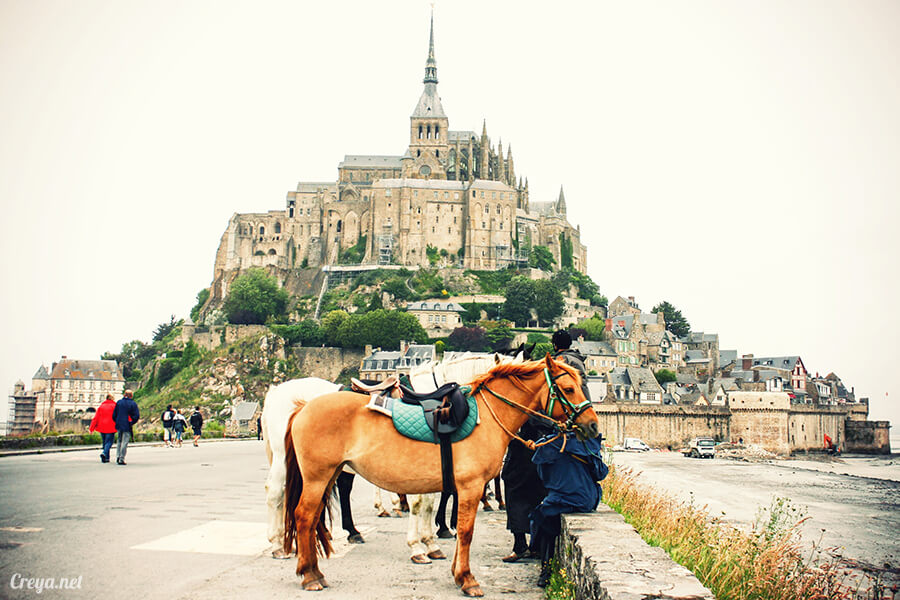
[ You can also take a horse-drawn carriage there, but that kind of luxurious life remains beyond my reach for now (tears). ]
Although I chose to make Mont Saint Michel a day trip from Paris, this solitary island in the sea west of the capital is actually athree-hour high-speed train journey from Paris, followed by a bus transferbefore you can reach this Far Far Away Kingdom. It is basically the equivalent of taking a day trip from Taipei to Tainan, yet despite the long journey, it still draws crowds every day—including me.
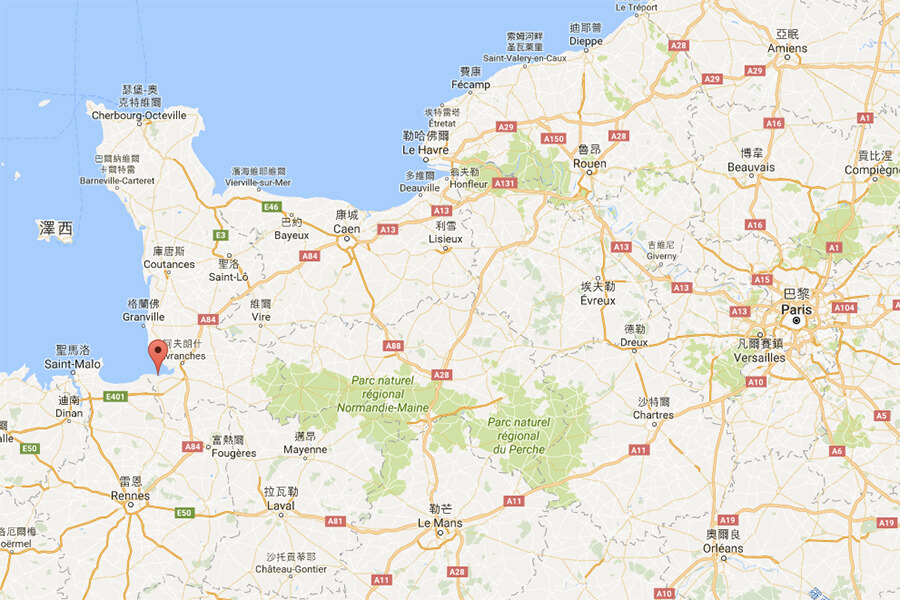
[ Mont Saint-Michel lies along the coast—banish my love away, solitude can be wonderful too~ (♪)—near Normandy, practically at the edge of France and Europe. ]
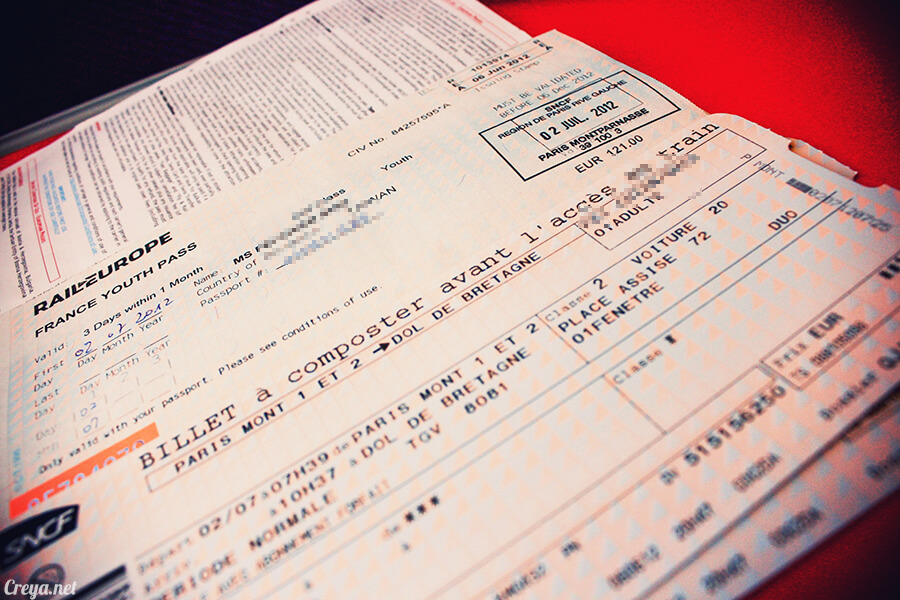
Armed with the three-day France Rail Pass that I would rely on whenever I ventured beyond the city during my nine days in France, plus my reserved round-trip TGV tickets(see the information at the end of the article for details), I set off on my first European rail journey. As the train pulled away from Paris, it introduced me to the towns and scenery of France beyond the capital. This is why I love traveling overland by train and bus, and why they were my main means of transportation throughout my European leg-powered adventure.Even if I could not stop and wander around every station, I could still catch glimpses of everyday life through the window.
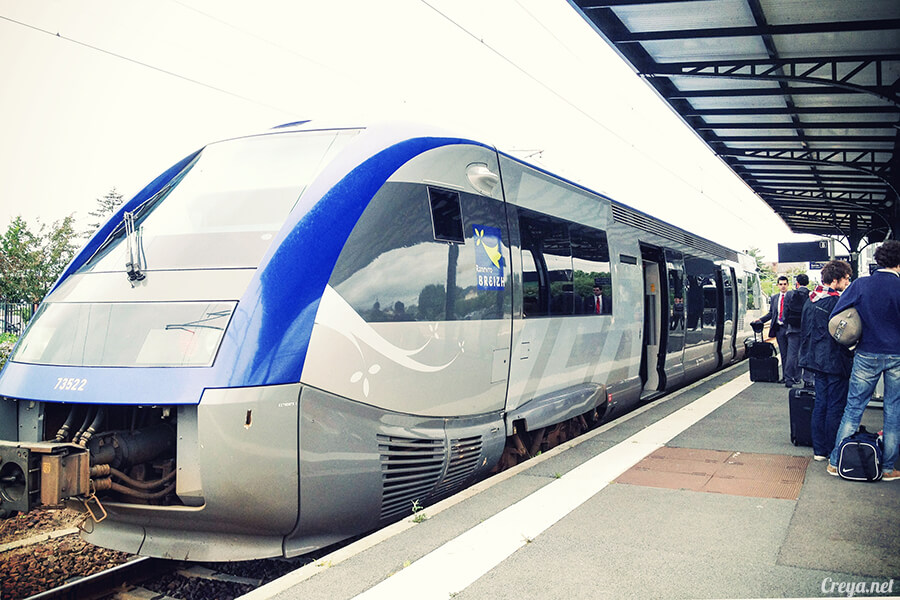
[ The interior of France’s TGV high-speed train was remarkably comfortable and clean—nothing like the Paris Métro. (This was actually the train I transferred to.) ]
After more than three hours on the road, the bus gradually approached the coastline, and Mont Saint-Michel suddenly appeared ahead. What began as a tiny triangular spire in the distance drew closer and grew larger until the dreamlike, castle-shaped Mont Saint-Michel was finally within reach.
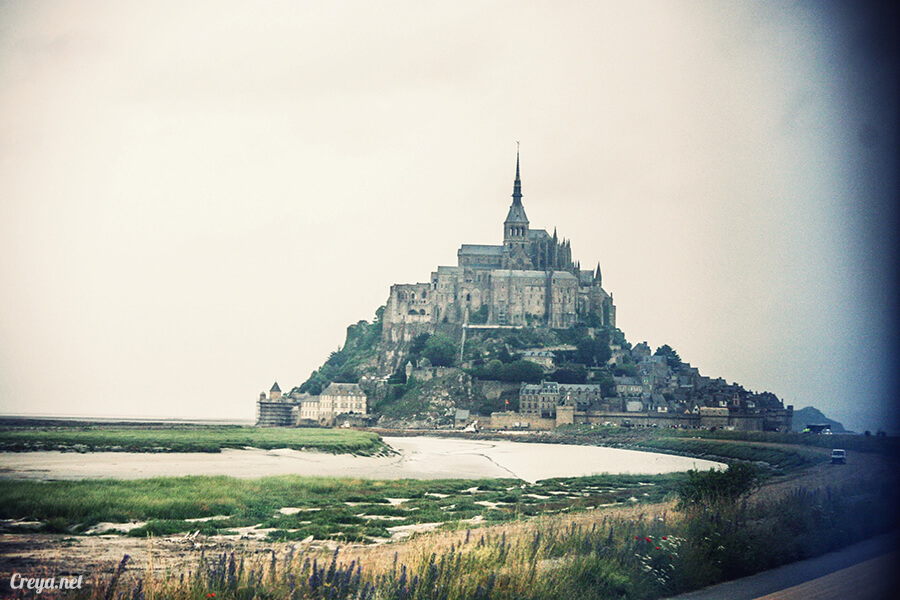
Mont Saint-Michelmay be called a mountain, but it is actually only 88 meters tall. I suspect most of its inflated height comes from the buildings piled on top—much like how I always want to style my hair a little higher when someone measures me.
First the mountain is a mountain, then it is not a mountain, and finally it is a mountain again. At that moment, however, I had none of a Zen master’s leisure to sit down and contemplate the philosophy of life. My watch was counting down the mere five and a half hours I had there. Anyway,to me, Mont Saint-Michel was merely a slightly elevated little granite island. Its true stature, however, came from the invisible religious status it held in the hearts of believers。
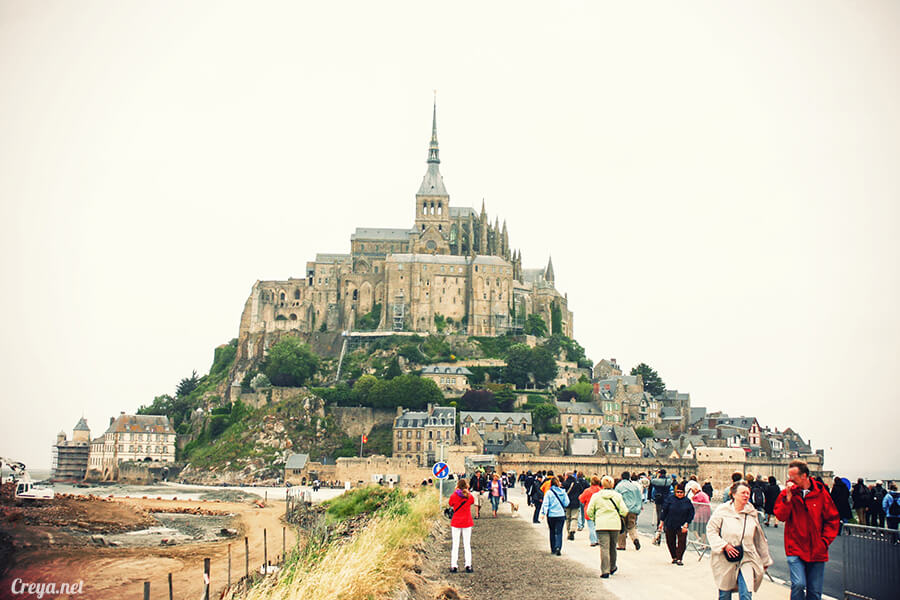
[ More than 2.5 million people from around the world visit every year, packing tiny Mont Saint-Michel to the brim. ]
It is Catholicism’s third holiest pilgrimage site, after Jerusalem and the Vatican. The abbey at the summit was first built as early as 708 AD. According to legend, its builder,Bishop Aubert, was visited in dreams by Saint Michel, the archangel from the Bibletwice. (Who knew Westerners used the dream-message trick too?) Michel asked him to build a house, but the bishop dismissed both visions as nothing more than dreams. Fed up, Michel appeared for a third time and poked the bishop’s head with his divine finger. When the bishop awoke and discovered an actual dent in his skull, he finally realized things had gotten serious. He hurried to obey the divine decree and built the Romanesque abbey, and the mountain became known as Mont Saint-Michel.And that is where having a hole in your head comes from…Oh, no! I mean, that is how Mont Saint-Michel came to be. (Slaps own mouth.)
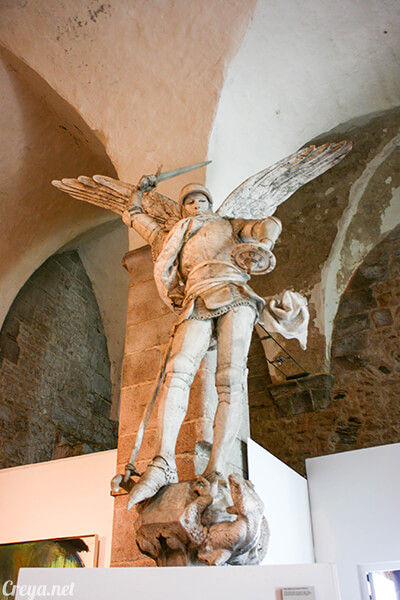
[ That’s him! Archangel Michel, the fellow who went around poking holes in people’s heads. ]
Beginning in the ninth century, Viking invasions drove farmers to seek refuge here, and a small town gradually emerged at the foot of the mountain. The church and abbey complex itself was built up slowly over several centuries before taking on the appearance we see today.
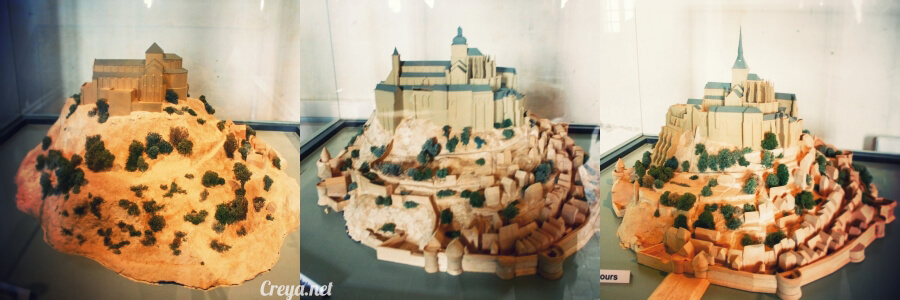
[ From the abbey to the growing village and then the church, the models recreate its historical development. ]
Mont Saint-Michel, which becomes an island whenever the evening tide comes in, is the area’s most mysterious natural wonder, and its isolation made the abbey on the mountain an ideal place for secluded spiritual practice. In the past, pilgrims even had to wait for low tide before braving the obstacles on their way into the holy site.
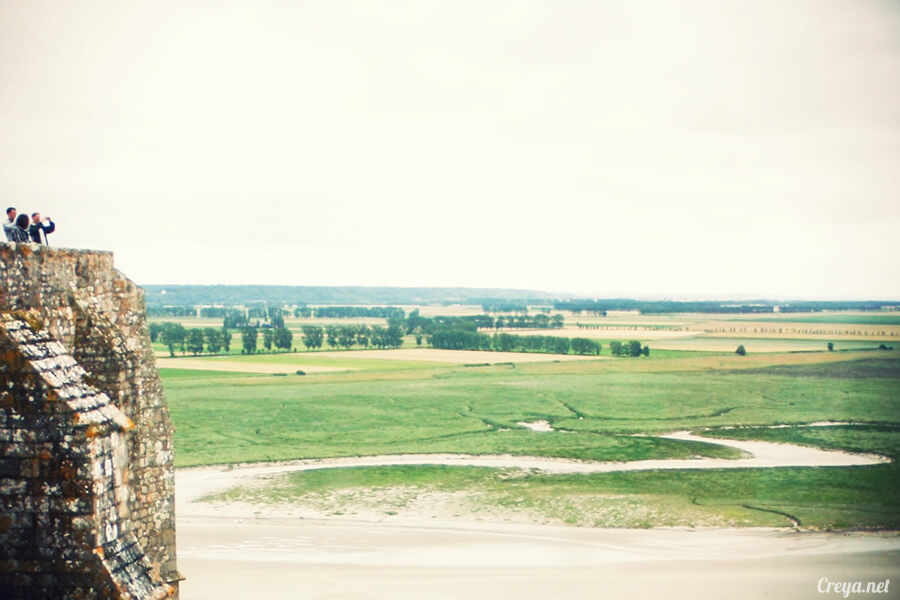
Its cultural heritage, combined with its natural beauty, gives Mont Saint-Michel everything it needs to draw visitors from thousands of miles away. Unfortunately, the causeway built in the 19th century and the parking lot later provided for tourists altered the area’s natural rhythms. Sediment accumulated across the surrounding tidal flats because of the causeway, and by the time I visited in 2012, the spectacular tidal transformation was no longer visible.
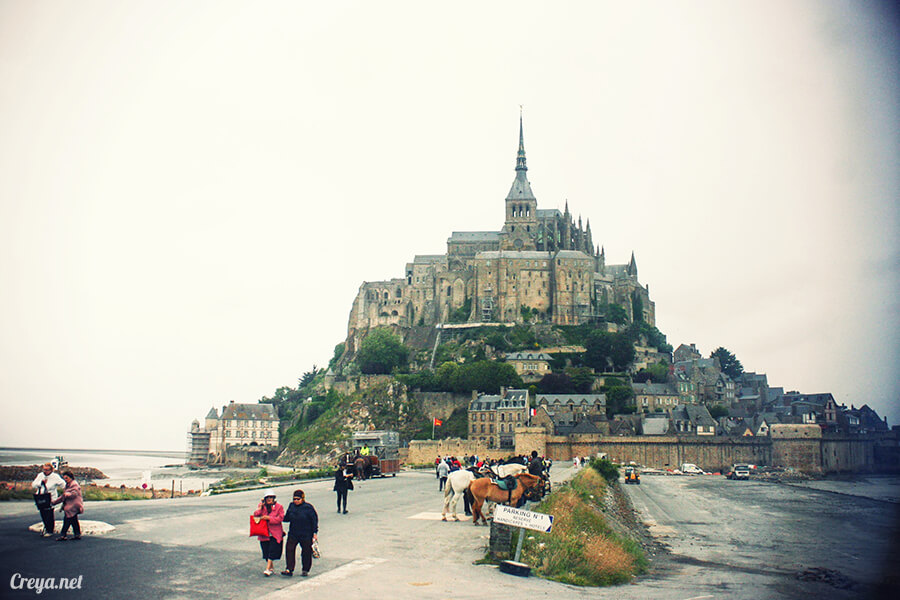
[ Mont Saint-Michel had only one man-made access road, with seawater surrounding it everywhere else. But that road also became one of the causes of ecological change. ]
One generation spent a fortune destroying the ecosystem, so the next had to spend even more restoring it. Fortunately, the French government was at least willing to tackle the problem. Restoration work was still visibly underway when I visited in 2012, and according to reports,the last section of the causeway and the parking lot were removed in 2015 as part of the restoration project. After nearly ten years and €200 million, Mont Saint-Michel’s spectacular island setting was finally restored. It seems Mont Saint-Michel has given me another reason to visit again.
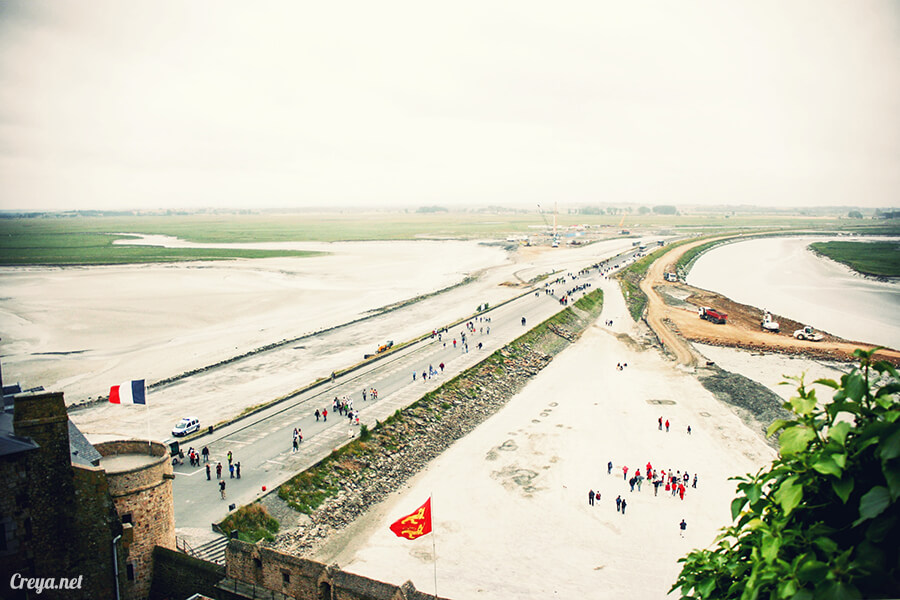
[ Restoration work in the distance was ongoing in 2012. Apparently, the parking lot shown in this photo has since been removed and the access road replaced with an elevated bridge. This picture has unexpectedly become a historical record! ]
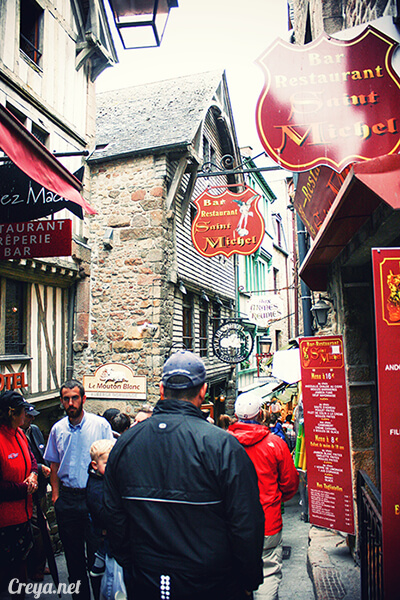
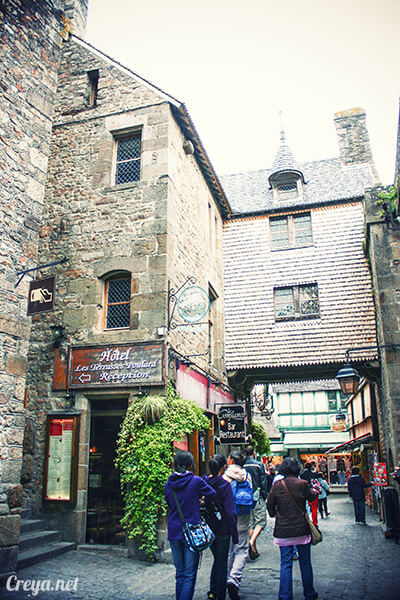
The moment I slipped into the hill town, stone walls surrounded me. Their subdued, rustic shades of brown and dark red gave the town a quiet, solemn air, strongly contrasting with the flood of tourists. Somehow, even amid such dense crowds, the atmosphere kept me calm and my pace leisurely as I slowly explored this adorable little town. (The people walking behind me were probably cursing me.)
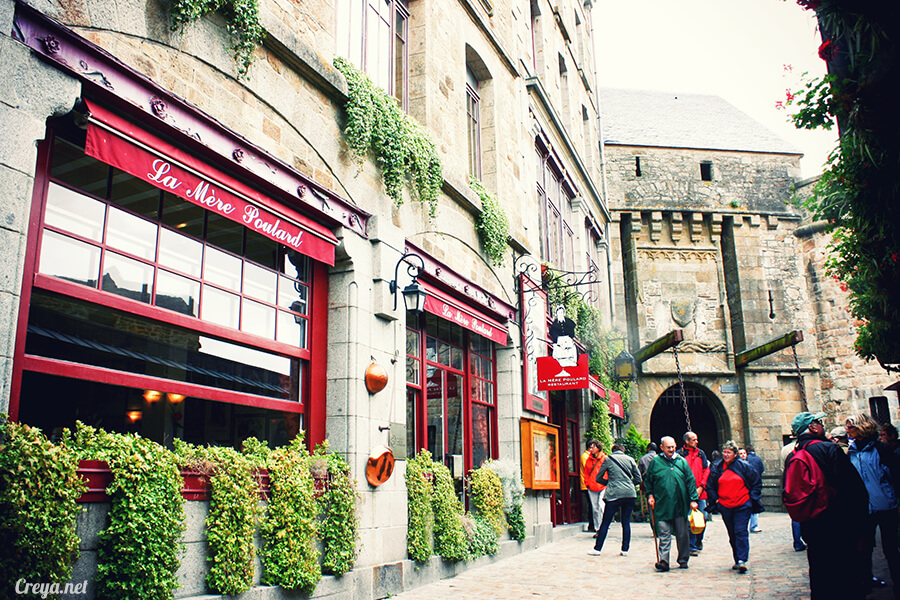
[ Isn’t this exactly what a castle looks like in your imagination? (Love!) The red storefront on the left is the town’s famous omelet restaurant. ]
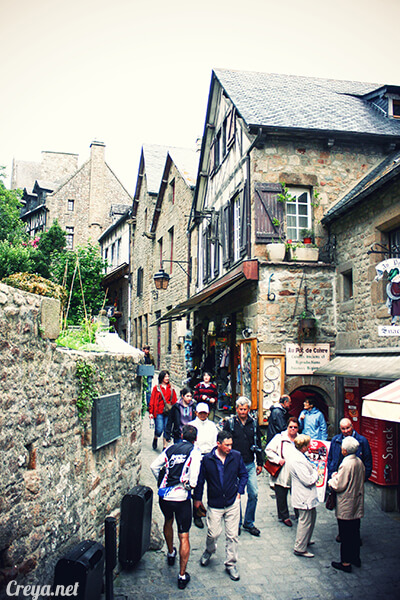
The little houses near the entrance have all become shops, and the lanes are not very wide. With stone paving that slopes gently upward, the place feels like a French version of Jiufen or Pingxi Old Street.。
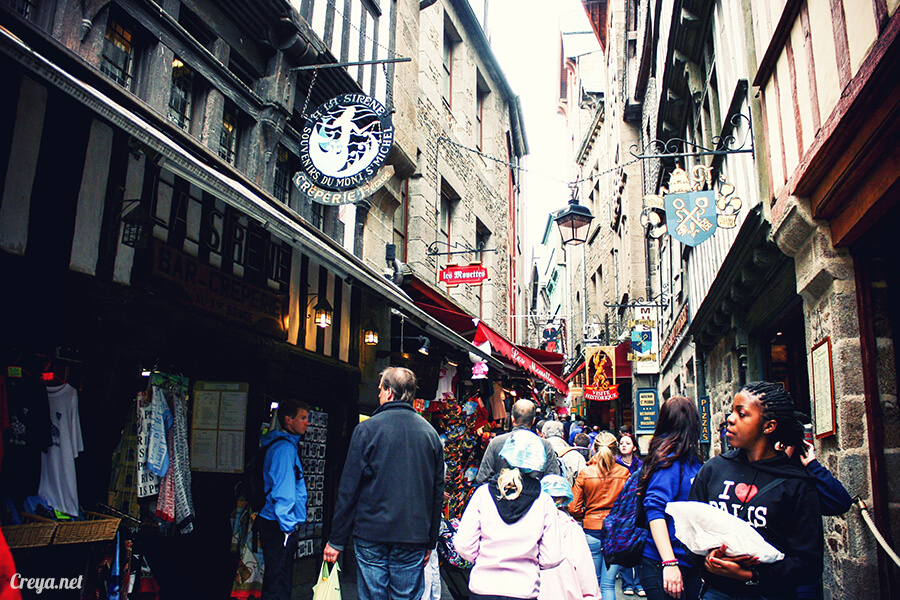
I once described Mont Saint-Michel this way to a friend, only to be met with, “Huh? Then is it still worth going?” That made me wonder why describing a foreign destination as resembling somewhere in Taiwan can make fellow Taiwanese question whether they want to visit. Is it because “I can see something similar in Taiwan,” or because “if it looks like Taiwan, what is there to see?”
While traveling from country to country, I have often found myself amid world-famous scenery that reminded me of places in Taiwan. When I traveled along Australia’s renowned Great Ocean Road near Melbourne, for example, several stretches made me reach for comparisons with the highways of eastern Taiwan.It is an expression of admiration and pride—a realization that the Taiwan where we grew up is truly remarkable, possessing such magnificent scenery within such a small territory.。
The same is true of our cultural landscape. Taiwan’s well-preserved Chinese culture has always been one of the things I find most worthy of pride. A comparison to Jiufen carries no negative meaning at all; it shows that our own culture also has the potential to shine on the world stage. I only wish we would cherish and protect Taiwan’s other cultural treasures too.
I believe our culture can be properly preserved only when valuing it and taking pride in it become part of the public consciousness. This is not merely the government’s responsibility, but everyone’s duty.
The pride of the French may help explain why so many historic buildings in France remain beautifully intact, making a trip through the country feel as though you could travel back in time at any moment.
Not far from the end of the Jiufen-like shopping street, beside the hillside, stands abeautiful little church that visitors can enter free of charge to look around or pray. Although I am not religious,I love stepping into places of worship and experiencing the shared feeling that different deities and teachings seek to convey: “inner peace.”。
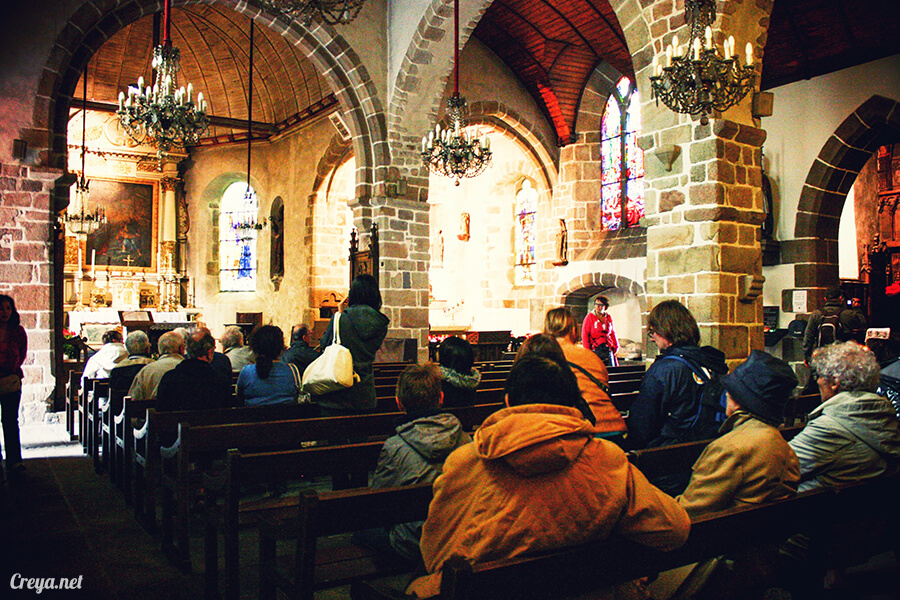
[ Though I honestly could not tell whether everyone was there to visit and pray or simply to find a chair and rest…. ]
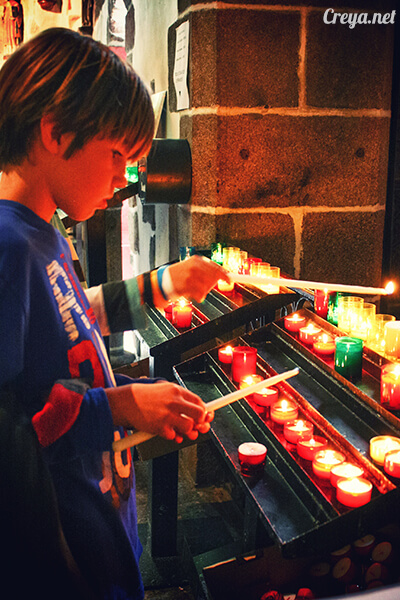
[ I often find myself staring absentmindedly at prayer candles inside churches, and afterward I feel much calmer. (I was definitely not mesmerized by this adorable child.) ]
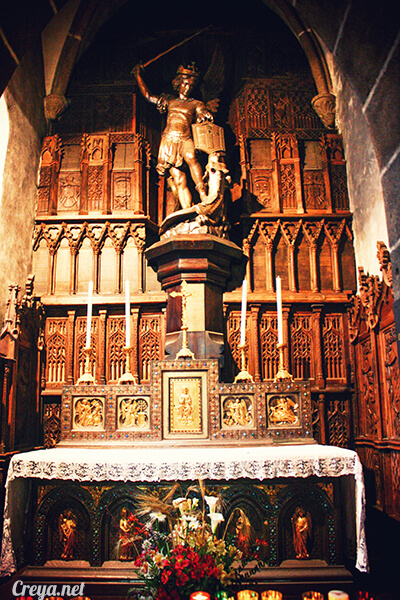
[ It’s Saint Michel the archangel again! A sculpture of him slaying the dragon—the embodiment of Satan. ]
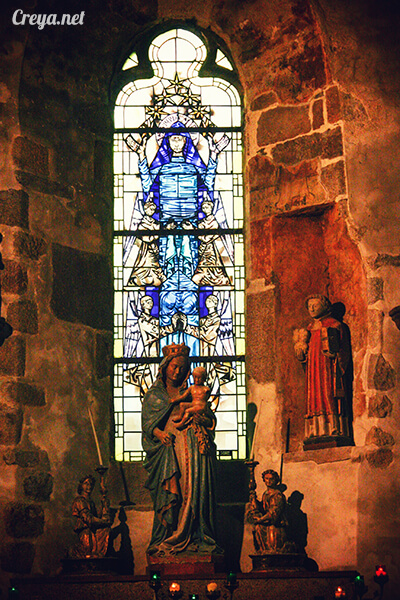
As I slowly climbed the hillside, every fork in the path piqued my curiosity and tempted me to see what new world might lie around the corner. The hill town was only so big, after all; no matter how much the paths branched, they could never be as maddening as central Paris. And that was how I ended up at the residences of the eternally resting…. I had accidentally wandered into an authentically French cemetery—clean, orderly, andin daylightnot frightening at all.
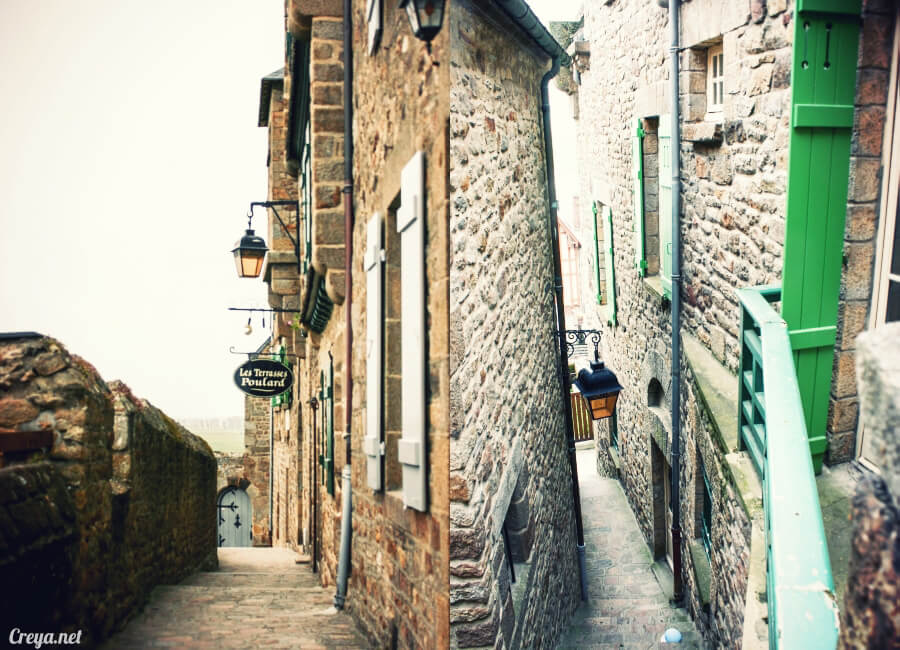
[ I was beginning to develop a fondness for darting through alleyways and exploring. ]
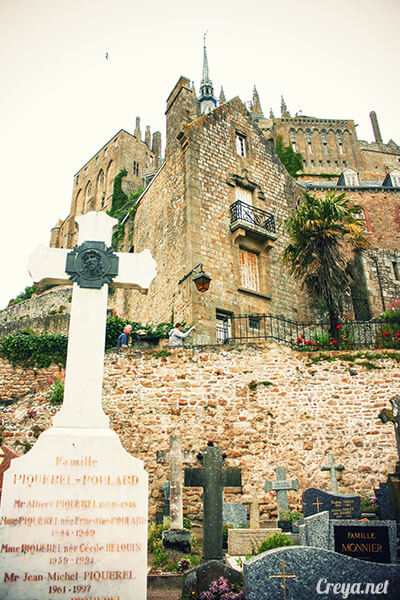
[ Even I dared to enter a graveyard like this. ]
Mont Saint-Michel is not particularly easy to walk around. It is an ancient place, after all, with narrow stone paths and a continuous upward slope, so walking quickly or for long periods can become tiring. And the stone steps leading to the abbey at the summit are serious leg training. Yet elderly ladies and gentlemen still climbed one step at a time, determined to enter the sacred abbey in person. (Youth admission in 2012: €5.50.)
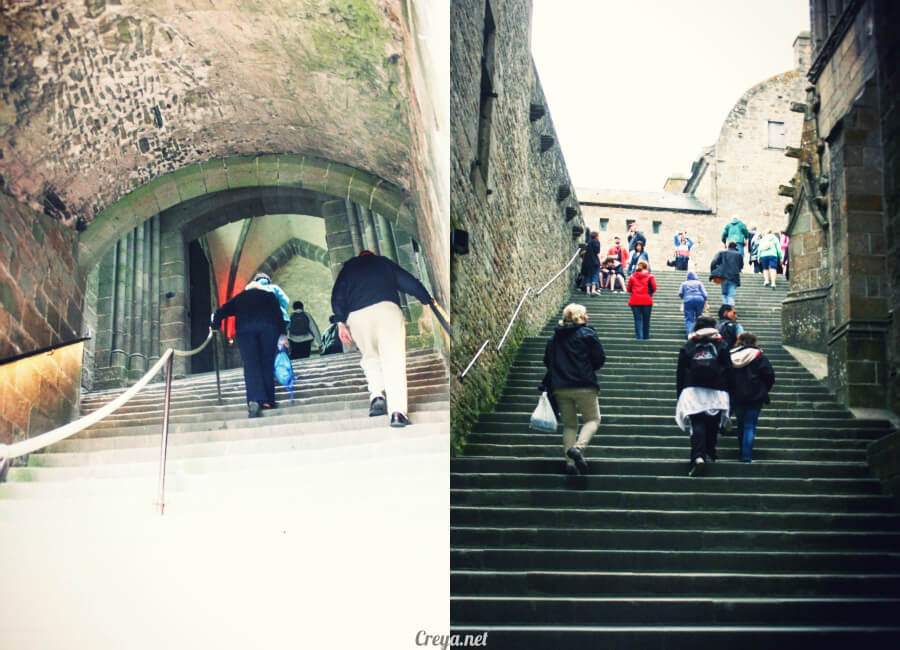
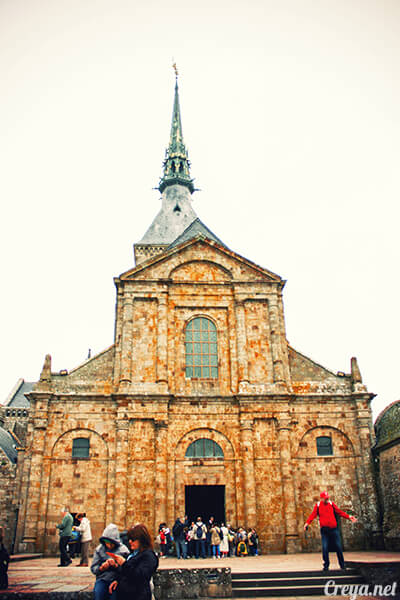
I loved the simple design of the Romanesque abbey. It had no elaborate decoration, yet still radiated solemnity. Repeated, understated geometric patterns were used throughout, with the arches in every design converging toward the sky.
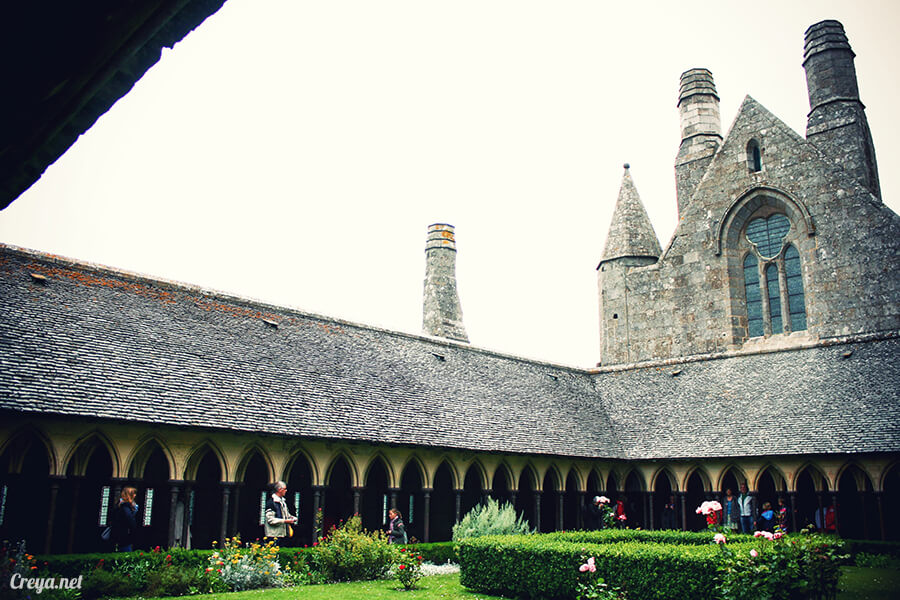
[ The outdoor cloister of the Romanesque abbey was once used for prayer and silent contemplation. ]
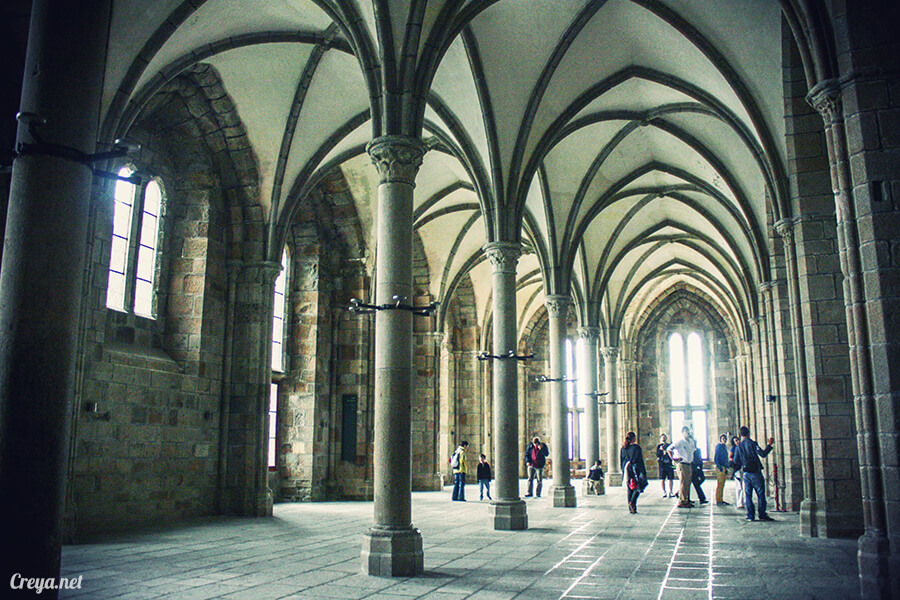
The route through the Romanesque abbey is quite unusual: the visit begins on the third floor and proceeds downward one level at a time. Each floor corresponded to a different social class. The uppermost level contained the monks’ living and religious spaces, the second floor held the grand hall where high-status guests were received, and the lowest floor accommodated ordinary pilgrims.
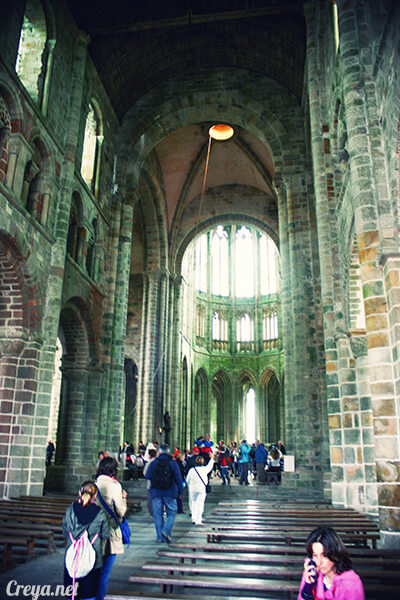
[ The Romanesque abbey was built during different periods and incorporates several architectural styles. Its collapsed chancel was rebuilt in the Flamboyant Gothic style. ]
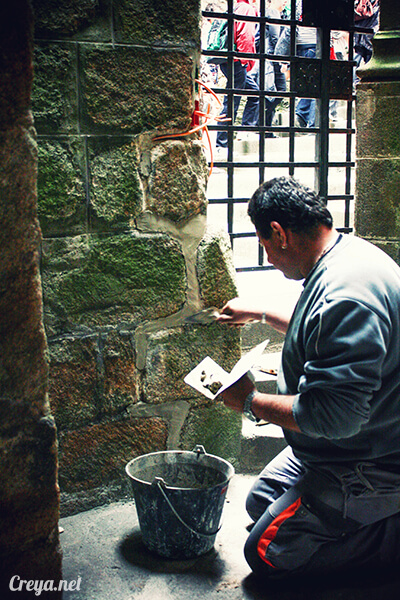
[ The historic monument is carefully restored and maintained using traditional techniques. ]
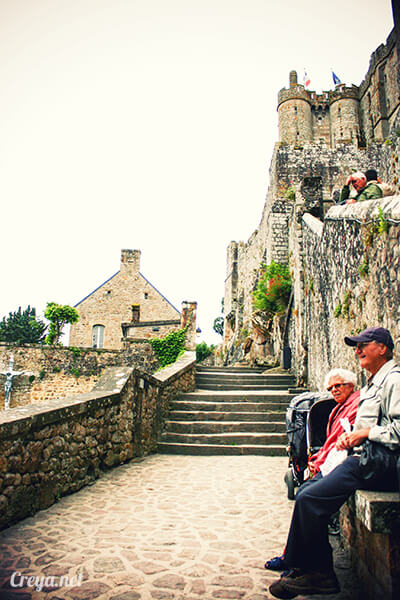
I had watched Mont Saint-Michel slowly draw closer from the bus, then walked gradually from the foot of the mountain to its summit. Standing in what is said to be the place closest to God, I gazed down over this miraculous bay under divine protection. The sweeping view made me feel even more peaceful. Whenever my legs grew tired, I found a stone bench, rested in the breeze, and watched elderly couples leaning on and supporting each other.
At that moment, I felt especially calm. I thought about my former life, constantly searching and rushing around every day, yet always forgetting to give myself a chance to rest.Now I travel more unknown roads at my own pace, learning to pause amid everything I long to accomplish and to seek companionship and relief amid the noise. No matter how many goals and desires we have, none can outweigh what matters most: inner peace.。
Mont Saint Michel Information
Getting There
TGV High-Speed Train + Bus
For the outbound journey, I took the 7:39–10:37 TGV from Paris Montparnasse to Dol de Bretagne, then transferred to the 10:50 bus to Le Mont-Saint-Michel. For the return journey, I planned to take the 16:35 bus, retrace the same route, and catch the 16:56–19:49 TGV back to Paris.
There are three TGV routes, but all ultimately require a bus transfer to Le Mont-Saint-Michel:
Paris – Rennes
Paris – Dol de Bretagne
Paris – Caen – Pontorson (train)
When I visited in 2012, I used a three-day France Rail Pass, which had to be used within one month.
A same-day round trip to Mont Saint-Michel used only one travel day, and I used the other two days in southern France.
The France Rail Pass cost €167 for adults and €134 for travelers under 26. (Prices as of September 2016; it cost €121 in 2012.)
Seat reservations are required when using a Rail Pass in France. At the time, the reservation fee was €1.50 each way.
For detailed information, see theRailEurope official website
Alternatively, you can buy TGV tickets directly. If you book early, promotional fares may be available for around €20 each way, while standard round-trip fares are approximately €80–120. Whether a Pass or individual tickets work best depends on your itinerary.
Admission
Only the Romanesque abbey at the summit charges admission. (Youth admission in 2012: €5.50.)
✈ Travel date: 2012/7/2
| Follow My European Leg-Powered Adventure | 9 Days in France Series
● France: Not What You Expected?
● France Day 1 – What?! You Can’t Get By in English at Charles de Gaulle, France’s Largest International Airport?
● France Day 1 – The Palace of Versailles in Paris, France: Unblocking the Historical Connections in My Head
● France Day 2 – No Getting Lost, No Discovering the Old-World Charm of the Palais Garnier in Paris, France
● France Day 2 – The Historic Road Between the Arc de Triomphe and the Champs-Élysées—and Lamenting How Little I Know About History
● France Day 3 – The Louvre in Paris, France: That Faint Smile Hidden Away in a Gilded Palace
● France Day 3 – My Impressions of Paris! Impressionist Masterpieces at the Musée de l’Orangerie and Musée d’Orsay
● France Day 4 – Mont Saint-Michel: So That’s Where Having a Hole in Your Head Comes From
● France Day 5 – Two Holy Sites in Paris in One Day: Two Sides of Parisians at Sacré-Cœur and Notre-Dame
● France Days 1–5 – The Eiffel Tower: Five Perspectives on Paris’s Magic-Lamp Tower
● France Day 6 – Avignon, an Ancient Provençal City Even More Beautiful at Sunset
● France Day 7 – A Carefree Stroll Through Provence’s Lavender Fields and Red Town
● France Day 8 – Arles in Southern France: The Roman Empire Through My Eyes and Van Gogh’s Brush
● France Day 8 – Another Ancient Roman Town in Southern France: How Well Do Old and New Mix in Nimes?
● France Day 9 – That Year, I Became Part of the Festival d’Avignon….
| Follow My European Leg-Powered Adventure | 85 Days Across Europe, 16 CountriesComplete List of More Articles


