


Paris’s maddening maze of roads was enough to make anyone lose it. A journey of barely one kilometer somehow had me going around in circles for an entire hour (for the full story, see my post about getting hopelessly lost on the way to the Palais Garnier). All that helpless frustration had me ready to bash Paris over the head!!
But just when all hope seemed lost, Paris mercifully offered me a way out: a route that, during those days in the city, let me walk forward without the slightest hesitation for once. The contrast was so refreshing that I felt grateful the entire way (if this wasn’t some Parisian conspiracy, then tell me what was), and I was evenwilling to walk it twice.
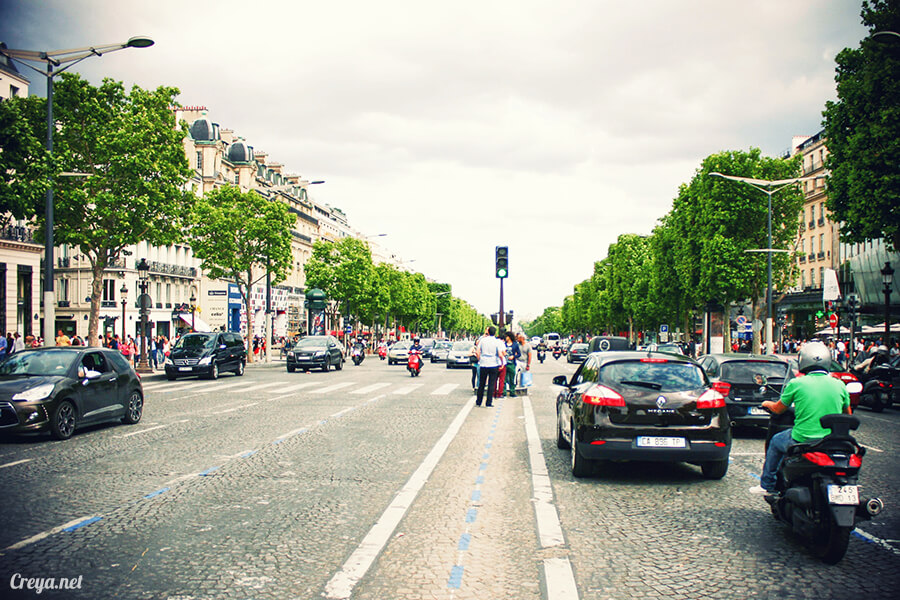
[ The sight of such a perfectly straight road nearly brought tears streaming down my face… ]
I’m convinced Paris could be the official spokesperson for the saying “water is the source of life.” Spread out a tourist map of Paris andyou’ll find most of its cultural attractions clustered along the two banks of the Seine.North of the Seine is the Right Bank, the city’s main commercial and political district; south of the river is the Left Bank, steeped in the effortlessly stylish aura of cafés, art, and literature.
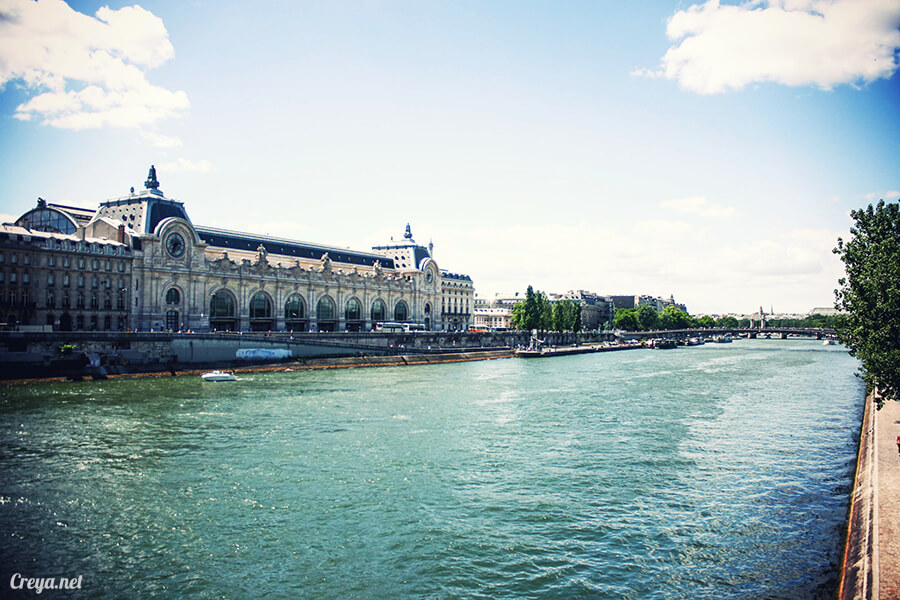
[ Take one giant watermelon, slice it down the middle: one half goes to Left Bank cafés, the other to the French monarchy. ]
[ Most of the best-value sights are gathered along the riverbanks too~ (I was definitely not out catching Pokémon.) ]
The road that rescued this lost little lamb lies on the Right Bank of the Seine. The scenery on either side is basically a one-road super compilation of Paris’s greatest hits:starting at the Louvre, it runs west through the Tuileries Garden, Place de la Concorde, the Champs-Élysées, and finally to the Arc de Triomphe, all in one straight line. This is the historic axis through central Paris, also known as the Voie Triomphale,and every stop along it is a name people of all generations have heard since childhood. You can even see the Eiffel Tower from the riverbank—the Seine is more impressive than a Kinder Surprise.
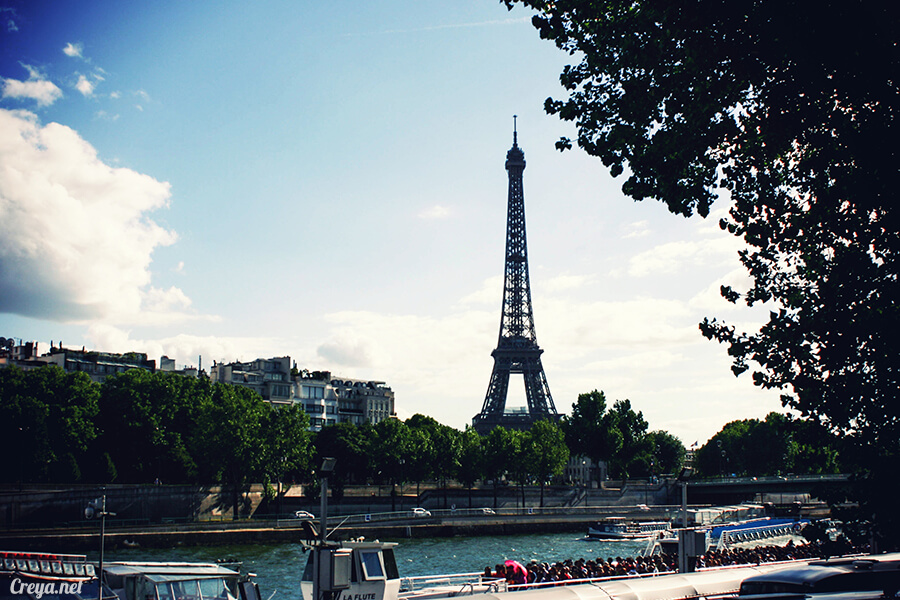
[ Just like Taipei 101, everyone complained about its design while it was being built. Yet once it was finished, how many people came to Paris just to see the Eiffel Tower? ]
Naturally, those glittering names were what drew me here too, even though before planning my Paris itinerary, I had no idea the Arc de Triomphe, the Louvre, and the Champs-Élysées were all in the same area.This grand avenue stretches for roughly four kilometers, and walking nonstop from the Louvre to the Arc de Triomphe takes at least an hour(since this road won’t let you get lost, one hour is actually pretty realistic—as long as you don’t lose yourself inside the shops on the Champs-Élysées…). Keep heading west to the Grande Arche and you’ll need another hour. It was only my second day in Europe, but this forced march was already enough to earn me a bona fide case of Europe legs.
[ One road threaded through a series of roundabouts—Parisian urban planning, skewer-style. ]
So that was the Louvre Museum from The Da Vinci Code, right? A name I had always thought existed only in legend had suddenly appeared before my eyes, and it hardly felt real. I. M. Pei’s glass pyramid shone even more brilliantly amid the surrounding French palace architecture. At the time, though, I didn’t know that the originalLouvre had actually been a fortress before it was converted into a royal palace and expanded.I’m not even sure whether, back then, I knew thatthe building before me had once been a royal palace, home to France’s kings until Louis XIV moved the court to the Palace of Versailles.。
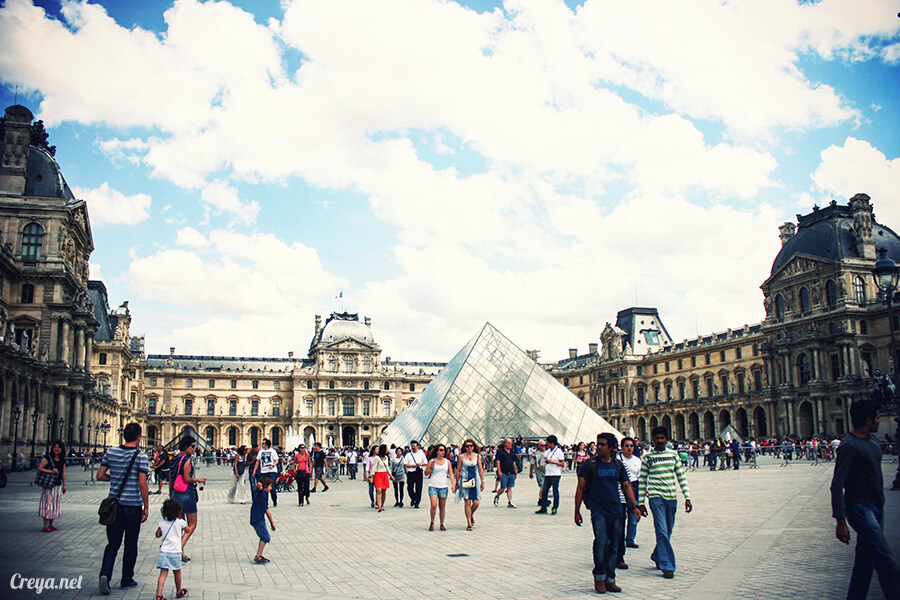
[ The pyramid is like a diamond set inside the Louvre, adding a touch of modern luxury. ]
Directly opposite the Louvre Pyramid is the Tuileries Garden. Perhaps they were terrified of not being able to find the way home at night, because they actually used a 19-meter-tall triumphal arch as the entrance! The moment I spotted the famous arch, I excitedly joined everyone in taking photos, while quietly wondering how I had reached my planned destination with virtually no effort. Only after studying my map for ages did I realizethat Paris has more than one triumphal arch.Later, while traveling through other European countries, I also discovered that France isn’t the only country in the world with them. Any gateway modeled after those of ancient Rome to commemorate a military victory is a triumphal arch.
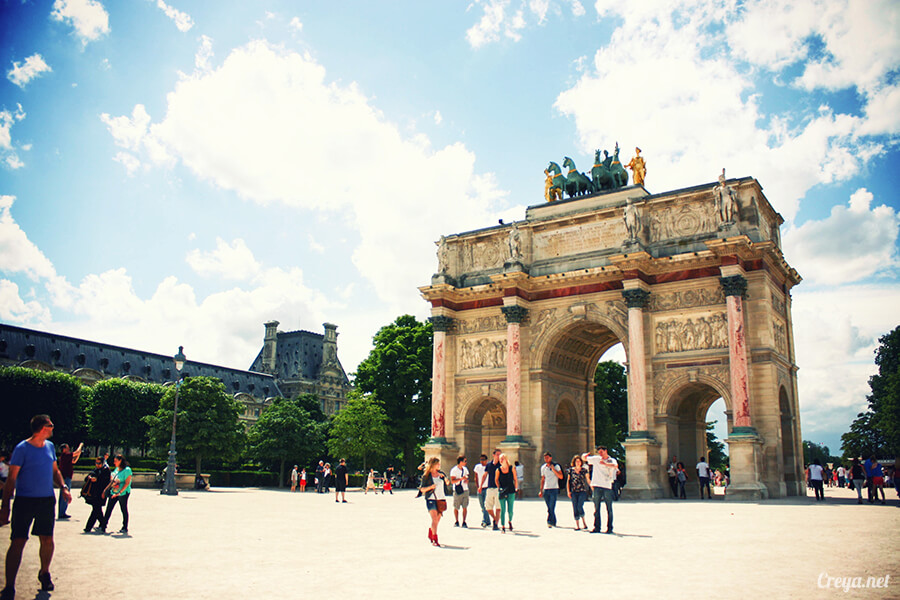
[ The Arc de Triomphe du Carrousel was originally an entrance to the Tuileries Palace and was built to commemorate Napoleon I’s military victories. Sadly, the palace was burned down during the upheavals of the French Revolution, leaving the arch as a landmark in the square and enduring proof of the history that once unfolded here. ]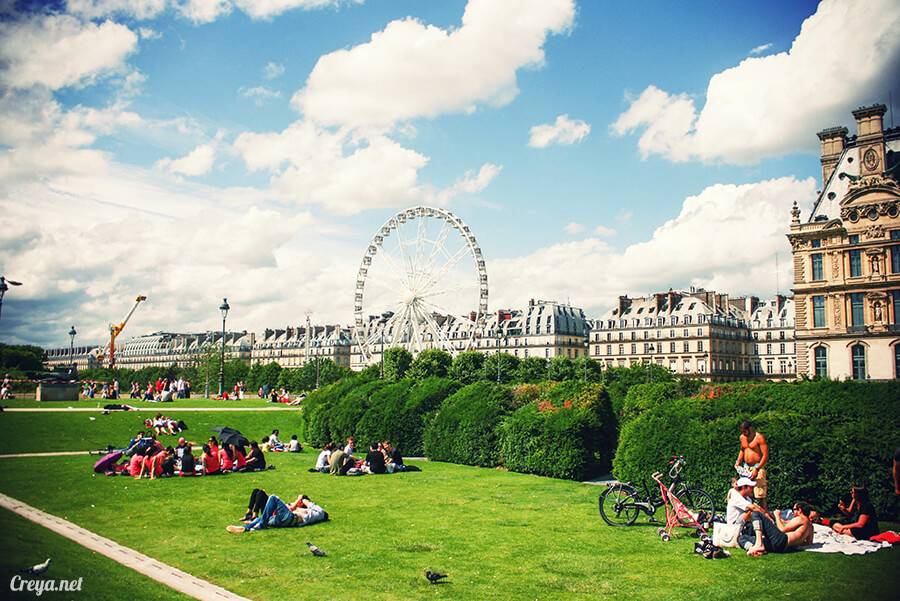
[ I thought I’d photographed one solid chunk of fresh meat. Looking closely after I got home, they really were all joined together. (They were beside a baby stroller—what more do you expect?) ]
Passing the former site of the Tuileries Palace, where only the garden remains, I stood beside the pond and took in the remnants of old Paris surrounding me in every direction. Thanks to my own decision and persistence, I was lucky enough to step inside scenes that had once existed only in photographs. Every movement I made within that picture became a memory of my own.
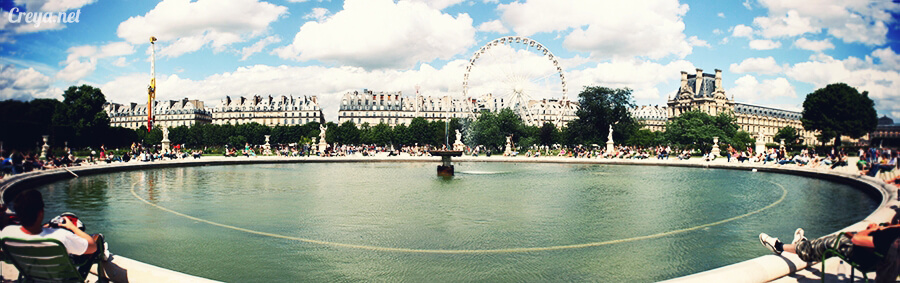
[ Find a chair, sit down, and soak up the warm Parisian summer sun—you’ll soon be as tanned as I was. ]
After leaving the garden, I reached Place de la Concorde. At the time, it looked to me like nothing more than a beautiful roundabout with lovely fountains. Only later did I learn that it had hosted the wedding celebrations of Louis XVI—and then, during the French Revolution, became the place where he was sent to the guillotine. The distinctive obelisk that caught my eye was actually a gift of friendship from Egypt to France.
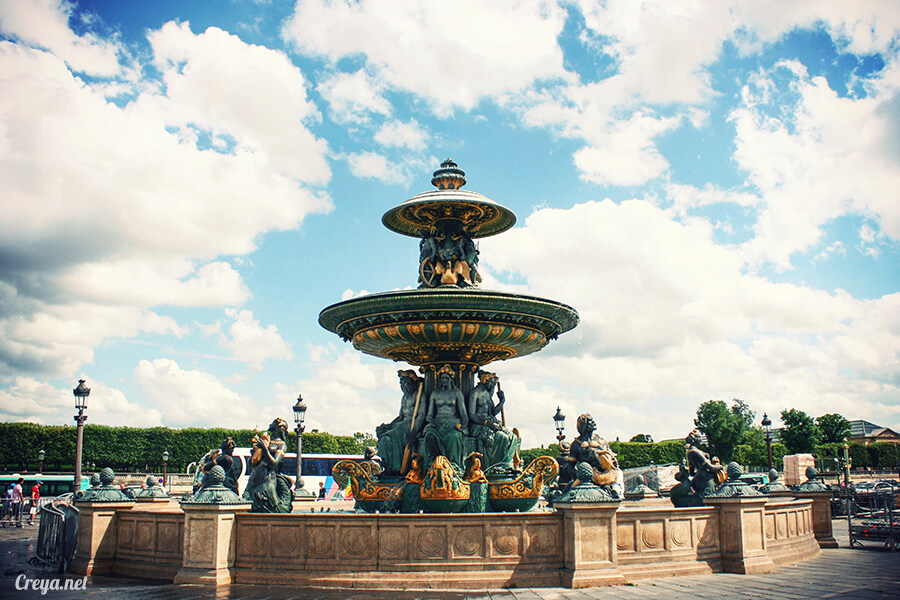
[ It’s also the fountain where the phone gets tossed in the final scene of The Devil Wears Prada. Too bad waterproof phones didn’t exist back then for a little product placement. ]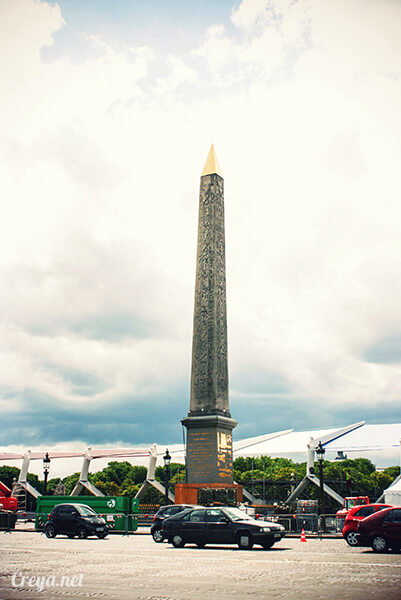
[ The obelisk is covered with Egyptian hieroglyphs, while its pedestal illustrates how it was transported to France. At the time, I looked—but understood absolutely nothing. ]
Walking through this living, open-air museum of history was nothing like visiting the Palace of Versailles or the Palais Garnier, where a guide or audio headset could explain the story behind every building and sight. I tried digging through the storage drive of historical knowledge in my brain, but every last record had been permanently deleted the instant I finished filling out my university entrance exam answer sheet. This 85-day journey through 16 European countries had been inspired on a whim and planned in a rush. Before it began, I knew very little about Europe; for many countries, I didn’t even relearn where they were until I opened a map to plan my route and gave myself another geography lesson.
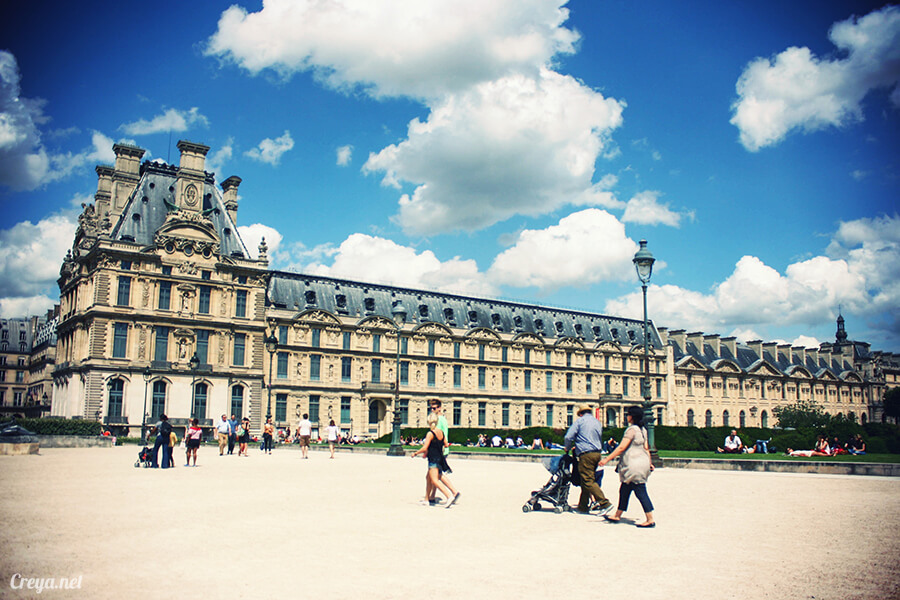
[ So unreal it looked exactly like a property developer’s 3D rendering. ]
Standing on Paris’s historic axis, I was surrounded by genuine historic monuments. Yet without the background knowledge needed to understand them, all I could see were one lavish, beautiful piece of urban decoration after another.I realized that I had rushed out the door carrying only an itinerary, forgetting to bring the knowledge behind it. Rather than traveling freely and spontaneously, I was merely brushing against the outer shell, unable to touch the soul within.
Travel ten thousand miles; read ten thousand books. It turns out the two were never meant to be separated.
When traveling, we take in the world carefully through all five senses, or listen to the descriptions and stories told by local people.
The history, literature, and other materials we have read then help us understand everything we observe around us.
To travel ten thousand miles, we must also read ten thousand books: each enriches and completes the other.
Fortunately, I began documenting my travels. Writing allows me to travel through them once again and fill in the cultural background I failed to notice at the time—and the reflections that come afterward can be even more valuable than the journey itself.
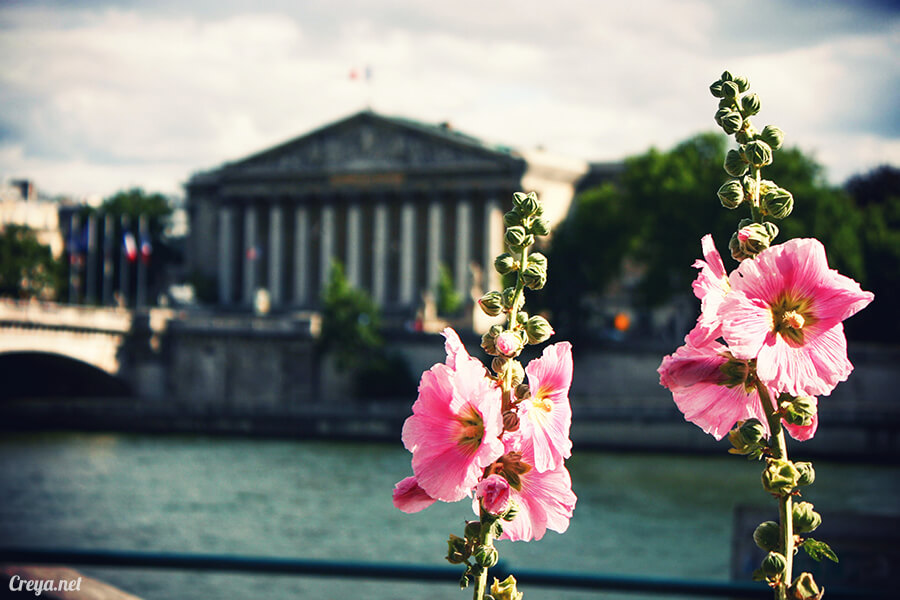
I also believe that every journey has meaning. Even if my time in Paris looked like a whirlwind tour,
it still showed me just how enormous the world is—and how very, very much I do not know.,
By honestly facing my own shortcomings, I gave them the chance to propel me toward growth, again and again.
Without the impact of that moment, perhaps these realizations would never have had time to settle and take shape.
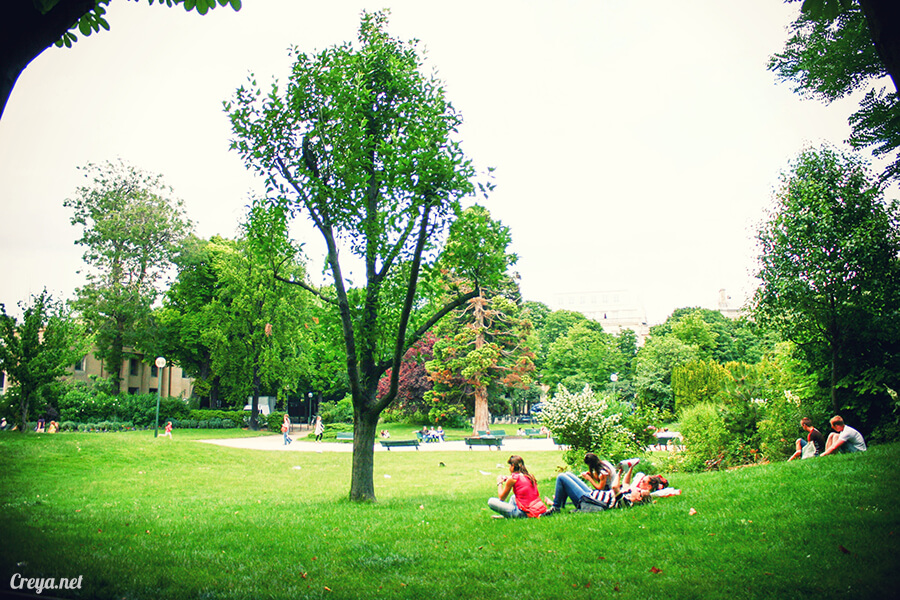
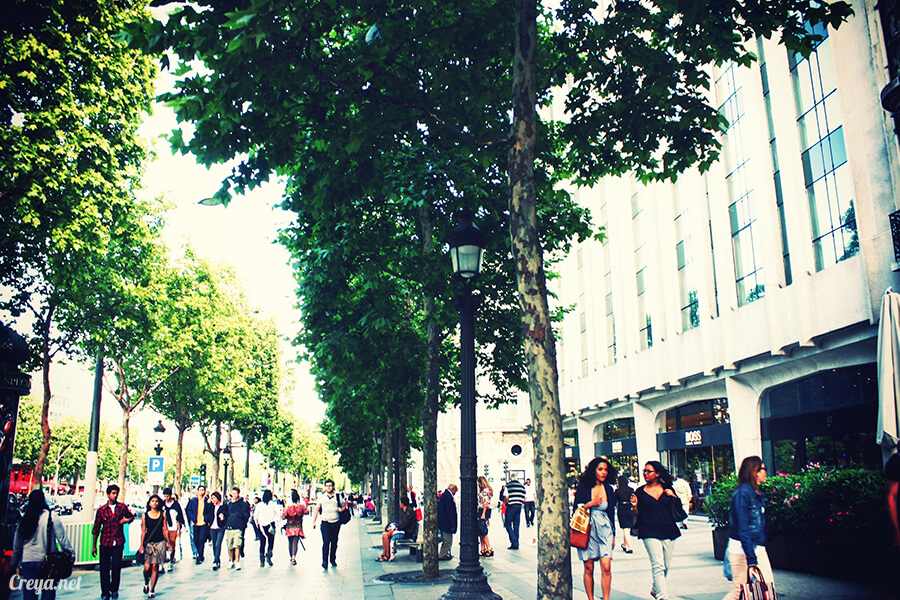
There was only one place along the Voie Triomphale where I briefly escaped the anxiety of knowing nothing: the fashionable Champs-Élysées. Continuing on from Place de la Concorde, I entered a broad, wooded stretch and briefly wondered whether I had taken a wrong turn. It wasn’t until luxury boutiques began appearing one after another, with waves of perfume drifting out through their doors, that I knew I really had reached the Champs-Élysées. Yet it felt more like a wider version of Taipei’s Xinyi District. Apart from a few extravagant window displays worth stopping to admire, these luxury goods were hardly meant for a traveler carrying nothing but a 19-inch suitcase.
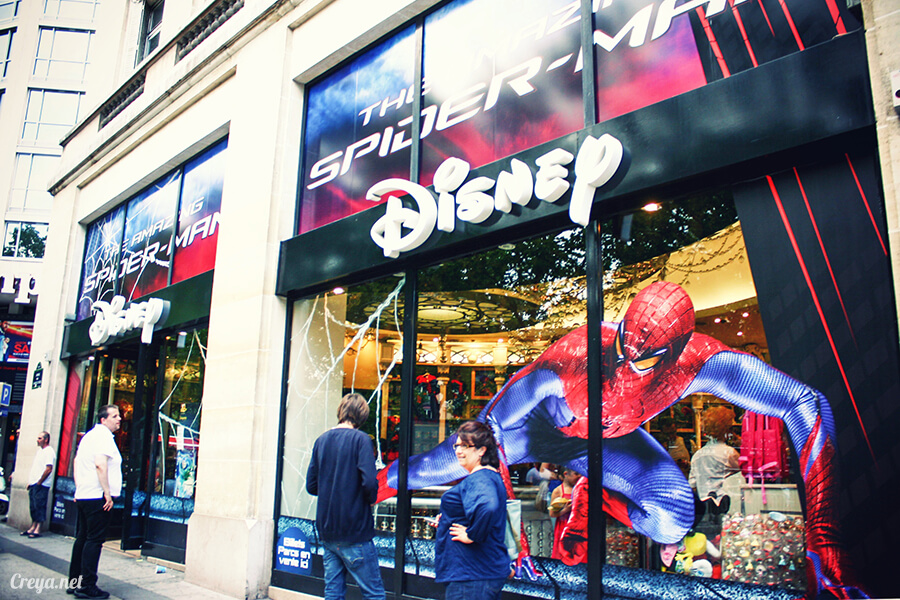
[ This was probably the only kind of window display capable of catching my attention…. (How old am I, again?) ]
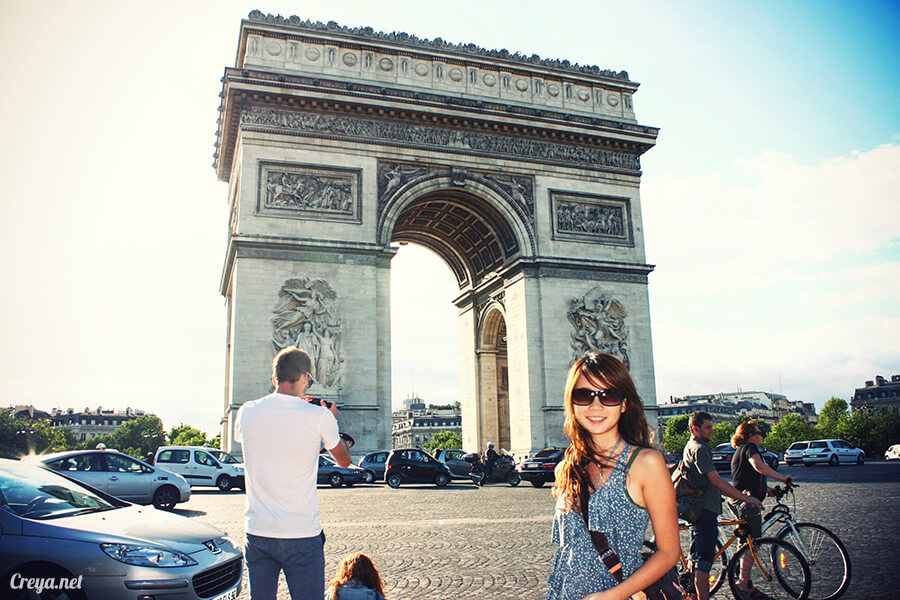
And heaven knows how stunned I was to discover that the Arc de Triomphe stood in the middle of a giant roundabout, surrounded by streams of traffic. For a moment, the sheer absurdity made me feel as if I were looking at a Western version of Taipei’s North Gate. Napoleon commissioned this famous grand arch, which took 30 years to complete and is intricately carved with scenes of military victory. Yet Napoleon himself passed beneath it only once—while others carried his body.
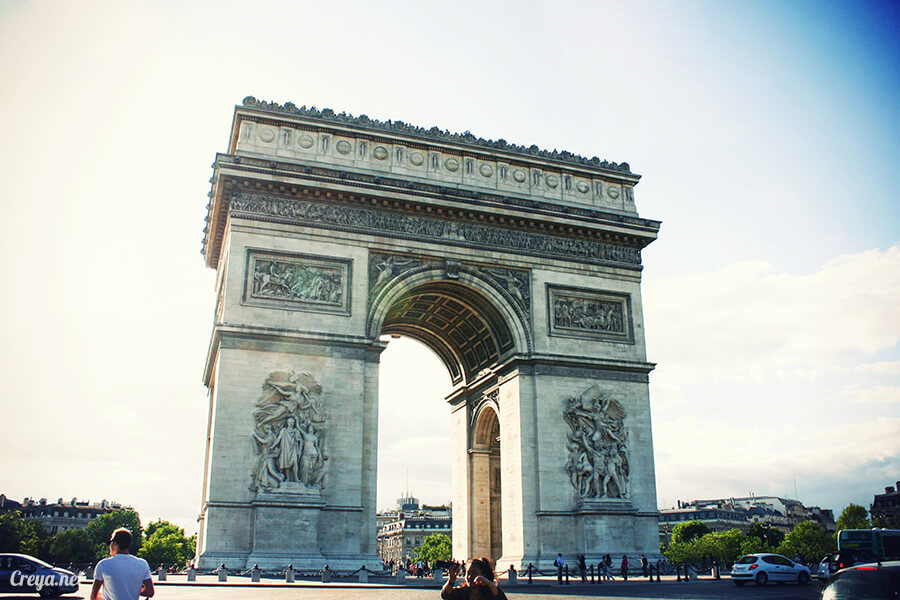
Even after reading up on it,there is still one thing I cannot understand: why does the Arc de Triomphe need 12 exits?! Are we slicing a pizza here?!
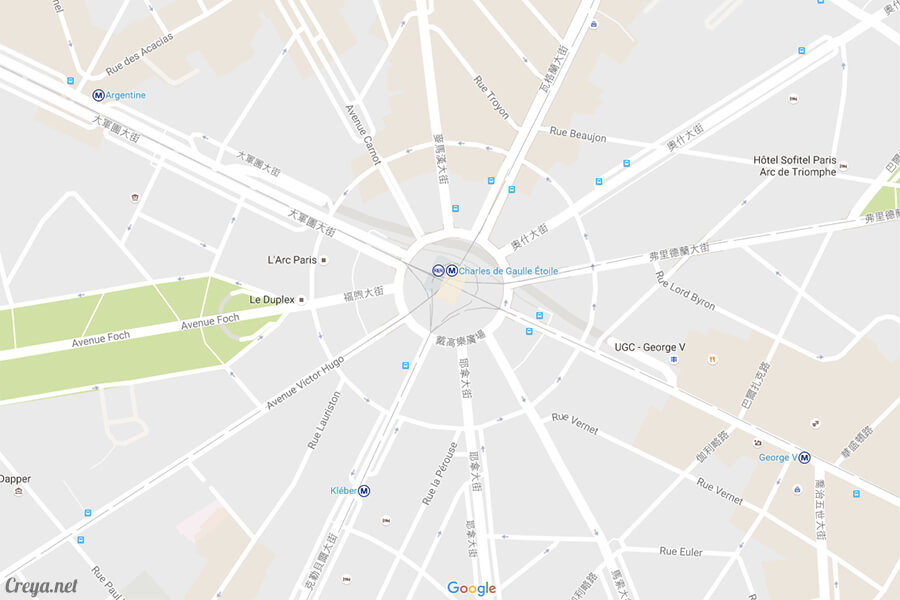
[ How am I supposed to cross this?! How am I supposed to cross this?! You tell me! (Meltdown, round two.) ]
It seems Paris still had one more question mark to leave me with.
✈ Travel date: 2012/6/30
| Watch Me Earn My Europe Legs | France: 9-Day Series
● France: Not Quite What You Imagined?
● France Day 1 – What?! Charles de Gaulle, France’s Largest International Airport, Doesn’t Speak English?
● France Day 1 – The Palace of Versailles in Paris, France: Unblocking the Historical Connections in My Brain
● France Day 2 – No Getting Lost, No Reward: Finding the Old-World Charm of Paris’s Palais Garnier
● France Day 2 – From the Arc de Triomphe to the Champs-Élysées: A Historic Parisian Route and a Lament for All the History I Didn’t Know
● France Day 3 – The Louvre Museum in Paris: That Faint Smile Hidden Away in a Gilded Palace
● France Day 3 – My Own Impression of Paris! Impressionist Masterpieces at the Musée de l’Orangerie and Musée d’Orsay
● France Day 4 – Mont-Saint-Michel: So This Is Where the Hole in My Head Came From
● France Day 5 – Two Holy Sites in One Day: Two Sides of Paris at Sacré-Cœur and Notre-Dame
● France Days 1–5 – The Eiffel Tower: Five Views of Paris’s Magic-Lamp Lighthouse
● France Day 6 – Avignon, the Ancient City of Provence That Grows Even More Beautiful at Sunset
● France Day 7 – Living It Up in the Lavender Fields and Red Towns of Provence
● France Day 8 – Arles in Southern France: The Roman Empire Through My Eyes and Van Gogh’s Brush
● France Day 8 – Another Ancient Roman Town in Southern France: Does Nimes Blend Old and New Any Better?
● France Day 9 – That Year, I Became Part of the Festival d’Avignon….
| Watch Me Earn My Europe Legs | 85 Days, 16 Countries Across EuropeFull List of More Posts


