

I doubt there are many road races in this world that could convince me to run them a second time—except NIKE WE RUN TPE. (I even wrote a second post about it. It’s practically Mission Impossible. And why, exactly, do I insist on typing nonsense that I’ll only have to translate all over again?) Not only is it an iconic sporting event for women, but each race has also marked an important milestone in the running goals I set for myself.
This time, however, I didn’t just miss my milestone—I also experienced something that had never happened to me before. My life practically flashed before my eyes, and sure enough,NIKE WE RUN TPE always becomes an unforgettable memory in a girl’s life…This has weighed on my mind for ages, keeping me tossing and turning whenever I wake at midnight. (How melodramatic—I haven’t lost a single night’s sleep.) I’ve finally decided to come clean about it. May my experience serve as a cautionary tale for runners everywhere—oh, the tragedy, the heroism! I also want to share everything I learned along the way, especially this revelation:Heart rate is an essential indicator for monitoring your body throughout a race.!
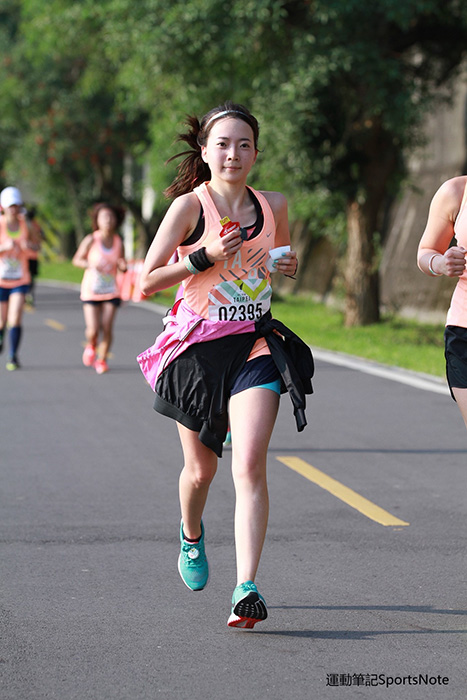
[ Thanks to the photographer from Running Biji for capturing this wonderfully fake photo of me smiling only because there was a camera pointed at me. ]
WE RUN TPE on June 8, 2014, was my first-ever half marathon. Before registering, I had never run more than 10 kilometers in one go, so I was incredibly nervous. I diligently followed the half-marathon assistant coaches’ training program for three months, and on race day I carefully adjusted myself with every nerve-racking step forward. I ran along Ren’ai Road, crossed the Xinsheng Overpass—a place my feet would never normally touch—and survived the endlessly repetitive Dajia Riverside Park. Finally, after 2 hours and 18 minutes, I crossed the finish line with more than 21 kilometers behind me. I was beside myself with excitement! The 2014 WE RUN TPE half marathon promoted me from running preschool to the senior class! Mom—I’m all grown up! (Finally.) (My deeply heartfelt account from that year is here)
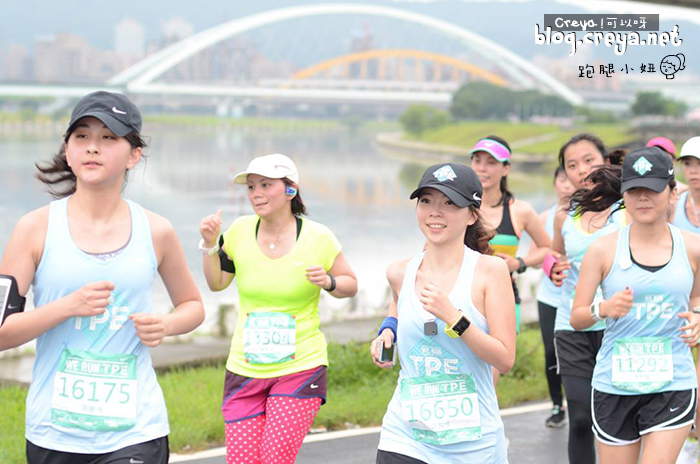
[ Last year’s joy was written all over my face. The Chariots of Fire theme was swelling in my head; all that was missing was a cinematic sob as I crossed the finish line. ]
But Taipei road races always seem to be on either Ren’ai Road or the riverside. I was already tired of the route—did I really want to run it again? Before registering for this year’s WE RUN TPE, a tiny seed of doubt sprouted in my mind.I treat running like travel—a chance to enjoy the scenery.If I was going to revisit the same old places a year later, I needed some motivation. Fine! I had already conquered the distance; now it was time to improve and challenge my speed. I would use the same course to beat my former self! They say children grow an inch overnight. I was a late bloomer, so I’d settle for growing an inch a year.And so, at WE RUN TPE on April 26, 2015—my third half marathon—I was going to break two hours and become a sub-two-hour half-marathon woman!(Now that is some spectacularly big talk.)
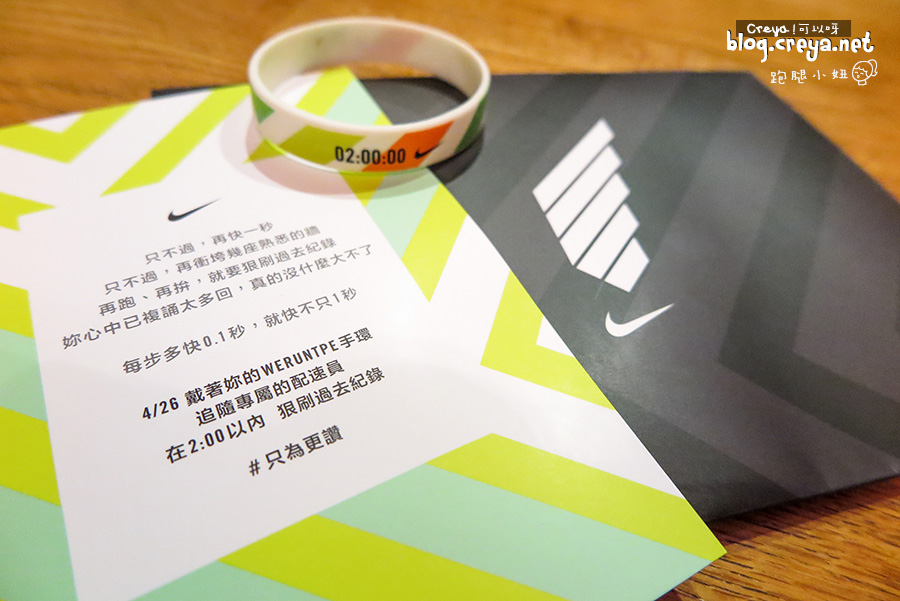
[ Receiving Nike’s encouragement and my starting-zone wristband made me feel as though I had been assigned a mission. ]
“Creya, aren’t you worried you won’t finish?” a visibly panicked coworker asked me a few days before the race.“Of course I’ll finish. It’s just a matter of how long it takes.” (Shrug.)」And technically, I wasn’t wrong. With a four-hour cutoff, you could run and walk your way through 21 kilometers; the only question was how much you wanted to demand of yourself. Finishing a half marathon shouldn’t have been difficult for me by then, since I had already completed two. My second was the beautiful, cool-weather Chishang super half marathon. I had been doing loads of yoga and running less at the time, so I took it easy and enjoyed the scenery, ultimately covering 23 kilometers in 2 hours and 21 minutes. On top of that, for the three months leading up to this race I had been attending Rainbow Runa running class led by Teacher Edison, with one high-intensity session every week. Even though the targets he set for me were basically at the class’s intermediate level, and I kept wondering how on earth I could possibly meet them, my body was very honest and KO’d every single one.That self-hypnosis was probably what gave me the confidence to talk quite so spectacularly big.
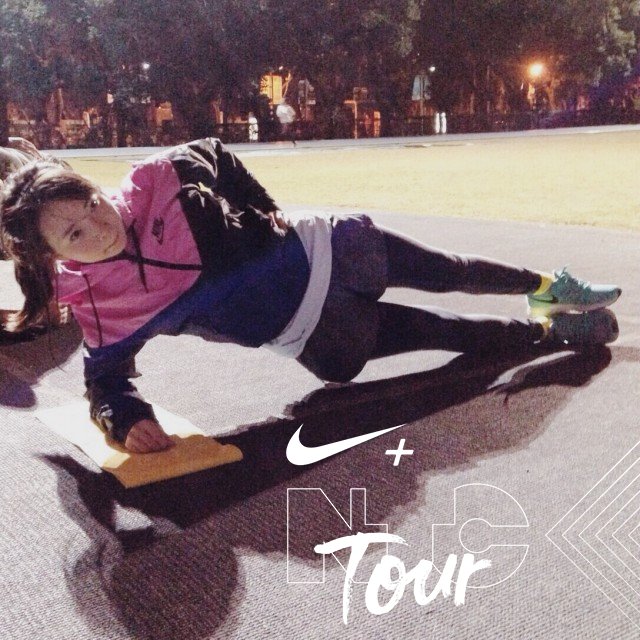
[ Group training didn’t just cover running—muscular endurance came bundled into the package too. ]
During the week before the race, I busied myself preparing my gear and setting up my freshly delivered EPSON RUNSENSE SF-810V sports watch, which combines run tracking and heart-rate monitoring. (Get to know me through the unboxing post) In keeping with my usual philosophy of “look good first, run fast second,” I also went to Nike to buy something that would match this year’s event tank. It had basically become an essential part of my pre-race ritual. (They deliberately released such an unusual color—this was clearly a Nike conspiracy!!!)
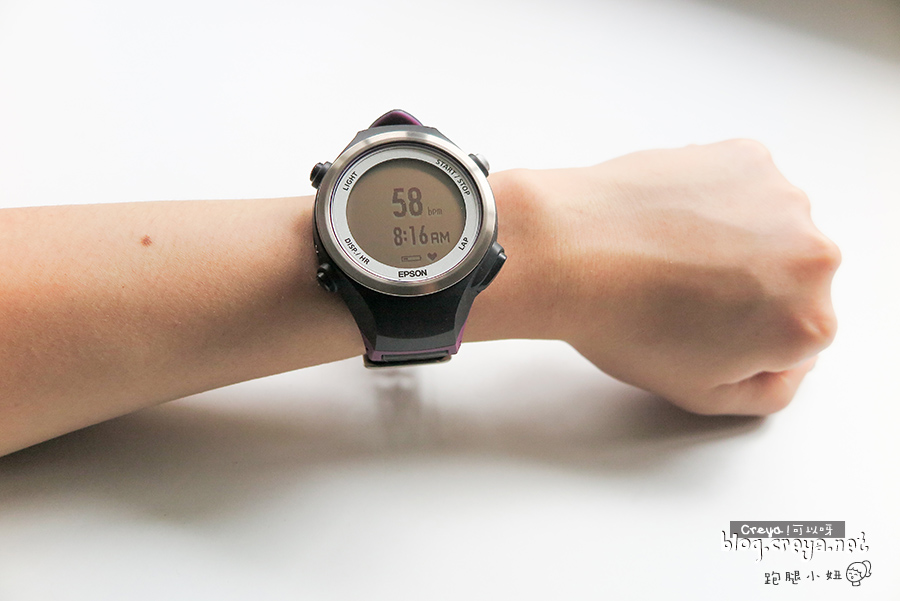
[ With an EPSON RUNSENSE SF-810V on my wrist, hope springs eternal. ]
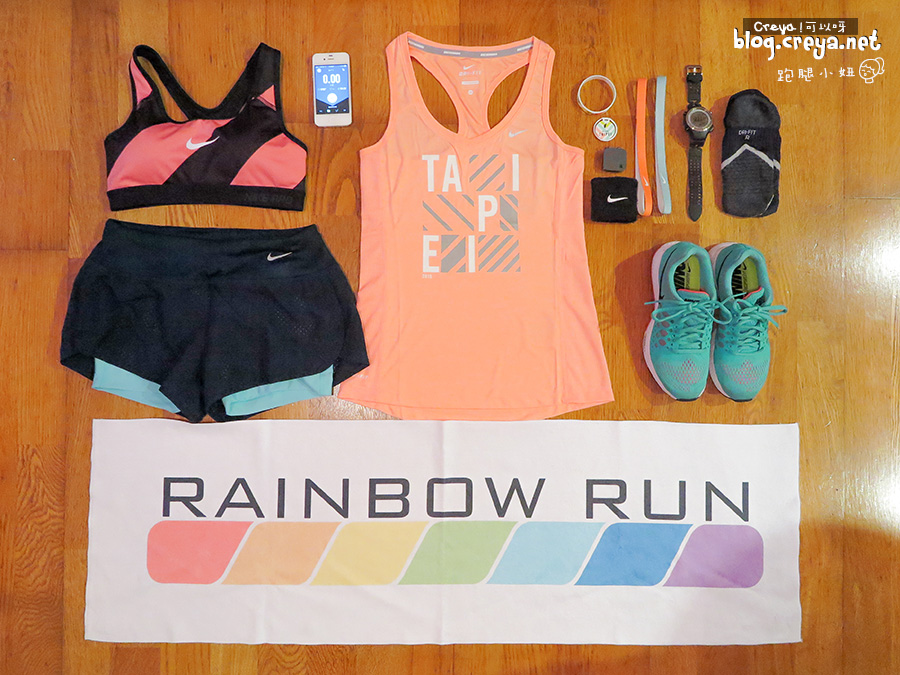
[ My battle gear: sports bra, top and shorts, wristband for wiping sweat, small automatic interval camera, headband, sports watch, Pegasus shoes, and one running-club towel. ]
The night before the race, I even stayed at the home of a coworker who was also participating. Since the race started at 5:30 a.m., we would have to wake up sometime after three to get ready and leave—and there was a lot to do. Even though I had already coordinated my battle outfit, after waking up I still had toput it on, eat a substantial energy-boosting breakfast, empty my bowels as thoroughly as possible, and, most importantly, apply my makeup.We’re women, after all. We know makeup isn’t good for the skin while exercising, but at a major race like this, cameras are constantly firing at you. Skip the makeup and you’ll want to bang your head against a wall when you see the photos—unless you open your wallet and get eyelash extensions so you can buy yourself a little more precious sleep.
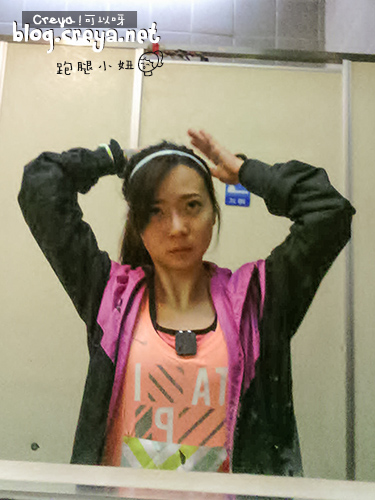
After several girls spent ages fussing over this and that, we arrived at the venue—even though we were staying quite nearby—and discovered there was less than an hour until the start! And women aren’t merely busy getting dressed after waking up; we’re extremely busy before the start too. Busy doing what, exactly? Your correspondent went into the field to investigate. It turns out we had tocheck our bags and attach our timing chips, bibs, and assorted bits of gear to ourselves.(That is, if we hadn’t managed to finish all that before leaving.) Then there might be another trip to the toilet to make sure our abdomens weren’t carrying any unnecessary cargo, lest we have to waste time queuing for a toilet while trying to race at full speed. By the time we were finally ready, everyone else had already begun warming up, while we hadn’t even reached the starting area. After a chorus of “Excuse me—sorry!” we squeezed into the section assigned to runners targeting two hours just as the starting gun was about to fire. This was my first race where my only warm-up consisted of rushing frantically to the bathroom, with no stretching whatsoever—and I was about to run 21 kilometers. Truly reckless. Good children, never do this!
RACE LESSON, TIP 1: Leave yourself plenty of time to prepare and warm up before the race.
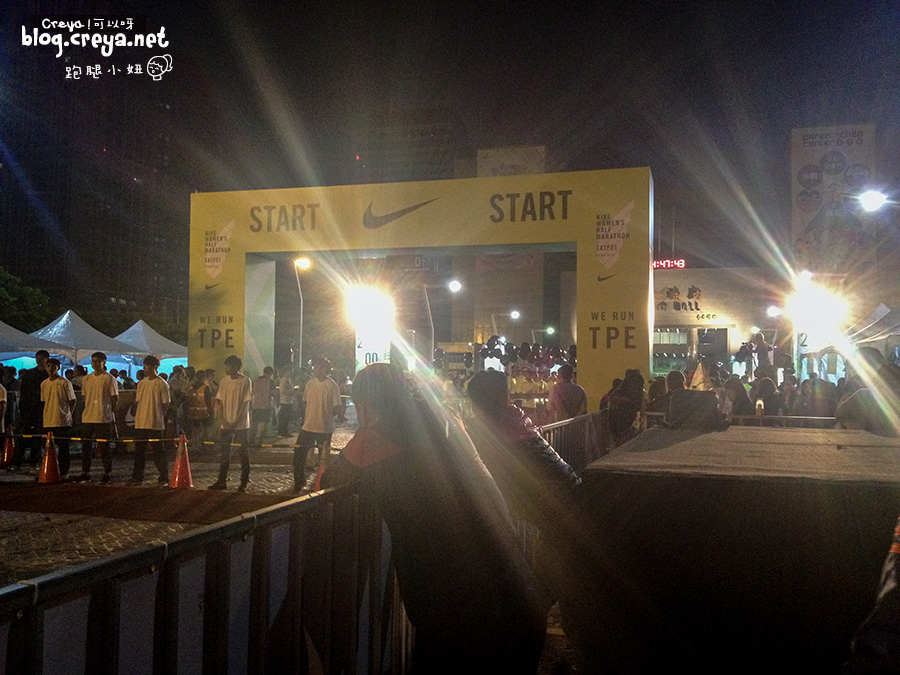
[ You’re seeing correctly: it was still dark an hour before the start. Then black turned to white in an instant, and by the time the race began, daylight had arrived. If only tanned skin could change that quickly. ]
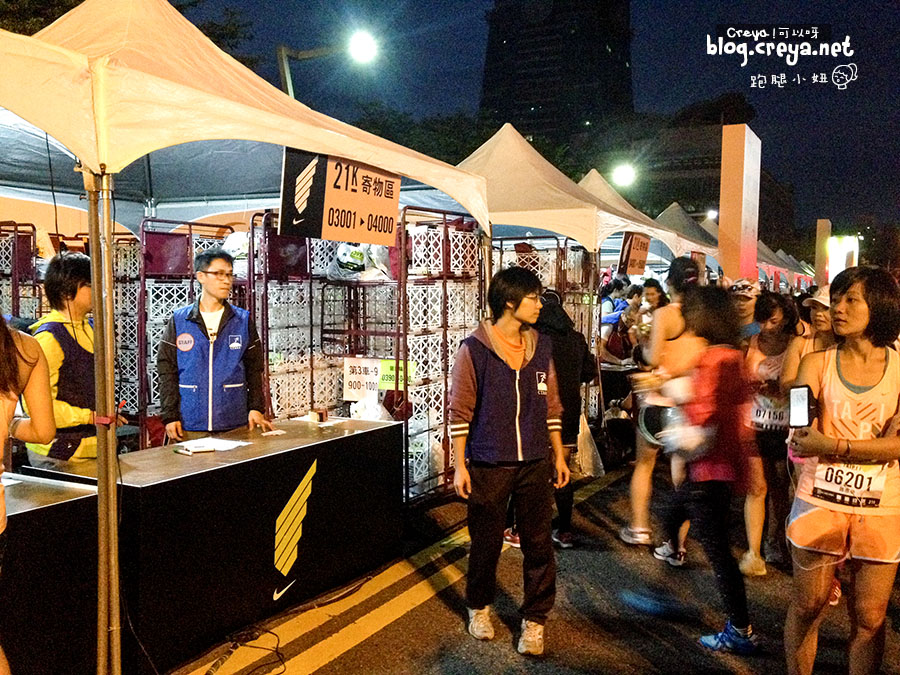
[ Nike’s bag-check service was very efficient this time, so we didn’t actually spend much time there. Most of it was swallowed by our own endless assortment of little things. ]
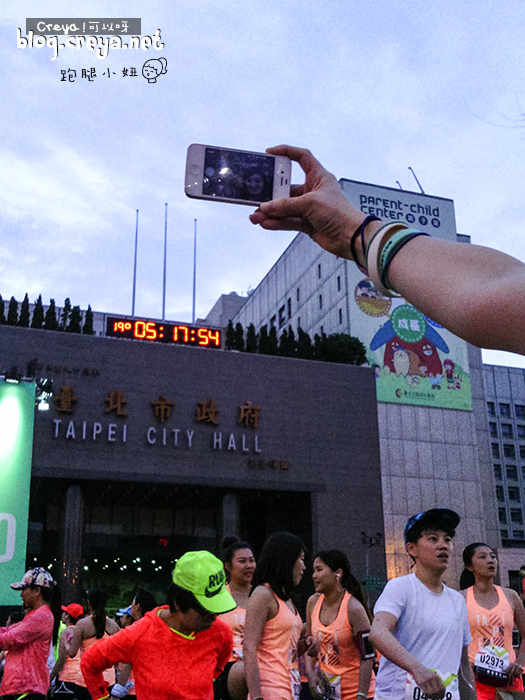
[ Oh, right—another essential pre-race task: taking selfies. ]
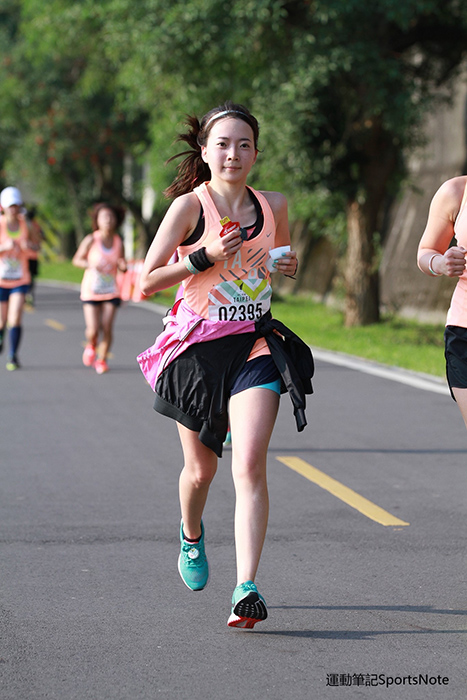
The race began amid the chaos, and all I could do was hurry along with the crowd. But the thing keeping me flustered and unable to settle into my run was actually the jacket tied around my waist. An April dawn still carries a chill, so I had worn it, thinking that after meeting up with everyone fromRainbow Runthe group before the start, I could temporarily leave my little jacket-child in their care. That was why I hadn’t checked it with my bag. But somehow we became so busy that we never joinedRainbow Runthem for the warm-up, and then I couldn’t find them at all. I kept searching until the very last moment, but just like love, some things cannot be found no matter how hard you look. (Covers face and weeps.) In the end, I could only tie the jacket around my waist, thinking it was very “ting-teh”—Taiwanese for being in the way—while worrying about whether the race photos would be fit for human eyes. They turned out roughly like this.
RACE LESSON, TIP 2: If you can check something with your bag, check it. Don’t burden yourself unnecessarily.
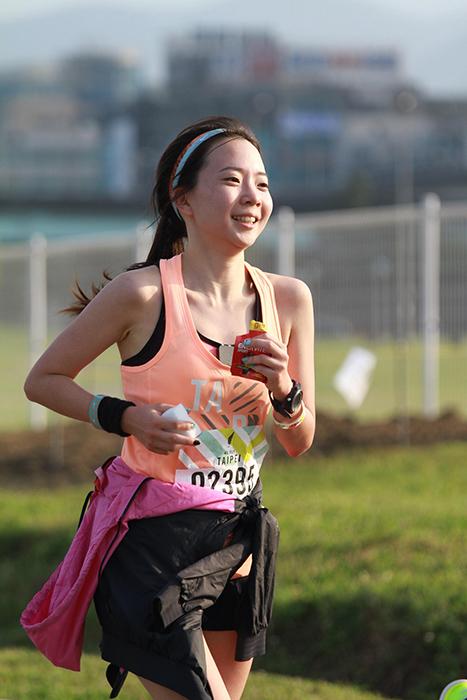
[ They really weren’t fit for human eyes. So much for the black shorts I had carefully coordinated. ]
For the first 5 kilometers, we ran along Ren’ai Road and Xinsheng South Road. The staggered starts made the course relatively uncrowded this time. Teacher Edison had originally assigned me a pace of 5:20 per kilometer for this section, and that was what I had programmed into my EPSON watch, but I completely lost control and charged along at around 5:10. My body still felt pretty good, though, so I was happy to build myself a little extra margin.
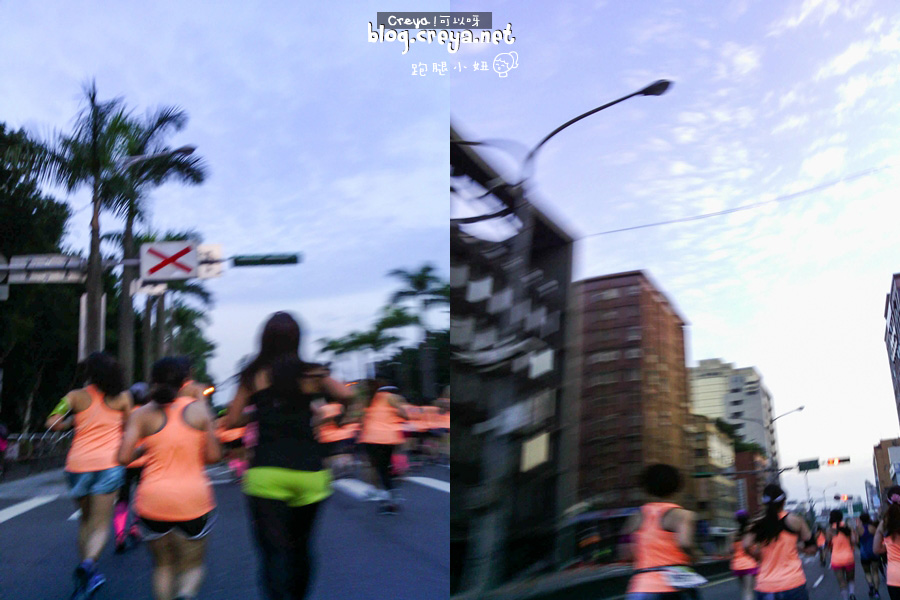
[ This is what they call a sense of speed. ]
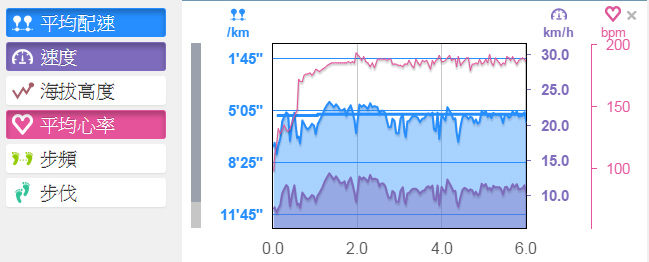
[ In reality, my speed kept fluctuating. Recorded by the EPSON RUNSENSE SF-810V. ]
The upcoming climb onto the Xinsheng Overpass was my Achilles’ heel. I had already learned that the hard way the year before—though I had done absolutely nothing to train that particular weakness. So this year, the moment I reached the bridge, I once again felt on the verge of collapse. Every step felt as though I were running in place; I grew slower and increasingly breathless, while screaming inwardly: Who built the Xinsheng Overpass this steep?! My combat power instantly dropped by 50 points and nearly went into the negatives.
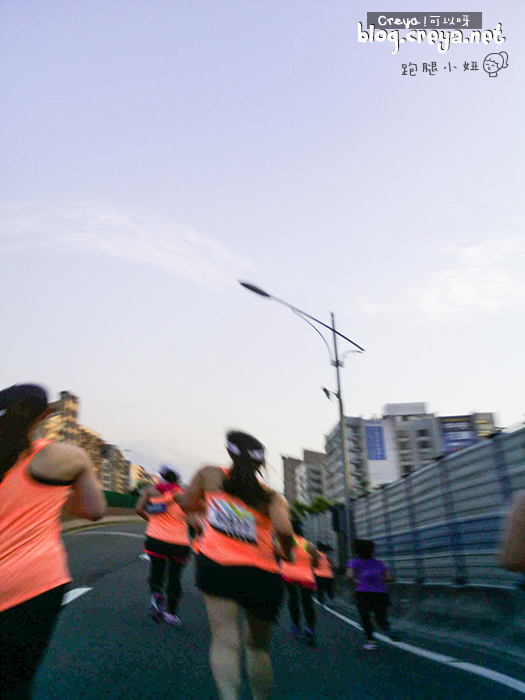
Eventually, I pushed on to the 10-kilometer mark. The section along Mingshui Road differed from last year’s route and was both beautiful and comfortable to run. By then, however, my energy had begun to fade. I could only maintain around 5:20 per kilometer, and the pace was quietly slipping further. This was the exact opposite of Teacher Edison’s instruction to accelerate during the second half, but no matter what I did, I simply couldn’t press the gas pedal any harder.
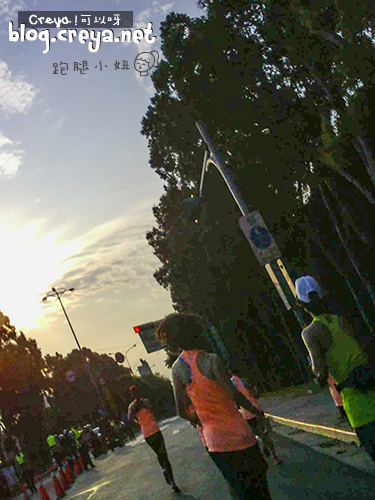
[ It felt a little like sunrise, with the sun directly ahead,but it wasn’t too hot. ]
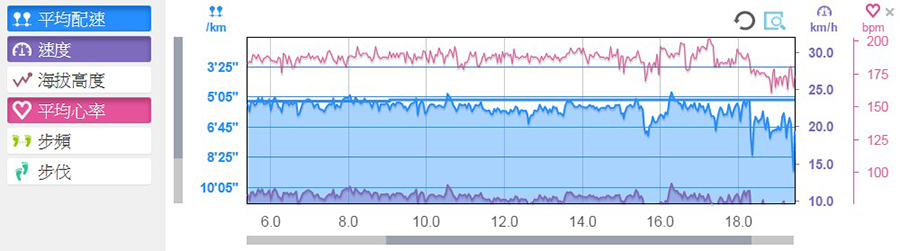
[ Unfortunately, I’m no Schumacher. I could only run slower and slower, drift farther away, and be shown the door. ]
At this point, I rememberedRainbow RunTeacher Edison’s pre-race advice and theenergy gel I had prepared for mid-race fuel. For a 21-kilometer race, though, you should start refueling at around 6–8 kilometers, giving your body half an hour to digest it so it can take effect during the second half.Naturally, I didn’t remember any of this until the 10-kilometer mark. (How could I forget something like that while running, when there was literally nothing else to think about? I truly am the goldfish-brain champion. What am I so proud of?) This time I had chosen a BCAA gel from ENERVIT, a well-known energy-gel brand available at convenience stores. But it was my first time trying it, and I hadn’t sampled it beforehand. The moment I took a mouthful, I discovered it was unbelievably “kau”—Taiwanese for thick and sticky. Holding it in my mouth immediately made me feel as if every drop of moisture had been sucked away, so it absolutely had to be taken with water. That meant carefully timing the gel for when I was approaching a water station, unless I happened to be carrying my own water. Highly advanced stuff. I ate it anyway because I felt tired, although it was actually useless at that point because it still needed half an hour to digest and kick in. Then I remained desperately thirsty.
RACE LESSON, TIP 3: Test your fuel before race day so you know whether your body tolerates it and what precautions you may need to take.
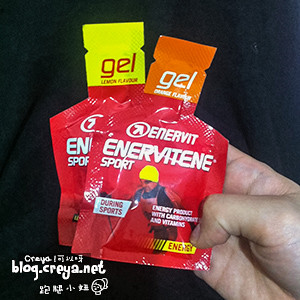
[ ENERVITENE SPORT GEL BCAA energy gel—this is the culprit. ]
After the angelic Mingshui Road section from kilometers 10 to 12, we turned onto the devil-tier riverside route, with little variation in the scenery and no shade. (Fine, I’m the one calling it devil-tier. My tolerance is exceptionally low.) Once again, WE RUN TPE placed its finish in the riverside park,so as the sun grew stronger during the second half, the completely exposed riverside route became a major challenge.I had calculated that April weather shouldn’t be too hot and might even be overcast, so I decided to wear my newly purchased headband—the important part. And naturally, if I wanted the headband to be visible, I couldn’t cover it with a hat. But once I reached the riverside and the sun began beating down on my face, I knew: oh dear, oh dear, I’m going to get dark! Without a hat for shade, the heat felt incredibly intense.
RACE LESSON, TIP 4: Don’t be too obsessed with looking pretty. Sunscreen and a hat are still the most effective.
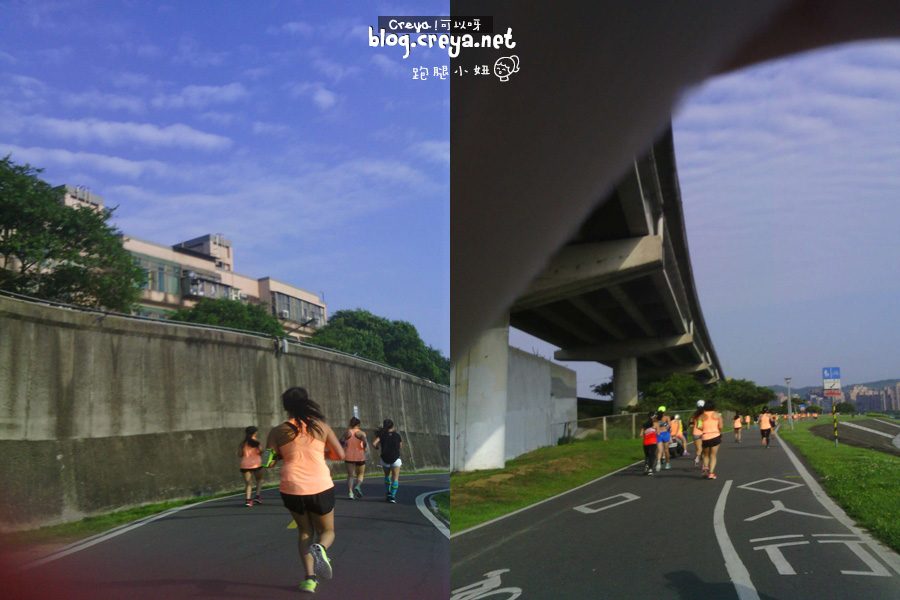
[ The greatest distance in the world must be the riverside. The extra sun is free of charge, and it shows no mercy. ]
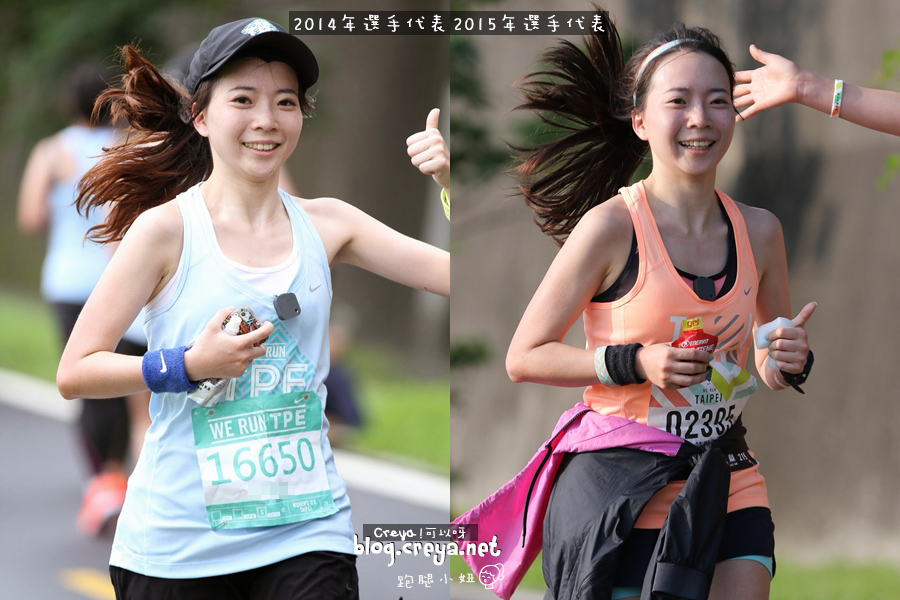
[ You can tell this runner made little progress over the past year—apart from still tying a jacket around her waist and stubbornly wearing a headband instead of a hat. ]
As the weather grew hotter toward the end of the race, hydration became increasingly important.Teacher Edison had also reminded us that the placement and spacing of every water station are carefully calculated and serve a purpose.So don’t fly past them like a race car. Make a pit stop at every station, and if sponges are available, take one to wipe yourself down and cool off. By the later stages, I was actually extremely thirsty. Although I stopped at every water station, I drank in a frantic rush, taking only one or two sips before wanting to throw the cup away as quickly as possible. All I could think about was catching up with my two-hour finish line.
RACE LESSON, TIP 5: When you reach a water station, drink if you can.
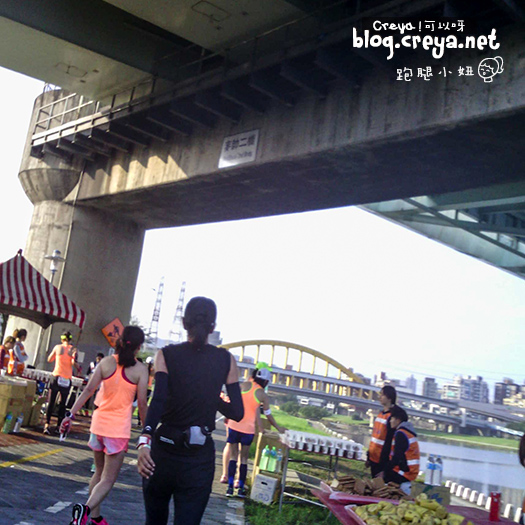
[ Sports drinks and water were my salvation, but I thought I didn’t need saving. ]
Little did I know that this chain of minor oversights would lead to something major. I grew weaker with every step.My pace dropped to 5:40 per kilometer, then 6:00, and after 18 kilometers I had slowed all the way to somewhere in the 6:30s. Maybe the energy gel had kicked in too late. Maybe the sun was so strong that, without a hat, I was practically evaporating. Or perhaps I simply wasn’t drinking enough to replace what my body was losing. I felt exhausted and desperately thirsty, even clutching my sponge to my lips and secretly sucking water from it. (That energy gel had made my mouth so dry, and drinking hadn’t helped.) Helplessly, I watched the two-hour pacers and runners who had originally been behind me overtake me one by one. Then, at 19.5 kilometers,Ipassedout.….
Yes! I passed out!That isn’t an adjective. It is a verb!I had never experienced fainting in my entire life, and then, just like that, I fainted!
Ah—of course, I didn’t think, “Huh? Why am I fainting?” as it happened, because I was literally unconscious. Before I went down, I only felt that my steps might genuinely be getting a little unsteady and that my energy might genuinely be running out. But then again, every time I attendedRainbow RunTeacher Edison’s running class, I also felt as though I was about to faint—and I never did. I always finished. So I kept thinking, just hang on for another 1.5 kilometers and I’ll be there! Who knew I would actually hit the ground!
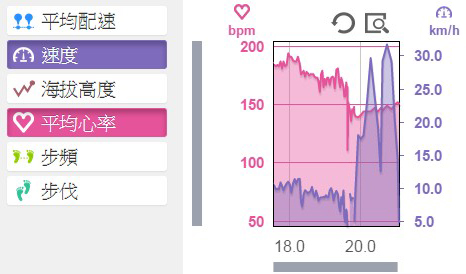
[ Returning to the scene of the fainting, Part 1: the EPSON RUNSENSE SF-810V record at 19.5K. Thank goodness—I still had a heartbeat! ]
When I opened my eyes, all I could see was the sky and several heads peering down at me. Then voices began asking, “Are you okay? Do you remember your name?” (A very practical question, I thought.) After lying there for a few more minutes, I was helped up and placed on a motorcycle to be taken back to the first-aid station. We passed runners who were still working hard, and I thought how lucky they were to still be running. Then I suddenly realized I was being taken back to the main station—which meant I wouldn’t get to finish!!!! I actually told the staff member driving me, “I feel better now. I can run.” Naturally, he rejected the idea firmly. The only thing missing was for him to grab my shoulders, shake me, and yell, “Wake up!”
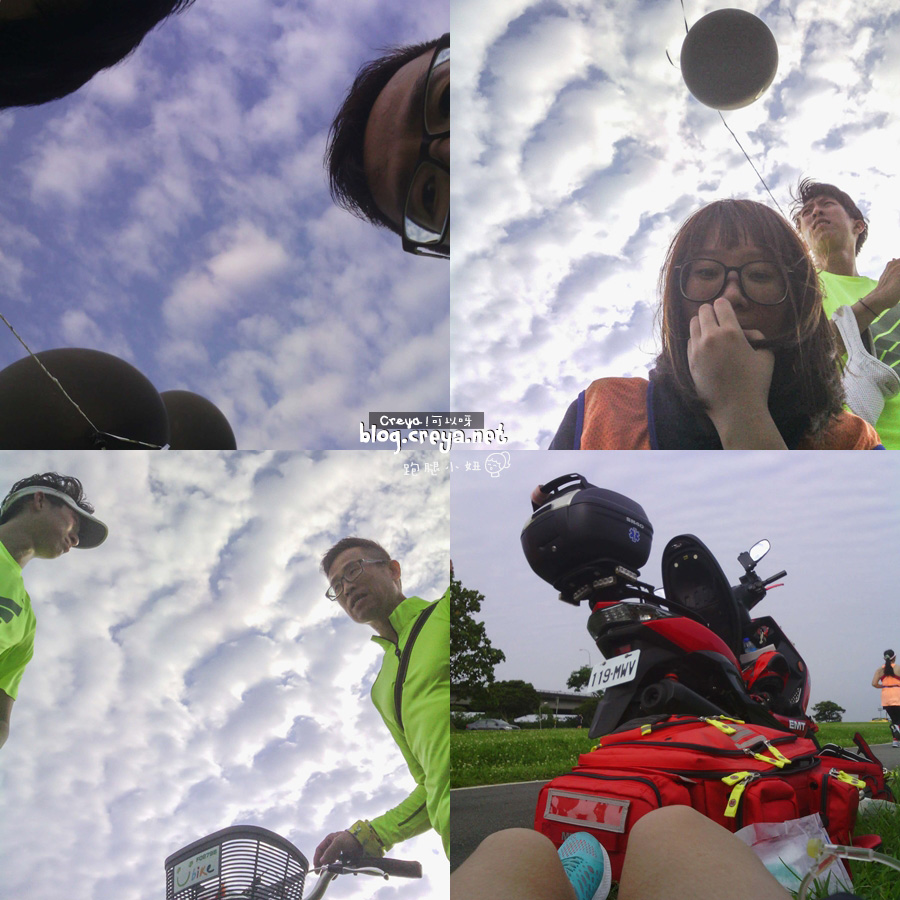
[ Returning to the scene of the fainting, Part 2: the most precious image captured by the interval camera on my chest! These are the people who saved me. (I would really love to thank Mr. Pacer properly—please contact me if you recognize yourself in this public photo. T^T) ]
But I deeply regret not challenging him to a duel,because after passing the finish line on the way into the main venue’s first-aid station, the motorcycle… it… it actually drove straight in front of the main stage. The area was packed with returning runners from both the 10-kilometer and 21-kilometer events. He asked everyone to make way and drove directly through the middle of the enormous crowd, while approximately ten thousand passing girls stared at me in open-mouthed astonishment. So if I had to fill out a race feedback form, I would definitely write:Please create a discreet route to the first-aid station that avoids the crowd. This was mortifying.(Then again, I’m publicly sharing it myself now, so I suppose I have no dignity left to lose.)
I lay in the first-aid station for only a few minutes, because the staff soon said, “You seem fine now. You can get up.” I thought, Already? The moment I stood, someone else was placed on the bed I had just vacated. Hmm. Apparently this first-aid station was extremely popular, with no time to waste. Even though I looked fine, I still vomited several times. I stared blankly at all the people coming and going, feeling that everything was strange. I touched my face and wondered why my nose felt like that. Then I held my phone without knowing how to use it! Yes! That was truly the most terrifying part!!It was so frightening that I burst into tears—how could I not know how to use my phone? Discovering that I hadn’t awakened with amazing English skills, acquired another foreign language, or forgotten everything about work was also the greatest disappointment of the whole incident.
Well, anyway, fainting became one of the unforgettable experiences of my life.Now I can tell people, “I’ve fainted before. I bet you haven’t!” And whenever someone says, “I felt like I was about to pass out while running,” I can roll my eyes and say, “Oh, you were fine! That is not what fainting feels like, okay?” Then I’ll turn my head coolly and jiggle my leg. Sigh—please don’t envy me, darling. (What is wrong with this woman?)
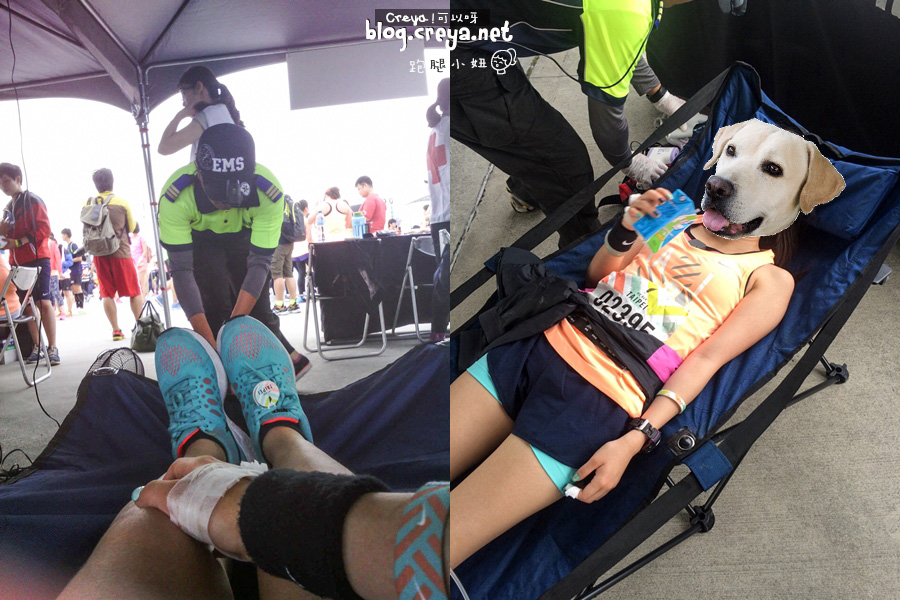
[ 100 things to do before you die: CHECK. ]
But once I had fully regained my senses, I discovered there was still more than half an hour before the course closed. (Good thing I fainted early?!) So,accompanied by my angelic coworker Bao’er,I returned to the 19-kilometer point and completed the final two kilometers. Naturally, I didn’t break two hours, but I did receive a finisher’s certificate with a time of 3 hours and 56 minutes, just before the event closed. Sure enough:“Of course I’ll finish. It’s just a matter of how long it takes.” (Shrug.)
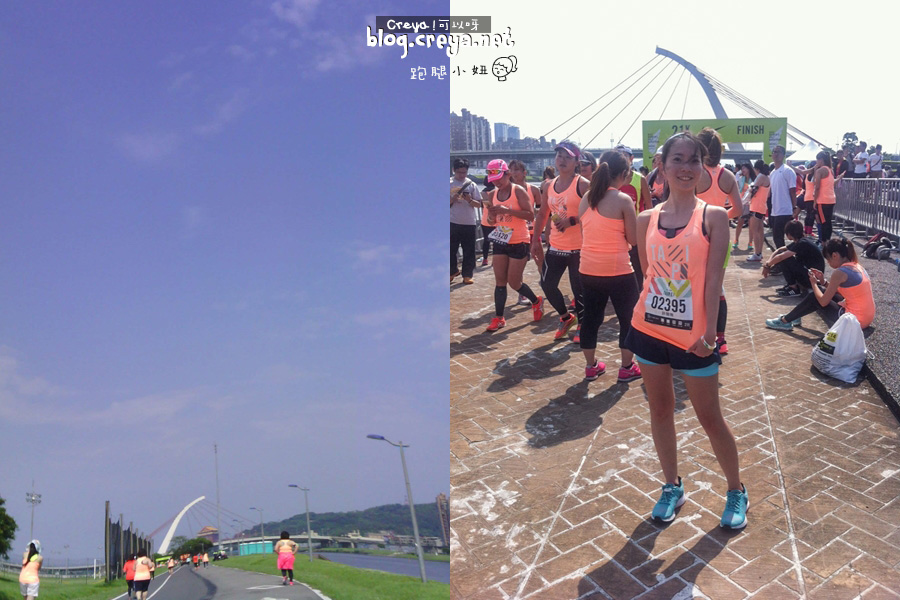
[ Back to this riverside course, which is basically the Xinhai Tunnel with no way out, except it also tortures your mind. ]
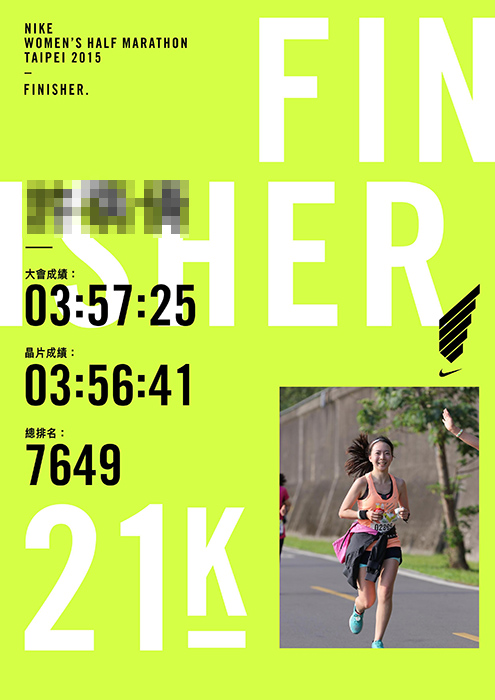
[ There is no such thing as fake running in my dictionary. ]
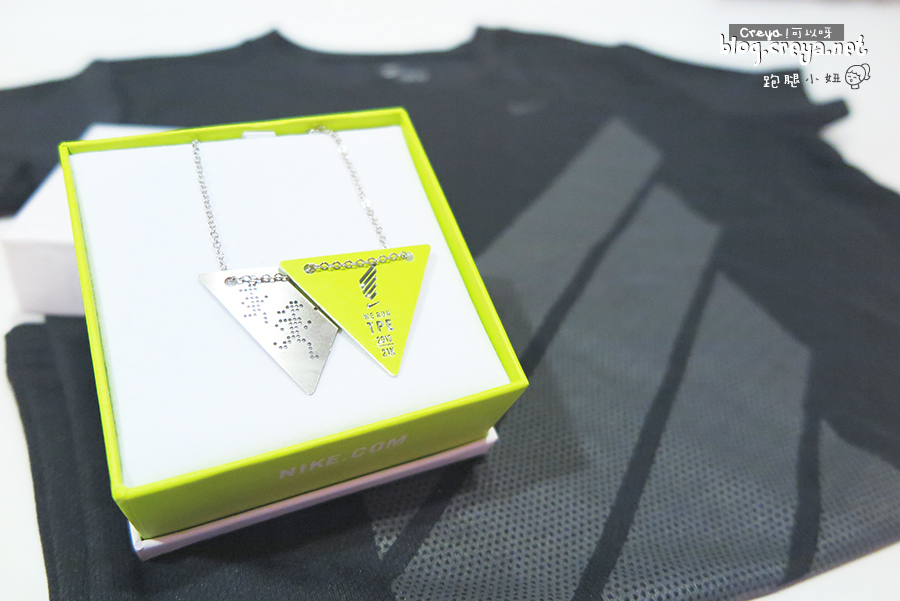
[ And all for this necklace designed by Ouyang Jing and the finisher T-shirt. This auntie is perfectly entitled to say: I paid NT$1,200 to register—how could I not collect them? ]
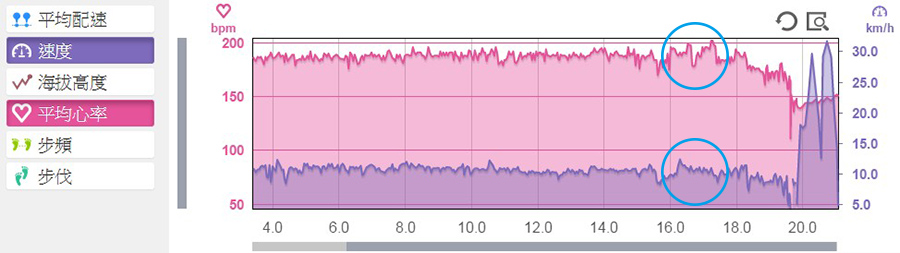
Most importantly, I only learned afterward just how valuable heart-rate monitoring is while running.When your heart rate suddenly rises abnormally, there is a strong possibility that your body is dehydrated, and you need to stop immediately and drink plenty of water.Although I was wearing the ideal heart-rate monitoring tool, the EPSON RUNSENSE SF-810V—and a watch with built-in heart-rate monitoring is probably the only way to observe your heartbeat continuously while running—I didn’t yet understand heart rate well enough to use this powerful tool properly. How embarrassing. (What beginners need to know about heart rate)
RACE LESSON, TIP 6: Heart rate doesn’t only reveal exercise intensity; it can also indicate whether your body is dehydrated.
[ My speed didn’t increase, but my heart rate suddenly did. Then I became severely drained and slowed right down. ]
Looking back at why dehydration made me faint—and bidding farewell to my title of Water Girl—it seems I had been unusually prone to thirst for about six months. Even when I went toIce Changhave my scalp examined, the moment she scanned me she said my body was dehydrated. (Just admit you’re a fortune-teller, not a hairstylist!) Teacher Edison—who has appeared an impressive number of times today, proving that I do listen obediently in class—had also said:By the time you feel thirsty, your body is already dehydrated, so drinking before you become thirsty is best for your body.But I had been thirsty all the time, and it became even worse during the week before the race. I was often too busy to drink water, and my schedule that week was more irregular than usual, with even later bedtimes, leaving my body physically overdrawn.
RACE LESSON, TIP 7: Adjust your sleep schedule and diet during the week before a race.
The lesson that truly sank in was this: if your body is in poor condition—if something feels wrong, you feel unwell, or you feel you can’t go on—slow down. If you’re thirsty, stop at the water station and drink deeply. Forget your result for the moment, because taking care of your body is what matters most!
RACE LESSON, TIP 8: If your body isn’t doing well, never force it.
And finally—finally—the most important lesson is this:If you haven’t trained properly, don’t aim unrealistically high and assume you can still produce a great result.,
Because the legendary Chang Chia-che has a famous saying:“Running is the most honest sport!”
Lesson learned!
[ But I still won’t give up running! ]
(Finally, thank you for making it this far, because… did you realize you just read a 5,000-character, half-a-ten-thousand-word manifesto? Perhaps there should be an Easter egg for anyone who reaches the end. Go to myKeyi Ya Facebook pageand reply: “A half-ten-thousand-word manifesto is nothing. If you dare to write it, I dare to read it!” But that doesn’t necessarily mean there’ll be a prize. XDD)


