


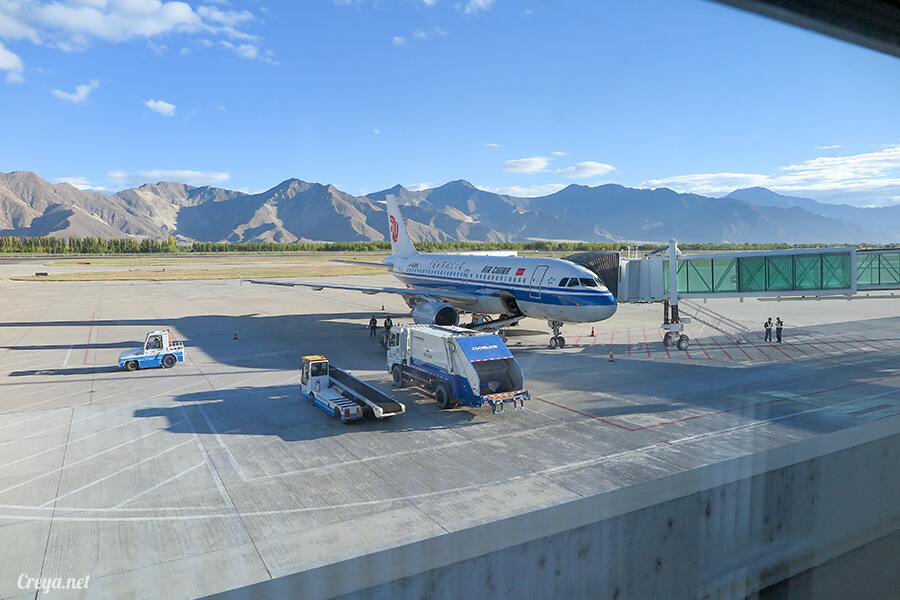
Whenever I mentioned traveling to Tibet, the first response I invariably got was, “Wow—that’s so cool!” (Is that really how Tibet is perceived?), followed by, “Isn’t it really easy to get altitude sickness there?” And once I started doing some homework for the trip, no matter which book, blog, or website I consulted, the words “altitude sickness” kept appearing before my eyes, as if announcing:Heh heh—don’t even dream of escaping me(That’s right—you’re reading precisely this kind of article now).
[ If it isn’t yours, it isn’t yours. If it is yours, it’ll come back even after it leaves ]
So what exactly is altitude sickness? First, let’s inviteWikipedia’s cheat sheetto explain: “Altitude sickness, also known as acute mountain sickness or altitude illness, is an acute pathological response that occurs when the human bodyis exposed to lower oxygen levels at high altitudeIt usually occurs above 2,438 meters and can develop into pulmonary or cerebral edema, potentially becoming fatal in severe cases.” In other words, people like us who are used to living comfortably at sea level suddenly get too close to heaven and can’t catch our breath. There’s an old saying about feeling nervous as you approach home; up on the plateau, it’s more like“short of breath as you approach heaven”—probably much the same feeling.
And the first city we would enter in Tibet was its capital,Lhasa, at an elevation of 3,650 meters…Wait, doesn’t that shoot straight past Wikipedia’s 2,438-meter threshold for altitude sickness?! Didn’t that mean we were destined for a head-on confrontation with it?

[ We were doomed ]
The frightening part was that every five sources offered six different predictions and prevention tips. One said professional athletes were more susceptible; moments later, another said people who exercised were less susceptible. There seemed to be no definitive answer, and the more I looked through the fog, the foggier everything became. After all, this little lady had never grown quite that tall in her life, so I had absolutely no idea how my body might react. I originally kept declaring that I should simply climb Yushan (3,965 meters) as a trial run, but our schedules never worked out. In the end, I could only bite the bullet and head straight for Tibet.
“We’ll find out when we get there.” Perhaps altitude sickness really is synonymous with Tibet: no matter how much you read, the truth still seems hidden behind a veilIf I could only half understand it and couldn’t see clearly, I might as well go experience it for myself!
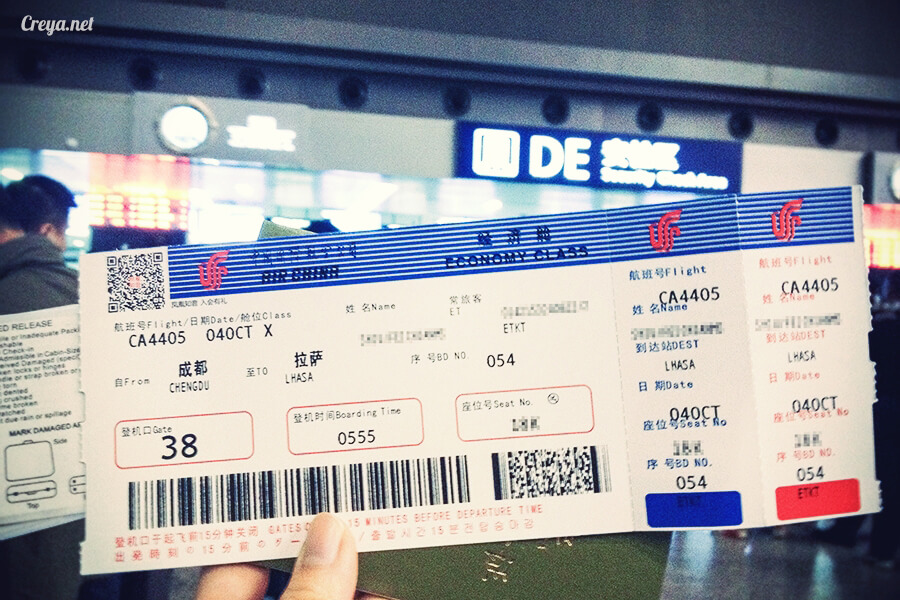
[ Boarding a Chinese airline flight from Sichuan to Lhasa—the journey officially begins ]
The four of us flew nearly four hours from Taoyuan Airport and arrived in Chengdu, Sichuan, at 23:35. We immediately launched into a live-action episode of Running Women filled with love and peril (please see the archival replay); then, fully embracing the backpacker spirit,we became airport couchsurfers in Chengdu for four hours. At 6:30 the next morning, we returned to the boarding gate and flew directly from Chengdu, Sichuan, to the gateway of Lhasa, Tibet.。
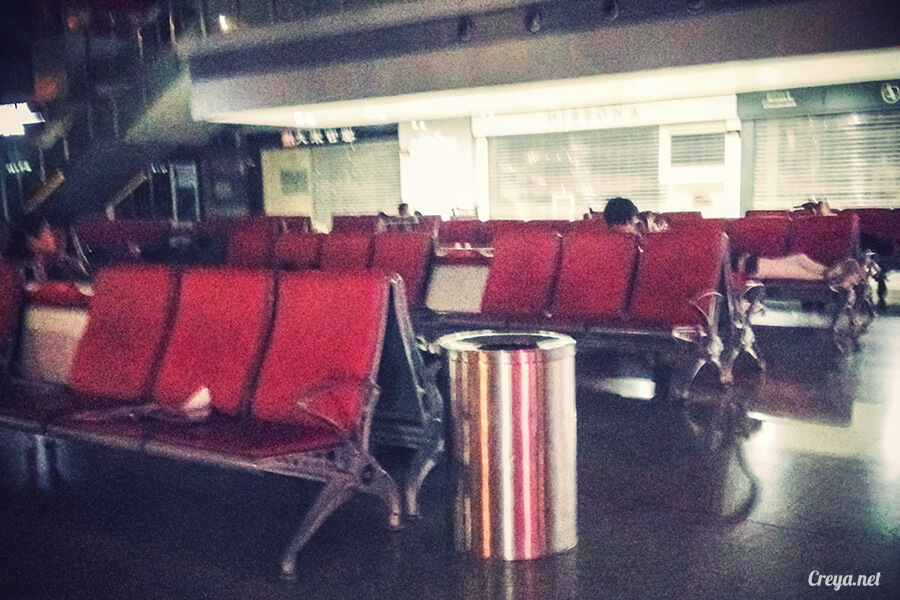
[ Any four chairs can become a bed. It was actually fairly comfortable, except there weren’t enough seats (and here I am reviewing it) ]
When we booked the tickets, we were quite pleased with this schedule. Compared with other Taipei–Lhasa itineraries that took more than thirty hours in total, our connection was short while still leaving enough buffer time in case of delays. Most of the travel and transfer time would be swallowed up by the middle of the night, and we would arrive in Lhasa bright and early with a whole beautiful day ahead. After discussing it, my companions even thought we might as well stay at the airport and save the cost of a hotel. It looked like an excellent deal.Little did we know that all of this was about to bump Tibet’s first compulsory course—altitude sickness—straight from beginner to upper-intermediate level…
From the plane, we admired this heaven-sent treasure called Tibet and previewed the magnificent mountains below. They looked just likethe endless peaks we drew as children with colored markers, scribbling up and down in one continuous zigzagrange after range stretching into the distance. When the plane turned, snow-clad peaks appeared on the horizon, and I wondered which one might be the legendary Mount Everest.
[ Because we obediently stopped using electronic devices as the plane prepared to land, the rest of the magnificent scenery could only be stored and admired in our memories ] (Photo courtesy of our resident comedian)
The closer we got to Tibet, the more excited yet nervous I became. It wasthe surreal feeling that, in the blink of an eye, I was actually about to set foot in TibetI looked forward to all the scenery and cultural shocks ahead, but part of me was still afraid my body wouldn’t adjust to the change in altitude. Yet being too nervous or too excited would accelerate my heartbeat, which was no help when facing altitude sickness. So at the same time, I kept telling myself: calm down, come on, reminding myselfto face everything ahead with composureOnce you arrive here, the little theater inside your head can’t help getting complicated.
Flying into Lhasa is an exciting experience. Imagine stepping out of the cabin and finding yourself standing at the summit of Mount Fuji(3,776 meters)—that was the kind of drastic change we experienced. With a single step, we shot into the heavens and barged into Lhasa. Lhasa Gonggar Airport may be small, but the surrounding mountain scenery already left us stunned. (We couldn’t help it—we were country bumpkins, and this was surely one of Tibet’s most minor views.) This was Tibet!Lhasa lies 3,000 kilometers from Taiwan. The distance wasn’t enormous, yet the journey here had been long—and at last, we had arrived!
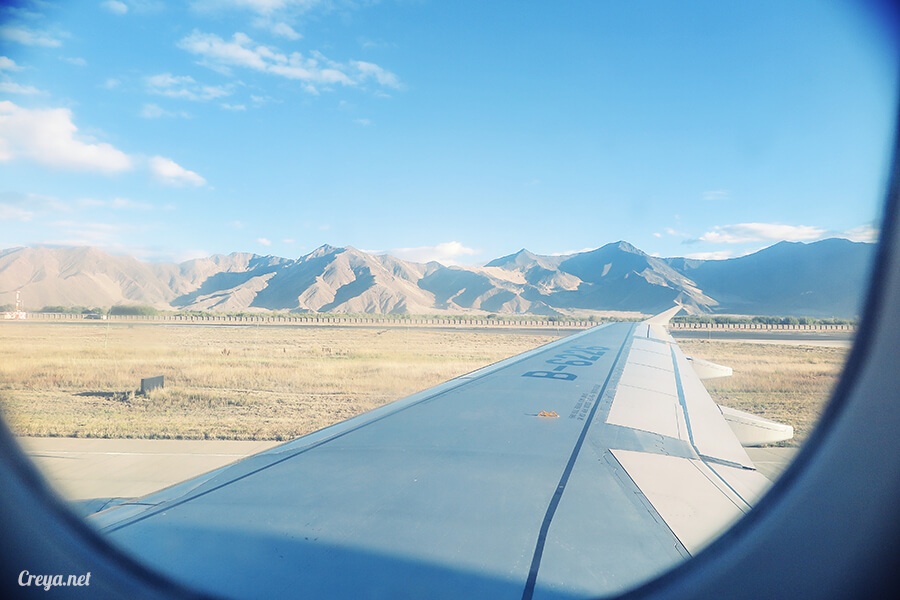
[ This outrageously beautiful mountain scenery sits right beside the airport runway. Only later did we discover that views like this are everywhere in Tibet! ] ]
Outside the airport was the usual crowd of people meeting arriving passengers. But we still had no local mobile number with which to contact anyone, so once again we wandered back and forth outside the terminal looking for a guide holding our names. (Was this our destiny? We didn’t dare run around here.) Every time we passed a taxi, the drivers aggressively solicited our business while also teasing us girls. But that was a piece of cake now. We were already in Tibet, so there was nothing left to worry about, and Lhasa Airport was much smaller than Chengdu’s anyway. Meanwhile,all four of us were still full of life, taking photos everywhereand thinking: Looks like we’re adjusting pretty well!
[ Our first encounter with Lhasa—and our first encounter with Tibetan writing ]
[ Our reporter takes you back to the scene, bringing you firsthand footage of all four of us bouncing energetically off the plane, though the exhaustion on our faces was admittedly impossible to hide ]
There to welcomeus was our guide, Mr. Losanga Tibetan from Shigatse in southwestern Tibet.As he said “Tashi Delek,” he placed a white raw-silk khata around each of our necks with both hands. This khata ceremony is common in Tibetan culture and conveys welcome and blessings“Tashi Delek” was also the phrase we used most often in Tibet (mainly because it was the only one we remembered). Many restaurants and shops along the road use it as their name. It is a greeting and expression of welcome meaning good fortune and auspiciousness. Interestingly, legend has it that when Princess Wencheng married into Tubo (Tibet), she saw the surrounding scenery and asked in Tang-dynasty speech, “Where is this?” The Heluo language spoken during the Tang dynasty was apparently close to modern Southern Min, sothe sound of “Tashi Delek” supposedly came from the Taiwanese phrase “Tsia si tó-lo̍h?”—“Where is this?”So Tibetan and Taiwanese are family after all! Doesn’t that make it feel much friendlier?
[ A khata is placed around your neck as a gesture of welcome and blessing, but this white idiot…oh no, white silk was definitely Made in China. It snagged on absolutely everything and left threads trailing everywhere ]
[ Hear the original audio and listen to how Tibetans pronounce “Tsia si tó-lo̍h?” ]
It takes about forty minutes to travel from Lhasa Gonggar Airport to central Lhasa. We climbed into a nine-seater van whose seat covers were a glorious display of artistic beauty. The drowsiness from the previous night’s lack of sleep immediately struck, and nearly all my companions fell asleep. But perhaps I was born to be a drifter: I had slept wonderfully during our four hours of airport couchsurfing and again on the plane, so I spent most of the drive staring nonstop at the scenery outside.
[ I wanted to take this seat cover home. It was even furry and felt sooo comfy to sit on ]
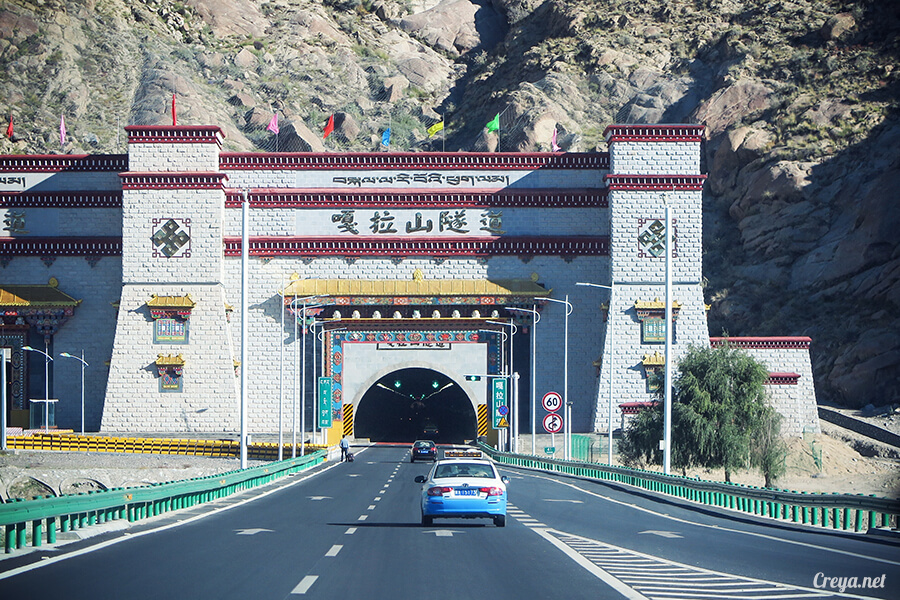
[ Some people like it, some don’t, because Tibet has a certain Tibetan flavor (gesture) ]
Unexpectedly, the moment we got out of the van at the hotel,Y, who had just woken up, and our senior traveler Mengmeng immediately said they felt unwell and extremely dizzyI put on my backpack and had taken only a few steps up the stairs into the hotel lobby to wait for check-in when I, too, suddenly felt dizzy and breathless, as if I had finished a half marathon just one second earlier.I never imagined altitude-sickness symptoms could slam into the body so overwhelmingly within mere secondsI had no choice but to slow down. Only after several long, deep inhalations and slow exhalations did my body gradually begin to feel some relief.
Then Y, carrying her luggage, suddenly said, “Oh my God, I’m so dizzy,” and collapsed weakly into a chair with her head in her hands. It scared us half to death.Were we going to visit the hospital before we even saw our rooms?Our guide kept urging the front desk to hurry up and give us our room keys, while I immediately dug out theglucose packetsI had prepared in Taiwan, hoping they might restore some of her energy. Fortunately, Y improved after swallowing two packets. At least some color returned to her pale lips, and we were able to go to our rooms and rest.
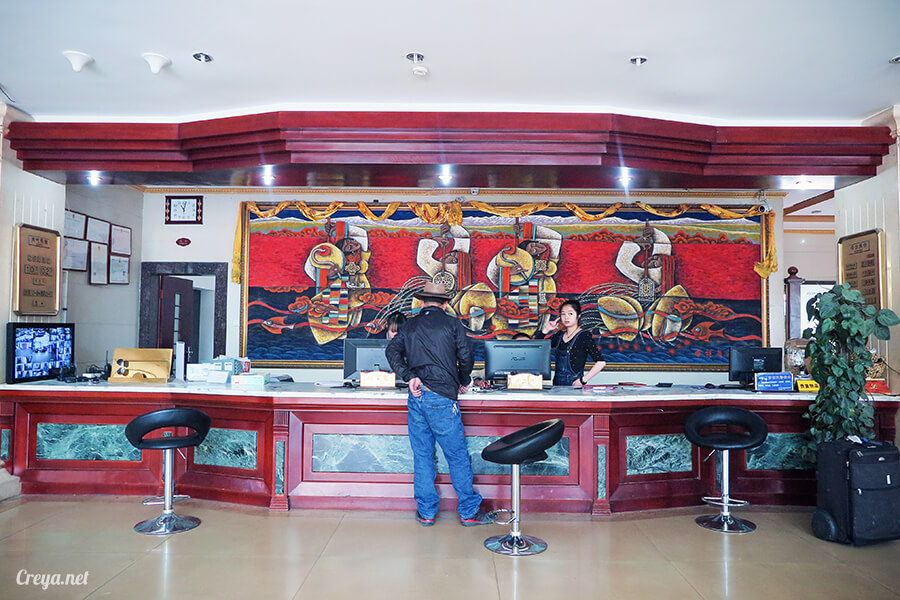
[ Our guide Losang was busy checking us in, and we were busy too—busy being dizzy ]
Becausetravel agencies usually schedule no activities on the first day in Lhasa, allowing us lowlanders to acclimatize properly to the high-altitude airwe reached the hotel and began resting as early as eleven, giving us an entire day to adjust. Yet it would become the most painful day in my companions’ memories.
Once Y entered the room, she collapsed onto the bed and tried to sleep. But because she felt so unwell, she couldn’t fall asleep at all—insomnia being one symptom of altitude sickness—and her headache grew increasingly severe. According to the patient herself,it felt like a terrible cold: an excruciating headache and a weak, limp body with no strengthHer respiratory system was already sensitive, and she alternated between feeling cold and hot while sneezing from time to time. (You know your head will always hurt even more after a sneeze.)Eventually, she even developed severe vomitingShe vomited water after drinking it and medicine after taking it. During this time, Changhao from the travel agency checked on us through WeChat and repeatedly reminded her to drink plenty of water. All I could do beside her was keepboiling hot water and offering rhodiola, glucose, brown sugar, snacks, and other suppliesto see what might relieve her symptoms most effectively. Then news arrived from next door that Mengmeng was suffering just as badly. So the still-conscious resident comedian and I decidedto visit a pharmacy in search of Gaoyuan’an, the medicine rumored to be more effective than rhodiola. Our experiment, however, suggested it had no noticeable effector perhaps they simply vomited it all back up immediately after swallowing it, before their bodies had any chance to absorb it.
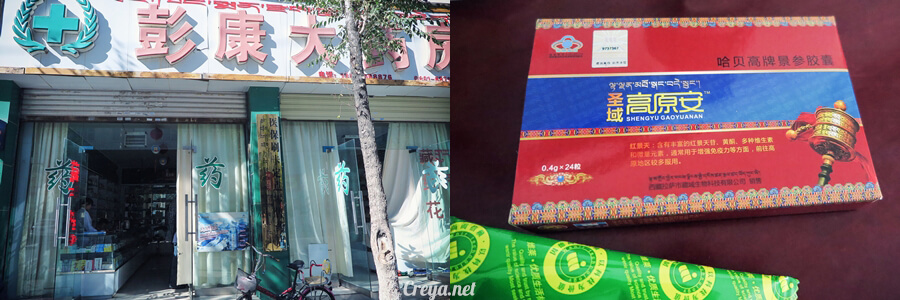
[ Found through the Dianping app: Pengkang’s shui-yi-du, diu-diu-tang-a-yi-du, a-mo-yi-du, diu-a-yi-du dripping down… There are many brands of Gaoyuan’an, so we casually picked one ]
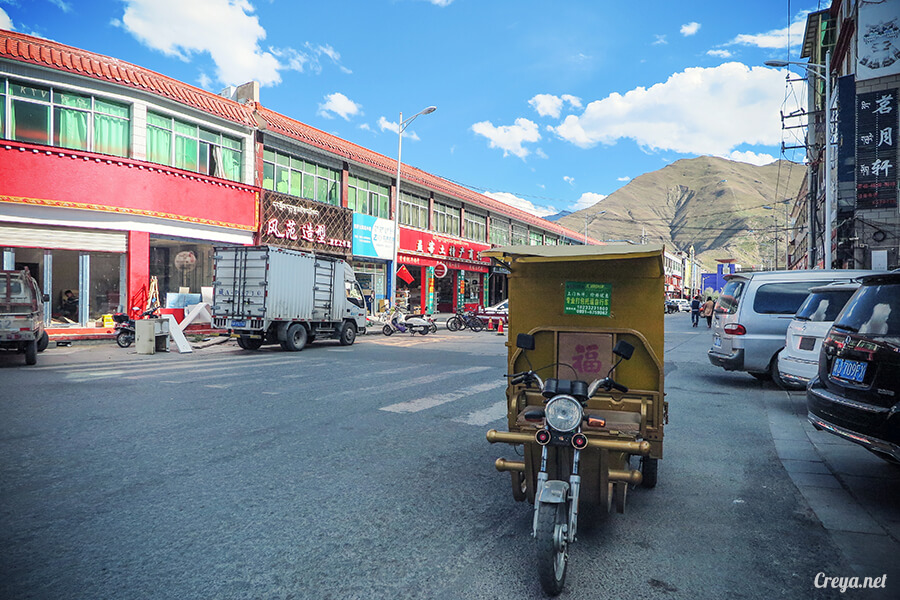
[ We also took the opportunity to look around Lhasa. Every random corner offered outrageously beautiful mountain scenery ]
Even more frighteningly,symptoms tend to worsen as night falls, because even plants begin releasing carbon dioxideand the oxygen concentration in the air keeps dropping. It made me want to sing, “People live by clinging to one breath of oxygen—oxygen is you… the air is so thin… because of loneliness.” (And after singing, I was even more oxygen-deprived.) In the end, even our final strongman, the resident comedian, failed to hold the line and emptied the contents of his stomach. Fortunately, I remained conscious enough to communicate with Changhao from the travel agency, complete the contract, and go out to buy hot congee for everyone to replenish their strength. At that moment, I was extremely grateful that at least one member of the group was still conscious and unaffected, and could take care of a few things for everyone.
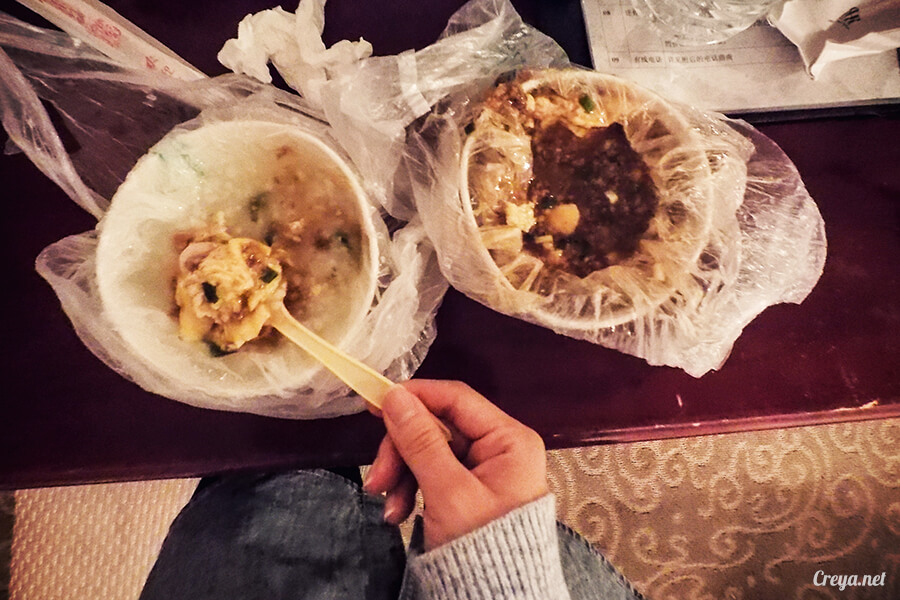
[ Uh…it doesn’t look very appetizing in the photo, but this congee and steamed egg were genuinely delicious. My whole body warmed up after eating them ]
Perhaps all of this happened becausewe had rested for only four hours at Chengdu Airport the previous nightand Y and our resident comedian couldn’t really sleep in that kind of open environment. They arrived in Lhasa already in poor condition, just when their bodies desperately needed energy to acclimatize, and simply couldn’t handle the strain. Changhao from the travel agency also told us that another Taiwanese group had arrived several days before us. Because they had first slept for a night at a hotel in Chengdu, none of the seven travelers developed symptoms as severe as ours. Altitude-sickness symptoms normally begin about six hours after arrival, once the oxygen in the body has been replaced, yet ours erupted in less than two hours.
Fortunately,after surviving that unbearably long night and waking from a good sleep, everyone felt much betterWithout relying on oxygen bottles or visiting a hospital, we let our bodies gradually adapt to the altitude on their own, and everyone’s condition continued improving over the following days.
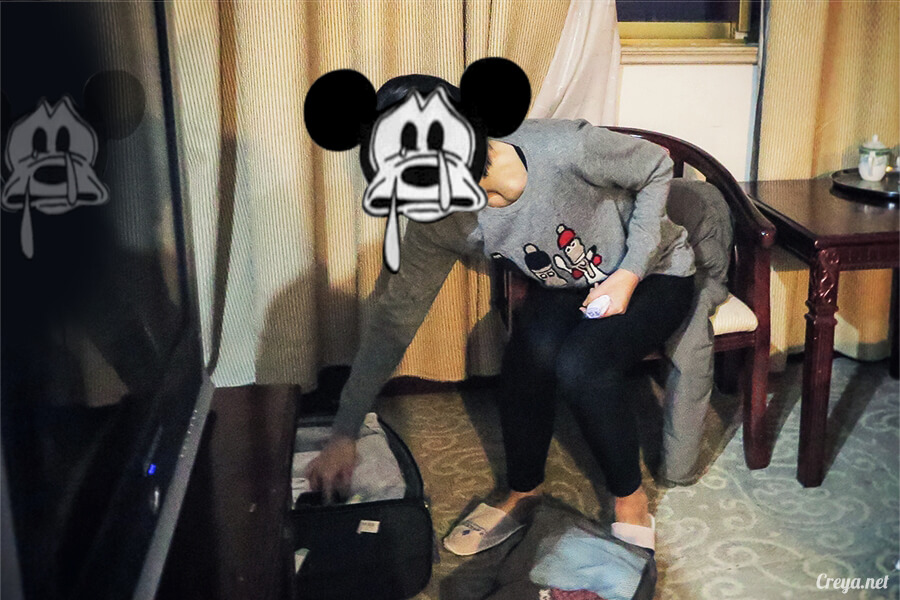
[ Watching my friends struggle with altitude sickness, they genuinely looked miserable (to protect their celebrity image, I covered them with Mickey Mouse mosaics) ]
As for me, throughout the trip I experienced nothing more than a little breathlessness and dizziness if I walked too quickly at elevations above 4,000 feet. Otherwise, altitude sickness left me alone. I looked fully qualified to settle down as a plateau native, probably because I’m used to living below everyone else’s nostrils and breathing low-oxygen air. (No need to envy me too much.)The planet surely has great need of someone as energy-efficient and low-carbon as me!
But even with only four people in our group, we couldclearly see how differences in exercise habits and physical condition became far more obvious under Tibetan conditionsIf you are normally prone to allergies or respiratory issues, your altitude-sickness symptoms may be more noticeable. The severity of symptoms also seemed inversely related to exercise habits. I think my half-marathon training, which had measurably lowered my heart rate compared with everyone else’s, may have been the main reason altitude sickness didn’t catch me this time. Practicing yoga had also taught me to regulate my breathing and stay aware of my body. Whenever something felt wrong, I immediately inhaled deeply, exhaled slowly, calmed myself, and listened to my body. That always made me feel much better.Throughout the journey, I felt deeply grateful that I had taken up running and yogaIf you decide to visit the plateau, don’t neglect your health beforehand!
“Your body is in hell while your eyes are in heaven” is an apt description of Tibet. To visit, you apply for the documents and buy a plane ticket. It isn’t actually that difficult. But apart from uncertainty over the permit, the greatest challenge is your body’s immediate feedback and condition.While you still have the strength, hurry up and make your dreams come true!
[ Some places and some things require you to act quickly once you decide you want them ]
Bonus feature: advice on altitude sickness
● Is flying or taking the train less likely to cause altitude sickness?
This is definitely a controversial question on which Tibet travel sources are firmly divided. Most information about altitude sickness says that “ascending slowly to high altitude allows the body to acclimatize gradually and can effectively reduce the risk of altitude sickness,” so at first we thought the train might help. But after continuing our research, we found another school of thought: the Qinghai–Tibet Railway also rises abruptly rather than truly ascending slowly; the air is not ventilated with the outside for adjustment; and there are no professional medical personnel aboard, making it a poor environment for acclimatization. The final straw was one sentence: “If someone smokes on the train, you’ll feel extremely uncomfortable.” (After all, this is a country where indoor smoking isn’t prohibited.) So we firmly chose to fly directly into Lhasa. When we later left Tibet aboard the Qinghai–Tibet Railway, we did find the air-conditioning inside somewhat stuffy. In fact, the only time I felt slightly unwell during the entire Tibet trip was while the train was climbing above 4,000 meters.
If you genuinely want to ascend gradually and reduce the risk of altitude sickness, your only options are probably driving yourself, cycling, or hiking into Tibet(but obtaining the required permit is yet another hurdle for Taiwanese travelers…).
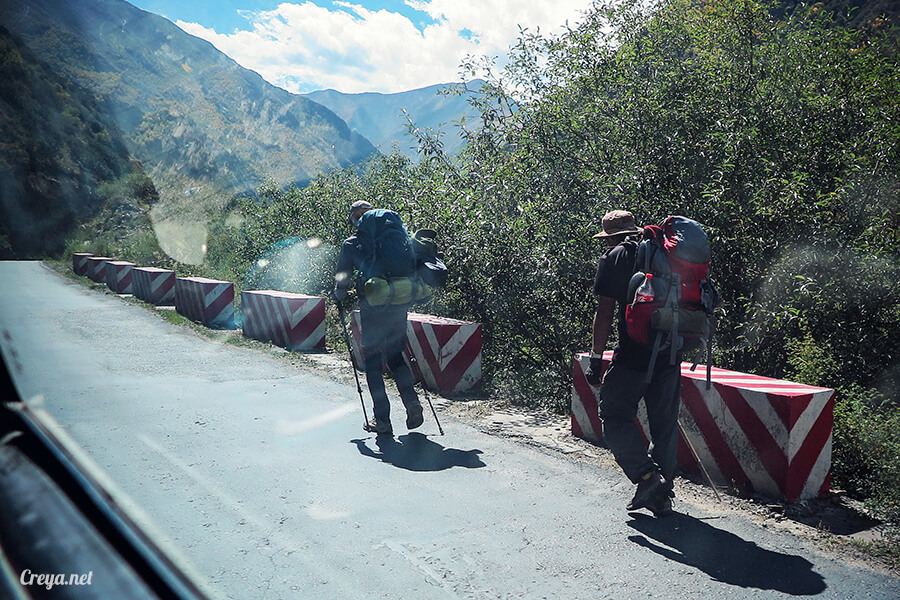
[ We genuinely encountered many mainland Chinese travelers hiking or cycling along the road ]
● How should you prepare before the trip to prevent altitude sickness?
Most of the information we found online recommended taking rhodiola. Whether it works is yet another question with arguments on both sides, but we still figured taking it for peace of mind was better than taking nothing, so we began taking one capsule a day a week before departure. Once again, however, our experiment proved that maintaining good physical condition was far more practical.
Preventing altitude sickness essentially means increasing the blood’s oxygen-carrying capacity, somewhat like treating anemia. Therefore,supplementing vitamin B12 and folateor addressing iron deficiency in those who have it can all be helpful nutritional measures. Ideally, you shouldbegin conditioning your body one month in advanceThere are no shortcuts.
Based on the admittedly tiny sample size of our single experience,maintaining a healthy routine before departure, getting enough sleep, supplementing nutrients, and absolutely avoiding catching a coldseem to be the best approach. And just because you don’t experience altitude sickness once doesn’t mean you won’t react the next time you visit a plateau, because altitude sickness depends on your physical condition at that particular moment.
The effect of exercise habits is harder to pin down, but long-distance jogging really can lower your heart rate. Both doctors at my health checkups and instructors in my running classes have demonstrated this with real examples. If you have decided to visit Tibet, you might as well start developing a habit of gentle exercise.
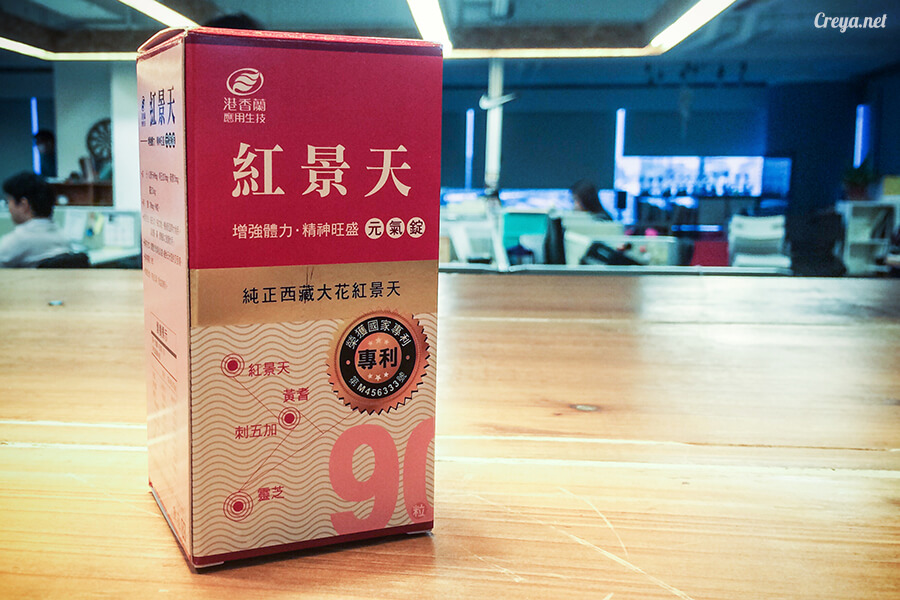
[ One a day for peace of mind ] (Photo courtesy of Y)
● What should you do when altitude-sickness symptoms appear?
“Keep drinking water, keep drinking water, keep drinking water.”Both our guide and Changhao from the travel agency repeated this reminder constantly, so the blood would have enough water to function properly. We also prepared rhodiola, Gaoyuan’an, glucose packets, Okinawan brown-sugar cubes, and even Viagra.The item I most recommend bringing is actually glucose packetsBecause glucose is a monosaccharide, it is easily absorbed, and since it is sweet, it feels just like eating candy and is not unpleasant at all. It can quickly replenish calories and energy. If altitude sickness becomes severe enough to require hospital treatment, the hospital will administer glucose directly into your body anyway. Liquid glucose is also available and may be absorbed even faster.
You will see small oxygen bottles in hotels, vehicles, and shops, available for anyone who has trouble adjusting and needs pure oxygen. Usually, however, their use is discouraged because the body can become dependent on them and fail to acclimatize on its own. With sufficient rest, our bodies are capable of gradually adjusting to the altitude.
And the little blue pill (stop snickering over there) is reportedly recommended by the U.S. Centers for Disease Control and Prevention for preventing and treating acute high-altitude pulmonary edema. Fortunately, we never needed to use it; everyone overcame altitude sickness through their own strength. Still, this is a useful trick to remember. The next time you need to buy Viagra, you can tell the doctor:“It’s for my trip to Tibet.” (sly grin)(I’m not kidding—readthe detailed information on using the little blue pill to prevent and treat altitude sickness)
[ (Left) Glucose comes in small packets that are inexpensive and easy to swallow. You can also bring (right) Okinawan brown sugar and suck on it like candy whenever you need extra sugar ](Photos courtesy of Mengmeng and Y)
✈ Travel date: 2015/10/4
| Tibet: Kicking It Up North | Article series: (Travel period: 2015/10/3–2015/10/16)
● Lifting Tibet’s veil with my own eyes—the dream I once thought was beyond reach
● We’ve made it all the way to Chengdu at Tibet’s doorstep—but will we actually get there?
● Finally setting foot in Lhasa, breathing the legendary thin air and battling altitude sickness
● The Potala Palace, spiritual sanctuary of the Tibetan people—but perhaps altitude sickness wasn’t the only reason we lacked energy
● Searching for the true heart of Tibetan Lhasa: overwhelmed by the power of faith at Jokhang Temple and in the Old Town
● A road trip that pushed body and mind to new limits: eastward from Lhasa to Nyingchi (Part 1—Mila Mountain Pass and tales of going to the toilet)


