

Our Tibet trip officially went on air with a straight dash to the Potala Palace, the place outsiders say you have not really visited Tibet until you have seen.previous instalmentYet the deeper I stepped into its solemn grandeur, the less I could feel the soul that should belong to a fortress of religion and politics. Inside the Potala’s shell, what remained seemed almost museum-like: a record of the history Tibetans carry in their hearts (oh, and it works as a photo-op too…).
那For Tibetans with a devout faith, where is the true sanctuary for the soul?
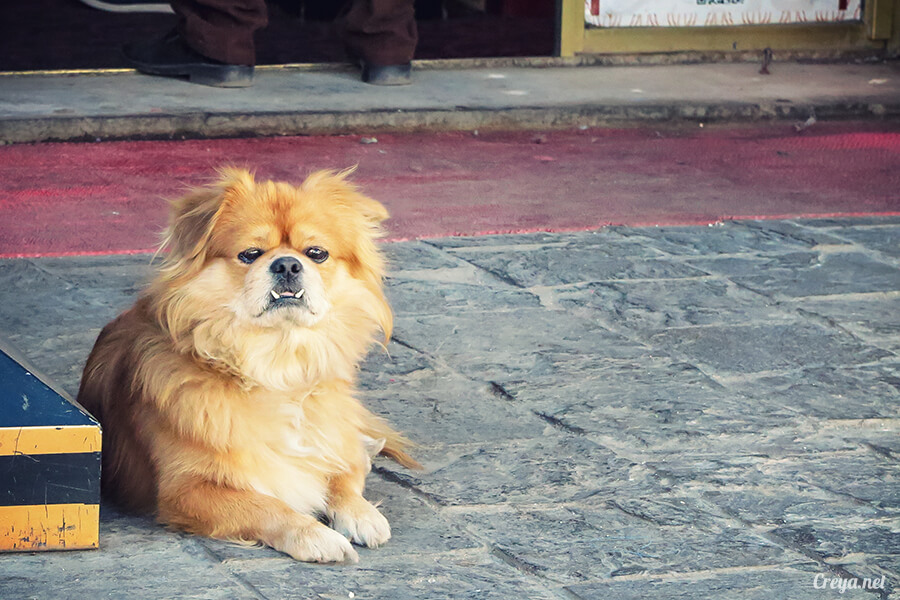
[ 雖然我很厚道,但你確定我會告訴你嗎?(流行厚道的拉薩的犬) ]
“First came the Jokhang Temple, then came Lhasa.” Tibetans call it the true centre of Lhasa—and the heart of the Buddhist holy land,原來大昭寺才是他們眼中「沒去別說你到過西藏」的神聖建築。它是西藏最古老的建築之一,在中共闖入重劃前的整個舊拉薩城,可說是圍繞著它發展,而「拉薩」這名字正是「佛地」的意思。
一個上午拜訪那once代表著政教中心的布達拉宮後,下午接著來見見the Jokhang Temple, the supreme sanctuary of Tibetan Buddhism。從布達拉宮上車後不過約五分鐘的車程,我們就抵達了大昭寺所在的舊城區,屁股都還沒坐熱,就瞬間從新建築街景跳轉到老城區(但別誤會,A journey this short only happens within Lhasa,相當珍惜,畢竟離開拉薩之後的拉車時長是以四小時為一單位計算了)。
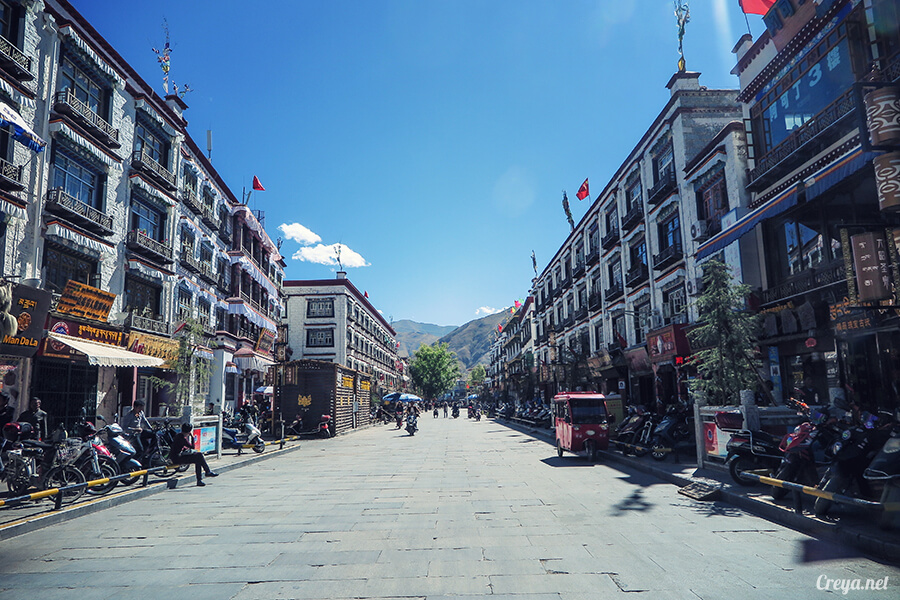
[ 大昭寺旁有不少知名餐廳的丹林杰路,這裡的房子好合我胃口 ]
The moment I got off the bus, the old quarter’s houses enchanted me. Snow-white walls were picked out in saffron red so perfectly it looked colour-coded; tiny windows had Tibetan-blue frames and curtains fluttering in the breeze, with a few flower pots for good measure.This was obviously a tiny Paris with a Tibetan twist!
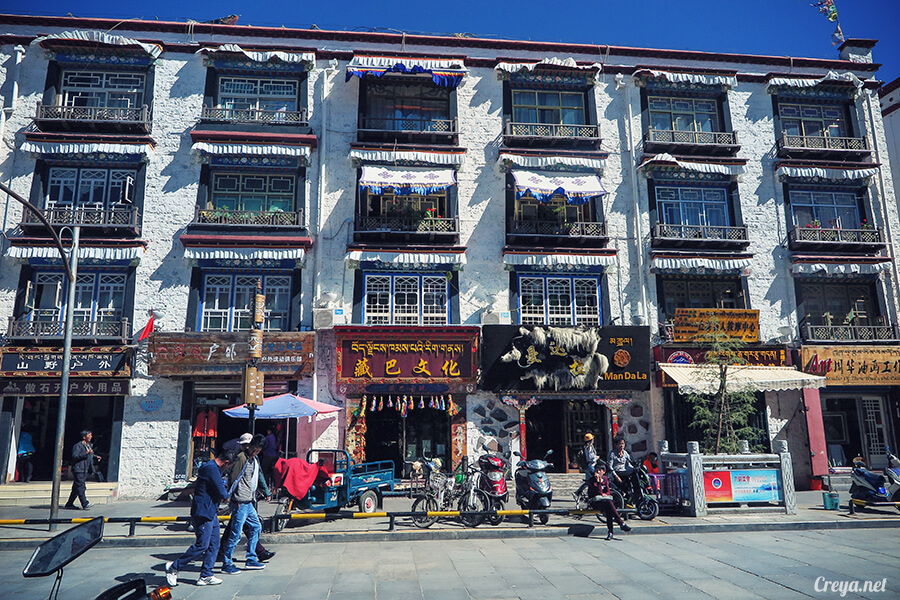
[ 再也找不到比藏味更好的形容詞了 ]
“These are all fake old houses.” “What?” Our guide, Losang, jolted me out of my daydream.
「是這樣的,They were built recently to imitate old houses. Fake, fake.」
Ah! So even houses can be knock-offs?! Then again, when I think of台南的水晶教堂我也不好意思多說什麼了,至少西藏這兒還是有用心地保有傳統文化的街景,even if the houses are not genuinely old, the old quarter still creates an atmosphere steeped in history,而我們卻是花大錢蓋了個一模一樣地外國建築、捨棄打造自己的特色。
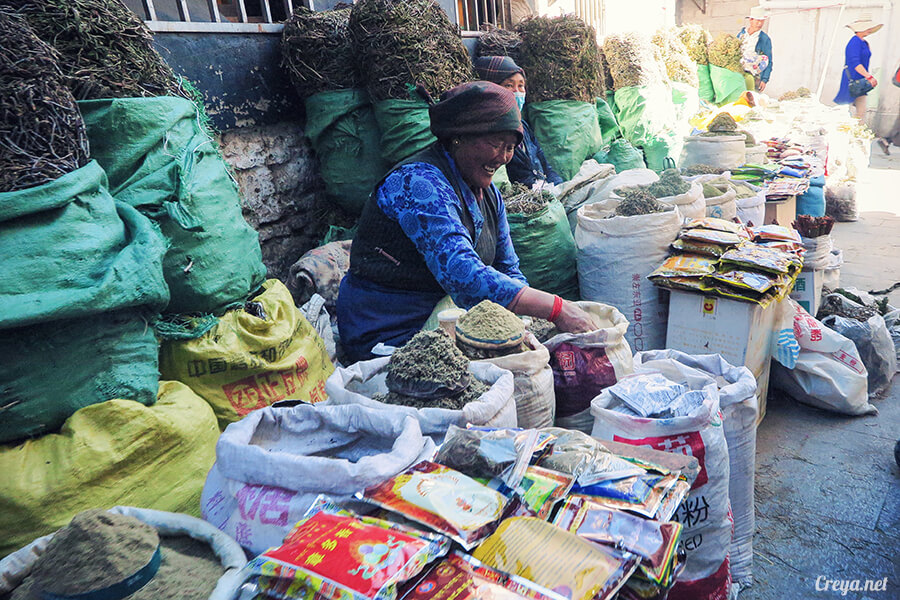
[ 舊城區的小巷弄內,販賣著用於供添香爐的桑葉和供奉雜貨 ]
I turned through the security gate at Jokhang Square and saw old houses again—this time, the real thing!
Surrounding the Jokhang isBarkhor Street (also called Bajiao Street), now transformed into a shopping district,Old-house façades, shop interiors, and tourist souvenirs—jewellery, thangkas, clothes, and so on… Wait, do you have to pass a security checkpoint just to buy a souvenir? The Chinese government’s answer here is security checks, security checks, and more security checks. For Tibetans visiting a sacred site, the restrictions must bring endless frustration. Does the government care? Hmph—who told you to resist?!
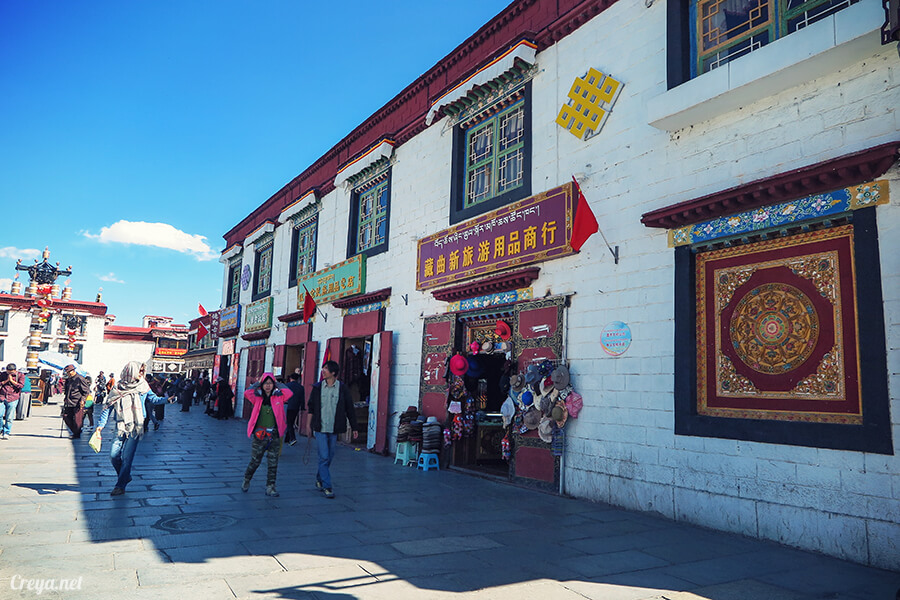
[ 一間間老房內清一色都是”旅遊用品商行”,白話文就是紀念品店啦! ]
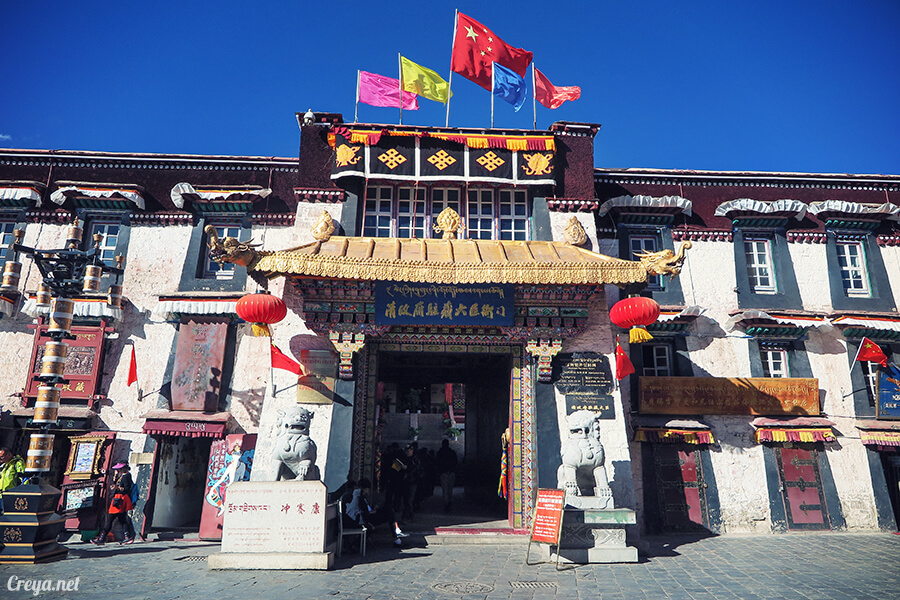
[ 看來清政府相當有先見之明,在八廓街建了個駐藏大臣衙門,名叫沖賽康 ]
The reason the Jokhang is so important to Tibetans is that it enshrinesthe life-size statue of twelve-year-old Shakyamuni,據說這是釋迦牟尼在世時依他實際比例製作,並親自開光,brought from the Tang dynasty when Princess Wencheng married Songtsen Gampo of Tubo (ancient Tibet)。這尊釋迦牟尼十二歲等身金銅佛像被認為是最靈驗的,因此It became the supreme centre of Tibetan Buddhism in the hearts of Tibetans, considered even more important than the Potala Palace.
The twelve-year-old statue was originally housed at Ramoche Temple, built by Princess Wencheng. The Jokhang was built for the life-size eight-year-old Shakyamuni statue brought by Nepalese Princess Bhrikuti. Legend says the statues were later swapped because of war—and fear that Empress Wu would seize one. The eight-year-old statue at Ramoche was destroyed during the Cultural Revolution.
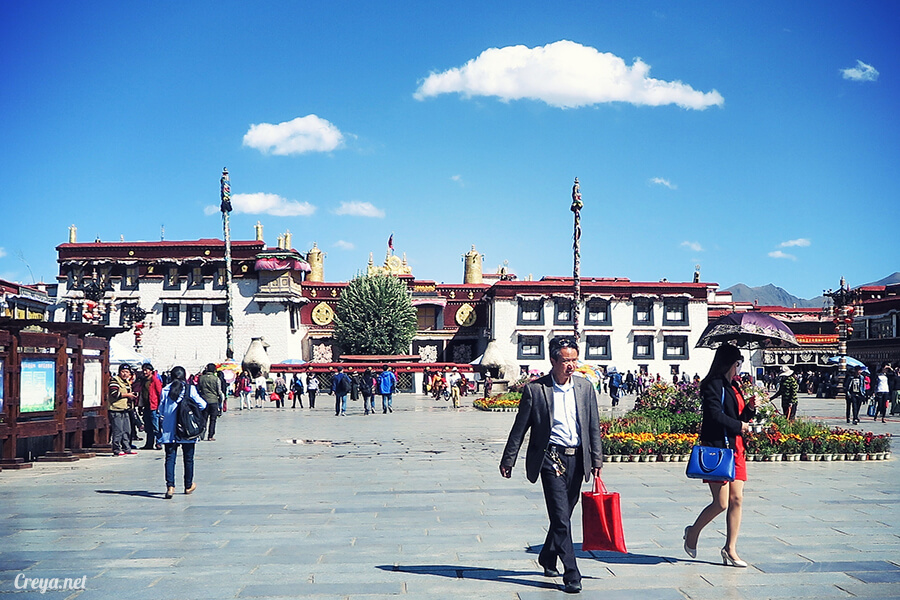
[ 大昭寺廣場與神聖的大昭寺 ]
Inside the Jokhang’s main hall, butter lamps cast a dim, solemn light. Worshippers carried plastic buckets of butter to refill them, bowing and prostrating again and again, murmuring prayers with such focus they seemed to speak with the Buddha. Then they offered banknotes. Some held statues, hoping to have them consecrated. A lama happened to be in the hall, so Losang stepped away to pay his respects; Tibetans came and went through a small room to see him, then bowed deeply once more outside.
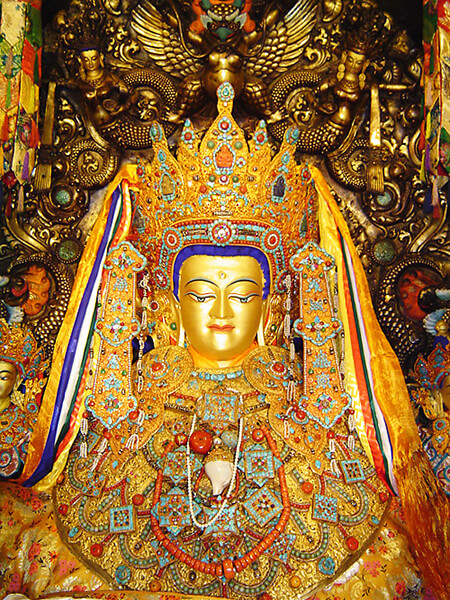
[ 釋迦牟尼十二歲等身像,沒想到十二歲可以長這麼大(佛祖果然與眾不同呀) ] (照片取自網路)
I have no religious faith, yet I was captivated by every movement. Their intensity came from a longing of the heart, regardless of gender, age, or background. They entrusted their whole souls to it; faith carried them through hardship, sorrow, and a Tibet that keeps changing and fading.I think—and hope—that Tibet’s soul lives in every worshipper and every Tibetan, carried forward for generations.
The Tibetan Buddhist terms I first heard at the Potala came up again: Shakyamuni, Maitreya (Jampa), Bhaisajyaguru, Tsongkhapa, Songtsen Gampo, Thousand-Armed Avalokiteshvara, mandala art, and the four major schools of Tibetan Buddhism. Moving from hall to hall and trying to recognise each statue was a challenge, but I seemed to be getting acquainted with them.
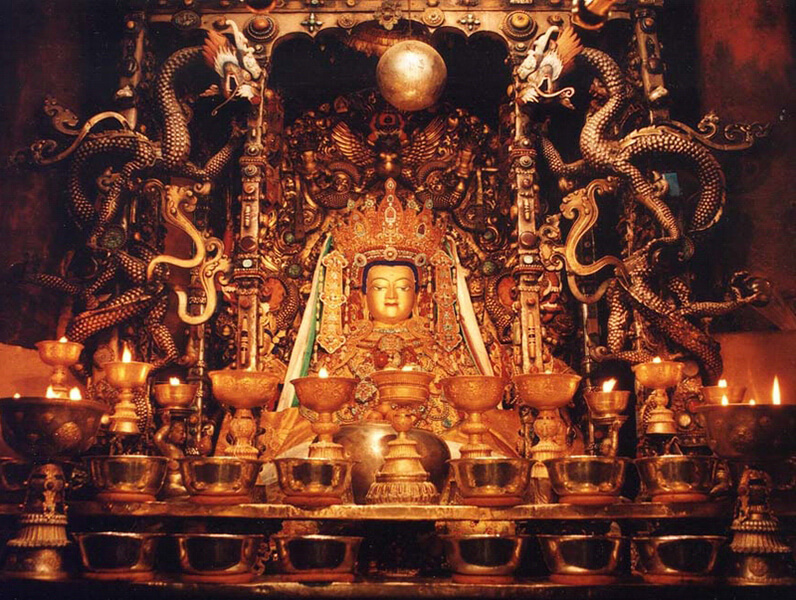
[ 供台上的七碗清水是給佛祖的每日七供養,象徵釋迦牟尼成佛前,施主獻與的七種貢品 ] (照片取自網路)
Losang explained that the Jokhang, built in AD 68 during the Tubo period,is Tibet’s oldest surviving earthen-and-timber structure, with a layout known as the Tibetan plain style。大昭寺雖然是由尼泊爾尺尊公主修建,但據說當初因為一直建不好,後來由文成公主幫忙占卜勘地,占卜的指環落入臥塘湖而選定了位置,並用一千隻白山羊從果噶拉山運土石,把臥塘湖填滿才建成現在的大昭寺寺廟,也就是說the Jokhang was built on a lake呢!
寺廟中有一個矮石柱,中間挖了一個洞不知通到哪裡,洛森說耳朵貼上去聽,據說會聽到水波的聲音,說著便把耳朵貼上去示範給我們看「有聽到嗎?有聽到嗎?」「你聽聽看呀!」於是我也立馬貼上去聽「…………….」,非常專注的維持這動作長達一分鐘,「….什麼都沒聽到呀!」「我也沒聽到」洛森回,接著所有旅伴都聽了一輪,什麼聲音都沒有,所以現在是被古人耍了嗎?好吧,we clearly had not reached the enlightenment needed for a live stream with the Tubo dynasty。
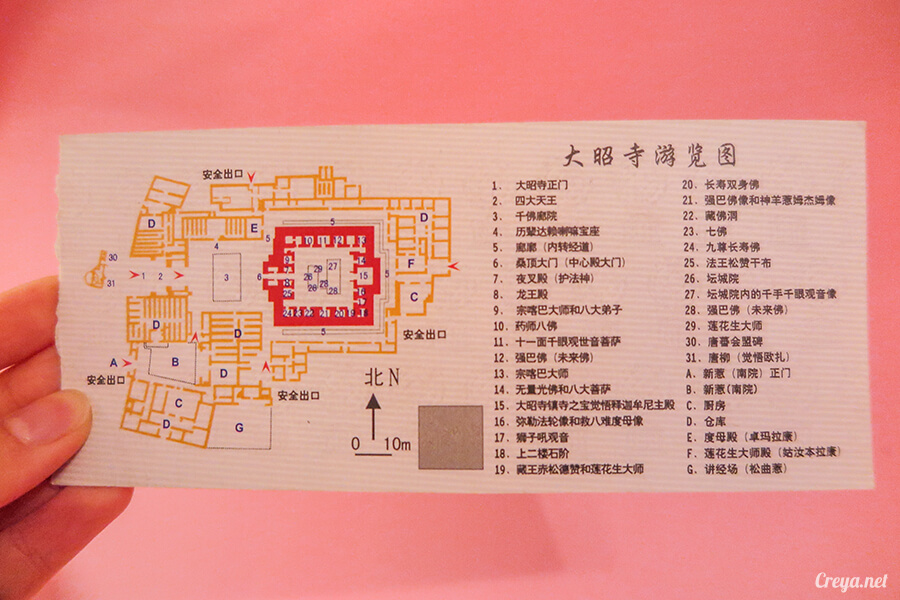
[ 藏式平川式的寺廟佈局…阿其實我也不是很看得出來啦!哈哈哈哈 ]
The Jokhang blends Tibetan, Tang, Nepalese, and Indian styles. You can even admire Nepalese carvings on its beams and columns. One temple, so many layers of history and culture—it is excellent value.
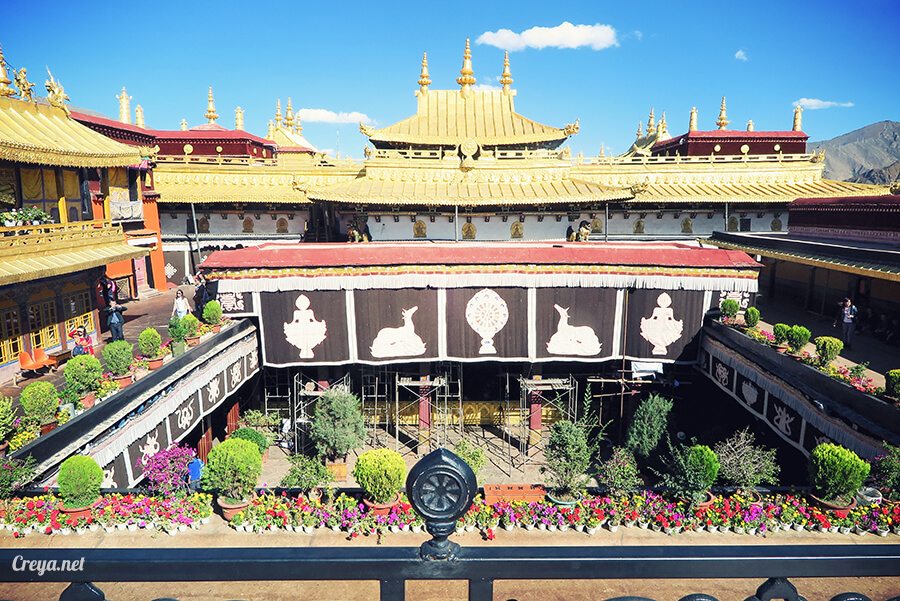
[ 左右黑簾上的圖案是吉祥八寶,分別是寶傘、寶魚、寶瓶、白海螺、吉祥結、勝利鐘、金法輪、與蓮花 ]
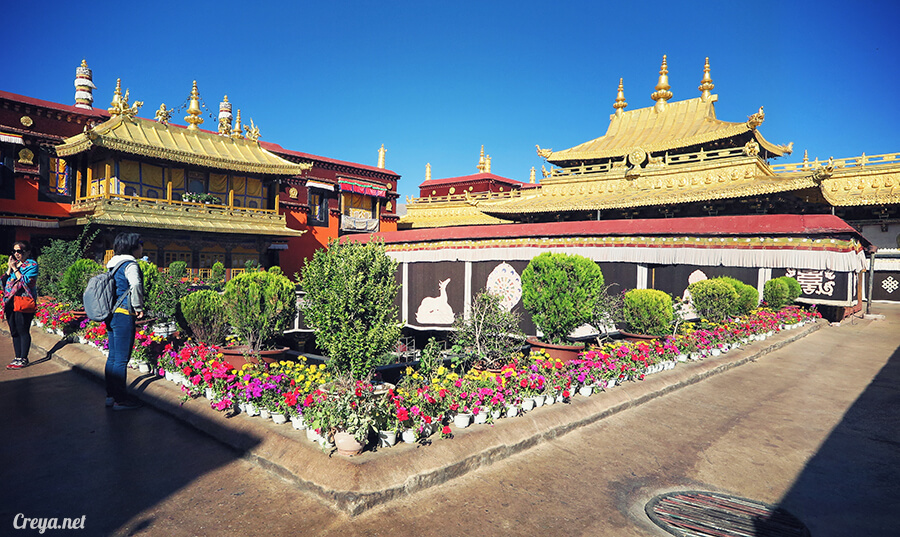
[ 集聚藏、唐、尼泊爾、和印度的建築風格,來到大昭寺二樓金頂區 ]
Photography is forbidden inside the Jokhang’s prayer halls,因此一切也只能親臨感受或透過網路上的照片一窺面貌;不過出了殿外就可以好好將眼前美景記錄下來了,站在大昭寺屋頂,亦能眺望布達拉宮,還能俯瞰大昭寺廣場,攘來熙往的朝聖人群,藏人比觀光客多得多了,相較於布達拉宮的宮殿莊嚴氣息,來到this holy site brings you much closer to Tibetan culture。
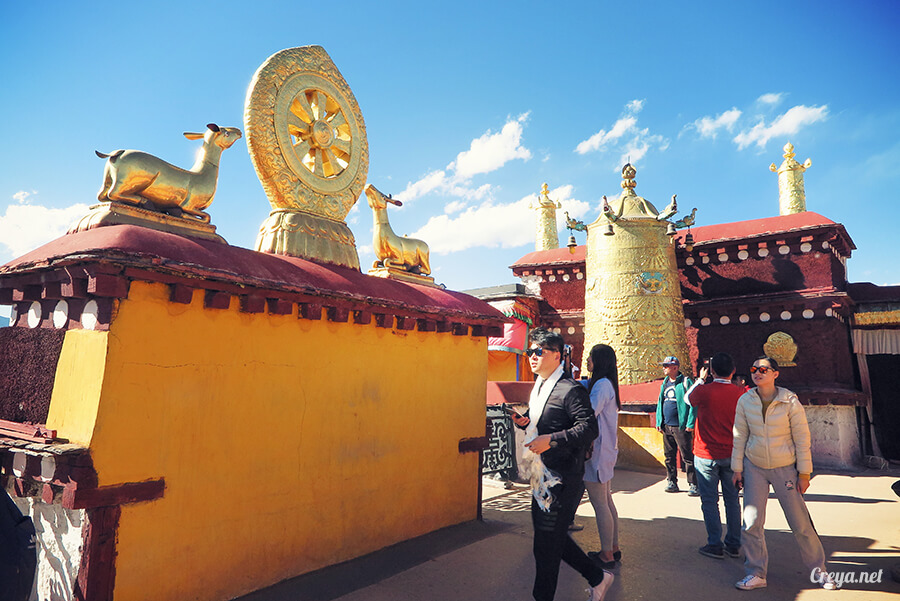
[ 藏傳佛教常見的標誌 – 雙鹿法輪,洛森說是釋迦牟尼第一次講道時,沒人來,卻有兩隻鹿來聽道…(怎麼有點兒心酸) ]
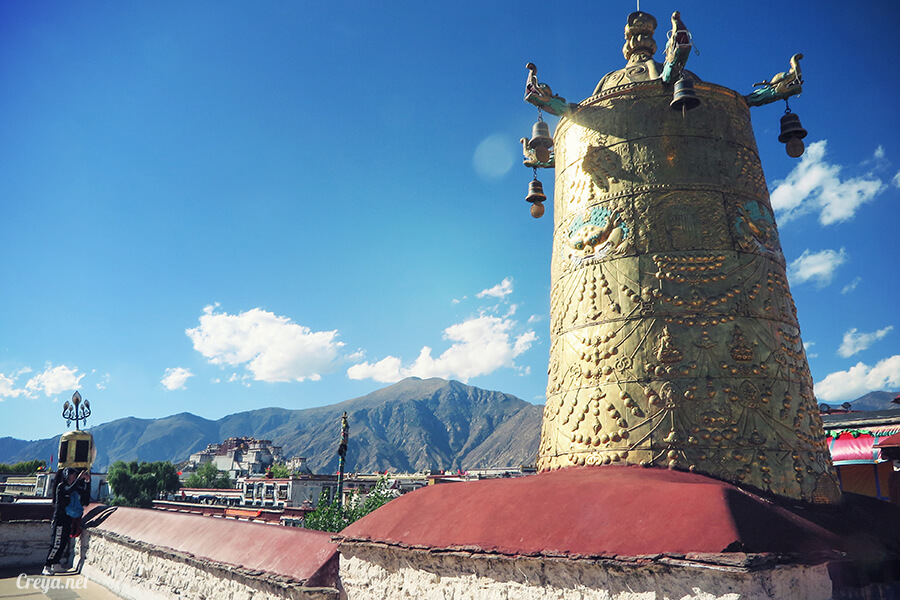
[ 典型藏傳佛教樣式的經筒,大昭寺的頂樓視野相當好,還能眺望不遠處的布達拉宮 ]
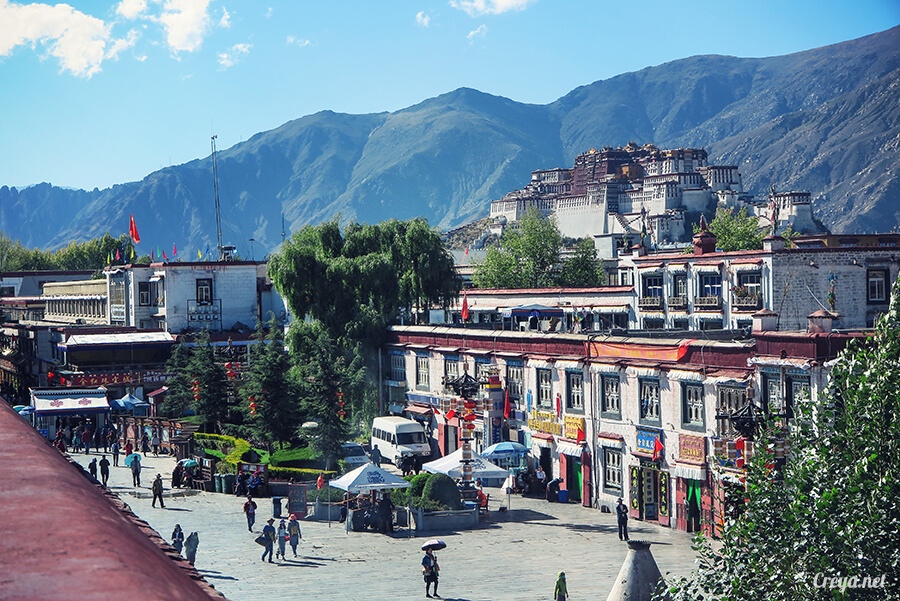
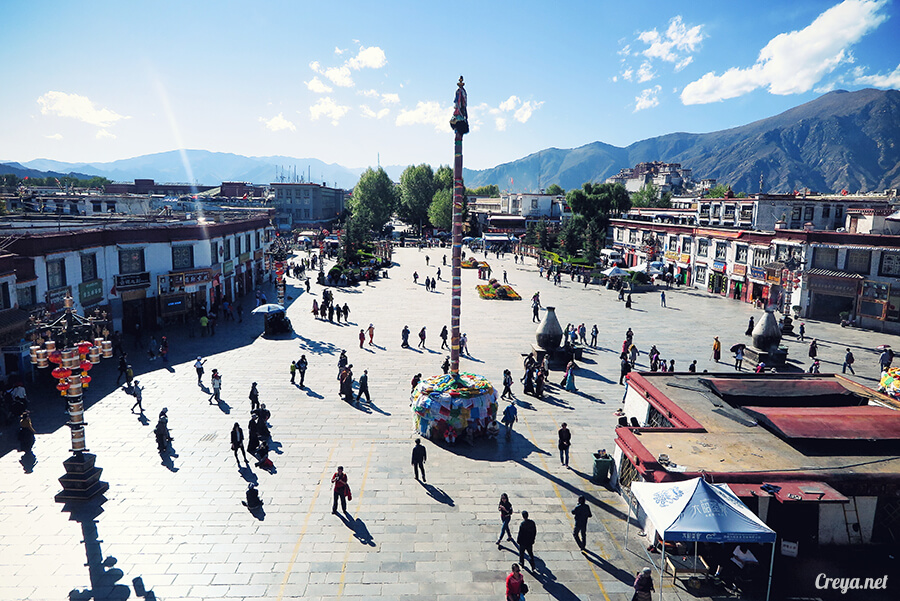
[ 大昭寺廣場上跋涉而來的信徒與遊客,只為見釋迦牟尼一面 ]
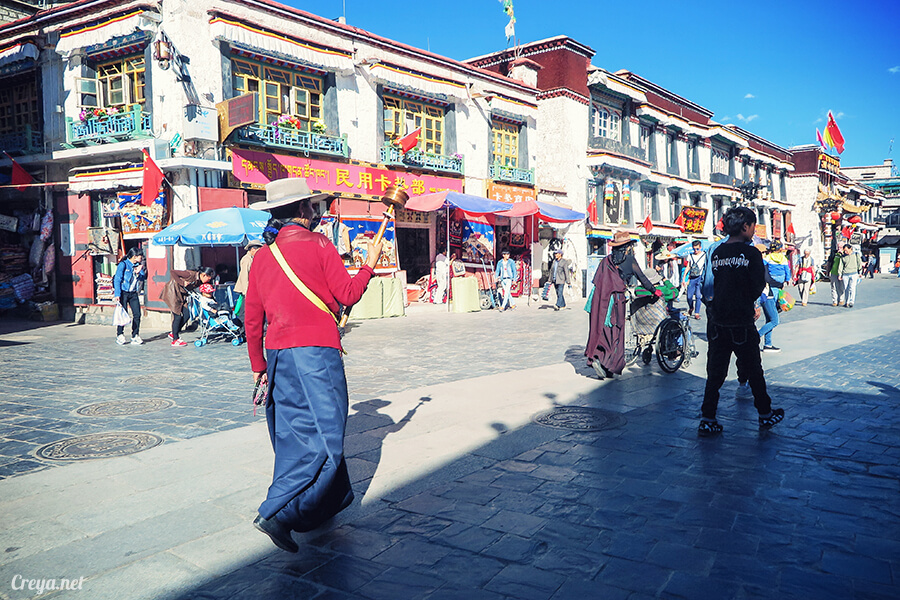
On Barkhor Street outside the Jokhang, pilgrims arrived from every direction. Some carried prayer wheels and recited the six-syllable mantra; one turn is said to equal one recitation. Others performed full-body prostrations, circling the temple and bowing every three steps.
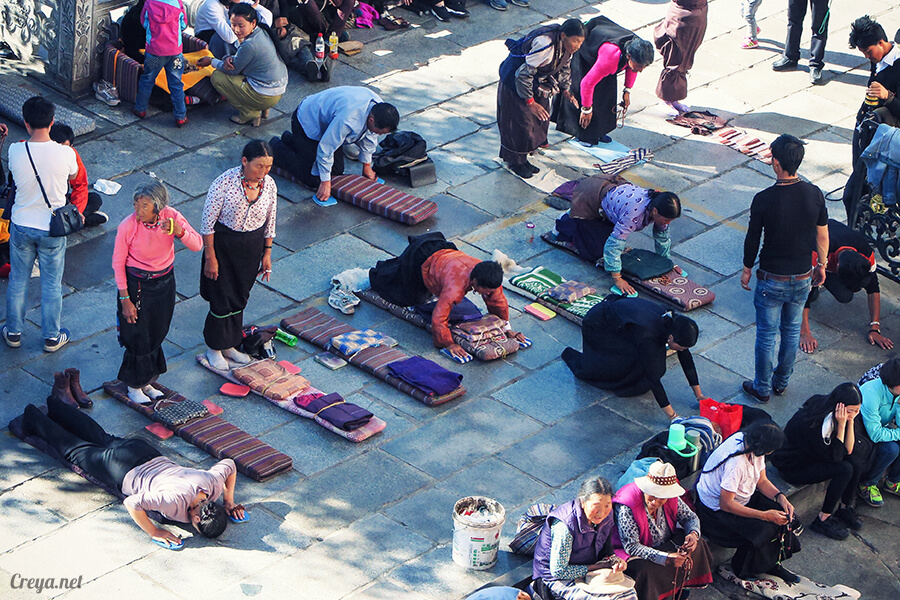
[ 在八廓街上朝寺廟內不斷行五體投地禮的信徒 ]
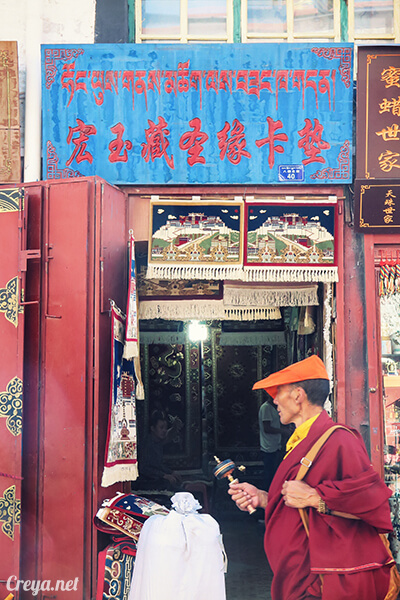
[ 拿著轉經輪繞行八廓街的僧人,這比較輕鬆,還可以邊逛街(誤) ]
Full-body prostrations are not something just anyone can manage.That is basically a push-up,每一個動作都需要強健的臂力和核心,我這無法做超過五下的臂力弱雞尚需練練再來,但信徒們無論男生女生老的少的,都是這樣反覆叩跪一整天,沒有任何遲疑,堅定的叩首再起身;即便現在有越來越多的防護裝備可以配戴選擇,但額頭上黑色的印子卻清晰可見。The invisible force of faith was clear in every long prostration. Nothing could stop them, and it shook me deeply.
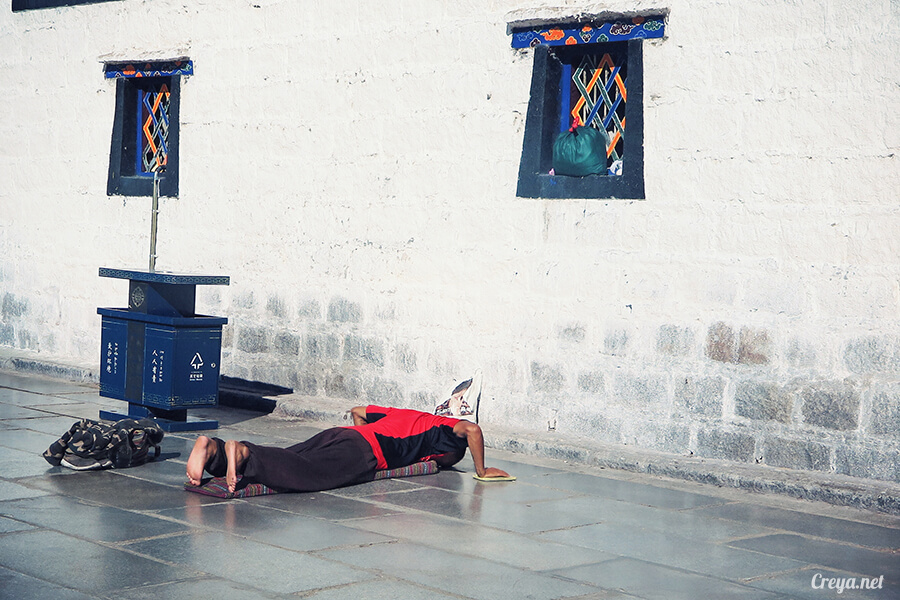
[ 看來藏人的胸肌和手臂線條應該練的也不錯(重點沒畫錯),即使前面是一面牆,但朝寺廟內方向就義無反顧 ]
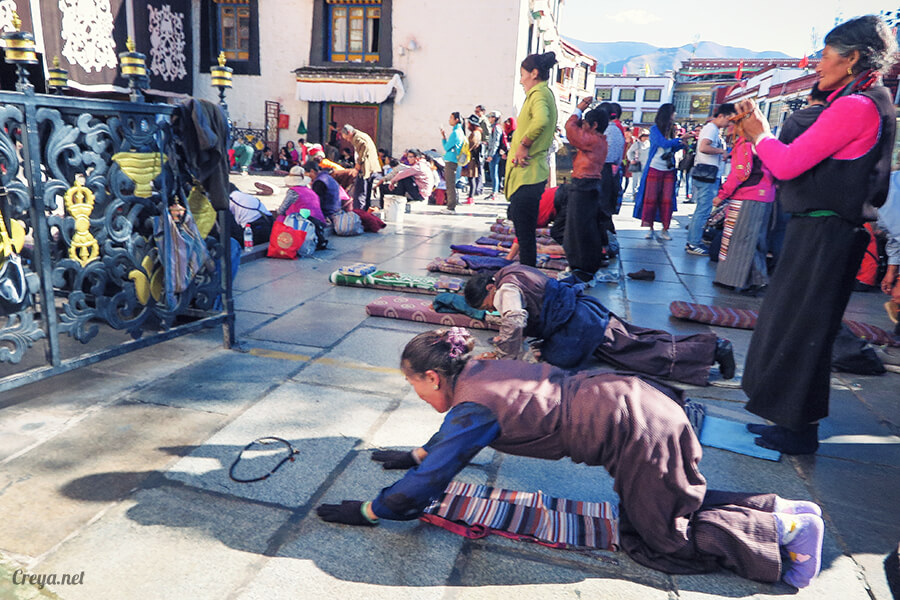
[ 男女老少都虔誠的一叩再一叩 ]
We followed the Tibetans and completed one clockwise circuit of Barkhor Street.
One circuit of “kora” represents completeness, and Tibetan Buddhists walk clockwise. Three important circuits formed around the Jokhang:
The inner circuit, Nangkor, circles the Shakyamuni chapel inside the Jokhang;
the middle circuit, Barkor, circles Barkhor Street outside the Jokhang;
and the outer circuit, Lingkor, links the Potala Palace, Jokhang, Ramoche Temple, and Chakpori Hill.
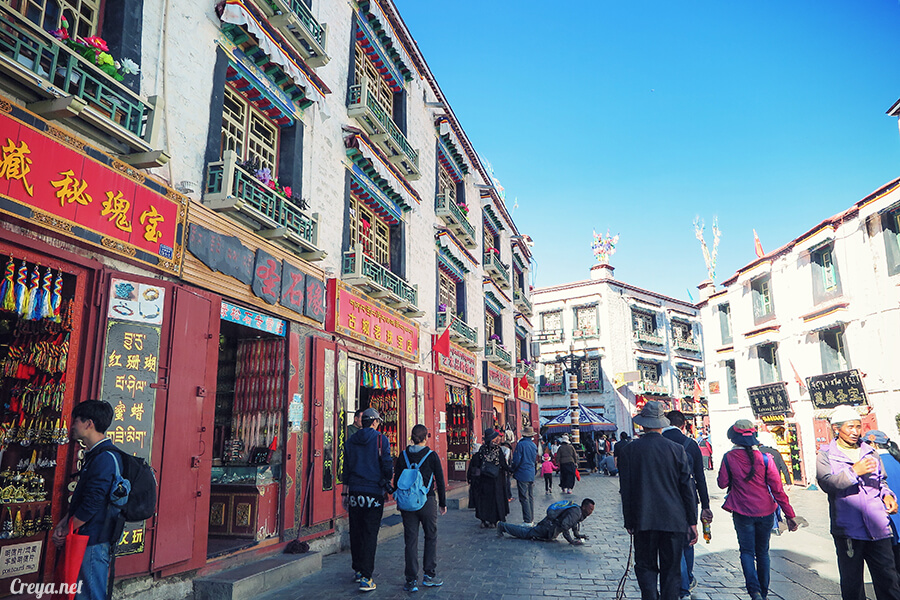
[ 不時會見到邊繞行八廓街邊行五體投地禮的信徒 ]
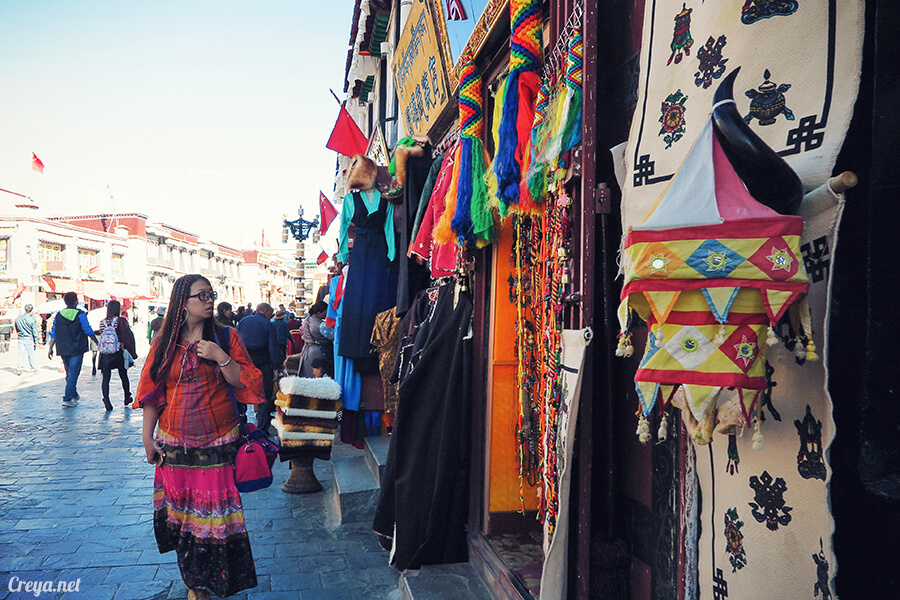
[ 雖說八廓街賣的是紀念品,但有許多唐卡、書屋、曼陀羅店、甚至尼泊爾的商店,走走看看蠻有意思的 ]
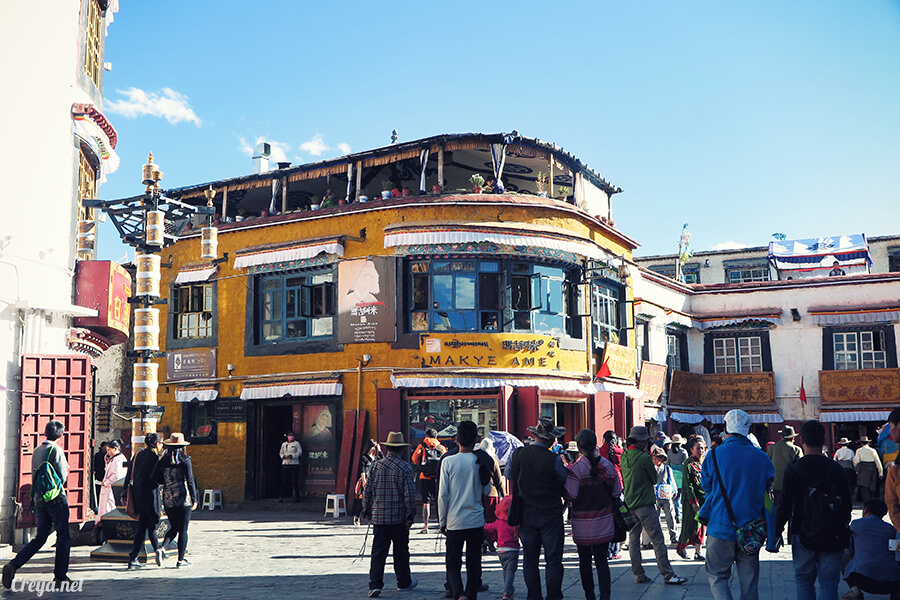
[ 八廓街上顯眼的一棟黃色建築,據說是達賴六世倉央嘉措會情人的地方,他的情史都被出成書了 ]
街旁見著一個白塔與一個小寺廟,這是在八廓街上的藏傳佛教寧瑪派敏珠林寺,寺廟外一圈轉經筒,許多藏人轉入小巷開始繞行著寺廟外,輕輕撥動轉經筒,嘴邊繼續念著六字箴言「翁媽咪爸咪鬨」(唵嘛呢叭咪吽),離開,然後再度回到八廓街的轉經,如同本能反應般,一切都是如此的自然,信仰在他們的心中已經是根深一體。
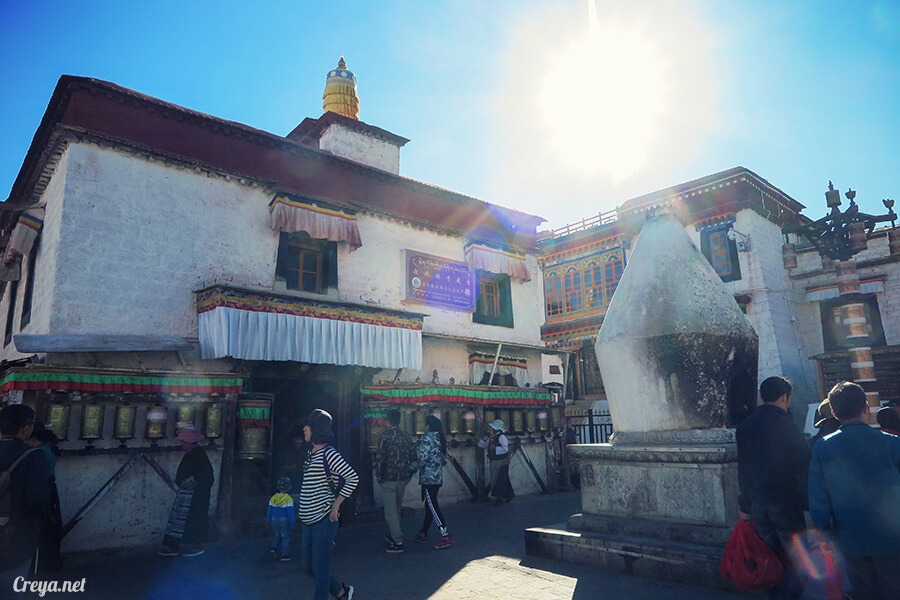
[ 掛著敏珠林寺藏香的小寺廟 ]
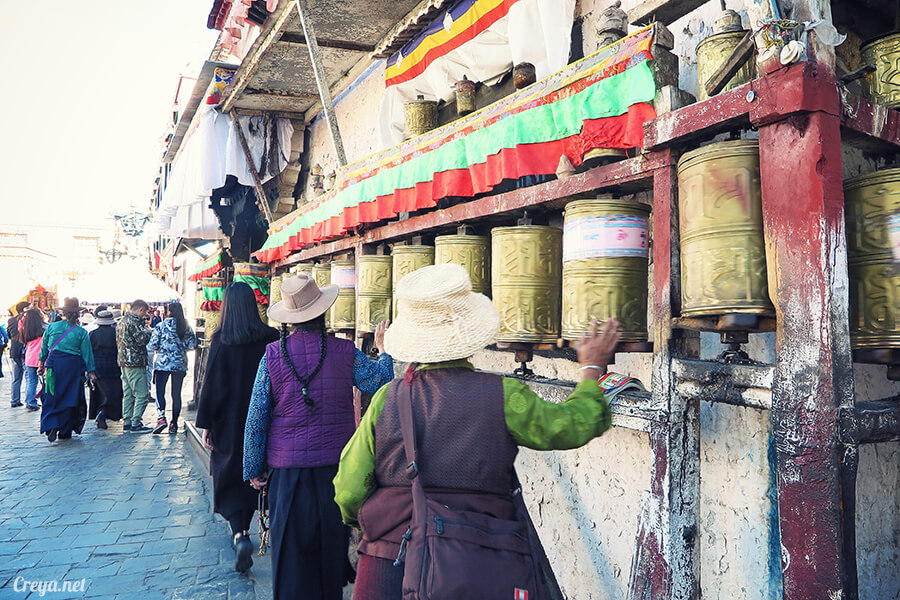
[ 轉經筒上的也是寫著六字箴言,轉一圈即念一次經 ]
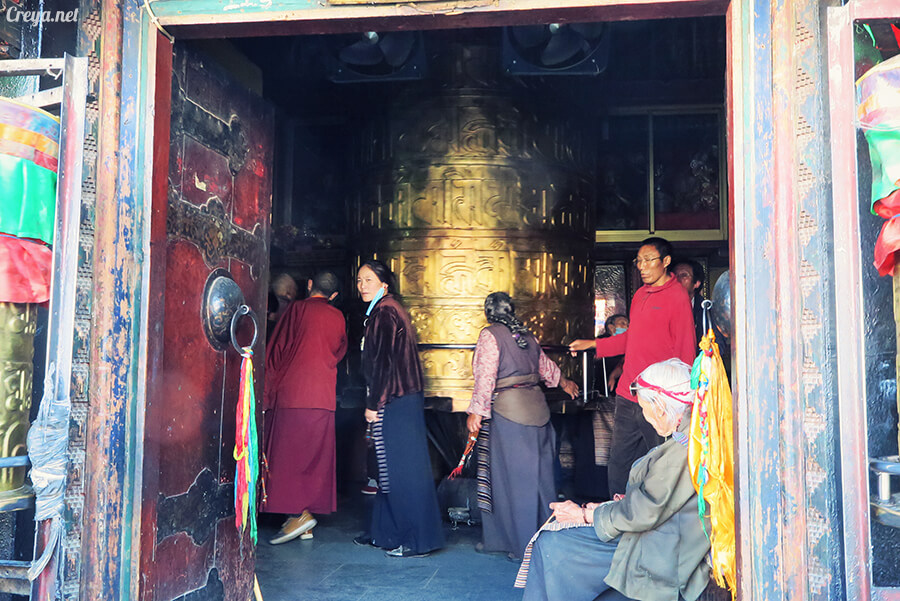
[ 寺廟內還有巨無霸轉經筒?! 所有人合力轉經 ]
Before coming to Tibet, I had heard about Tibetan devotion. Only seeing it with my own eyes let me feel the power of that faith.
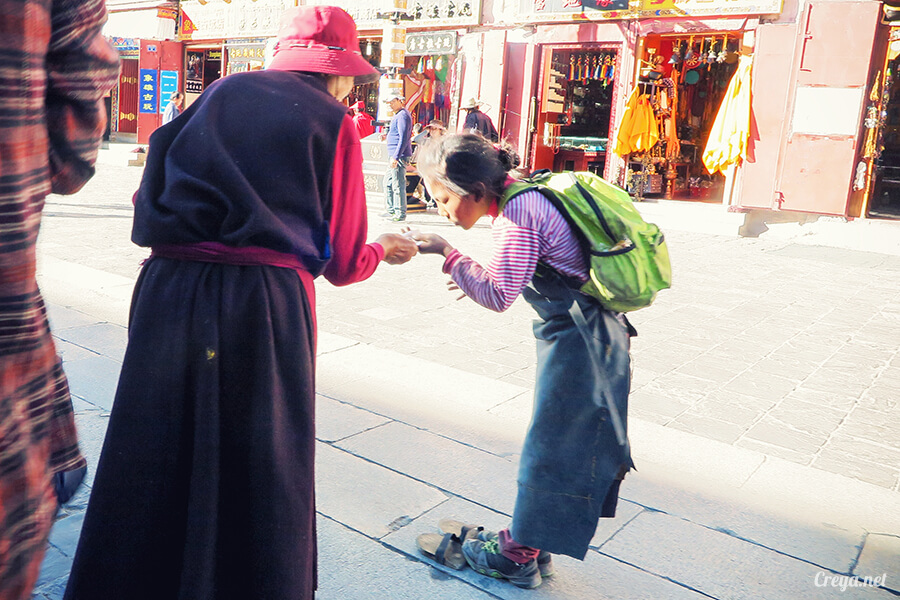
[ 這個女孩獨自一人在磕長頭,藏人們見到來行五體投地禮的信徒也會給予一點錢支持 ]
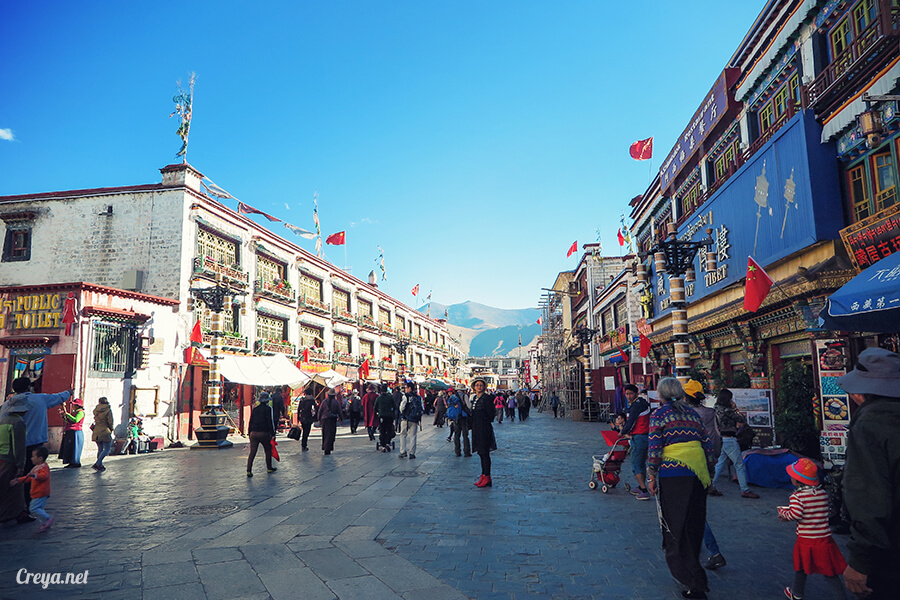
[ 對我們遊客來說,這或許只是一條富有西藏傳統風味的建築古街,但對藏人而言卻是世界中心 ]
These pilgrims travelled thousands of miles to fulfil a lifelong dream: to come to Lhasa, complete the kora, see this statue, and make good on a vow.
Many Tibetans may not know what “tourism” means; the kora may be the great journey of their lives.
As long as you carry a destination in your heart, the journey toward it is a trip.
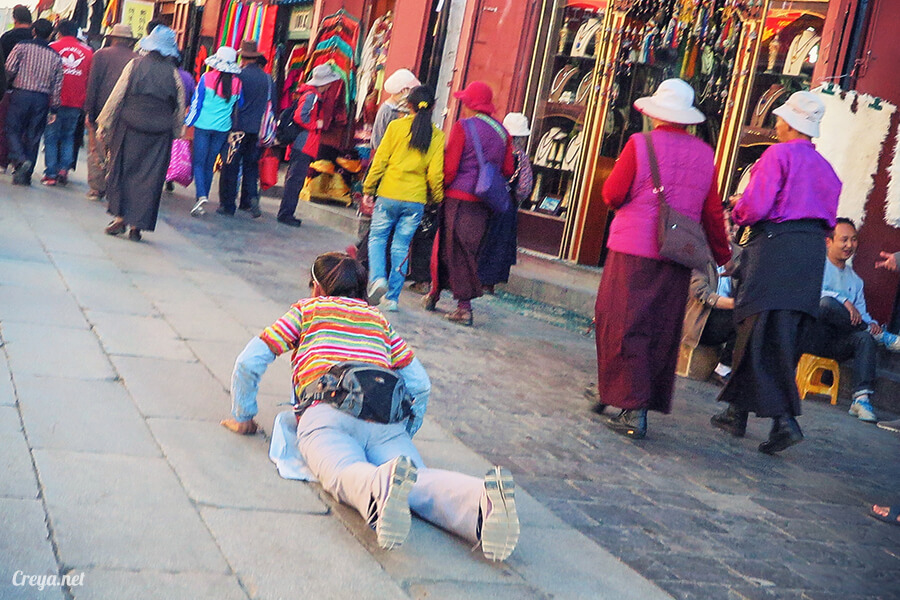
[ 最後用影片來聽聽來自西藏八廓街的聲音吧!(美女~編辮子嗎?) ]
✈ Travel date: 2015/10/5
| Tibet 西藏踢北去 | 系列文章:(旅行期間:2015/10/3-2015/10/16)
● 親眼揭開西藏面紗,那曾經以為遙不可及的夢
● 都站到西藏腳下的成都了,到底去的成嗎?
● 終於踏上拉薩,吸著傳說中的稀薄氧氣與高山症對決
● 藏人的精神殿堂布達拉宮,但或許不只我們高山反應沒精神
● 尋找藏人真正的拉薩中心,被信仰力量震撼的大昭寺與舊城區
● 身心大突破的公路之旅,從拉薩一路向東到林芝(上集 – 米拉山口與如廁記)


