


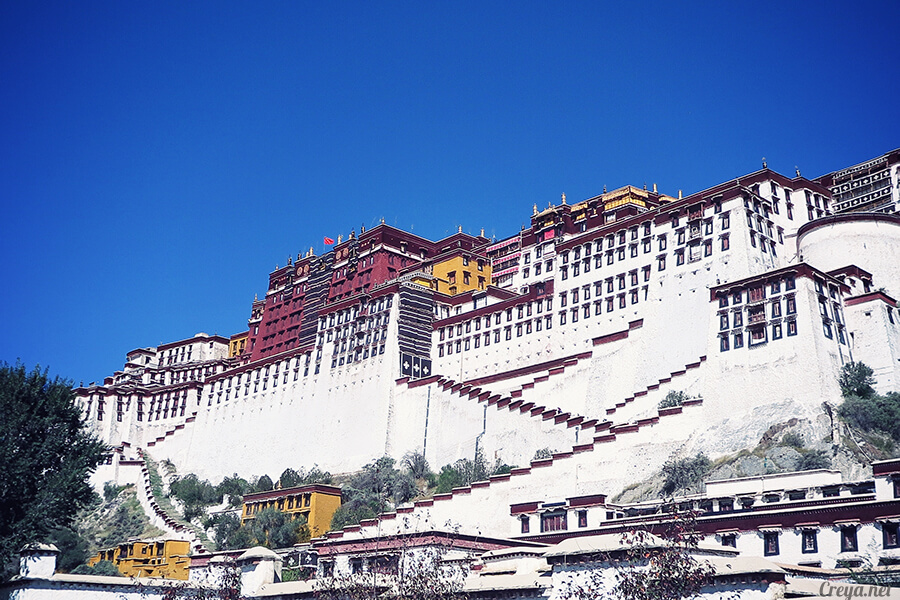
After holing up in our Lhasa hotel for a full day and night, I managed to survive the initial bout of altitude sickness and step out into the light to greet Tibet properly. Our very first stop: the iconic Potala Palace. It’s a staple on every tour itinerary, almost always scheduled as the first sight in Lhasa—as if visiting Tibet without seeing the Potala Palace means you haven’t really been here at all. Naturally, a ordinary traveler like me had it right at the top of my bucket list.
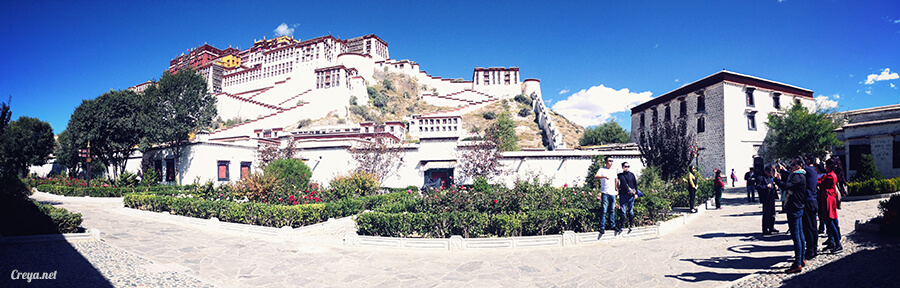
[ Potala Palace shot #2: Looking up from near the entrance ]
Truth be told, I love photos like this. The moment you post one, no explanation is needed—everyone instantly knows you’re sharing a story from Tibet (even if it inevitably leads to a barrage of questions about my itinerary, requiring even more talking). Yet, as I stepped through this majestic sanctuary steeped in centuries of Tibetan history and spirituality, an unmistakable sense of quiet detachment crept over me. If this grand structure stands as such an iconic landmark to outsiders, what does it truly represent in the hearts of the Tibetan people themselves?
[ Even in Tibet, people can’t look up from their phones—proof that smartphone culture spares no one ]
Less than 15 minutes after leaving our hotel, our guide, Lobsang, announced, “Alright, everyone, we’ve arrived at the Potala Palace—time to get off!” I glanced out the window, and there it was, looming right beside a busy, traffic-choked street. The scene felt strangely familiar, much like driving down a busy city boulevard in Taipei and suddenly spotting the National Palace Museum or Chiang Kai-shek Memorial Hall. There was no romantic journey along winding mountain trails, no dramatic reveal eliciting collective gasps. It. Was. Right. On. The. Roadside. Right in downtown Lhasa—a city that, as Tibet’s largest hub, certainly hasn’t shied away from modern urbanization. Thankfully, I’d already heard rumors about this and mentally prepared myself. Ha! You can’t shock me that easily. (Now, consider yourself forewarned, too.)
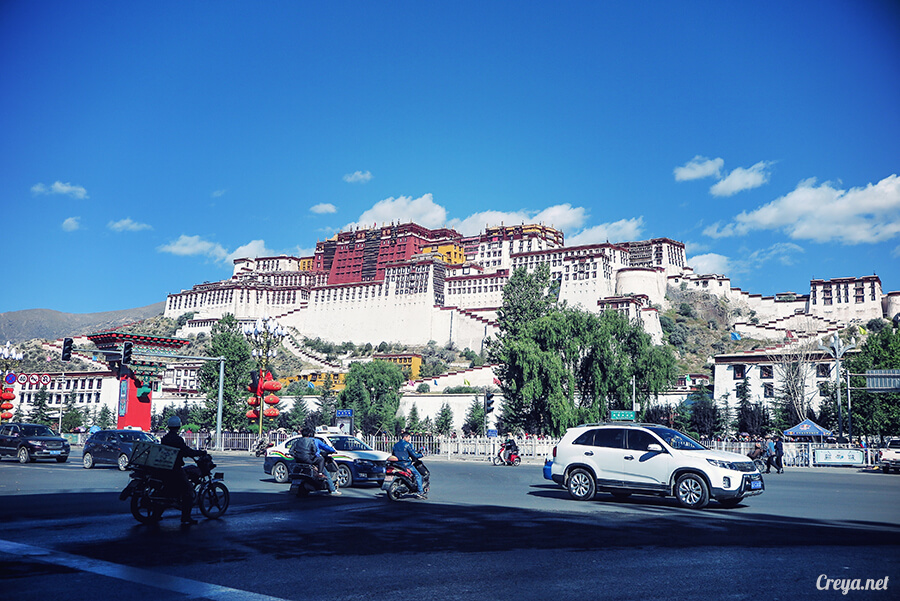
[ Stripped of its mystique: The Potala Palace without its “makeup” ]
Still, seeing the Potala Palace standing grandly before me felt surreal. Its sheer iconic presence washed over me with a wave of emotion: I’m actually in Tibet! The image that had only ever existed in 2D photos and videos suddenly sprang to life in full three dimensions. Now, it was time to step inside and experience it with all five senses.
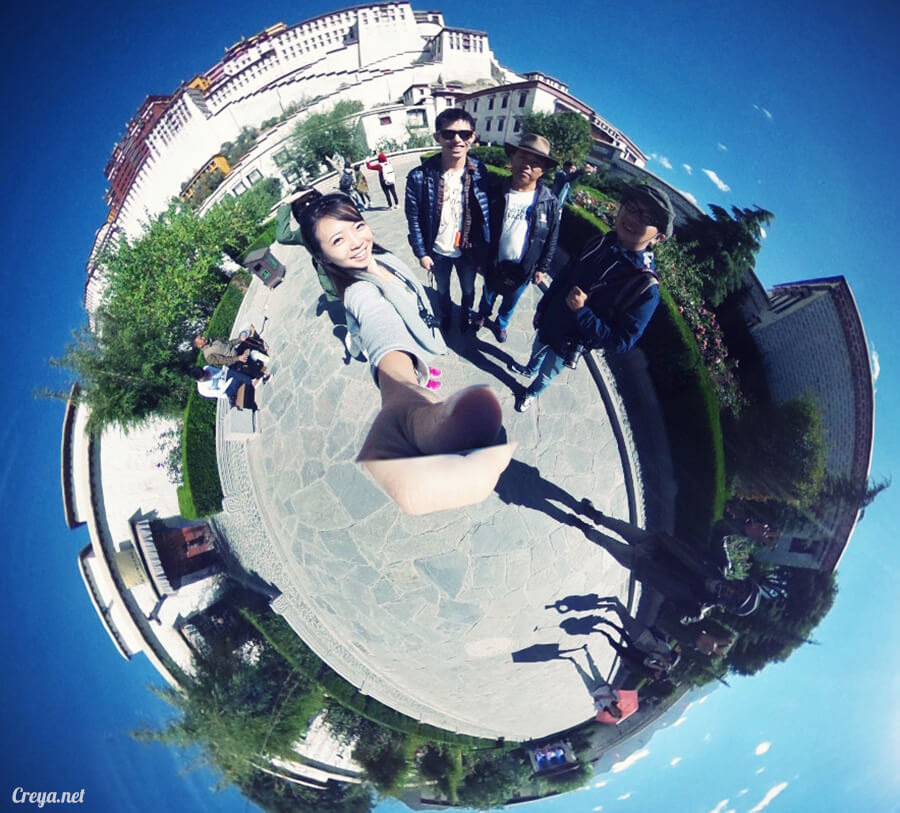
[ It can even look round from this angle ]
Built into the slopes of Marpo Ri (Red Mountain) in Lhasa, the fortress-like structure of the Potala Palace cuts an imposing figure against the barren, golden-brown mountains in the background. Originally founded by Songtsen Gampo of the Tibetan Empire, most of the original palace was destroyed by fire during the empire’s collapse, leaving only two chapels intact. It wasn’t until the 5th Dalai Lama, Lobsang Gyatso—a pivotal figure in Tibetan history—established the Ganden Phodrang government and rebuilt the palace. Construction spanned 48 years, from 1645 to 1693, transforming it into the winter residence for successive Dalai Lamas and establishing Lhasa as the political, religious, economic, and cultural heart of Tibet. However, the complete structure we see today wasn’t fully realized until around 1936, under the 13th Dalai Lama.
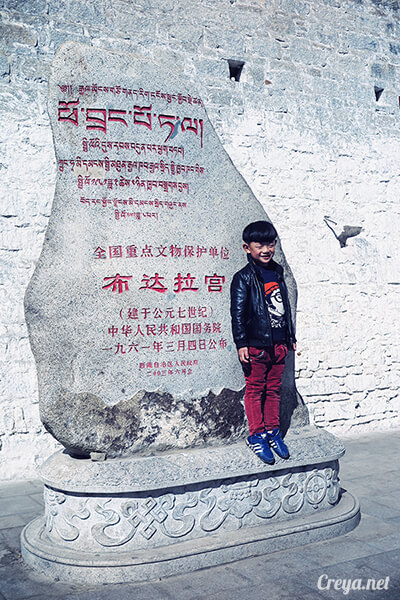
[ If not for its status as a key national cultural heritage site, the Potala Palace might not have survived the Cultural Revolution unharmed ]
The Potala Palace boasts an impressive title: “the highest palace in the world.” It sounds like an ultimate world record to check off your bucket list!
However, standing here while still nursing yesterday’s altitude sickness turns that “ultimate” record into a truly… unforgettable physical ordeal.
Lhasa itself sits at an altitude of 3,650 meters, but perched up on the mountain, the Potala Palace sits at a whopping 3,700 meters. A 50-meter elevation gain on flat ground would be a total walk in the park, but at this altitude, that 50-meter climb requires powering up an endless flight of steps under severely thin air. Even though my altitude sickness had mostly subsided, forcing my acclimatizing body to tackle an oxygen-draining climb left me gasping for breath every few paces. All I could do was focus on regulating my breathing and pacing my steps to keep the fog in my head at bay.
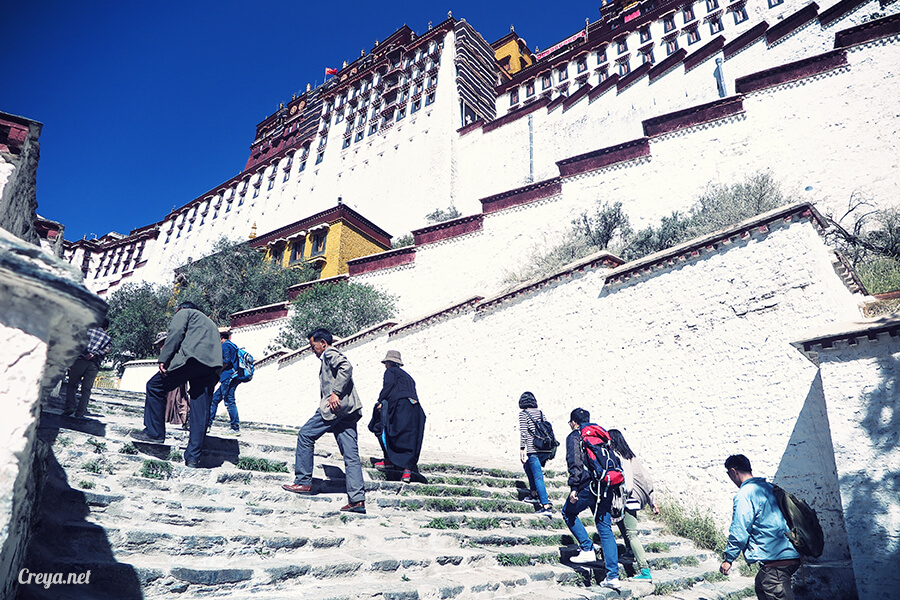
[ “I will climb up step by step, waiting for the sunshine…” Who knew Jay Chou’s song lyrics would become my ultimate mental anthem in Tibet? ]
“Ah, us Tibetans can hike up here in about ten minutes,” noted Lobsang, who usually guides foreign tours. “But with tour groups, it’s a different story—especially Asian travelers, who tend to have lower stamina.” Ouch. Shots fired! Fortunately, he mentioned Koreans held the title for the weakest, so I held out hope we could save face for Taiwan. Still, no matter how exhausted and winded I felt, I was determined to reach the top to witness the treasures inside, even if it cost me whatever breath I had left!
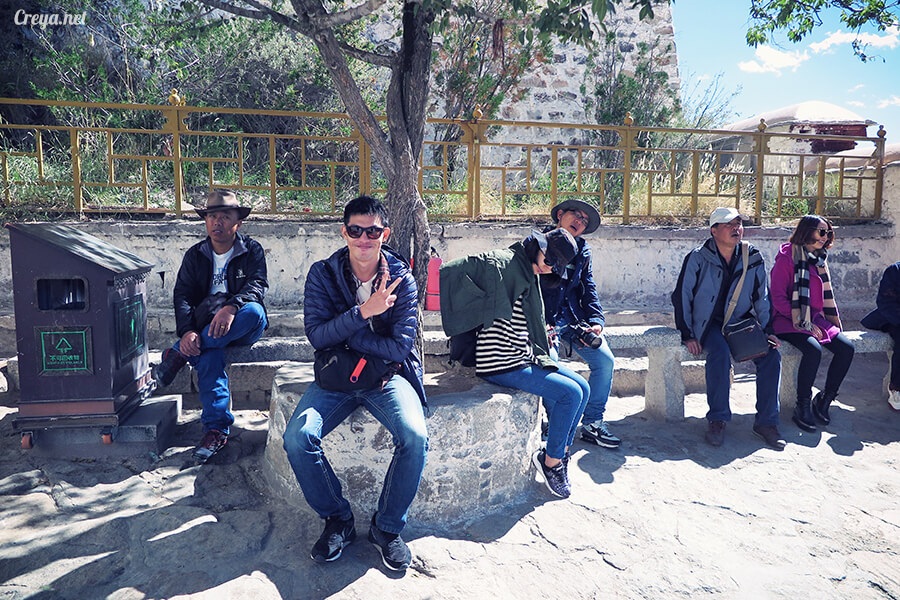
[ Seriously though, it’s exhausting! Running 5 km doesn’t leave me this winded. Why do tour agencies love testing everyone’s physical limits on day one?! ]
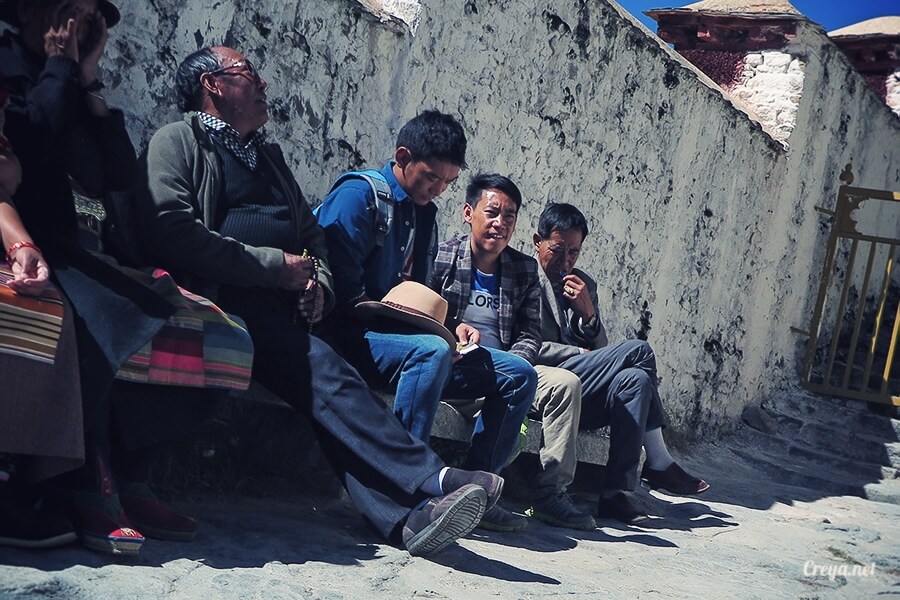
[ “I’m Tibetan, and even I get tired.” See? We’re not doing so bad after all! ]
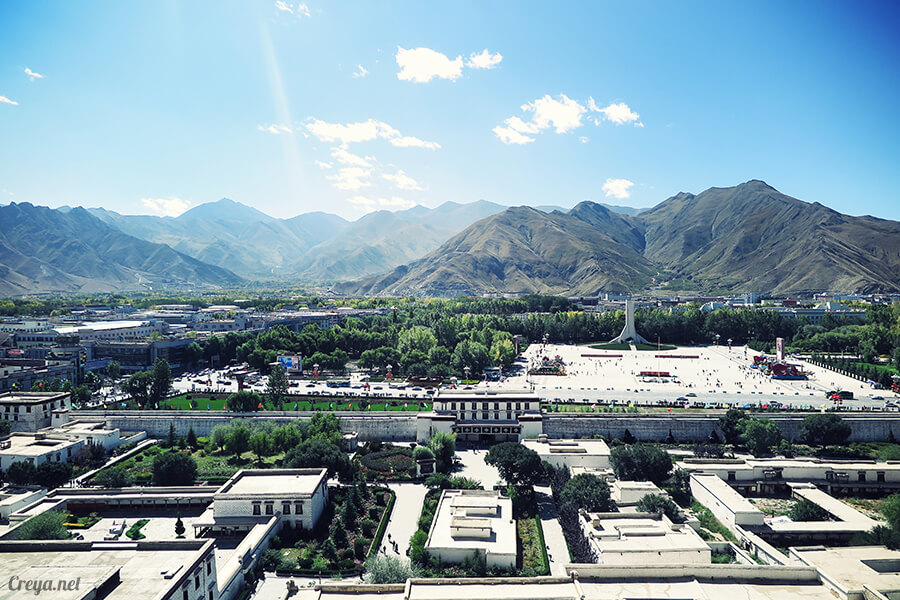
[ Still, taking in the panoramic view while climbing makes it all worthwhile. Below lies Zhol Village—once the administrative heart—and further out, the Monument to the Peaceful Liberation of Tibet. ]
Along the way, Lobsang dutifully explained the architectural marvels of the palace. Each stop he made to give an explanation was a welcome blessing, giving us a precious moment to catch our breath while taking our minds off the steep climb.
Rich with Tibetan character, the Potala Palace is packed with ancient wisdom, making you realize how much modern humans could learn about living in harmony with nature. The upper reddish sections of the walls along the stairways are crafted from Baima grass soaked in red dye. Light and flexible, it reduces structural weight while providing natural insulation and lightning protection. This rare alpine shrub grows only at high altitudes and was reserved exclusively for royal architecture. Meanwhile, the white walls were painted with a mixture of lime, milk, and honey—which sounds suspiciously like a luxurious facial mask formula! It reminded me of the sticky-rice mortar walls at Anping Fort back in Tainan, proving that you should never underestimate anything—even playing with your food can yield a palace structure.
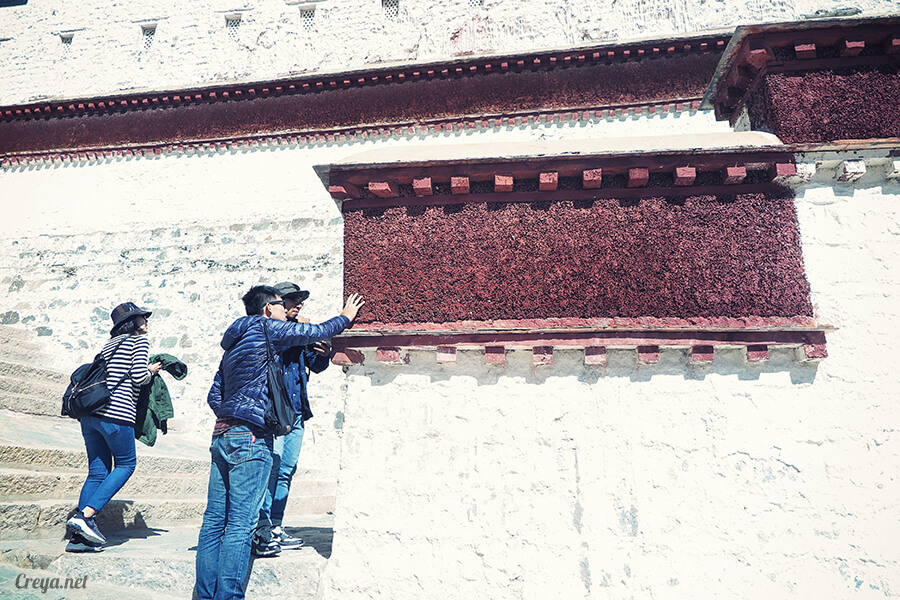
[ A real-life tale of the blind men and the elephant ]
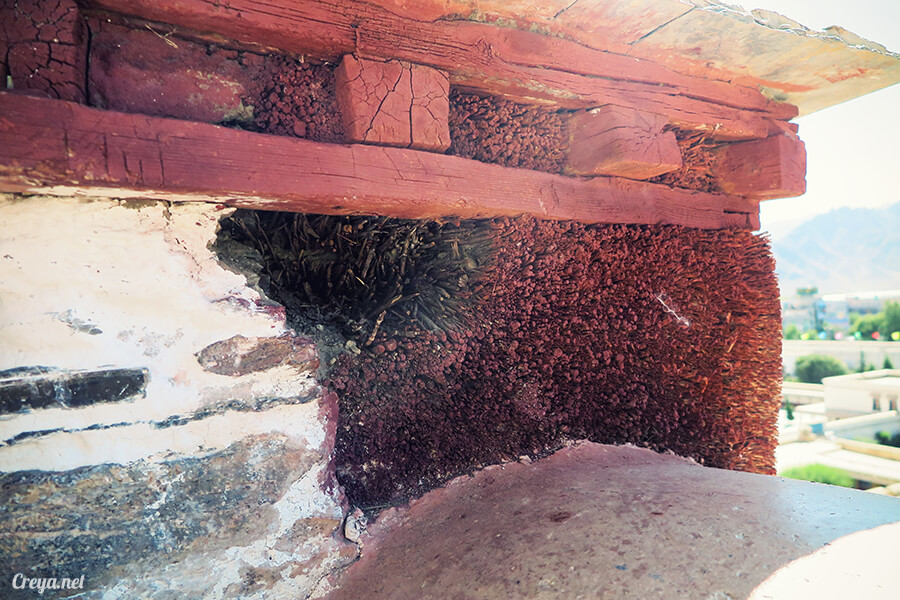
[ White horse grass, which only grows at high altitudes, is reportedly disappearing—leaving a void that may never be filled. ]
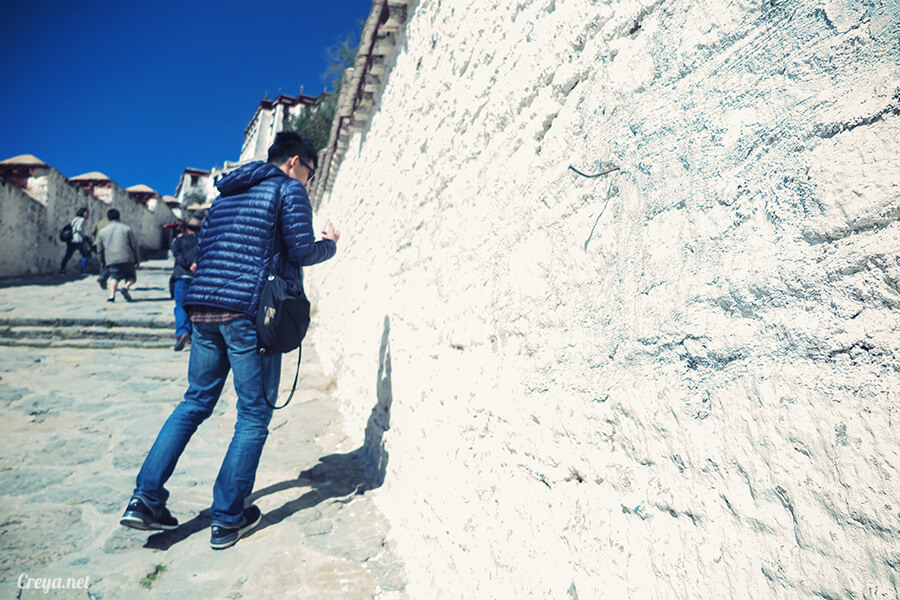
[ Milk-and-honey walls… Hey, don’t play with food! ]
Some of the floors and walls are packed with Arga clay, a traditional Tibetan building material that stays cool in summer and warm in winter. True enough, when we touched the walls under the blazing sun, they felt surprisingly cool to the touch. The thick black yak-hair curtains over the doors and windows are another brilliant defense against the elements—windproof and rain-resistant. My dramatic travel buddy swore they rival Gore-Tex in functionality, even if they’re a bit heavy… though that weight is precisely what keeps them from flapping wildly in high winds.
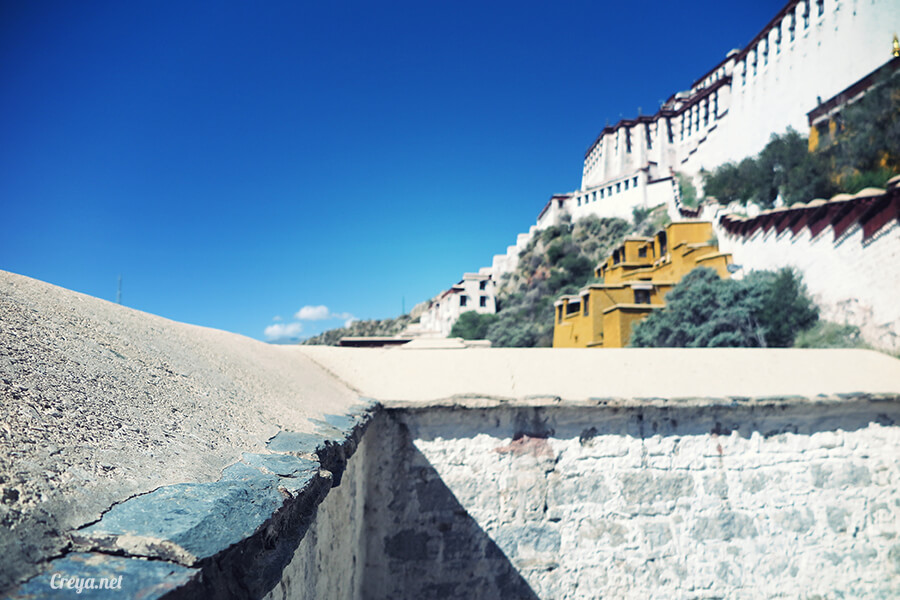
[ The Arga clay layer on the wall stays pleasantly cool even under the beating sun. ]
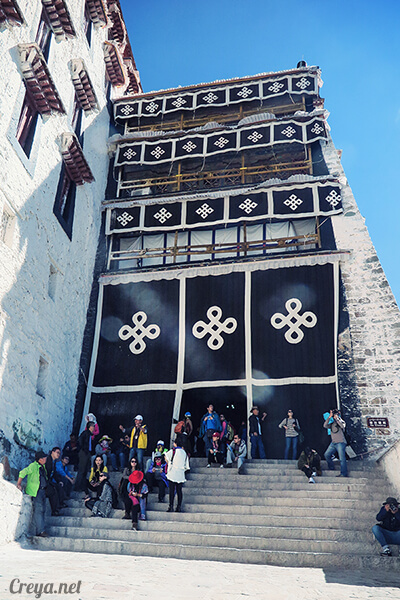
[ The Endless Knot embroidered above is an iconic Tibetan motif for good fortune and blessings. ]
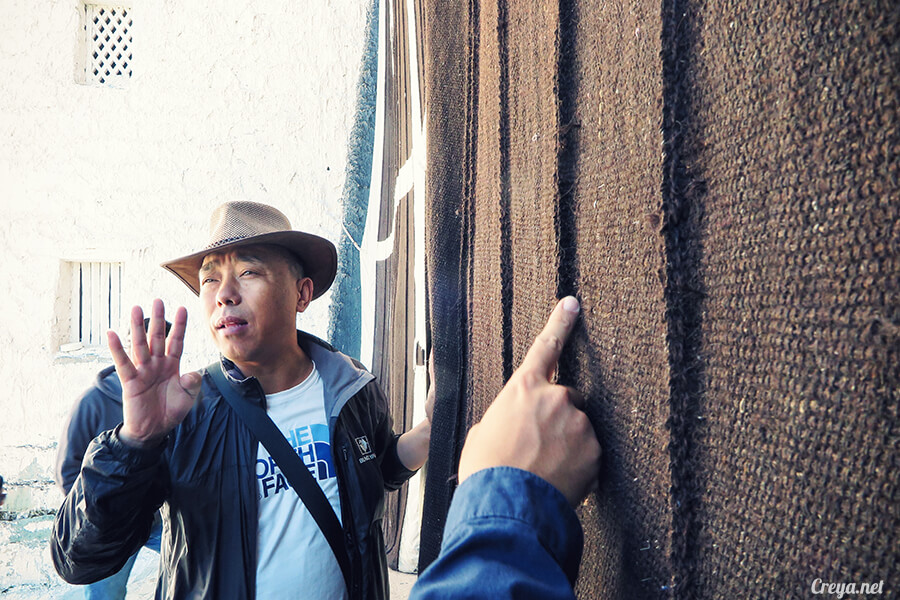
[ Heavy-duty yak-hair fabric—built so tough it’s also used to make nomadic tents. ]
The exterior of the Potala Palace features a striking color-blocked aesthetic, divided by color into the Red, White, and Yellow Palaces—built across different eras yet combining into a seamless whole.
The White Palace covers the largest area and represents secular power. Serving as the living quarters for the Dalai Lama and the administrative hub, it was the political heart of Tibet.
The Red Palace, sitting prominently in the center, represents religious authority. Home to sacred chapels and the jeweled stupas holding the remains of past Dalai Lamas, it served as Tibet’s spiritual center.
The Yellow Palace was once a monastic college where monks studied and recited scriptures.
“There are no monks studying in the Yellow Palace anymore. In fact, no one really knows what’s inside now,” our guide Lobsang said with a gentle smile, shaking his head. “After all, the Dalai Lama doesn’t live here anymore—he’s in India.” That slight smile masked a poignant sense of helplessness. When the supreme sanctuary of Tibetan Buddhism loses its spiritual leader and no longer houses monks passing down teachings, does the building still hold a soul in the eyes of Tibetans? Perhaps the only silver lining is for tourists like us—it’s the reason we get a rare glimpse inside at all.
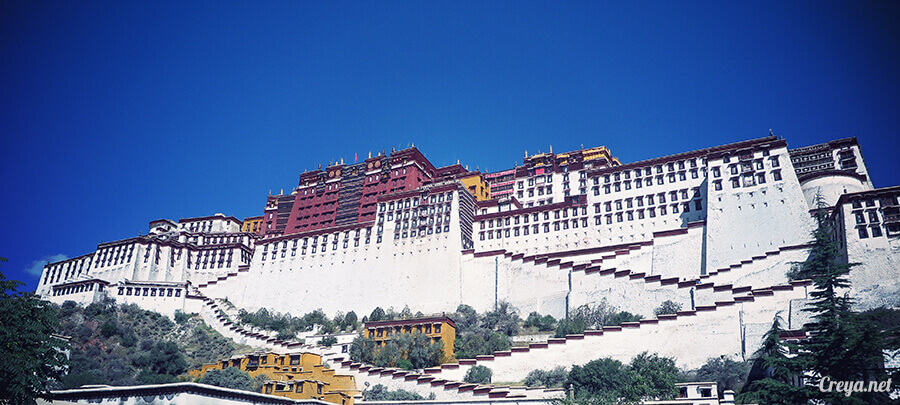
[ The seamless blending of the Red, White, and Yellow Palaces symbolizes the unification of church and state in traditional Tibet. ]
Passing through the main entrance, the East Gate, we emerged into a courtyard filled with colorful flowers known as Deyang Shar. Every year on the 29th day of the 12th Tibetan lunar month, grand religious ceremonies are held here.
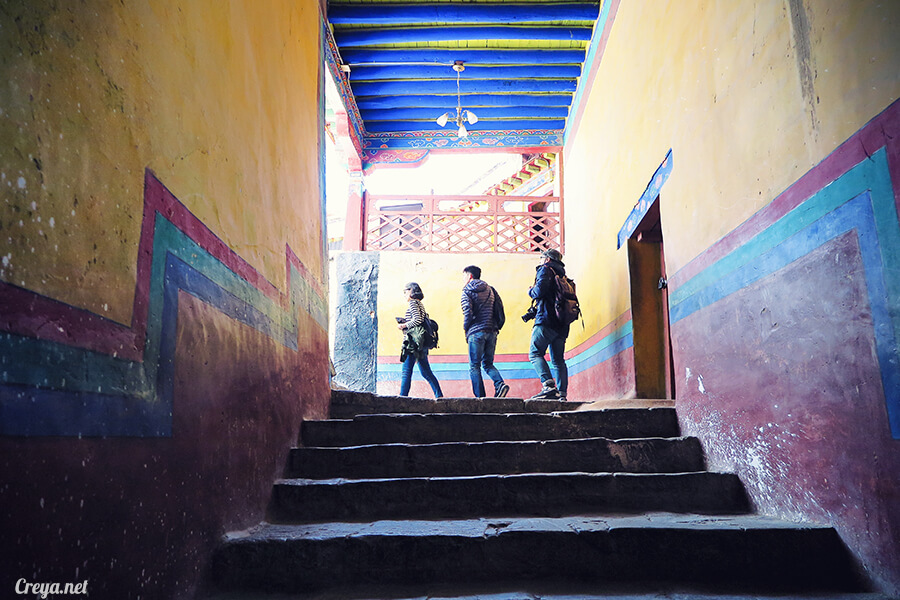
[ The corridor inside the East Gate is full of steep stairs—one visitor nearby completely threw a tantrum and refused to take another step! ]
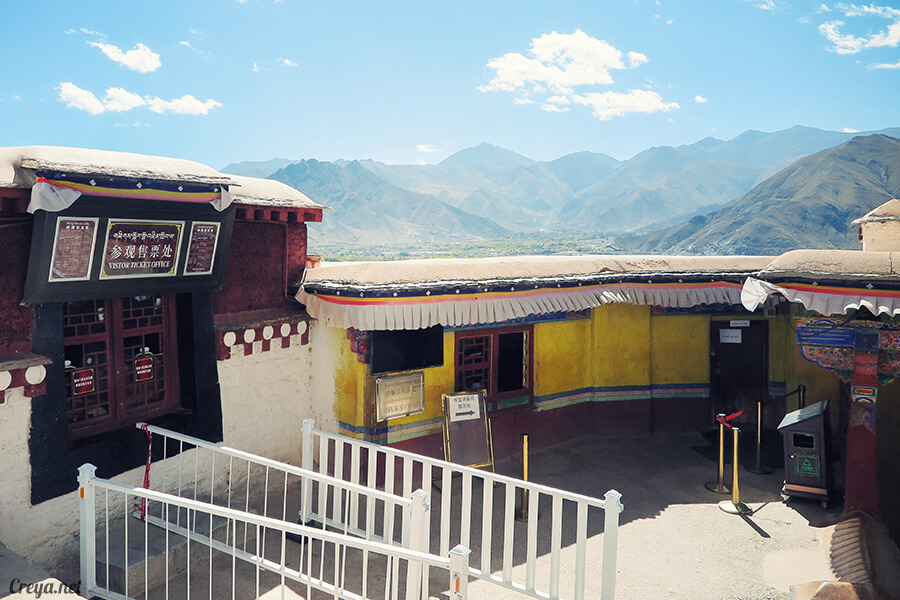
[ The former ticket booth, now repurposed into our favorite pit stop (seriously, how many breaks do we need?). ]
[ A crucial rest stop for water and bathroom breaks—security here is like airport control, meaning no outside liquids allowed! ]
After a grueling 30-minute stair-climb at high altitude, we were finally about to begin the main tour. Priceless historical artifacts lay inside the White Palace behind these doors. But there was a catch: a strict one-hour time limit. The countdown begins the second you step through the threshold. If you overstay by even a single minute, the travel agency’s ticket reservations for the next day get canceled—talk about high stakes! On top of that, photography is strictly forbidden inside, which is why you rarely see photos of the relics online. If you want to see them, you’ll just have to come to Lhasa yourself.
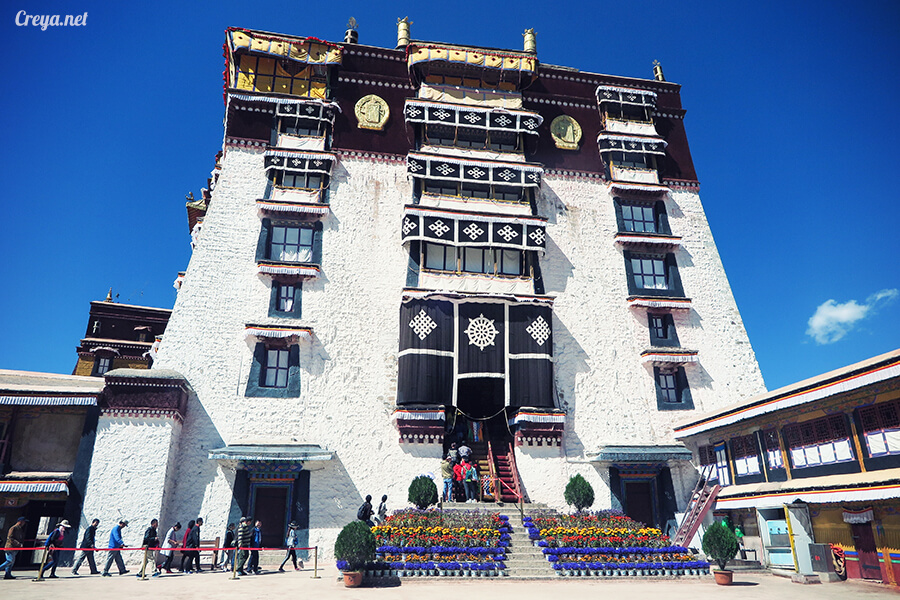
[ This beautiful building adorned with vibrant flowers marks the entrance to the White Palace. ]
To be honest, I hadn’t had time to do much homework on Tibetan religious culture before arriving. Under the pressure of the 60-minute ticking clock, Lobsang launched into a rapid-fire tour, guiding us past jeweled stupas containing the remains of past Dalai Lamas, sacred statues, private living quarters, white stupas, intricate wall murals of deities, walls covered in scriptures, and historical gifts from Qing Dynasty emperors… My brain was working overtime trying to absorb a deluge of completely unfamiliar terms and stories. Without a camera, all I could do was mentally snap as many memories as possible. The Fifth Dalai Lama left the strongest impression on me—his stupa and statues were overwhelmingly massive compared to the others, a clear testament to the era’s wealth and influence.
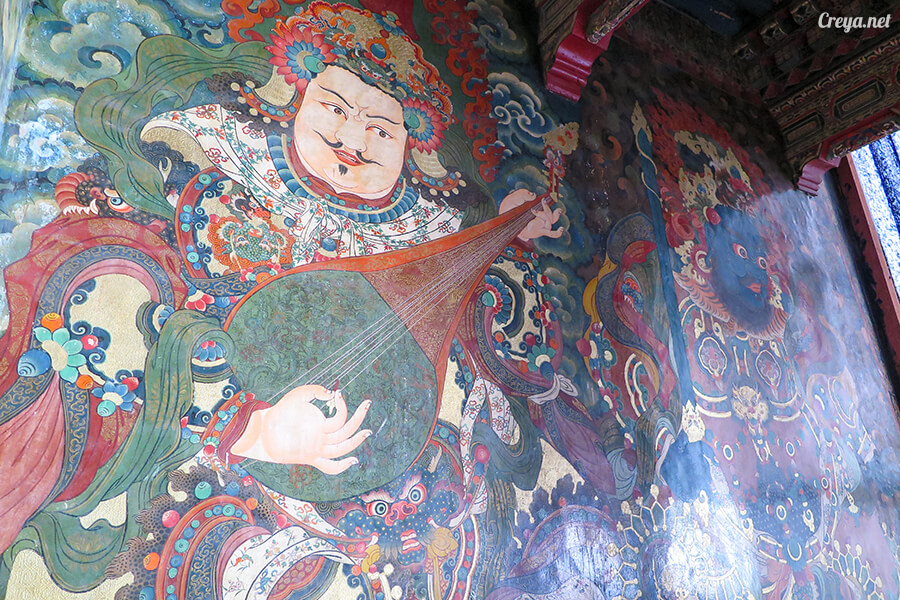
[ The mural of the Four Heavenly Kings inside the East Gate is one of the few artworks permitted to be photographed. ]
After stepping out of the White Palace, we tried to recap what we had just seen. “Wait, he mentioned stupas, white stupas, and… what was the third one?” “No clue.” “…Haha, totally forgot!” “… ” Well, blame it on altitude sickness, sensory overload, or trying to parse Lobsang’s heavily accented Tibetan cadence—between the four of us, our collective memory was a complete blank. Even so, that single hour thoroughly sparked my fascination with Tibetan history and Buddhism.
What remains unforgettable, though, are the sensory memories: watching butter lamps flicker in the dim halls, their faint aroma filling the air; seeing statues stuffed with colorful banknotes like RMB 100 (about US$14), proving that Tibetans never hold back when it comes to faith; and observing red-robed monks, some busy counting donation money and others sweeping and wiping down surfaces. “These monks don’t study anymore; they’re just staff wearing robes,” Lobsang remarked. He didn’t roll his eyes, but I mentally rolled mine for him.
It made me wonder: in Lobsang’s heart, had the Potala Palace become nothing more than a workplace for guiding tourists around?
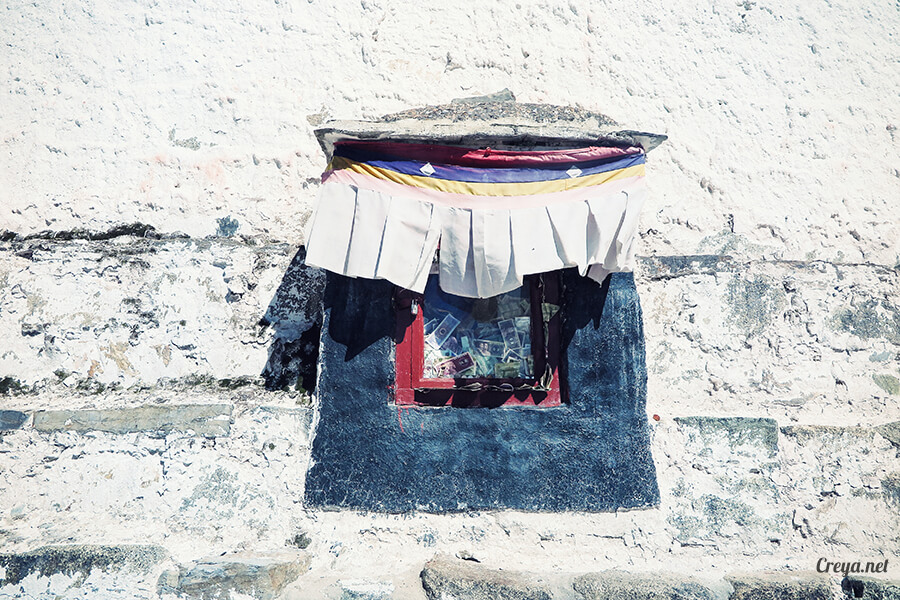
[ In temples and palaces, virtually any gap or crevice is stuffed with donation money by pilgrims. ]
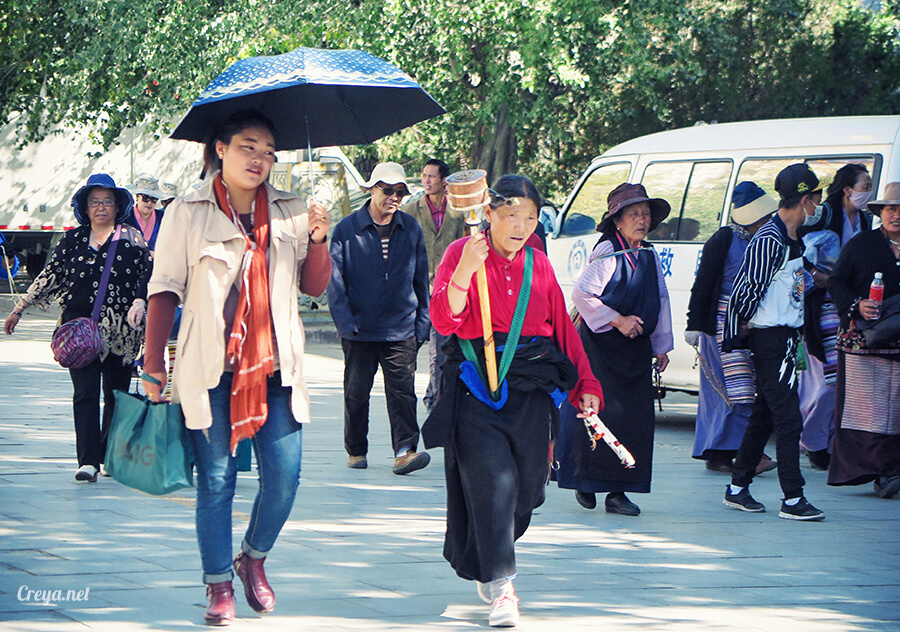
Stepping outside, a sparse trail of pilgrims holding prayer wheels still walked along the circuit around the palace—one of the three main kora routes—mingling alongside clusters of tour groups.
On our final day in Tibet, we caught one last glimpse of the Potala Palace while dropping off postcards. The initial rush of awe had faded significantly. It wasn’t that we had grown jaded after seeing so many magnificent landscapes; rather, the more we learned about the history and modern reality of this land, the more Lhasa felt like a place where the true Tibetan soul was being slowly drained away, disappearing into thin air.
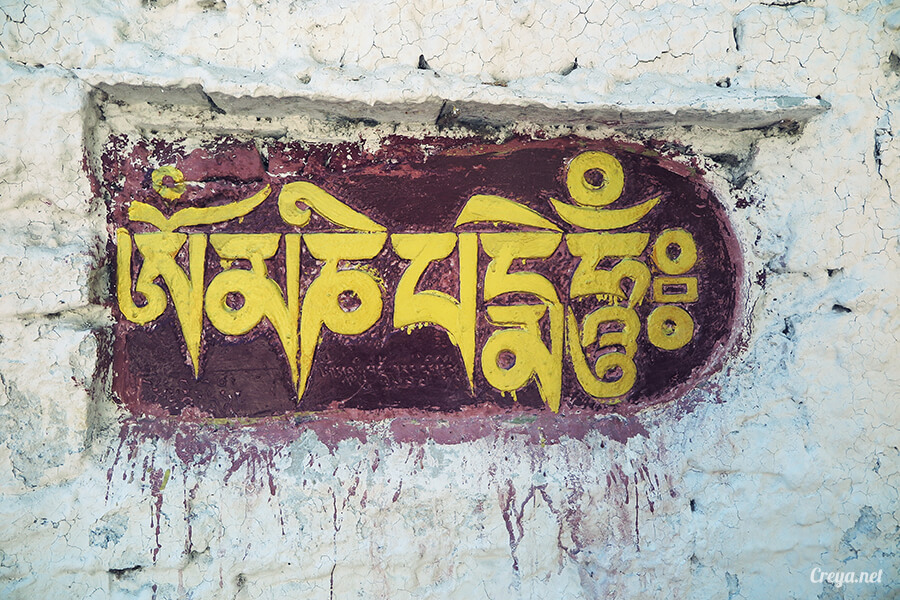
[ Tibetan script: Om Mani Padme Hum—the Six-Syllable Mantra. Reciting it is a universal prayer for peace, and a hope that faith will continue to protect Tibet. ]
✈ Travel Date: October 5, 2015
| Off to Tibet | Series (Trip Dates: Oct 3–16, 2015)
● Unveiling Tibet with My Own Eyes: Realizing a Once Impossible Dream
● Standing at the Threshold in Chengdu: Will I Actually Make It to Tibet?
● Finally in Lhasa: Breathing Thin Air and Battling Altitude Sickness
● Potala Palace: The Spiritual Heart of Tibet, Where Altitude Left Everyone Short on Energy
● Discovering Lhasa’s Soul: Moved by Devotion at Jokhang Temple and the Old Town
● A Mind-Bending Road Trip from Lhasa to Nyingchi (Part 1: Mila Pass and the Toilet Chronicles)


