


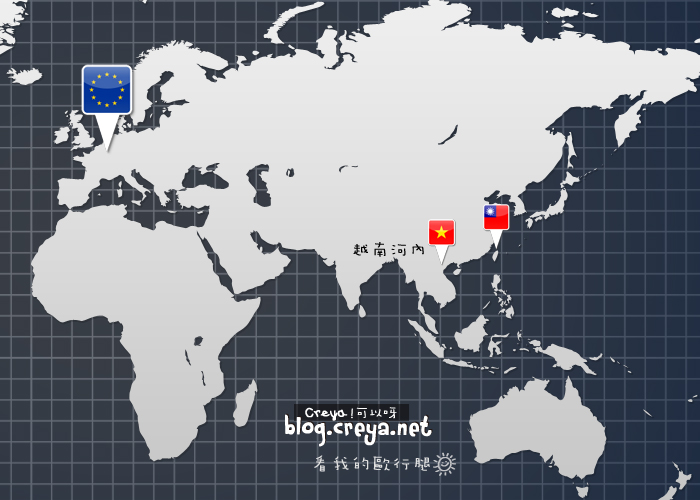
When you hear “Vietnam,” who comes to mind? The Thai and Vietnamese immigrant districts outside major train stations, theVietnamese women whose children now make up one in every ten Taiwanese elementary school students of mixed heritage, or the Vietnamese version of Princess Pearl who has just tried spicy hot pot?
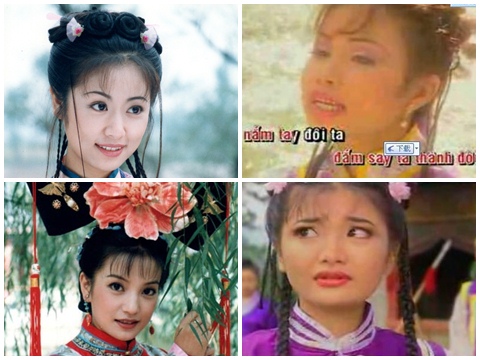
[ You on the right—aren’t you in the wrong show? ]
Fortunately, thanks toVietnam Airlines—making the dream of stretching your legs in Europe less far-fetched(←If you haven’t caught up yet, hurry over and catch up), I had the chance to take a free, whirlwind sightseeing tour of downtown Hanoi for a few hours during my layover en route to Europe. It gave this little-island native a chance to broaden her horizons and get a look at a Vietnamese culture that felt both familiar and unfamiliar.
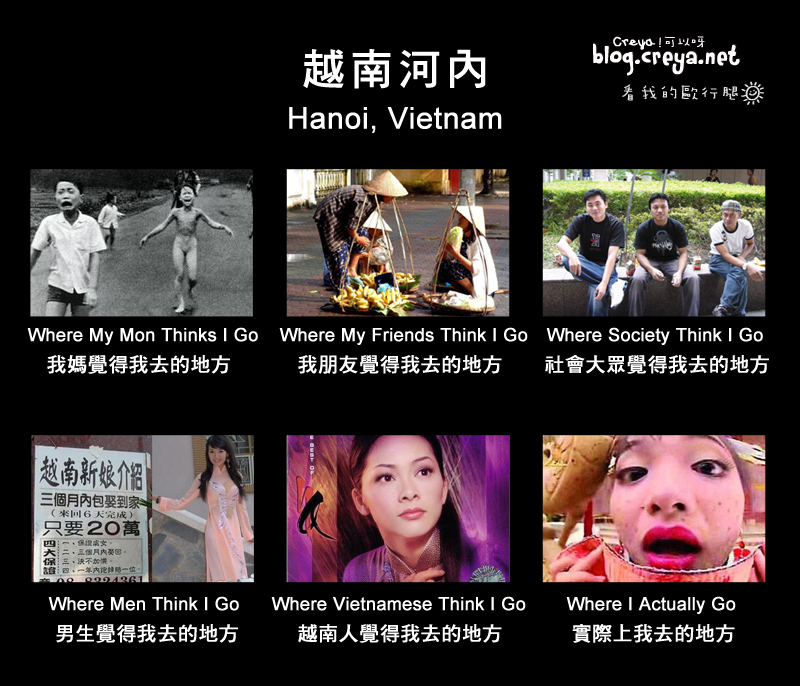
[ Princess Pearl is back to cause trouble again: Episode 2 ]
I used to think Taiwanese people had to be the world’s greatest traffic-conquering superheroes. Every one of us could weave through a sea of vehicles while picking our noses, and once you’d driven on Taiwan’s roads, you could handle any country. But the moment I set foot in Hanoi, Vietnam, I felt an overpowering aura of road-warrior supremacy that instantly sent me ten steps backward. I struggled three steps forward, only to stumble six steps back again (←Can you feel my terror now?) (Who secretly counted exactly how many steps I moved backward and forward?!). Someone, sound the alarm—we have met a worthy opponent! Less than five minutes after leaving Hanoi Airport on the shuttle bus into town, I was completely stunned by the scene before me. Cars, scooters, bicycles, cycle rickshaws, hand-pulled carts, and pedestrians on their own two feet—everything you could possibly imagine was there. Each went its own way, yet they constantly crossed paths, weaving in S-curves and crisscrossing one another. That was when I realized Taiwan only has Little S; Vietnam is where horror queen Big S truly reigns. Andthose melancholy parallel lines of life can cross at any moment on a Vietnamese road。
Taiwanese people!You’ve all lost!You’ve all lost!What’s so impressive about weaving between cars? And taxis that stop wherever the heck they please? Come witness the wondrous spectacle of Vietnam’s roads.
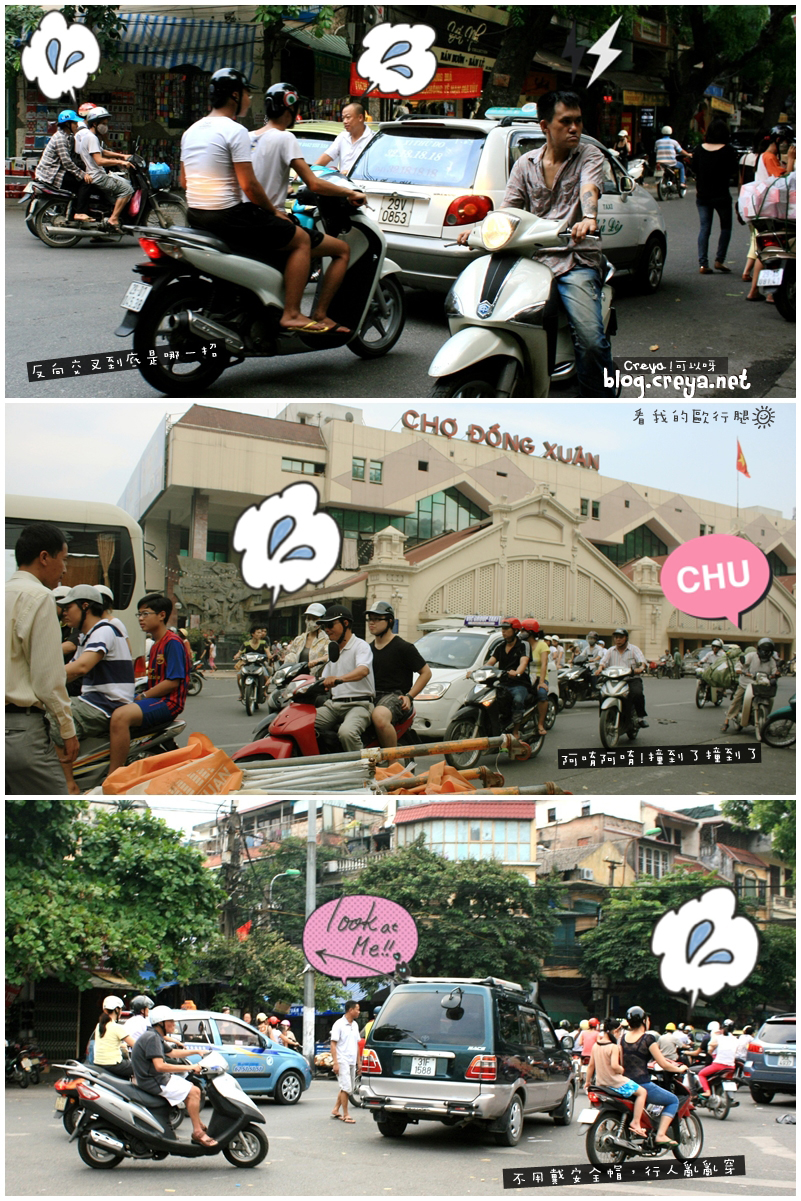
[ This is the legendary pinnacle of doing exactly as one pleases. ]
At first, I couldn’t figure out just what on earth was going on before my eyes (translation: Why in the world is this happening?). Then I looked more closely. Ah-ha! There were no traffic lights! Although deep down we knew we had lost and our odds of making a comeback looked slim, we Taiwanese weren’t about to concede without finding out why. That’s the spirit of the Taiwanese!
(The following has been automatically translated from English into Chinese.)
Me: Tour guide, why aren’t there any traffic lights on the streets of Hanoi?
Tour guide: Becausetraffic lights would cause traffic jams!
Traffic lights: ………………….
It suddenly hit me like a revelation, clearing the traffic jam in my brain… Hmm… that actually made a lot of sense. I was almost convinced…. Horns blared everywhere, instantly sending me back to my days in Beijing and Shanghai. Even crossing the road meant waiting until enough people had gathered, then charging bravely forward together. Getting to play a real-life version of Frogger in Vietnam was worth the price of admission, I suppose (?!)
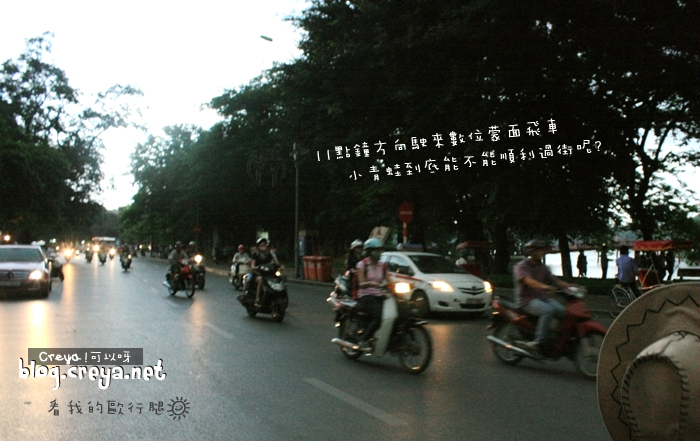
[ Now you know I risked my life to take this photo, right? T^T ]
So, everyone,when visiting Hanoi, protecting your life matters more than protecting your money; don’t worry too much about having your valuables stolen, but make sure you buy plenty of accident insurance! (Note: The guide also said Vietnam’s traffic-accident rate is extremely high, with more than 10,000 people dying in road accidents each year. You can also see that Hanoi residents not only disregard traffic rules, but most people don’t wear helmets, routinely overload their vehicles, and have no traffic police directing them.)
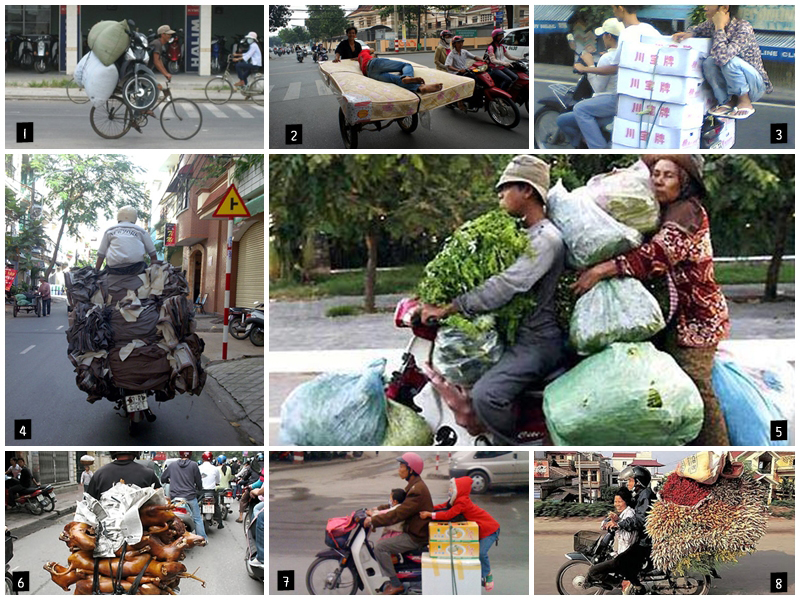
[ Vietnam is the land of heavily loaded scooters—which one do you think is the most impressive? ]
But please don’t read this far and immediately put a giant X through Vietnam. Every country has its own distinctive qualities, strengths, and things worth appreciating. After all,the purpose of travel is “to see,” and seeing means improving our understanding and judgment of other peoples, cultures, and places(by Solon—oh yeah! I actually managed to slip in a famous quote);“seeing” broadens our horizons: we can look at others, and also take a good look at ourselves(make sure you put the emphasis in the right place~).
After all, Vietnam spent centuries as a tributary state of China and had extensive cultural exchange with it. It was also colonized by France twice and has remained under socialist-party rule (commonly called communism) since the Vietnam War. With so many cultures blended into one country,its architecture, food, writing, language, and traditional culture have all been profoundly influenced by China and France, making it well worth putting down the books and traveling far to see for yourself. Chinese influences include Confucian temples, Mahayana Buddhism, and the Vietnamese áo dài. Its best-known foods—Vietnamese pho (PHO), spring rolls, and rice noodles—are also very similar to Chinese cuisine. Later, after French culture arrived, there came baguettes, super-nutritious Vietnamese-style sandwiches stuffed with all sorts of fillings, and wildly popular Vietnamese coffee. Whether Chinese-inspired or French-inspired, Vietnamese food is unbelievably delicious! (Suddenly I feel a quiet pang of sadness. This seems to be exactly how foreigners see Taiwan: delicious food, and everything else… forgotten. *sob*)
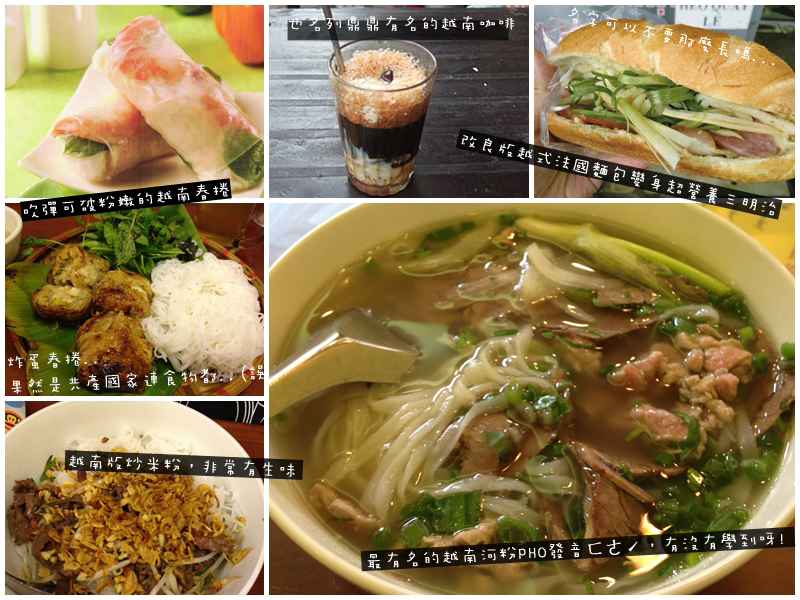
[ Must-try local Vietnamese eats that’ll have you saying “book boots” ]
Vietnam’s written and spoken language reveals this cultural fusion even more clearly. Back when I was a naive and innocent twenty-three-year-old (?!), I thought Vietnamese writing was basically English with extra marks on top—the sort of slashes and squiggles we normally use to make emoticons like T^T、~_~—serving as tones, like those in Chinese. But on this trip to Hanoi, I finally learned from our guide thatthese letters were actually“French” letters!Vietnamese originally existed only as a spoken language, without its own writing system, rather like Taiwanese. Chinese characters and several other scripts were used at various points, but they couldn’t fully represent the pronunciation. During French colonial rule, a Vietnamese writing system adapted from French was developed—the same English-looking symbols that now appear to have doodled faces and little wigs. So when Vietnamese people learn French, reading and pronunciation are much easier for them!

[ The orange text is Chữ Nôm, the extremely difficult script once used in Vietnam; the blue text is modern Vietnamese! ]
Think that’s the end of it? Vietnam isn’t as simple as you imagine. Please proceed to the next page ↓


