


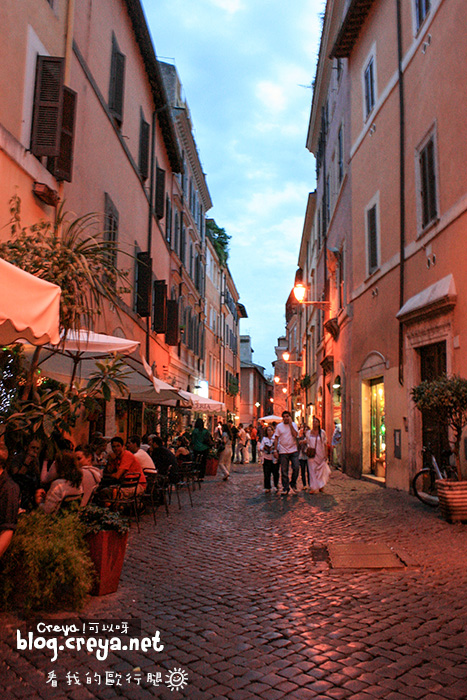
Despite all the stories from people who’d been robbed or pickpocketed, plus everyone’s well-meaning warnings and scare tactics, I still had the nerve to make my very first trip to Europe an 85-day journey. Thank goodness this little lady made it home safely. Apart from a few close calls caused by my own stupidity, I was never robbed or pickpocketed, which admittedly took a whole lot of luck. But rather than simply leaving everything to fate, what mattered more was that Iread loads of relevant information beforehand, learned which situations to watch out for, raised my awareness, and even found ways to prevent certain foreseeable dangers before setting off.。
Brother Chi-tian has a song that goes, “Thirty percent is destiny, seventy percent is hard work—stay alert and you’ll stay safe!” So now, listen to Creya! Okay, okay, let me slowly tell you these stories about staying safe in Europe. They’re divided into three parts, so read this carefully compiled guide and keep yourself safe!
Part One: Europe—Stay Alert! – Scam Edition
Part Two: Europe—Stay Alert! – Theft and Robbery Edition
Part Three: Europe—Stay Alert! – My Defensive Tactics
* I put this together to remind everyone that even when travelling in Europe, you still need to pay attention to basic safety details. But please don’t let that put you off going. Once you’re there, enjoy the scenery to the fullest and interact with the locals. Many of the situations below are things adults have drilled into us since childhood, but growing up accustomed to Taiwan’s safety makes them easy to forget overseas. Pay a little more attention to your surroundings and the small details, keep these basic precautions and responses in mind, and you’ll be better able to tell good from bad and enjoy a trip that is both fun and safe!
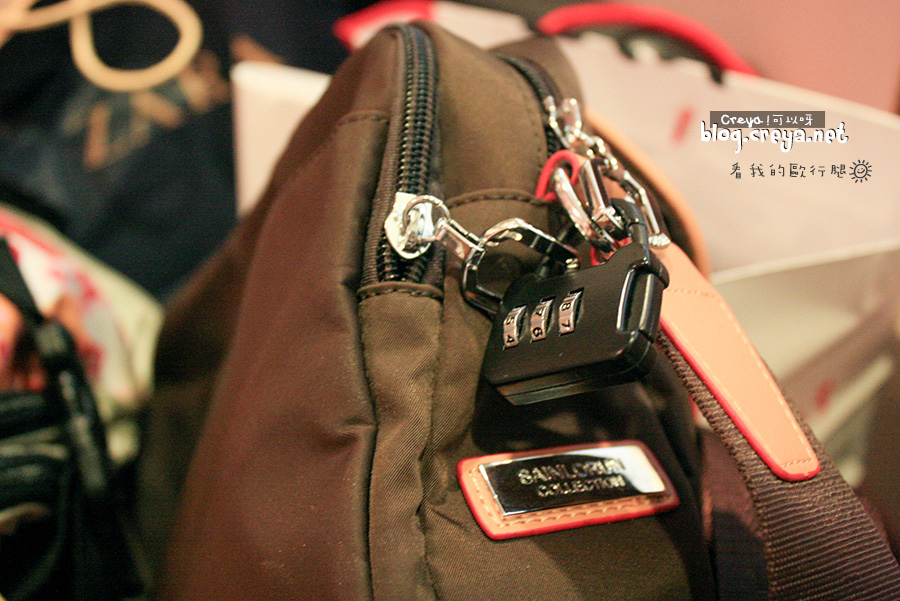
[ Only you~ ](Image sourced online)
When Mama Hsia first heard that her daughter was going to Europe alone for three months, she came home at the same time every day for seven straight days to deliver a fresh headline: “My friend’s daughter had all her money stolen in France,” “My friend went to Europe and said there are lots of dangerous Roma people there,” or “Your uncle’s friend was robbed in broad daylight in Italy.” (The director cut the other four reports.) (Actually, my goldfish brain forgot them.) It was the first time in my life I’d realised Mama Hsia had so many friends! (That is not the point.)
And she wasn’t alone. Whenever Europe came up, nine friends out of ten would tell me, “Isn’t Europe supposed to be super dangerous? Several of my friends were robbed or pickpocketed there!” I had assumed only notorious countries such as France, Spain, Greece, and Italy required extra caution. (These just happened to be the first two and two of the final three countries on my itinerary, so apparently I was either going home early or going all in.) Then a classmate told me that our university photography teacher had an entire boot full of camera equipment pried open and cleared out during a single meal—in Switzerland, of all places, a country that sounds exceptionally wholesome and safe! (Inner monologue: WTF, so where exactly am I supposed to feel safe?)
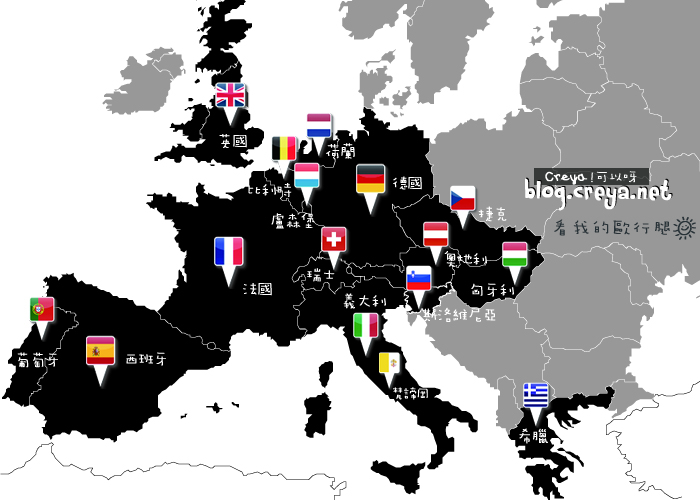
[ This map looks awfully familiar. I think I saw it inthis postbefore ]
Fine then~ Why had everyone else “heard of” these terrifying incidents, while foolish little me had just decided to visit Europe in blissful innocence, imagining Europe as a collection of classically romantic and advanced countries? What could possibly be worrying about travelling there? But once friends and relatives began competing to warn me, and a casual online search produced an endless stream of safety warnings and theft stories, I broke into a cold sweat.It sounded as though getting robbed or pickpocketed was a compulsory mission in Europe, and unless you completed it, you couldn’t claim to have been there.。
Could it really be that terrifying? I didn’t want to believe it, yet I couldn’t ignore such a serious reality. But was this youthful little flower of a woman (who?) supposed to give up the trip just to avoid those possible dangers?
I knew I would regret not going, and my mind was already made up. So I decided to turn fear into strength, read countless accounts online, and sort the common dangers into several categories. During those 85 days, whenever I sensed danger approaching and the warning light turned amber, I could prepare in advance—dodging, avoiding, or confronting it head-on. They say, “Danger comes from ignorance,” and also, “Fear comes from ignorance.”If both danger and fear come from ignorance, then gaining knowledge and greater risk awareness must give us a much better chance of overcoming both!

[ Still a rookie, but reading more has to help somehow ](Image sourced online)
Europe—Stay Alert! One! Nothing Costs More Than “Free” – Scam Edition
As travellers, we often feel touched when strangers in an unfamiliar place kindly look after us, enthusiastically approach us, or strike up a conversation. But in Europe, pause and think for a few extra seconds:someone who initially gives you something or helps you for free may turn around and demand money the moment you accept.That doesn’t mean we need to become cold bitches.Just take a moment to judge whether the person is trustworthy and do your homework, so you’ll know to be more alert in places where many incidents have already occurred.。
The best-known example is outside Sacré-Cœur in Paris. On the steps leading up to the basilica are many tall men holding “lucky strings.” At first, they approach as if they mean well and say something to you.「Free Free」Once an unsuspecting tourist stops, heh heh~ theytie the lucky string around your wrist and start demanding money:“10 euros,” “20 euros.” Many people have even had their arms forcibly grabbed, or had the string slipped around their moving wrist with an almost magical sleight of hand. (How romantic.) (With talent like that, why not become a magician?)

[ The steps outside Sacré-Cœur. With scenery this lovely, watch the bags beneath your hands even more carefully ]
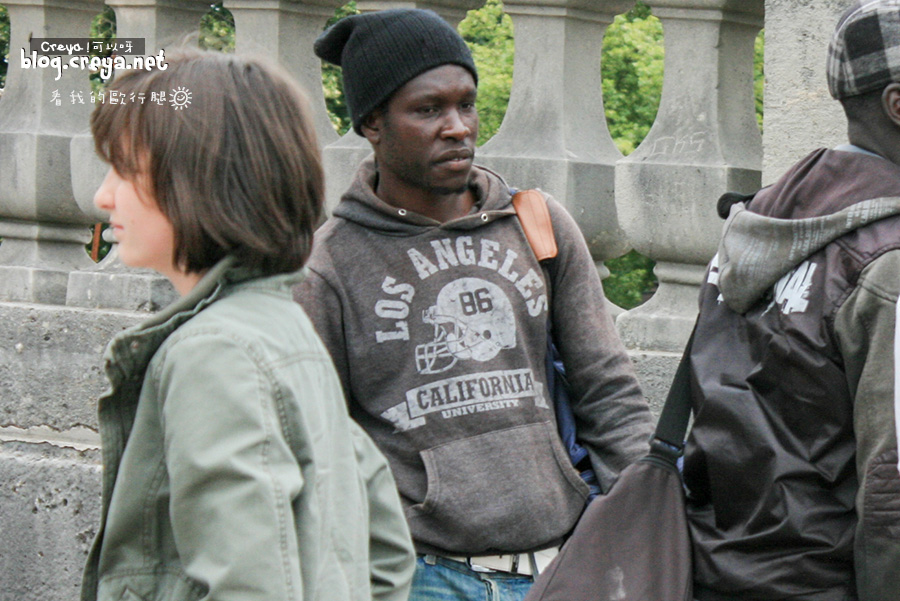
[ The bands of hawkers commonly found around major Paris attractions (not the bracelet gang—I certainly wasn’t brave enough to take out my camera in front of them) ]
I already knew about this scam, so my solution was simple: never let them tie anything on me. The moment I began climbing the steps, Icrossed both arms over my chest and tucked my wrists as far under my arms as possible.I activated “You can’t find my wrists~ You can’t find my wrists” mode. I didn’t even glance at the men as I passed, putting on my fiercest expression and walking straight ahead. Yet one of them still reached out and tried to pull my wrist free. Since he had committed a hand-checking foul, yours truly fought back with an elbow and threw in a side-eye free of charge. He saved face by asking, “Why do you look unhappy?” and I continued straight up the steps without seeing him off! Soon afterward, I watched a foreign couple ahead of me foolishly get fitted with so-called lucky bracelets by another man, leaving them no choice but to pull out their wallets and pay. Fortunately, police patrols in the area have become more frequent. By the time I finished visiting Sacré-Cœur, the police had cleared every one of the steps.If you encounter a particularly persistent man, don’t be polite—shout at him to go away.They will usually slink off.
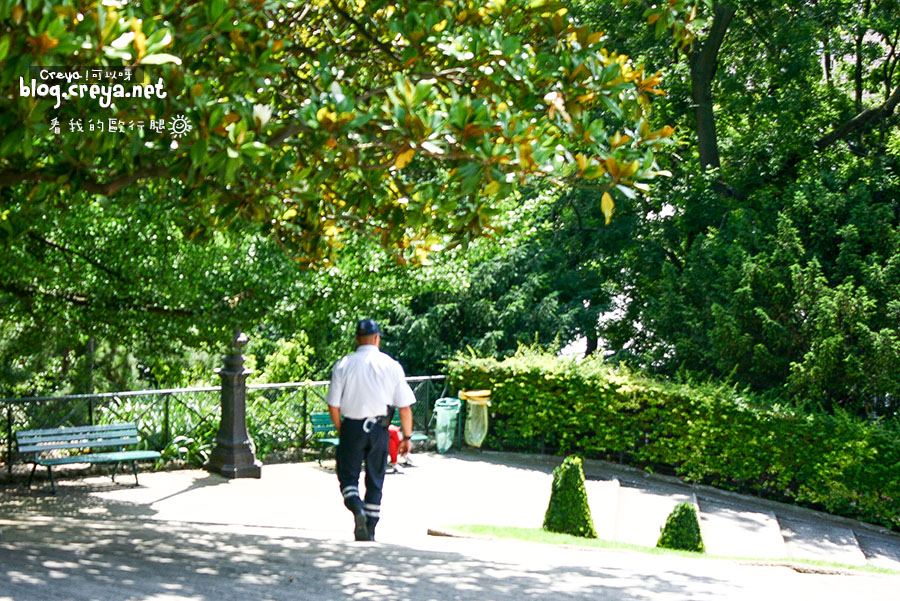
[ Paris police on patrol. I immediately quickened my pace and headed towards him ]
I encountered something similar in the UK. London was the final city of my European journey, so I had let my guard down, and I’d heard far fewer stories of scams in Britain. When I passed a woman outside Big Ben dressed head to toe in white Roma-style clothing, she offered me a little folded-paper flower as a blessing. Without thinking, I accepted it. She immediately began pestering me to “donate.” This girl instantly transformed into a stern old lady, shoved the flower back into her hand, turned around, and walked off. So staying alert at all times really matters—even somewhere that looks, or that you merely assume is, safe!
Another common scam occurs in places with lots of pigeons, where someone willpretend to offer tourists free birdseed, either handing it over or simply stuffing it into their hands.The pigeons quickly finish the food, and then the tourist is asked to pay. The most famous spot for this is outside Milan Cathedral in Italy, but scam rings do exchange ideas across borders. To prevent this, watch for anyone approaching whenever you see a flock of pigeons, and refuse to take any feed. Sometimes the birdseed scam and theft even happen simultaneously!If someone forces birdseed into your hand and demands money, say loudly and fiercely, “I didn’t ask for this birdseed. You forced it on me.” (Please translate that yourself into English or the local language.)If you’d like to add a full soap-opera performance, feel free to improvise!
* Speaking loudly exposes what they’re doing and may make them back down, while also attracting the attention of passers-by. But assess the danger first: Are accomplices surrounding you? Is the area busy? Are there people nearby who can help? Consider the circumstances before choosing the best response.
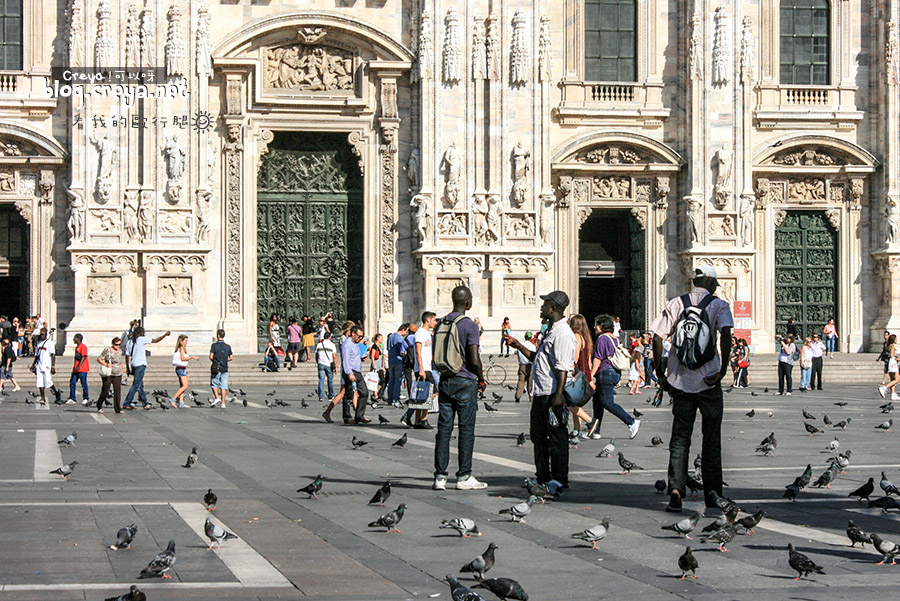
[ Pigeon Kabukichō outside Milan Cathedral, Italy ]
Also, if a street performer or someone dressed in costume or as a clown invites you to take a photo together, refuse if you don’t want to pay. In Europe, where even using the toilet costs money, almost nothing is truly free.After the photo, you will almost always be expected to pay them,even if they invited you. (Perhaps next time we should strike first and demand a portrait fee. Let’s see who can out-scam whom!)
Even at railway stations, you may encounteroverly eager teenagers who offer to carry your luggage or show you the way, then immediately hold out a hand for money once they’ve helped.You hear about this most often in Italy, but similar tactics can appear anywhere. It really is disheartening, especially for women travelling with suitcases through European metro systems where most stations lack escalators. You feel grateful when someone offers to help, only to feel suddenly shaken down afterward. Still, viewed from another angle, if you genuinely needed help and someone provided it, offering a small tip might be reasonable. Just remember tokeep your luggage in sight at all times, watch the person’s behaviour, and judge whether they seem trustworthy.Of course, the best solution is to reduce your luggage and handle everything yourself!
Europe—Stay Alert! Two! No Good Deed Goes Unpunished – Scam Edition
Apparently, exploiting people’s kindness or sympathy for money works in every country. Those who give may prefer never to learn the truth for fear of losing faith in humanity, but knowing in advance when not to offer your kindness can keep the thunderbolt from striking the wrong person.
The most common version involves asking you to sign a petition. It may supposedly support justice for some group, protest a social issue, or establish a school organisation. (Don’t you have to attend that school?) Whatever the cause, they’ll ask you to“Sign, sign.”Once you do, uh-oh~it’s as though you signed a cheque too: they claim that signing means you must donate.The amount is usually not small either—enough to make you start cursing their ancestors! They generally surround you as a group, making it hard to leave without paying. You could harden your heart, shout, and push your way out, butthe best approach is not to let them get close at all. Walk away quickly and decisively, or pretend you don’t understand English, wave them off, and leave.Now that you’ve read this, you already know to be on guard!

[ Enough trickery—let me expose your fox’s tail ](Image sourced online)
Another type isaggressive begging.This isn’t the voluntary roadside-donation sort, but ratherthe kind where they hound you until you break, argue until you surrender, and practically roll around on the ground unless you hand over the money in your wallet.I encountered this once on a train in Eastern Europe. A female beggar went from seat to seat begging from everyone, tourists and locals alike, loudly haranguing them the entire time. Even passengers pretending to sleep were treated to a determined tirade until Sleeping Beauty woke up and paid. And if someone refused? A man seated directly in front of me demonstrated that scenario. The beggar very confidently pointed at his nose and began yelling. A spectacular stand-up routine I couldn’t understand unfolded before my eyes, with spit flying everywhere. Just as I was about to stand up, bang a gong, and applaud (busy, aren’t I?), she suddenly turned in a huff, marched towards the back of the carriage, and left with a bang. Peace finally returned, and I was lucky enough to escape being harassed. But if it had been my turn to face her, I think I would havecountered with my “I don’t understand English” punch. Sometimes we get hooked precisely because our English is good enough to understand what they’re saying, so we obediently comply. But if you’re prepared, put on a blank, uncomprehending expression. Paired with an East Asian face, it should make them give up fairly quickly.。

[ Play dumb with flair, and your money stays right there ](Image sourced online)
Europe—Stay Alert! Three! Wolves in Sheep’s Clothing – Scam Edition
When we were young, our mothers repeatedly warned us not to follow strange older boys, and to verify someone’s identity before opening the door to anyone claiming they needed to read the water meter. Even when we’re grown and overseas rather than in Taiwan, we must keep the same advice in mind.Fake police officers are a common example.
Before leaving, I found many accounts online from travellers who had encounteredplainclothes police demanding to inspect their passports or wallets.It’s such an obvious lie. A “plainclothes officer” is just someone who puts on a random outfit from the wardrobe and says, “Freeze! I’m the police.” Any of us could act that role. (All right, I’d probably be exposed immediately.) With such a low barrier to entry, of course everyone wants the job! They then claim to be investigating smuggling, counterfeit money, theft, or something similar, and demand to search your bag. If you foolishly let them,your belongings may be “confiscated,” forcibly grabbed once your valuables are exposed, or quietly pocketed during the search.。
[ Boss Wu, I heard someone managed to grab 20 of them ](Image sourced online)
This tactic is common in Spain, though similar cases occasionally occur elsewhere. Luckily, my friendly face and good fortune meant I encountered no identity checks from real or fake police. But if it does happen, even if they show you identification—we may never have seen genuine Taiwanese police ID, let alone know how to authenticate every country’s version—show them no more than a photocopy of your passport. (I also recommend carrying one, stored in an outer compartment that is easy to reach and separate from your valuables.) Insist that any inspection take place at a police station, and never get into anyone’s vehicle.Any legitimate officer should be perfectly willing to accept that request!
Europe—Stay Alert! Four! Leave It to the Professionals – Scam Edition
Buy tours from travel agencies, tickets from ticket offices, and foreign currency from banks. Obviously. Isn’t that just common sense? Yetfor the sake of a little convenience or a slightly better price, we often buy from dubious sources with no pedigree whatsoever,especially mobile vendors wandering around. And I am one certified idiot with firsthand experience of being scammed. (Confession.)
Here’s what happened. During the first month of my European wanderings, I reached Switzerland. Because Switzerland uses Swiss francs rather than euros, I had no francs when I wanted to leave my luggage in a locker at a small-town pier and explore. My only option seemed to be buying something from a nearby shop with euros and receiving Swiss coins as change. As I stood there hesitantly peeking around, a heroic young Swiss man approached and asked whether I needed help. He kindly exchanged some coins for me. Having travelled widely himself, he enjoyed helping other travellers. His gesture rescued me and gave me a wonderful experience.
More than a month later, I reached Prague in the Czech Republic and again needed to exchange euros, this time for Czech koruna. Newly arrived at Prague’s enormous central station, I joined a long, motionless queue at the currency counter. A middle-aged man approached and asked whether I wanted to exchange money. He said I could trade directly with him at a better rate. In a hurry to meet my Couchsurfing host and remembering my good experience in Switzerland, Iagreed to exchange 50 euros with him—about NT$1,800 at the time—and received two 500-denomination banknotes.After the transaction, I was putting the money into my bag and thinking I should take a photo with this kind man. But when I looked up, he had vanished into thin air. No matter where I looked, there was no trace of him. I’d barely arrived in Prague and had already witnessed a street performer’s masterful teleportation act!
Although it felt strange, I picked up my luggage and hurried to meet my host. Passing a bank counter on another floor, I caught sight of a sign that made my blood run cold and my heart race. It displayed photographs of various banknotes and read:“Never exchange money with people on the street. You’ll receive fake money, and it’s illegal.The genuine koruna are shown below.” I read it again and again in disbelief, then pulled out the notes I’d just received. Well, damn! They looked nothing like the money on the sign! With a trembling voice, I told the bank staff what had happened. One glance confirmed it: these were scam notes—aaaaaah! Technically they weren’t counterfeit, because they were genuine banknotes with first-rate watermarks and security strips. They were simply Belarusian banknotes. At the exchange rate, my two notes were worth about NT$2!!!!! (The teller delivered one final cold blow: “You can throw them away… They’re rubbish.”)
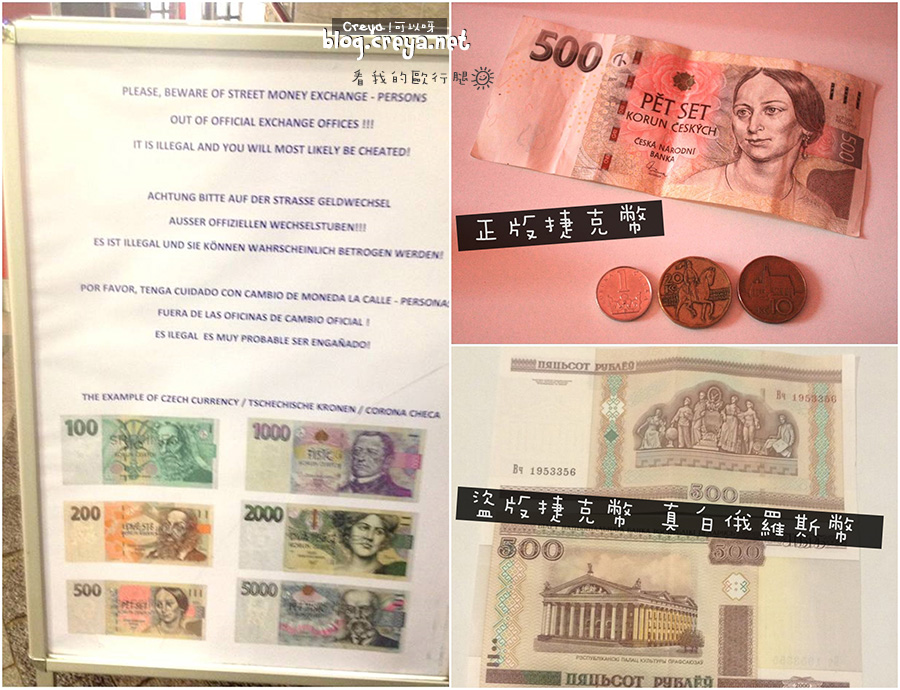
[ Next time I go to Belarus, I can use these two 500 notes to… fan myself ]
FINE! At least I’d exchanged only 50 euros, and at least I hadn’t been robbed in the process. After all,letting someone see your wallet is dangerous in itself.I could only treat it as spending 50 euros on two toy souvenir banknotes and one idiot’s painfully authentic story. I was furious with myself, but when something like this happens, changing your mindset matters. I could choose to feel disappointed in the trip and angry at the country, or I could remember the lesson, laugh it off, and continue travelling. Still, remember:never trust a random stranger of unknown origin. Whatever you need to buy, insist on using a reputable professional business. That is always the safest choice!
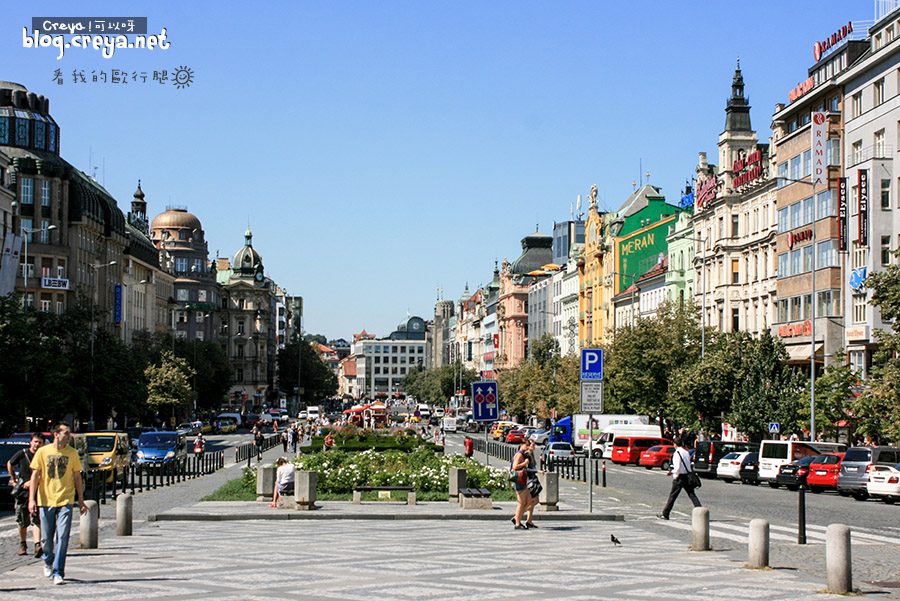
[ A change of mood: once I left the station and saw this lovely street, none of it seemed like such a big deal ]
Most scams are psychological battles involving cunning tricks, so anyone, male or female, can become a target. Still, anything that can be resolved with money is not a major disaster. At worst, you’ll be in a foul mood or have to end your trip early. The real danger is when failed extortion turns into theft or robbery, so stay alert and avoid trouble wherever possible!
Next comes the theft and robbery edition, where they act directly. These stories are even more thrilling—and frightening. Read them for protection, and please, please stay alert~
↓↓↓↓↓↓


