


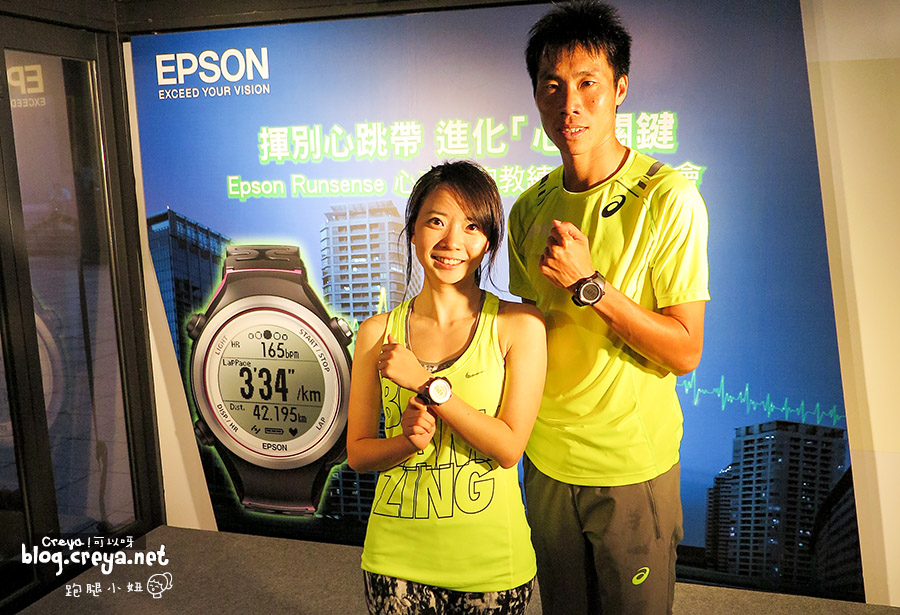
To be honest, I used to know absolutely nothing about heart rate, nor was I particularly curious about it. All I vaguely knew was that measuring it required buying something called a chest strap and wearing it around your chest while running. It sounded uncomfortable no matter how I imagined it, so I had zero motivation to look into it. Then one day, I heard that heart rate was an important indicator of fat-loss effectiveness, as well as one of the benchmarks for measuring training intensity (which was clearly a distant second in my mind). Just like that, my curiosity about heart rate—and my appreciation of its importance—burst into life. So as soon as I heard there was anEPSON RUNSENSE SF-810 professional GPS running watch with built-in heart-rate monitoring—no chest strap requiredexperience event, of course I immediately raised my hand to join! (So yes, this is the story of a beginner learning about heart rate. Hopefully, if you’re a beginner too, you’ll be able to follow along.)

[ Thanks toRainbow RunI had the opportunity to attend this incredibly informative experience event ]
Speaking of which, before I started taking running classes three months ago withRainbow RunI had always been a very beginner-level runner. Even though I’d already been running for two years and completed two half marathons, my entire body of running knowledge amounted to… just keep running and running. All right, I did know a tiny bit about stretching and cooling down, and my running-addicted colleagues were constantly nagging me about correcting my form, so perhaps I could be promoted ever so slightly to abarelyintermediate runner. But interval runs, acceleration runs, running drills, and all the other things those runners talked about were still nothing more than legends to me. Although I would occasionally read explanations of them onRunning Biji, I rarely put any of that knowledge into practice. The real reason was“How on earth am I supposed to know how to train by myself?” Besides, when you train alone, you have no idea whether it’s actually working.。
But everything changed when I joinedRainbow Runthe running class led by Coach Edison. In addition to leading our weekly group training session, Coach Edison always carefully prepared a self-training schedule for us each week. That brought terms like intervals and Tempo Run back into my life and forced me to take them seriously. A professional running watch therefore made its way onto my running-gear wish list. I hoped it could serve as a portable coach on days when I didn’t have class, guiding me through the prescribed workouts. At this EPSON RUNSENSE SF-810 running watch experience event, Running Biji expert Daniel and newly crowned Lake Biwa Marathon champion and national-team athlete Ho Chin-ping gave detailed introductions to the functions and methods that matter in self-directed training. It was also my first proper introduction to heart rate.
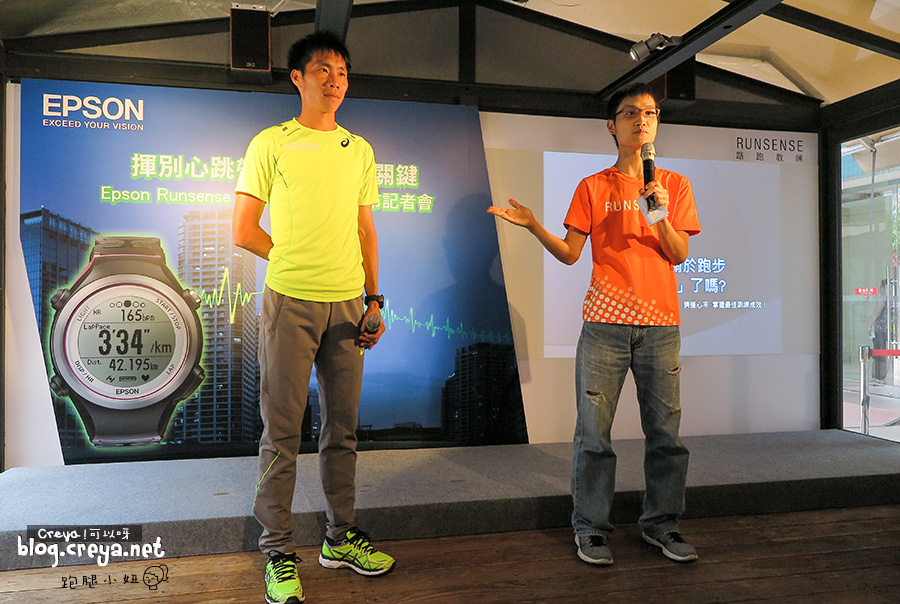
[ Running Biji expert Daniel and newly crowned Lake Biwa Marathon champion and national-team athlete Ho Chin-ping shared the stage, taking turns explaining the relationship between heart rate and training ]
Heart rate is an important benchmark for quantifying fitness—but how exactly? (Come on, everyone, health class is back in session!) Heart rate is a bit like measuring blood pressure: it counts the number of times your heart beats per minute (beats per minute, bpm). The reason we measure heart rate during training is thatheart rate reflects how much blood your body needs at that moment. During vigorous exercise, as the load on your muscles increases, blood needs to circulate faster to clear the by-products produced by those muscles and provide them with more energy and oxygen. Your heart therefore beats faster and your heart rate rises, making it a very direct reflection of what’s happening inside your body.
I used to think running training was all about pace and distance: if I ran farther or faster than last time, that meant I had improved. But those figures are really more like the final grade on a report card. Two students may both score 100, but one might have studied painfully hard while the other barely flipped through the textbook. Everyone in the running group might cover 10 kilometers at the same pace, yet I’ll be gasping for air whileRainbow RunBrother Chao and Sheep can chat their way through the whole run (I find it unbelievable every single time). Even if our final distances and paces are nearly identical, the difficulty and effect can be completely different for each person. Sometimes we run with other people or find a training plan to follow, but because everyone has a different fitness level, the workout may be far too intense for some people—or not intense enough to have any training effect at all. So if you want an accurate understanding of how well your training is workingfor you personally, pairing those results with heart-rate data, which directly records your physical condition, gives youquantifiable, more objective, and more meaningful data。
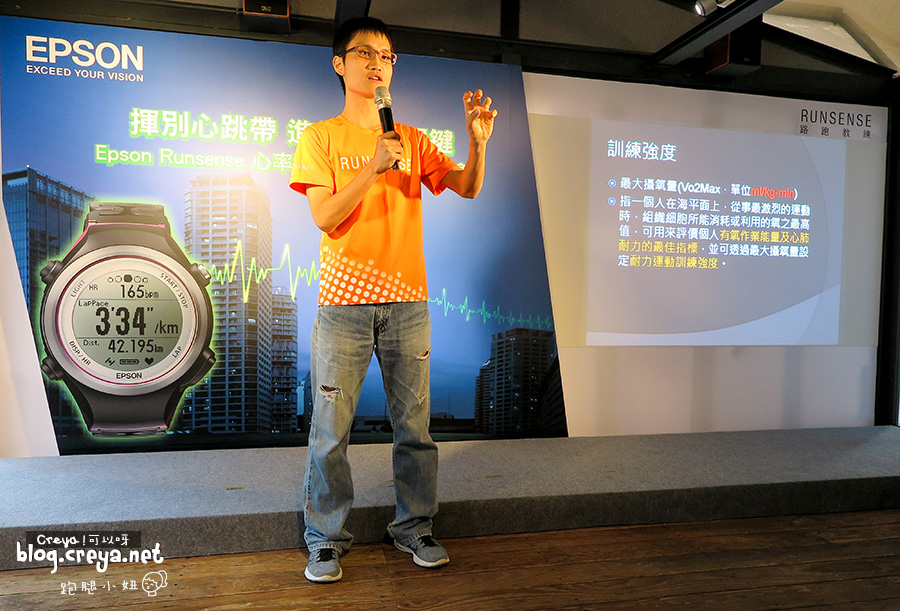
[ Our lord of sports science, Daniel, explains heart rate to us from the perspective of scientific data ]
But you don’t use heart-rate readings in training simply by looking at the raw numbers. The best method is tocalculate percentages based on your usual maximum and minimum heart rates. That’s because heart rate is highly personal: everyone has a different maximum and minimum, and it also varies with age, sex, weight, sleep quality, and more. When looking at heart-rate data, comparing the heart rate from this training session with a previous one, or setting a goal for this workout such as reachingmaximum heart rateat 50% (50% HRMAX), is much more useful than simply saying you want to hit a figure like 120 bpm. Heart rate is all about comparison!
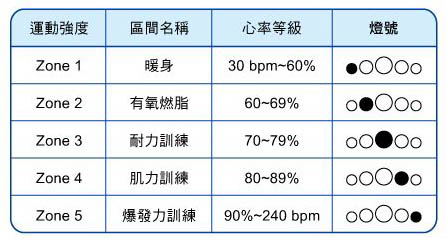
[ Heart-rate percentages correspond to different exercise intensities. This Epson RUNSENSE SF-810 watch offers five intensity zones that can be configured according to your fitness level ]
Image source: Epson official website
There are two ways to find your maximum heart rate. The simpler method is to plug your age into a formula, though the drawback is that the result is merely an average and won’t be accurate for everyone. If your heart rate happens to differ significantly from the average, you could still end up training incorrectly (For a detailed explanation of the formula, please visit)。
Formula → Maximum heart rate MHR = 220 – age
Daniel shared another method. It sounds absolutely brutal, but it can give you a figure very close to your actual maximum heart rate, or MHR. If you’re interested, you can follow the instructions in the image below (orrefer to the testing procedure online):
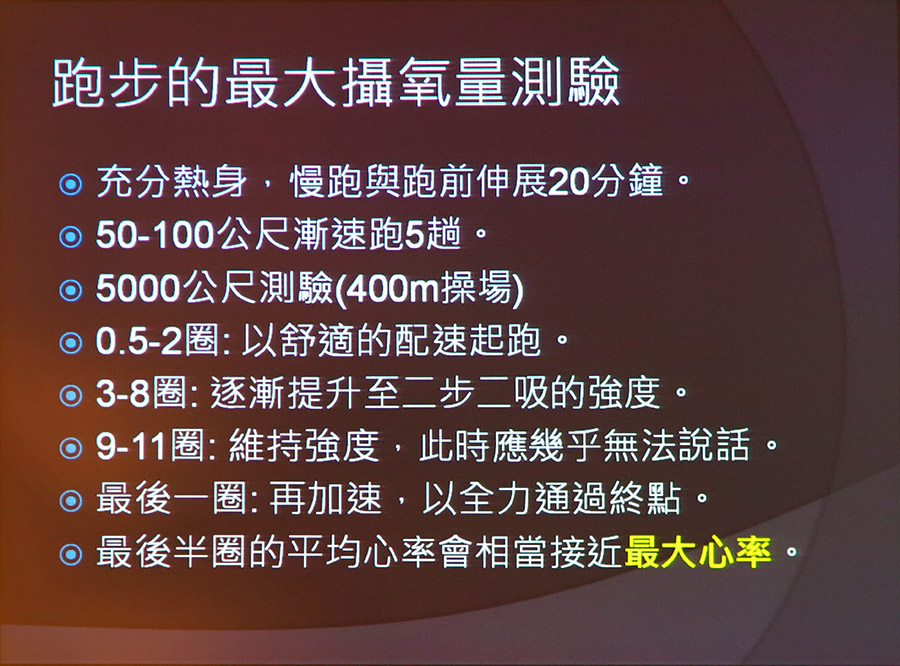
[ Oxygen uptake can be used to obtain a close estimate of your heart rate. Apparently, this test is guaranteed to leave your legs like jelly! ]
“Training only works when you push slightly beyond your current capacity. It must be adjusted to each person’s fitness level, and the intensity has to be manageable enough that you can keep training consistently.” Those were the three training principles Daniel shared at the event. By recording heart rate with a sports watch, you may discover that your heart rate gradually decreases when running the same distance at the same pace compared with previous measurements. That means your cardiorespiratory fitness has improved—and that you’re ready for more demanding training. It’s also an important indicator for anyone hoping tolose weight through running.If your running heart rate always stays below 60%, it will be difficult to achieve any slimming effect. You might simply be adding soreness and fatigue through junk training!Ho Chin-ping also offered one final reminder: “By recording your workouts with a sports watch, you can pull up the data and compare it. The areas where your running falls apart are exactly the ones you need to strengthen.” What matters in heart-rate testing is comparing your results with your previous data and with yourself, which makes consistent record-keeping especially important for improving the effectiveness of self-directed training.
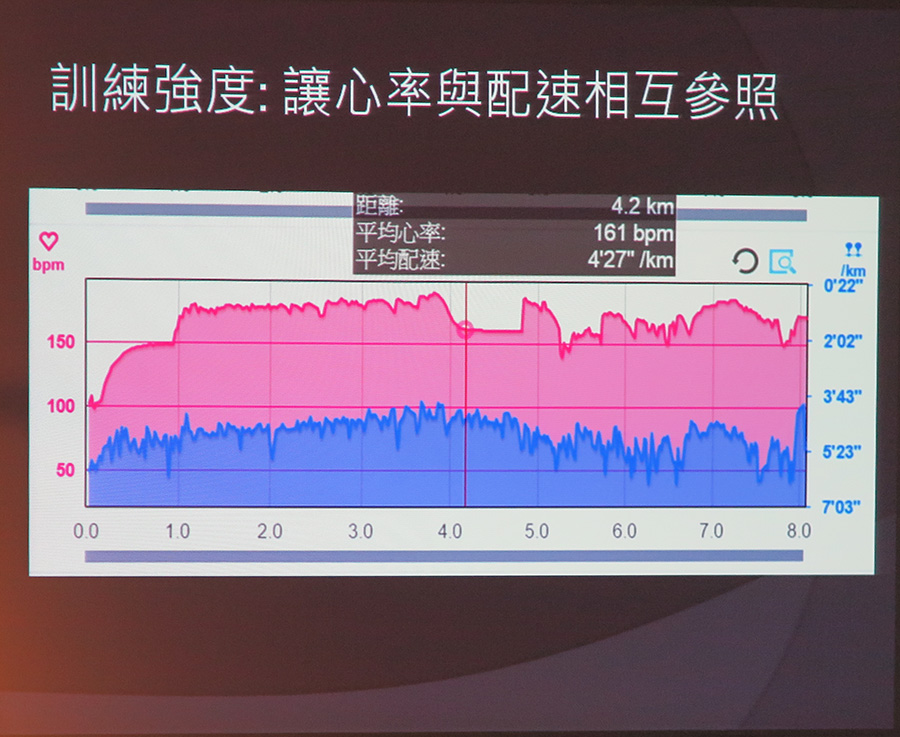
[ The value of accumulating and analyzing data is that you can observe your heart rate and pace, using the two sets of figures together to improve the quality of your training ]
Most training watches currently on the market require a chest strap to measure heart rate. A chest strap wraps around your chest like a belt and clips into place; not only can it feel uncomfortable while you run, it may also come loose. What makes the EPSON RUNSENSE SF-810 wearable sports watch so impressive is that it detects your heart rate directly using green LED light on the watch—no need to strap anything around your chest. All right, honestly, this news probably wouldn’t have impressed me much before. But after learning that day how important heart rate is to effective training, I was genuinely moved by what a groundbreaking little watch this is!

[ The EPSON RUNSENSE SF-810 watch itself (the enlarged version on the wall behind it is easier to see) ]Image source: Running Biji
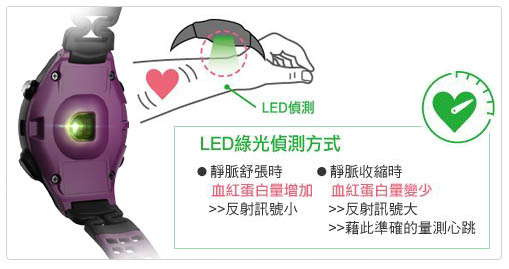
[ No chest strap required. The secret behind detecting heart rate with green LED light is measuring the amount of hemoglobin as the veins expand and contract ]
Image source: Epson official website

[ This is a chest strap—but now you can throw it away (Epson Product Manager Wendy: Throw it!) ]
Our lord of sports science, Daniel, also revealed another major benefit of using a heart-rate watch: itcan tell you whether you’ve been overtraining. If your resting heart rate upon waking (the number of beats per minute) is more than five beats above your usual average, you should consider whether you overtrained the day before or failed to recover adequately. Since none of us is likely to sleep with a chest strap fastened around us (just thinking about it makes me uncomfortable), a wristwatch with built-in heart-rate detection is ideal for wearing to bed and monitoring your condition.
But when you hear EPSON, I’m sure your—you, you, all of you (myself included)—first thought is, “Isn’t EPSON a printer company? Why are they suddenly making wearable sports watches?” What you may not know (and I didn’t either) is that EPSON’s full name is SEIKO EPSON. SEIKO is EPSON’s parent company in Taiwan, and EPSON has been making SEIKO watches for a very long time. So it really isn’t strange at all that the company could create the RUNSENSE SF-810, a watch ahead of the pack that emphasizes power efficiency, light weight, and precision. Combining heart-rate sensing, rapid GPS positioning, and the ability to configure and measure multiple sports-training programs, this high-performance watch is naturally right in its wheelhouse. For a detailed introduction and test of the EPSON RUNSENSE SF-810, please look forward to myunboxing article (right here, right here), where I’ll take my time telling you about its many, many features!
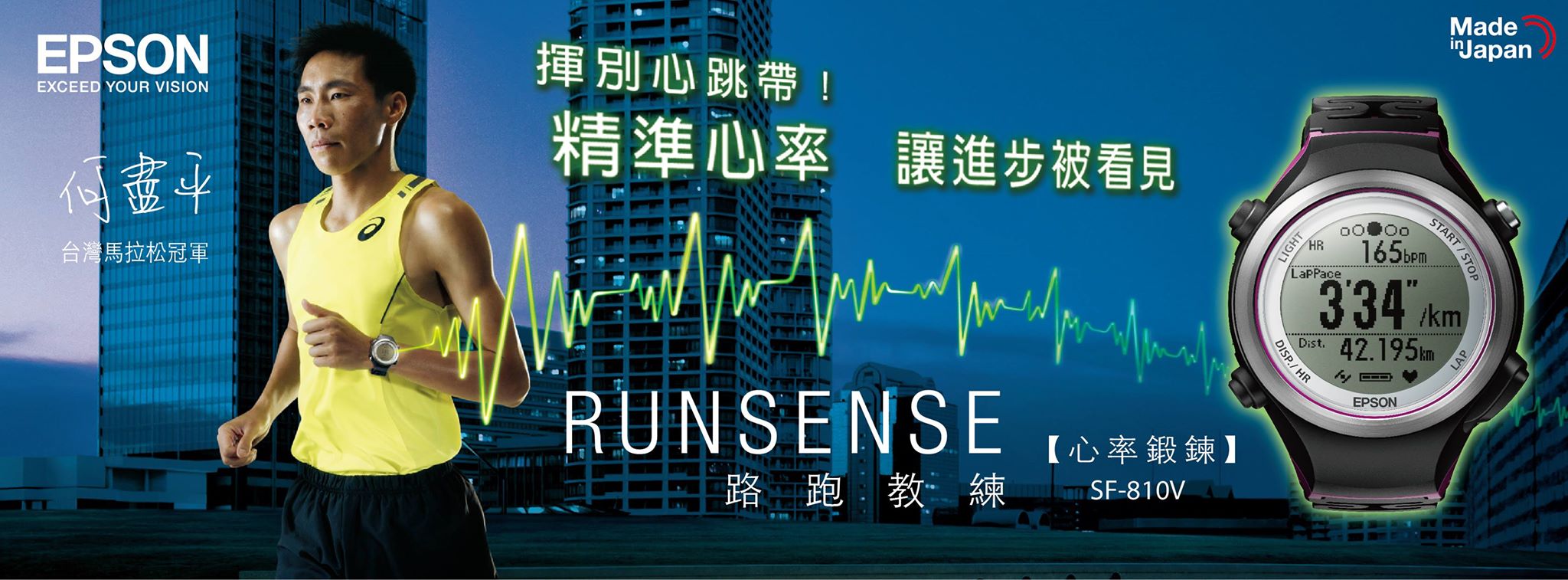
[ This is the EPSON RUNSENSE SF-810, newly evolved tosay goodbye to the chest strap ]
Another highlight in the second half of the event was the fantastic practical session led by product ambassador, national treasure, marathon champion, and national-team athlete Ho Chin-ping. We did a short running workout consisting of warm-ups → jogging → high-knee running → bounding → shuttle runs and more, and could immediately see the changes in our heart rates at each stage on the EPSON RUNSENSE SF-810. Our national treasure also gave us several running tips. For example, your arms need to swing and lift naturally while you run to help drive your body forward; no matter how quickly your legs move, you can’t run fast without swinging your arms. He also warned us against shifting our center of gravity backward when lifting our feet, and demonstrated the fluid motion of landing on the forefoot and lifting off naturally the instant the heel touches the ground. Finally, he taught us several ways to build muscular strength.

[ Correcting our posture and stride cadence, and learning to run with a natural forward lean ]

[ What an honor to run alongside a national-team athlete, progressing from a warm-up jog to high-knee running, bounding, and shuttle runs ]Image source: Running Biji
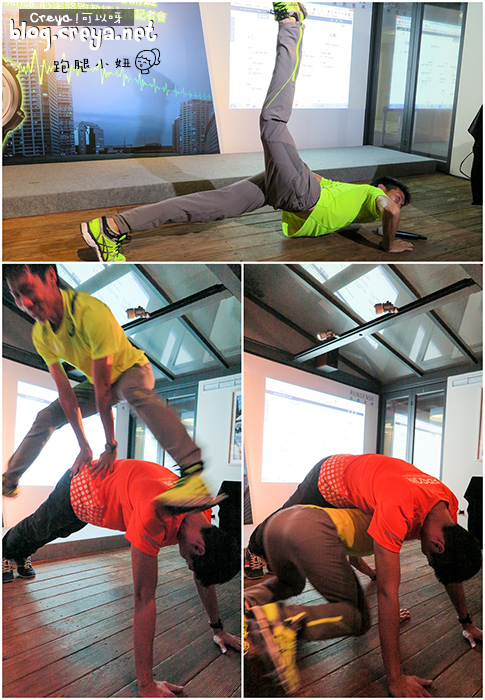
[ Strength training: push-ups with one leg raised, and a two-person “over the mountain” drill (one person is the mountain, while the other jumps over their back, crawls underneath, and keeps going) ]
With this watch and instruction from a national-team athlete, I instantly felt my experience points go ++. Now I’m ready to keep training toward my next goal with the EPSON RUNSENSE SF-810!
Further reading:
| Running Girl | The Definitive EPSON RUNSENSE SF-810 Wearable Heart-Rate Sports Watch Unboxing


