

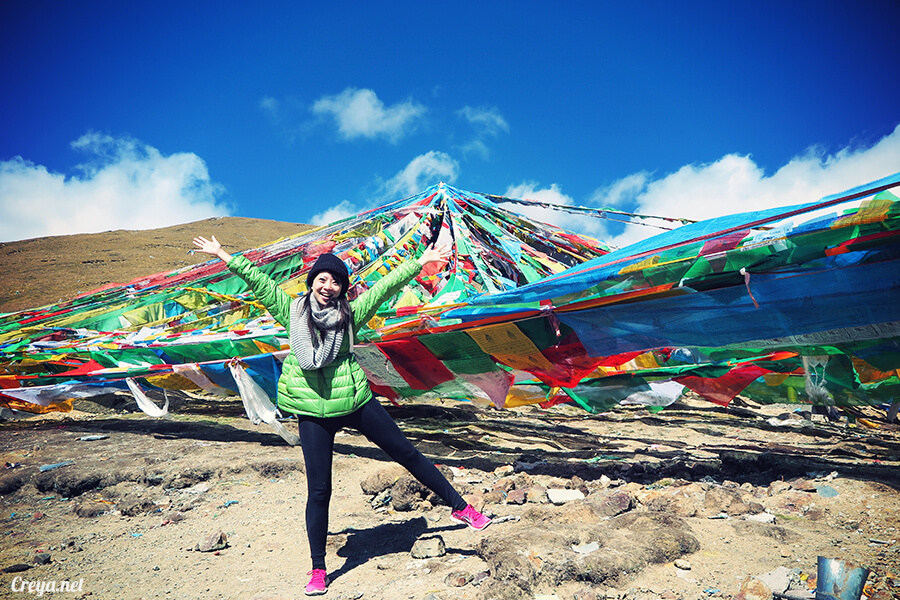
[ Let’s kick things off with the famous Patrick Star pose ]
Our mission on day three in Tibet was to head east from Lhasa,travel more than 400 kilometers, cross the 5,000-plus-meter Mila Pass,and then reach Nyingchi, the easternmost point of our journey. Our only sightseeing stop along the way was Basum Tso, a lake of historical significance in Tibetan Buddhism (“tso” means lake, so it is also known as Basum Lake).
I had assumed it would simply be a full day on the road, nothing special. Little did I know it would unexpectedly become a pivotal day of breaking through one mental barrier after another and instantly adapting to local life. Apparently, when city slickers venture into the countryside, it doesn’t just broaden their horizons—it expands their “inner horizons” too! (As long as it doesn’t open a portal to the spirit world.) (Hey!)
The moment I heard that Mila Pass stood at more than 5,000 meters above sea level, I was seriously nervous. After all, merely climbing to the 3,500-meter-high Potala Palace had left us panting like oxen, dizzy and foggy-headed from the lack of oxygen. Going above 5,000 meters was clearly issuing us one massive challenge. Granted, we would be ascending gradually by vehicle, so altitude sickness theoretically shouldn’t get too severe (Need a refresher on altitude sickness?), butthis was higher than Yushan, higher than Mount Fuji, and far, far beyond anything I could imagine.Unexpectedly, however, our guide Luosen and Brother Hao, the head of the travel agency, bothassured us, “You’ll only be up there for a few minutes. It’ll be no problem at all!”I could trust them, right?
[ I’m pretty quick to trust people ]
We set off with some trepidation. This was a hurdle we had to clear regardless. Since the altitudewas, of course,no big deal to those two locals, thenthe only difficult part of the day sounded like sitting in a vehicle for a very long time, right?For young folks like us, it was just sleep when we got on and pee when we got off. Piece of cake!
But in my naïveté, I had forgotten that once we left Lhasa, we would no longer be in a big city.On an eight- or nine-hour drive through nature, where the heck were we supposed to pee?
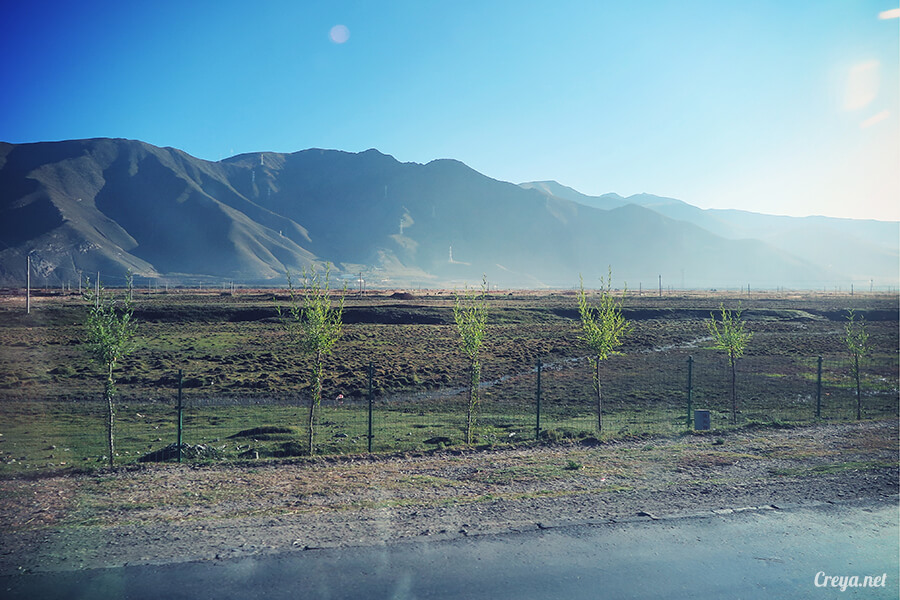
[ If it wasn’t a mountain, it was a mountain far away; if it wasn’t a field, it was pasture for cattle ]
“Even if there aren’t any McDonald’s along the road, surely there’ll be some shops that let us use their bathrooms, right? And if not, the van will eventually need gas. Gas stations definitely have bathrooms, don’t they?” After two days in Lhasa, I had clearly been brainwashed by the positive impression that restrooms at attractions and restaurants came with doors and our good friends, toilets. Blissfully unaware of what awaited me, I was inexplicably confident. Reality was about to hit me, one blow at a time….
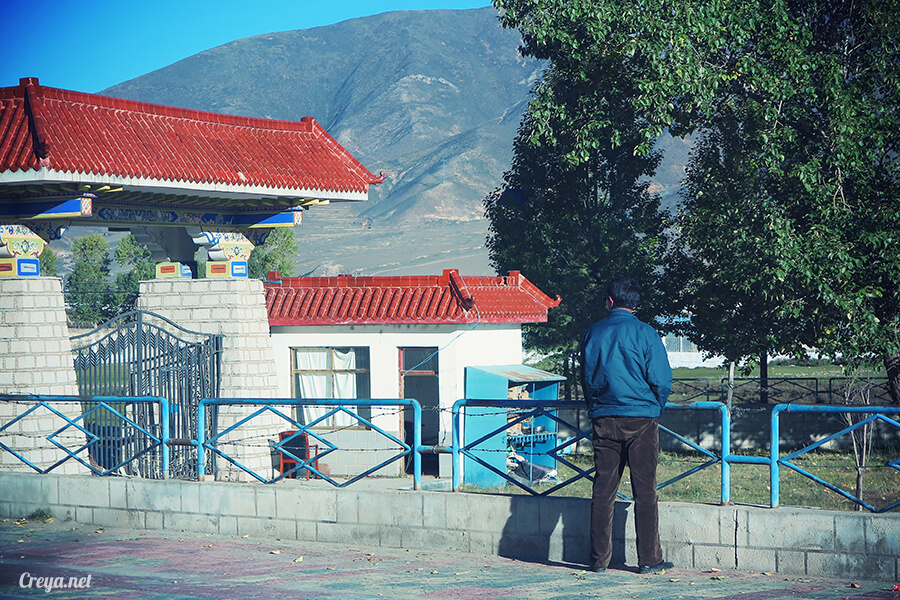
[ My most constructive idea of the day was undoubtedly to be born a man in my next life (?!) ]
As the yellowish-brown mountains outside the window gradually sprouted patches of green, the saying “The farther you travel toward Nyingchi, the more vegetation you’ll see” proved absolutely true. Every so often, a row of fewer than ten adjoining shops would appear by the roadside; sometimes there were a few more, forming something like a tiny settlement. We spent far more time looking at endless grasslands and mountains than houses, and the grass didn’t even need to bend in the wind for us to spot herds of cattle and sheep. We drove along a highway that looked paved, though the asphalt was almost gone, yet it wasn’t particularly bumpy.
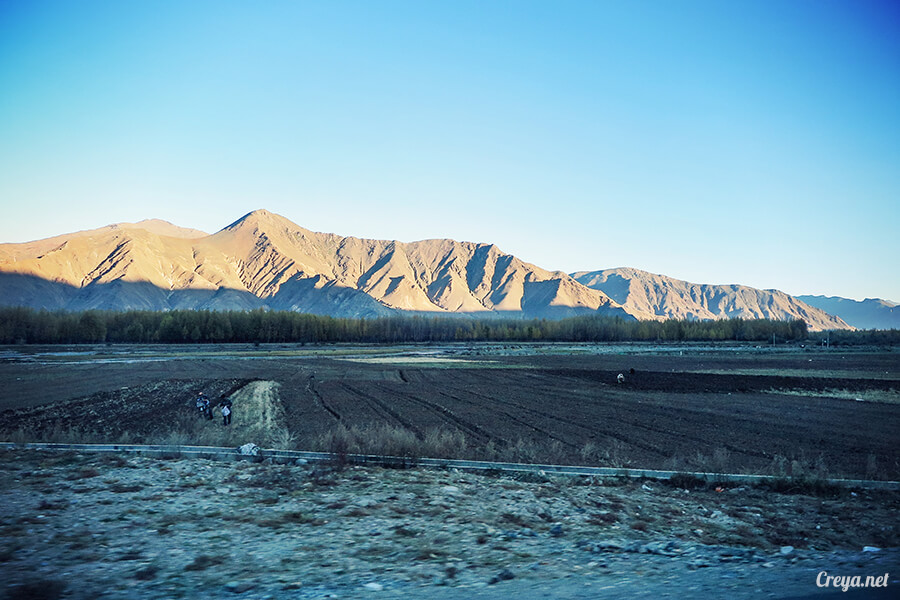
[ The scenery shortly after leaving Lhasa reminded me of Uluru in Australia ]
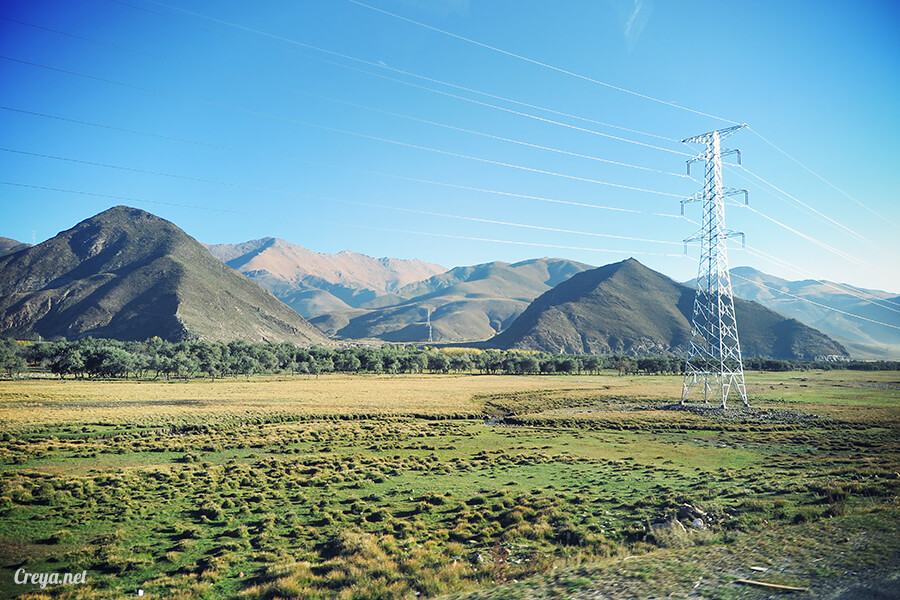
[ More and more green appeared as we drove east—two landscapes in a single day ]
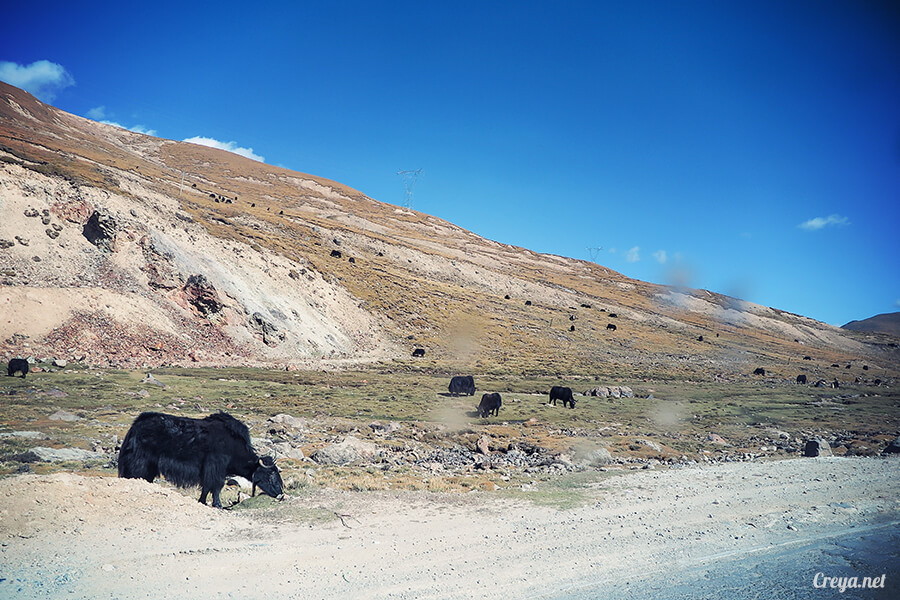
[ Found the ancestors of people glued to their phones: yaks that charge onto the road without looking ]
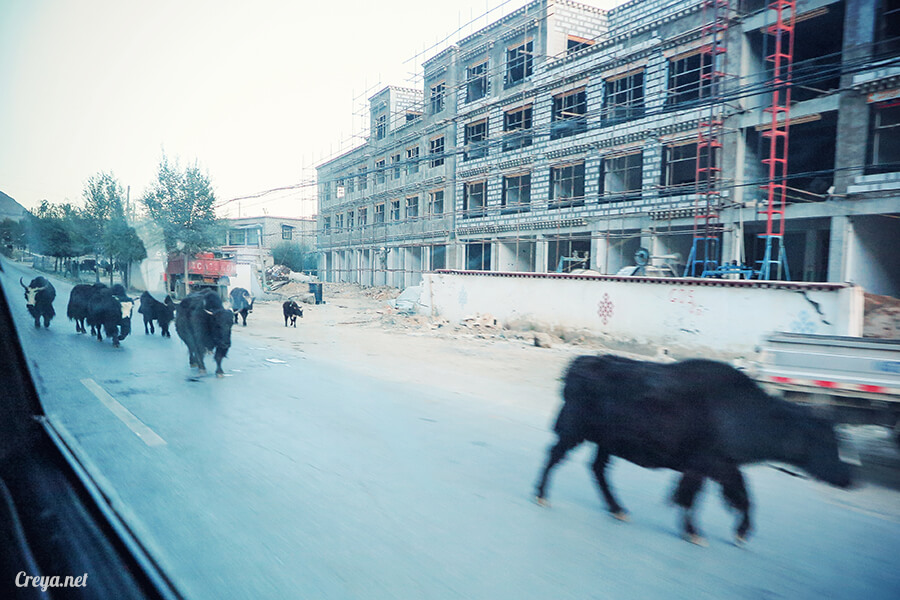
[ A chance encounter with the Tibet Yak Cup Marathon ]
Two hours later, our nine-seater minibus stopped in front of a building bearing the words “Rido Tashi Beef Soup Restaurant” in Tibetan and Simplified Chinese. Located in the hot-spring town of Rido, this beef soup restaurantwas one of guide Luosen’s personal local favorites, and he stopped for a bowl every time he passed through.Stepping inside felt like entering someone’s home. Several pots ofbeef soup made with genuine yak meatsat on the iron stove. The long benches were covered with Tibetan-style cushions almost identical to the ones in our minibus, reminding me of the wooden bench in Grandma’s living room when I was little. These served as both benches and beds.
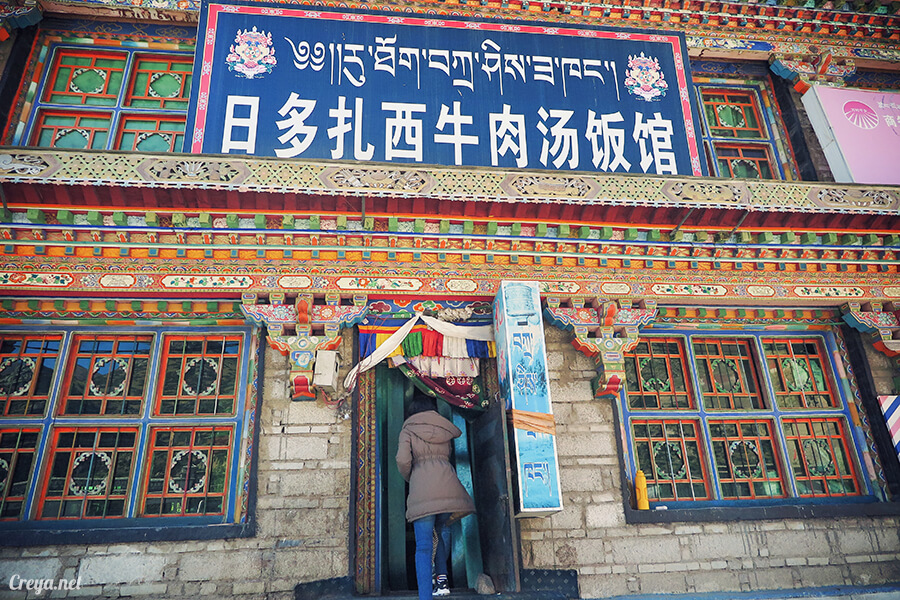
[ The easiest part of opening a shop in Tibet is naming it. Eight out of ten shops include “Tashi” (meaning auspicious) in their names—a foolproof naming strategy ]
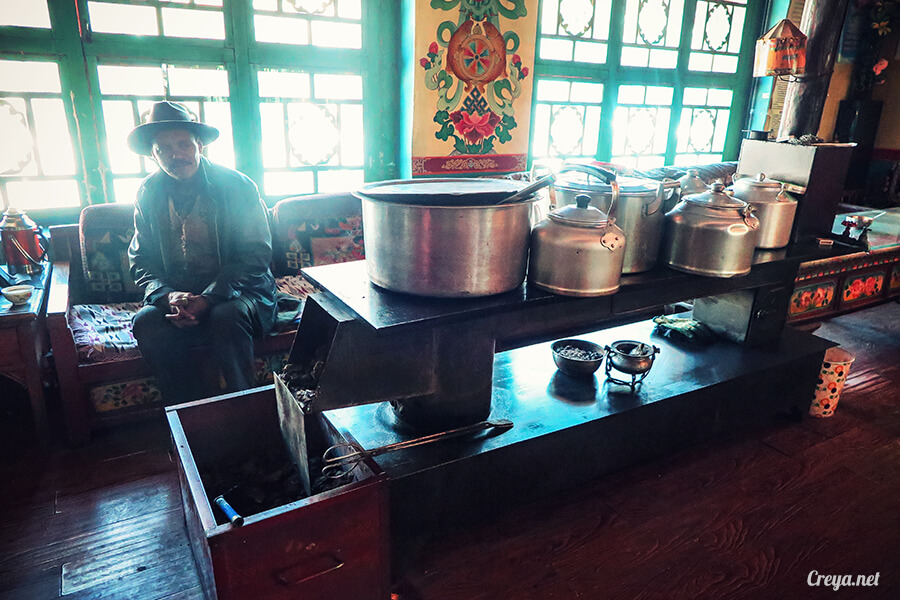
[ The stove was fueled with yak dung. Cooking yak meat over yak dung—maximum yak power ]
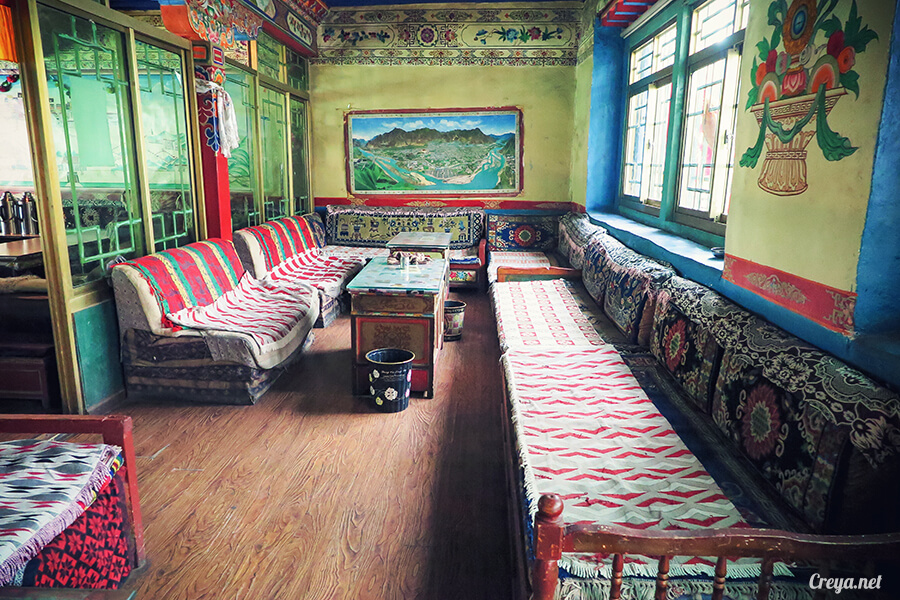
[ The essential bedding set for eating when you wake and sleeping when you’re full—save space without IKEA ]
But what we really cared about was, “Luosang, is there a bathroom here?”It had been two hours since all the soups and drinks at breakfast, so it was time to empty our internal pee tanks.
“Yes, yes. The bathroom is outside. Turn left after you go out the door, then follow the little path uphill. You’ll see it.”
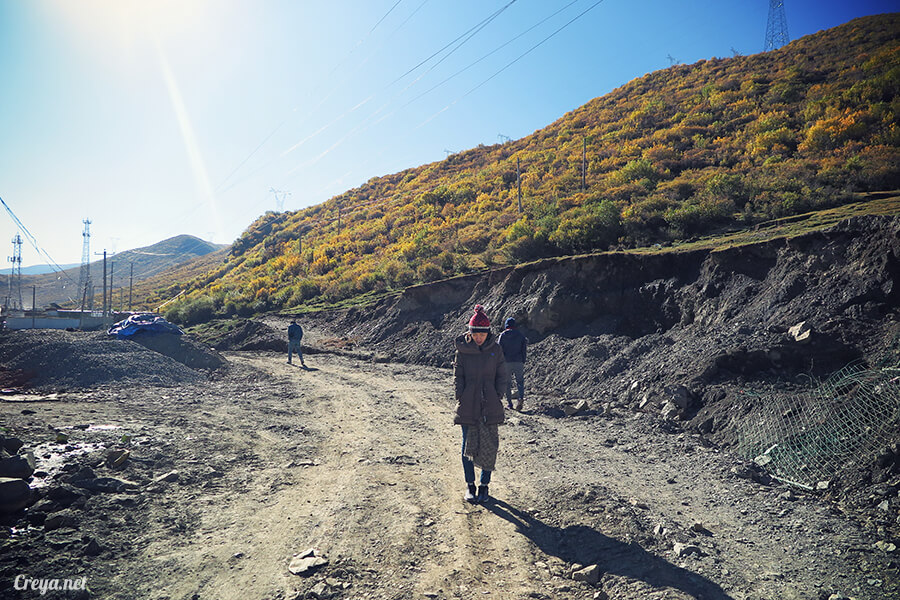
[ The Tibet Toilet Expedition sets off down a road with no visible future ]
Following Luosang’s directions, we stepped outside and stood at the entrance to what seemed to be the correct path, staring toward the other end without the slightest idea where it led. I began to wonder whether the bathroom Luosen had mentioned was the little wooden shack in front of us. It was about the size of a green portable toilet, except this was a wooden, “all-natural toilet.” But when I got closer, not only was there no familiar porcelain toilet inside, the floor contained just onehole that might have been a broken plank or might have been deliberately cut out. And there wasn’t even a door.The mere thought of cold wind blowing across my butt while passersby poked their heads in was enough to send me scurrying back out. Clinging to the hope that there had to be another bathroom somewhere, I moved on.
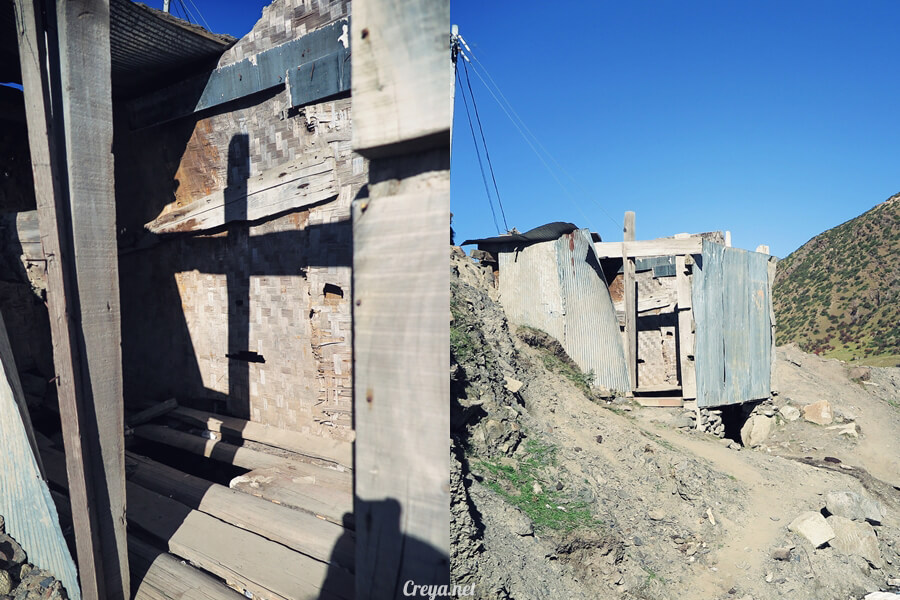
[ Don’t step into strange roadside toilets ]
By then, my travel companions had continued toward the other end of the path. Someone called out, “This must be the bathroom, right?!”
And then what came into view was… another wooden shack! The only difference was that this one was twice as large and had the word “Toilet” written outside. There was no denying it now!
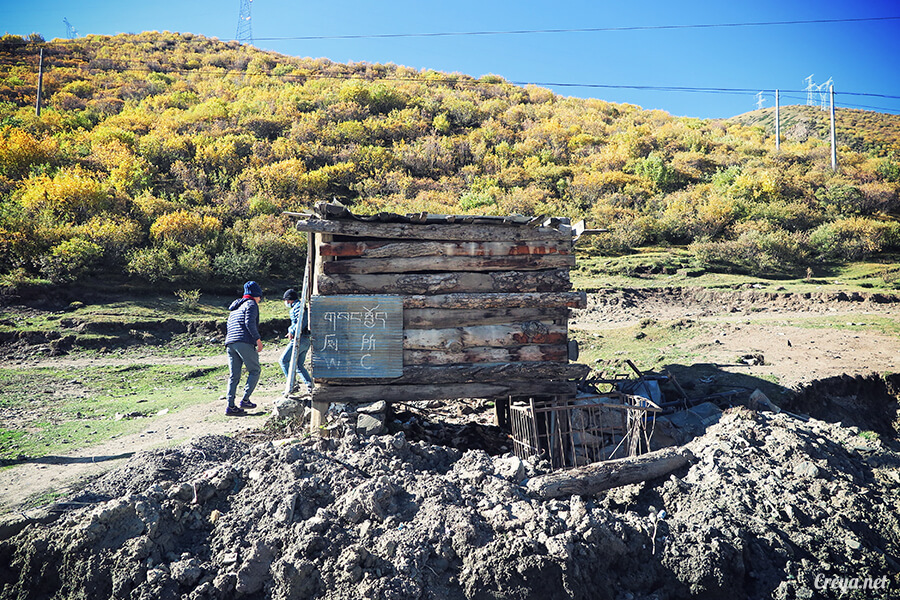
[ A very international toilet, with translations in three languages ]
But what needed to come out still had to come out, so I walked around to the front and prepared to enter. Uh… where’s the door? Where’s my door?
I looked down at the floor. Whew—it finally wasn’t just one hole. There were two!Best friends could sit side by side, using the toilet and chatting in the breeze. Even complete strangers could instantly become the people who knew each other most intimately.Beneath the holes, illuminated by a slanting ray of sunlight, was a rich and fascinating display: specks of snowy-white toilet paper decorating a sea of black. It was almost romantic.Even more romantic was the fact that we could contribute to the pile.People say, “Only by giving of yourself can you truly receive.” I had a feeling I was about to receive quite a lot.
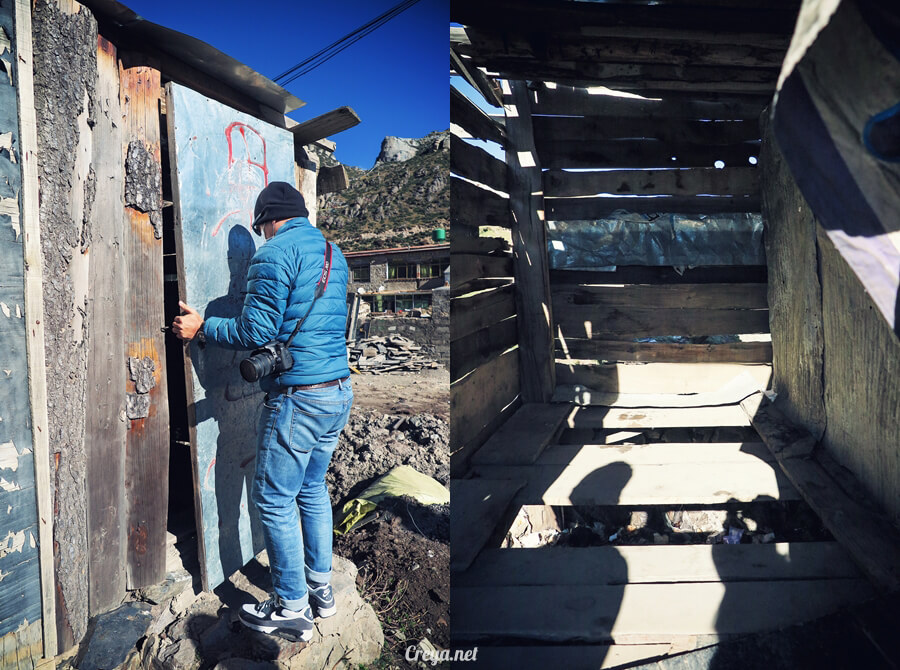
[ A fully self-service toilet. If you want a door, position it yourself—horizontal, diagonal, or half-open, all adjustable to your personal preference! ]
Before coming to Tibet, I had heard that using the bathroom would be an ordeal. All I could do now was tell myself, “This is Tibet. It’s finally time to face it.” Summoning my courage, I pulled down my pants. “Shit! How am I supposed to use this?” “Shit! My butt is freezing!” “Shit! There’s someone else’s shit below me!” Thank goodness we were traveling with close friends who could take turns holding the door and standing guard. Otherwise, this entire journey would have been one long song of suffering.
Fortunately, once I overcame that enormous psychological hurdle, it was replaced by the joy of sweet relief. This lady had unlocked the achievement of occupying a pit latrine! Returning everything to the earth was environmentally friendly and natural, and it didn’t even waste water.Coming to Tibet made me feel as though I had done my tiny part for the planet.After clearing this hurdle, surely there was nothing left to fear, right?! (Mm-hmm—just you wait.)
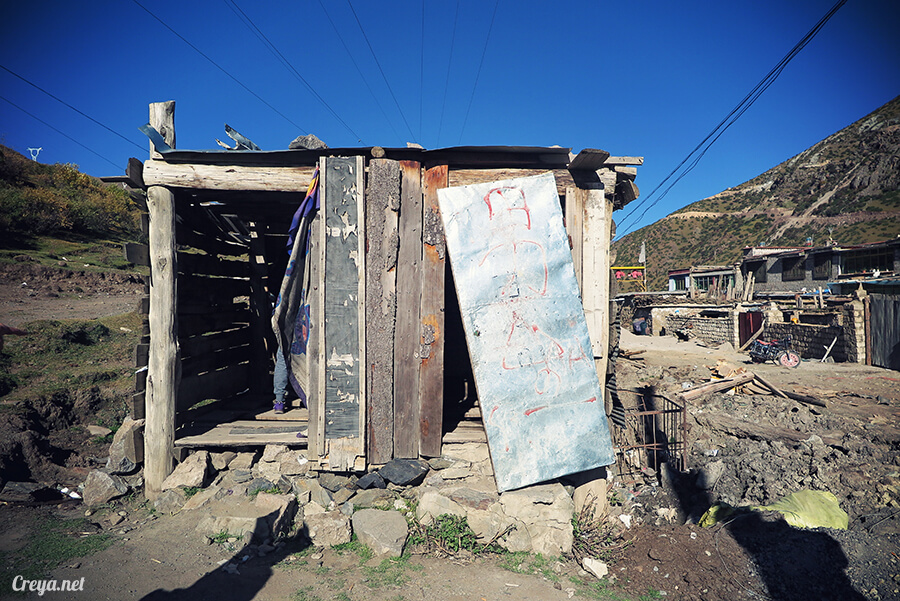
[ So what exactly is the point of separating this toilet by gender? There are just two holes. Does・it・make・any・difference?! (Surely nobody saw me involuntarily roll my eyes.) ]
Back inside, we soothed our traumatized souls with delicious beef soup. Authentic yak meat had a distinctive beefy flavor without tasting gamey, and its texture was wonderfully springy. Paired with salted brick tea imported from Yunnan, alternating bites of plain flatbread with sips of soup made a complete meal. Reenergized, we resumed our road trip, ready to face our first high-altitude experience.
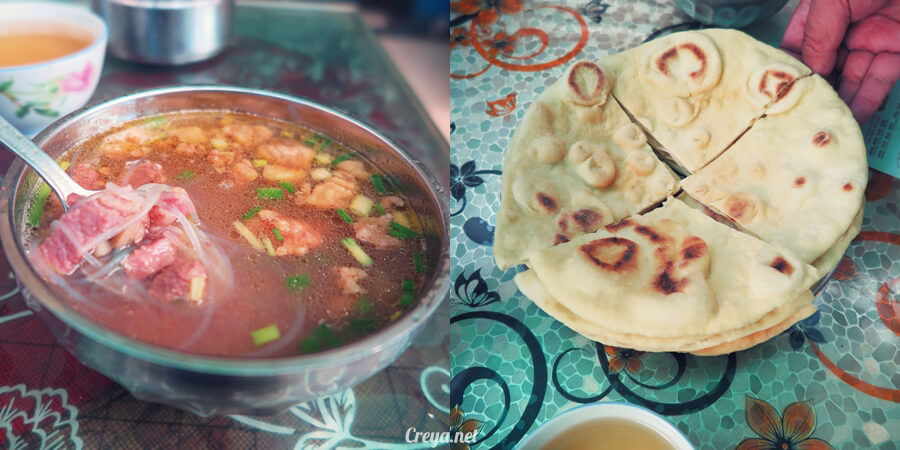
[ An incredibly delicious meal—I never expected to enjoy authentic Tibetan food during a long day on the road ]
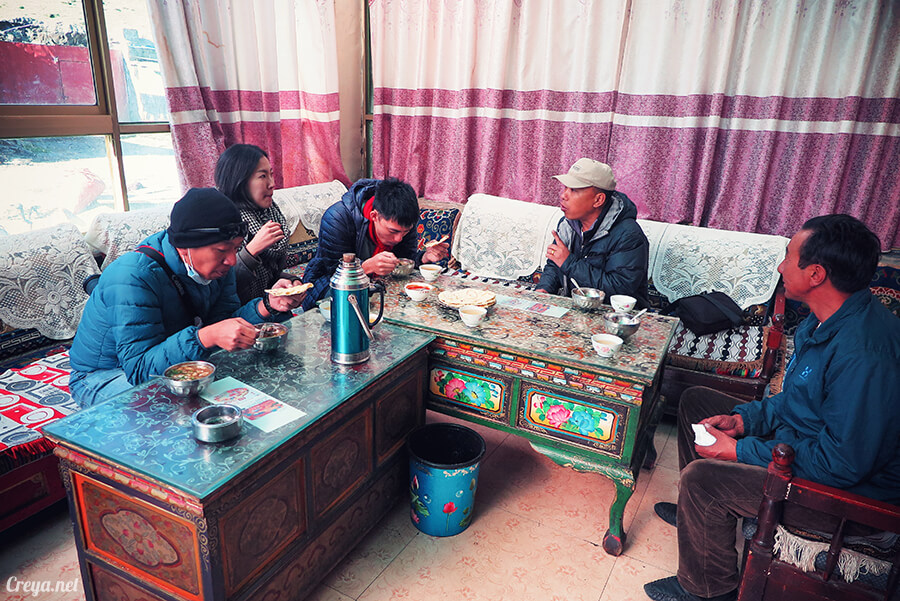
[ Sit in this chair and become Tibetan in one second ]
An hour and a half later, we finally reached Mila Pass at an elevation of 5,013 meters. The mountaintop was draped in five-colored prayer flags. Because Mila Pass is extremely high and windy, Tibetanshang five-colored prayer flags representing good fortune on sacred mountains and at mountain passes. The stronger the wind, the farther and wider it carries that good fortune.Looking at the magnificent mountains and five-colored prayer flags fluttering before us, it was so beautiful—so beautiful—so beautiful! I nearly forgot how high we were. Even if walking a little faster or going uphill immediately left me breathless, I didn’t care anymore. Although we stayed for only a few minutes, this was our first successful challenge at an altitude of 5,000 meters, and wefinally experienced for ourselves what it felt like to stand at such a high elevation.。
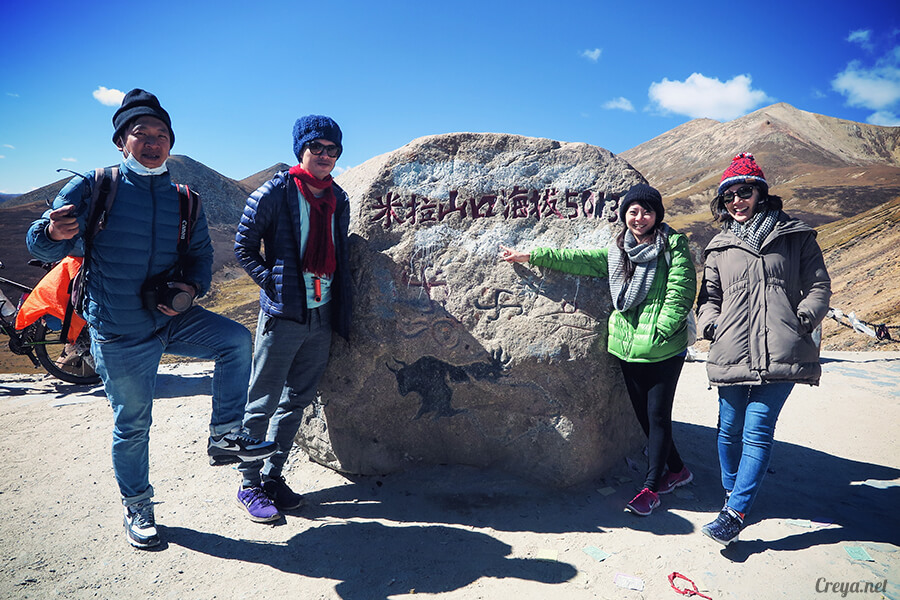
[ A forced smile is the best caption for this photo, hahaha. Yes, my head hurt too ]
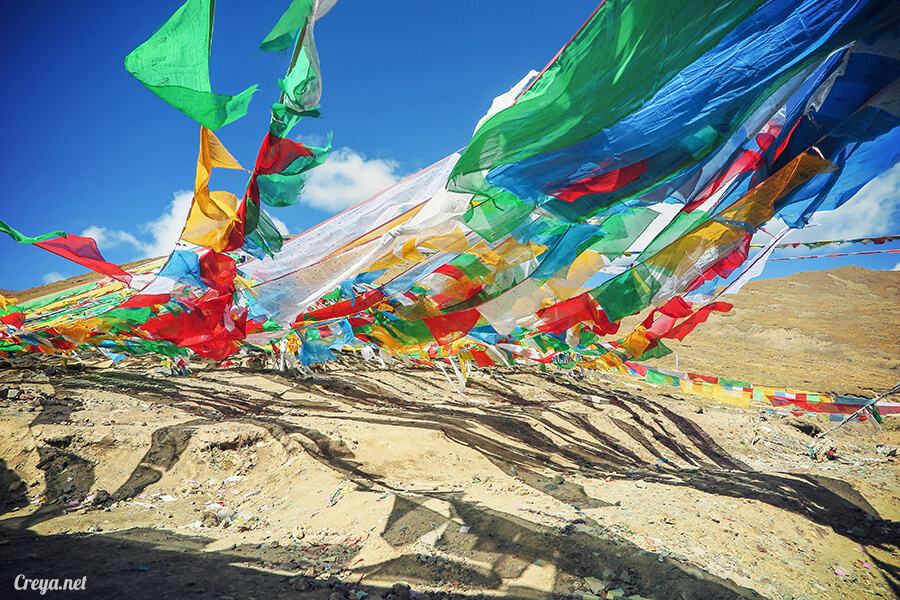
[ Each of the five colors on the prayer flags has a meaning: blue is the sky, white is the clouds, red is fire, yellow is earth, and green is water ]
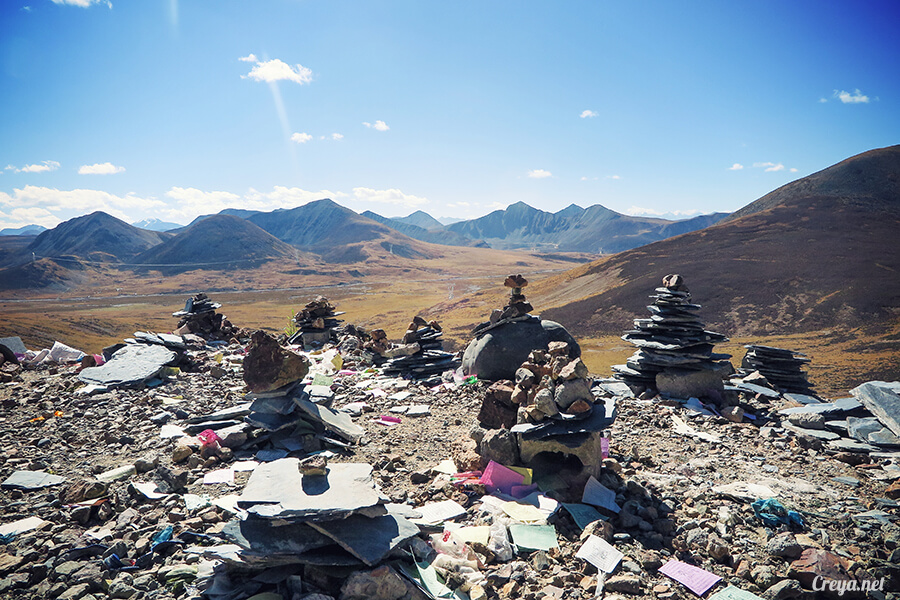
[ Looking down over the valley and fields from Mila Pass—the visibility was excellent ]
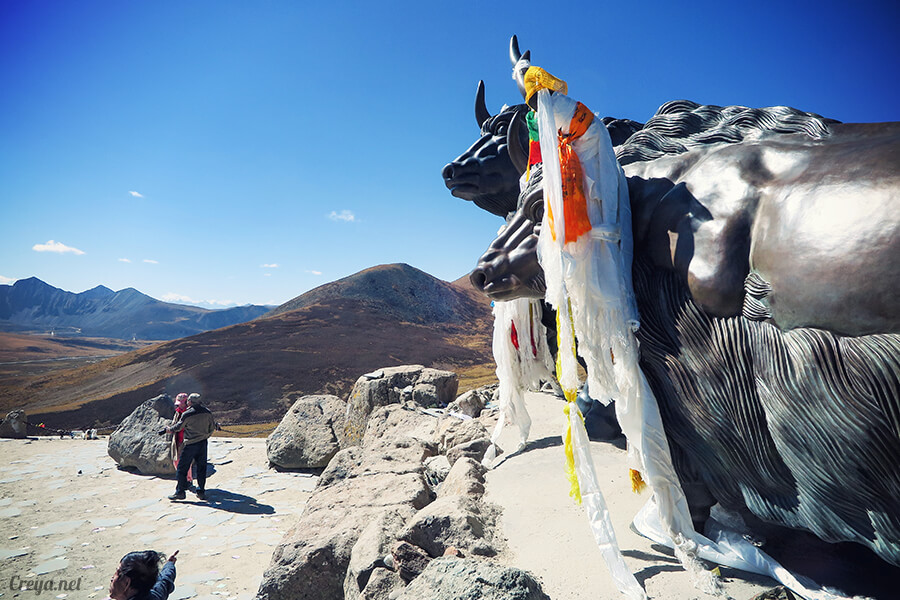
[ Yaks covered in prayer flags and white khatas—I was starting to envy them for getting to see this scenery every day! ]
After crossing Mila Pass, we officially entered the Nyingchi region.The Mila Mountains divide not only the vegetation and scenery, but also the watersheds of the Lhasa and Nyang rivers, the continental and maritime climates, and even the human landscape on either side.Most houses around Lhasa are built of stone, whereas Nyingchi receives frequent rain and snow, so its roofs are sloped. Traditional old houses were built with sloping wooden roofs and stone walls, while modern ones use sheet metal and come in brighter colors.
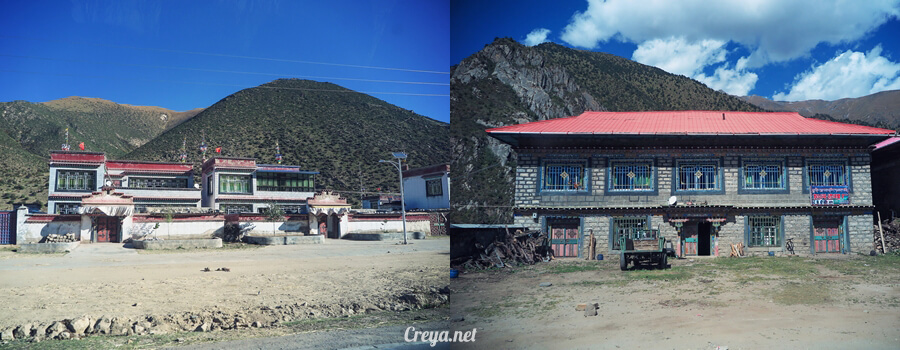
[ On the left is a flat-roofed house from the Lhasa region; on the right is a steep-roofed house from Nyingchi. Japan’s gassho-style villages probably follow a similar concept ]
But one thing that probably hadn’t changed was the bathroom situation.
The Chinese government strictly enforces speed limits for driving in Tibet, with checkpoints along each stretch of road to verify travel times. Passing a checkpoint before the required time results in a fine. Naturally, every policy inspires a workaround, so our driver would pull over every so often to rest and use up the time we had saved by exceeding the speed limit.
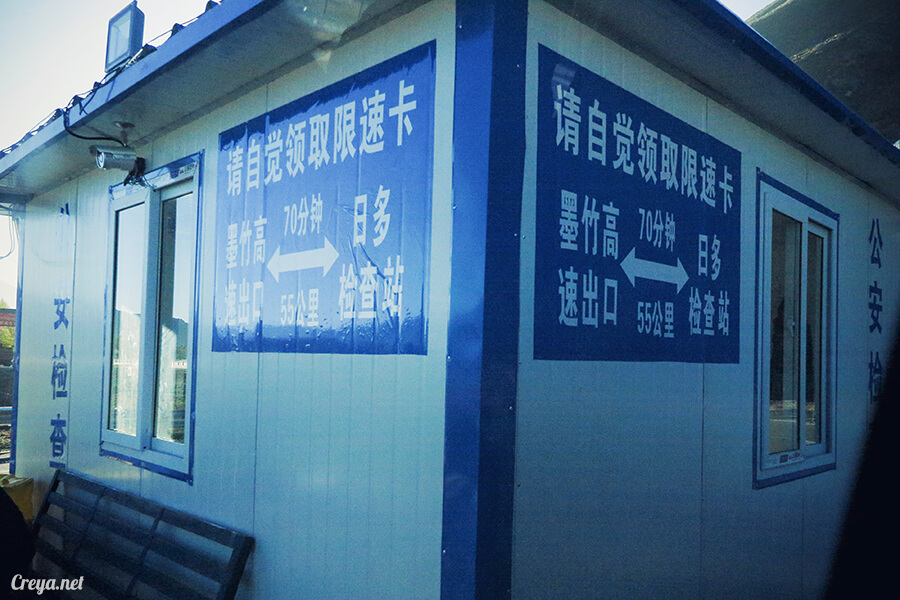
[ You have to take at least 70 minutes to drive 55 kilometers. Probably only a newly licensed road menace like me would actually drive that slowly ]
“Let’s take a break. Get out and use the bathroom!” guide Luosen thoughtfully announced. It had been another hour and a half since the public restroom at Mila Pass—the one with doors and toilets.Our entire road trip could practically be measured in bathroom breaks.。
[ The place where we stopped to rest was beautiful, completely encircled by mountains ]
We happily climbed out carrying toilet paper, but looking around, all we saw were the soaring, rugged mountains surrounding us. There wasn’t a building in sight.
“Where can we use the bathroom, Luosen?”
Following our guide’s pointing finger, we saw a row of walls. “Go behind the wall. Nobody will see you there!”
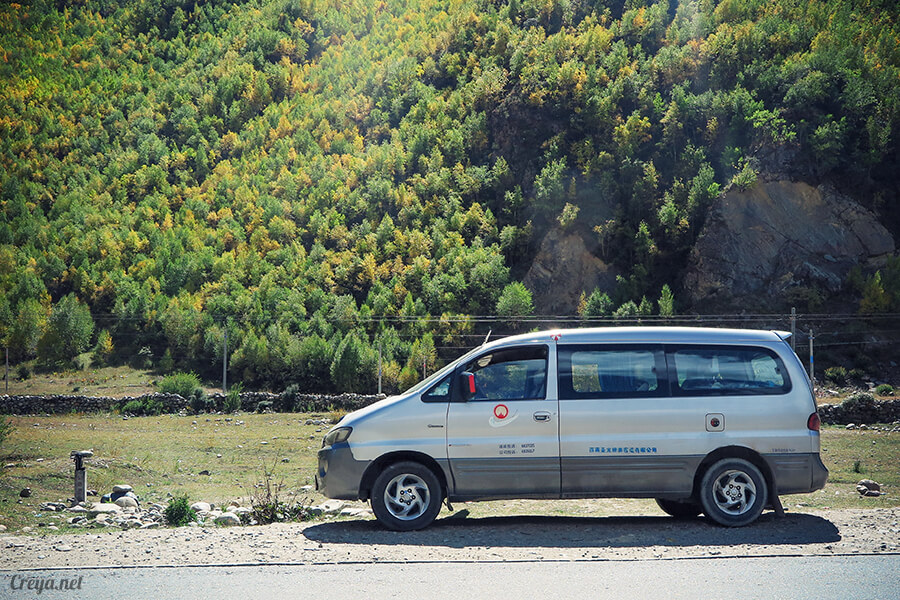
[ Follow Luosen’s directions and look over there. That’s right—the row of walls behind the van ]
That all-natural wooden shack was nothing compared with this. Once you squatted down, you had a front-row view of Tibet’s scenery. This was undoubtedly the legendary luxury toilet boasting“Aesthetic surroundings, a global outlook—waterfront charm, exclusively yours”!
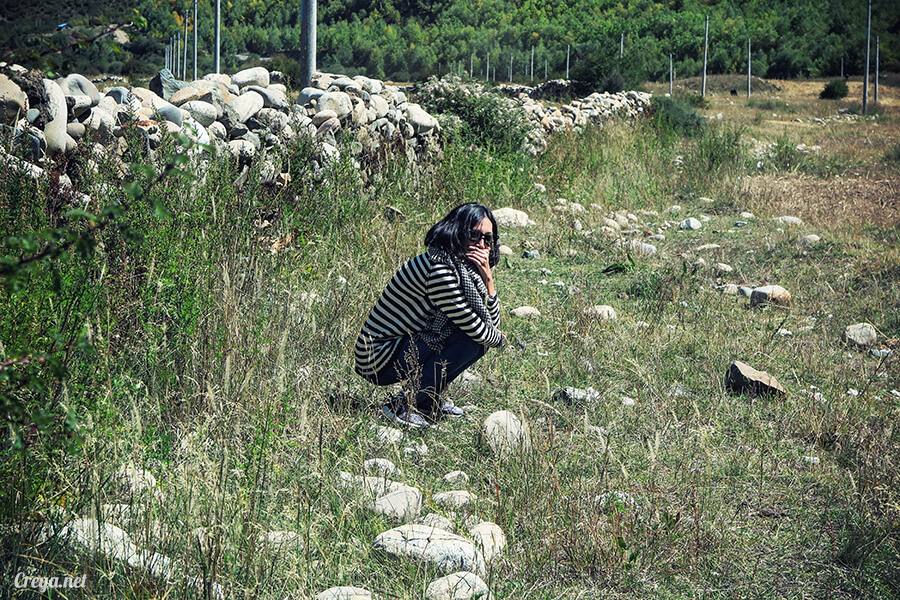
[ Bathing beauty Miss Y demonstrates how to use the toilet with a front-row mountain view. Most of the white stuff in the grass isn’t stone—it’s toilet paper ]
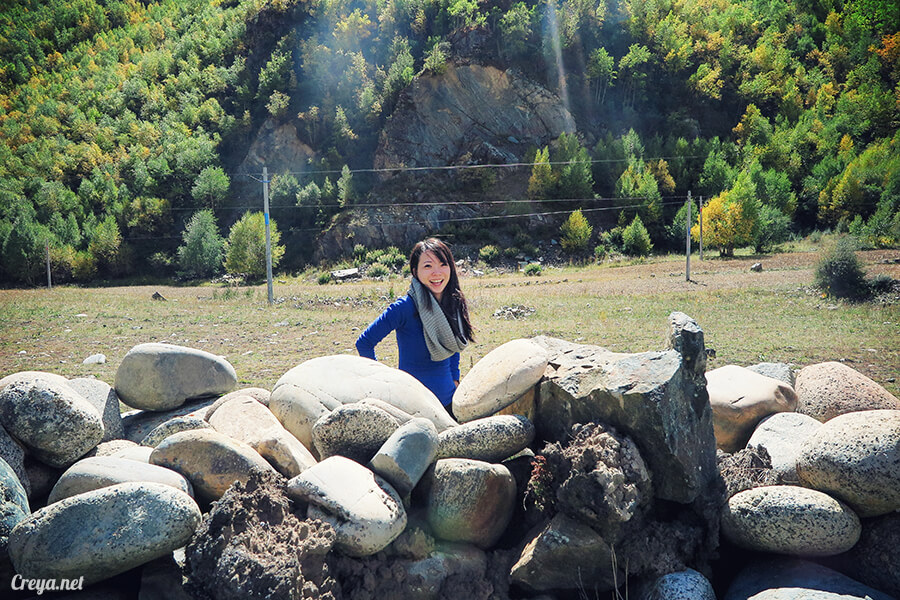
[ This was one of those moments when I felt grateful for my short legs. Even standing upright to pull on my pants, I still wouldn’t be exposed. Tall women planning to visit Tibet: you’re on your own… hmph ]
Having graduated from a pit latrine to relieving myself in the wild, I figured there was nothing left I couldn’t overcome. (Surely this was the limit, right?!) I therefore stopped restricting how much water I drank. So when we reached our next stop to kill time under the speed limit, I once again had to ask where I could use the bathroom.
The only people in sight were a local farmwoman and her children playing in a field. After the guide spoke with her for a while, he said, “Just go in the field!” “Huh?”
The guide and all our male travel companions were immediately cleared out, leaving only the farmwoman and Miss Y, who stood with her back to me and kept watch. Apparently, I had no choice. Who knew where the next rest stop or bathroom would be? Fortified by my earlier experience in the luxury toilet with the magnificent view, I was less bashful about setting myself free beneath the blue sky on the green earth. Once your values have been liberated, you see, it can be very hard to bring them back.
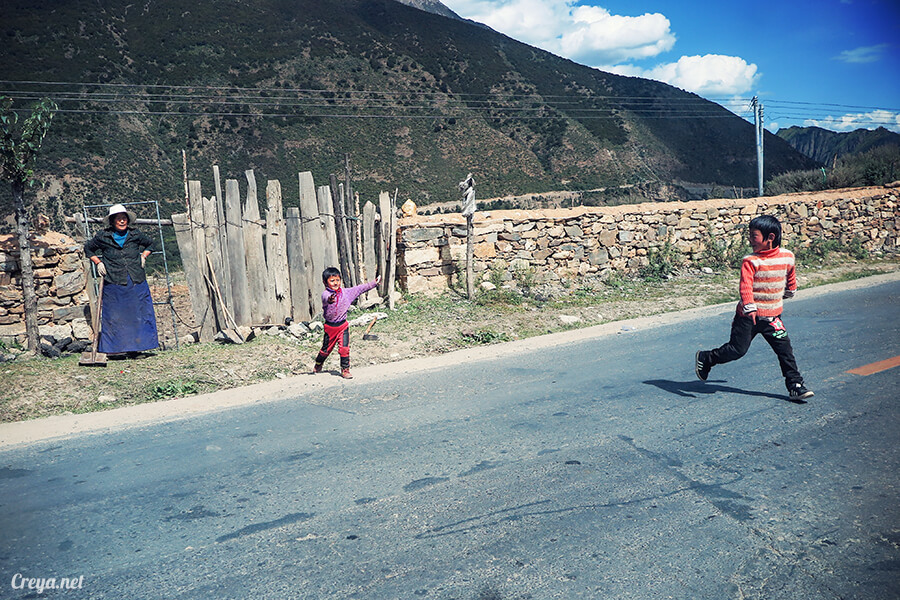
[ This scene of children running through the fields looked like something I had only ever seen in a painting—but I had to use the bathroom here… ]
Seeing all the men outside the wall, I relaxed and relieved myself in a corner beside the field. But halfway through,the farmwoman’s two children, an older sister and younger brother, suddenly came charging in. Our eyes met, yet I couldn’t move and had no choice but to finish the part I was in the middle of.The siblings simply stood frozen at the entrance, watching me use the bathroom in their family’s field. My mind went completely blank, and I had no idea what to do. It wasn’t until Miss Y shooed them away in Chinese—which they couldn’t understand—that my butt was finally spared their stares.
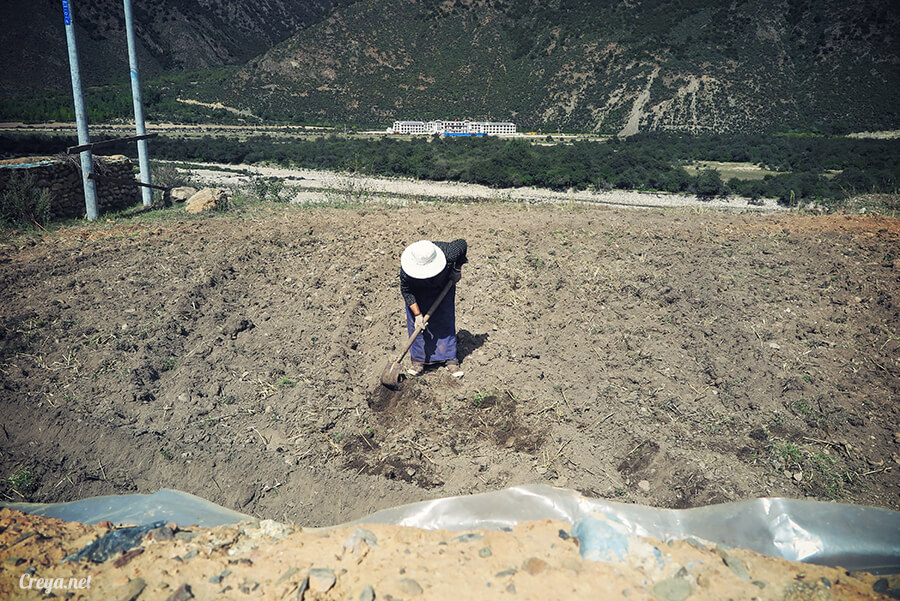
[ This is the very plot of farmland I fertilized. It also removed all limits from my capacity for embarrassment forevermore ]
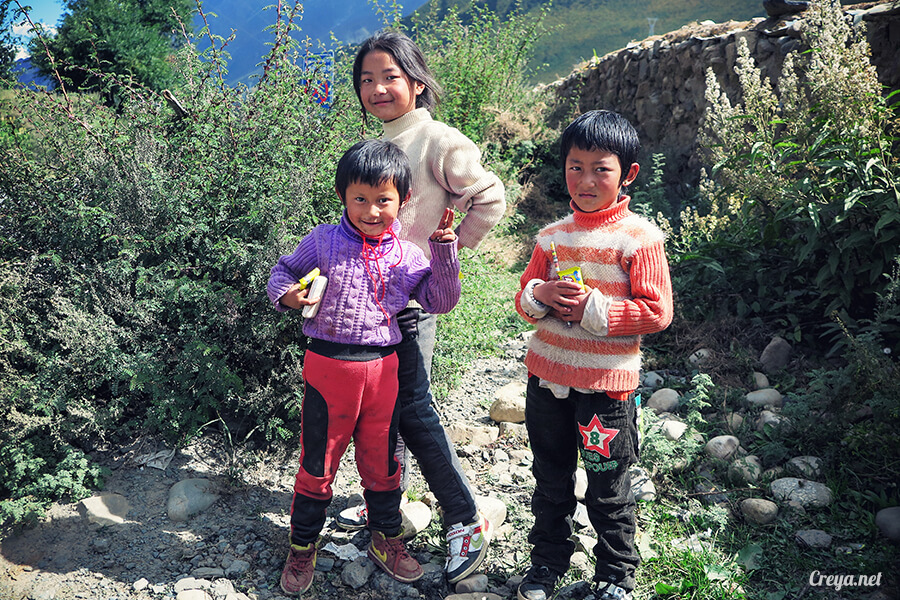
[ Such innocent little faces… I wonder what they thought of the Taiwanese woman using the bathroom in their family’s field ]
Somehow, a simple road trip had turned into a series of increasingly difficult bathroom challenges. But when I thought about it, this was really just an unavoidable way of life under the circumstances. Humans in the past lived this way too, after all.Isn’t modern civilization merely a set of rules humanity created for itself?
But enough nonsense. Given a choice, I still want a bathroom with a door and a toilet!
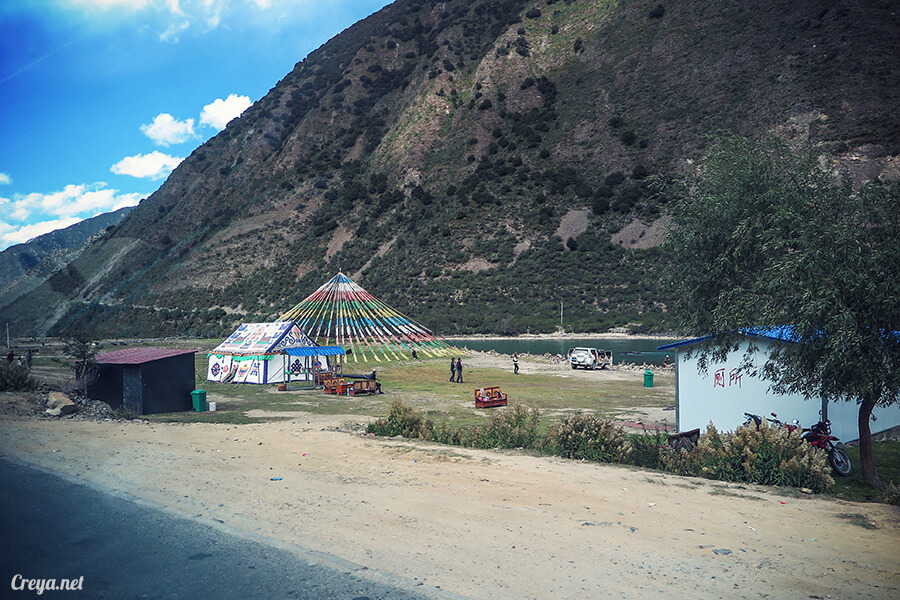
[ Looking back at the photos, I realized I had captured quite a few toilets along the way. So why on earth didn’t I use them first… ]
✈ Travel date: 2015/10/6
| Tibet 西藏踢北去 | Series: (Travel period: 2015/10/3-2015/10/16)
● Lifting the Veil on Tibet with My Own Eyes—the Dream I Once Thought Was Beyond Reach
● We Made It All the Way to Chengdu, on Tibet’s Doorstep—but Would We Actually Make It There?
● Finally Setting Foot in Lhasa: Breathing the Legendary Thin Air and Battling Altitude Sickness
● The Potala Palace, Spiritual Sanctuary of the Tibetan People—Though We Weren’t the Only Ones Feeling Listless at High Altitude
● Searching for the True Heart of Tibetan Lhasa: Awestruck by the Power of Faith at Jokhang Temple and the Old City
● A Road Trip of Physical and Mental Breakthroughs: East from Lhasa to Nyingchi (Part 1—Mila Pass and the Great Toilet Adventure)


