


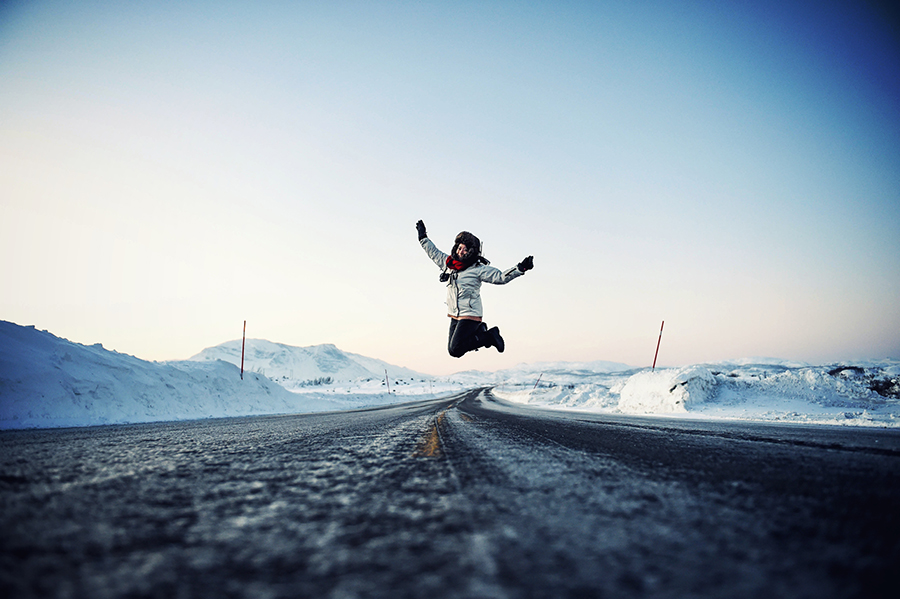
The ancients used to say, “Fools have all the luck.” I suppose the greatest blessing of being a fool like me is the ability to decide to set off without a moment’s hesitation. Before booking my flights, it somehow never occurred to me that Sweden—and the rest of Northern Europe—would obviously be absolutely freezing at this time of year. (Sigh. I definitely already knew that, but my brain must have been blinded by the Northern Lights.) Never mind that I was heading all the way into the bitterly cold “Arctic Circle”! Perhaps it was precisely because I kept things simple—“Sure, why not?”—and assumed everything else could be worked out that I was foolish enough to ignore the weather and charge headlong into my Swedish Northern Lights adventure.Then I checked the weather forecast…
Five days after booking the flights, it finally occurred to me to check the temperatures for the trip! (Was waiting until five days before departure perhaps a little slow of me?)
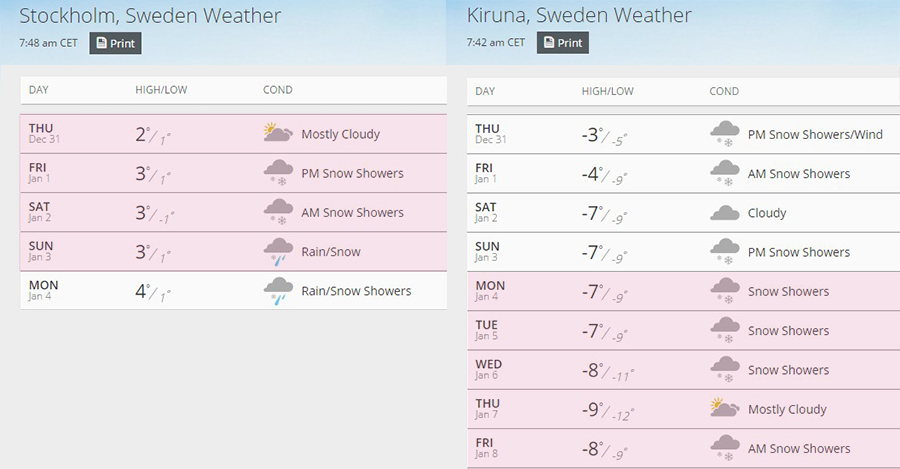
[ Forecast checked five days before departure: Stockholm, Sweden, on the left; Kiruna, inside the Swedish Arctic Circle, on the right. The dates highlighted in red are our arrival dates. ]
Our first stop, Stockholm, showed a low of only about -1°C. I remembered surviving winter days around 0°C in Melbourne, Australia, so surely my body could handle it. But our next destination, Kiruna in the Arctic Circle, was forecast to be between -7°C and -12°C—colder than anything my skin had experienced in its entire life.I knew this was going to be an incredible journey, not only visually but for all five senses.
Then, two days before departure, I opened The Weather Channel again to confirm the temperature, and it…It…It had plummeted!
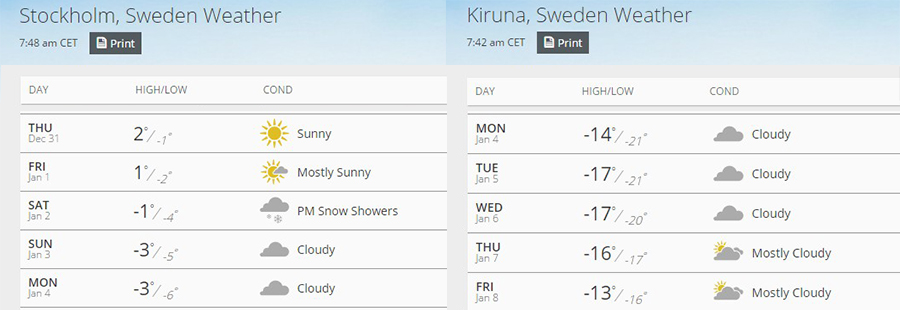
[ Checked two days before departure, and somehow it had become even colder! Stockholm, Sweden, on the left; Kiruna, inside the Swedish Arctic Circle, on the right. ]
Stockholm’s high had dropped to just 2°C, and on most days it would remain below freezing all day! But never mind that—far more terrifying was the Arctic Circle forecast, which now showed a low of -21°C!!My hair stood on end just looking at it. What even is -21°C!? Would my ears and nose freeze so solid that they would fall off if touched?! Was I seriously going to spend four days in a place like this?
Only then did I realise I was in deep trouble. I urgently called for frontline support from all directions: please donate supplies and save this frozen Arctic fool! Then I dashed out to buy more gear. First, special thanks must go to the trip’s biggest equipment sponsor—my mother, Sister Xia. I suppose having a hoarder in the family does have its advantages. (Just kidding.)
Of course, once the forecast drops, it is bound to drop a second and third time. When we finally set foot inside the Arctic Circle, the airport thermometer read -24°C—and this was at noon, in broad daylight! The airport taxi driver told us, “Until yesterday, it hadn’t fallen below -15°C at all this winter. You’re very lucky to have arrived on the coldest day of the season.” Even luckier for us, it was not actually the coldest day, becauseevery day we stayed was colder than the one before, and that is how I somehow ended up experiencing a brutally frozen world of -38°C, where my hands and feet went completely numb—a thrilling experience so cold it drove me mad and so beautiful it made me lose my mind. Fortunately, all four limbs and all five facial features survived, and I am now typing this blog post in warm Taipei… (Amitabha, amen.)
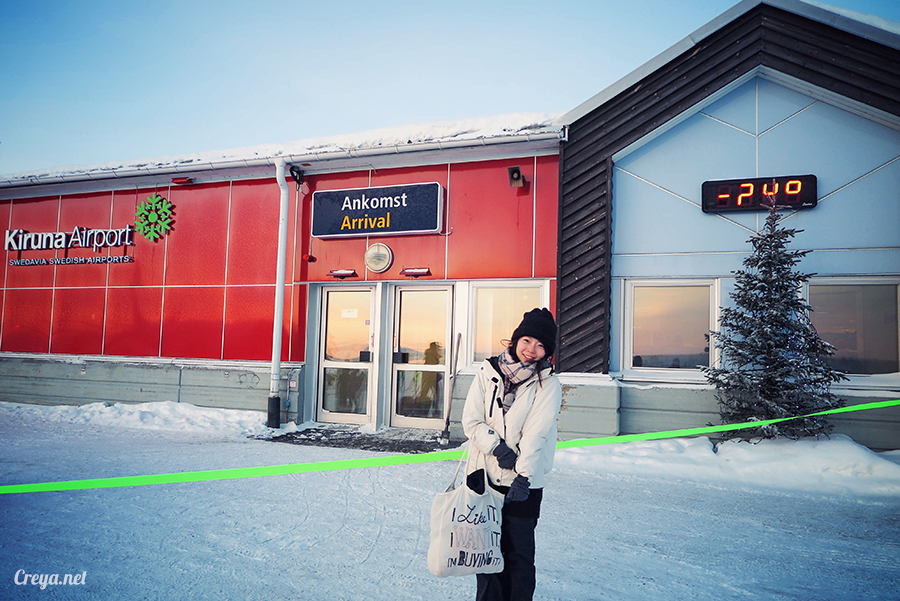
[ So cold my face went crooked—the Arctic Circle welcomed me with a brutal -24°C. ]
Is there really a difference between -20°C and -30°C?
Let me tell you:it is like the difference between 30°C and 40°C in a Taipei summer—there is a HUGE difference. At one, you melt after standing outside for ten minutes; at the other, you evaporate the instant you step outdoors. Billing is by the second. At -20°C, you can survive without professional snow gear. Below -30°C, the moment you remove a glove or layer, the deep freeze attacks inward from your extremities. This was especially true while standing in the snow waiting to photograph the Northern Lights—my hands and feet hurt so badly that I felt as if amputation might be imminent. So no, temperatures below freezing do not all feel equally cold.
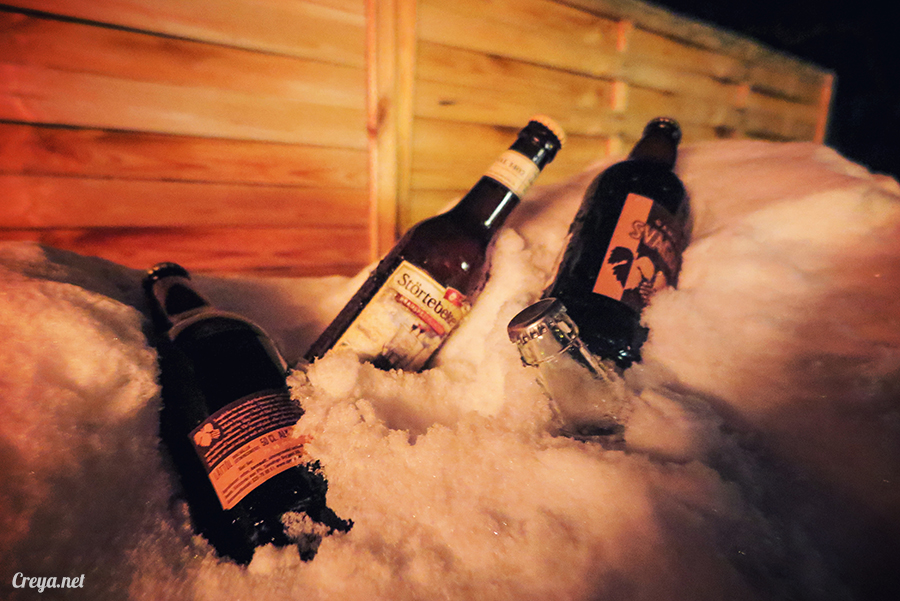
[ Who needs a fridge? Just leave your beer outside for a moment and it is ready to drink. ]
This survival guide is therefore based on my own brief eight days in Sweden, from snowy weather around 0°C to FUCKING COLD subzero polar conditions. I havecompiled my experiences with layering clothes and useful little items, along with warnings about the strange things that happen to batteries and belongings in polar conditions, for anyone planning to visit snowy or Arctic regions—and now some of these tips are even useful during winter in Taiwan. (Good grief.)
Rules for Dressing in the Snow
Whenever you are heading into snow, remember the key formula for dressing from head to toe:“an insulating layer” + “a waterproof, windproof layer”. You cannot go wrong.
Countries in Europe and places such as Japan generally have a dry cold, so normally you only need clothing that is warm enough. But once it snows, the snow melting on your clothes turns into icy moisture that seeps inside. From that point on, you are doomed—nothing will make you warm again! (After returning home, I realised this rule applies perfectly to Taiwan too. It is both wet and cold here!)
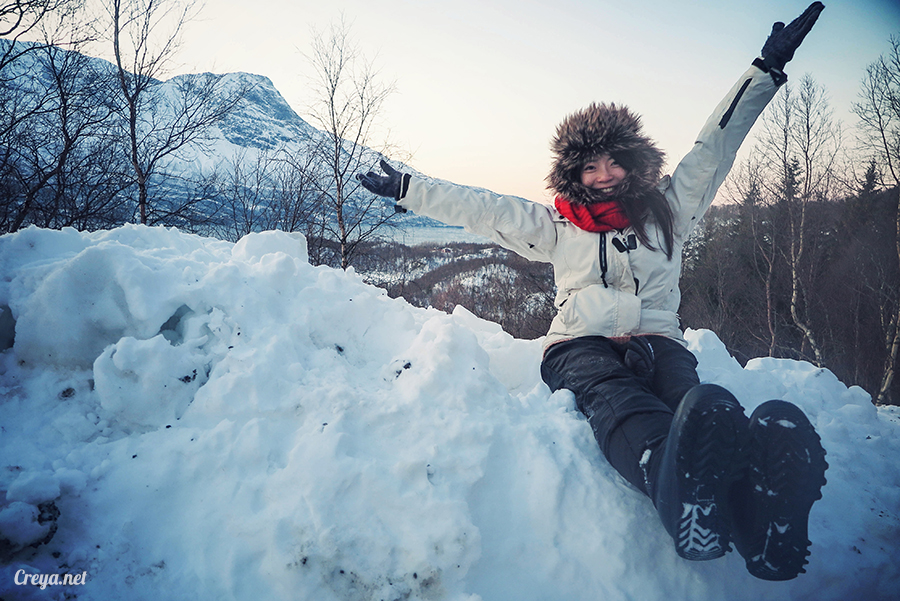
[ If you want to roll around in the snow, remember: warmth + waterproofing! ]
Because indoor heating in Sweden is turned up extremely high, however, the flexible“onion-style layering method”is the only way to go. Whether it is tops, trousers, shoes and socks, or accessories such as gloves, scarves and hats, Irecommend bringing several of each, with at least one item that is waterproof and windproof. You can then add layers one by one depending on whether the day’s temperature is 1°C, -17°C or -35°C.
Layering also reduces the total number of clothes you need to pack. If you want your photos to look as though you are wearing different outfits, simply change the outer layer. If something needs washing, you only have to wash the garment touching your skin. (In reality, though, I wore the same coat every day, so all my outdoor photos still look as if they were taken on the same day. I just LET IT GO—staying alive was more important.)
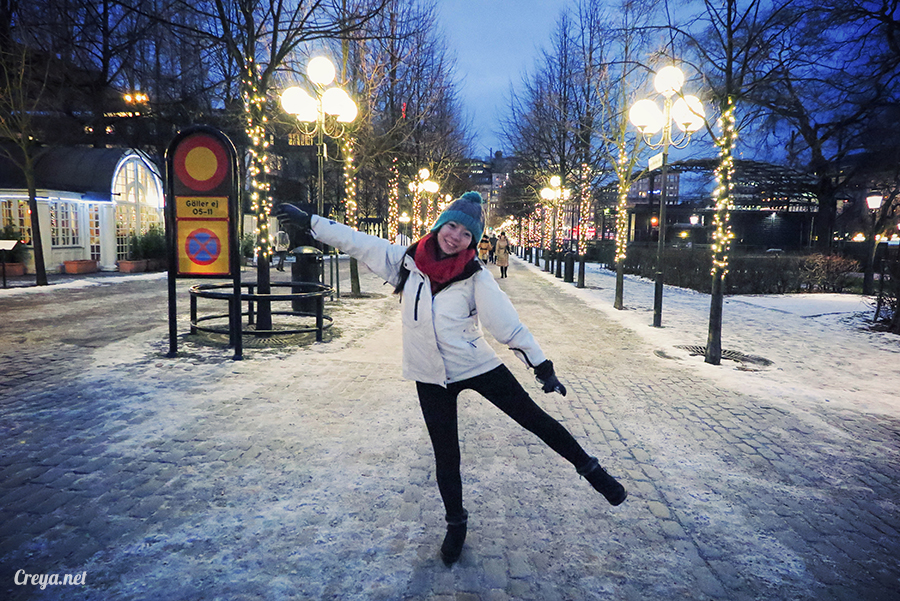
[ Wearing black on your lower half is also a form of visual weight loss. ]
As for materials,avoid both pure cotton and denim. These materials absorb moisture, and in the snow they will leave you covered in white frost no matter how you layer them. Your extremities are crucial to staying warm, so pay special attention to your gloves, socks and shoes. In particular,choose shoes with slip-resistant soles。
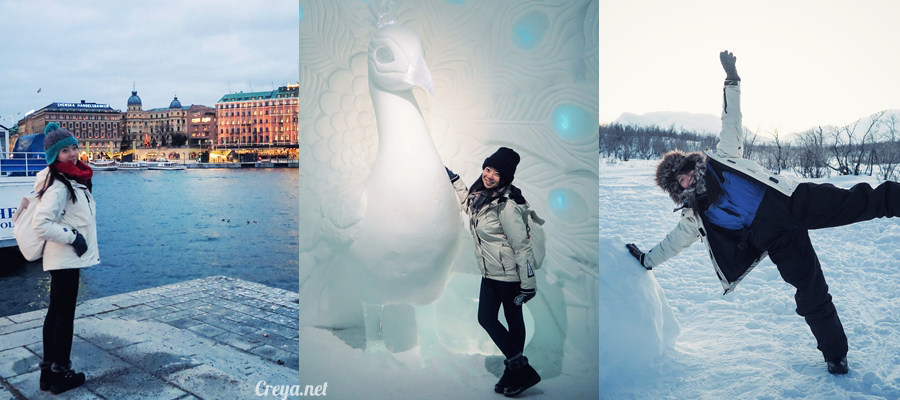
[ What I wore at around 0°C in Stockholm / at -17°C in the Arctic / and at somewhere in the minus thirties in the Arctic. I will use these three temperatures as reference points below. ]
The outfits for the first two temperatures look fairly similar. When friends saw my photos, they kept thinking I was wearing very little, but I had actually hidden many layers of different thicknesses underneath, which provided more than enough warmth. The professional snow gear I wore at -30°C was supplied by our local accommodation. For example, at thefridge I stayed in—the domed snow igloo—and during theAbisko Guesthousefour-day tour, they provided invincible one-piece snowsuits and snow boots free of charge. You truly need professional local equipment to stay warm enough. It is essential polar-survival gear!
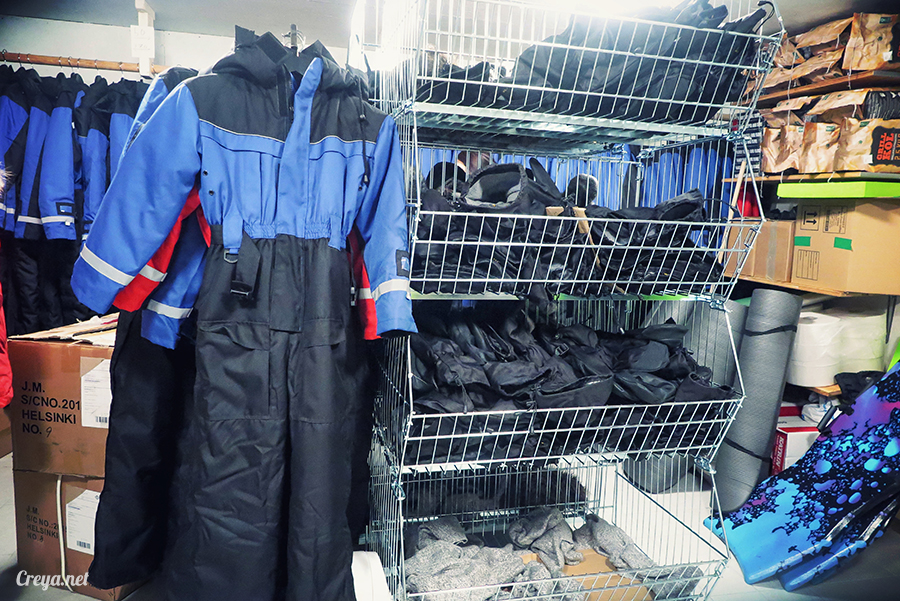
[ Almost all accommodation in Abisko lets guests borrow a complete set of essential Arctic equipment. ]
Below, I will explain my recommendations for dressing each part of the body.
Keeping Your Upper Body Warm
These are all the clothes and accessories I wore on my upper body, adjusted for different temperatures. Only one outer knitted sweater is shown as an example.
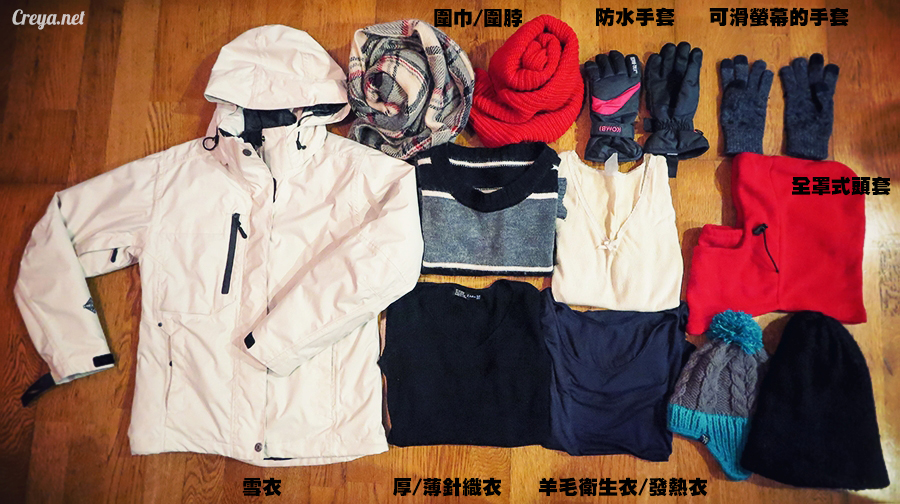
Tops
Here is how I layered for different temperatures, from the inside out—
Around 0°C:thermal top > thin knitted top > long knitted sweater > snow jacket + scarf, hat and one pair of gloves
Around -17°C:thermal top >wool base layer> thin knitted top > long knitted sweater > snow jacket + scarf, hat and one pair of gloves
Around -30°C:thermal top >wool base layer> thin knitted top > long knitted sweater > snow jacket >professional one-piece snowsuit+ scarf,two hats、and two pairs of gloves
For the innermost layer, you absolutely muststart with a mighty Uniqlo HEATTECH top. Light, thin and warm, it is one of history’s finest inventions. Mine was an older lightweight version; they now make thicker, fleece-lined versions that are even warmer. When it was extremely cold, I added an Australian wool base layerthat was thicker and slightly heavier than HEATTECH, but wool genuinely provides excellent insulation. Finally, I put on two knitted tops of different lengths and thicknesses. That part can be adjusted to suit your usual style.
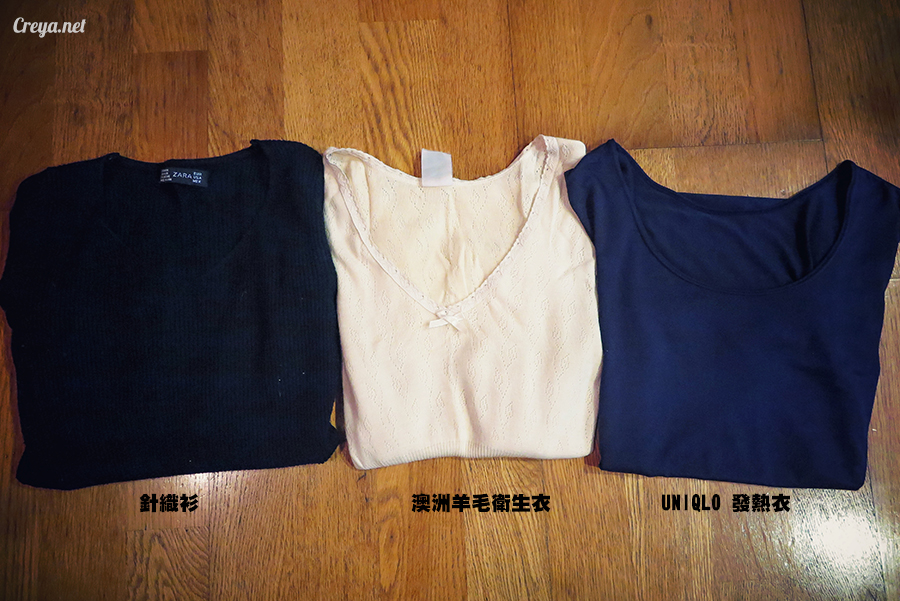
[ My three trusty insulating base layers. ]
I wore my snow jacket every single day in Sweden.Snow jackets generally have a tougher windproof shell on the outside and down insulation inside, providing both wind protection and warmth in one powerful package. I recommend a snow jacket over an ordinary down jacket becausethe waterproof fabric on the outermost layer of a snow jacket has no stitched channels, whereas down jackets usually have quilting seams that allow wind and moisture through. Proper snow jackets are generally expensive, though. If you do not want to buy one, simply stick to the “warm” + “waterproof and windproof” formula when preparing your outerwear.
What I wore was not technically a snow jacket, but it was functional enough to impersonate one, generously loaned to me by my mother, Sister Xia. It is a two-piece jacket: the inner down layer can be removed, and both parts can be worn separately. During my transfer in Türkiye, the airport felt unbearably hot, and removing the inner layer brought instant salvation. It also has plenty of pockets. In cold weather, you can keep frequently used items in them so your stiff fingers can grab things quickly. I think it is an excellent jacket, and it is suitable for Taiwan too. (I could only finda link to a similar model from the same Canadian brand, STORMTECH, so you will have to search for it yourself)
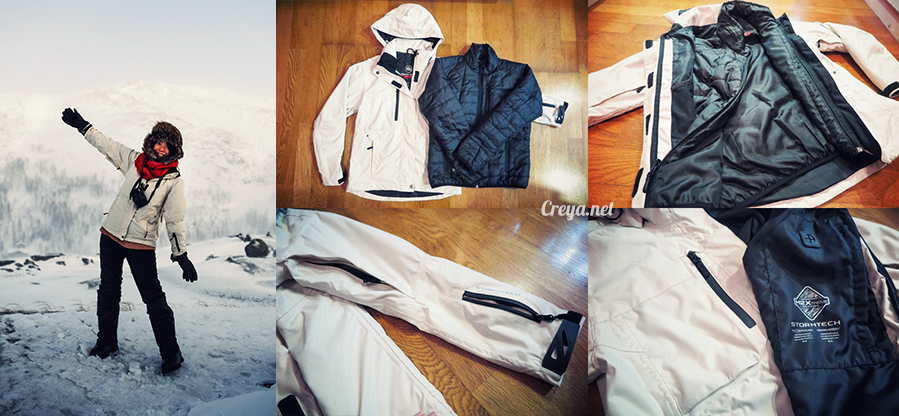
[ Tested in the Arctic: passed! ]
Accessories
Scarves, hats, gloves and other accessories that cover your extremities and areas where major blood vessels run are absolutely essential. A face mask that covers your mouth and nose and reduces the amount of icy air you inhale also helps tremendously.
On our first day in Stockholm, however, we wore masks while walking around and kept encountering concerned locals asking why. “Sweden’s air is very clean. This isn’t China—there’s no smog here,” they said, brimming with confidence in their air. “I’m confident too, but we’re simply freezing,” was all I could keep telling them. After all, temperatures around 0°C probably do not count as particularly cold to Swedes, and nobody else on the street was bundled in as many layers as we were. Eventually, I simplypulled up one corner of my scarf to cover my mouth and nose. Partly because the mask I had brought kept slipping and was annoying, and partly as a thoughtful gesture to stop confusing the Swedish people.
In the Arctic, I brought out my ultimate secret weapon:a “full-face fleece-lined thermal balaclava”, once again sponsored by my mother, Sister Xia. The first time I saw it, I burst out laughing. There was no way I was walking around in that ridiculous thing. I might accidentally be mistaken for a terrorist or a highly skilled ninja—although at my height, probably not. Once I reached the Arctic, however, I began thanking it profusely. (All I had to sacrifice was my dignity.) It was exceptionally warm, stayed securely in place and did not slip like a mask or scarf covering the mouth and nose. Its only drawback was thatif you forgot to remove it for a photo, you would regret it for the rest of your life! (I cannot believe I actually found somewhere selling it)
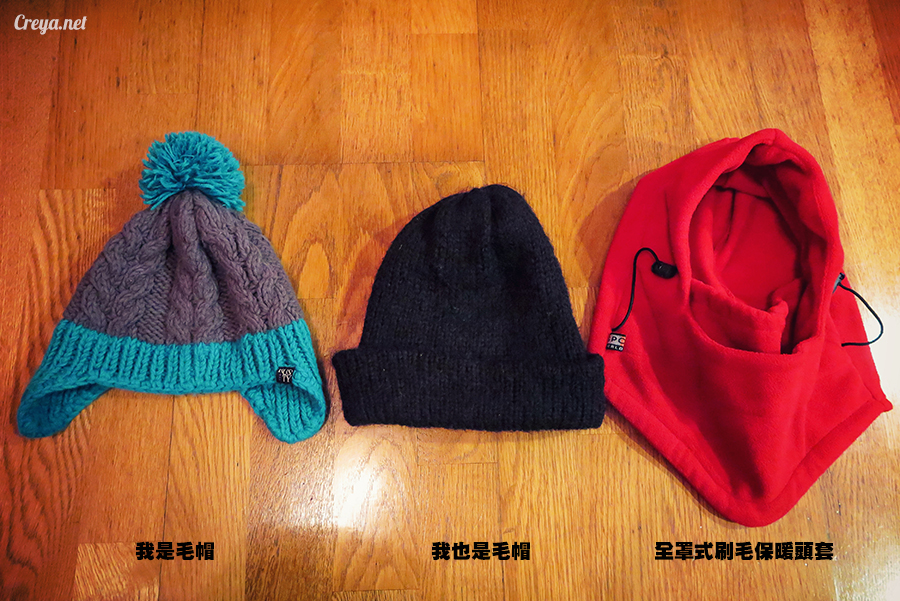
[ My three sisters of head insulation. ]
I also brought two knitted hats and tested in advance that I could wear them on top of each other. At -30°C in the Arctic, however, I mostly wore the huge earflap hat supplied by our accommodation. It was extremely warm and looked delightfully local. Underneath, I could wear another hat or the full-face fleece balaclava.
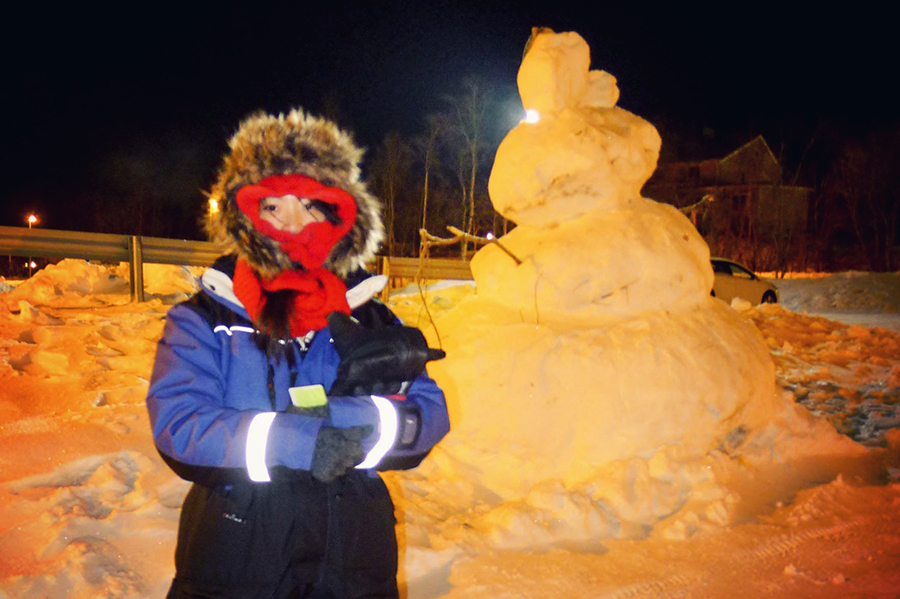
[ Giant earflap hat + full-face fleece balaclava. I told you to take it off for photos! Who even is this? ]
I brought one neck warmer and one scarf to coordinate with my clothes.Simply wrapping your neck makes your whole body feel much warmer. Both are highly versatile: besides covering your mouth and nose as mentioned above, they can wrap around your head to block the cold wind, and they are easy to put on and remove when entering a heated building.
Gloves are something you absolutely, absolutely, absolutely must prepare—have I repeated that enough for you to understand their importance? Once your extremities freeze, it becomes excruciating.This is especially true when taking photos in the Arctic: the metal body of a camera becomes freezing cold, making your hands hurt faster and more intensely. Playing in the snow and handling objects also means touching wet, icy things, so choosing warm, waterproof gloves is extremely important. I recommendwearing two pairs of gloves: a thin inner pair that lets your hands move freely, plus an outer pair that can be enormous as long as it is warm. When you need dexterity, you can temporarily remove only the outer gloves and still have one layer keeping your hands warm.
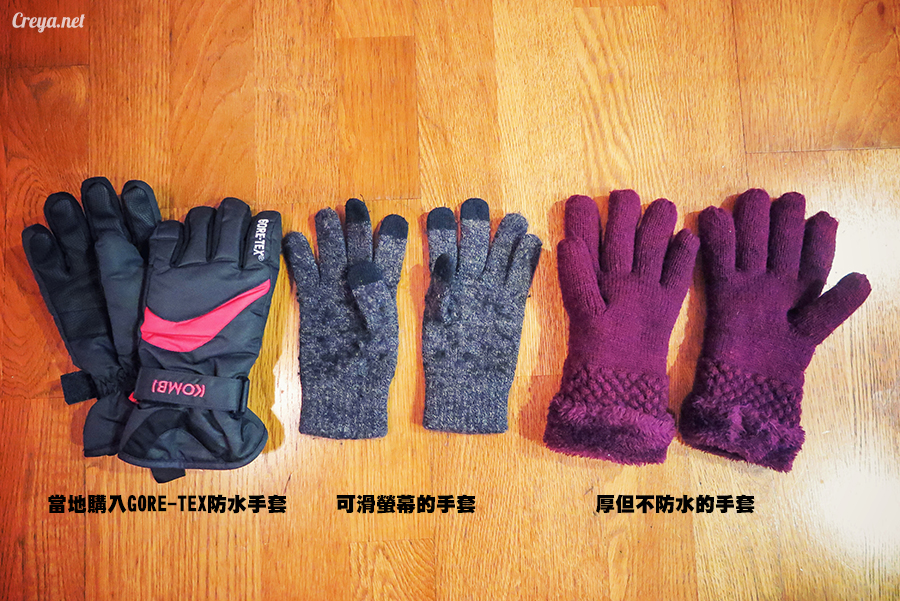
[ Gloves need to be both waterproof and warm. The two pairs I brought only provided warmth, so when I saw waterproof gloves on sale in Kiruna, I bought them immediately. ]
Nowadays, we are constantly using touchscreens. Even many of my camera settings can only be adjusted through the screen. Waterproof gloves stopped the screen from responding, but thin touchscreen-compatible gloves were not warm enough. Was I truly going to let a pair of gloves sever my connection to the digital world?
Then inspiration struck. You fool—the world has invented something called a “stylus”!No matter how thick your gloves are, as long as you can still hold a stylus, you canremain hopelessly glued to your screenand keep using your iPhone or camera!
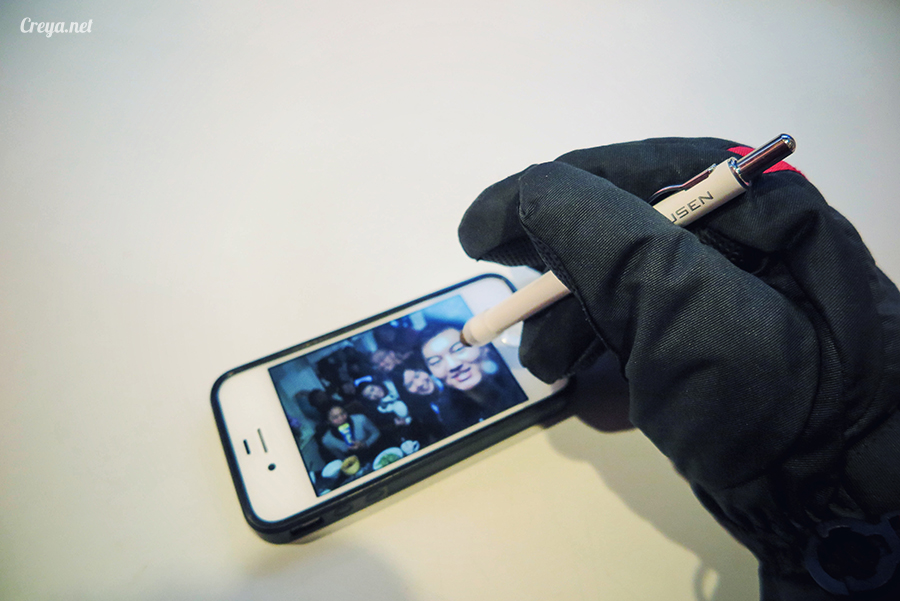
[ With a stylus, you can keep swiping away even while wearing gloves! ]
Keeping Your Lower Body Warm
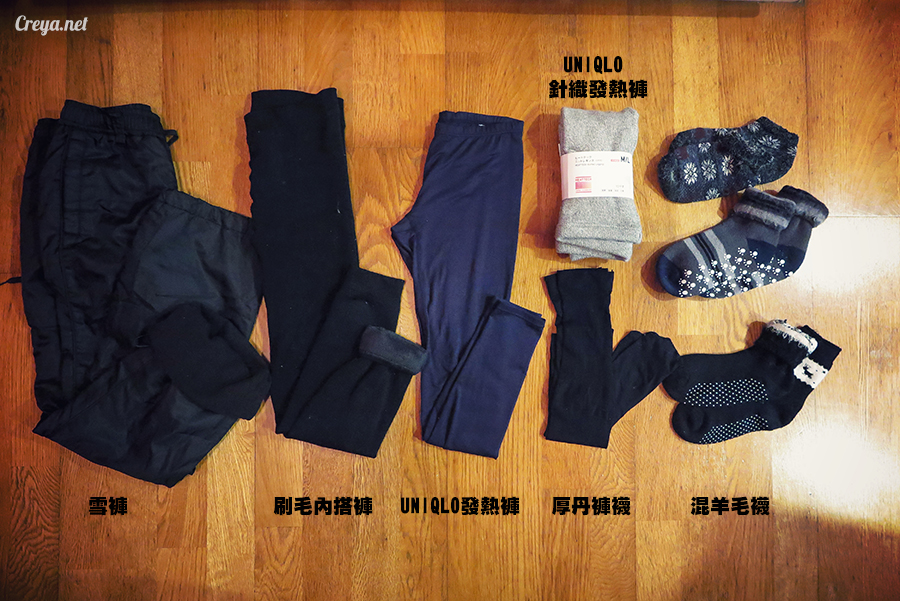
These are all the trousers, socks and other items I used to keep my lower body warm. I brought several of each but still could not pack enough for every day, so they needed to be washed and rotated to avoid taking up too much suitcase space. The layering method was similar to that for my upper body, although I wore snow trousers only when it was extremely cold in the Arctic.
Legs
Here is how I layered for different temperatures, from the inside out—
Around 0°C: thick black opaque tights > thermal leggings > fleece-lined leggings + two pairs of socks
Around -17°C: thick black opaque tights > thermal leggings >thick Uniglo knitted trousers> fleece-lined leggings + two pairs of socks
Around -30°C: thick black opaque tights > thermal leggings >thick Uniglo knitted trousers> fleece-lined leggings >snow trousers + + three pairs of socks
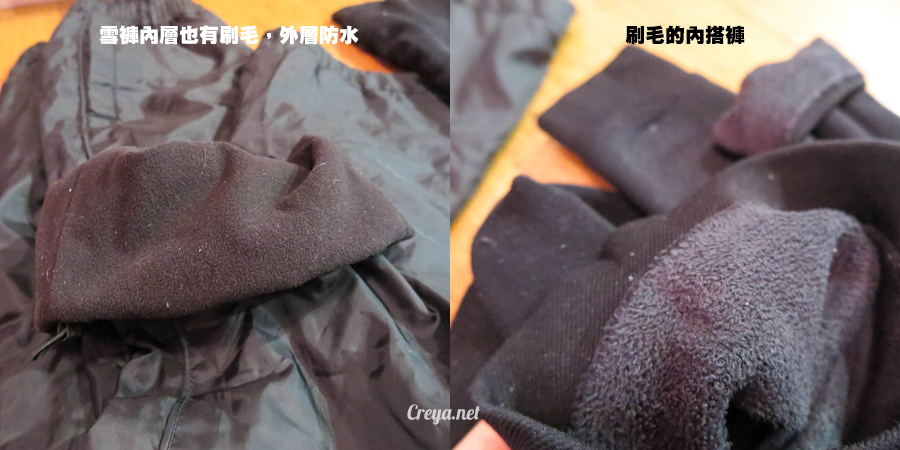
My tights were all thick, high-denier styles that completely concealed the skin. I also brought every pair I had at home, from thinner versions to thick ones resembling compression stockings, and chose according to the weather. The thermal leggings and thick knitted trousers were also from Uniqlo and genuinely helped keep me warm. The fleece-lined leggings were something I already wore regularly in winter, and their brushed lining made them far warmer.Remember: never wear cotton garments or jeans. Most of my trousers were made from inexpensive materials such as nylon, which actually provide better protection from the cold.
Meanwhile,snow trousers follow the same principle as snow jackets: waterproof fabric outside and a warm fleece layer inside. Proper professional snow trousers generally also have suspenders and are designed for skiing and other snow sports. The pair supplied by my mother, Sister Xia, was lighter and cheaper but offered similar functions. Once I put them on, I could lie down and roll around in the snow without worrying about a wet bottom!
Feet
The item I made a special dash to buy was socks, becauseyour feet are in the most direct contact with the thick snow and ice on the ground. If you keep moving, blood circulation to your extremities helps them stay relatively warm. But when you stand still to take photos, your feet freeze in no time.Frank from the Lapland Secret Northern Lights Tourspecifically reminded us before departure thatwe should wear several pairs of socks and never wear cotton socks. (I rebelliously brought one pair of cotton sports socks anyway, and no matter how I wore them, they always felt chilly.) So I visited a specialist sock shop and bought several pairs of warm wool-blend socks with fleecy linings.I wore two or three pairs over my tights before putting on my boots。
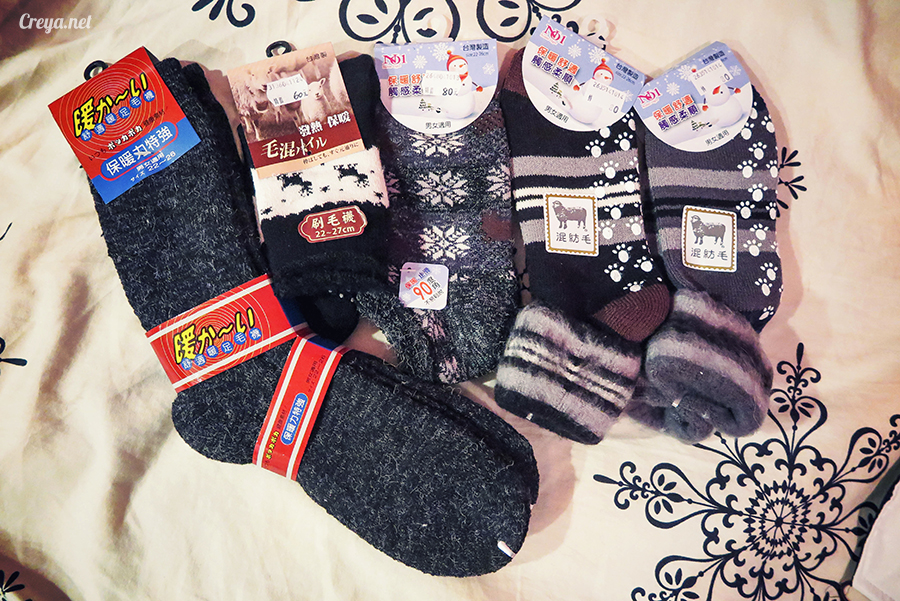
[ You can also wear the socks to bed at night after returning to Taiwan. However, an experienced mountaineer in our group recommended buying one pair made entirely of wool, saying they are incredibly powerful. ]
Shoes are equally important. Choose thicker soles, leave all those highly ventilated and breathable shoes at home, and make sure the outer layer is waterproof so snow cannot seep inside. At first, I casually assumed I could wear my existing ankle boots and simply add more socks. Fortunately, while discussing equipment with my travel companion before departure,ChihI suddenly realised my feet might freeze beyond repair. Since I would have few opportunities to wear professional snow boots afterwards, I chose an inexpensive, easy-to-style pair of ankle boots with a furry lining, water-repellent exterior and slightly raised heel. But these non-professional boots could only just about cope with temperatures around 0°C.In the Arctic, I always wore the professional snow boots and thick socks provided by our accommodation. Only those were enough to keep me alive to this day.
Even with professional snow boots and three layers of socks, standing in the snow at somewhere in the minus thirties at night while waiting for the Northern Lights kept bringing scenes of amputation from the film Everest into my mind. My feet genuinely hurt terribly before going numb. On the final day, at -38°C, I triedputting one hand warmer inside the toe of each boot. It worked very well, butremember to choose shoes one size largerso you can fit all those socks and hand warmers inside.If your shoes are not large enough, cramming too much into them can restrict circulation and actually make your feet colder!
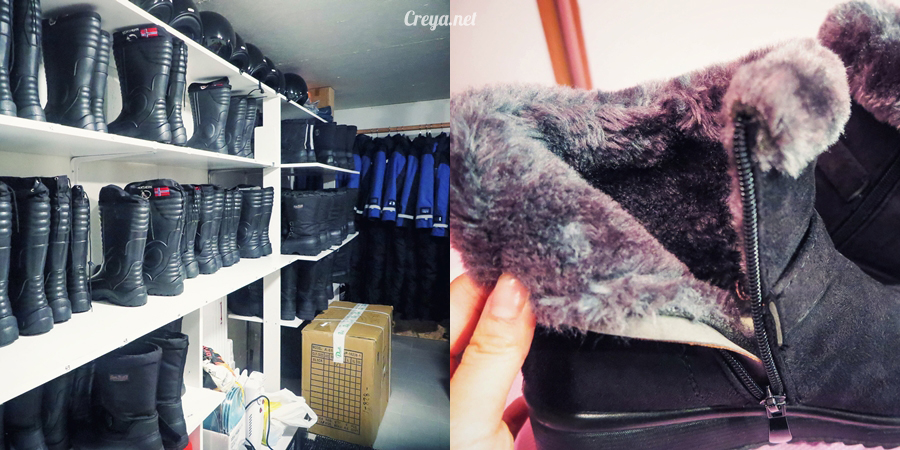
[ Remember to choose a roomier size so you can stuff everything inside. ]
Besides warmth, an even more important consideration when choosing shoes isslip resistance. Fresh, fluffy snow is not particularly slippery. But in places around 0°C, water or melted snow can refreeze into ice. Snow on heavily trafficked ground also gets compressed into ice and becomes extremely slippery. When choosing shoes, therefore,pay particular attention to the depth of the tread on the soles. When walking through snow,try to plant your feet vertically on the ground. Dragging or sliding your feet makes you far more likely to fall.
Just before leaving home, I impulsively put on a pair of tall boots that had accompanied me for years, thinking they would keep me warm. I forgot that the soles were already badly worn. As a result, I repeatedly went skating and falling through the snow, only to get back up and immediately face-plant again. (Fortunately, my travel companions were kind enough not to secretly film me and turn it into a GIF.) Falling onto hard ice is also extremely dangerous. Although I escaped with only aches and pains, I needed several sessions of traditional massage after returning home and still had not fully recovered. Do not take this lightly.
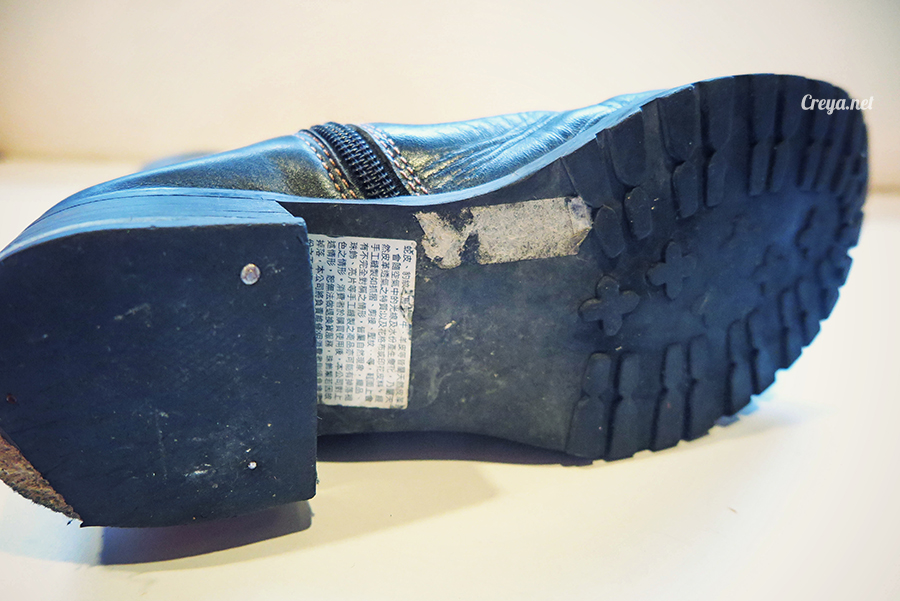
[ My ice skates. ]
That was when I discovereda piece of equipment I strongly recommend everyone bring: ice cleats. Slip them over your shoes for extra grip. They are essentially snow chains for your feet. A set costs only a few hundred dollars and makes walking on snow and ice much safer.
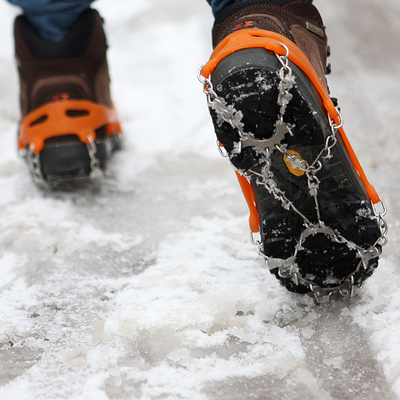
[ Ice cleats slip over your shoes to prevent slipping. ](Photo sourced online.)
Recommended Items to Carry
In a place this dry and brutally cold, you must bring moisturising products.Besides the facial moisturiser, lip balm and conditioner you normally use at night, I strongly recommend carrying “Cellina” with you. Its lanolin formula is rich enough to use as body lotion and can provide emergency relief when your face or hands become too dry. The round, rigid container is easy to carry in a bag and convenient for everyone to share. It cost only NT$39 as an add-on when I bought hand warmers, making it a little product that everyone agreed offered excellent value for money.
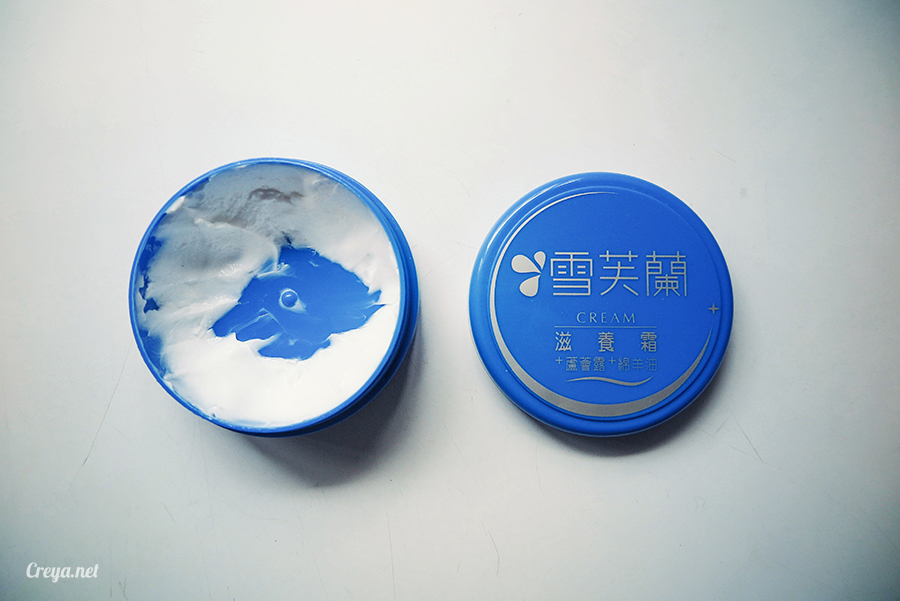
[ In the Arctic, Cellina develops a slightly crunchy, icy texture that actually feels quite pleasant to use. ]
Do not forget to keep lip balm and tissues with you either. Under attack from the biting wind, you will constantly alternate between dry skin and a runny nose. It is a busy life. I also brought two large packs of hand warmers, buthand warmers are not actually very effective in Arctic conditionsbecause even they start freezing when exposed to the air. However, if youkeep them somewhere enclosed, such as a pocket or inside your shoes, they can still provide a little warmth. They are also somewhat useful for thawing frozen hands immediately after going indoors.
I also recommendbringing an insulated flask. Tap water in Sweden is safe to drink directly and tastes even better than ordinary bottled mineral water, so filling your own flask before going out saves you from buying water. Just do not foolishly bring an ordinary water bottle like I did, because when you want a drink, you may discover that all your water has frozen….
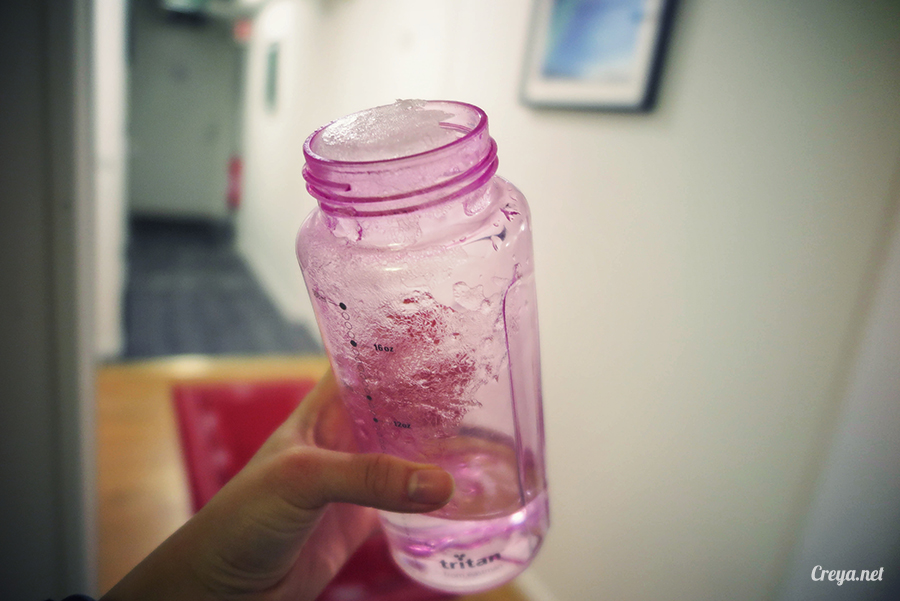
[ A thoughtfully pre-chilled bottle of water. ]
Electronic Devices
It is easy to lose your sense of direction in a frozen landscape, especially in an unfamiliar environment. A portable WIFI device that can receive a signal in the Arctic is an important tool for navigation—and potentially for survival.
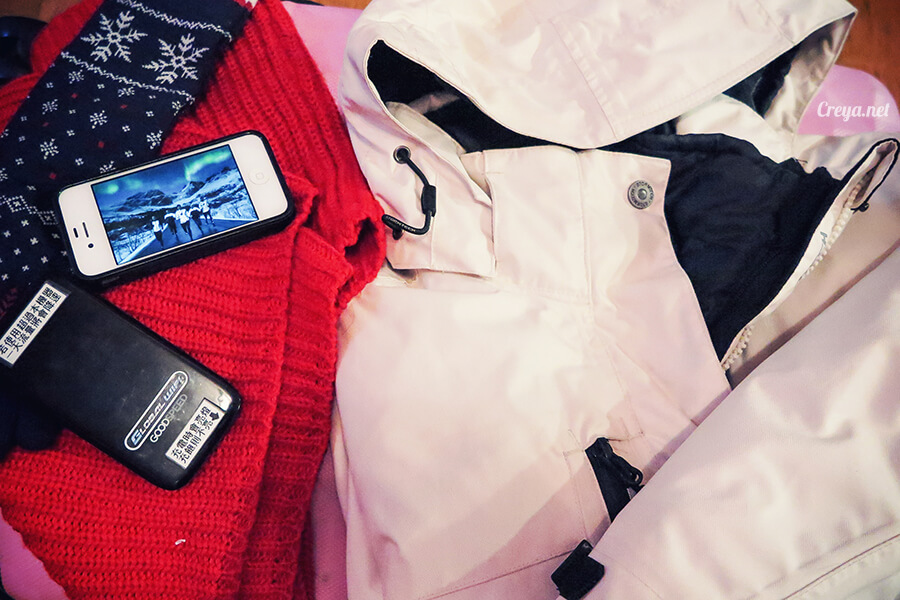
[ The Global WIFI device I used still received a signal in the Arctic. It made communicating easy whenever I became separated from my companions, and I could use online maps to reach destinations independently. ]
In cold places, you will notice that a fully charged battery drains extremely quickly and your phone may mysteriously collapse. Once you return somewhere warm, the battery suddenly returns to normal. This happens because low temperatures prevent the chemical reactions inside the battery from functioning properly. Therefore,bring several camera batteries and replace them frequently. Keep removed batteries in a pocket close to your skin, together with one or two hand warmers to keep them warm—although you must be careful not to let batteries become too hot. That is probably not much of a concern in the Arctic, though… You will also need to remove your thick gloves to change a battery properly, which makes the process extremely painful.
Toprevent your phone from suddenly going into hibernation, keep it connected to its blood bag—a power bank. The power bank’s performance will certainly be worse than usual too, but at least its overall capacity is larger. I recommend bringing one rated at no less than 5000mAh so it can keep feeding power to your phone.
What Happens to Your Belongings
Batteries are not the only things that conk out. In extreme cold around -30°C, plastic items are particularly prone to deterioration. For example, after the tripod I borrowed from my supervisor spent several nights photographing the Northern Lights in the Arctic, its bag became extremely hard and froze into shape. In that condition, any impact or friction could easily crack its surface.
My PVC suitcase was also cracked by an impact on the flight out of the Arctic and then gradually passed away. Soif you are visiting the Arctic and expect brutally cold temperatures somewhere in the minus thirties, do not bring valuable belongings!
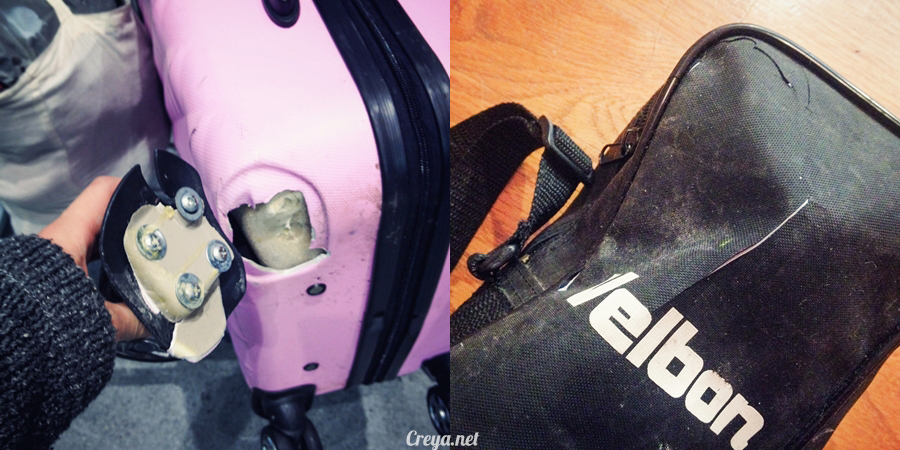
[ One of the wheels fell off only after I had made it back through immigration. Very considerate timing indeed. (Trying not to cry.) ]
Being in subzero temperatures could admittedly drive me to despair at times. But whenever breathtakingly beautiful bands of the Northern Lights appeared before my eyes, everything felt worthwhile. I also found it incredible that I was challenging my limits again and again!
Facing the harsh challenges of the Arctic also gave me deeper thoughts about travel. I felt fortunate to have seen the Northern Lights at my age. How much harder and more dangerous would it be to stand in a cold, windy snowfield and endure -38°C when I was old? Soif you want to see the Northern Lights, go while you are still young!
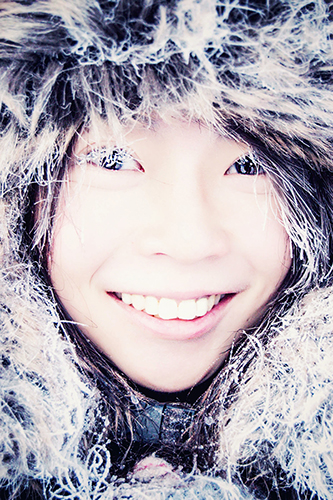
[ Instantly transformed into a snow woman. Even the inside of my nostrils felt frozen. (Perhaps that was too much detail…) ](Photo taken byFrank from the Lapland Secret Northern Lights Tour.)
| Follow My European Adventures | Chasing the Northern Lights in Sweden series: (Travel dates: 2015/12/30–2016/1/10)
● A Northern Light Appeared Out of Nowhere! Welcoming 2016 Inside Sweden’s Arctic Circle
● Grab Your Bags and Go: Leaving in Ten Days to Chase the Northern Lights in Sweden’s Arctic Circle! Independent Planning Is Not a Dream
● Being an Inuit Is Not Easy Either: Spending a Night in an Igloo Snow Dome
● My Exhausting Tale of Entering Sweden’s Subzero World—An Arctic Survival Guide: Snow Gear and Equipment Tips
● No Matter How Cold It Gets, See Three Nights of Northern Lights in Abisko, Inside Sweden’s Arctic Circle
● Becoming a Pirate for a Night at Stockholm’s Viking Restaurant, AIFUR RESTAURANT & BAR
● Oops—I Somehow Went from Sweden to Norway: Discovering Textbook Fjords in the Town of Narvik
● So Beautiful We Rushed into the Ice Palace: Lying Inside Sweden’s Arctic Circle ICE HOTEL, Built Entirely from Ice
● Stockholm’s ICEBAR: Breaking the Ice over Drinks with Fellow Taiwanese Met by Wonderful Chance
● Thank You to the Me Who Never Gave Up: Running into Stockholm’s Secret Urban Forests
● A Plane That Only Takes You to Dreamland: Jumbo Stay, the Unique Hostel Beside Stockholm Airport


