


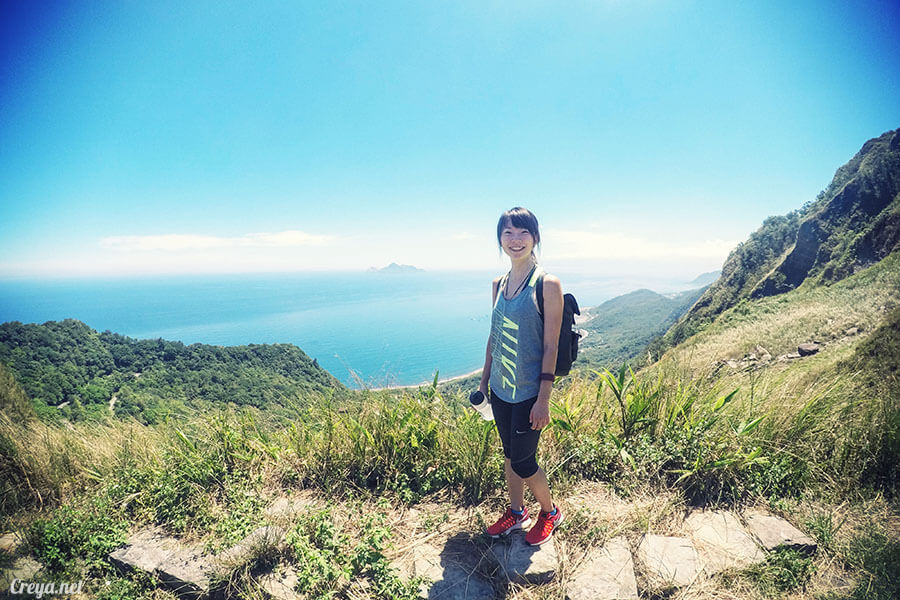
Learned to walk into nature in New Zealand, returned to Taiwan to learn to walk into life itself.
While hiking in New Zealand, watching landscapes that bore some resemblance to each other, I kept thinking of Taiwan; of course, it was perhaps just homesickness projecting onto the scenery I perceived, making New Zealand and Taiwan blur together in my mind. ‘I want to know Taiwan’s soil better, I want to walk into Taiwan’s mountains and see them with my own eyes,’When moving through the forest became a habit, hiking and mountaineering were simply a way of life, and so returning to Taiwan this time, my greatest hope for myself was probably to bring that beloved lifestyle back to Taiwan and let this way of living take root here.
[ Farmland scenery along the way before reaching the trailhead ]
The Caoling Old Trail was the first relatively long-distance trail after I returned to Taiwan. When I say long distance, it’s really just 8.5 kilometres, completable in about 3–4 hours. Carrying foot injuries not yet recovered from 3,000 kilometres of hiking, during this period I could only manage the occasional two-hour round trip to nearby suburban hills to barely recharge my spirit. So a 9-kilometre hike already had me thrilled, impatient to temporarily shed the city’s bustle and rush into the grass and forest for deep breaths.
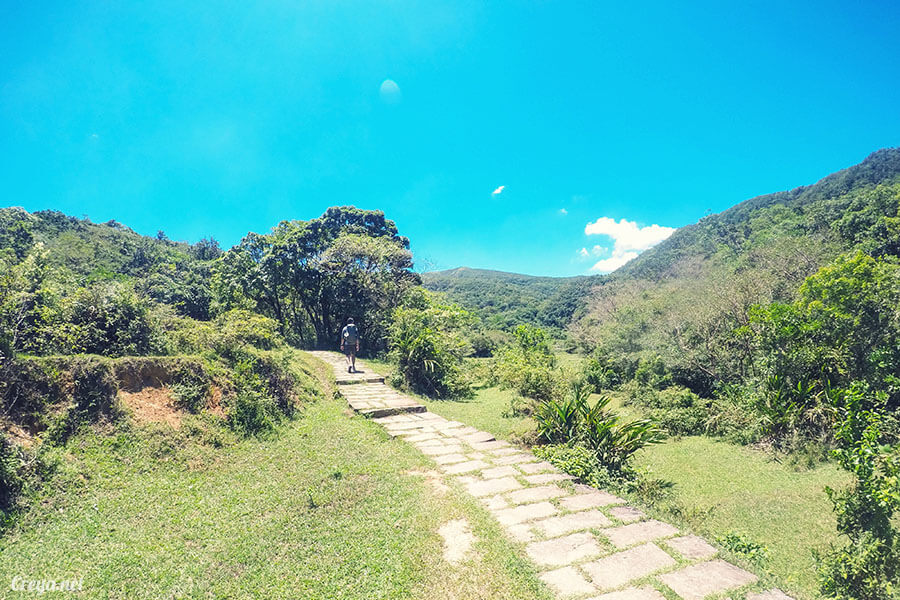
It’s a section of the Tan-Lan Old Trail, an ancient route that pioneers once carved out to connect Tamsui Hall to Kavalan Hall, later widened and paved to become today’s spacious and accessible trail, yet you can still faintly see the footprints of ancient travellers.
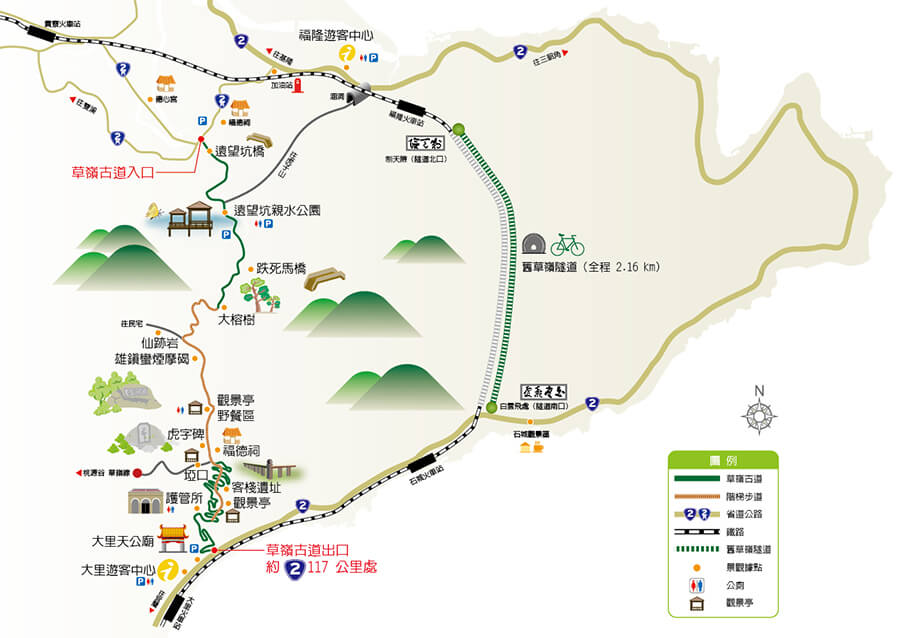
The route offers different options: one end is at Fulong Beach, a popular summer beach in New Taipei City, from where you can walk all the way along the ancestral path to Dali Station in Yilan, or at the saddle point of the trail you can choose to continue climbing, following the 4.5-kilometre Caoling line to Taoyuan Valley, reaching Dasi Station in Yilan (the next station after Dali). You can enter and exit from either end of the route.
[ Dali, at one end of the trail ]
Walking out of Fulong Station in the tail end of summer, dressed head to toe in athletic gear with a pack on my shoulders, I formed a starkly contrasting picture with the sun-soaked youngsters in bikinis and beach shorts passing by. Yet despite looking so different, we shared the same essence: ‘getting to know Taiwan’s soil closest to us.’ Lucky to be Taiwanese people embracing such beautiful mountains and waters, this is our gift, and I think it’s time we got to know and treat her properly.
Following the signs toward the Caoling Old Trail trailhead, up to just before Yuanwangkeng Waterpark, the endless road stretches even longer under the bright sun. Even though it’s only 2.8 kilometres, after all a road is made for cars, not for humans who should be walking on paths. The scenery, save for a few traditional courtyard-style old houses that add a bit of ancient trail flavour, offered little for the feet to look forward to.
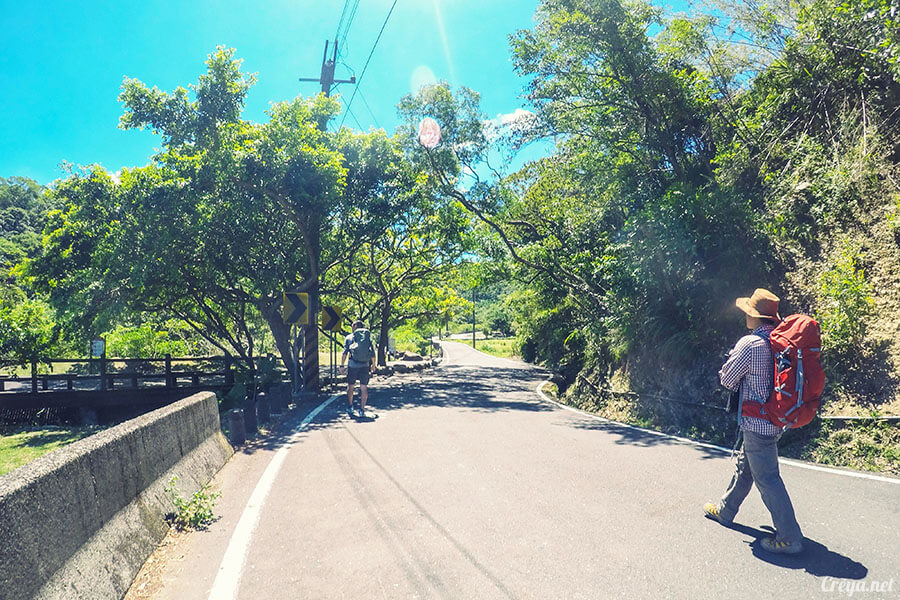
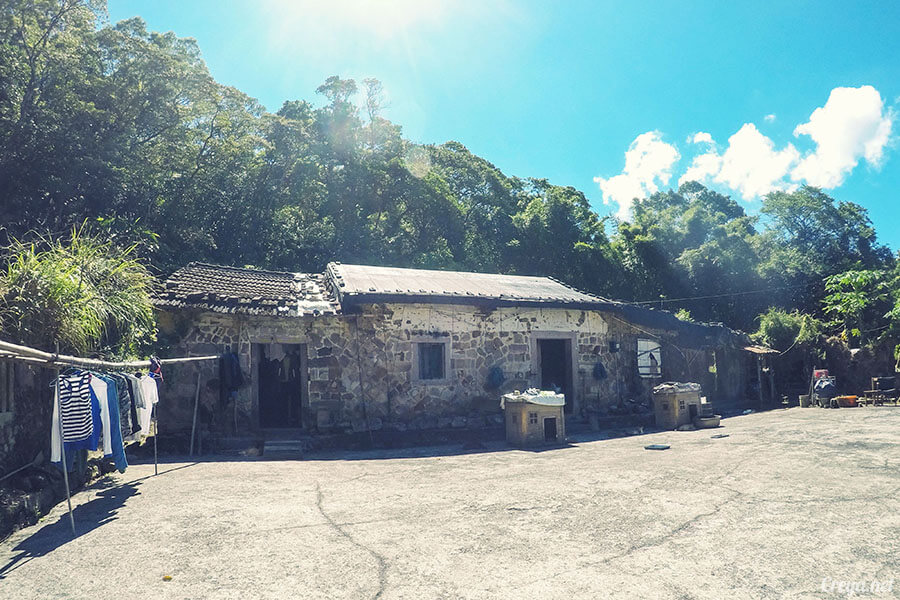
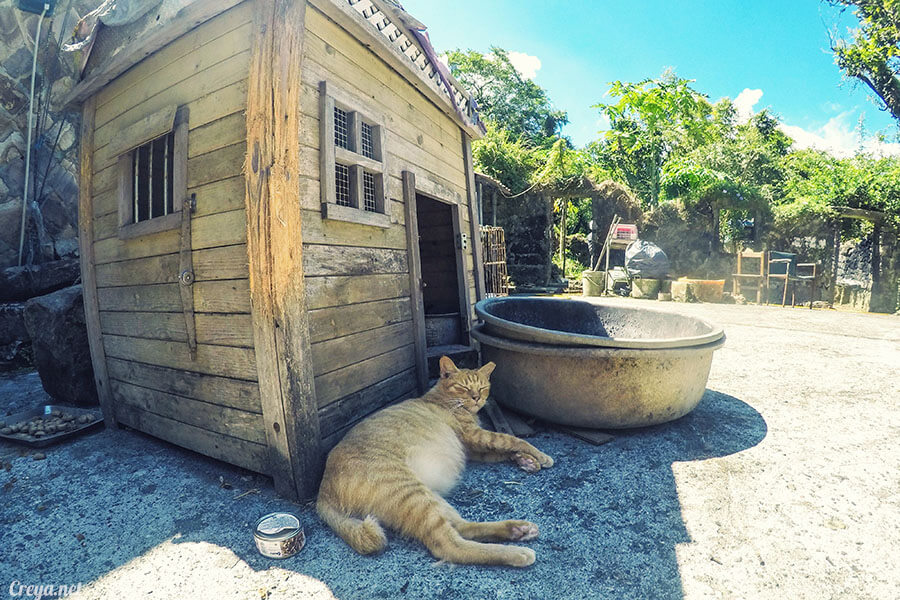
After passing a residential building full of cats, there was finally the appearance of an actual trail, with bamboo groves bearing signs asking not to steal bamboo shoots (as if I’d have known without being told), and broadleaf forest flanking the soft, comfortable earthen path on both sides. The slight unevenness and loose, slippery sections actually awakened my feet to their natural responsibility to step carefully and firmly.
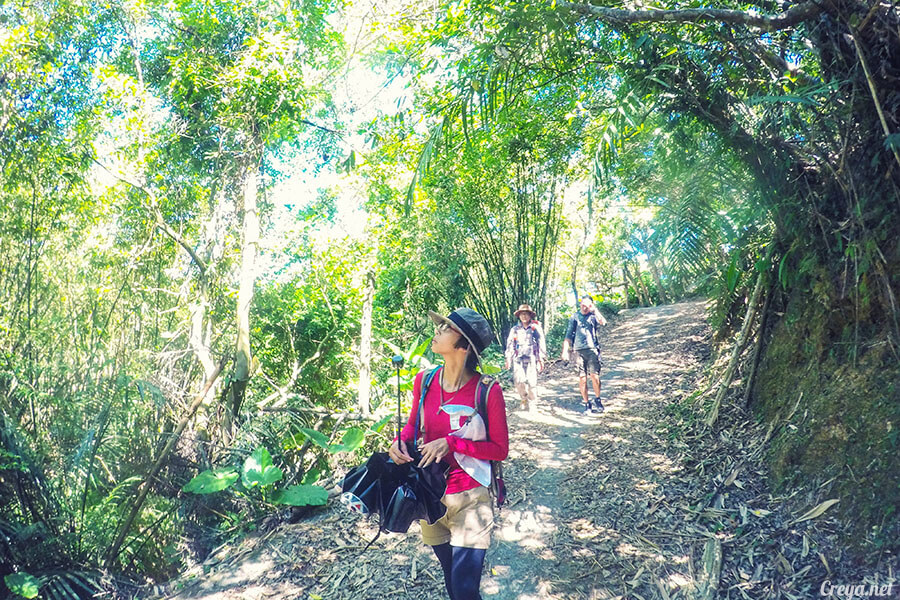
It wasn’t until after Yuanwangkeng Waterpark that we truly seemed to enter the old trail, with the opening of the stone-slab path and the beginning of stone steps climbing upward. It’s hard to climb without losing some sweat, but being able to walk through the forest, everything becomes a pleasure.
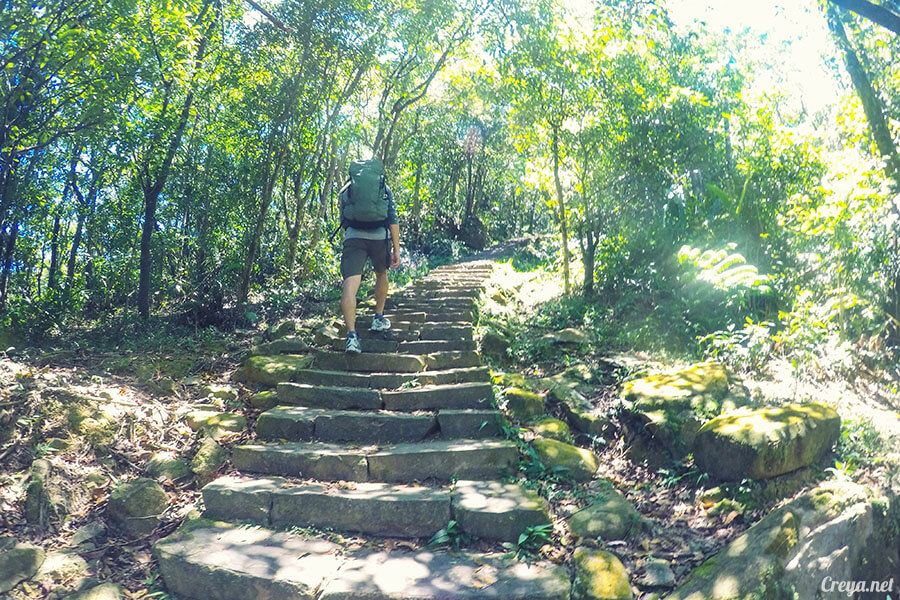
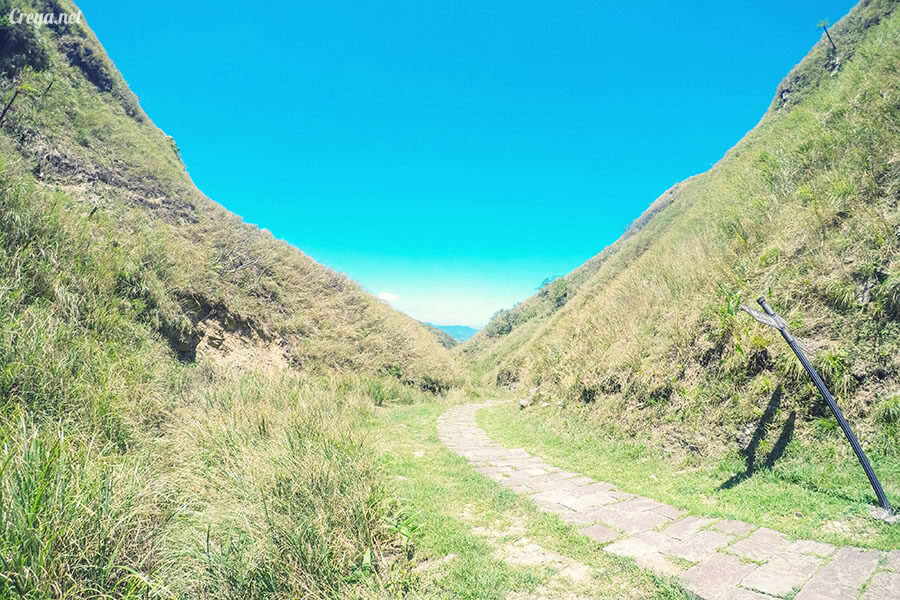
Within a short distance, stone paths, dirt paths, and forest mountain trails intersperse, then you arrive at an open grassland slope. The variety changes quickly, quite interesting, though it also highlights just how long the road was and how short the trail is. When the scenery gradually improves, becoming increasingly expansive and beginning to draw out ‘WOW’ of admiration, you reach the most emblematic third-class heritage site, the ‘Tiger Character Stone Tablet,’ and can easily see the mid-point rest station, the ‘Saddle Point.’
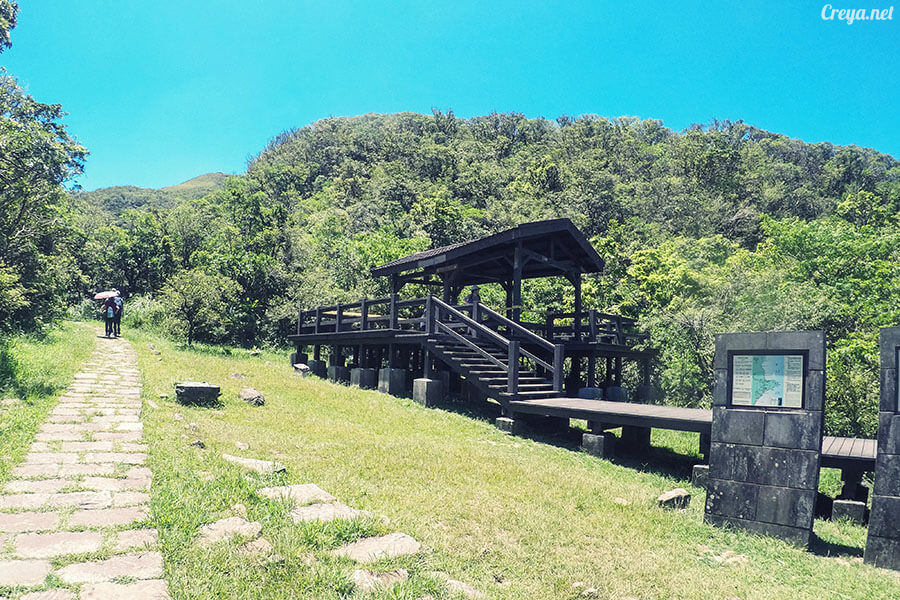
[ Plenty of pavilions and rest stops along the way, this one even has a toilet ]
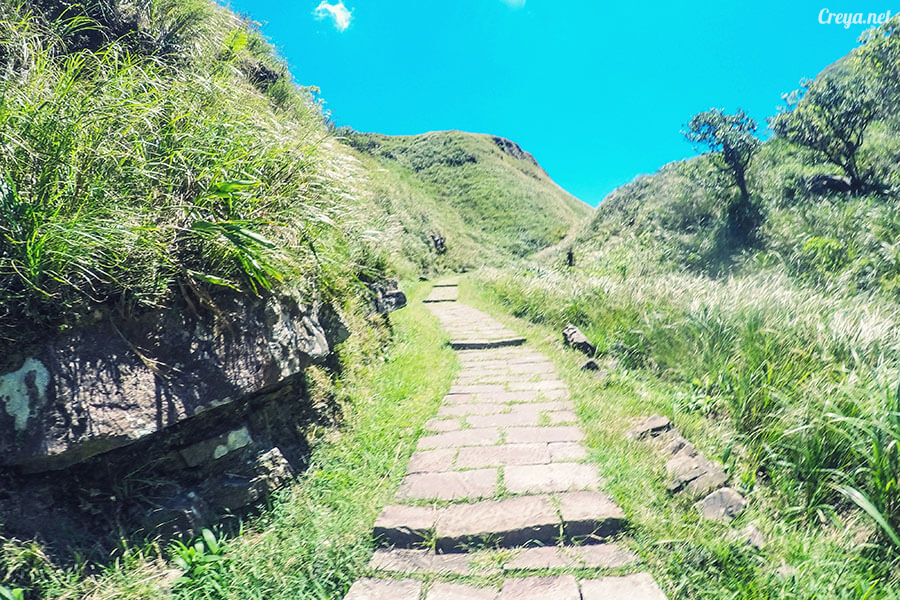
[ Still easy to be fascinated by such scenery, anticipating what awaits on the other side of the mountain ]
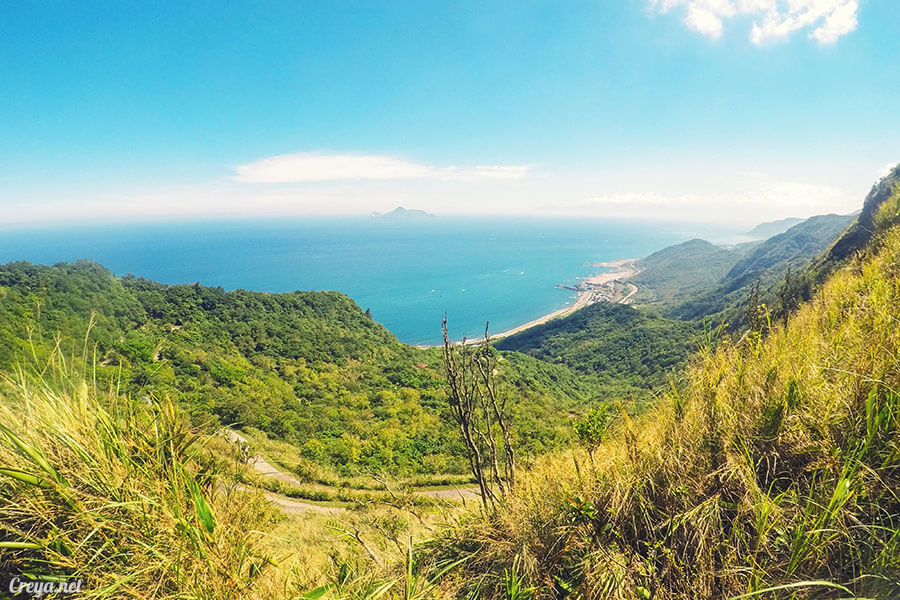
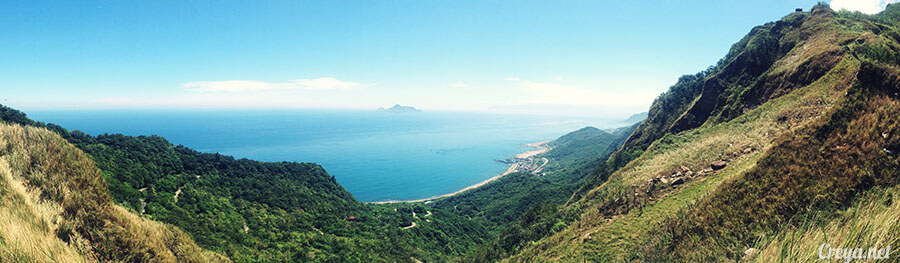
The view from the Saddle Point pavilion was absolutely the highlight of the entire trip. The coastline drew a clear arc, Dali Fishing Port and the sea-erosion platform both clearly visible, but most eye-catching was undoubtedly the large Guishan Island out at sea.
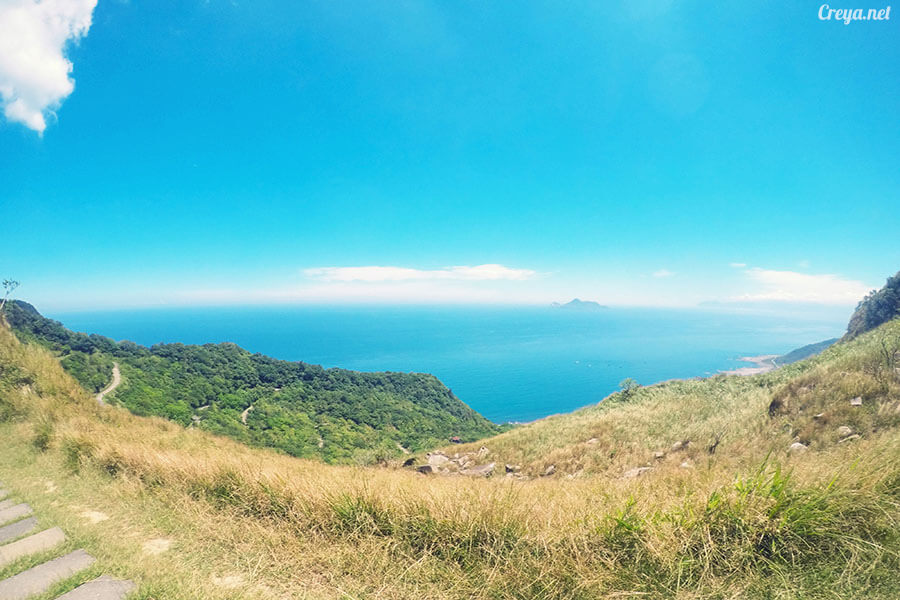
[ With a relaxed day-trip mood, reaching the Saddle Point is meant for stopping to rest, taking in the view, and snacking ]
Following the fork in the path beside the pavilion, we climbed to a higher pavilion and lookout on the Taoyuan Valley route. No part of the entire Caoling Old Trail has an incline as steep as this short section of Taoyuan Valley, but the view you gain makes every step worthwhile. We lingered there for a long time, the early autumn wind carrying away the oppressive summer heat at the season’s turning. Looking at the beautiful scenery below our feet, we couldn’t bear to leave.
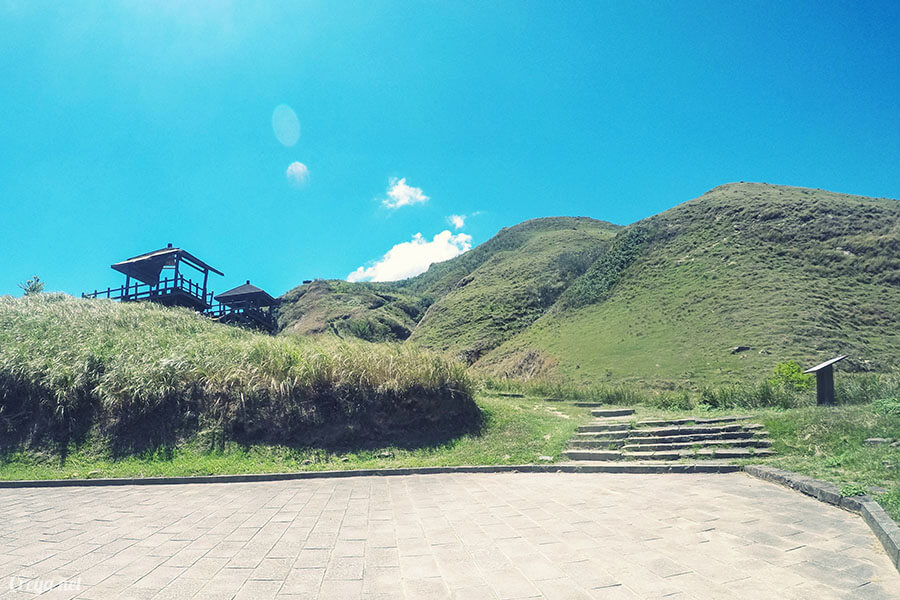
[ Going further up on our own initiative ]
‘I want to see the other side of the mountain’—this thought kept echoing while I was walking Te Araroa, and it almost never disappointed me, because there was never anything to be disappointed about,when you unveil the unknown moment, all there is are surprises and emotion. I will continue stepping forward one by one, looking forward to the unknowns beyond the mountain.
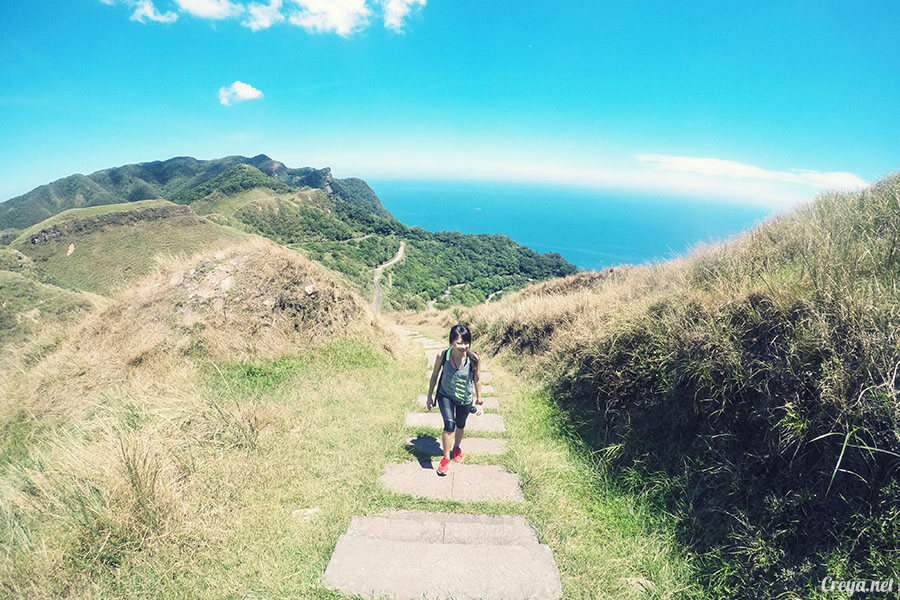
[ Continuous climbing towards the first pavilion on the Taoyuan Valley trail ]
Slowly making our way back to the Saddle Point pavilion, the continuous winding descent had shortcuts for walkers, but each step carried its own angle, mixed with loose and slippery slanting dirt paths. On a dry, sunny day you still had to watch your footing carefully; on a rainy day your heart might leap out of your chest. With such continuous descent, plus two months without hiking, I could already feel my calf muscles trembling. The rapid descent also brought the endpoint closer faster. But my heart stubbornly refused to leave.
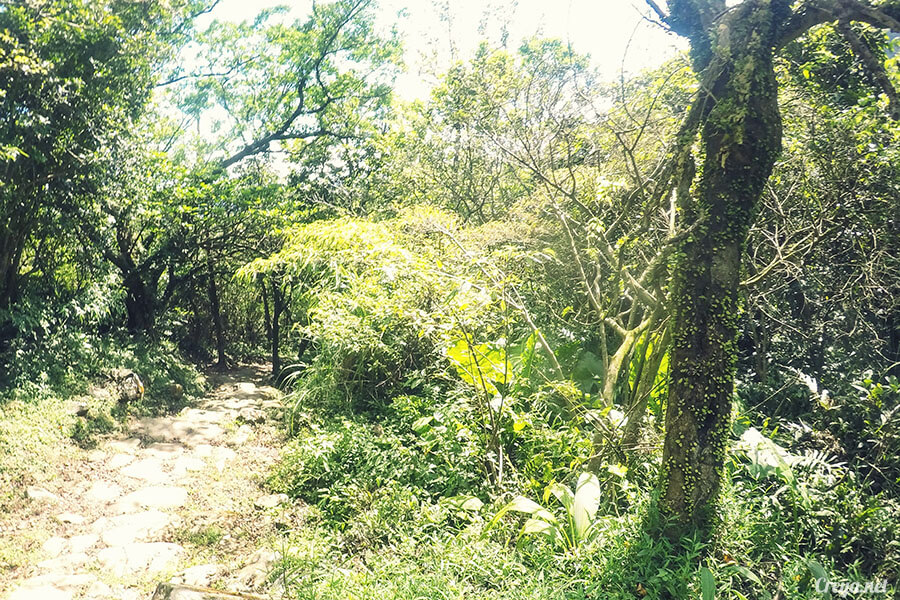
[ Stone steps are fine going up, but exhausting coming down ]
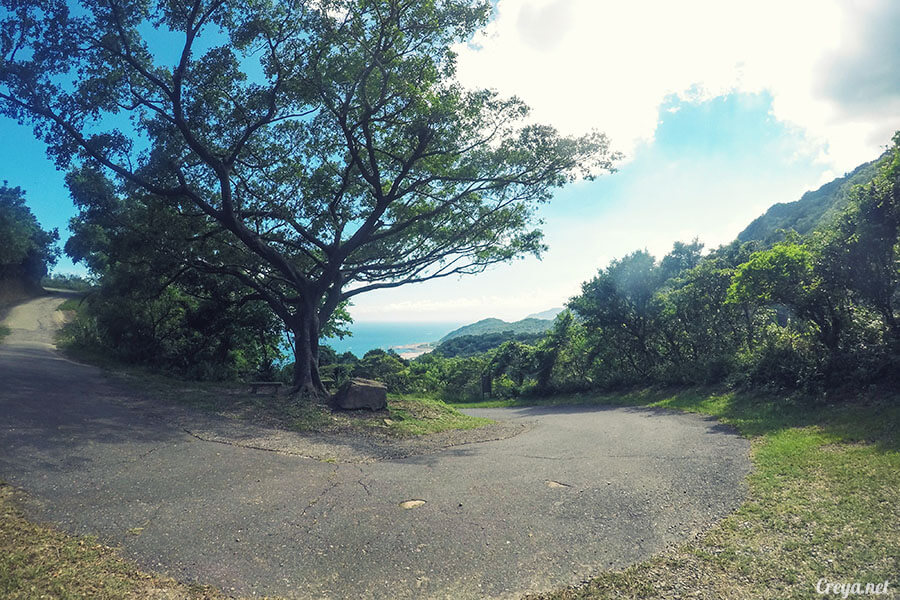
[ S-shaped asphalt bike path, the pedestrian trail cuts straight as a shortcut ]
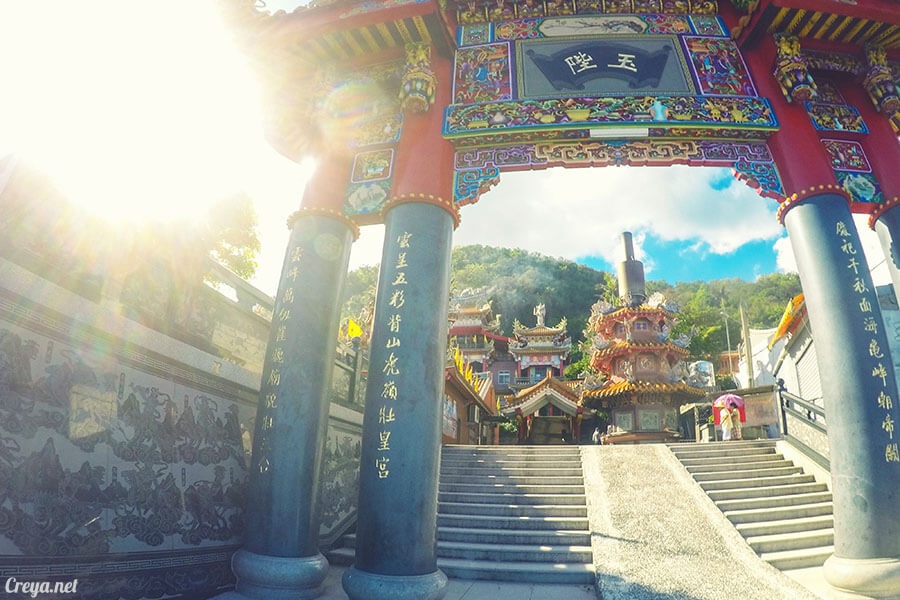
[ A temple at the exit on the Dali side of the trail, a place people trek far to seek courage—how could you still lack courage after coming here? ]
In English, the word ‘travel’ is used for commuting and movement, from one point to another, which is also journeying, for over a hundred years, travellers have walked the Caoling Old Trail on foot. The well-laid stone beneath their feet may feel different to the touch than it did a century ago, and the distant city scenery in their eyes may differ greatly from the past. Yet the travellers’ yearning heart for movement has always existed, continuing to spread along this line of history.
Caoling Old Trail Information
There are multiple entrances to choose from, all near train stations, including Fulong, Gongliao, and Dali. You can even walk from Dasi Station via the Taoyuan Valley trail to connect to the Caoling Old Trail. Transport is convenient, and you can also take a bus to the trailhead on the Fulong side. Total distance is 8.5 kilometres, recommended walking time is 3–4 hours.
♬ This article was simultaneously published onOUTSM – Finding Back Your Exercise Buddies


