

A one-way ticket, and I was setting off once again. This was the first step toward turning a dream I had buried deep in my heart for years into the present tense. I had no idea whether anything would come of the unknown road ahead; all I knew was this:if I didn’t get up and try, that dream would forever exist only in the quiet dreams of the night. And so I returned to the Southern Hemisphere for another working holiday—this time in New Zealand, the world’s most beautiful geography classroom. It also meant leaving home again for quite a while with my little wander-the-world bag.
But… “Am I going travelling or moving house?” Packing is basically a series of life-or-death decisions. The longer the planned trip, the more everything seems like it might come in handy, until the suitcase somehow turns into a magic cornucopia and starts overflowing! You end up with a little bit of everything in your luggage—and then blame yourself for all of it when it’s time to carry the bags…
[ As the saying goes: Pack well, and travel without trouble. ]
Although my New Zealand working holiday had only just begun, I already had two years’ worth ofblood, sweat, and tearsfrom my Australian working holiday, plus dozens of trips large and small afterward. Together, they trained me to pack up and run away from home at a moment’s notice—and, through plenty of aching muscles, gradually helped me discover what kind of luggage works best for me. So what I brought on this New Zealand working holiday is essentially the accumulated wisdom of all my past travels, and currently the packing system that suits me best.It won’t necessarily work for everyone, but hopefully some of these ideas will still be worth sharing as a reference.
The packing advice below is mainly intended for long trips of three months or more that involve moving between several places.
Should you be a backpacker—or join the suitcase brigade?
This is practically theroot of all evilwhen it comes to packing, because it determines exactly how much you can bring. Both backpacks and suitcases have travelled with me, and each suits different kinds of trips. The combination I use most often is“a suitcase plus a backpack”—the only question is how large each one should be. Of course, given human nature, the more capacity we have, the more shamelessly we fill every last bit of it.
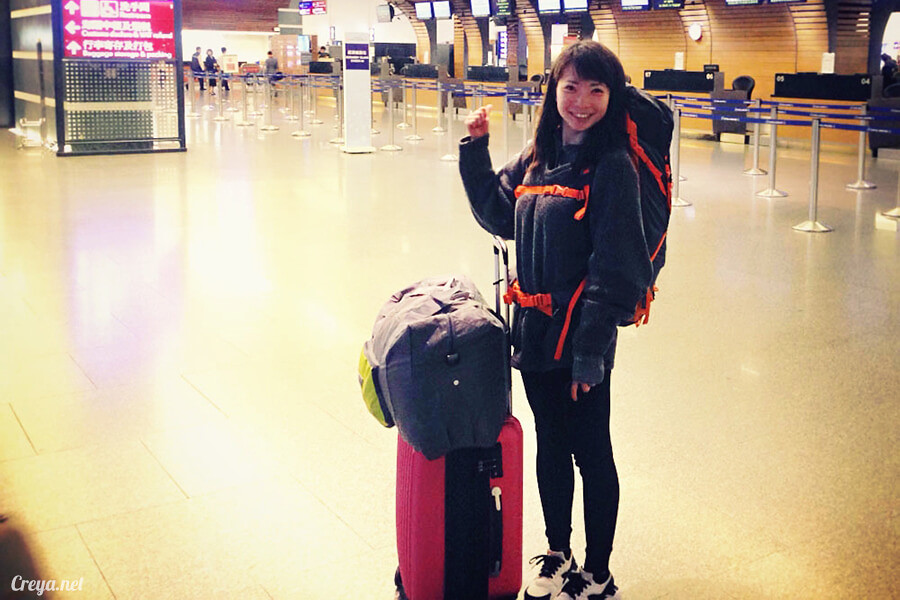
So here is my well-worn rule of thumb: whether you choose a backpack, a suitcase, or a mixture of both,each piece should be light enough for you to lift with one hand and hold for ten seconds. For me, no more than 10 kg per bag is the most comfortable weight. I can carry it up and down stairs without gazing longingly into the distance for a hero to come to my rescue, and my muscles don’t suffer too badly either. Otherwise, the next day really does feel as though I’ve been in a fight.
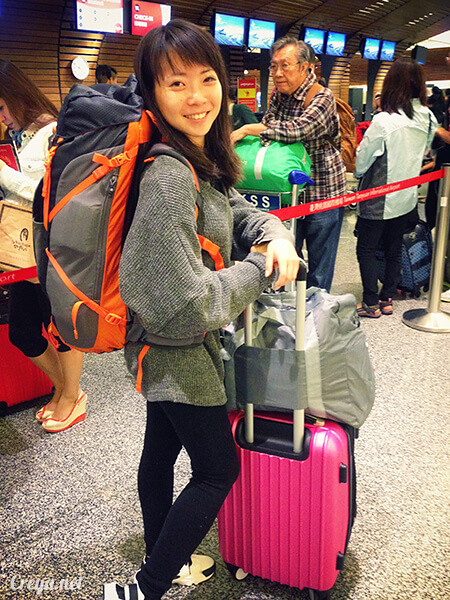
[ A petite woman like me especially needs to know her limits, or every staircase and slope will reduce her to tears. ]
I still remember my first solo independent trip: what was originally meant to be a one-year working holiday in Australia. I brought a suitcase that had started life at 24 inches but had somehow expanded to 25 inches, plus a small backpack. Before I had even left the country, I was already paying the painfully literal price—in cash—for excess baggage. Every move afterward was exhausting, and in the end I discovered that I had never used a great many things but couldn’t bear to throw them away, so they all returned to Taiwan exactly as they had left. For my next trip,three months travelling through 16 European countries on foot, I thoroughly reformed and switched to a 19-inch carry-on suitcase plus a small backpack. The trip was wonderfully easy, and it proved that everything I need in life fits into a carry-on suitcase—provided it’s summer…
After that, even when travelling to shopping paradises such as Japan and Korea with a 24-inch suitcase, I stuck to the rule of leaving Taiwan with no more than 10 kg. Curious about the backpacker experience, I borrowed a colleague’s 60L hiking pack for my Tibet trip late last year. Naturally, it posed no problem on a fourteen-day journey where vehicles carried us everywhere. (Hey, do I even get to brag about that?) But on a longer trip, fitting all my worldly possessions into a pack and then carrying it myself would be a serious challenge.
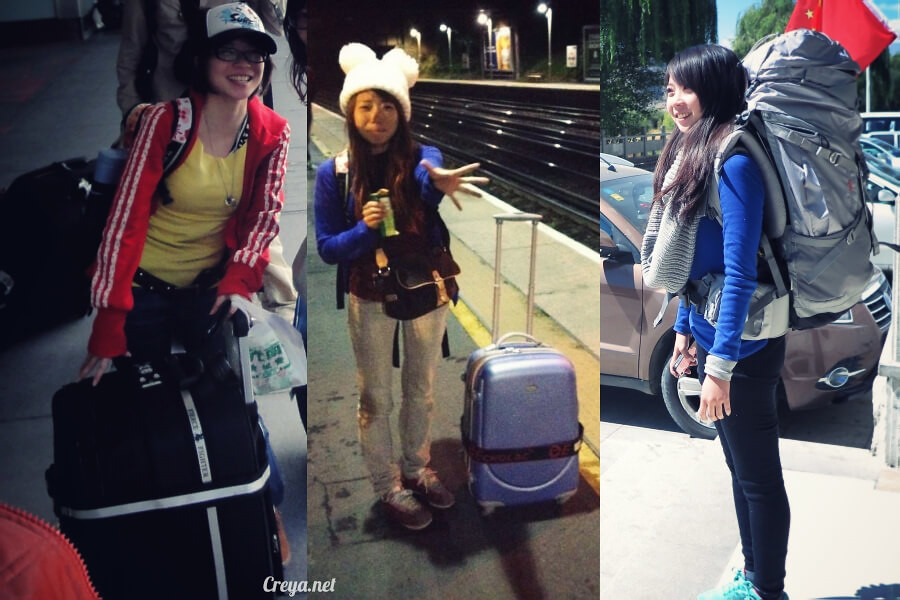
[ From a 25-inch suitcase for my Australian working holiday, to 19 inches for three months in Europe, to backpacking in Tibet—this was unquestionably an evolutionary journey spanning millennia. ]
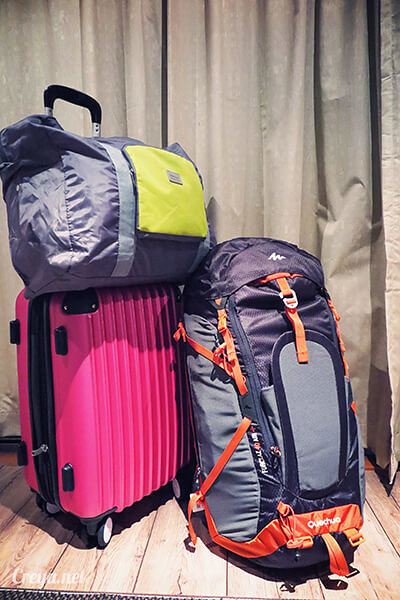
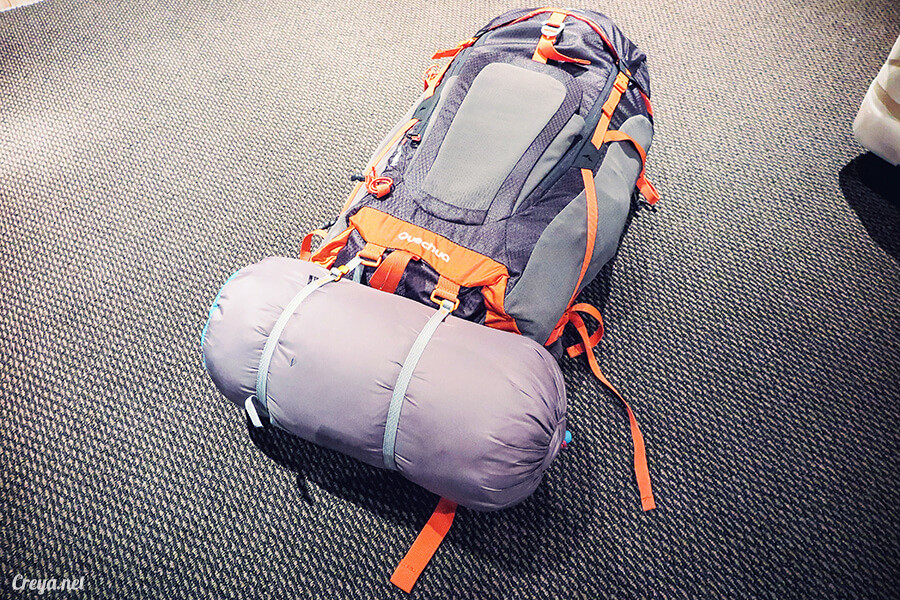
So when I began packing for a one-year working holiday in New Zealand,I had to account for my plans to hike and camp there, while also not wanting to pile all the weight onto my back. In the end, I settled on a combination I have been extremely happy with so far: “a 40L hiking pack + a 20-inch carry-on suitcase」。
>> 40L hiking pack:Decathlon men’s 40L ventilated-back hiking backpack(There is alsoa women’s 40L version, but I preferred the colour scheme of the men’s model. French brandDecathlonoffers quality comparable to major brands at extremely friendly prices, with a huge range of outdoor and sporting goods. Travellers, I highly recommend going there for a treasure hunt!)
>> 20-inch carry-on suitcase:【WALLABY】20-inch ABS matte suitcase with contrasting black trim, vertical ridges, and expandable compartment
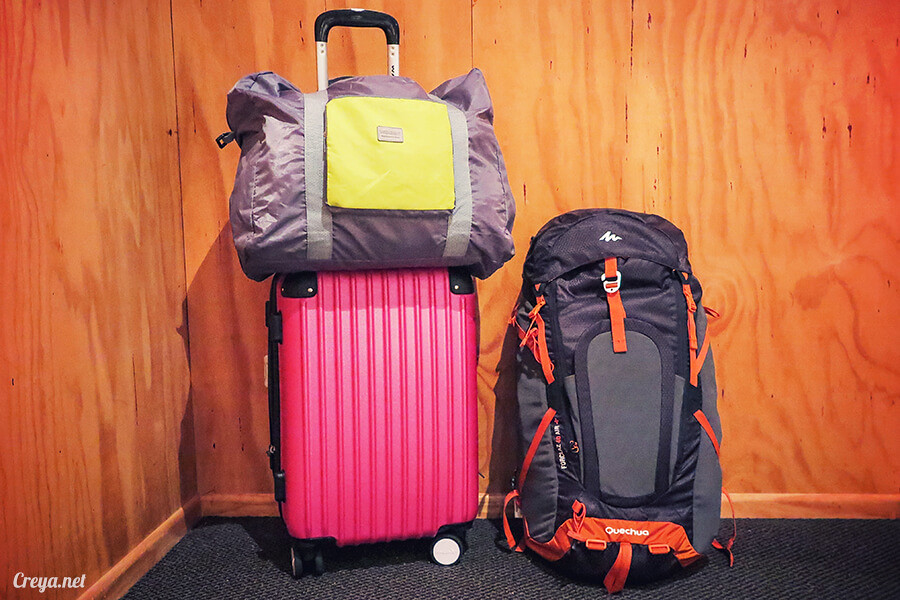
[ Upgraded into a suitcase-toting backpacker: heavier items go in the suitcase and roll along the ground, while lighter and frequently used items go in the backpack. ]
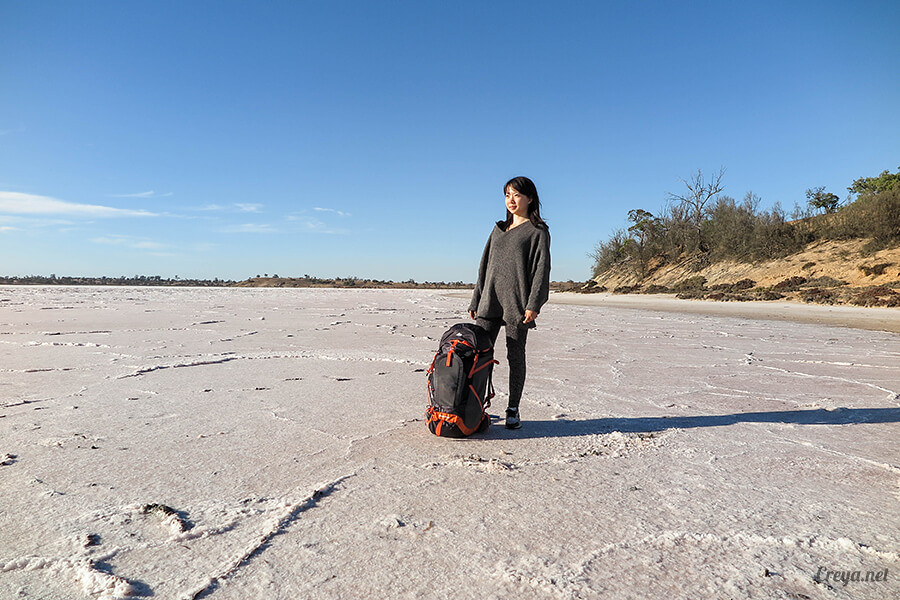
For a delicate woman with barely enough strength to truss a chicken,a suitcase considerably reduces the burden most of the time, while a medium-sized hiking pack has enough room for personal items and a laptop and can take centre stage on hiking and camping trips. They make the perfect partners for long-term travel. On my stopover in Australia, I immediately took thisDecathlon40L hiking backpackon a three-day camping trip, leaving everything I didn’t temporarily need inside my suitcase at my accommodation. The system adapts effortlessly to changing styles of travel and never feels burdensome. Highly recommended!
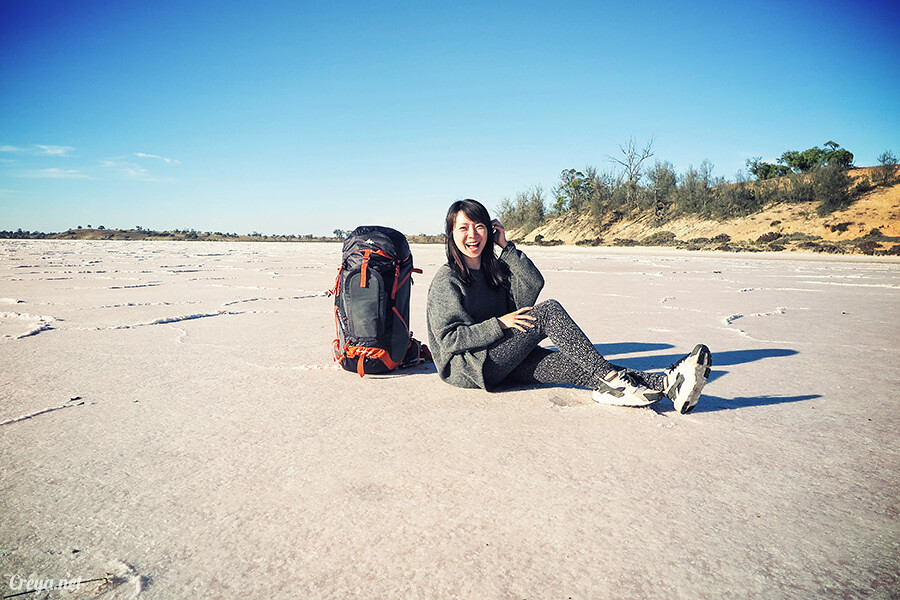
[ This Decathlon 40L backpack held everything I needed for a four-day, three-night hiking and camping trip. ]
Andboth the 40L hiking pack and the 20-inch suitcase fall within carry-on baggage dimensions, giving me flexibility to carry them aboard or check them in on future flights. I even chose an expandable suitcase—though it has to be checked once expanded. This time, I refuse to miss any opportunity to collect souvenirs!
So how much should you bring for this battle of survival, and how many spares do you need?
The truth is, many thingsare nice to have, but you’ll remain perfectly alive without them. Here are a few criteria forged through the trials of my body and soul:
★ Essential medical or specialist items that are difficult to obtain overseas deserve a place in your suitcase, such as contact lenses or medication you use regularly. Contact-lens solution is available abroad, however, so there is no need to bring extra.
★ Functional clothing and underwear are also worth bringing. Women’s bras, for example, may be harder to find in a suitable fit in Europe or North America. You can also bring familiar functional gear from Taiwan, such as thermal underwear and running shoes. Of course, sporting and hiking equipment often comes in a wider range overseas, though it is usually more expensive. If you don’t need something immediately, simply wait for a local sale.
★ The moment you find yourself thinking, “Thismight come in handy,” it means the itemis not essential. Usually, you’ll never use it.
★ Clothes you wouldn’t wear in Taiwan won’t suddenly become appealing overseas, so donate them to a clothing recycling bin! If you need work clothes, you can buy inexpensive ones from a local Warehouse, or hunt through second-hand markets and charity shops. Then you won’t feel heartbroken about discarding them when you move.
★ Likewise, if you rarely use something in Taiwan, you won’t use it overseas either. If you rarely use face masks in Taiwan, you probably won’t start abroad. If you dislike reading at home, travelling is unlikely to transform you into a voracious bookworm. Should your personality truly change, every kind of daily necessity and beauty product will be available locally—and English novels are incredibly cheap at second-hand bookshops.
★ Bottles and jars are the heaviest things, so start there when cutting weight. You absolutelydo not need to bring spares. Bring only one of each toiletry, lotion, skincare product, bulky pack of sanitary pads, and so on. You can even bring the ones already open at home. Everything can be replaced locally once it runs out, and trying local brands is another way to immerse yourself in the experience. You might even discover something perfect for you—special skin conditions excepted.
★ Unless there is something you genuinely cannot live without eating, avoid bringing food. Local ingredients are actually very affordable in overseas supermarkets, and Asian grocers carry the basic ingredients for Chinese cooking. Food is usually the greatest nuisance at customs, and after hauling it halfway around the world, you might only watch it get thrown away!
★ Posting things from Taiwan is also very convenient. If you genuinelyrun short of something, simply ask family or friends to mail it。
becauseif you bring a whole year’s supply, you’ll also spend a whole year dragging that supply from place to place. It’s a complete nightmare. (That was precisely my tragedy in Australia… tears.) Besides, we never know how the plot will develop. I later decided to stay in Australia for an entire extra year and still had to ask my family to post contact lenses and other supplies. If that was going to happen, I might as well have mailed everything in the first place. (Throws up hands.)
The urge to bring everything and fill your bags with spares usually comes from worrying about high prices overseas and hoping to save money by stocking up in Taiwan. But on a working holiday, once you earn a local wage and start viewing prices in local terms, everything feels like small change. Converted back, many items may even make you wonder how anyone manages to live in Taiwan.I therefore recommend bringing only a one-month supply of daily necessities—just enough to cover the initial money-burning period. The emptier your suitcase is when you leave, the more room you’ll have to bring home objects filled with local memories!Just remember to bring enough money—how practical! With enough money, you could even travel without an entire suitcase, couldn’t you? (Hey!)
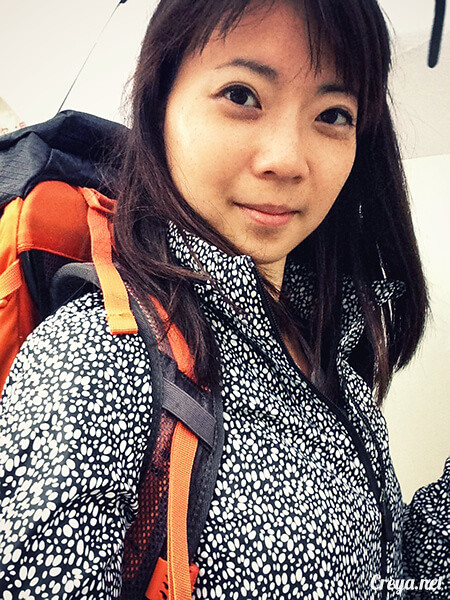
[ Just don’t forget to carry a heart brave enough to chase your dreams. ]
Tips for Choosing and Packing Your Bags
The contents of our travelling gourd fall into five main categories, beginning with the absolutely indispensable:passports, documents, and money; toiletries and medical supplies; clothing; electronics; and stationery and miscellaneous items. (Remain calm—detailed lists for every category are coming shortly.)
I normally sort each category into a separate organiser. This divides the inside of my luggage into clear compartments, making everything easy to see, find, and retrieve. When I need my toiletries, for instance, I can grab the entire pouch and saunter straight into the bathroom. Packing is also incredibly quick—just stuff the organisers into the bags—and I’m less likely to leave something behind.
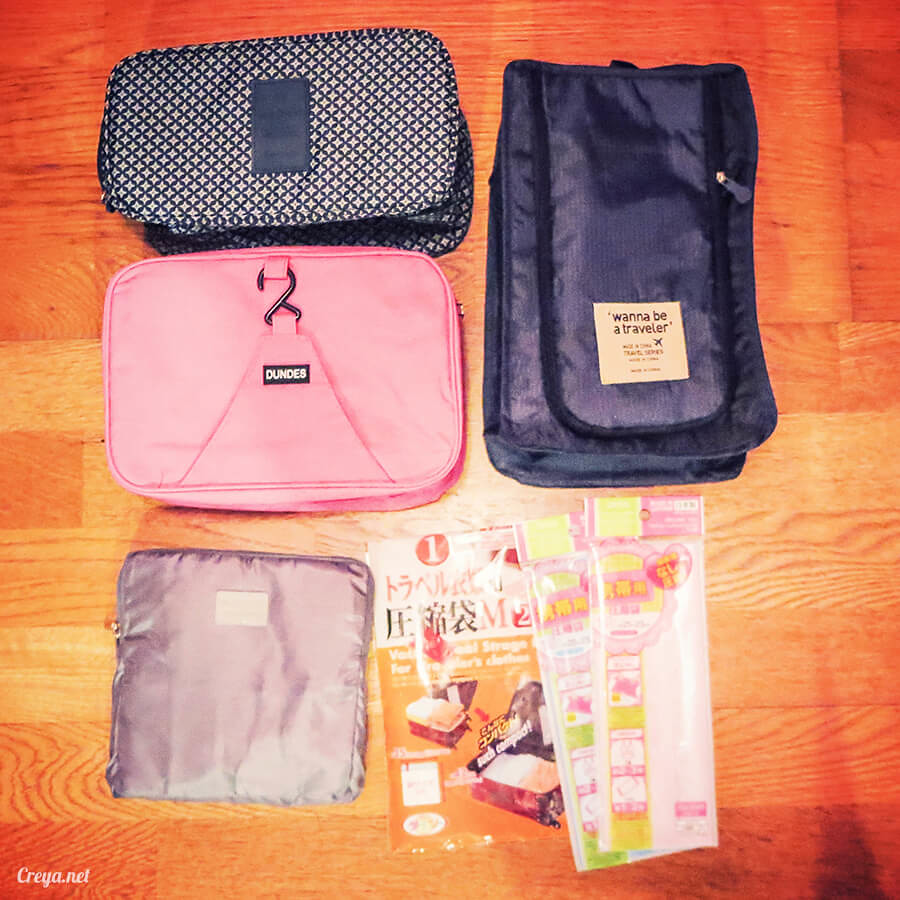
Just remember:liquids over 100ml, blades, scissors, and similar items must go in checked baggage, while batteries, battery-powered electronics such as tablets, laptops, and power banks, lighters, passports, and documents belong in your carry-on. Everything else may be placed wherever your heart desires!
【 Hiking Backpack 】
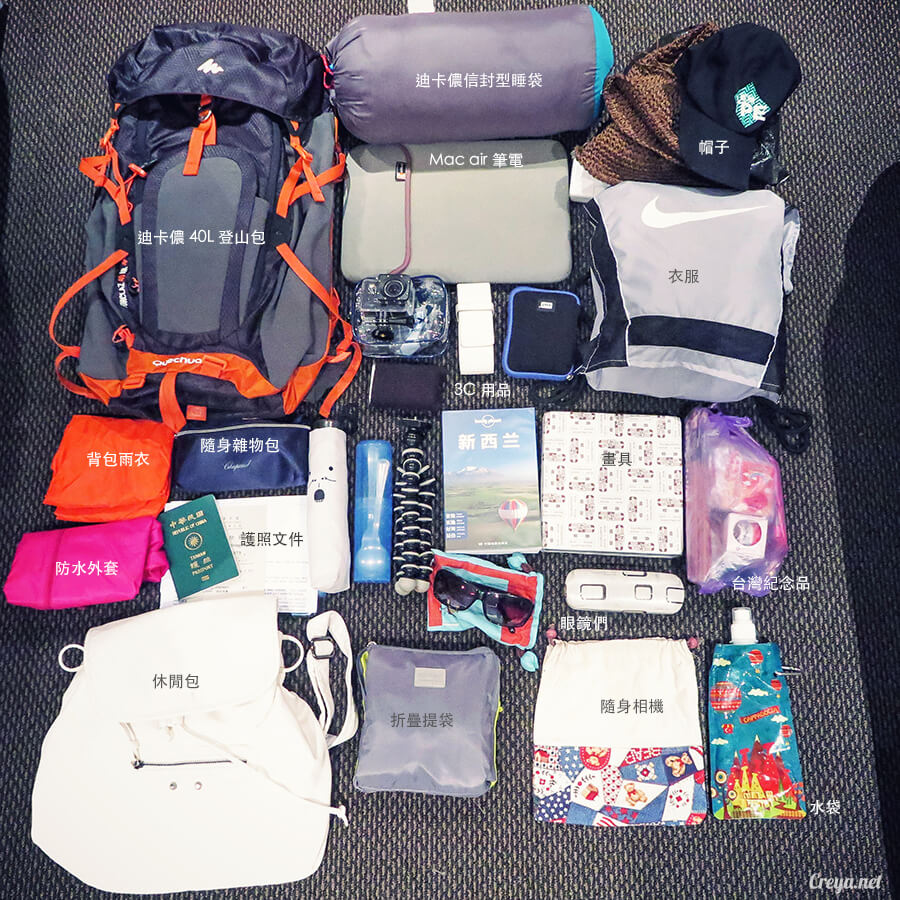
Whenchoosing a hiking pack, I specifically looked for one with numerous compartments. At the airport, passports and documents are constantly going in and out, so I temporarily keep them in an outer compartment for easy access. The top lid is ideal for sunglasses and other things that must be easy to reach without being crushed. There is also a rain cover at the bottom, where I stuffed an ultralight waterproof jacket for myself.
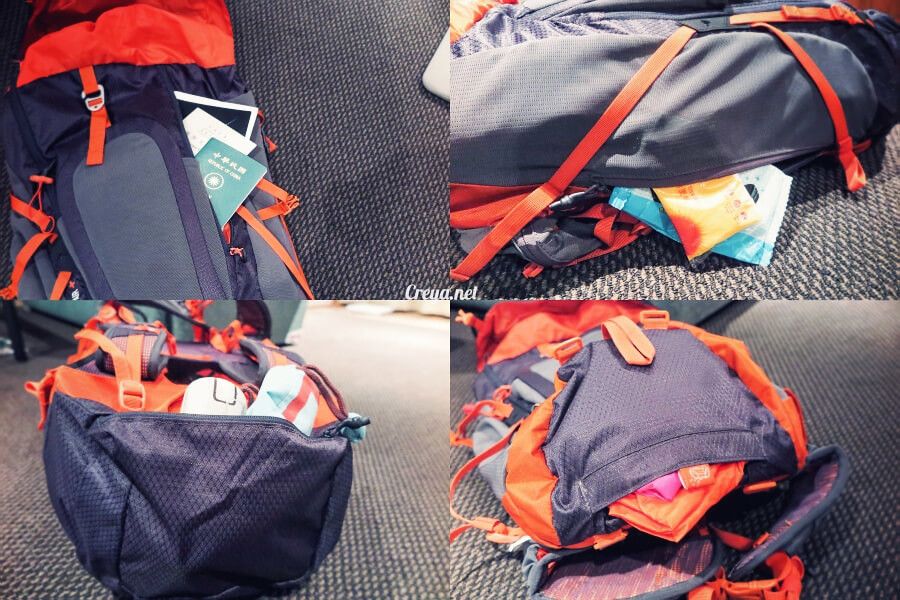
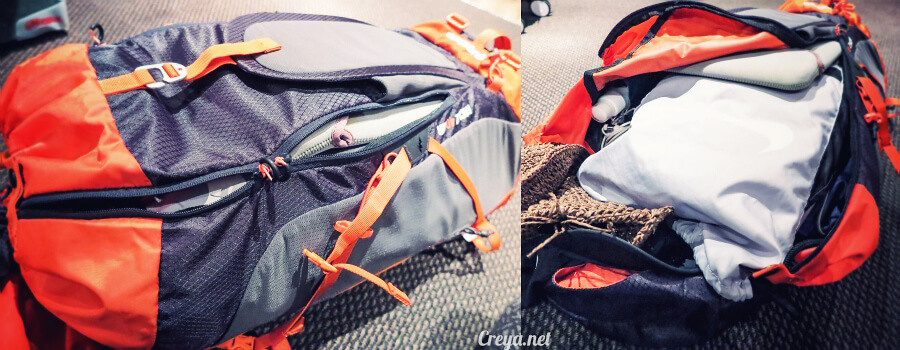
My electronics, travel guide, art supplies, and clothes all fit into this40L Decathlon hiking backpack. I deliberately chosea model with two zippers, making it easy to reach items stored at the bottom. That alone makes taking out my laptop at airport security much easier. This time, I put frequently worn clothes in my carry-on so I could add layers while adjusting to the temperature change between the Northern and Southern Hemispheres. If someone caught my carry-on being slightly overweight, I could also wear as many of those clothes as possible to get through. (I arrived in New Zealand wearing four layers and entirely immune to the cold—only to discover that nobody checked me at all…)
【 Suitcase 】
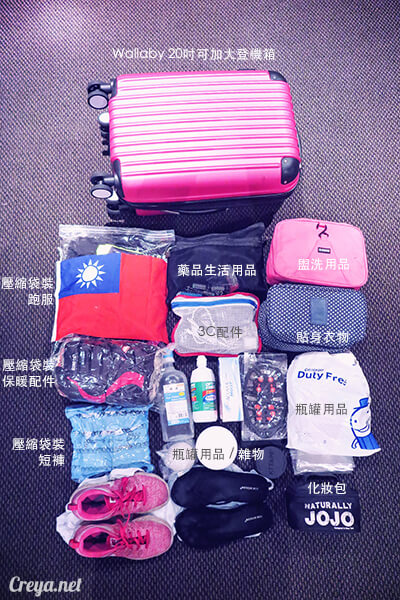
I like ABS semi-rigid suitcases. They offer more protection than fabric soft-shell cases, weigh far less than fully hard-shell cases, and still have a little give when the contents are about to explode and need more room.
Hard-shell suitcases usually have an inner fabric lining. I tuck papers that I don’t want folded between that lining and the hard shell.
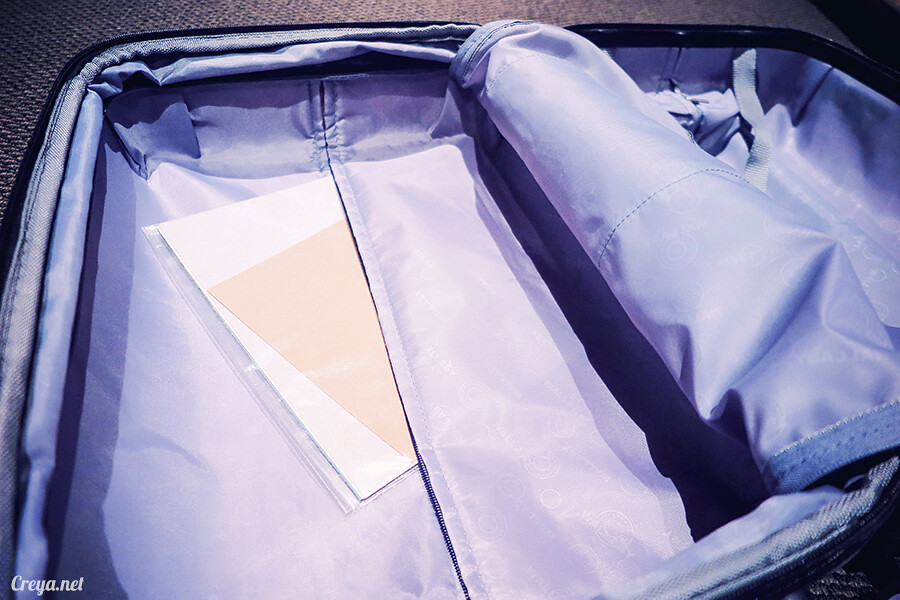
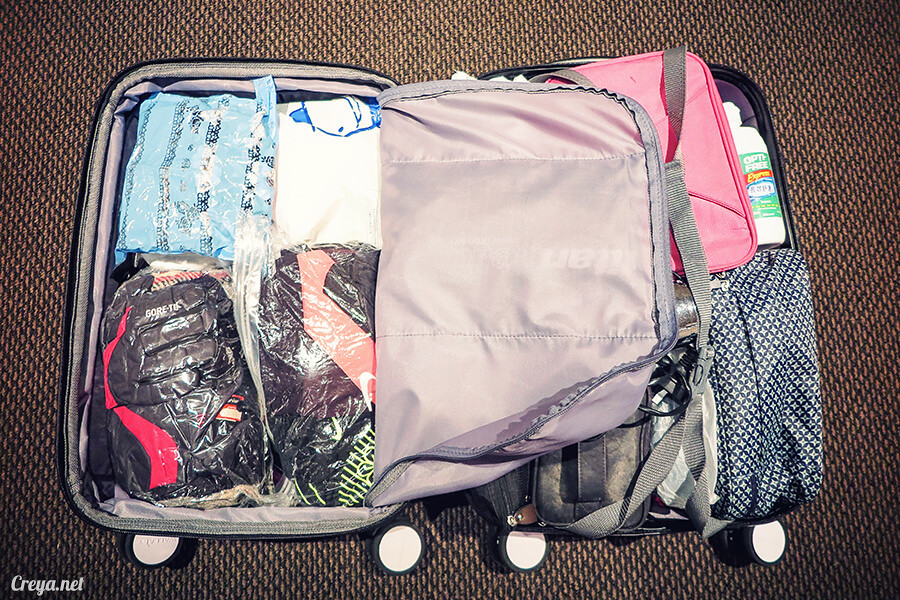
The half containing the telescopic handle is usually uneven, so large bottles, small organiser pouches, and similar objects can fill the spaces between the handle rails, ensuring that no precious luggage space goes to waste.

Running clothes, warm layers, and assorted bottles and odds and ends fit easily into the other half once compressed in vacuum bags. I made a last-minute decision to buy this suitcase two days before departure. From a 24-hour shopping site, I selected this expandable 20-inch model with enormous wheels. It cost less than NT$1,000, rolled beautifully, and the brand was called Wallaby—the little Australian kangaroo—so naturally I bought it immediately. (Completely the wrong priority.)
【 Tote Bag 】
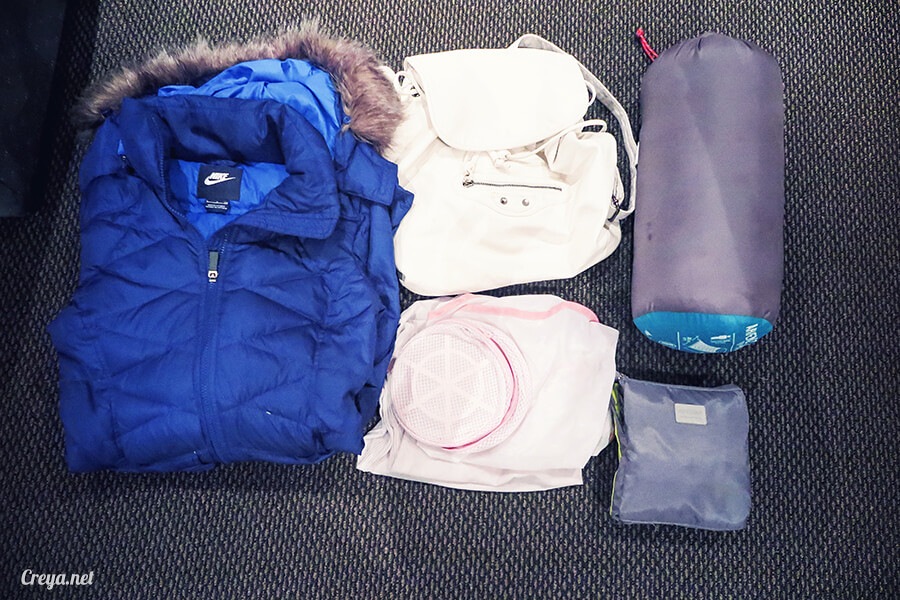
Finally, I placed my sleeping bag, down jacket, and everyday small backpack inside a large tote. This bag can be secured over a suitcase handle and folds into a tiny bundle when not in use. It is wonderfully convenient and can also serve as a food bag while travelling. Once I no longer need to fly and carry-on dimensions cease to matter, I can simply strap the sleeping bag beneath the hiking pack and reduce the burden again.
So What Should You Actually Pack? A Packing List for a Year of Travel
Next comes the grand luggage inspection, in which I expose the contents of my bags to the world as a sample packing list. (Any item visible in the photos but not specifically listed in the text below is not a recommended essential; bring it only according to your own needs.)
Naturally, I could still have packed less. I brought rather too many bottles and jars this time because they were already half used and would expire if left behind. Apart from those, the heaviest things in my suitcase were—astonishingly—my running clothes! Please use your own judgement when packing the following.
【 Passport, Documents, and Money 】
You could leave every other category at home, but forget something from this one and your grand adventure may become a day trip to a Taiwanese airport.
★ Passport: Make this the very first thing you put in your bag. After all, we don’t have powerful dignitaries arranging emergency service for us. Getting one at the airport costs a princely NT$4,900—enough to lie around doing nothing in New Zealand or Australia for a week. Remember to check the expiry date in advance. I recommend ensuring your passport remains valid for at least six months beyond your visa’s expiry. If you renew your passport after obtaining a visa, you must also complete the procedure for notifying the authorities of the change, because your passport number will change. Otherwise, immigration may be unable to match your records, turning your journey into a multi-day tour of airports in two countries.
★ Tickets and visa documents: Save an electronic copy of your e-ticket on your phone or print a paper copy to carry. Visa-free destinations require less concern, but for working-holiday visas or countries requiring tourist visas, it is safer to carry a printed copy even when the visa is electronic. Working holiday-makers will also need it when opening a bank account, applying for a tax number, or attending job interviews.
★ Supporting documents and identification:
□ International Driving Permit and original Taiwan driver’s licence (valid only when presented together)
□ Taiwan national ID card
□ Proof of funds
□ Passport photocopies(Print two or three spare copies and remember to store them separately from the original.)
★ Money: Unless you bought your foreign currency when the exchange rate was exceptionally favourable, paying by credit card may be better value than cash, bank drafts, or traveller’s cheques when exchange rates are relatively stable.I usually carry only a small amount of local currency and use credit cards whose cashback rate exceeds the foreign transaction fee for everything else—the Yuanta Diamond Card and Wiho Card remain my favourites. In New Zealand, Australia, Europe, North America, and many other places, credit cards can conquer the world most of the time. Before leaving, simply set up automatic credit-card payments and ensure there is enough money in the Taiwanese account being debited, then wave goodbye without a worry.
As forhow much money is enough, that depends entirely on the strength of your nerves. On my first Australian working holiday, I brought about AUD 2,000 in cash and traveller’s cheques—NT$60,000 at the time. That was actually enough to cover three months of basic expenses without a job. This time, I sauntered out of the country with only NZD 800—about NT$18,000—and my credit cards. Apparently, my nerves are getting stronger!
Before leaving, I also went to the bank and authorised my parents to register an overseas payee on my behalf. Once my New Zealand account was opened, my parents could fill its details into a form and submit it to the bank, registering it as a designated payee for my Taiwanese account. I could then use the online banking for my Taiwan account—I use CTBC Bank—to transfer money into New Zealand. That way, if I ever reached the end of my financial rope, I could still save my own life.
Spread your cash and credit cards across several places. Keep a little in your suitcase, backpack, and on your person. Put your eggs in several baskets so one mishap doesn’t force you to declare yourself all-in.
【 Toiletries and Medical Supplies 】
This category covers everything used on or in the body, from cleansing, skincare, and makeup products to oral and topical medicines.
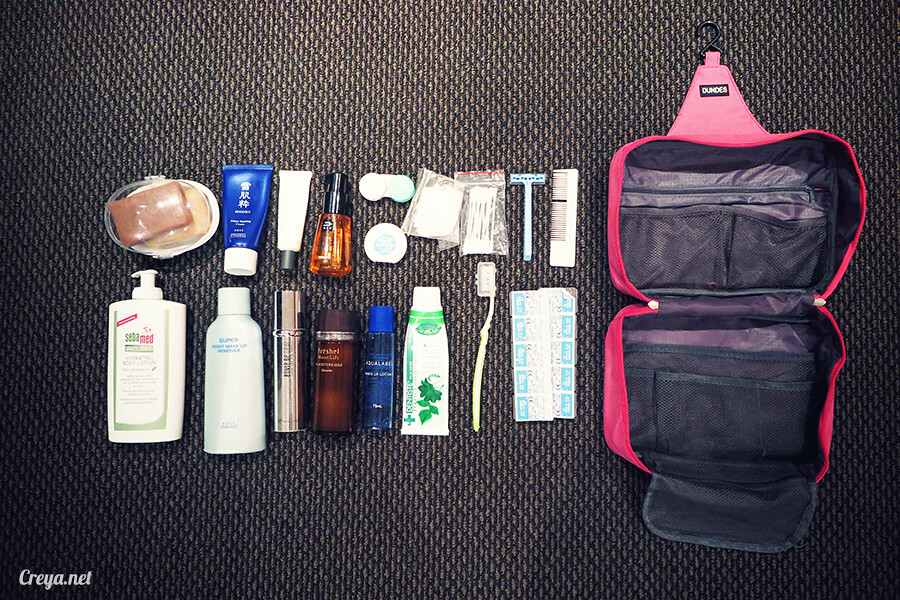
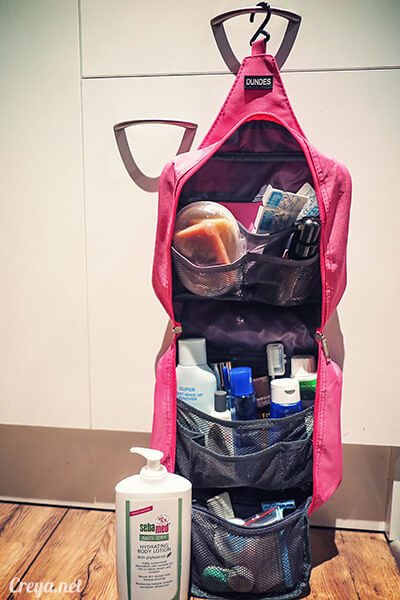
★ Toiletries: Everything thatgoes into the bathroom goes into one pouch. I normally remove my makeup, shower, and do my skincare all in the bathroom, so everything goes into the same organiser as my bath products. Ichose an organiser with a hook, because hostel bathrooms rarely provide enough space for your belongings. One little hook keeps every bottle conveniently within reach.
□ Shampoo, body wash, conditioner, facial cleanser, toothbrush, toothpaste, etc.(Since switching to soap, I now save both space and weight.)
□ Personal skincare and makeup-removal products
□ Hair-removal razor
□ Contact-lens supplies
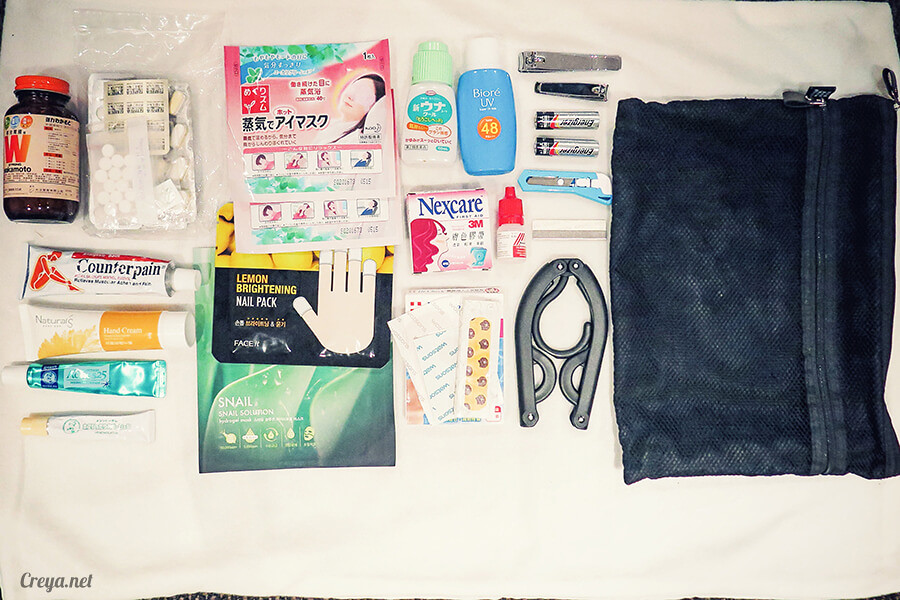
★ Medical and personal-care items: Use another organiser for medicines and body-care items that are not needed every day.
□ Personal medication(Bring one supply each of painkillers, stomach medicine, and cold medicine; everything else depends on your needs.)
□ Band-Aids and breathable medical tape(I brought Japanese liquid bandage and used it surprisingly often. Just how fragile am I?)
□ Sunscreen
□ Nail clippers
□ Face masks, folding laundry pegs, etc.(Blades, batteries, stationery, and other odds and ends can also go in here, but remember to move batteries into your carry-on before checking your baggage!)
★ Makeup bag: Your usual everyday makeup products.
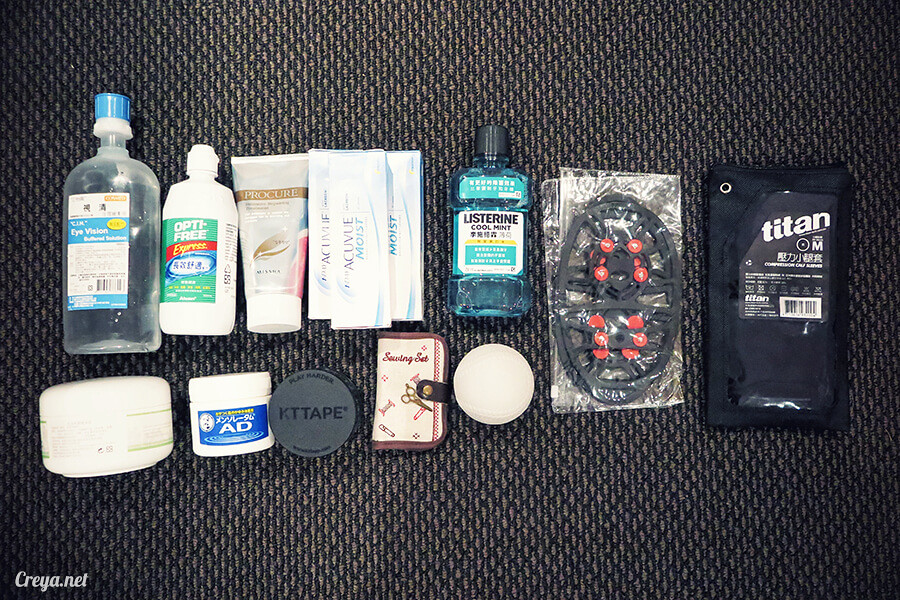
★ Larger toiletries and medical supplies: Bottles and containers of different shapes and sizes can take up more room when packed together. I recommend leaving them loose and using them to fill gaps in your luggage.
□ Three-month supply of contact lenses
□ Muscle massage cream and massage ball(Am I really that sore? Actually, Mum stuffed a huge jar of massage cream into my bag with love, so refusing wasn’t an option. The baseball-sized massage ball relieves fascia tension, works brilliantly, and takes up very little space!)
□ Basic snow grips(For snowy mountains or accumulated snow at high elevations.)
【 Clothing 】
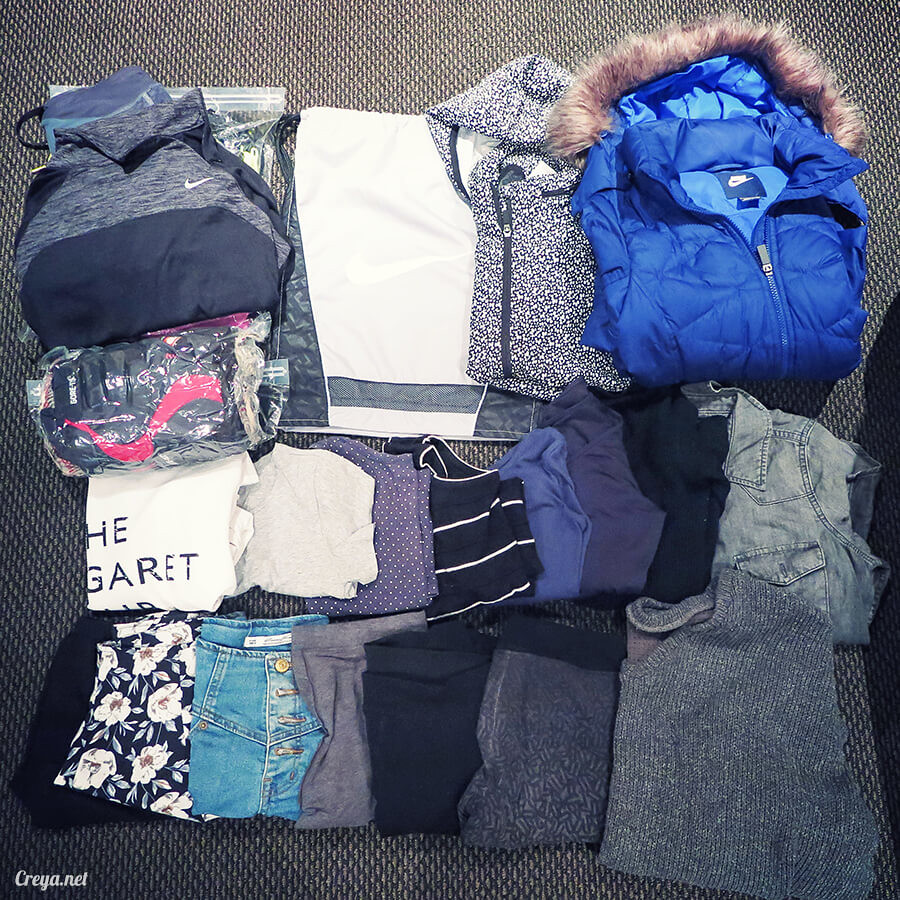
Clothes, underwear, shoes, hats, and so on should be selected according to your destination. New Zealand was approaching winter when I arrived, so I packed several extra warm layers.Wear your bulkiest clothes on the plane to reduce the weight of your luggage. Fluffy winter clothing that takes up lots of room can be compressed in vacuum bags—Daiso sells two medium bags for NT$39. Just remember that they reduce volume, not weight, so don’t get carried away, stuff in even more, and end up massively overweight.
★ Everyday clothing: I brought roughly two pieces each of long-sleeved and short-sleeved tops and bottoms, plus vests and one set of thermal underwear.Choose lightweight, thin garments wherever possible and stay warm by layering. If that isn’t enough, buy more locally. I also brought a warm down jacket, scarf, hat, and other hibernation gear—basically the same clothes I wore whenseeing the northern lights in Sweden, except that I replaced the ski jacket with a down jacket.
□ Long-sleeved and short-sleeved tops and bottoms, plus vests
□ Thermal underwear
□ Jacket
□ Hat and scarf(If departing in summer, wait until winter and buy these locally.)
□ Running clothes(A personal requirement, but running overseas feels wonderful. When the routes are that good, how could you not run?)
□ Long towel(Useful for both showering and running. If you prefer a large bath towel, bring one or buy it locally.)
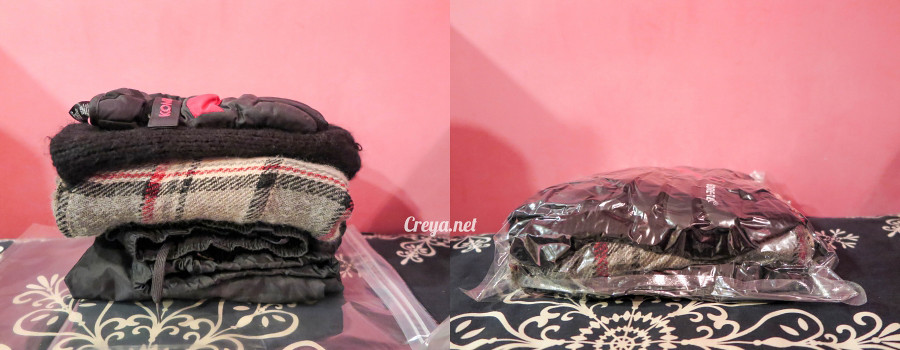
[ Vacuum-packing winter items such as scarves and woolly hats cuts their volume in half. ]
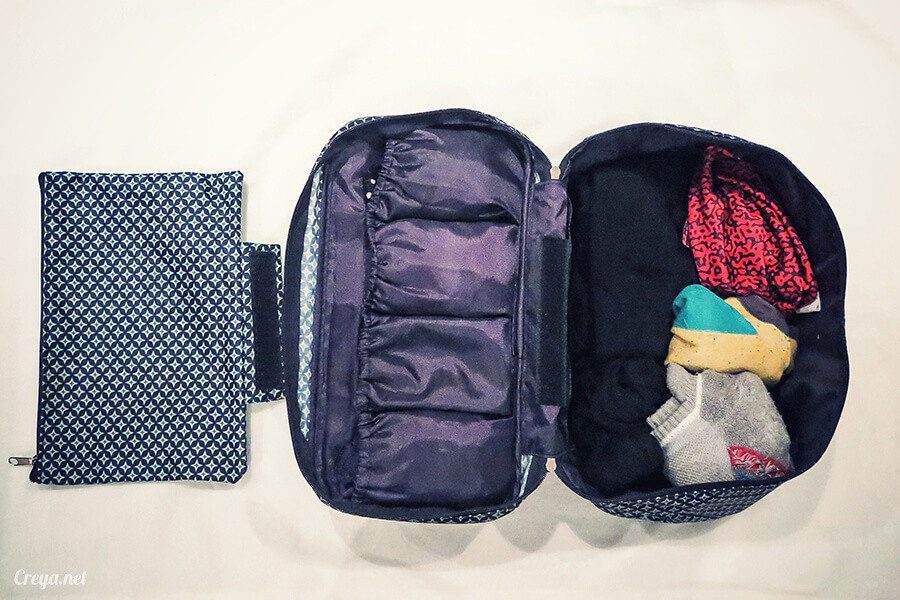
★ Underwear: I prepared roughly five days’ worth, which I could wash by hand and rotate at any time. I use a dedicated underwear organiser made from thicker, more supportive material to stop bras from being crushed out of shape. I fill the gaps with socks, which also support the bras. (The bras said they were feeling shy, so they declined to appear on camera.)
□ Bras
□ Underpants
□ Socks
★ Shoes: Comfort remains the priority when travelling abroad. I prepared one versatile pair that looks good and is comfortable for walking, plus a pair of lightweight running shoes. A pair of flip-flops is also extremely useful for showering at your accommodation or visiting the beach.Pack each pair of shoes in a separate plastic bag to keep the rest of your luggage clean.
□ Comfortable walking shoes
□ Flip-flops
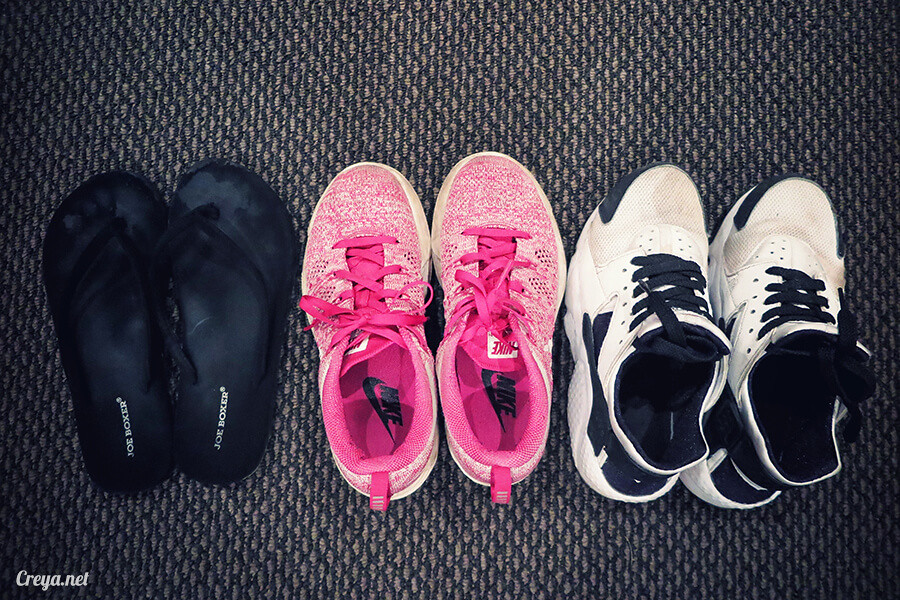
★ Swimsuit: I didn’t want to miss any opportunity to get into the water. If Western-style swimwear fits your body shape, you can also buy it overseas, where there are plenty of inexpensive and attractive options.
【 Electronics 】
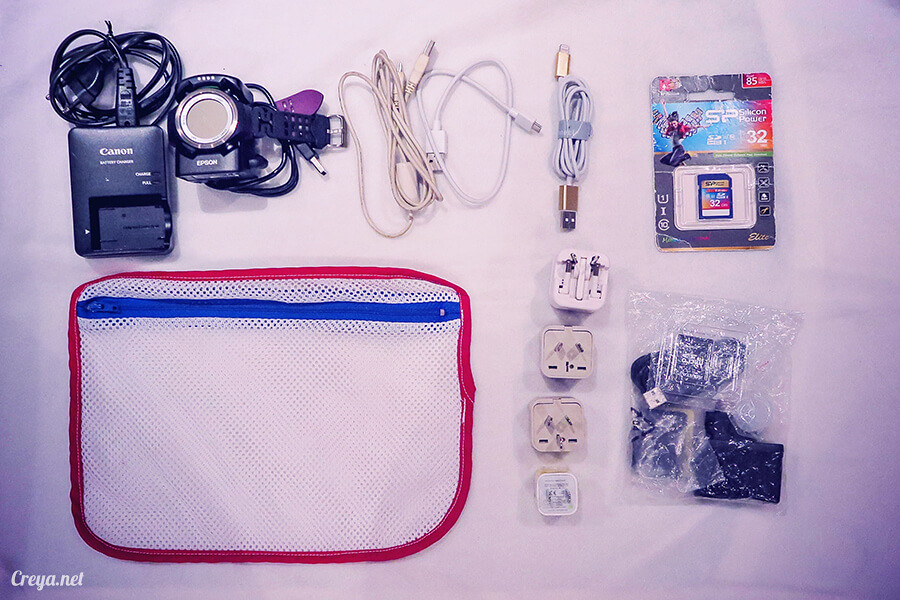
Smartphones, laptops, cameras, video cameras, portable hard drives, and other equipment are entirely optional according to your needs.Don’t forget every charger, and confirm that each device supports the local voltage.。A plug adapter is essential.I use one organiser for cables, chargers, and other accessories. When flying, the devices themselves and all batteries go in my carry-on.
□ Three plug adapters
□ Laptop or tablet / charging cable
□ Phone / two charging cables
□ Camera, GoPro, and other photography equipment / batteries / chargers / memory cards
□ Power bank
□ High-capacity portable hard drive for photo backups
□ Cloud storage or a Google Photos account for photo backups
□ Earphones(You’ll often share rooms with other people, so avoid disturbing them.)
□ GPS running watch(A personal requirement, but running overseas feels wonderful. When the routes are that good, how could you not run?)
□ Hair dryer(Mine was left over from one I bought in Australia. Because of voltage differences, I recommend buying one locally rather than placing too much faith in a voltage converter.)
【 Stationery and Miscellaneous Items 】
Again, I divide miscellaneous items among organisers. A small pencil case in my daypack holds pens, lip balm, a travel-sized bottle of hand sanitiser, and a few Band-Aids, keeping them conveniently within reach. I also brought several small Taiwanese cultural gifts to give to foreign friends I met.
★ Stationery: Pens, blades, and other supplies. If you keep a journal or take notes, bring one or two small notebooks. After taking an illustration class, I brought my entire set of coloured pencils as well.
□ One ballpoint pen, one pencil, and one marker(Correction fluid depends on personal need; I simply abandoned it.)
□ Small notebook
□ Blade(Pack in checked baggage.)
□ Document folder(For paper documents.)
★ Miscellaneous:
□ Sunglasses
□ Water bottle or thermos (when flying with a budget airline, fill it at a water dispenser after passing through security and take it aboard)
□ Lip balm
□ Laundry bag
□ Sleeping bag(For camping, though it can also serve as a blanket. This time I brought aDecathlon down sleeping bag)
□ Several drawstring bags, plastic bags, and ziplock bags(Very convenient for carrying clothes to the shower and storing dirty laundry.)
□ Travel guide(I wanted to road-trip thoroughly, so I brought Lonely Planet.)
□ Selfie stick and tripod(Any extendable tripod or selfie stick with a tube diameter of 1 cm or more and a folded length exceeding 25 cm must be checked in!)
□ Personal cutlery set
□ National flag
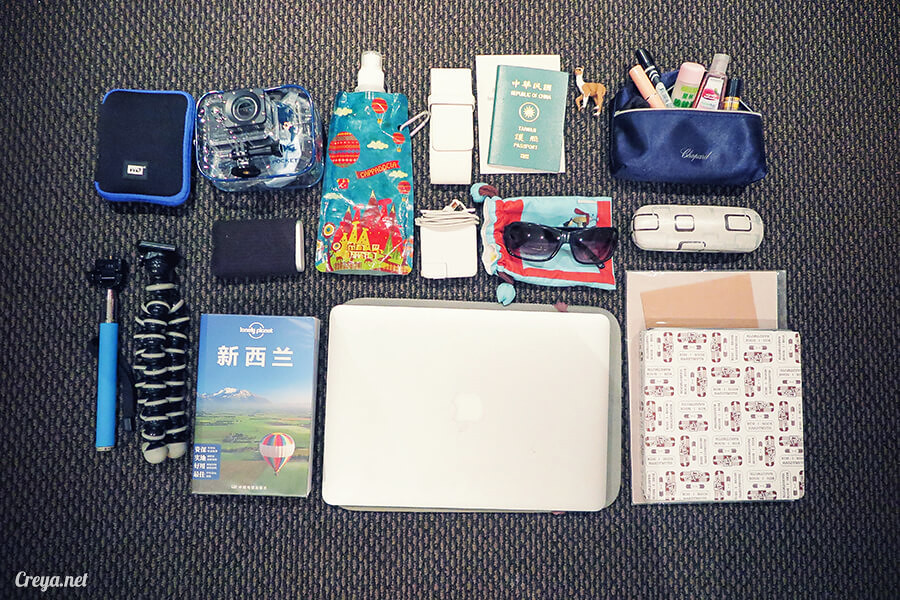
[ Pictured together with some of the electronics. ]
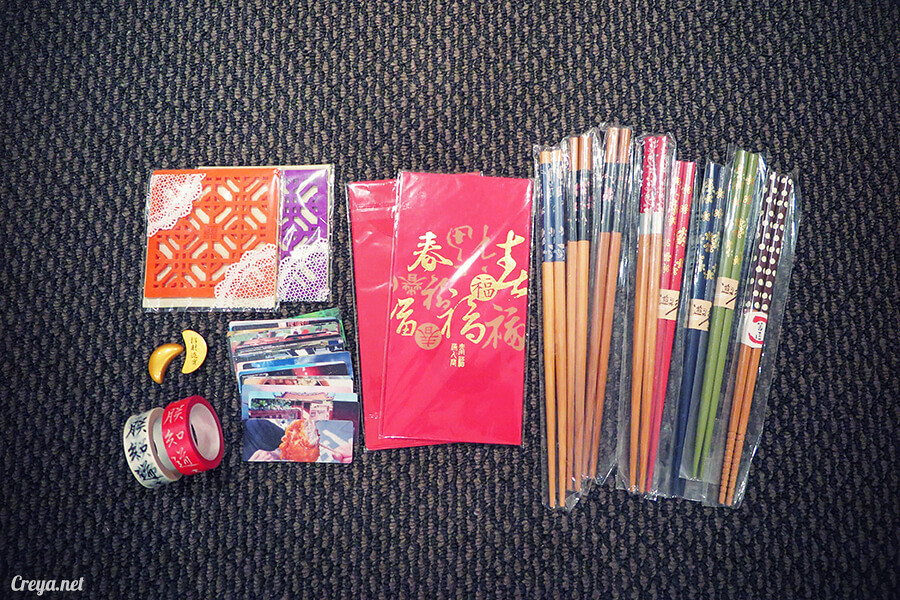
★ Small gifts representing Taiwan: When we go abroad, every one of us represents the “Taiwan” brand. Most foreigners are genuinely interested in Taiwanese culture,so bring small gifts with stories behind them and use them to introduce your culture to new friends—while practising your English at the same time. It leaves a lasting impression. This time, I deliberately chose products printed with Chinese characters, which foreigners seem to love. I brought red envelopes, a small divination-block ornament, chopsticks, “The Emperor Knows” washi tape, coasters, and business cards I had printed with a different photograph of a distinctive Taiwanese scene on every card.
Everything in our luggage is merely a material possession. Any bag that keeps the basics of daily life running smoothly is a good bag. What we are truly seeking on every journey is to fill the luggage in our hearts with rich experiences and memories, turning them into rare and precious nourishment for life. I can’t wait to discover all the unknown adventures awaiting me on my “New Zealand to the Ends of the Earth” journey!