


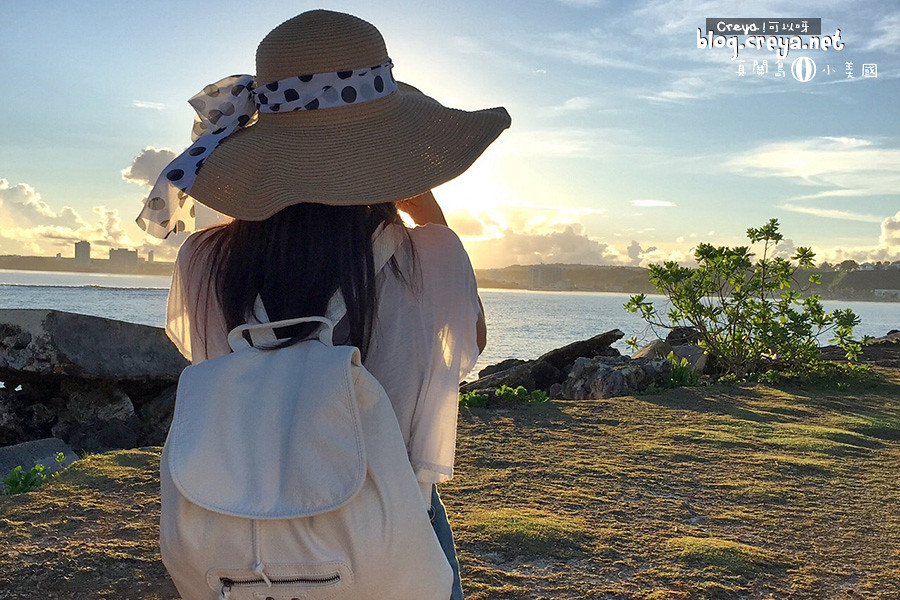
Guam might seem like it’s all about the ocean, and sure, Typhoon Soudelor crashed three out of our four days there—leaving us wondering if gray skies were all we’d ever see. But looking back, I’m utterly obsessed with its dreamlike beauty. Having an amazingly fun group of travel buddies made it infinitely better; with them, a beach wasn’t just a beach, and park lawns weren’t just grass. As every wise traveler knows: your travel companions make or break the trip!
Following up on our first guide, What’s Guam Like? A Complete 6D4N Independent Travel Guide, here’s a roundup of the top spots we covered across the island—which is about twice the size of Taipei—in just four days!
What’s the absolute must-do in Guam? Hit the water!
My daily routine revolved around rinsing my swimsuit, waiting for it to dry (or putting it right back on damp), and diving back into the ocean. In Guam, where the sea and sand are just a short drive away, even a water-phobic landlubber like me couldn’t resist splashing around. When in Guam, just embrace it—you’re going to get wet every single day!
Tumon Beach
Tumon Bay is the primary hub for tourist resorts, and after exploring other beaches, I still found Tumon Beach to be an absolute gem—stunning, top-tier, and easy to spend days on. The sand is wonderfully fine, reminiscent of Whitehaven Beach in Australia (though Whitehaven still takes the crown!). It’s firm enough underfoot that you barely sink, making it surprisingly easy to jog along—perfect if you feel like dramatically running along the shore in slow motion (I actually jogged on it for ten minutes to test it out!). It’s no wonder Tumon Bay remains the main draw for visitors.
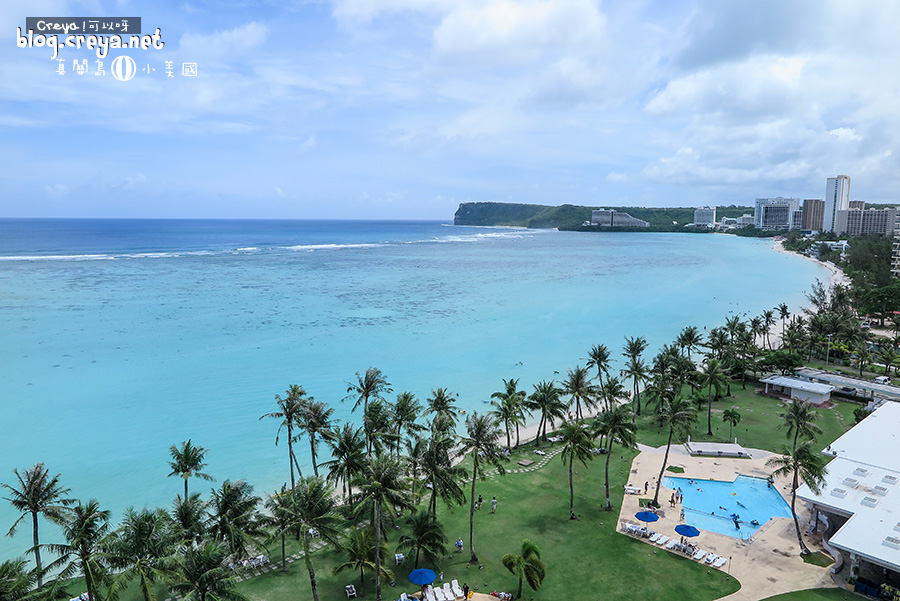
[ A glimpse of Tumon Bay with its row of coconut palms and crystal-clear waters. Take me back already! ]
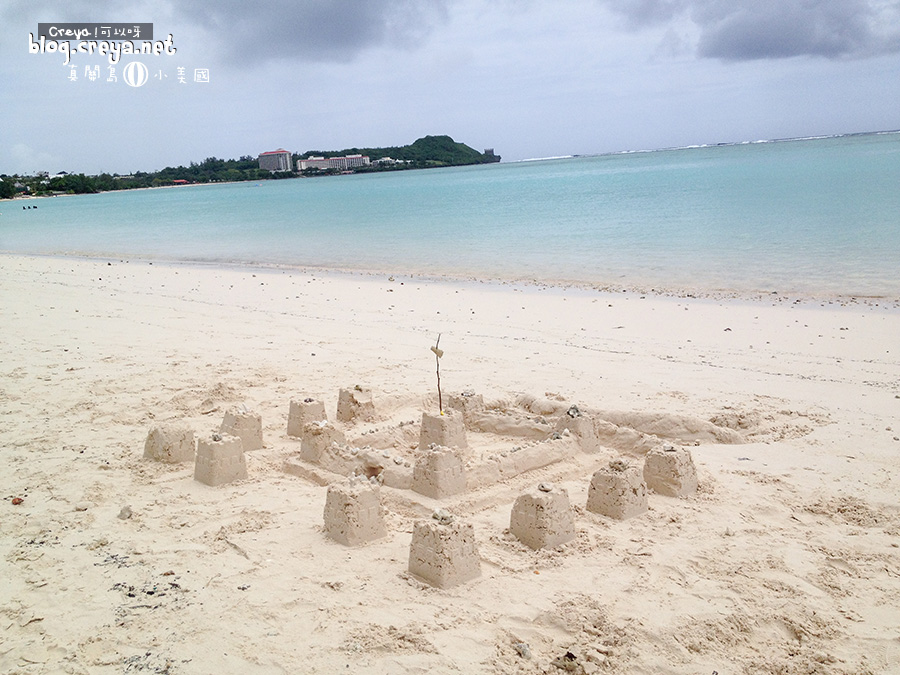
[ It’s not that the beach is empty—the sand is just so packed that footsteps leave hardly a trace! ]
The hotel beaches along Tumon Bay seamlessly connect to one another (except around PIC, which is blocked off). Staying at one resort while strolling over to admire another’s gorgeous glass chapel is seamless and effortlessly easy.
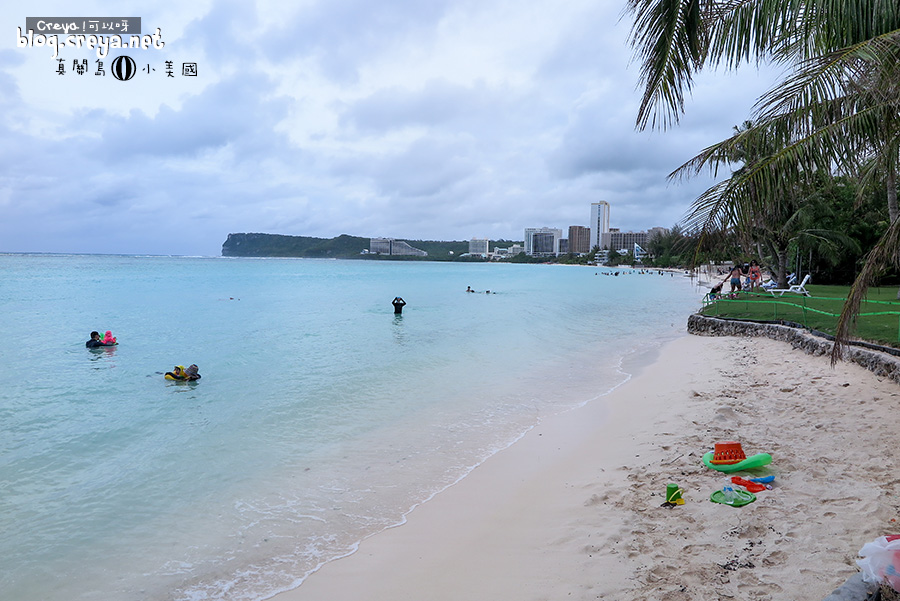
[ The bay stretches for 4 km—or maybe swimming across is faster… ]
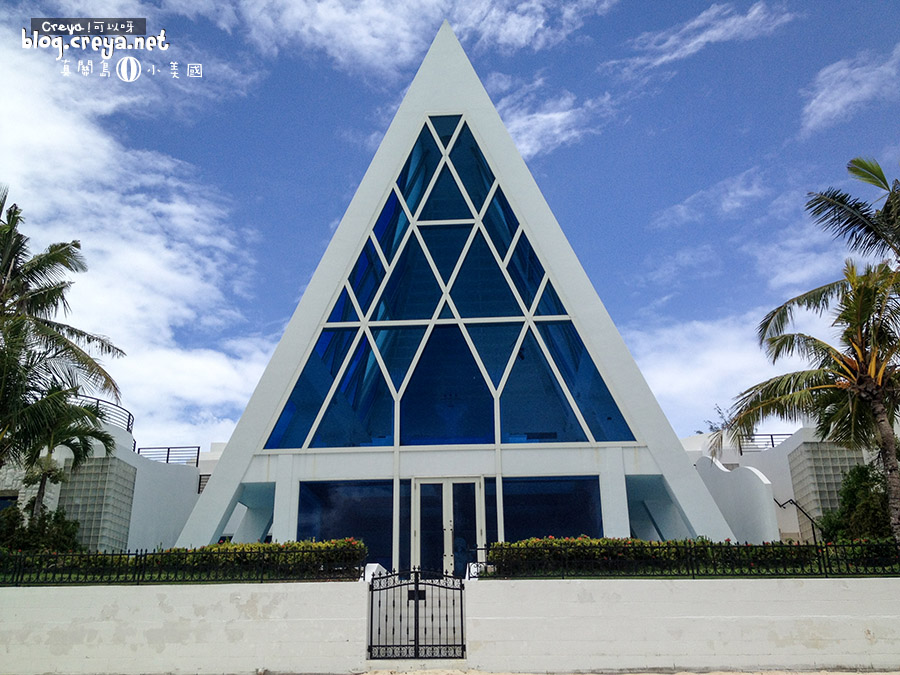
[ Feast your eyes on the Blue Aster Chapel in Tumon Bay—a quick 10-minute beach walk from our hotel, the Fiesta Resort Guam! ]
The shallow waters off Tumon Bay extend far out, so much so that you could host a 5K water run before reaching deep water. It almost feels like you don’t even need a lifeguard—if you trip, you just splash around with your head well above water. However, hidden coral reefs underfoot can be sharp and painful on bare feet. If you plan on playing water games like we did, wearing water shoes will give you a massive advantage over barefoot competitors.
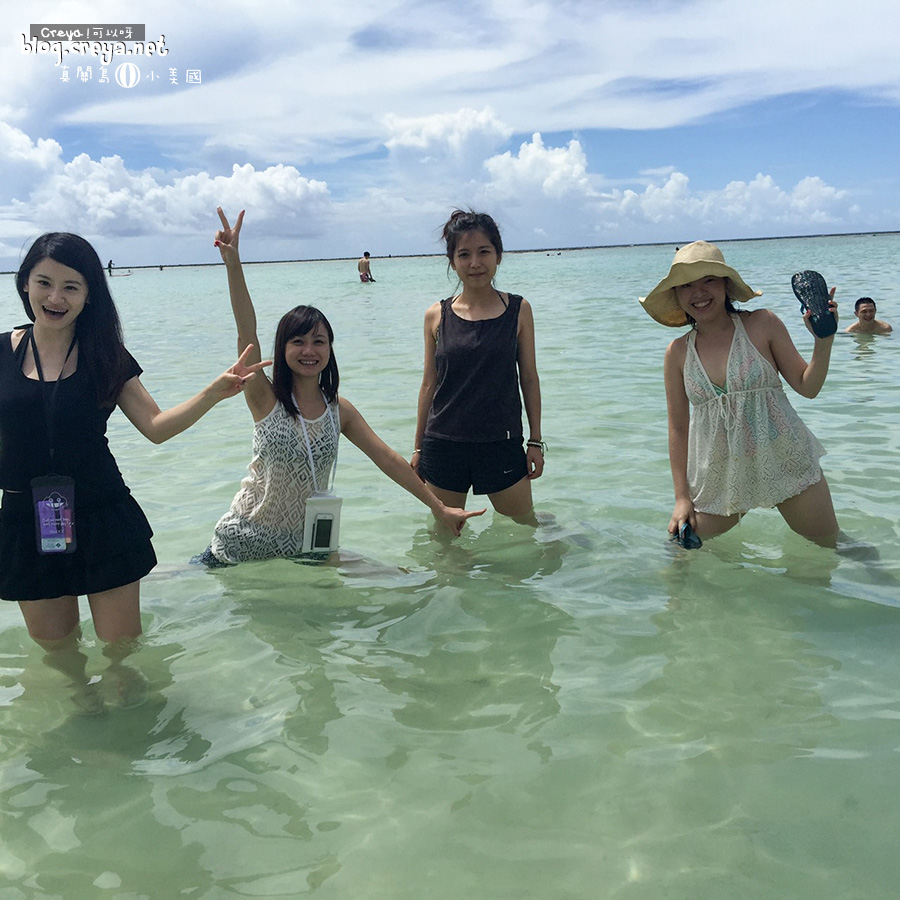
[ Don’t abandon your water shoes—your feet will thank you! ]
* Pro tip from our tour guide: Guam’s shallow, coral-heavy waters are definitely not the place for tossing friends into the sea or diving off shoulders. Coral cuts are the most common injuries, and local medical bills in USD without insurance can be astronomical—so play it safe!
Ritidian Point & Star Sand Beach
To get to Star Sand Beach on the northern coast, you have two options: rent a car and drive to the free public beach yourself, or book a paid tour with a beach club that includes round-trip shuttle service.
Naturally, we thought we were being clever by adding an extra rental car day to head over independently, planning to play beach games and lounge on the sand. But nature had other plans—Typhoon Soudelor threw a wrench in our scheme. After navigating the notoriously rough, pothole-ridden, and flooded road leading up to the beach, we were stopped right at the entrance. High swells had forced the northern beaches to shut down temporarily, leaving us unable to witness the famous star-shaped sand in person. Not wanting our trek to be a total waste after braving that off-road obstacle course, we decided to try our luck at Coco Palm Garden Beach Club, which we had passed on the way in.
* Ritidian Beach open hours: 8:00 AM – 4:30 PM.
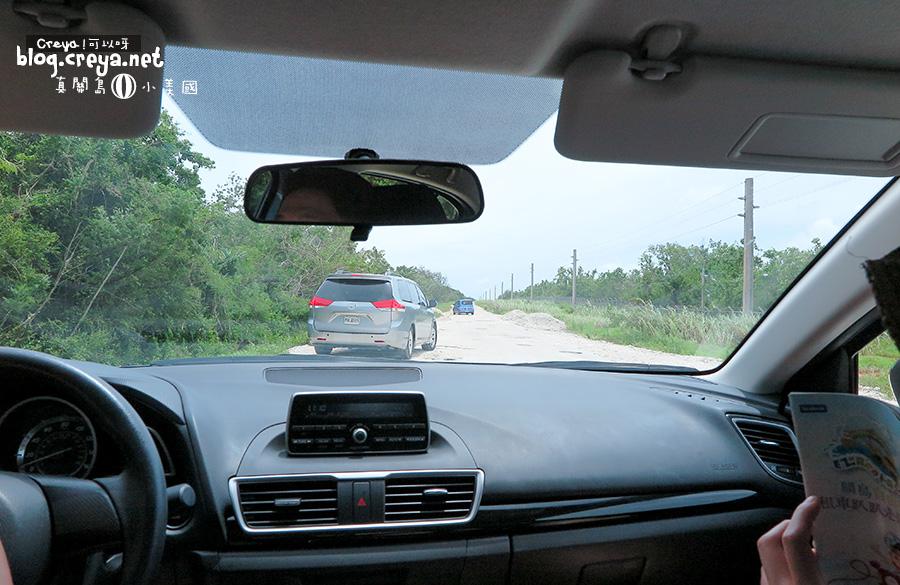
[ Please welcome the contenders for today’s off-road obstacle course! ]
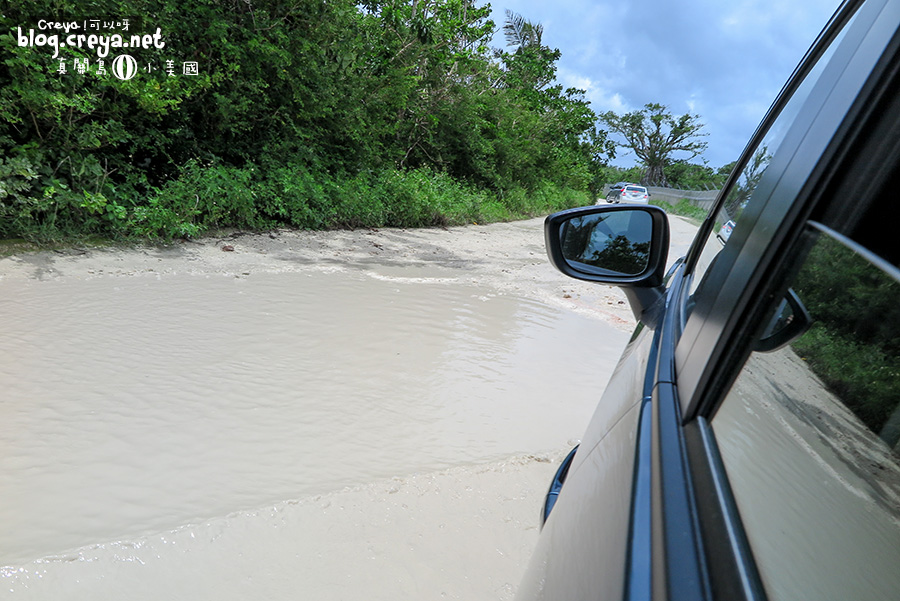
[ Overnight rain filled every pothole with water—even on dry land, Guam kept us surrounded by water! ]
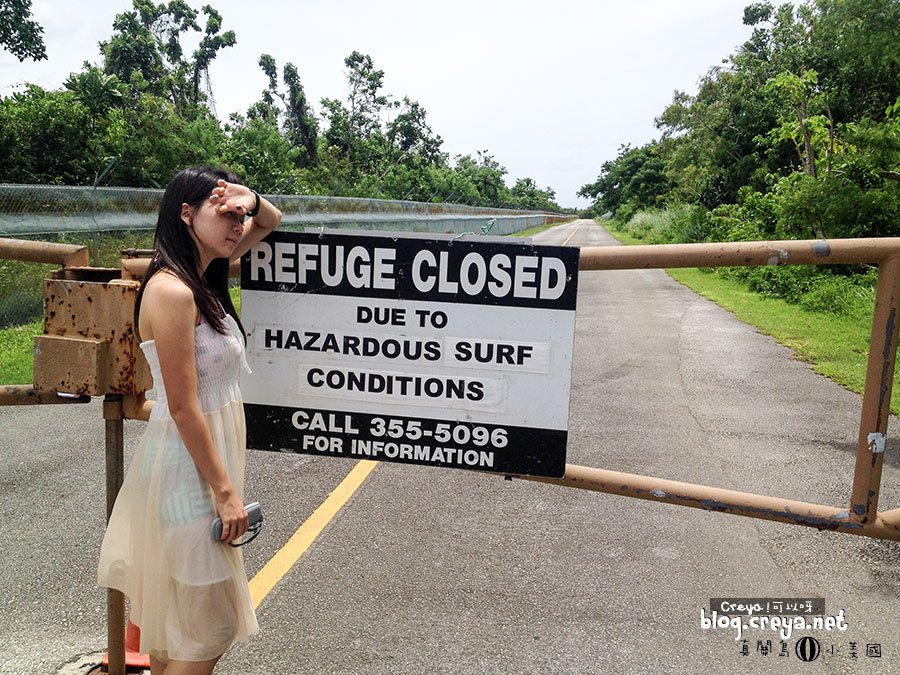
[ Honestly, I was just running on zero sleep from the night before. ]
Coco Palm Garden Beach
Japanese-owned and operated, Coco Palm Garden Beach caters heavily to Japanese travelers, with staff fluent in Japanese. Most guests arrive via organized shuttle tours, but since Ritidian was blocked off, we opted to walk in as self-drivers. Having driven all the way out to the northern coast, we were determined to make the trip count. Fortunately, Coco Palm was open—though due to the heavy swells, snorkeling was restricted to a small, cordoned-off safety zone.
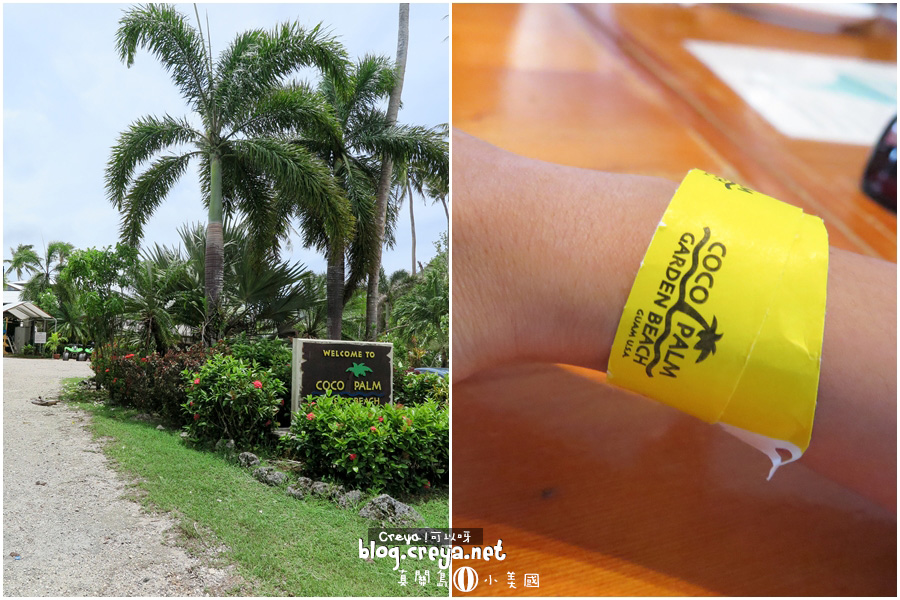
[ The Coco Palm entrance and our prized pass! ]
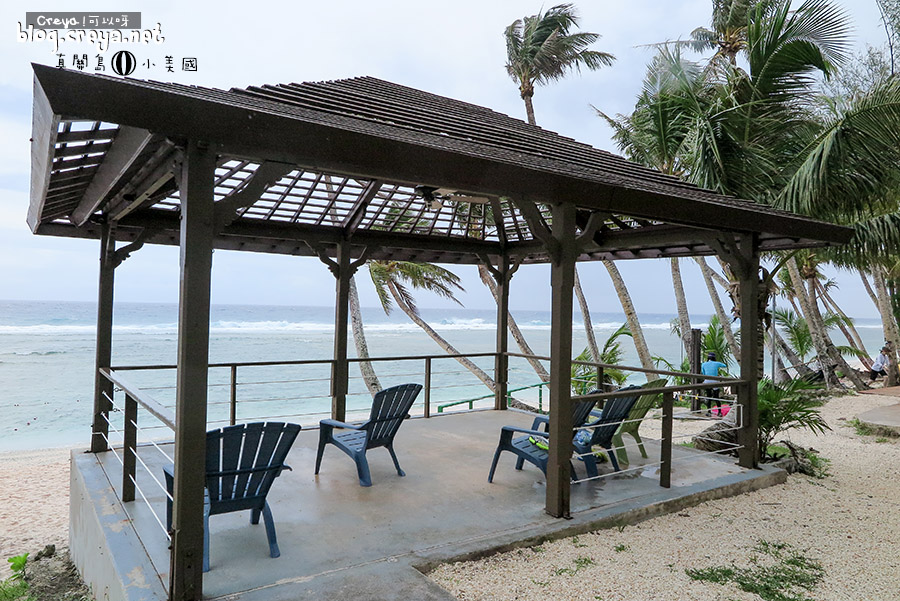
[ Complimentary prime-view loungers inside the club—first come, first served! ]
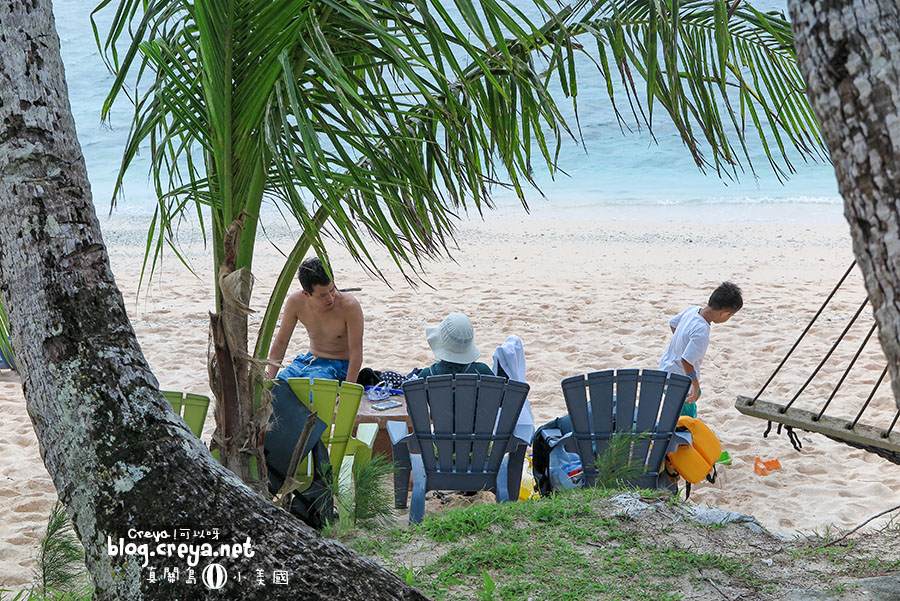
[ Or you can lounge directly on the beach (though I still have no idea where that table came from!). ]
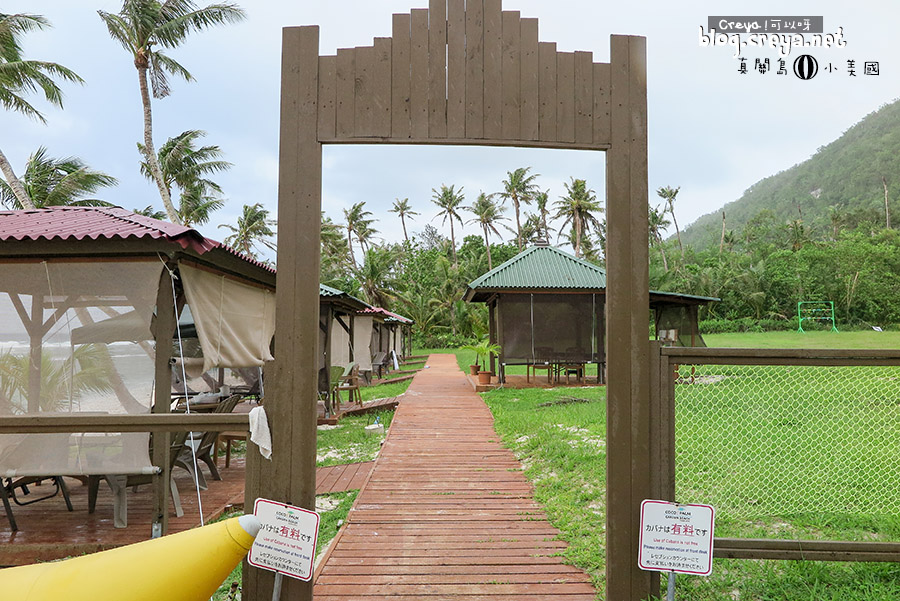
[ Want a shaded elevated cabana? That costs extra, but the view is definitely worth it. ]
Walk-in passes are charged by the hour. We opted for a 3-hour pass, which included access to basic beach facilities, lockers, a small welcome juice, snorkeling gear, and a packet of fish food per person—plus a few baskets of fries to tide us over. Since our group was a massive 18 people, they gave us a group deal at US$30 per person for 3 hours (down from the regular price of US$35).
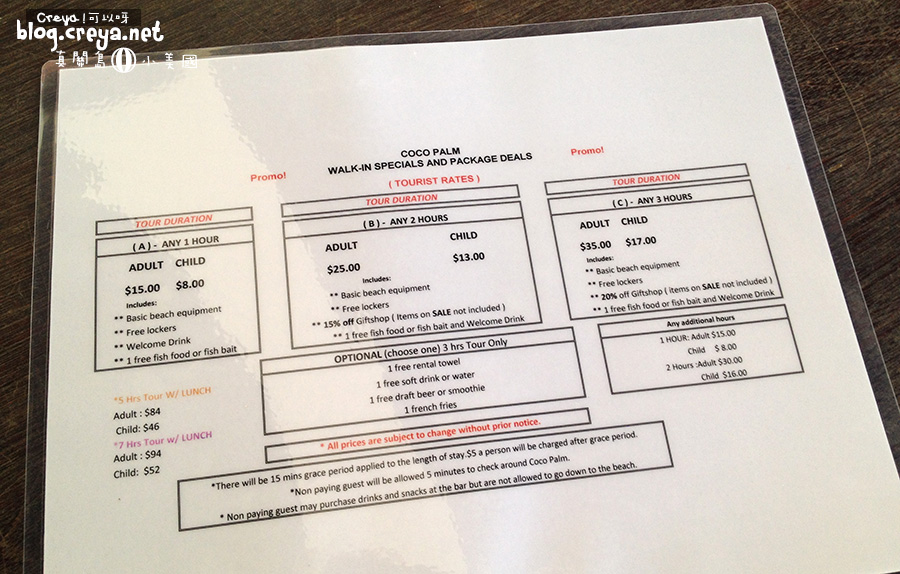
[ The front desk kept emphasizing that walk-in rates subject to change anytime! Rates shown are for reference only. ]
Snorkeling here is hands-down one of the absolute best highlights of the trip. Guam’s legendary marine life is no exaggeration—the moment you pull out some fish food, swarms of fish rush toward you like iron filings to a magnet. You don’t even need to know how to swim; just take five steps into the water or float face-down on an inner tube, and you’re in an underwater paradise. You can borrow inner tubes at the counter, or head over to the beach volleyball court for a quick game.
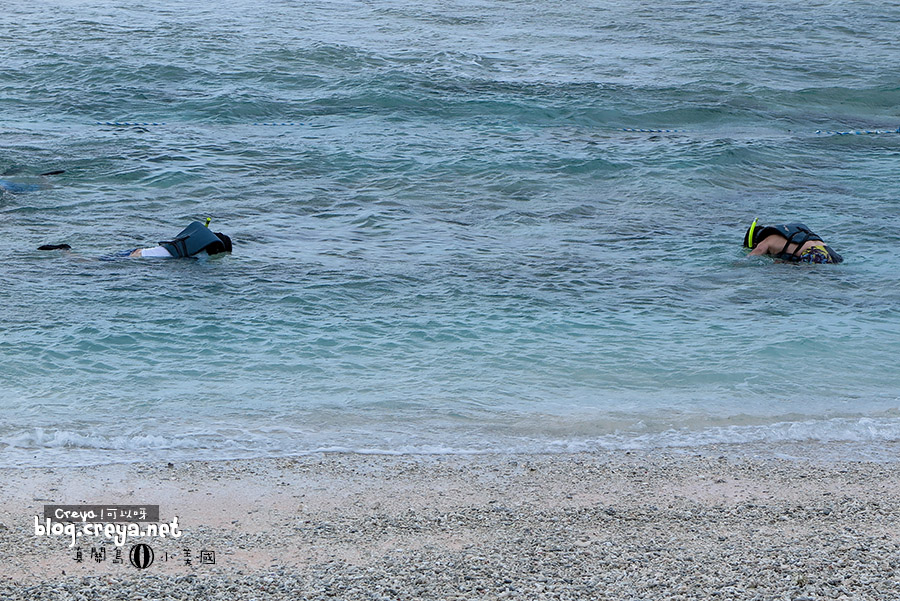
[ Just float face-down and enjoy—what you see is what you get! ]
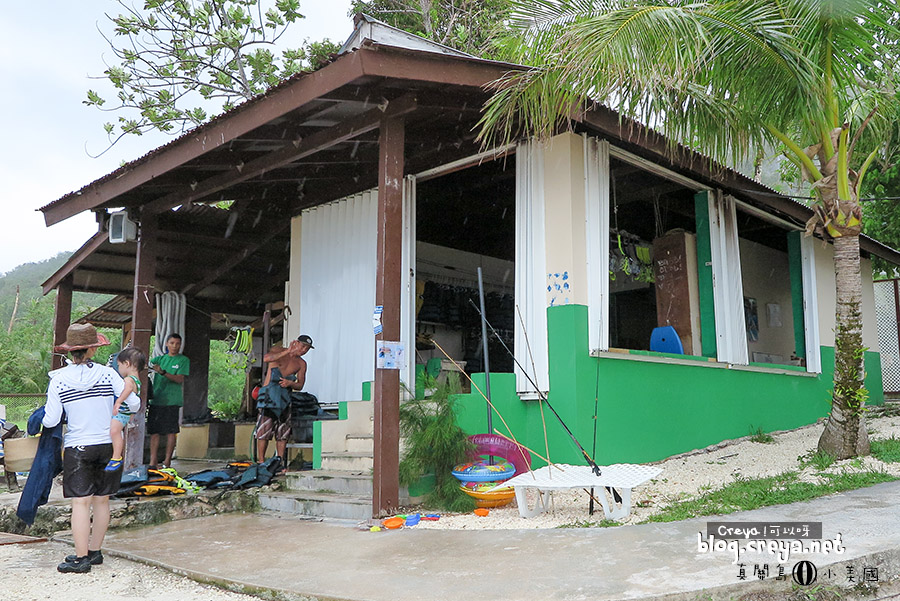
[ Gear rental station—pick up your mask, snorkel, reef shoes, and life jacket here ]
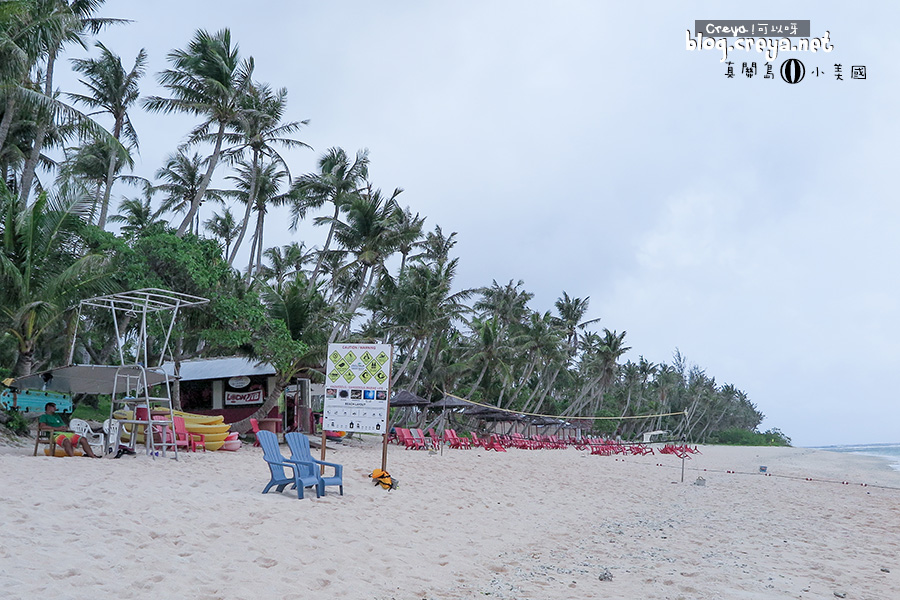
[ Chatting with two local lifeguards on the beach:
“I want to visit Taiwan too! What’s over there?”
“Taiwan has gorgeous mountains, beaches, and the ocean!”
“No ocean for me, just mountains!”
“Why? Your ocean is so clean and stunning! You’re so lucky.”
“Are you kidding? I look at this sea every single day—it gets boring!”
I guess travel really is just escaping the place you’re bored of to go to the place someone else is bored of… ]
This stretch of shore is part of the northern Star Sand Beach. After sifting through endless grains, I actually spotted a few legendary star-shaped sands! The club offers add-on activities like fishing and kayaking, or you can buy a full tour package. However, if you stick to the basic admission like we did, an hour or so is plenty (or maybe we’re just getting old… *sigh*). When a sudden rainstorm hit, we finished our fries, changed back into dry clothes, and ended up staying just a little over two hours in total. I’d recommend choosing your pass based on the weather and how long you plan to stay.
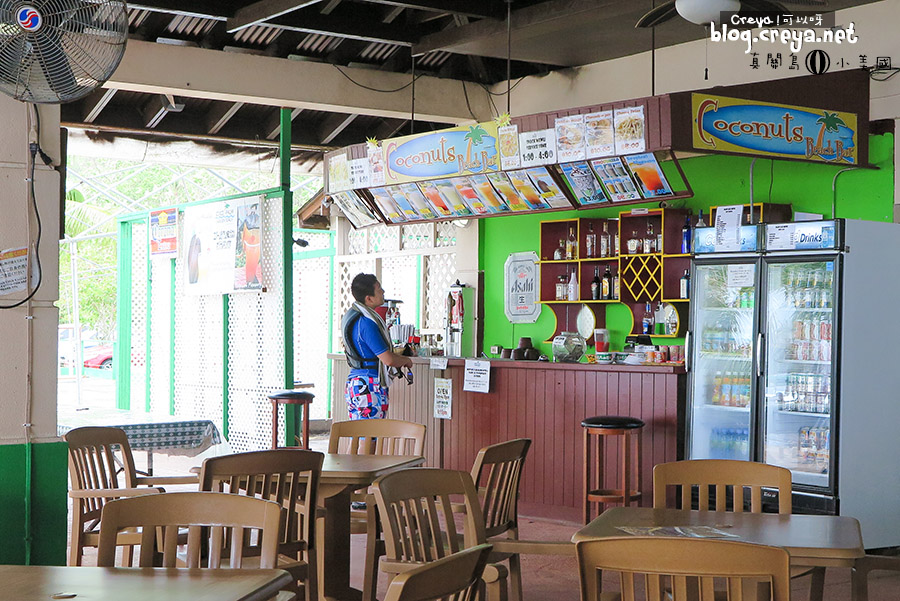
[ Onsite snack bar—no need to steal the fish food, there are plenty of options to satisfy your hunger ]
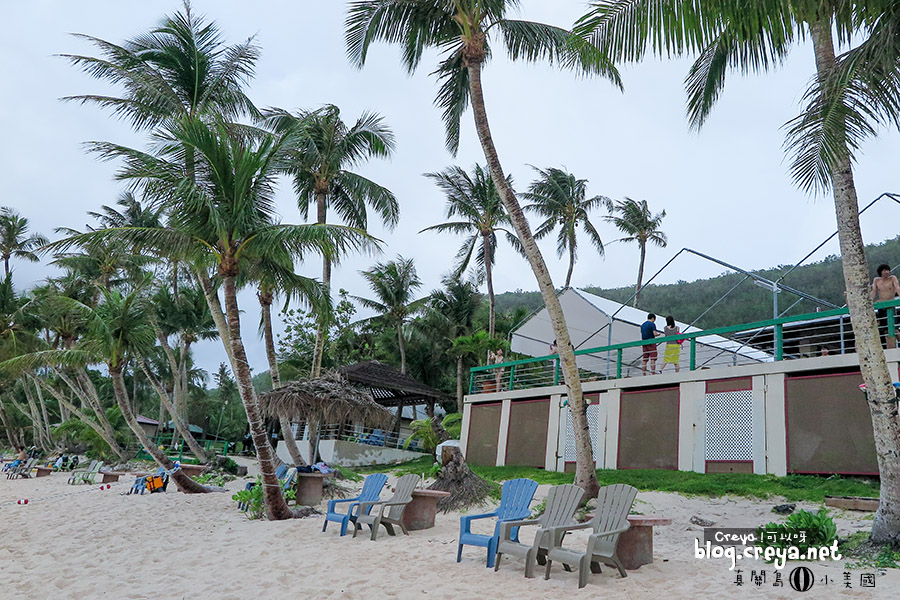
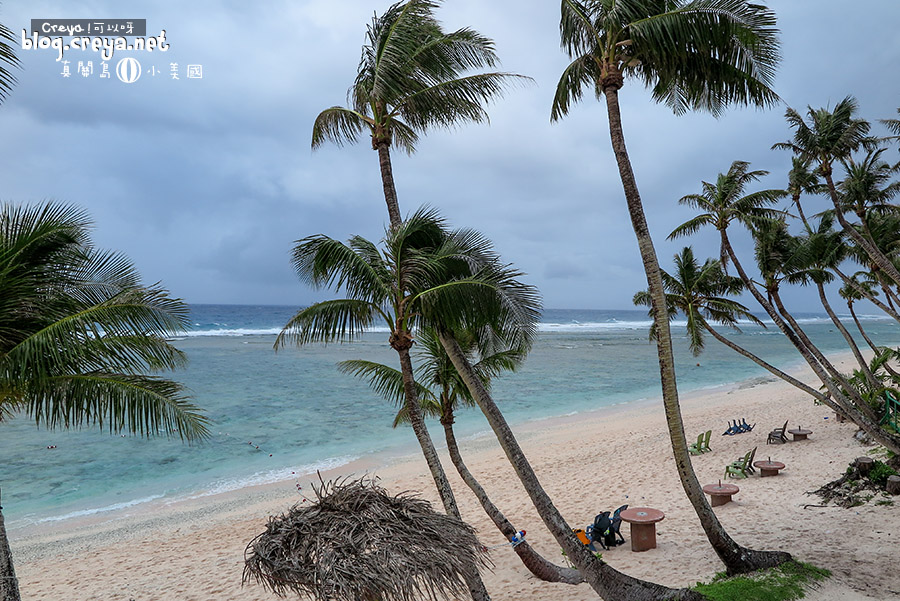 [ Typhoon Soudelor’s outer winds were bending the palm trees sideways as the sky turned dark. But hey, if you’re already soaked in the water, a little rain doesn’t matter anyway! ]
Central Guam Highlights (City Sightseeing Tour)
Our city tour came bundled with our flight-and-hotel package. Since flights from Taiwan land in Guam around 6:00 AM, a morning tour is the perfect way to kill time before hotel check-in. Watching the sunrise illuminate iconic spots like the Statue of Liberty, Dulce Nombre de Maria Cathedral-Basilica, Latte Stone Park, Plaza de España, and Two Lovers Point is breathtaking. Here’s a quick 10-second highlight reel to set the scene:
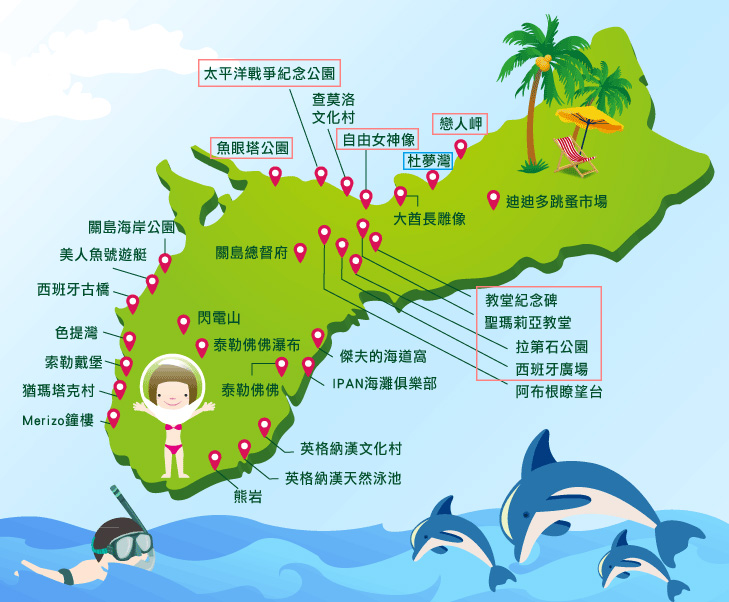
[ Central Guam Sightseeing Map ] (Super clear map courtesy of Star Travel)
The Mini Statue of Liberty is far more approachable than her NYC counterpart—her petite height makes it easy to snap a selfie with her! Located at the tip of Paseo de Susana Park, she overlooks the shimmering ocean. Just across the park sits the historic Guam Little League Field, famous in Taiwan for hosting epic youth baseball showdowns.
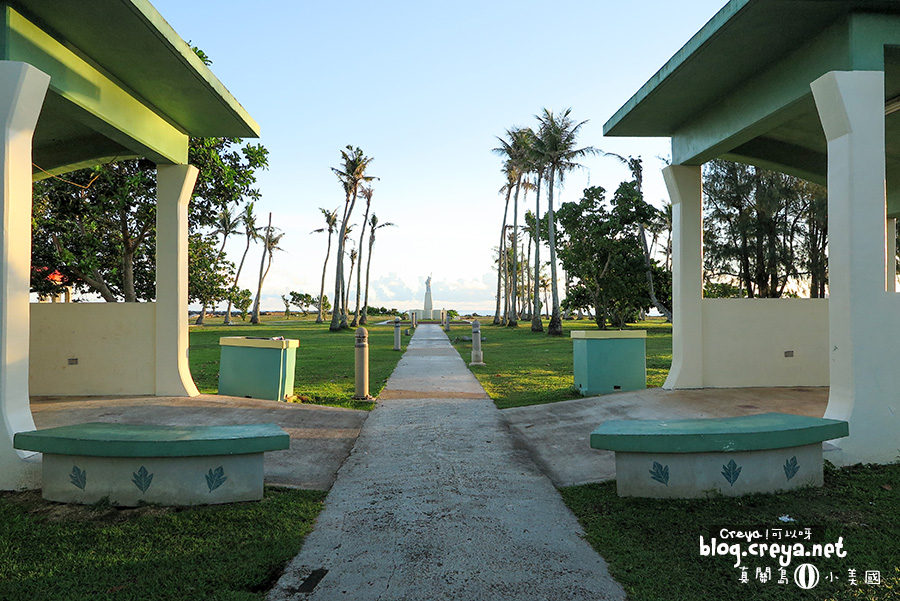
[ Approaching Lady Liberty with due respect ]
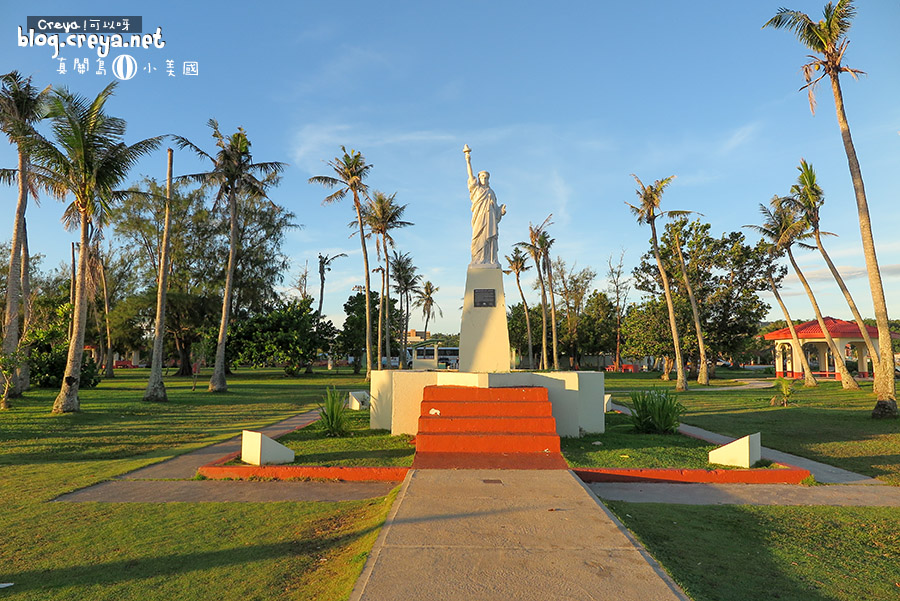
[ Finally face-to-face with Lady Liberty—taste of true freedom! ]
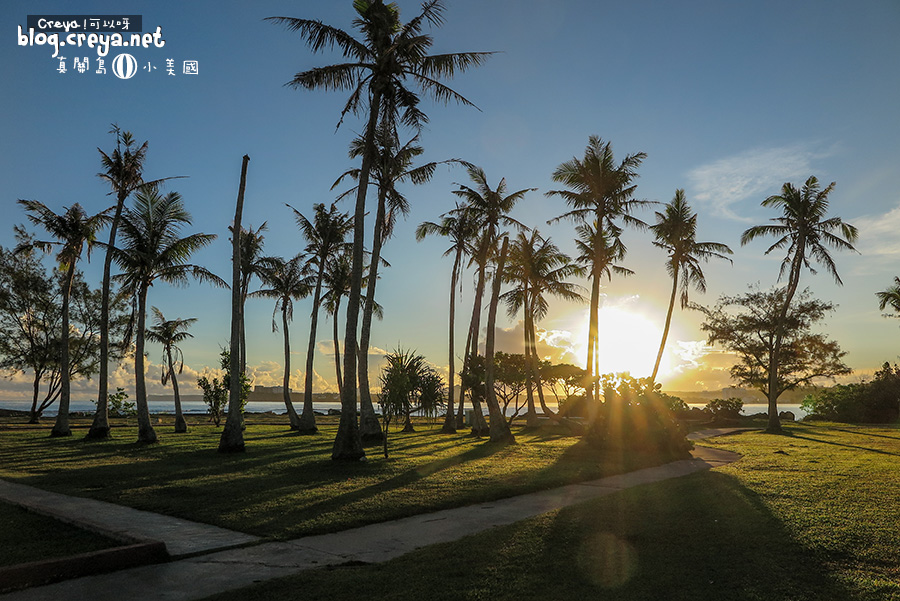
[ Watching the sun peek over the horizon—the golden light over the ocean and greenery is simply breathtaking ]
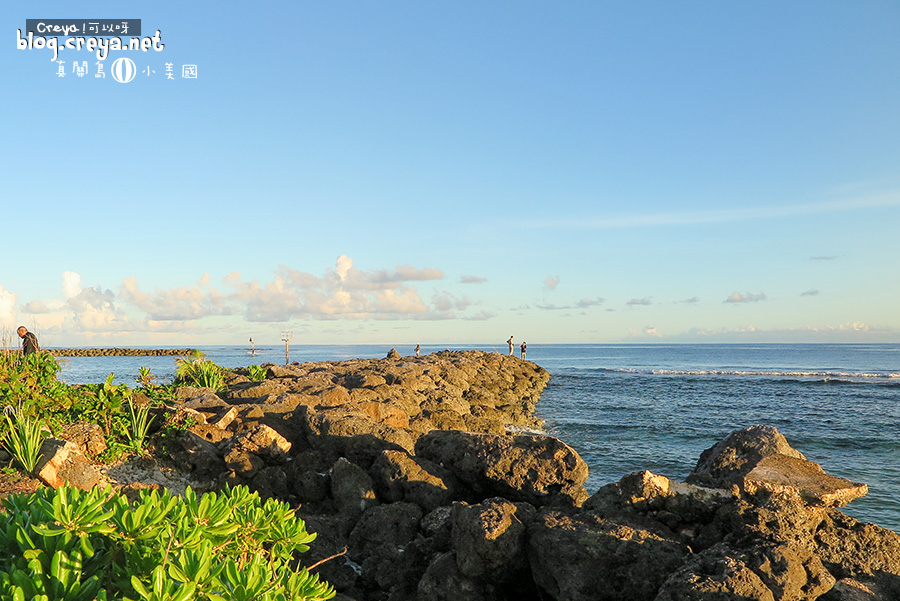
[ The park offers more than just Lady Liberty—you get Lady Liberty at sunrise, plus a panoramic ocean lookout as a bonus! ]
Latte Stone Park houses ancient megalithic relics dating back centuries. The star attraction here is the eight latte stones—traditional Chamorro pillars used as house foundations. Historically, the more pillars a house had, the higher the owner’s social status. Some visitors touch them hoping for a touch of power and prestige. Today, these distinct stone shapes are iconic symbols of Guam, found on everything from souvenirs to local logos.
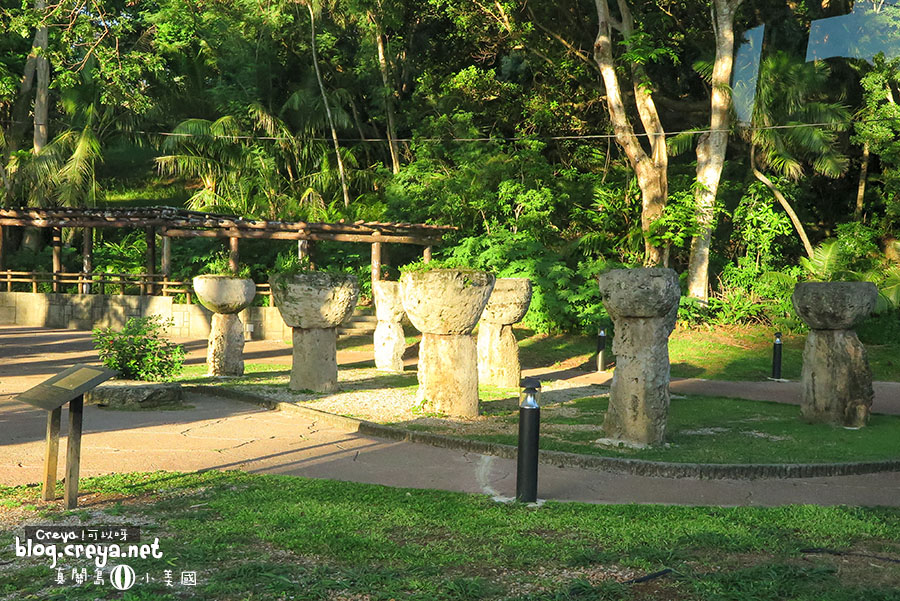
[ I didn’t touch the stones back then… which explains why I’m still just a humble peasant today ]
Plaza de España sits right next to the Dulce Nombre de Maria Cathedral-Basilica (built in 1669) and the Pope John Paul II Memorial Statue, letting you tick off three top landmarks in one go. The plaza features the historic ruins of the Spanish Governor’s Palace, and its elegant stone archways are a famous backdrop for celebrity wedding shoots.
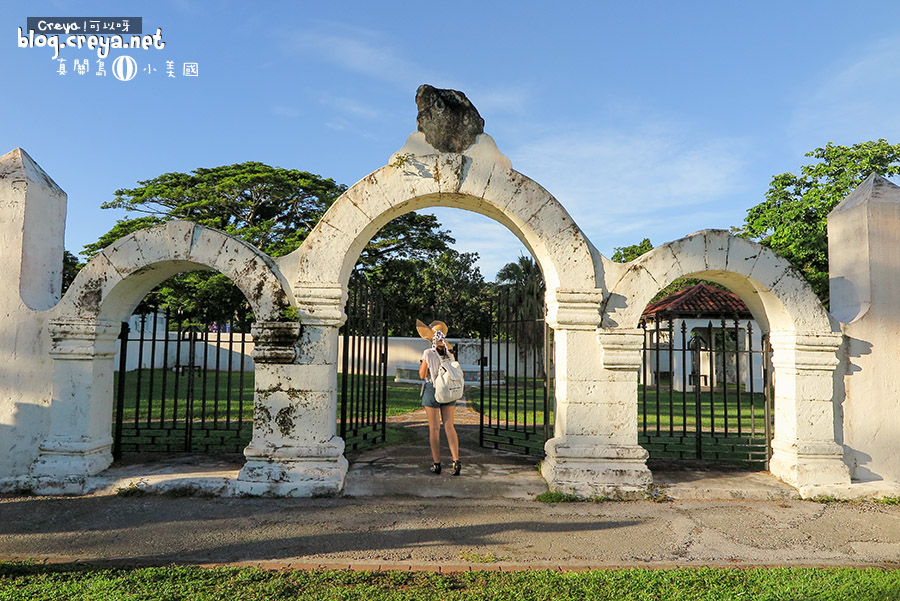
[ Spanish colonial history has left a deep mark on Guam’s architecture ]
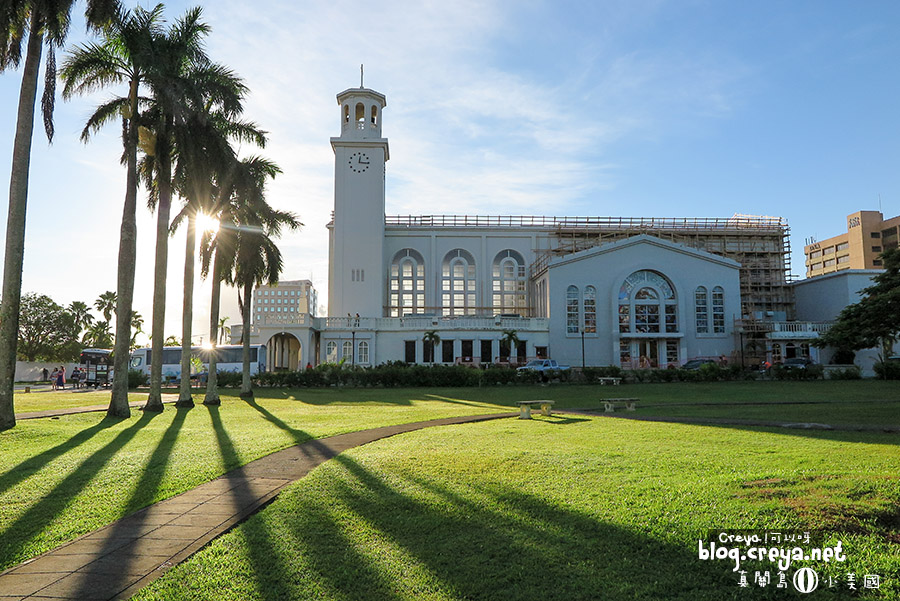
[ Looking toward the Dulce Nombre de Maria Cathedral-Basilica from Plaza de España ]
Dulce Nombre de Maria Cathedral-Basilica is a striking white landmark. Oddly enough, locals sometimes lock the doors when large tour groups pull up to protect the sanctuary’s peace (classic laid-back island logic!). While we couldn’t step inside, our guide dropped a spine-tingling fact: beneath one of the sacred statues lies an idol whose hair allegedly grows longer every year! Equal parts creepy and fascinating, it made me desperate for a glimpse. Pro tip: break away from big groups and visit independently for a better chance to get inside!
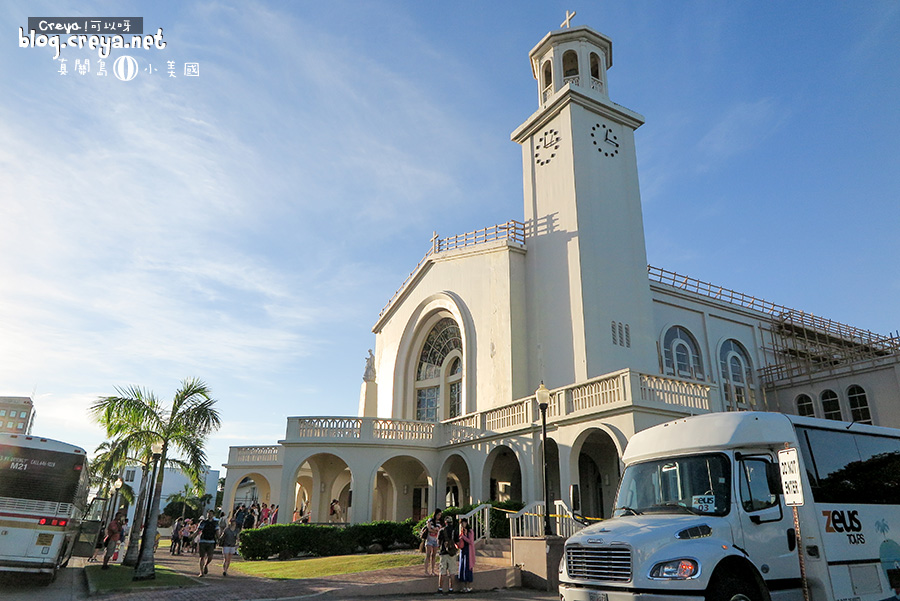
[ Far from a commercial glass chapel, the cathedral stands pristine and majestic ]
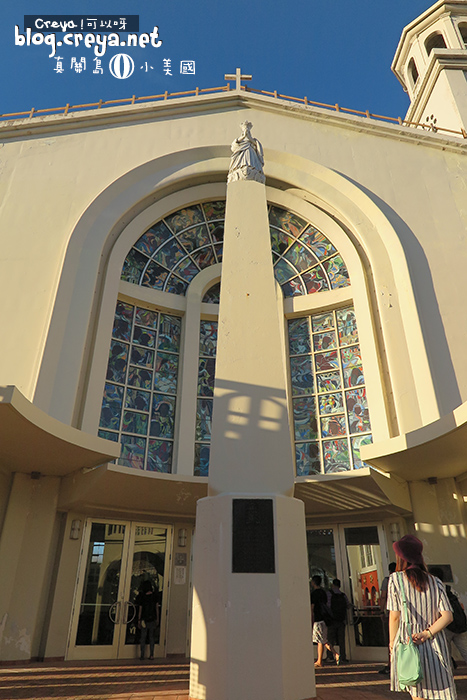
[ Even on a tropical island, the intricate stained glass detail is remarkable ]
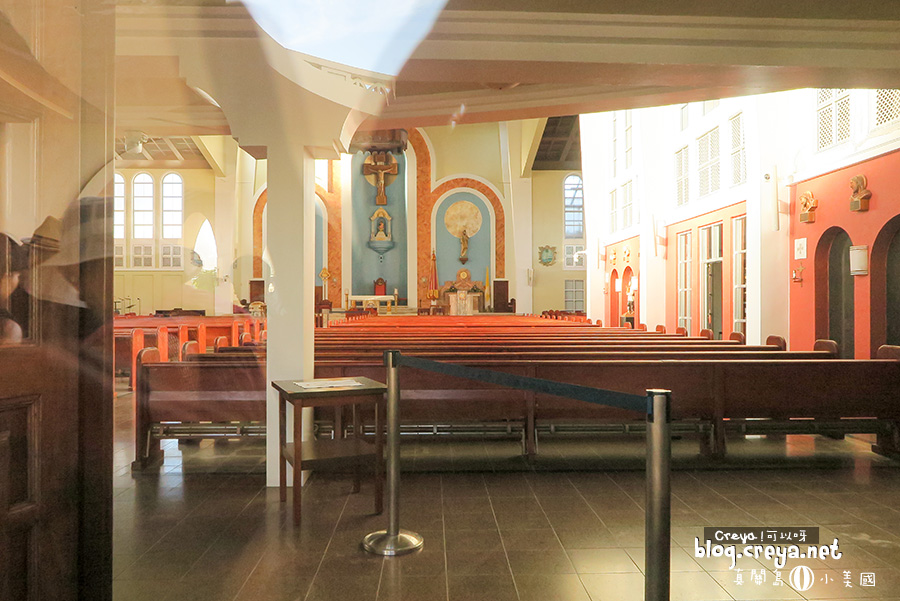
[ Locked out of the cathedral, we had to peer through the glass—could that be the mysterious hair-growing statue? ]
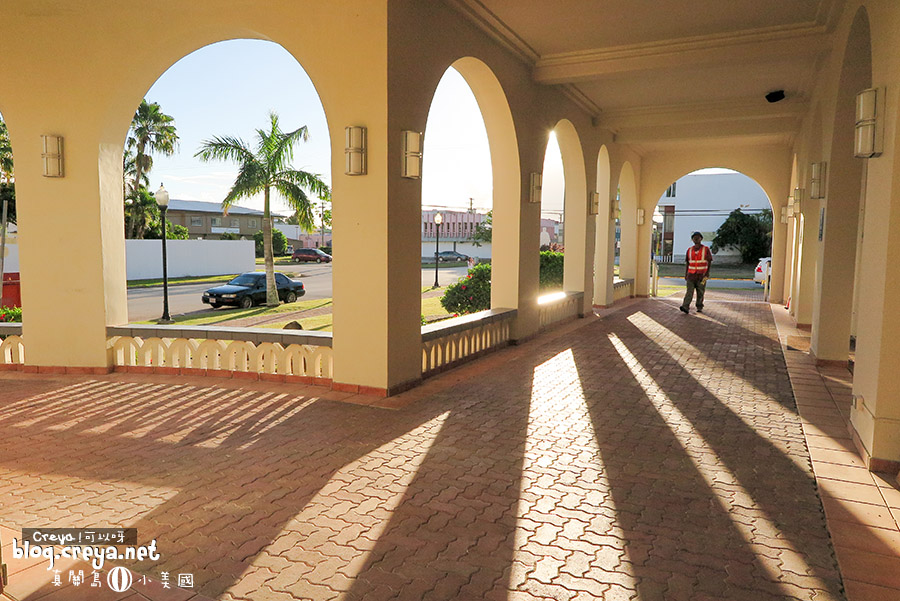
[ Exploring Spanish heritage in America’s closest Pacific territory—what a deal! ]
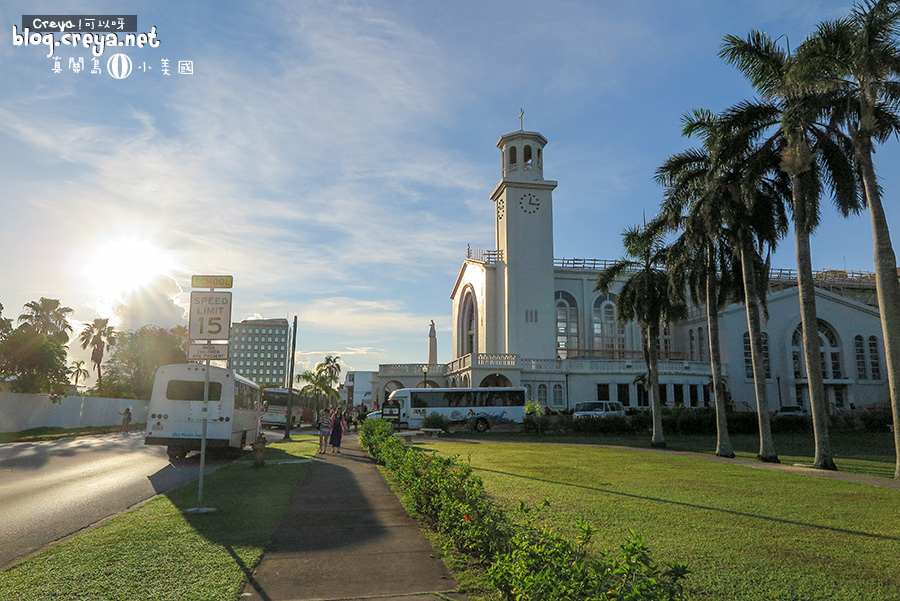
The Pope John Paul II Memorial Statue might look like an ordinary landmark at first glance, but our guide revealed an incredible secret: the entire statue rotates 360 degrees every 24 hours! It moves so slowly that you won’t catch it with the naked eye, but rotating ensures the Pope’s blessings reach every corner of Guam—even if it leaves His Holiness a little dizzy!
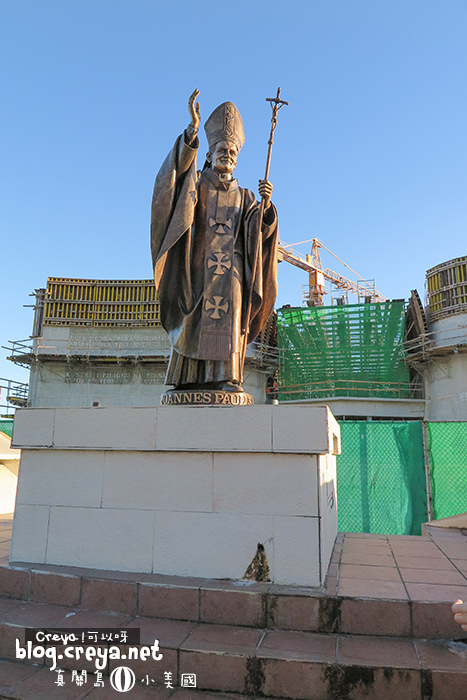
[ A statue with growing hair and a rotating Pope monument—how could you miss these island wonders? ]
Two Lovers Point (Puntan Dos Amantes) is easily the crown jewel of Guam’s city tours. Steeped in a tragic Chamorro legend of star-crossed lovers, its fences are covered with love locks, and couples ring the ceremonial bell for blessings. But the real highlight? The breathtaking, cliffside panorama stretching all the way across Tumon Bay. Standing atop the cliff taking in the endless blue ocean, it’s impossible not to fall head over heels for Guam!
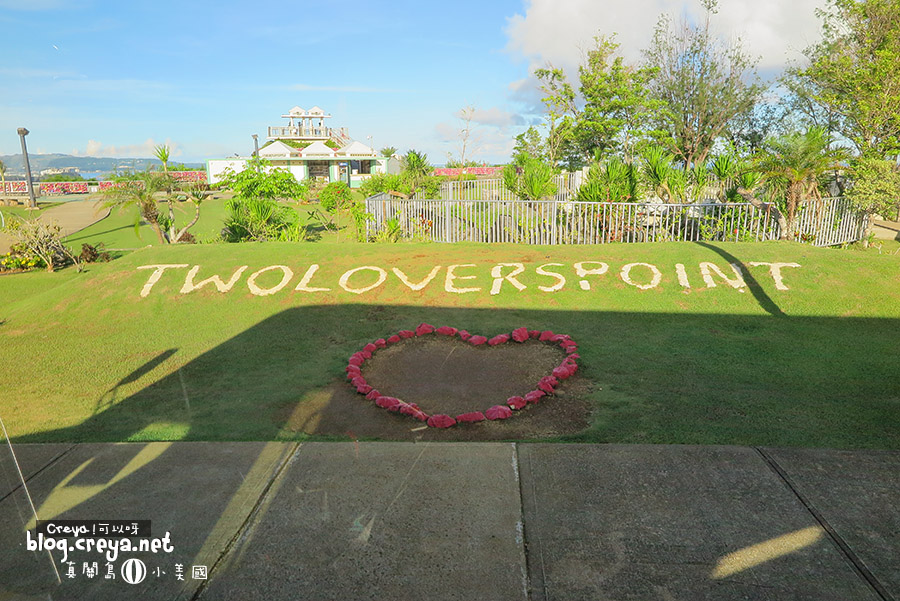
[ Two Lovers Point—a spot blatantly designed for Instagram photo ops ]
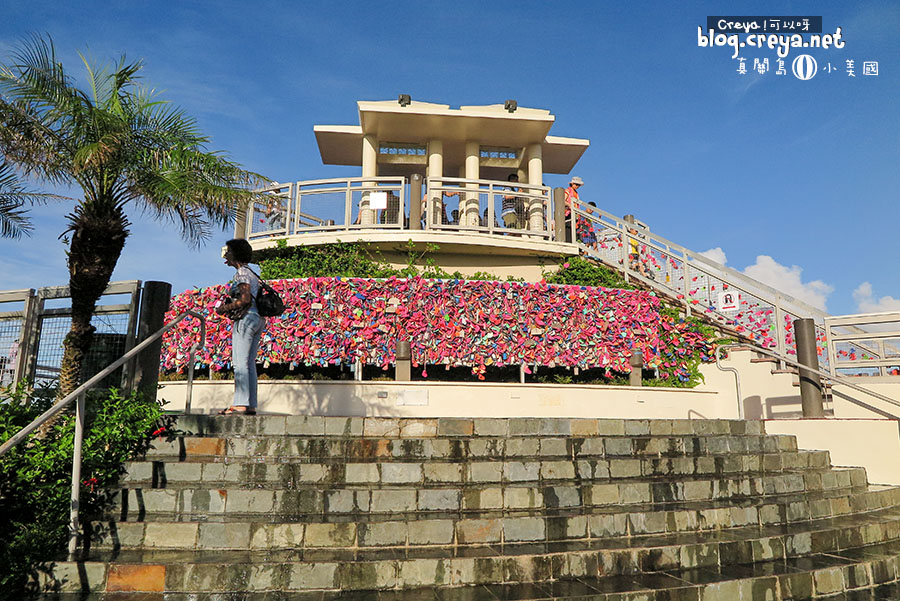
[ Yep, all those colorful trinkets are love locks, sealing eternal romance ]
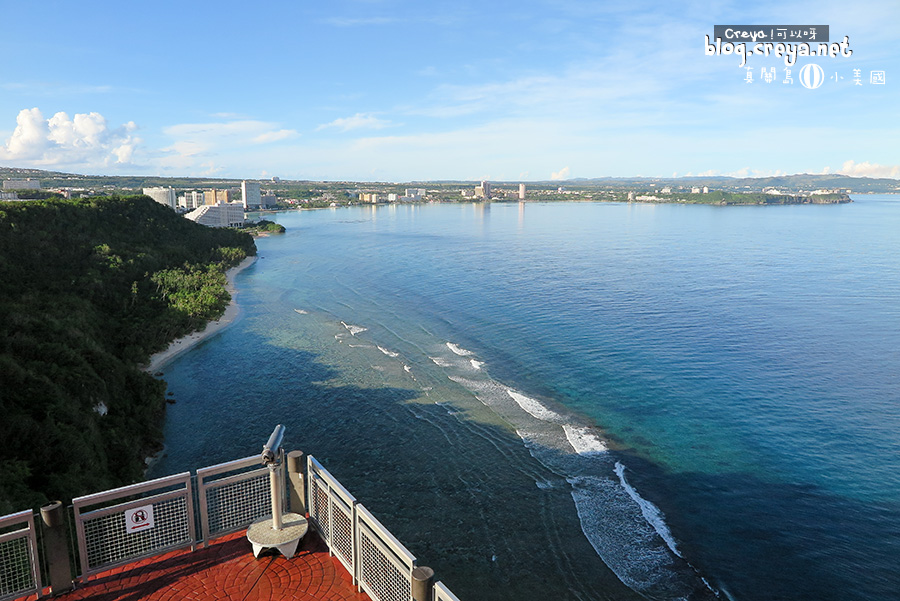
[ Panoramic views of Tumon Bay from the lookout point ]
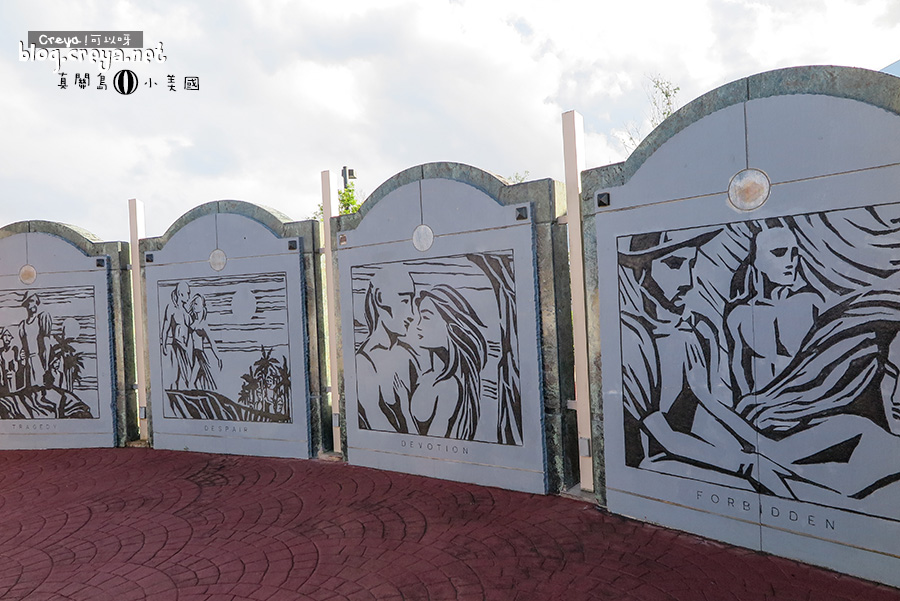
[ The legendary lovers from the myth… completely in the buff! ]
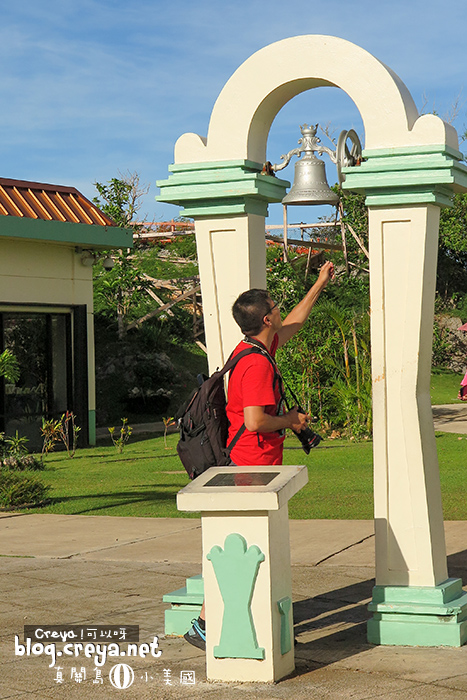
[ Because love locks aren’t enough—here’s a love bell to chime your romance across the ocean ]
War in the Pacific National Historical Park was our very first stop on our self-drive tour around southern Guam. Geographically, though, it sits near the Statue of Liberty in central Guam. As one of WWII’s major amphibious landing sites, it holds deep historic and cultural significance for the island, serving as a sobering reminder of the realities of war. The sprawling park features open-air artillery displays, historical exhibit panels, sweeping coastal views, and lush lawns—perfectly capturing Guam’s signature laid-back approach to sightseeing.
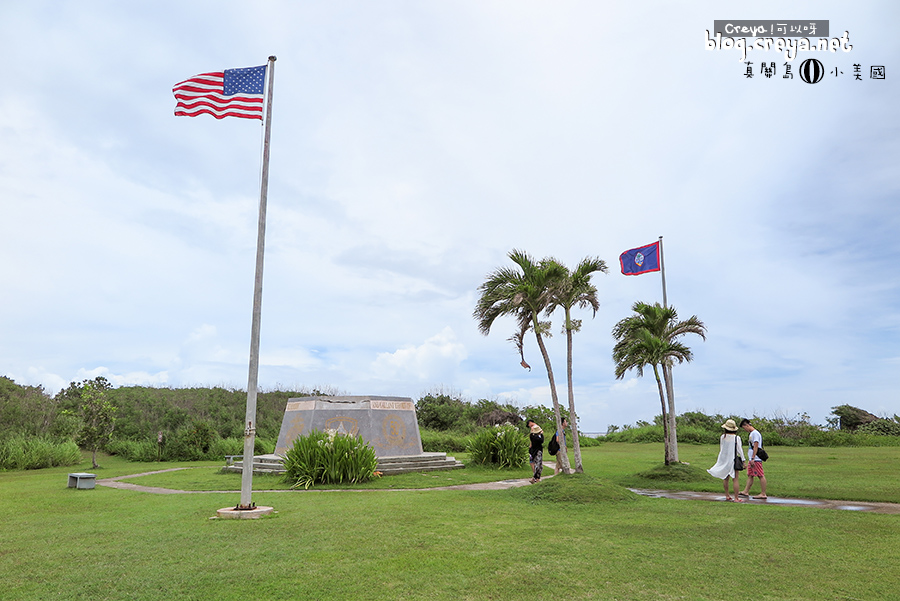
[ I actually made it to America! One step closer to the American Dream (not that I had one)—with the Guam flag flying on the other side ]
Deeply moved and inspired by the somber gravity of World War II history, naturally we responded by turning the park lawn into a baseball diamond to stage our own championship match—in Guam of all places, legendary grounds for Taiwanese Little League glory.
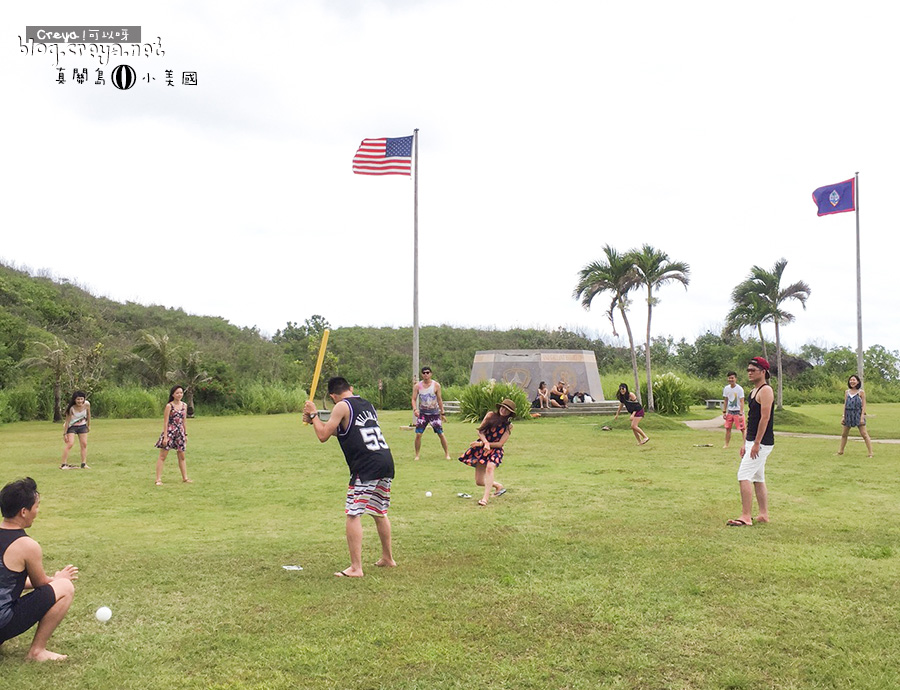
[ The Taiwanese youth team makes a comeback… right in front of a war memorial ]
Fish Eye Marine Park
Located near the War in the Pacific National Historical Park, Fish Eye Marine Park sits over a massive underwater crater created by WWII bomb blasts. What was once war damage has evolved into a thriving marine ecosystem and top tourist destination. A long boardwalk—famously featured in Taiwanese pop star Bobby Chen’s music video—stretches out into the ocean, leading to a circular underwater observatory set 10 meters below the surface where visitors can admire schools of tropical fish through viewing windows. Admission to the boardwalk and observatory is US$12. This was also where we went scuba diving (though our diving adventure is a wild story of its own, so I’m giving it its own dedicated post—stay tuned!).
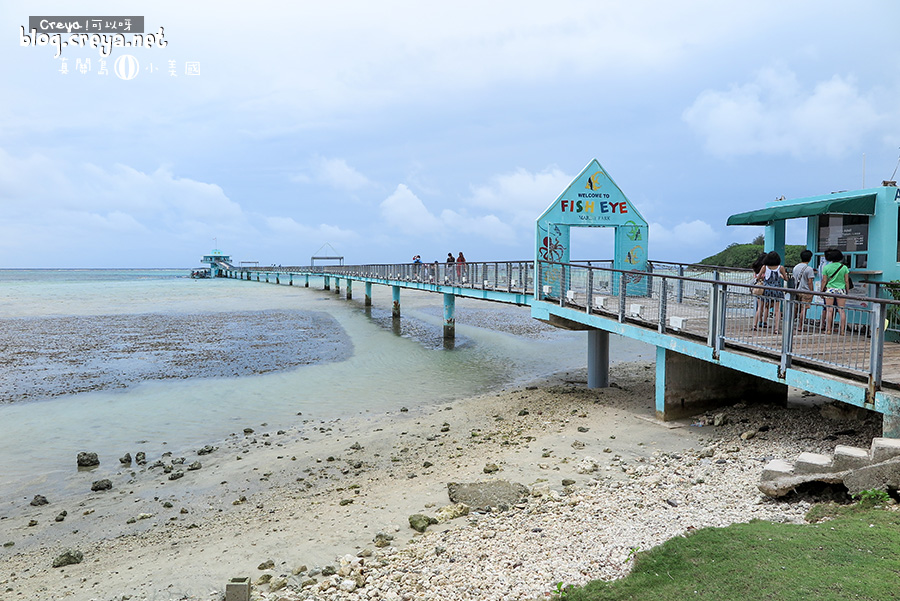
[ The undisputed theme song for Fish Eye has to be Bobby Chen’s “SUMMER” ]
Southern Guam Road Trip (Self-Drive Tour)
Since our hotel sat right on the beach, we rented a car to head south, hoping for a change of scenery with historic landmarks or traditional Chamorro-style architecture. Little did we know, practically every attraction down south is either the ocean or framed by the ocean (hardly a surprise when Guam’s highway hugs the coastline!). Even under overcast skies courtesy of a nearby typhoon, taking in the coastal panoramas from different lookouts was stunning—I can only imagine how breathtaking it looks on a sunny day.
Southwestern Guam is dotted with charming stops. After leaving the War in the Pacific National Historical Park, we took a scenic shortcut through the mountains to admire Guam’s rolling green hills, grabbed lunch at Jeff’s Pirates Cove, and then visited the Inarajan Natural Pool, Fort Nuestra Señora de la Soledad, and the Talefac Spanish Bridge. Here’s a quick 30-second tour of Southwestern Guam:
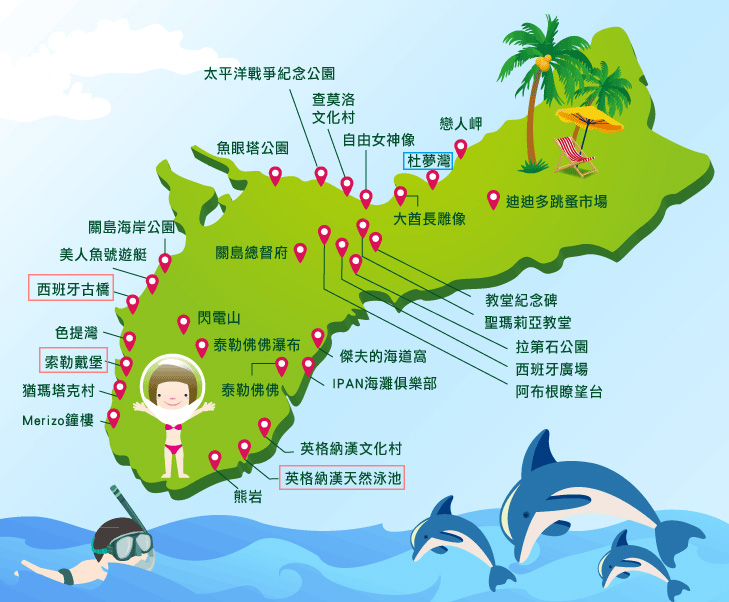
[ Map of Central Guam Attractions ] (This detailed map is courtesy of Startravel)
Inarajan Natural Pool
This was meant to be the highlight of our southern loop—a high-diving battle royale! But on our very first day, our guide broke the news: the diving board had broken off. Sure enough, seeing it in person, the structure was no longer a proper diving board, just a bare concrete tower. Jumping meant launching yourself aggressively forward to avoid hitting the ground below—a terrifying risk. Yet local Chamorro kids were flinging themselves off with acrobatic grace, executing feats that belonged in Cirque du Soleil.
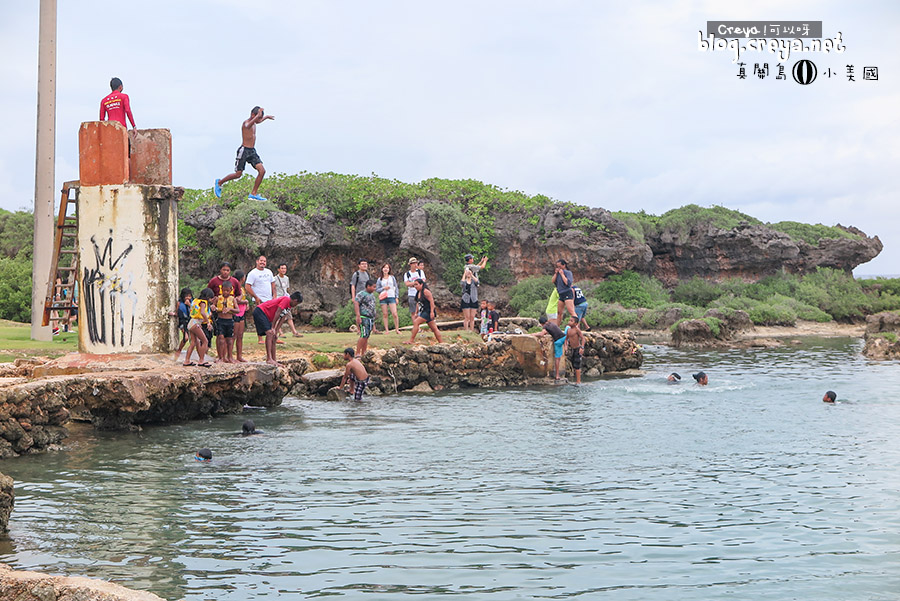
[ Forget Michael Jackson’s Moonwalk—check out my mid-air skywalk ]
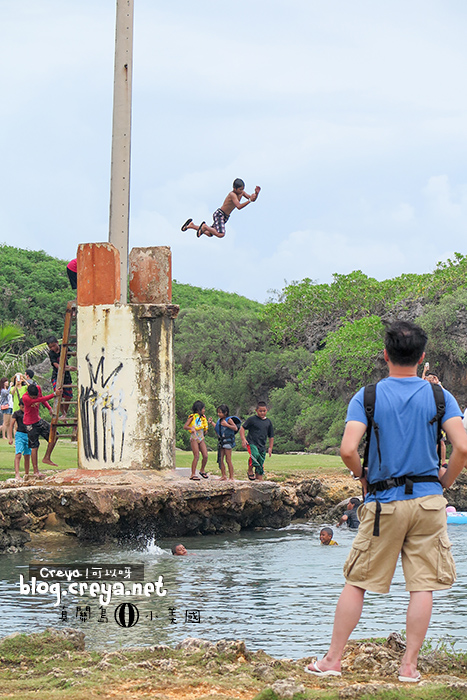
[ No proper platform? These kids remain fearless ]
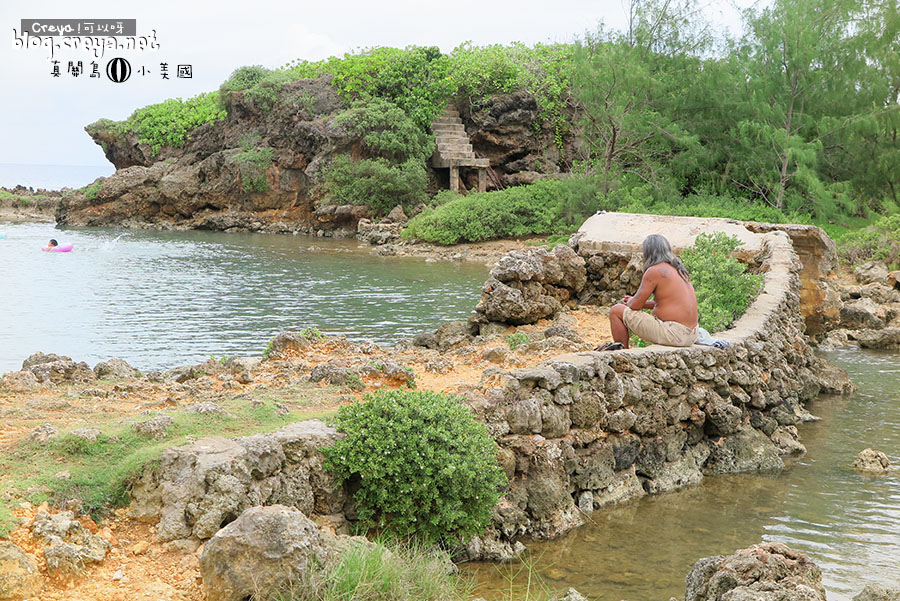
[ Even without jumping, striking a shirtless thoughtful pose by the pool works just fine ]
On weekends, Inarajan Natural Pool turns into a lively local gathering spot filled with sizzling cookouts while kids splash around in the water. The laid-back, community vibe reminded me of weekend park BBQs back in Australia. If you happen to drive around on a weekend, definitely drop by to soak in the local island lifestyle.
And let’s be honest—what’s a trip to Guam without a bikini photo? Here you go!
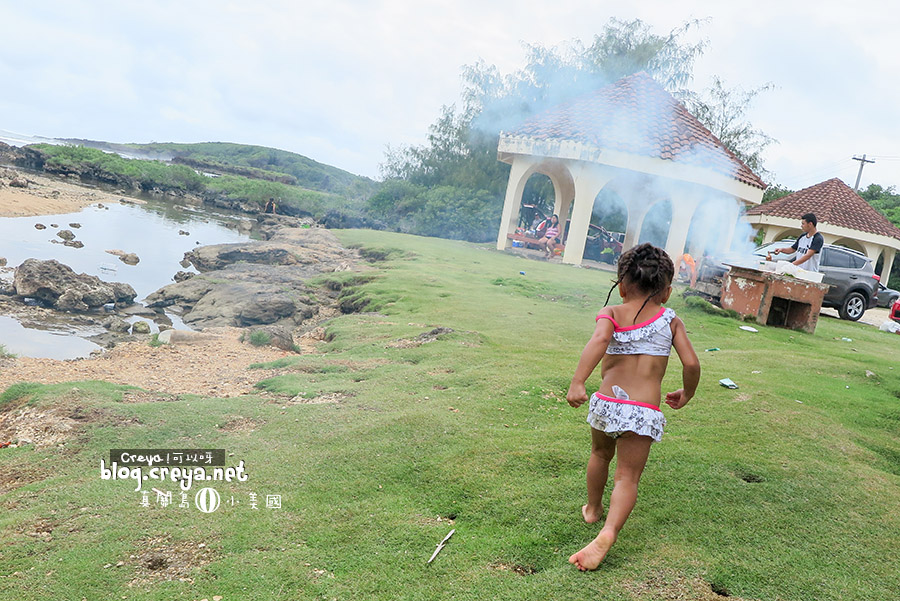
[ A bikini babe and her dad handling the BBQ ]
Fort Nuestra Señora de la Soledad
Fort Nuestra Señora de la Soledad is easily one of the most photographed spots in southern Guam. Perched high on a bluff, it offers sweeping panoramic views of Umatac, the island’s most picturesque village. Frame that view alongside Spanish-era fortresses built to ward off pirates, and you have a stunning sight even on a cloudy day.
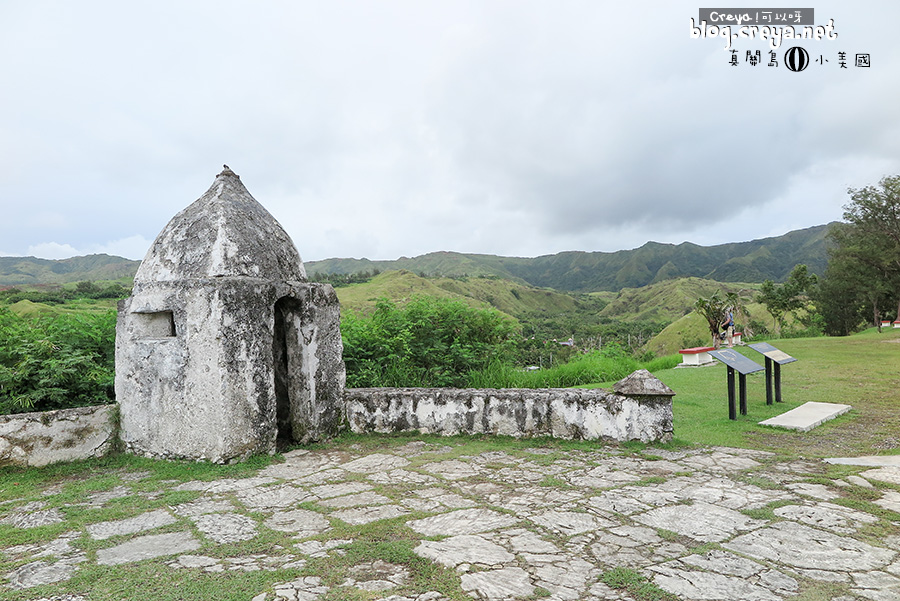
[ Panoramic views stretching across Guam’s rolling hills ]
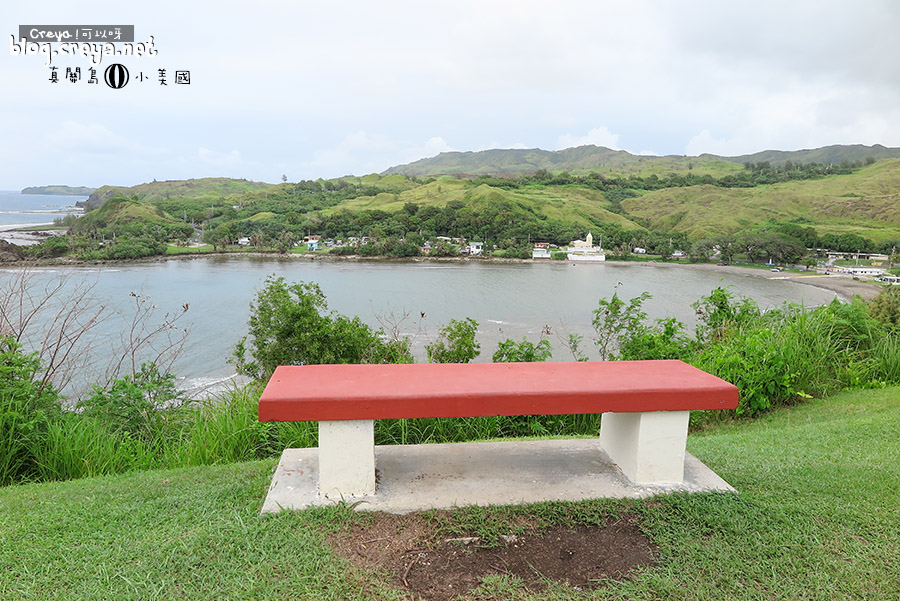
[ Sweeping vistas of the coastal village down below ]
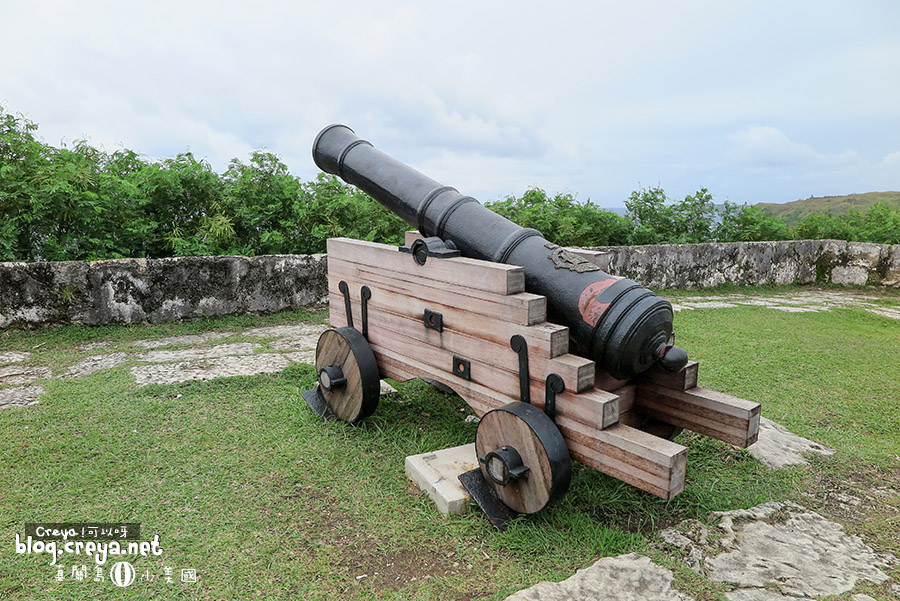
[ Even the cannons we ignored at the war memorial look photogenic here ]
While there, we met a super cool Chamorro local leading a water buffalo (carabao). He chatted warmly with tourists and let people interact with his buffalo. To be totally honest, at first we kept our guard up, wondering if he’d demand money for photos. As it turns out, fees only applied if you actually wanted to ride the buffalo; otherwise, he was just genuinely friendly and eager to chat—a delightful local encounter.
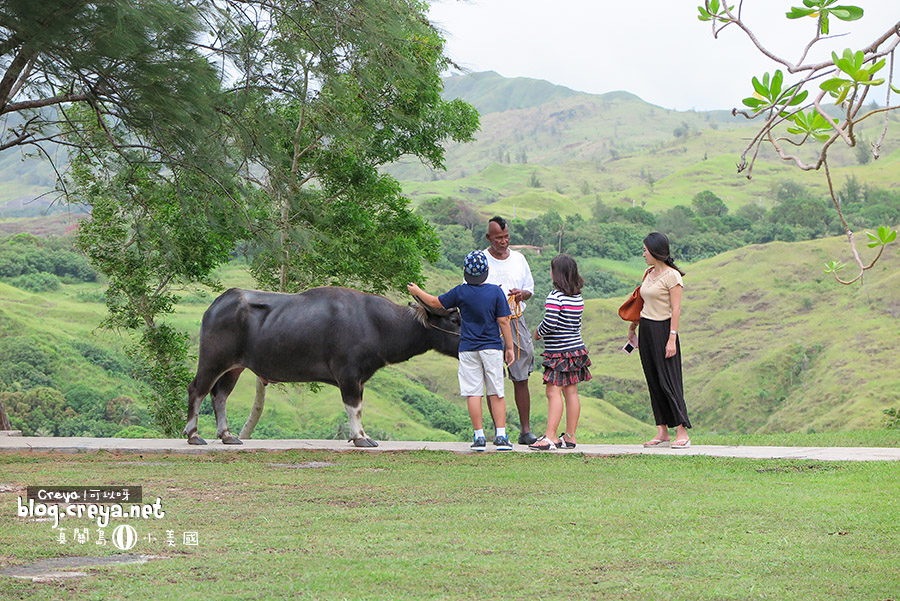
[ He’s not following trends; he’s setting them ]
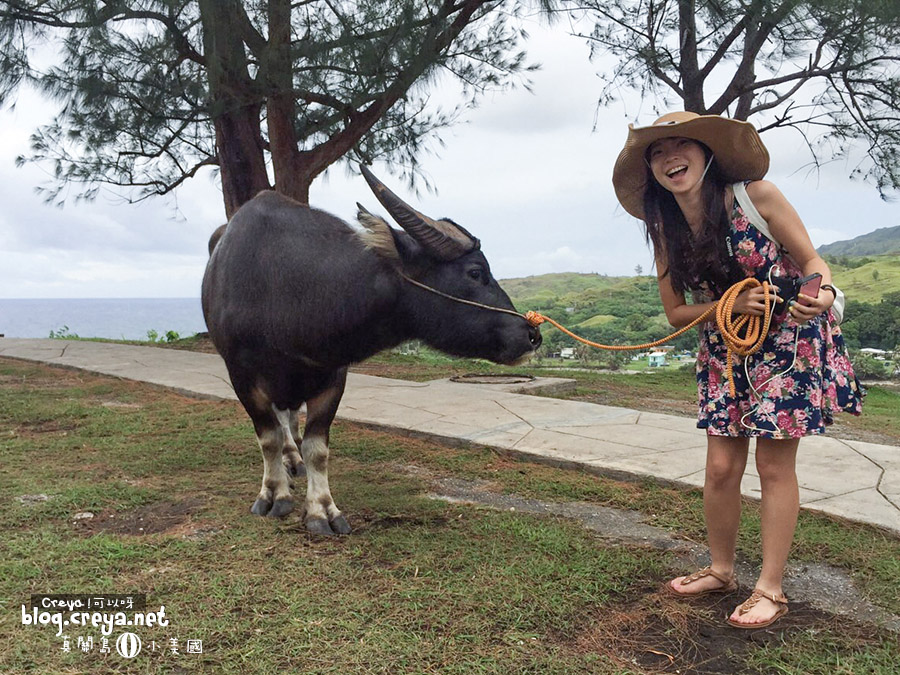
[ Though if I actually got on his back, I’d feel terrible for the poor buffalo ]
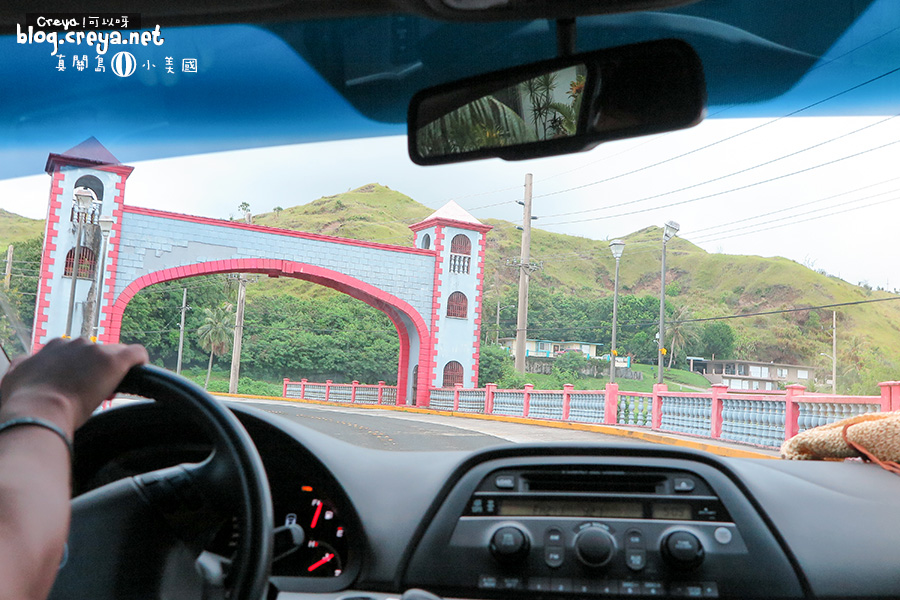
[ Looking down at Umatac Village and the Spanish-style arches of Umatac Bridge—built to keep pirates at bay in days gone by ]
Talefac Spanish Bridge
While doing our research, we heard that the Old Spanish Bridge has virtually zero presence—so much so that people often stand right on top of it asking where it is. Expecting very little, we treated it as a quick last stop on our drive. Yet, the moment we saw it, we couldn’t help blurt out, “What the… that really is one tiny bridge!” Historically, this stone bridge served as a supply route for a Spanish village; today, it sits right alongside a modern highway bridge. It’s just big enough for our group of 18 to squeeze onto before reaching max capacity. Jokes aside, the moss-covered stone bridge actually has a lovely, rustic character. But yes, it really is miniature—you’ll easily finish this stop in under five minutes.
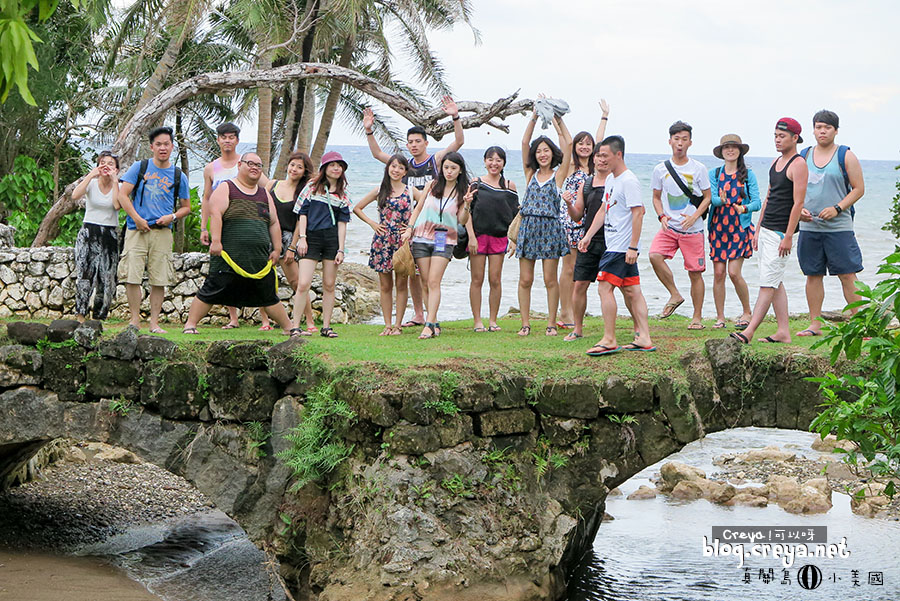
[ We tested it—this bridge officially holds 18 people. ]
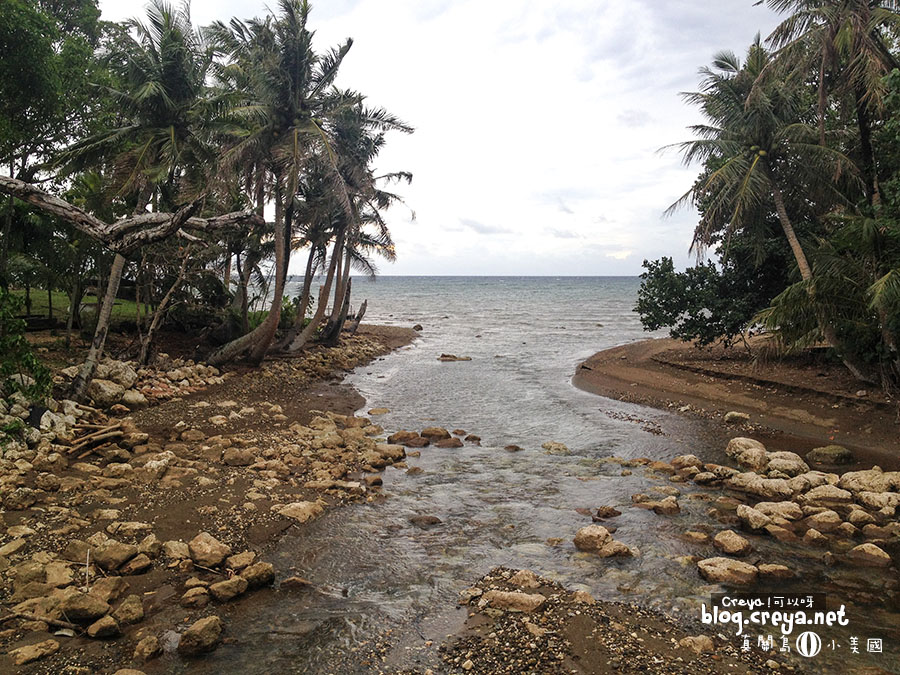
[ The other side opens out to the ocean. ]
Guam actually boasts plenty of other highly rated spots, including scenic lookouts, cultural villages, and even waterfalls. There’s also the popular Chamorro Night Market—though unfortunately, it only opens on Wednesday nights, so we missed out. Still, these land sights prove that a trip to Guam isn’t just about soaking in the ocean; it also offers great views and a chance to dive into local history. You can tailor your itinerary based on your interests and schedule. That said, even at a leisurely pace, a land tour only takes around four to five hours (unless you tap into your hidden potential for creating your own entertainment). We recommend checking out curated guides like Guam House for top highlights, then Googling any spots that catch your eye!
Further Reading:
| Guam Travel | What is Guam Really Like? A 6D4N Independent Travel Guide


