


“Give it another ten years, and you’ll be painting just as well as the master artisans!” the shopkeeper said encouragingly. I stared down at the strange little monster I’d just created with my own hands and quietly swallowed my pride.
My first encounter with kokeshi—Japan’s traditional limbless wooden dolls—wasn’t a nightmare-inducing scene out of the horror movie As the Gods Will. Instead, it happened in front of a shop window along the gentle, river-lined streets of Tsuchiyu Onsen. Just a half-hour drive from downtown Fukushima City, this picturesque town is a favorite weekend retreat for locals. But Tsuchiyu offers more than just soothing thermal waters—as one of Japan’s three major birthplaces of traditional wooden dolls, it holds a deeply revered place in the country’s cultural heritage.

The wooden doll resting in my hands began its life as Japanese maple harvested from the mountains surrounding the hot springs. Shaped and polished by master woodturners into a delicate silhouette, it was then brought to life with fine brushstrokes of ink and pigment, breathing a vibrant soul into humble timber.
Born from local natural materials, deep reverence for mountain deities, and rich folk traditions, every kokeshi crafted in the hot spring towns of Tohoku bridges the gap between nature and craft, the visible and the divine.
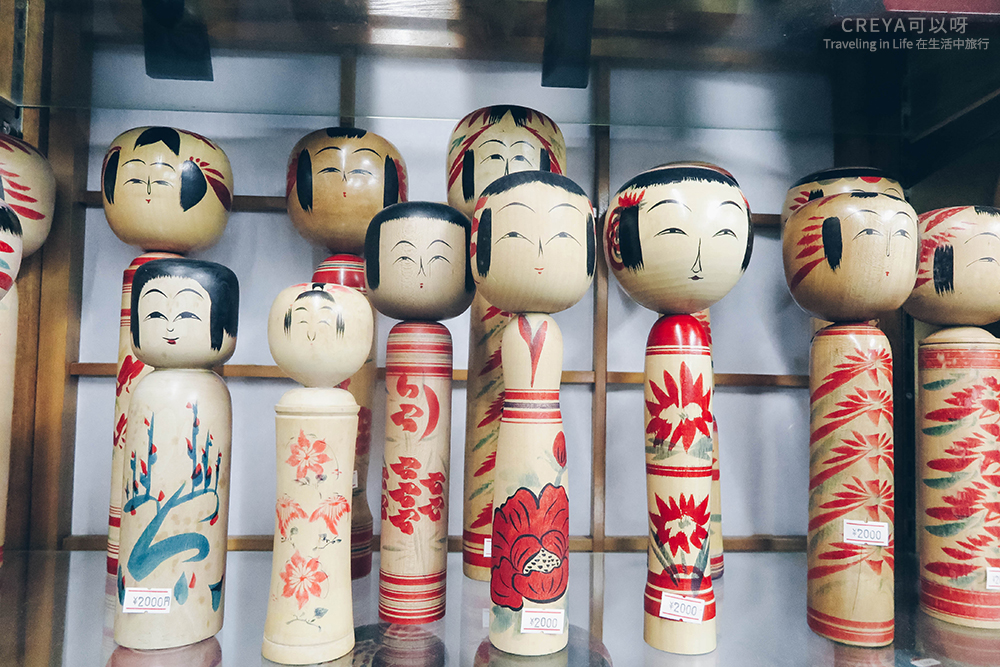
I fell in love with the quiet serenity of Tsuchiyu Onsen. I loved strolling along historic streets enveloped by forested peaks and babbling streams, spotting kokeshi dolls tucked into cozy corners, each whispering stories of local spirit. I spent hours admiring the deliberate, delicate strokes on the figures lining display cases. Between crisp early mornings and relaxing afternoons, I soaked in open-air hot springs with views of the surrounding wild, devoured silky-smooth Tsuchiyu hot spring puddings stamped with kokeshi logos, and drifted off to sleep wrapped in futons scented with fresh tatami. It was pure, restorative bliss for body and soul.
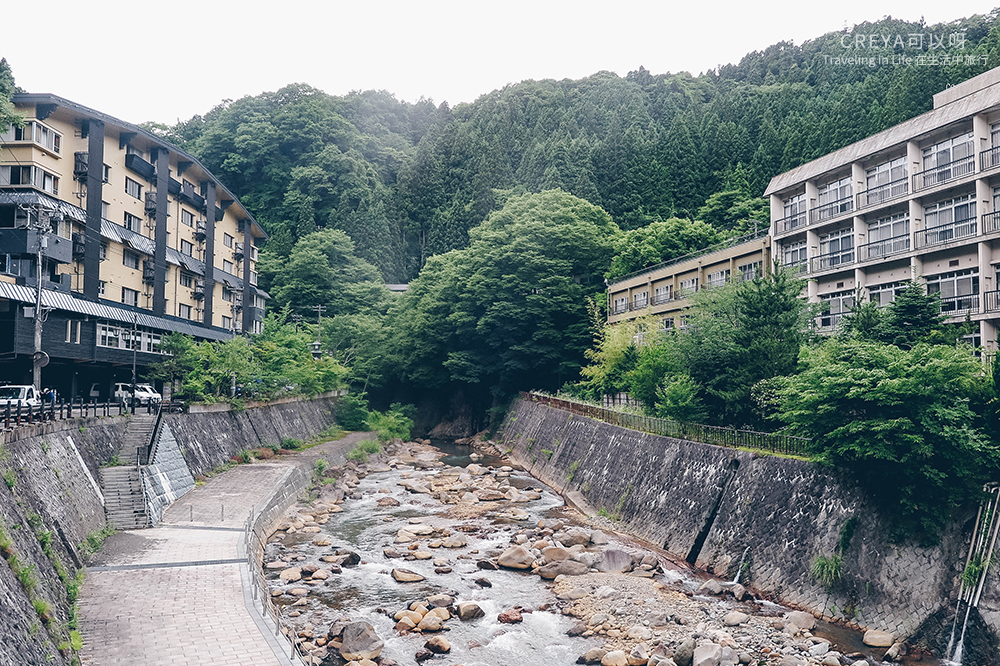
Tsuchiyu Onsen gave birth to the kokeshi doll, but it is the kokeshi doll that truly defines Tsuchiyu Onsen.
The Grassroots Origins of Kokeshi
With round heads resting on armless, legless cylindrical bodies, kokeshi dolls bear an uncanny resemblance to swaddled infants. Hand-carved and hand-painted, each doll’s unique personality—whether demure or playful, charming or quirky—is born from a few swift strokes of an artisan’s brush. No two dolls in the world are ever exactly alike.
Unique to the hot spring regions of Japan’s Tohoku district, kokeshi dolls carry a rich variety of origin stories. One tale suggests that local parents, unable to afford store-bought toys, turned to the surrounding forests to craft simple wooden figures inspired by pacifiers—sized perfectly for tiny hands to hold. During ancient smallpox epidemics, folk belief held that red toys (akamono) could ward off disease. Coated in red pigments, kokeshi became cherished talismans, carrying parents’ hopes for their children’s health and longevity.
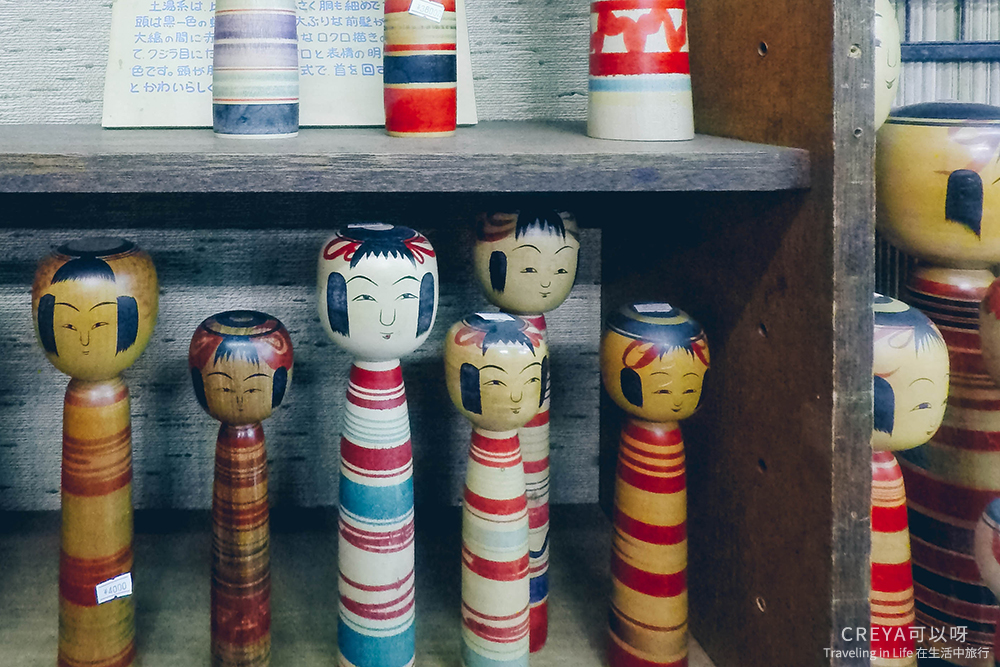
Another theory centers on economics and seasonal travel. Tohoku was predominantly agricultural, and farmers would head to hot spring retreats during the quiet winter months to ease a year’s worth of toil. Towards the end of the Edo period (1600–1868), kijishi—woodturners who usually made household bowls and tableware—began using leftover wood to carve small dolls, kendama toys, and spinning tops during downtime. Sold as souvenirs to bathers, these items served as lucky charms promising good harvests and divine favor from mountain spirits. As hot spring tourism boomed, kokeshi crafting evolved from a seasonal side hustle into a specialized art form, reaching its golden age from the late Edo through the late Meiji periods.
A full video recording of the kokeshi crafting process, from wood shaving to painting. Featured here is a Naruko-style doll (more on this below).
Regardless of which origin story holds true, traditional kokeshi dolls are inextricably tied to three core elements: Tohoku’s mountain hot spring towns, the protective tradition of akamono, and the skilled kijishi artisans who gave new life to the region’s natural timber.
Embodiments of cultural heritage, spiritual comfort, and resilience, kokeshi are no longer seen merely as children’s playthings. Today, they are prized collectibles, thoughtful gifts, and sophisticated marks of taste—sometimes even serving as status symbols among affluent collectors.
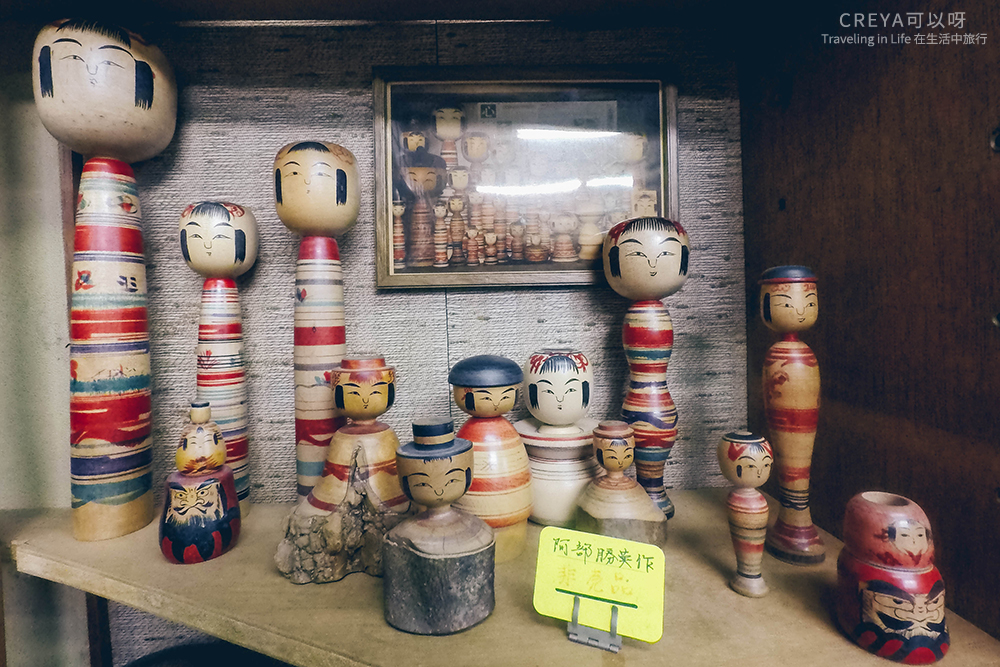
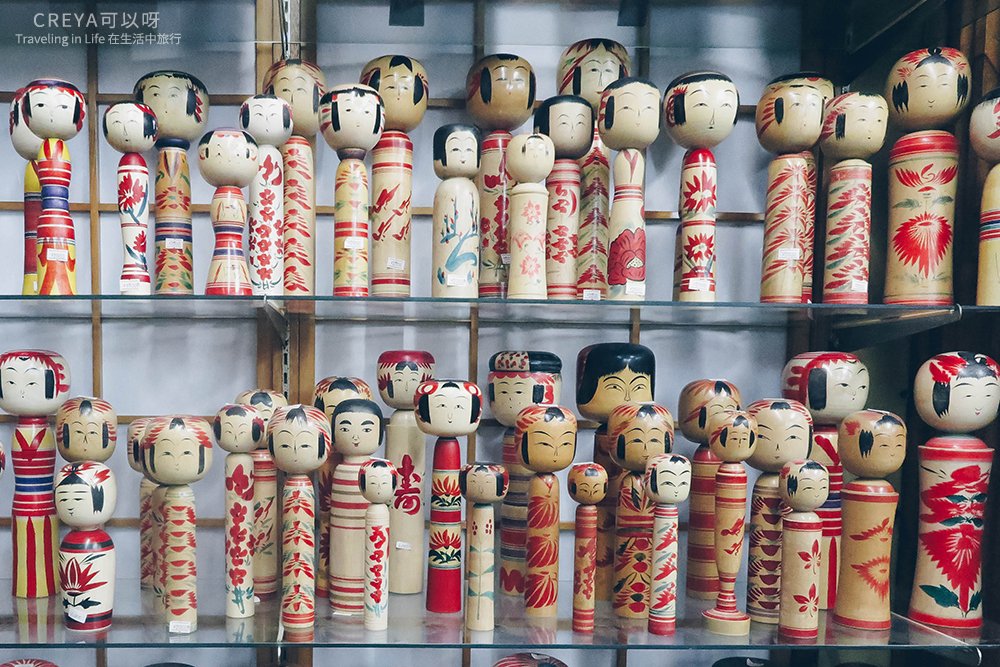
Influenced by regional customs across Tohoku, traditional kokeshi developed distinct regional styles categorized into 11 official lineages (some systems group Yamagata and Sakunami together for a total of 10). Each strain boasts signature motifs reflecting the local artisan’s environment, crafted from timber native to the local forests.
For instance, the Naruko style from Miyagi Prefecture is famous for heads that squeak pleasantly when turned. Farther north in Aomori Prefecture, Tsugaru dolls incorporate geometric patterns influenced by the indigenous Ainu people of Hokkaido. Even ubiquitous motifs like chrysanthemums vary wildly: Miyagi’s Sakunami style renders the blossom in a unique shape resembling a crab.
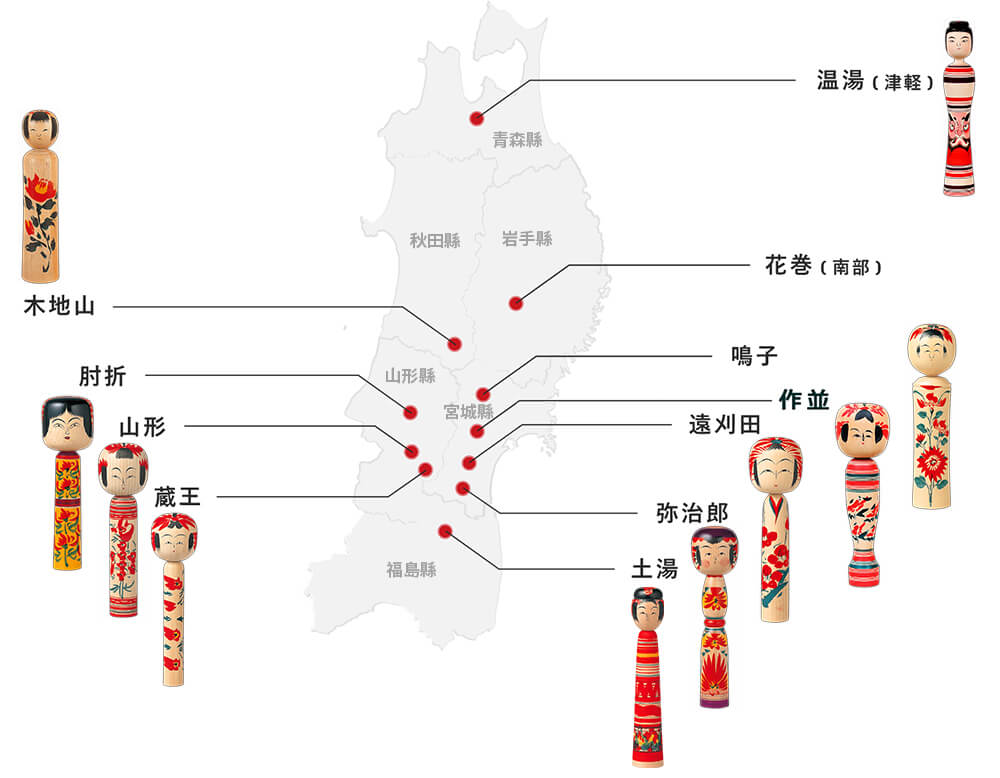
Following World War II, a movement of “creative kokeshi” (shingata kokeshi) emerged. Freed from the strict conventions of the 11 traditional schools, artisans experimented with bold shapes, vibrant palettes, and artistic themes, spreading kokeshi making across all of Japan.
With all those rigid rules out the window, I figured I actually had a shot at making one myself!
(Besides, no matter how bizarre it turned out, I could always just call it “creative modern kokeshi,” right? Heh.)
Kokeshi vs. My Monster-Making Hands
Visitors to Fukushima’s Tsuchiyu Onsen can try their hand at painting a customized kokeshi doll. The traditional Tsuchiyu style features fine concentric rings painted atop the head, while the body is decorated primarily with simple stripes and subtle accents.
In other words, even if I tried to stick to tradition, a style defined mostly by straight lines sounded remarkably forgiving for someone completely devoid of artistic talent. (Now you know why I spent all that time explaining the backstory—it was all to justify this moment!)
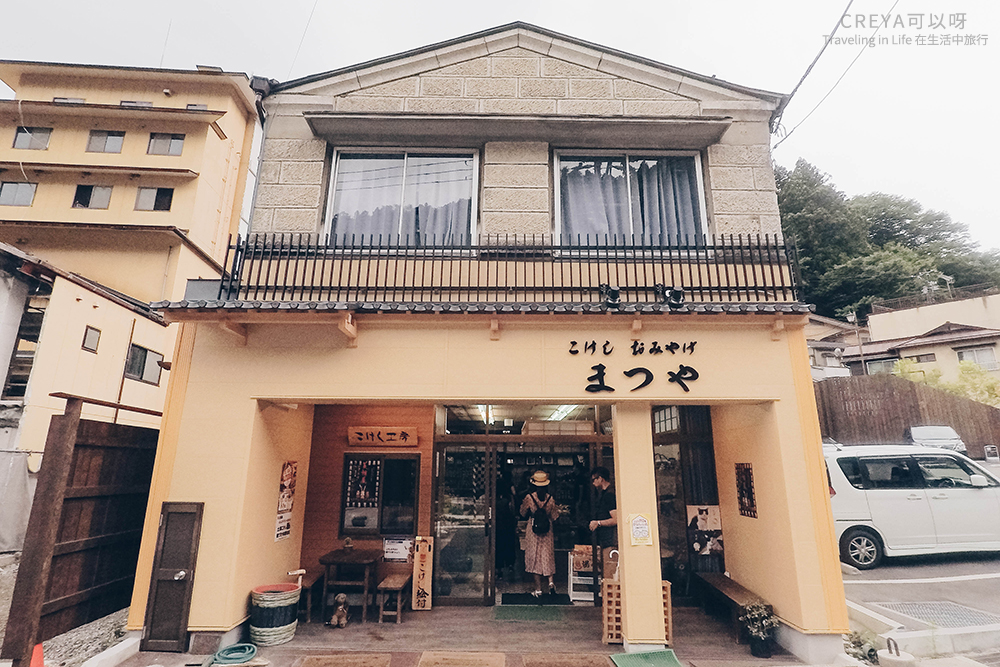
Stepping into the shop along the Tsuchiyu Onsen arcade, we were warmly greeted by a sweet shopkeeper with a beaming smile. With her crescent-moon eyes and animated chatter, she looked remarkably like the hundreds of kokeshi dolls sitting on the shelves around her.
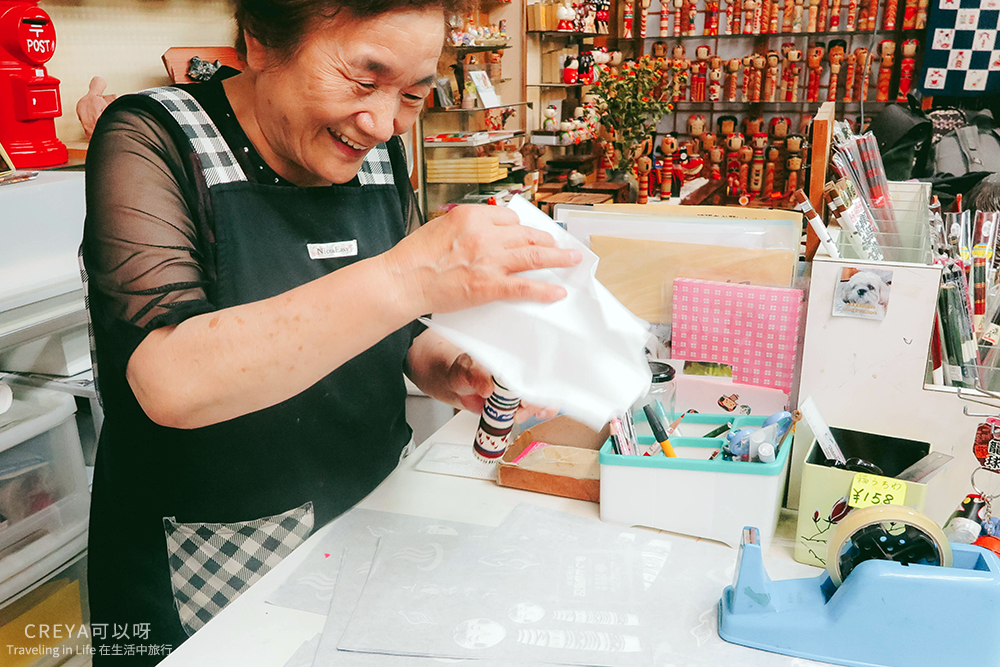
Holding the smooth, freshly turned wooden cylinder handed to me by the sweet old artisan grandmother, I found myself staring down a completely blank slate. Giving this little doll her soul and defining her lifelong expression felt like a terrifyingly huge responsibility. Where on earth was I supposed to start?
My genius backup plan was to start with her outfit—clothing is much easier to fix if my hands shake, and worst-case scenario, I could always resort to my nuclear option: painting her entire body one solid color. The real source of my anxiety was her tiny head. It might be small, but it’s literally her entire face. One slip of the brush and she’d need plastic surgery I definitely hadn’t budgeted for.
As soon as I sat down, the sweet kokeshi grandmother gently informed me that the very first step in bringing a doll into the world is painting her facial features—so she can open her eyes and see the world while you frame her overall proportions. I spent ages practicing draft lines on paper, but bringing the brush to actual wood was a whole different story.
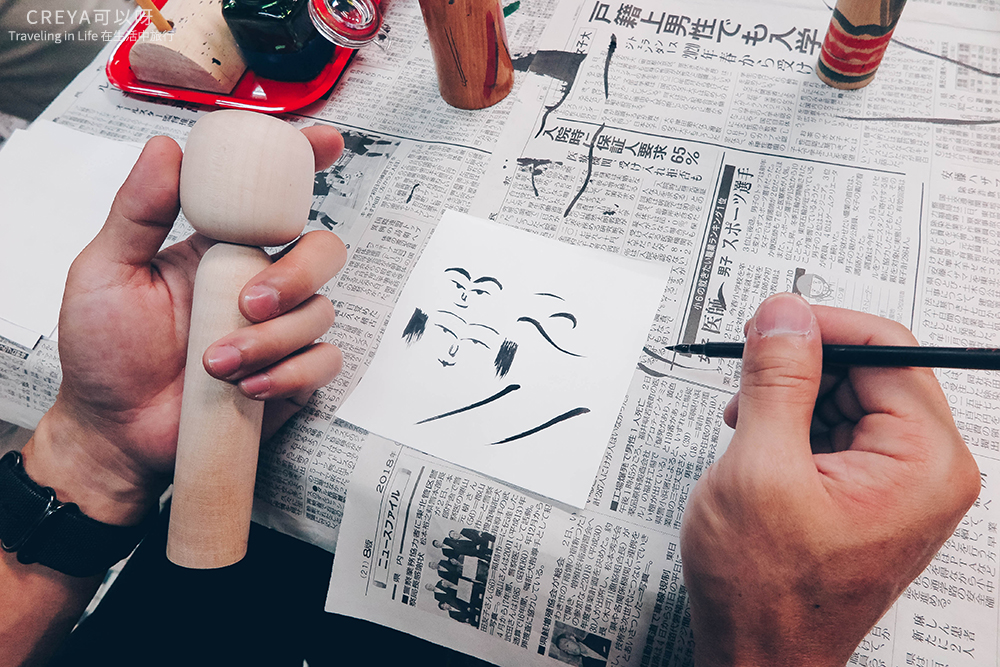
After a lengthy sequence of frantic touch-ups and nervous hesitation, I reached the grand finale: dotting the pupils. By that point, I had embraced complete surrender. When I finally snapped back to reality, the kokeshi doll in my hand was staring right back at me through two outrageously thick, bushy eyebrows.
“Give it another ten years, and you’ll be painting just like the master craftsmen!” the shopkeeper cheered warmly behind me. I stared at the little monster I had just birthed and quietly swallowed hard.
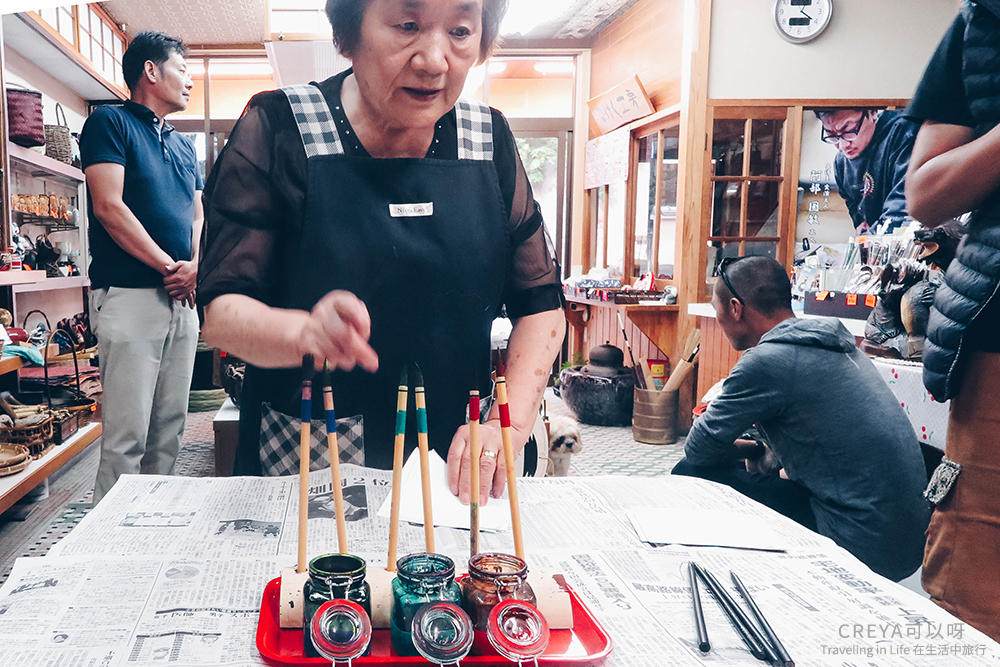
Next came the body patterns. Laying the doll onto the manual lathe, I carefully dipped my brush into the paint, held the tip steady against the wooden body at the desired width, and cranked the handle. I held my breath, praying that after one full spin, the beginning and end of the painted ring would magically align with equal thickness. It felt like a hand-painted version of a tightrope balance test.
Steeling my nerves, I adjusted my angle to press the brush closer to the curved wood. Time to face the signature concentric circles atop the Tsuchiyu-style kokeshi head! With grand determination, I gave the handle a dramatic full turn—only to reveal a line that looked like ocean waves. It vibrated with the chaotic energy of an EKG monitor, making my own heart skip a beat. (If only my lines had been as flat as a flatlined heart instead!)
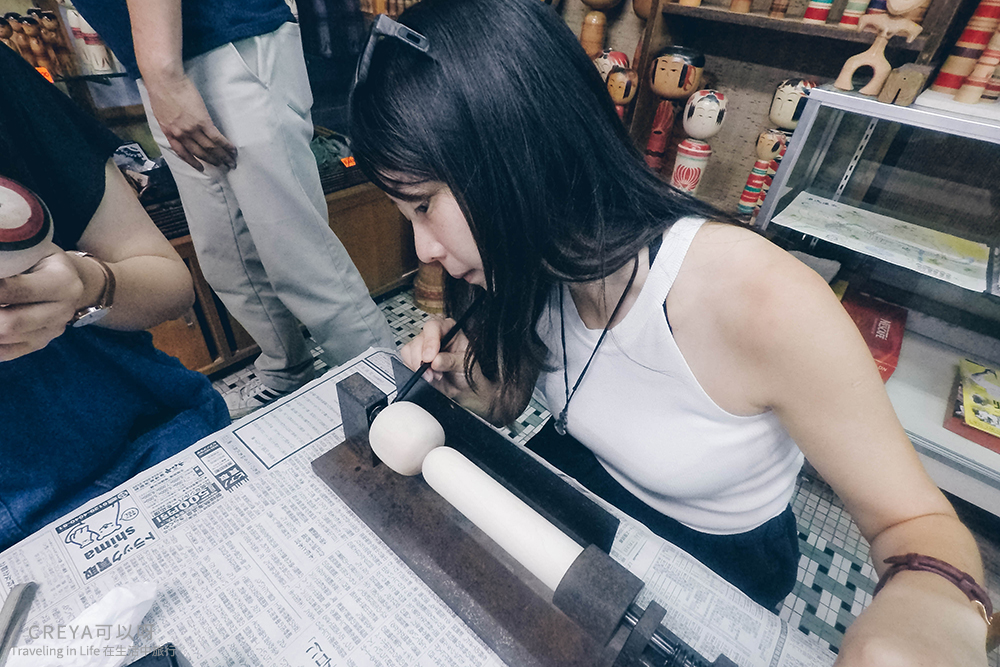
Well… let’s just call it an avant-garde, modern style of kokeshi, I thought, scratching my head.
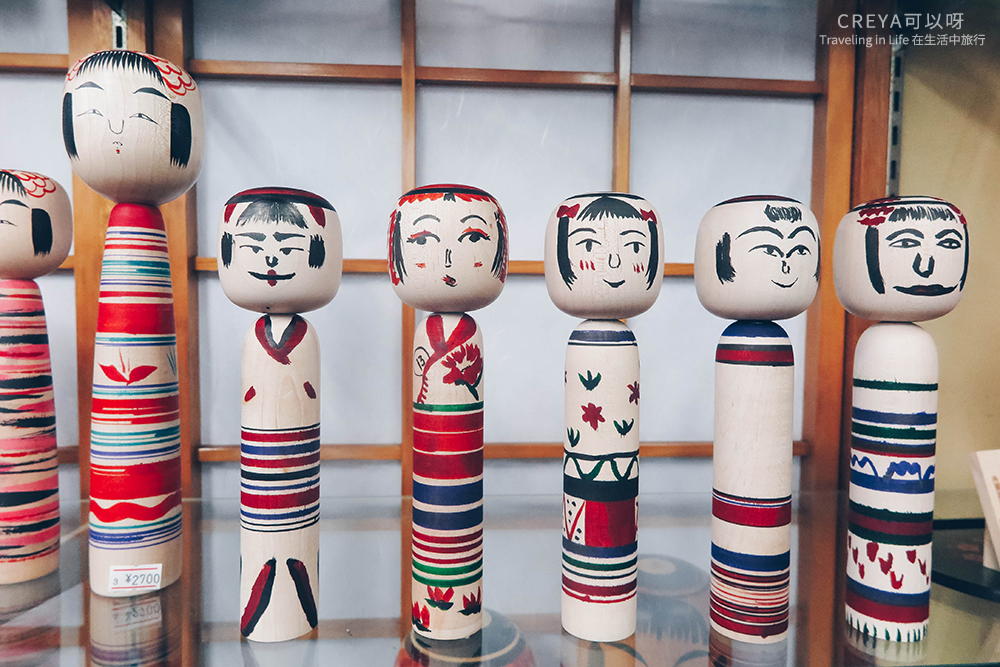
Breathing life into wood with just a brush and steady hands takes a lifetime of mastery. “Even after 40 years of practice, no craftsman ever looks at a kokeshi face and says, ‘My work here is perfect,'” master artisan Yukinori Jinnohara from Tsuchiyu Onsen in Fukushima Prefecture once said. Hearing that made me feel so much better—thank you, Master of Consolation!
I really wish they’d hang that quote on the shop wall. (And translate it into every language, please!)
| Kokeshi Painting Workshop: Matsuya Bussanten |
Price: ¥950 (about US$8.50) per person (As of May 2018)
Address: 25 Shimonochō, Tsuchiyuonsenmachi, Fukushima, 960-2157, Japan ⚑
Phone: (+81) 024-595-2156
Tsuchiyu Onsen Ryokan – Sansuiso
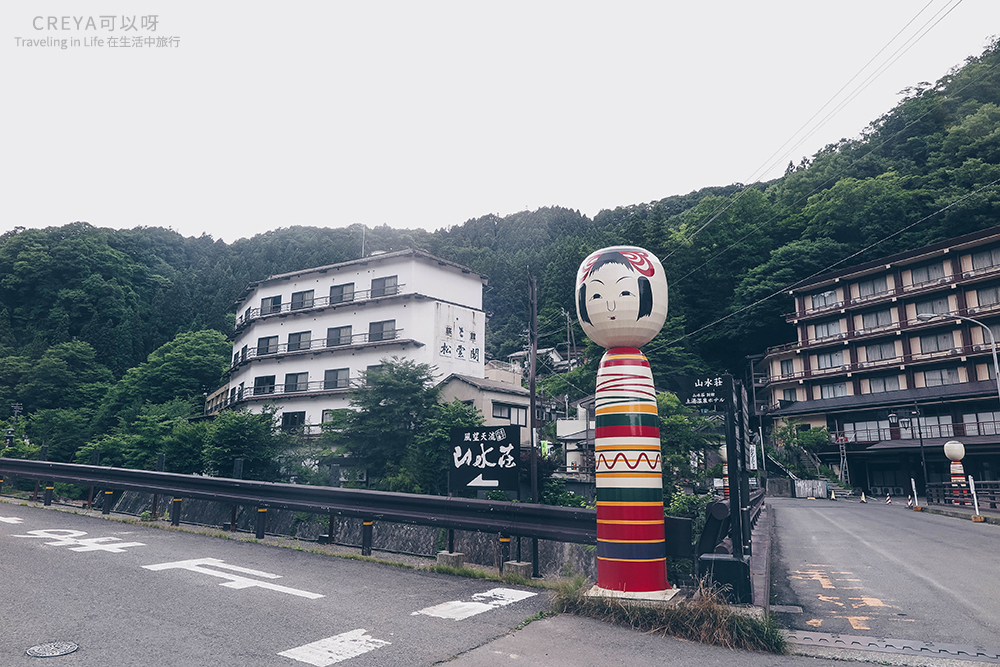
Carrying my newly painted kokeshi doll—wrapped up like a swaddled newborn by the sweet shop grandmother—I strolled back to my inn. Towering giant kokeshi statues line the shopping streets of Tsuchiyu Onsen, standing as iconic symbols of the town. On my walk there, I hadn’t paid much attention to their faces, but after my hands-on experience, I found myself sizing up their delicate features and body patterns, secretly comparing them to my own little monster just to see how far off I was (hmph!).
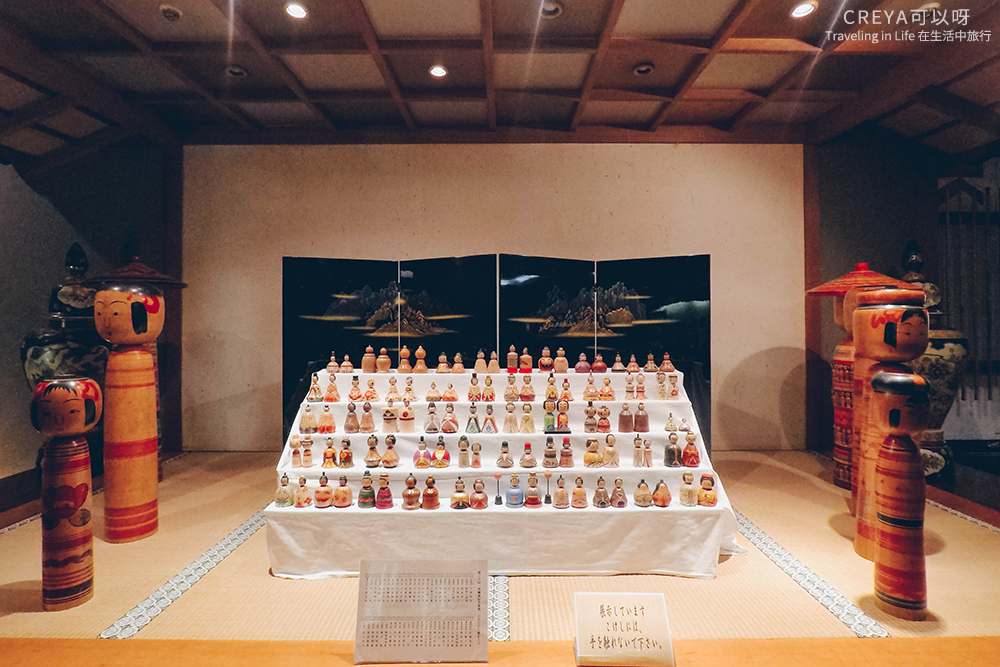
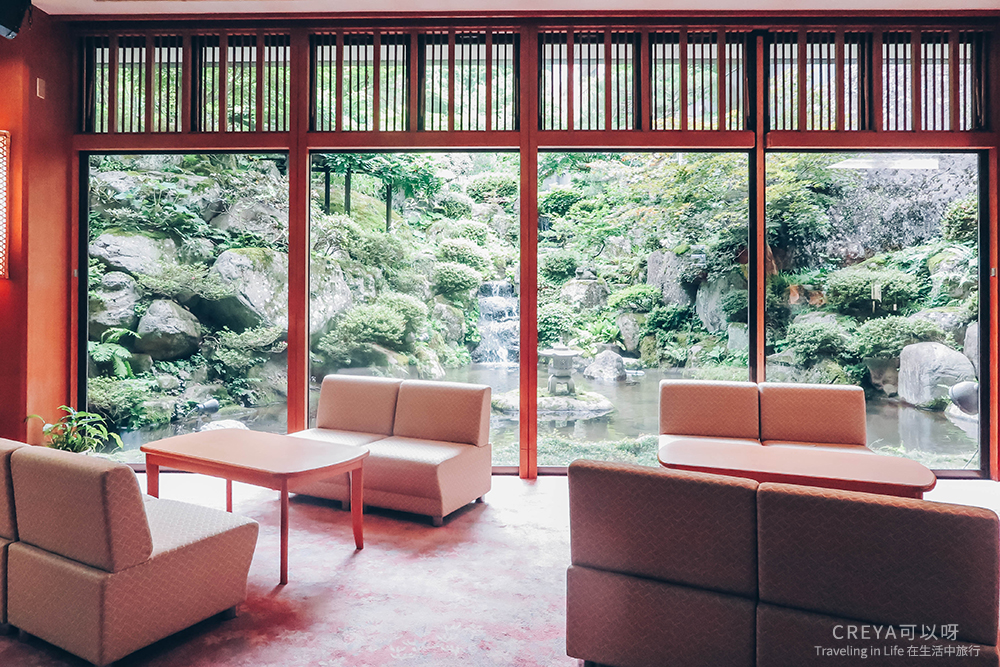
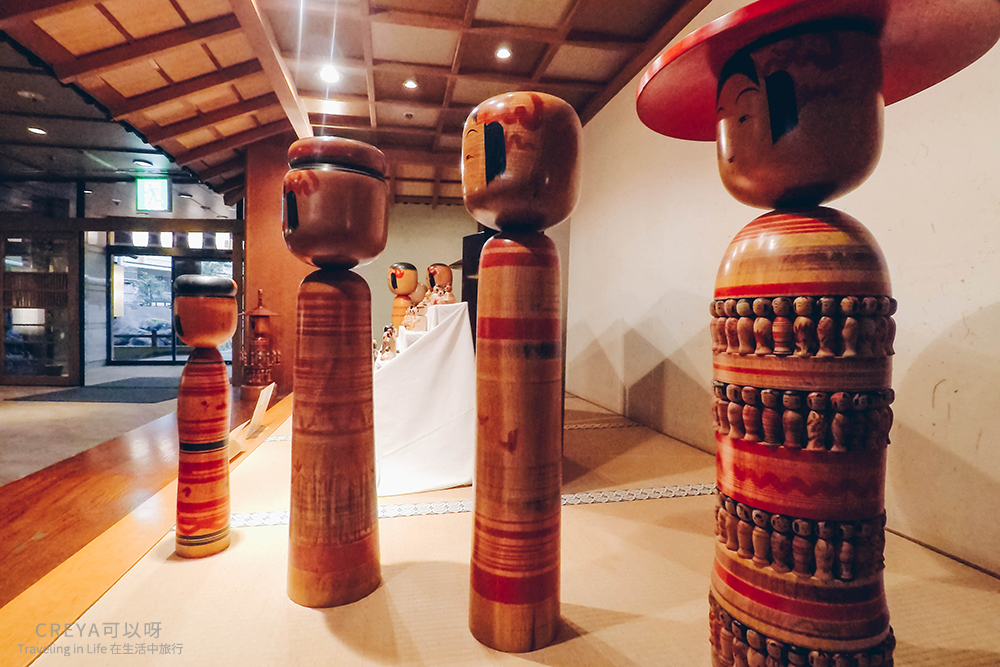
Back at Sansuiso Ryokan, the lobby featured a grand Hinamatsuri (Girls’ Day) tier display. Instead of traditional dolls, it showcased gorgeous kokeshi dolls in various sizes and styles, lined up like an ancient Japanese imperial court in session. Overlooking a serene water garden, these wooden figures blended seamlessly into the cozy space, binding together the region’s rich culture. Simply relaxing here felt like pure bliss.
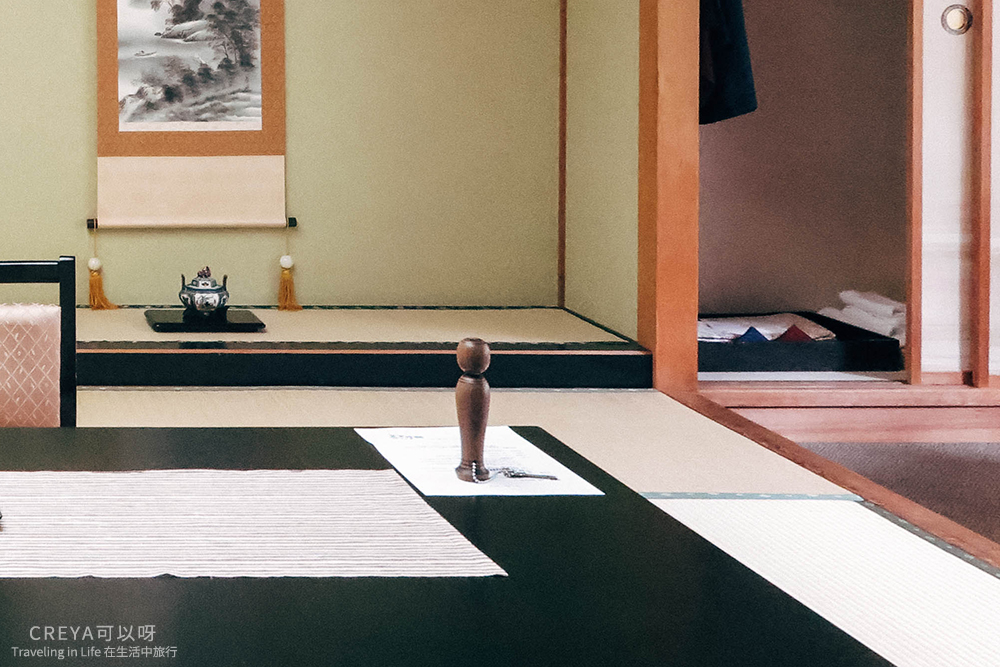
After receiving a room key attached to an adorable mini kokeshi charm, I unlocked my door and was greeted by the warm, soothing aroma of fresh tatami mats that lingered throughout my stay. With lush green mountains framed outside the window, soft tatami underfoot, and wooden kokeshi details everywhere, nature completely embraced me—the perfect restful warm-up before my upcoming trekking adventures across Fukushima.

| Tsuchiyu Onsen Sansuiso |
Address: 55 Aburabatake, Tsuchiyuonsenmachi, Fukushima, 960-2157, Japan ⚑
Phone: (+81) 024-595-2141
Rates & Availability: Booking.com Agado
Local Culinary Delights
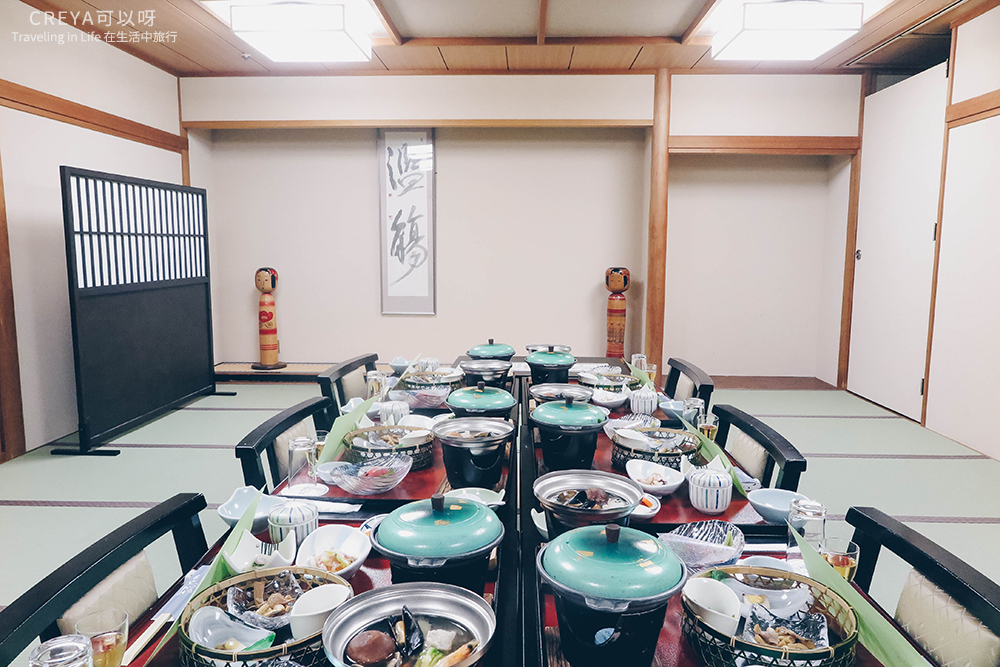
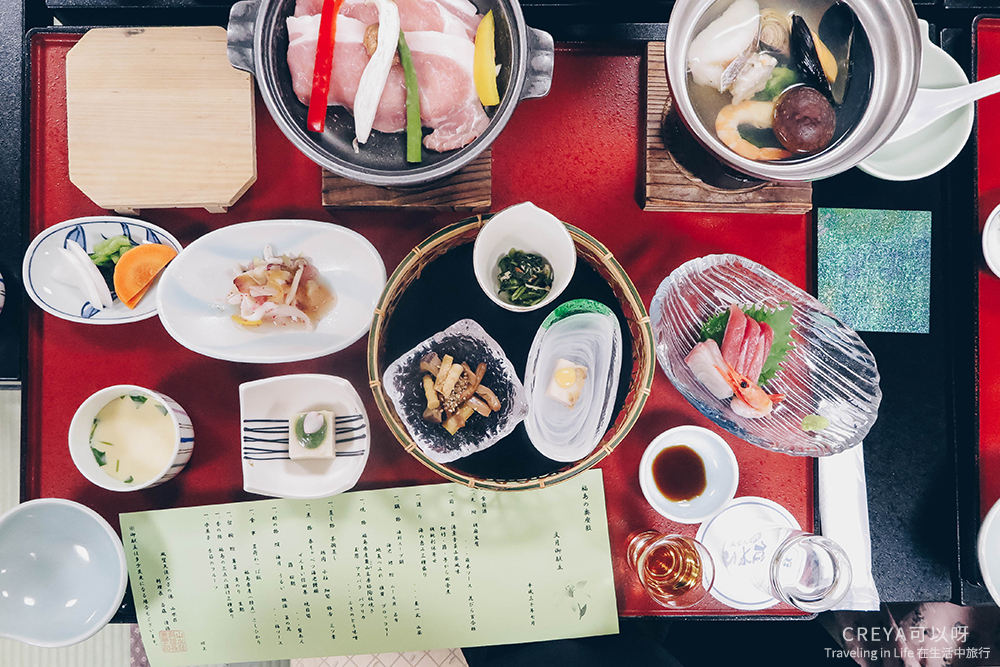
One thing I’ve learned about rural Japan is that ryokan (traditional hot spring inns) serve the most sensational, authentic local feasts. Dressed in elegant traditional kimono, our dedicated server course by course laid out a breathtaking Kaiseki dinner in our private dining room. There was sizzling Hayama Plateau pork cooked on ceramic plates, fragrant local Koshihikari rice brewed right at the table, homemade pickles, seasonal fruits, and fresh regional ingredients. Every dish felt simple yet steeped in culinary heritage, wrapping my soul in the warm, comforting flavors of Fukushima. It wasn’t just a meal; it was a vivid taste of local life.
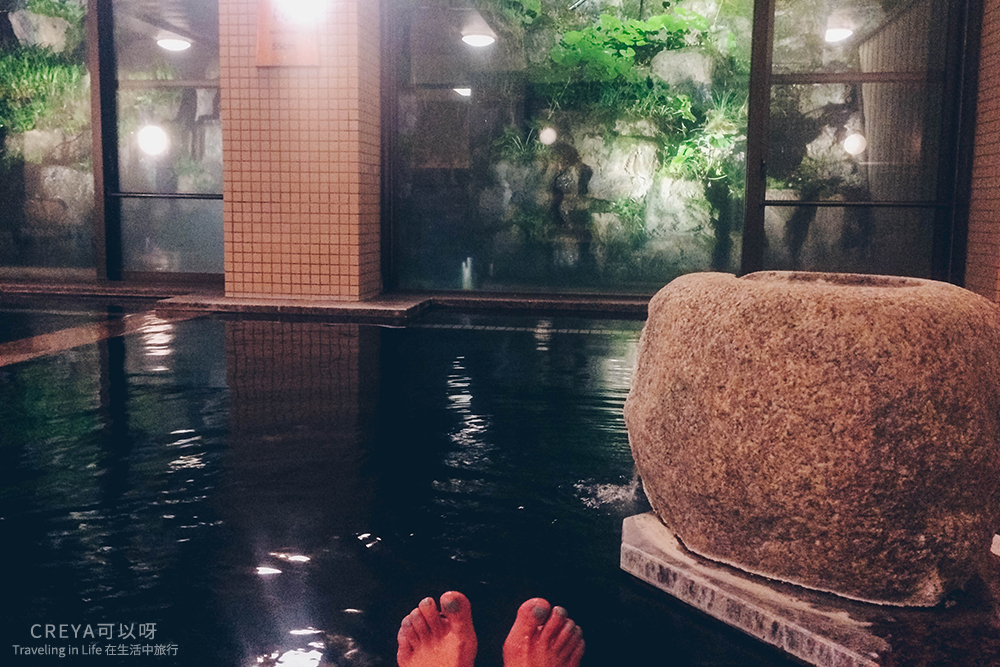
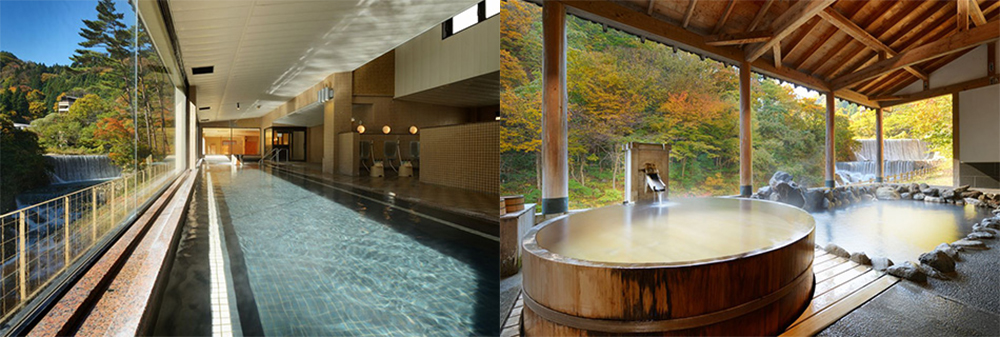
After letting the feast digest, I soaked in the steaming hot spring baths, washing away all the fatigue from my early morning flight from Taiwan. Instead of the usual post-bath bottle of milk, I treated myself to a jar from Kokeshi Pudding Honpo on the main street. The glass jar is shaped like a kokeshi head, complete with a cute doll illustration on the lid. Silky, rich, and perfectly balanced in sweetness—it melted in my mouth. Absolutely divine!
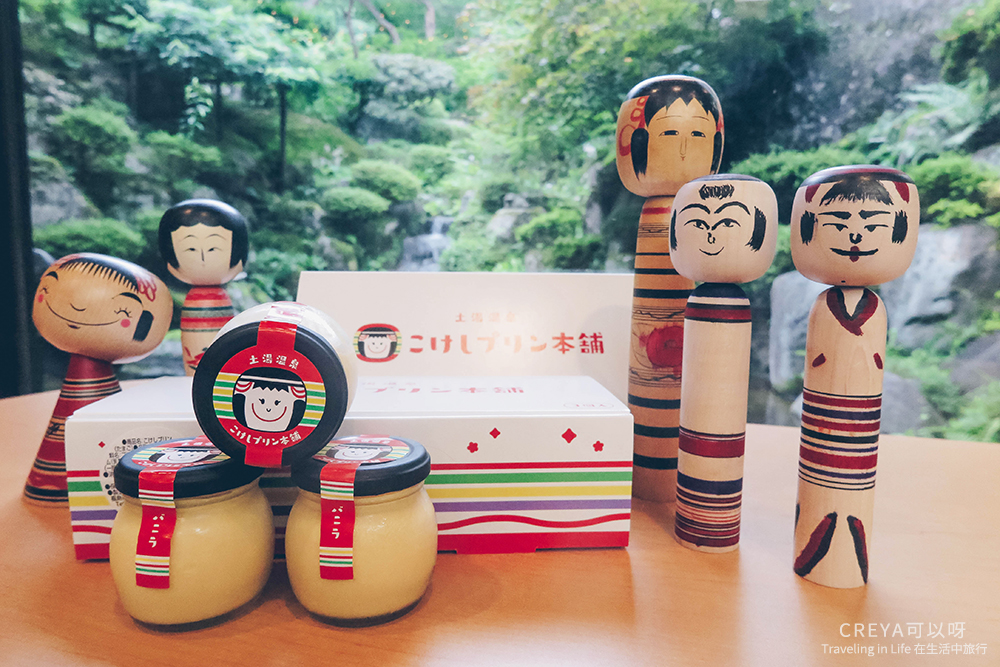
| Tsuchiyu Onsen Pudding: Kokeshi Pudding Honpo |
Price: ¥380 (about US$3.50) each (As of May 2018); visit the Official Website for details.
Address: 3 Uenochō, Tsuchiyuonsenmachi, Fukushima, 960-2157, Japan ⚑
Phone: (+81) 024-597-6528
Hours: 9:00 AM – 5:00 PM (Closed Wednesdays)
“Fell in love at first sight, and kept craving more ever since”—that perfectly sums up my feelings for both Kokeshi Pudding and Tsuchiyu Onsen.
True culture takes centuries to cultivate, making it all the more precious. Tsuchiyu Onsen preserves these treasures so beautifully—soothing hot springs, handcrafted kokeshi dolls, and exquisite local cuisine—each an irreplaceable piece of Fukushima and Japanese heritage.
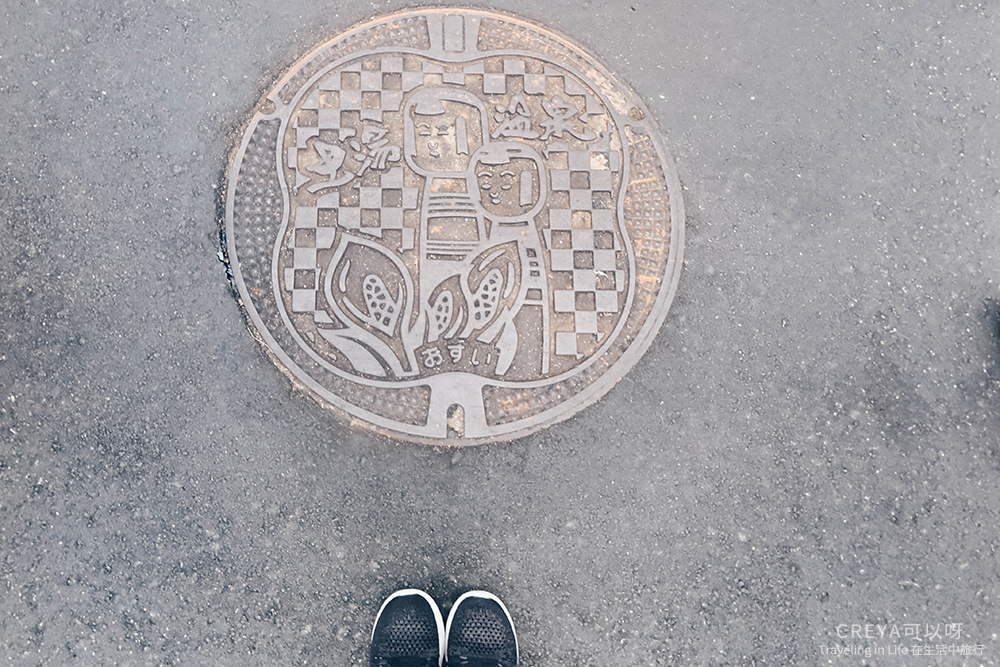
A Bit More History: The Folklore Behind Kokeshi Dolls
With their cute, minimalist charm, kokeshi dolls are hugely popular among young Japanese women. Yet a curious aura of mystery still surrounds them, sparking wild legends—which likely inspired their unforgettable, eerie role in the manga and film As the Gods Will.
Actually, there’s a darker third theory regarding the origin of kokeshi dolls. In his book “Looking for the Lost: Journeys Through a Vanishing Japan,” British travel writer Alan Booth speculated that the name kokeshi stems from homophonous characters meaning “child-erasing” (kokeshi), suggesting these dolls served as spiritual vessels for aborted or lost infants. Japanese poet Goichi Matsunaga touched on a similar theme in a 1960s fairy tale, though no reliable evidence backs up this grim claim. Still, it seems almost inevitable that people project dark fantasies onto human-shaped figures.
But speaking of wild imaginations, Japanese women have taken things in a very different direction. In a poll by the popular Japanese site Goo Ranking titled “Top 10 Everyday Objects That Trigger Steamy Fantasies for Women,” guess what snatched second place? None other than the kokeshi doll! I suppose its sleek shape and size leave a bit too much to the imagination…
Every object tells a story depending on who is looking, shaped by our own mindsets and past experiences. So… where does your imagination take you?
Follow my Facebook page & Instagram


