



I never expected that, nearing thirty, I would still be on the road to “finding the direction that suits me.” It turns out this isn’t a choice faced only by graduates, university students, or high schoolers filling out their college preferences. And it turns out it isn’t something that can be solved as simply as those grown-ups made it sound when they said, “You’ll understand when you’re older.”
When we try to answer this major question about our lives, we often can’t even turn it into a multiple-choice question—we have to come up with the options first. Even a simple true-or-false question can be terrifying, because although we may answer “true,” the rights and wrongs that follow may be entirely beyond our control.
“I feel lost about what I’m studying and don’t know why I’m studying it. I want to travel abroad and see the world. Should I take a leave of absence, or should I push through, finish my degree, and leave afterward?” Ever since I began sharing stories about how travel changed my life online and on university campuses, I’ve received many questions from students facing difficult choices, hoping to enlist more people in helping them find an answer.
I tried to answer these confused young men and women, but the more I wrote, the more I realized that the words I was saying seemed to be meant for me as well. The only difference was that I was too embarrassed to keep calling myself a young woman.

For a while, I thought my life was proceeding perfectly along its ideal track. At university, I studied Information and Communications, a subject that interested me. After graduating, I immediately found a six-month contract job that allowed me to save enough money for my travels. Then I flew to Australia on a working holiday, became what everyone called a backpacker, toured the country’s magnificent natural scenery, and flew on to immerse myself in the rich history and cultures of different European countries. I stayed away for two and a half years and spent most of that time traveling alone.
When I returned to Taiwan, I once again went straight into a new job without a break, this time in the digital advertising industry I had long wanted to challenge myself in. It was a field I had been eagerly looking forward to making my mark in even while I was still traveling. But I never imagined that, in less than three years, I would find myself lost in the very career I had thought I would devote my life to.
It was probably the lowest period I could remember. Normally, I loved to laugh, but even I could clearly feel the smile disappearing from my face. Since childhood, I had obediently followed the educational path expected of Taiwanese children. I had been lucky enough to choose a subject I loved, had traveled to places many people could only dream of, and had even built a career in the field I studied. Yet now I could see the road laid out before me collapsing. The broad, open highway I thought I was following was gradually disappearing from my map.

Should I simply drift along in a stable life, or stand up and start a revolution?
I thought about the person I had been while traveling. Although I planned my destinations and attractions in advance, I would always make spontaneous changes according to the weather, my mood, or the strangers I met. Those unexpected changes that had never appeared on my itinerary often became my most unforgettable and wonderful travel memories.
I remembered the farm life I had experienced during my travels—simple and deeply appealing. I remembered the animals that made my eyes light up and my grin stretch from ear to ear whenever I talked about them, and the dream of an animal farm that was always on my lips.
It sounded like nothing more than a dream, yet as my original blueprint for life began to crumble, that dream grew increasingly clear.At some point, we all hear the voice that has been gathering inside us for a long time. We simply never face it directly or consider whether it might actually be possible. More often, we use countless excuses to put it off and convince ourselves not to take the challenge.But this time, I decided to give myself another chance. I decided to set out in search of opportunities to learn from nature and ecology.
Changing tracks and switching careers were things I had never even considered.
But it turns out that no matter how long we have been in the workforce, we may still begin to doubt ourselves.
It turns out that no matter how old we are, we may discover that the road beneath our feet is not what we imagined.
But it also turns out that we never have just one option.
So why should we fear every attempt and every choice?
We all have the right to choose—to choose to break through our fears, to leave the comfort of familiar surroundings, to honestly face the true voice within us, and to give ourselves a chance to change.

We often hear this line encouraging people to act immediately: “If you don’t do certain things now, you’ll never get another chance!” But in truth,if it is something you genuinely want to do, no matter when, you will still find a way to make it happen.So what you should really ask yourself is: What is it that you want to accomplish?
When I left for my working holiday in Australia, I turned the first page of my notebook into a wishing well and listed everything I wanted to try there. My goals ranged from the usual—improving my English, traveling around Australia, and working in the service industry—to finding wild koalas and kangaroos and trying skydiving. Every time I opened the notebook, the list was right there, easily visible, reminding me.
During my first week in Australia, I landed a job at a corn factory through a friend. I didn’t have to burn through my savings while job hunting, I had familiar friends looking out for me, and I worked alongside a huge crowd of fellow Taiwanese. For my first solo trip, I was incredibly lucky. But after one month, then two, I began to feel that something about this life was a little odd—wrong, even. Hadn’t I come to Australia, an English-speaking country? Why was the only time I used English when paying at the supermarket, with phrases like “How much?” and “Thank you,” the sort of sentences that appear in the very first English textbook? I still spoke Chinese every day, occasionally picked up some Cantonese from my Hong Kong colleagues, and was probably improving my Taiwanese faster than my English.
One day, I opened my notebook again. As if fate had arranged it, the wish list on the first page stopped right in front of my eyes. The words “learn English” suddenly looked painfully glaring, but they also jolted my dormant determination awake. A few weeks later, I decided to leave that job with its reliable hours and walk the streets handing out résumés on my own. That headstrong decision nearly drained the last of my travel funds. Yet when I went all in, persistence helped me find a second job in an entirely English-speaking environment. I also deliberately chose accommodation without any Chinese-speaking residents, placing myself in circumstances where I had to think in English and forcing myself to learn. By the end of my time in Australia, I had even successfully moved into the service industry, serving customers in English at a bar and dining area inside a casino.
I watched myself progress from someone who couldn’t put together a single English sentence and spent every ride home from work memorizing menus and phrases in broken English, to someone who could chat with customers for a while. The transformation was so moving that even I could hardly bear to watch. When I first decided to leave the corn factory, my colleagues were incredulous. They warned me that jobs were hard to find and that it would be a shame not to stay for the full six months permitted under the Australian working-holiday rules. Looking back, however, I can say with certainty that leaving was absolutely the right choice.
Choose a goal, understand why you are pursuing it, write it down so you can keep reminding yourself, and then work hard to find a way to make it happen!
Even the smallest goal is worth pursuing.
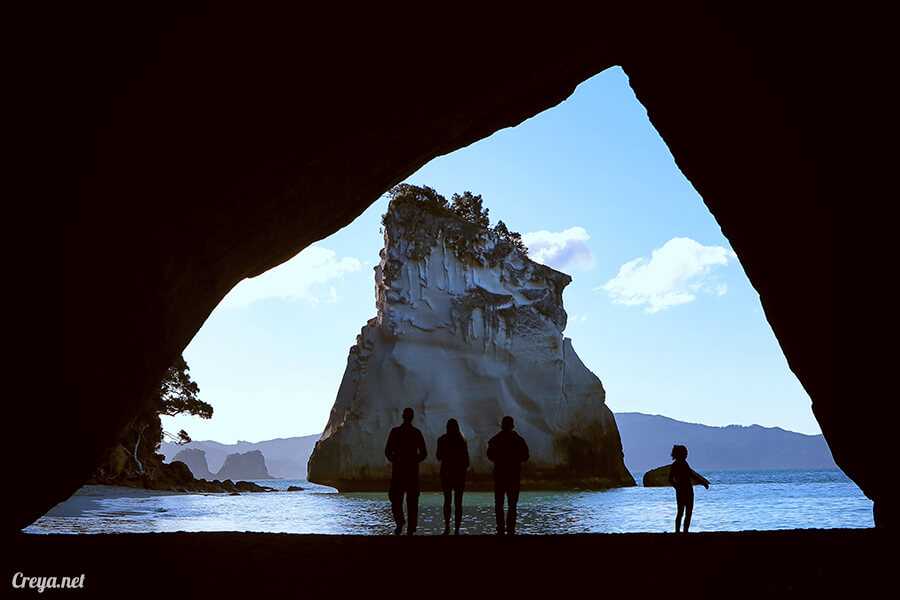
That was when I realized that our “environment” is something we create through our own choices. Over the years, I have met many international students who remained unable to speak English fluently after returning home, while some people who had never left the country spoke perfectly authentic English. Look closely, and the difference comes down to just one thing: heart. That’s right, heart. (shakes leg smugly)
Whenever we blame our poor English on being unable to go abroad, we forget to consider how we might use the resources around us to improve. While overseas, I used English-learning websites every night, hoping to improve so I could speak more smoothly with customers during the day. I thought I was being so wonderfully diligent, motivated, and productive. But hold on—wasn’t this something I could have done in Taiwan? Even in Taiwan, I could still study English every day, communicate with foreigners through international exchange platforms, or host foreign travelers through Couchsurfing.
I used to think my environment shaped me, butit turns out that creating the right environment is something we can control ourselves.Every choice we make helps determine the environment we want. Travel is merely one of those options. Only when we know what we want can we make the smart choice that suits us.
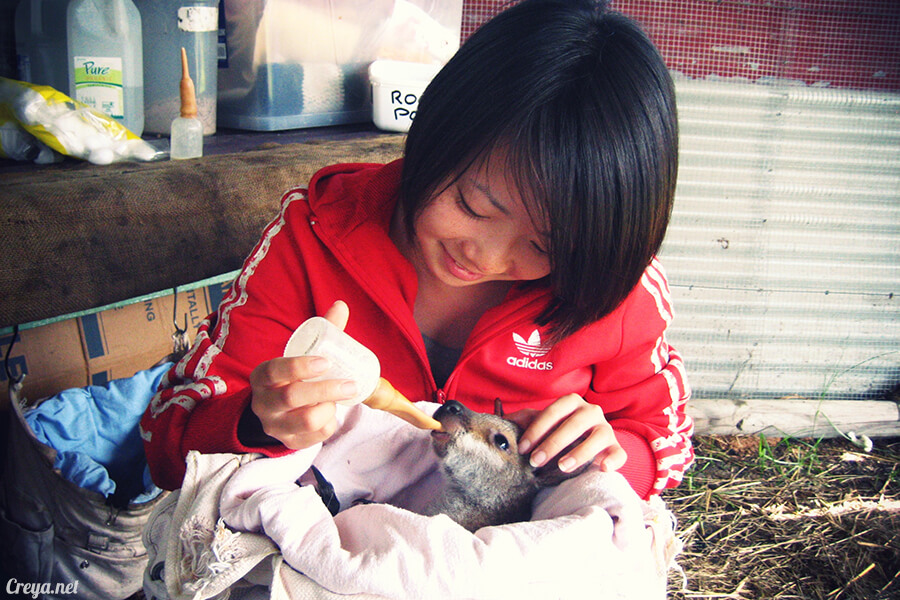
I later took the same approach to achieving my goal of working with wildlife. Through work exchanges for room and board, I even stayed on a local sheep farm and at a kangaroo joey rehabilitation center. Unexpectedly, this city girl spent an extended period living on a real farm for the first time, all because of her love for animals—and fell in love with the way the people there coexisted with nature and lived almost entirely self-sufficiently. That brief experience planted a seed in my heart, and it gradually began to sprout. I never imagined that farm life would become a dream I longed for and worked to achieve.
When we stand in front of a restaurant menu, hesitating over which dish to use on our limited stomach capacity, we eventually make a choice and try the dish our heart has settled on. As for everything we didn’t order, we can always return and try it next time—or persuade a friend to order it and sneak a few bites from their plate.
“Give it a try!” is a common English expression. Just try it! Aren’t the choices in our lives the same? How can we know whether we like something if we have never tried it? Even if it turns out to be a disaster, at least we will know to order something different next time. We may even realize that this whole place is simply incompatible with our energy—in which case, thanks, but please don’t contact me again. Beyond choosing a main course, we can also take a tiny taste first. The risk is small, but our palate grows broader. We lose little more than some time and money, yet gain invaluable experience points.
Hey—you get to choose what you eat, so why can’t you choose your life?
I have a university classmate who loves photography. After completing his military service, he also went to Australia on a working holiday. When he returned to Taiwan, he used his photography skills to shoot products and storefronts for businesses featured on a group-buying website. Australia’s rich variety of craft beers had sparked his interest. My main impression of him was that he was always drinking… Oh, no, I need to phrase that differently: he was always eager to try new things. That interest continued fermenting after he returned home. After working for several years, he quit his position at a large company and opened his own little craft beer bar. Many of the clever design touches in the bar were inspired by the thousands of shops he had photographed for the group-buying website. The place filled with foreign customers every weekend, and because he had grown accustomed to interacting in English in Australia, serving them came naturally. His fan page also regularly featured eye-catching photos of delicious food and drinks.
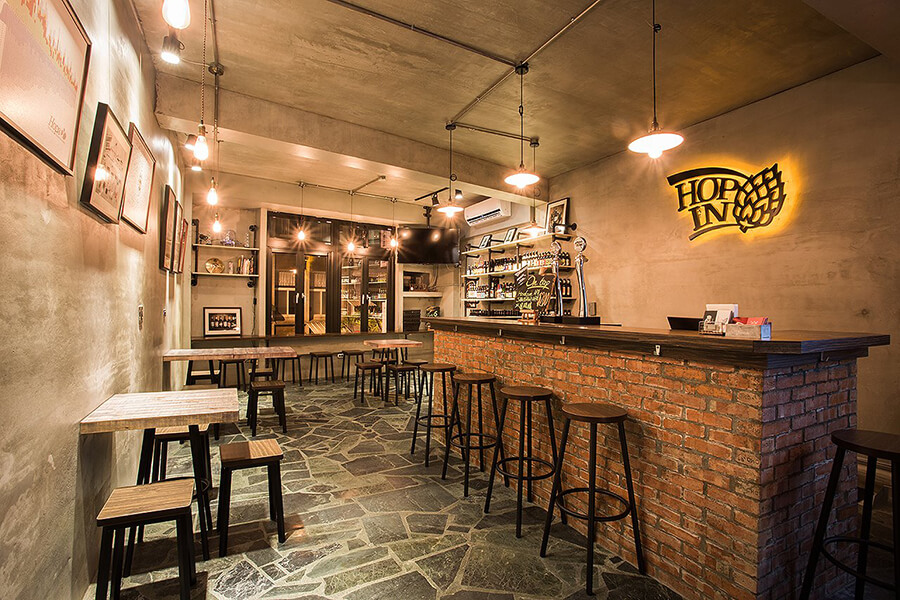
(Image taken from theHop In Craft Beer Shop fan page) )
No experience in life is ever wasted. We never know whether one small experience—or one path whose value we once questioned—might lead us toward an entirely different life.Beer, photography, interviewing businesses, and English: these experiences once seemed unrelated, and he had never imagined that his interests might become a business. Yet in this little bar, and in the hands of my friend, they came together perfectly. And I, a city girl, found myself moving ever closer to nature after an unexpected work-exchange experience, eventually setting off on a 3,000 km trek across New Zealand.
Everything you experience, learn, and choose will become part of you. One day, it may transform you unexpectedly and lead you down a different road in life.So be brave: go experience things, find your goals, and create the environment you need! We never have just one option, so why should we fear every attempt and every choice?
♬ This article was also published in the Shih Chien University Counseling Center newsletter
(This version was slightly revised on 2017.7.7)
Worth mentioning –
Hop In Craft Beer Shop information
Address: 2F, No. 11, Guang’an Street, Zhongli District, Taoyuan City
For detailed opening hours, please see the shop’s fan page:https://www.facebook.com/pg/HopInTW/
Chat about beer, photography, and travel with the tattooed owner who loves bunnies. When you visit, feel free to mention Creya! 可以呀—there won’t be a discount.


