


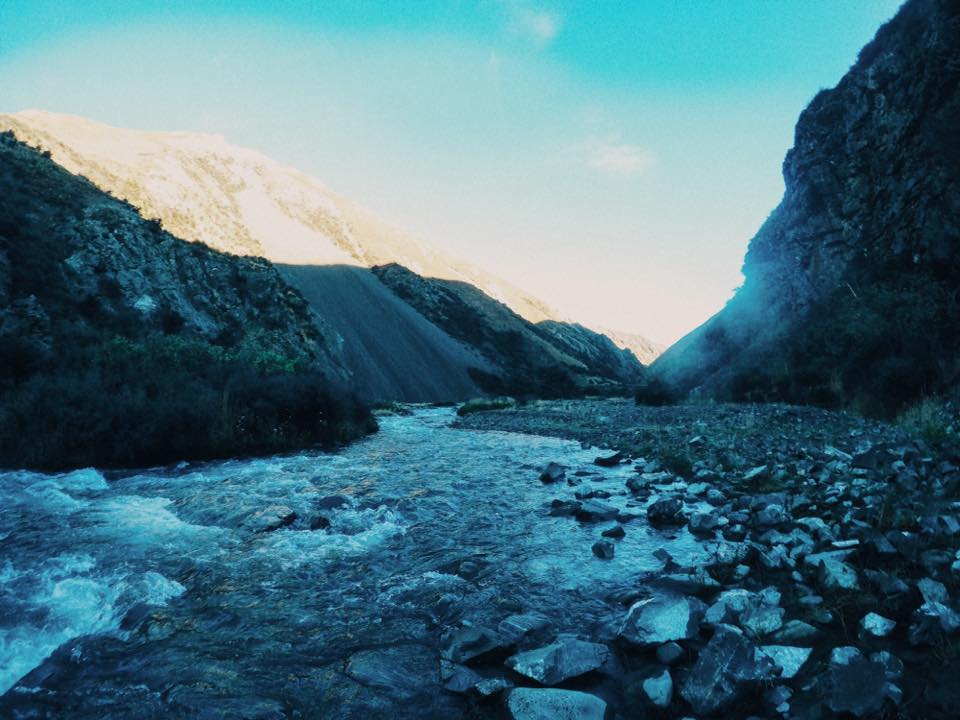
My feet soaked in water so cold it cut to the bone, I felt like a salmon swimming upstream. The lucky part, perhaps, was that I didn’t have to submerge my entire body. But on this crisp autumn morning, in a canyon where the sun couldn’t reach, I was shaking uncontrollably.
Dragging feet so numb they felt like stone striking the ground, the old ache in my foot—the one that had been throbbing before—wasn’t bothering me now, numbed by nature’s own ice therapy. I was relieved, yet somehow uneasy without the familiar pain I’d grown accustomed to.
By now, my body had carried me nearly two thousand kilometers on foot. My gait had become far more efficient than it was four months ago, when I was just a wilderness novice.
Without the foot pain holding me back, I moved as fast and steadily as I could—or at least that’s how it felt—trying to warm my core with each step. My eyes followed the sunlight creeping down the canyon wall, gradually illuminating the river valley below. My wish at that moment was beautifully simple and clear: escape this valley and reach the light. ‘I want to run toward the sun! I want to feel its warmth!’
After wading through seven river crossings and walking through water numerous times, the grass beside me finally blazed golden in the sun. Never mind that my sodden shoes and socks now weighed twice as much—I bounded into the warmth, whooping and dancing with abandon in the canyon, feeling the frost that clung to my skin melt away gradually from hairline to toes. Half an hour later, thoroughly satisfied, I continued on with the sun as my companion.
Well, that’s my version of the sun-chasing tale.
(Diary entry from 2017/4/18)
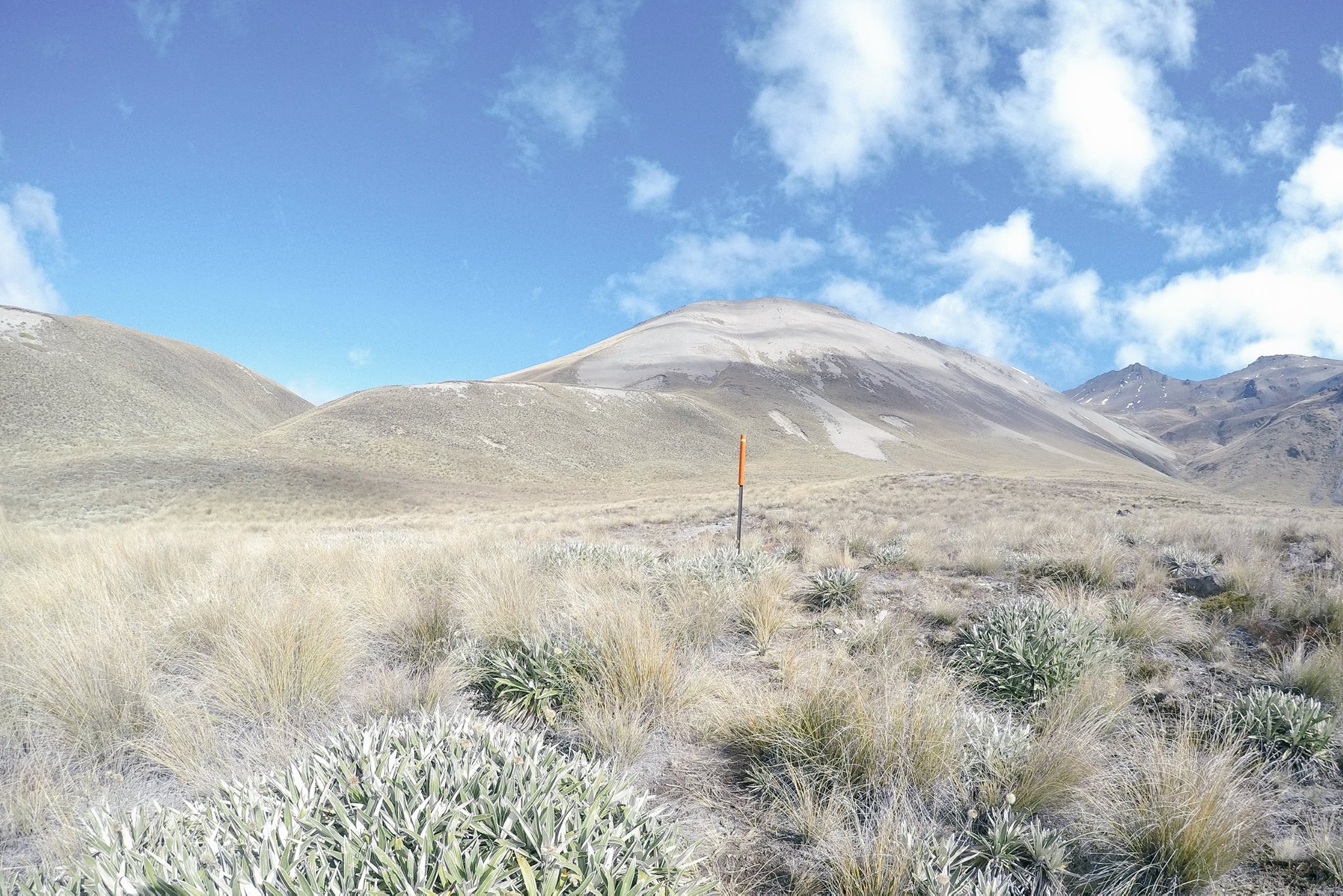
Finally free of the icy canyon, the warm sun and clear skies kept me grinning the whole way. Looking at the patches of snow on the barren brown mountainhead ahead, the landscape of New Zealand’s South Island truly was spectacular.
I hummed and sang my way up the mountain—whatever, only the mountains and birds would hear anyway (maybe?!)—wondering what waited on the other side. I amused myself with speculation as I walked, my anticipation like opening a gift, sometimes even planning my schedule in my head. A viewpoint paired with lunch seemed like the perfect rest stop. The summit was my only goal, and these musings kept my mind occupied, letting time flow alongside the images in my head.
My good mood lasted all the way to the final kilometer before the summit. Thin wisps of cloud drifted overhead, and mist from nowhere rolled in to blanket the mountaintop. The once-sharp mountain silhouette was now obscured and blurred, set against a gray-white void.
‘Don’t lose hope yet—the other side might have clear skies!’ I told myself. After all, I’d been climbing hard all morning for this moment.
But the final step devastated me. A wall of white fog prevented me from even seeing how steep the descent was ahead, and I couldn’t see the path I’d come from either. Visibility was barely two hundred meters. Only two well-placed benches reminded me this was normally an excellent viewpoint. Now I was staring at mountains through fog—all that effort wasted.
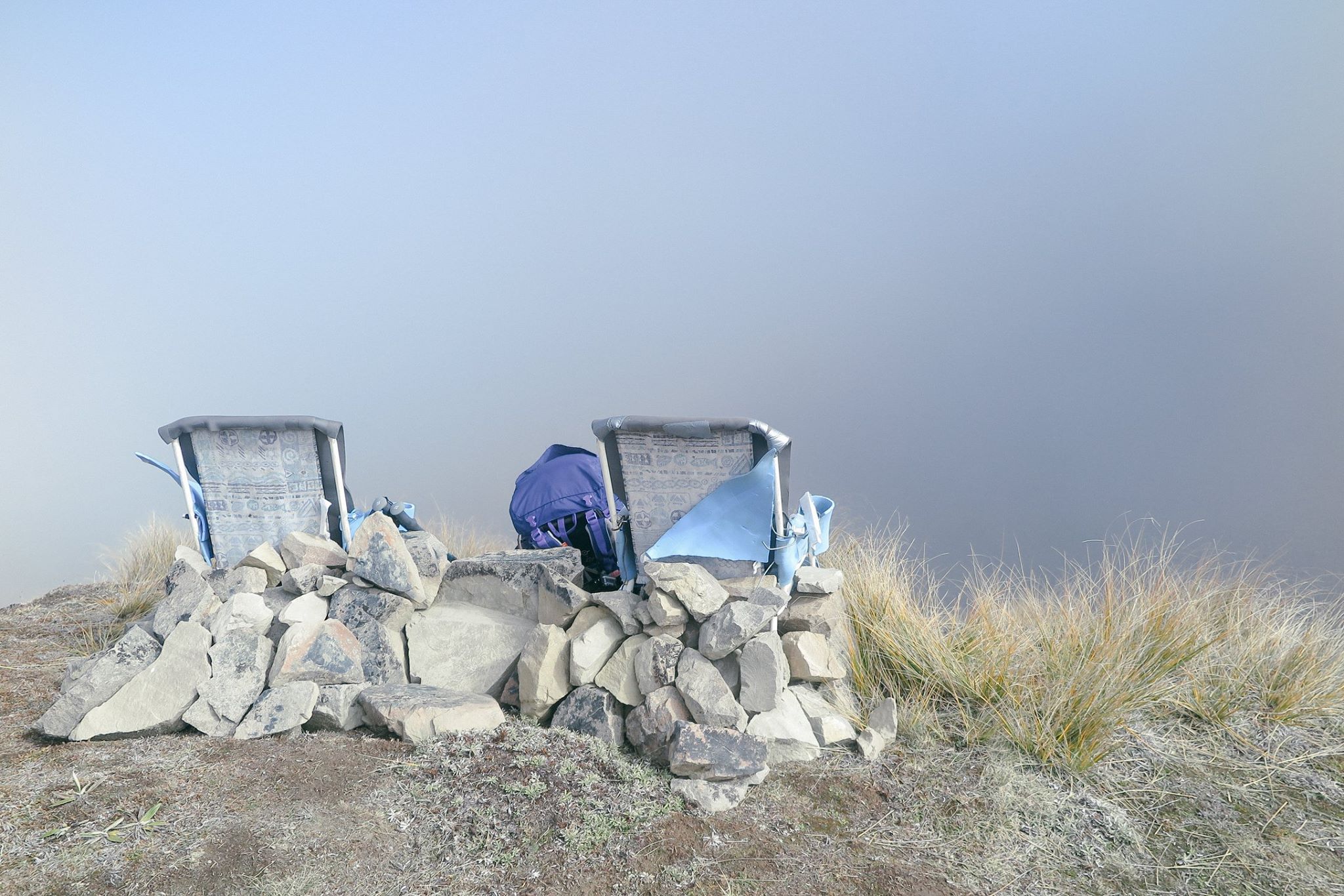
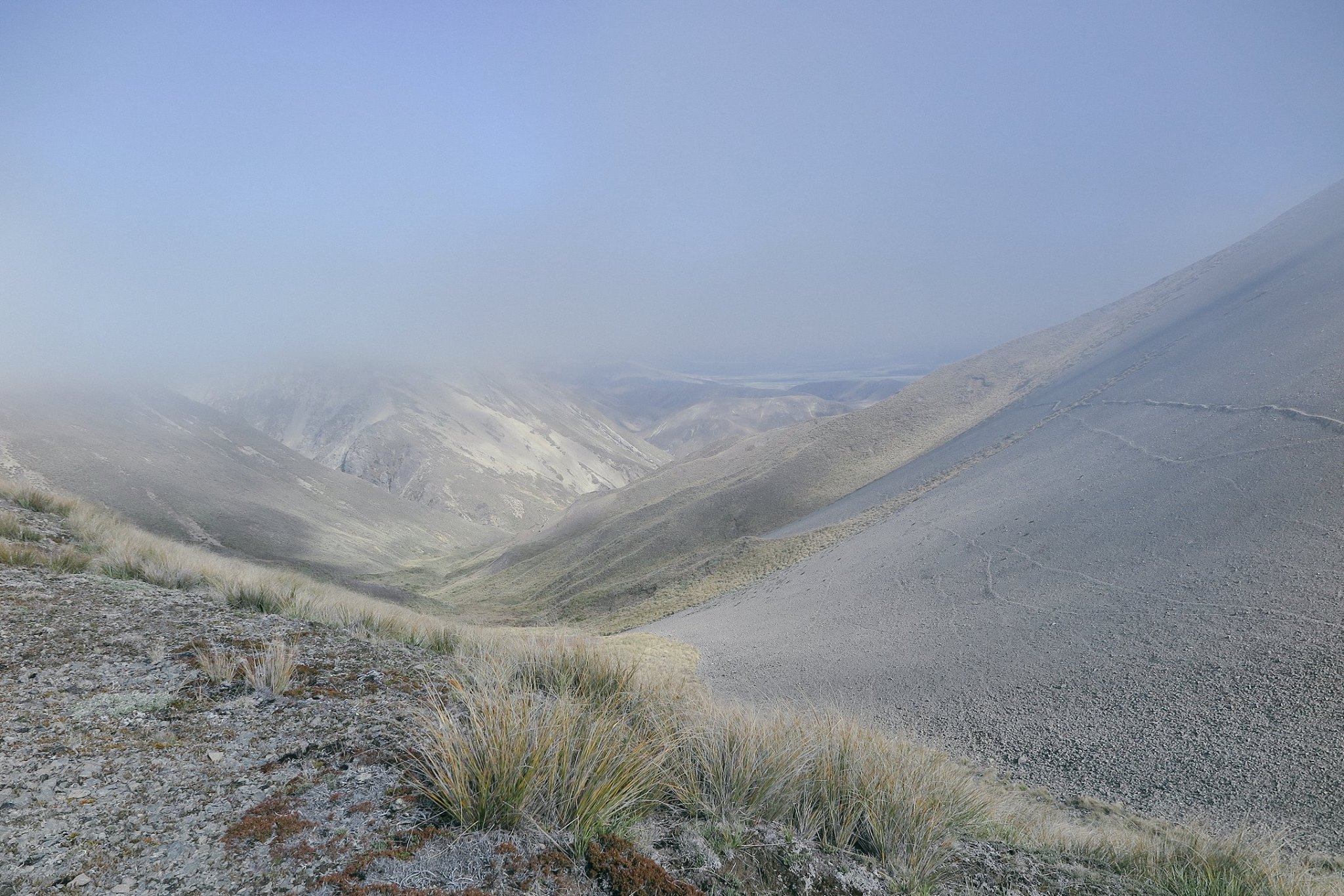
What worried me more was that through the drifting fog, I could faintly make out the next section of trail, apparently traced across a scree slope. Was this narrow path made by animals or the Te Araroa route? And if I walked on that rocky path, could I see what was ahead? Would it be safe to go?
No views, no sunlight, just relentless cold wind—this wasn’t a place worth staying at, despite my whole morning of anticipation. But I couldn’t rush blindly onto that dangerous slope either. If I made it over, would the weather improve? Could I find a better place to eat?
I hesitated.
Oh well, I needed to refuel before facing what came next. I set down my pack and pulled out my lunch and journal. I buried myself in writing, recording the day’s emotions: the morning’s battle against the freezing creek, the joy and hope of the sunshine, and now the quiet despair of being lost in fog.
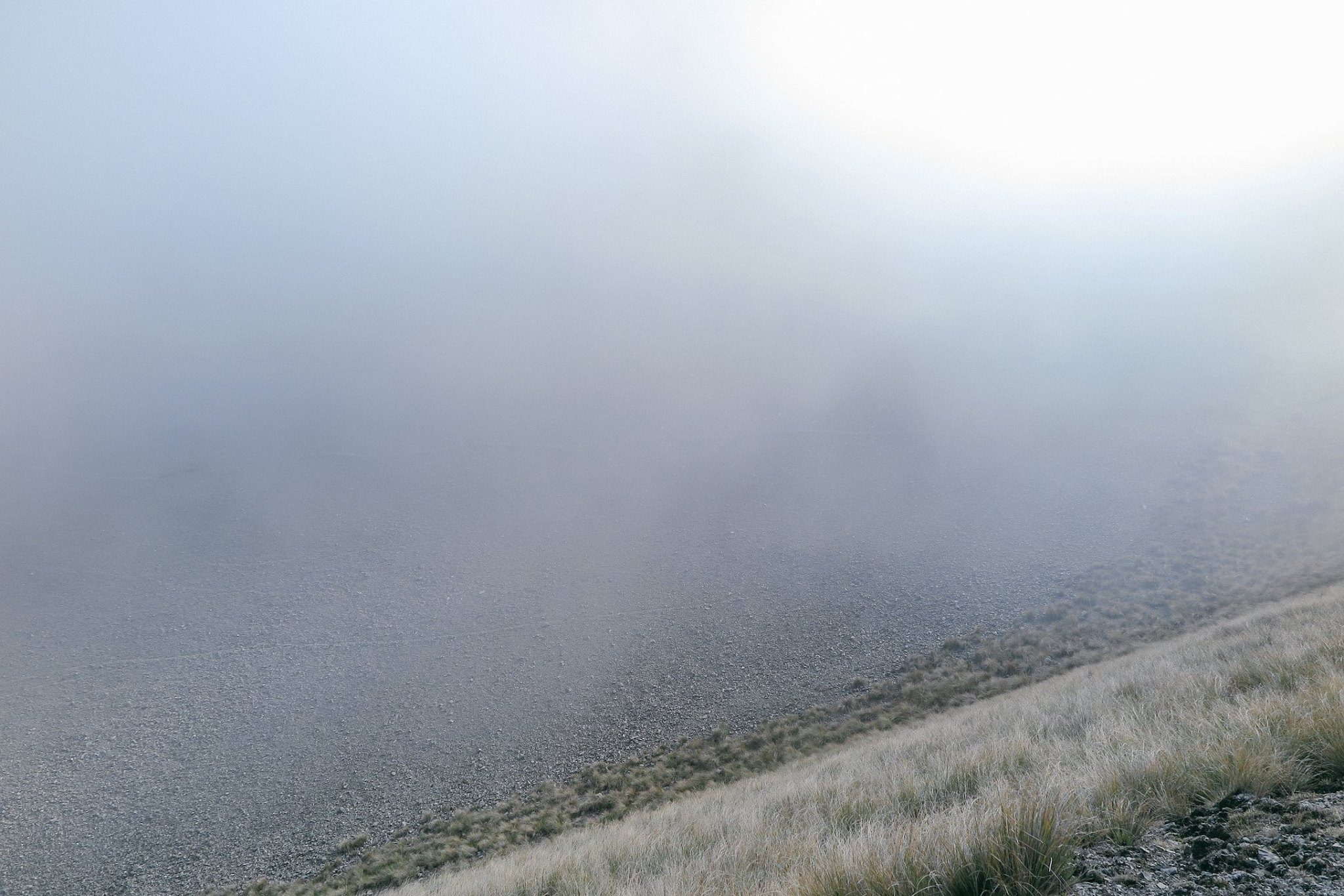
Thirty minutes passed. The wind kept blowing from behind, and the fog ahead wouldn’t clear. So I packed up and prepared to carefully pick my way across the scree slope through the mist.
As I turned to fasten my pack and shoulder it, I looked up—oh wow! There was the valley I’d started from! The clarity wasn’t perfect, but the difference was striking.
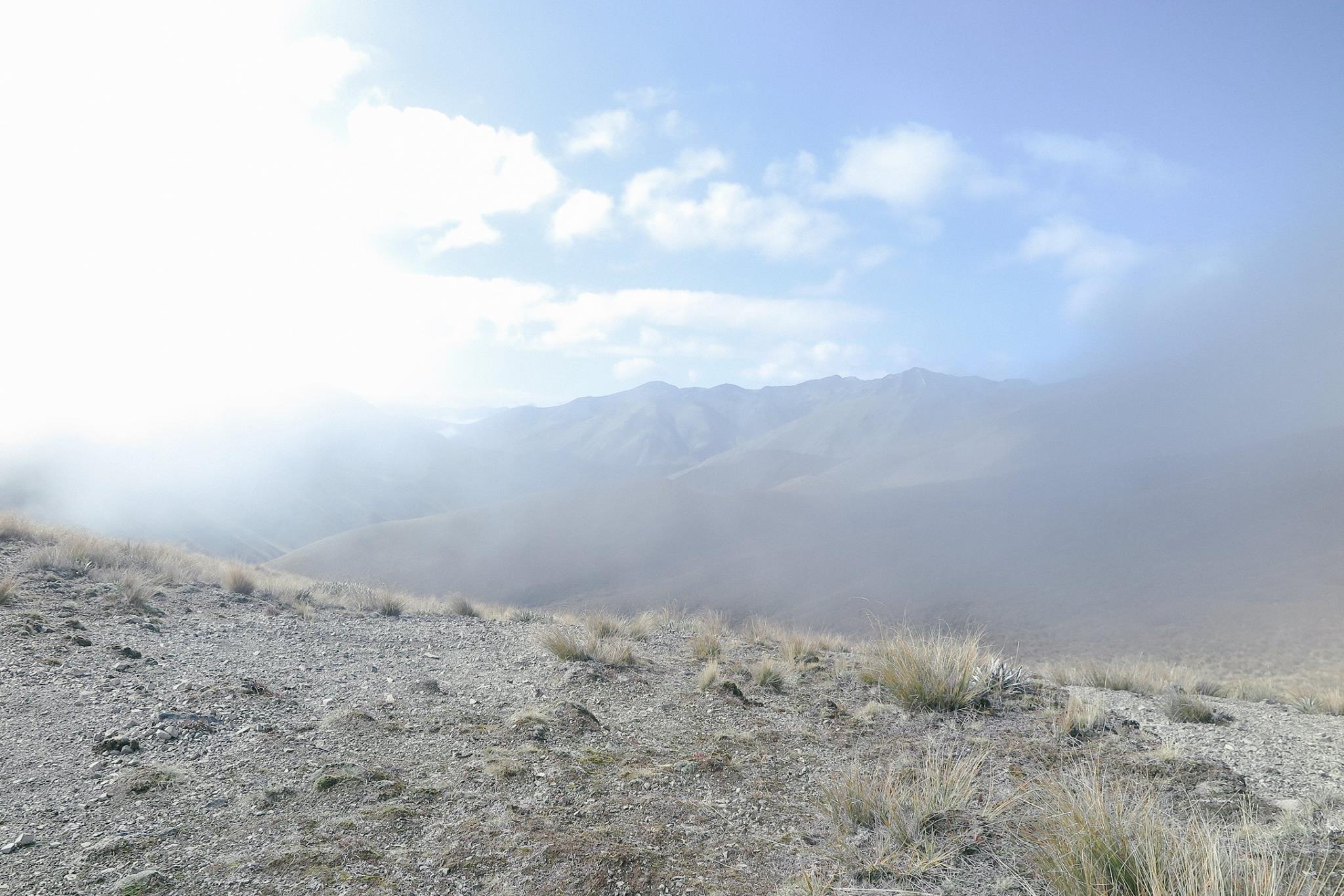
I turned back to look at the trail ahead, and the view was even clearer. Suddenly I understood what those benches were meant to see!
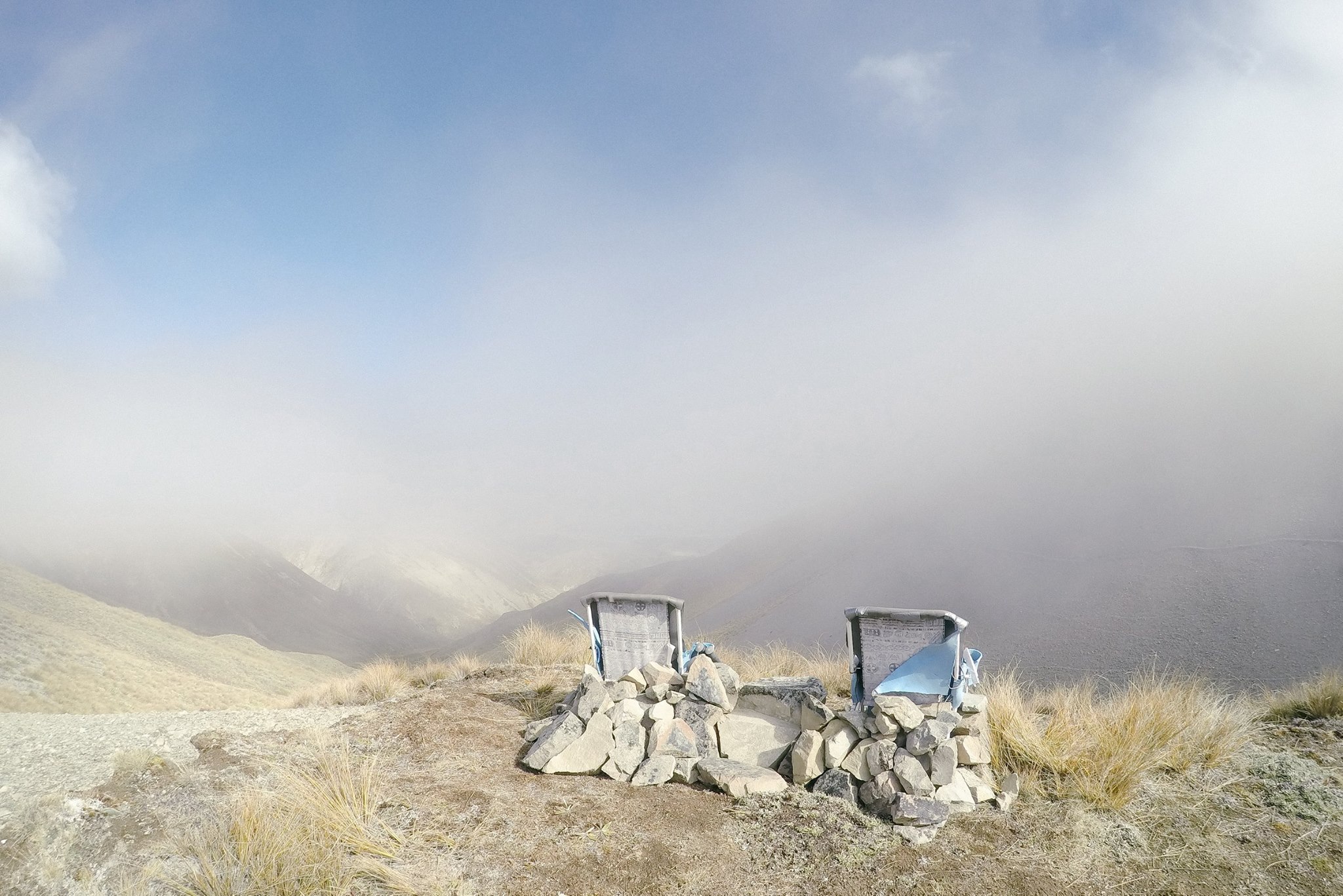
I grabbed my camera and snapped photos in both directions, wanting to capture this delightful surprise. At that very moment, the white fog wall was gradually dissolving, a testament to its own dispersal. Another half hour passed before I finally set off.
——
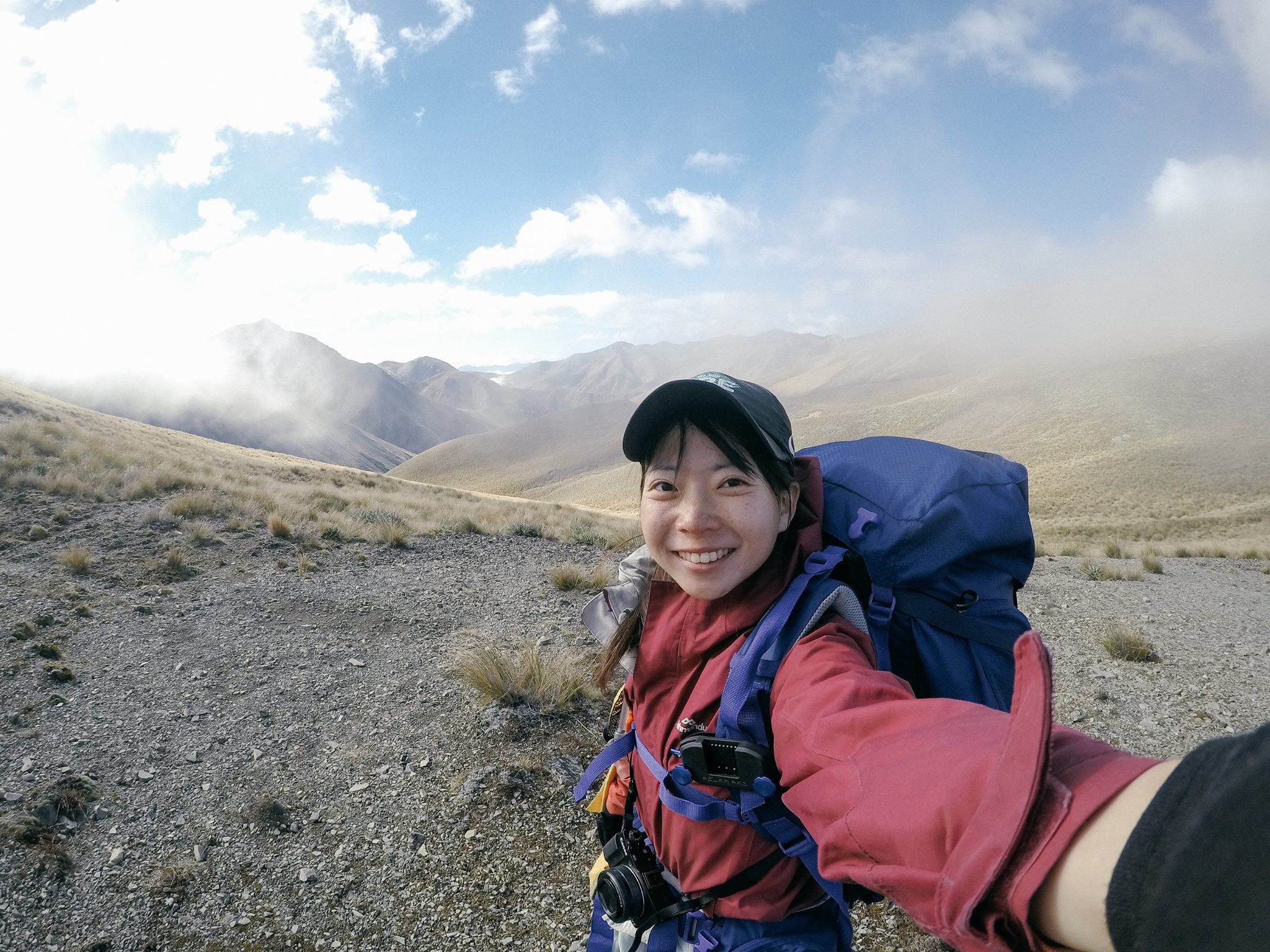
I kept wondering what persistence really means, what’s the value of waiting, and how to measure time spent. These questions had followed me since I started Te Araroa in New Zealand—even before that, when I first began traveling, I’d asked myself countless times. But I never came up with a clear answer.
But on the trail, different experiences kept offering their own responses.
——
(Diary entry from 2017/4/18)
📍 Te Araroa Trail | New Zealand 3,000 km Hiking Diary| Return to full series


