


As someone who did not learn to balance on a two-wheeled vehicle until I was 22, cycling is not my usual way of getting around—especially when travelling.
I have strict requirements for getting on a bike: it has to be in good condition, the roads cannot be too busy, there should preferably be a dedicated cycle lane, and I feel much safer if someone leads the way and rides at the back. I basically have princess syndrome in the cycling world.
Yet this three-day ride from Shimane to Tottori in Japan’s San’in region not only broke my record for consecutive days on a bicycle; it also shattered the mental barrier I had built around cycling in cities.
‘How do you feel about touring Shimane and Tottori by bicycle?’ a local Japanese reporter asked. At that point, we had only just finished the train ride and had been cycling for less than an hour.

‘So Japanese reporters ask questions this hard to answer too!’ was my first thought. But in the next second I blurted out: ‘I travelled mostly on foot for quite a long time before this. We have only just started, but this route has shown me that cycling moves faster than walking without being so fast that you miss the scenery. That pace fits Shimane’s relaxed atmosphere and the rich, exciting culture and landscapes perfectly. So far, I am really enjoying it.’
After saying all that, I surprised myself. The words had come out so naturally, straight from the heart.
Over the next few days, I tried to test whether I truly meant what I had said, worried that it might have been nothing more than an unconscious piece of polite press-speak. Yet even as I boarded the flight home and looked back on those few days moving through San’in, I was still grateful that I had first encountered the region by bicycle.
Pushing toward the next destination under the power of my own legs, looking forward to the next surprise, watching how one place gradually became another, I travelled slowly enough to savour it yet efficiently enough to keep moving. When I sat down and felt the faint soreness matching the size of a bicycle saddle, it was a mark left by physical work—and proof that some part of my body had connected with this land.
Cycling route across Shimane and Tottori in the San’in region
I mapped the route for this first five-day, four-night visit to San’in and marked the places we visited. We used a nine-seat van, three days and two nights of cycling, and trains—a flexible and wonderfully adaptable combination.
Renting bicycles
During the days I rented and rode in Shimane, I experienced the local cycling environment from the temporary perspective of a fellow cyclist. The planning was genuinely friendly: extensive cycle lanes and bike racks, convenient rental services, and even the printing and promotion of paper route maps all made me happy to be a cyclist here.

Next to Matsue Shinjiko Onsen Station (Ichibata Railway) is a familiar Giant bicycle shop offering rentals. Whether you love cycling trips but occasionally do not want to bring your own bike, or you simply want to add a cycling day to your itinerary, the local rental scheme is an excellent option.

The GIANT rental shop beside Matsue Shinjiko Onsen Station in Shimane is easy to spot.

Rental prices from September 2018, for reference. Check the shop for current prices.

The shop also sells Matsue-exclusive cycling jerseys.
The Giant shop at Matsue Station has bikes in good condition and a convenient location. Once you rent a bike, you can use the dedicated cycle lane beside the shop to go straight into the station and board a train.

A fast-access gate in front of the shop leads directly into the station.
Taking a bicycle on the railway
The Ichibata Railway train from Matsue toward Izumo offers services where bicycles can be brought on board without being boxed up. You pay a small additional fee, and the train has a designated bicycle area with straps. It even offers a one-day ticket for travelling together with your bicycle—a thoughtful, convenient option for visitors who want to combine cycling and trains.


Bikes and riders travel together. Once on board, there is a place to secure the bicycle with straps.

On the Shimane Cat train, the bicycle area is even tucked underneath the Shimane Cat display. It is adorable.
We took the train from the Giant shop in Matsue to visit Matsue Vogel Park, then continued by train with our bicycles to Ichibata-guchi Station. From there we cycled along the dedicated path to Izumoshi, then took the train from Izumotaisha-mae Station back to Matsue. Watching Lake Shinji stretch as wide as the sea along the way, we ended the day’s ride beneath a beautiful sunset.
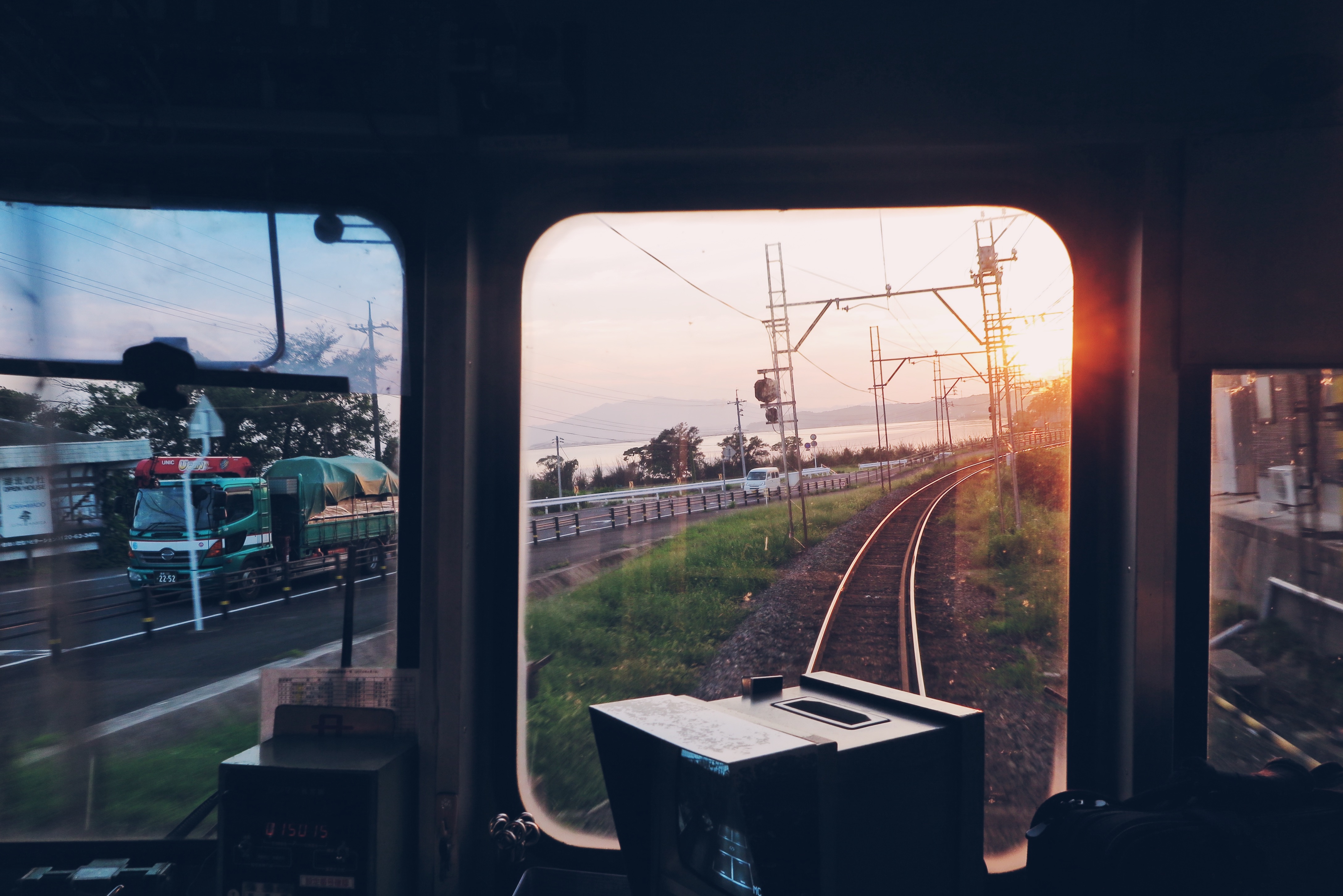
On the third day, we had planned to cycle from Sakaiminato in Tottori to Yasugi. Heavy rain arrived halfway through, and since our route already followed the railway, we decided the train was the safer choice. This is one of the advantages of combining bikes with trains in San’in: when your energy or the weather turns bad, you can adjust flexibly without ruining the itinerary.
Yasugi Station in Tottori also has a very friendly cycling setup. Inside the station, a dedicated space holds all kinds of information about cycle routes. If you want more detailed planning help, you can pick up recommendations here.
Yasugi Station also rents bicycles, although the models are city bikes intended for short sightseeing trips.
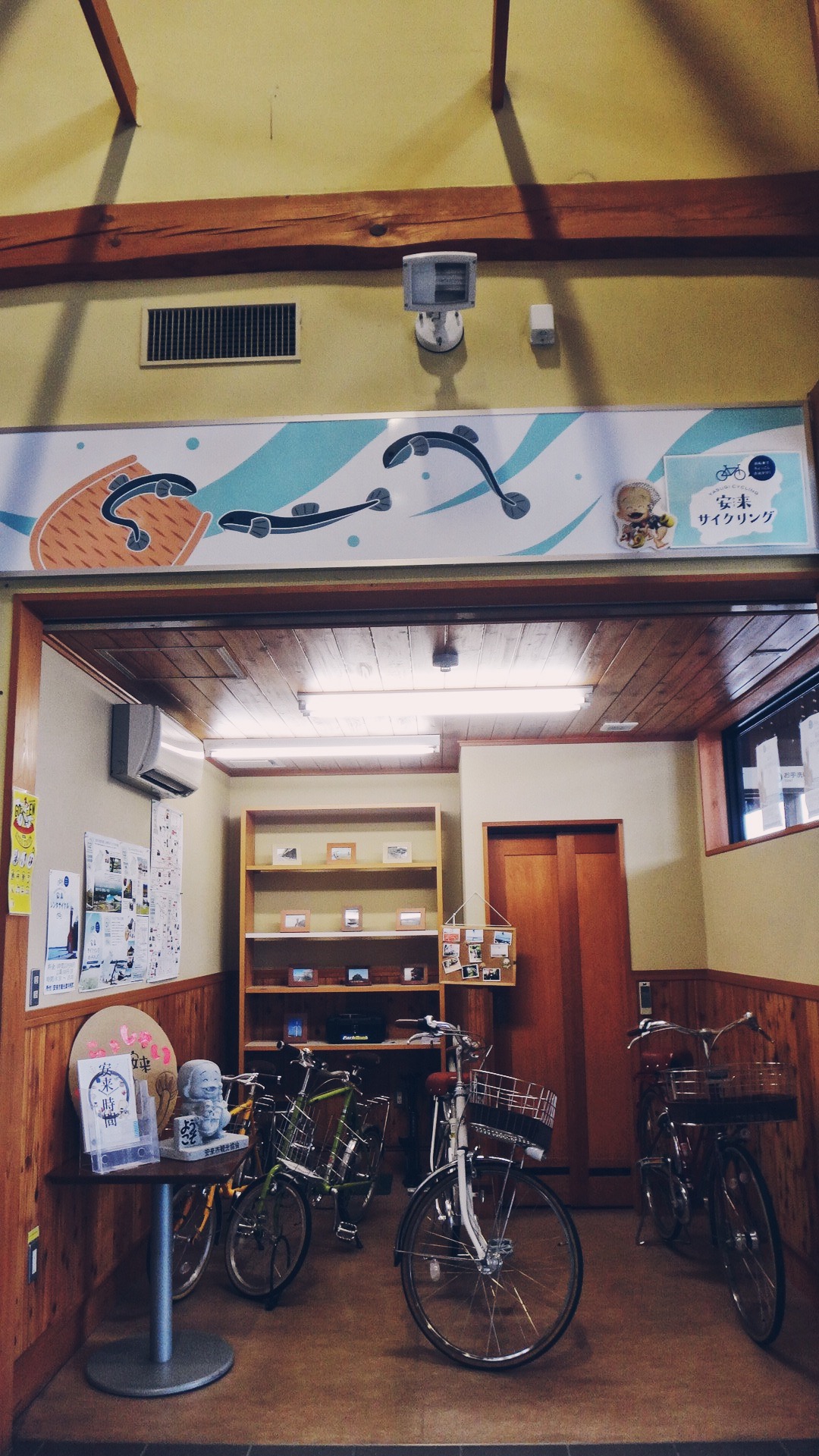

Outside Yasugi Station are free racks for parking bicycles.
Cycle lanes and a friendly environment
Because I have always felt rather unsafe on roads, the fact that I enjoyed cycling so much in San’in means my cycling princess syndrome was thoroughly looked after from the very beginning.
We rode almost entirely on planned cycling routes, most of which had dedicated lanes. Even when we wanted to make our own route, traffic in Shimane and Matsue was not particularly heavy. Cyclists sharing the road were treated courteously, in keeping with Japan’s consistently considerate social atmosphere.
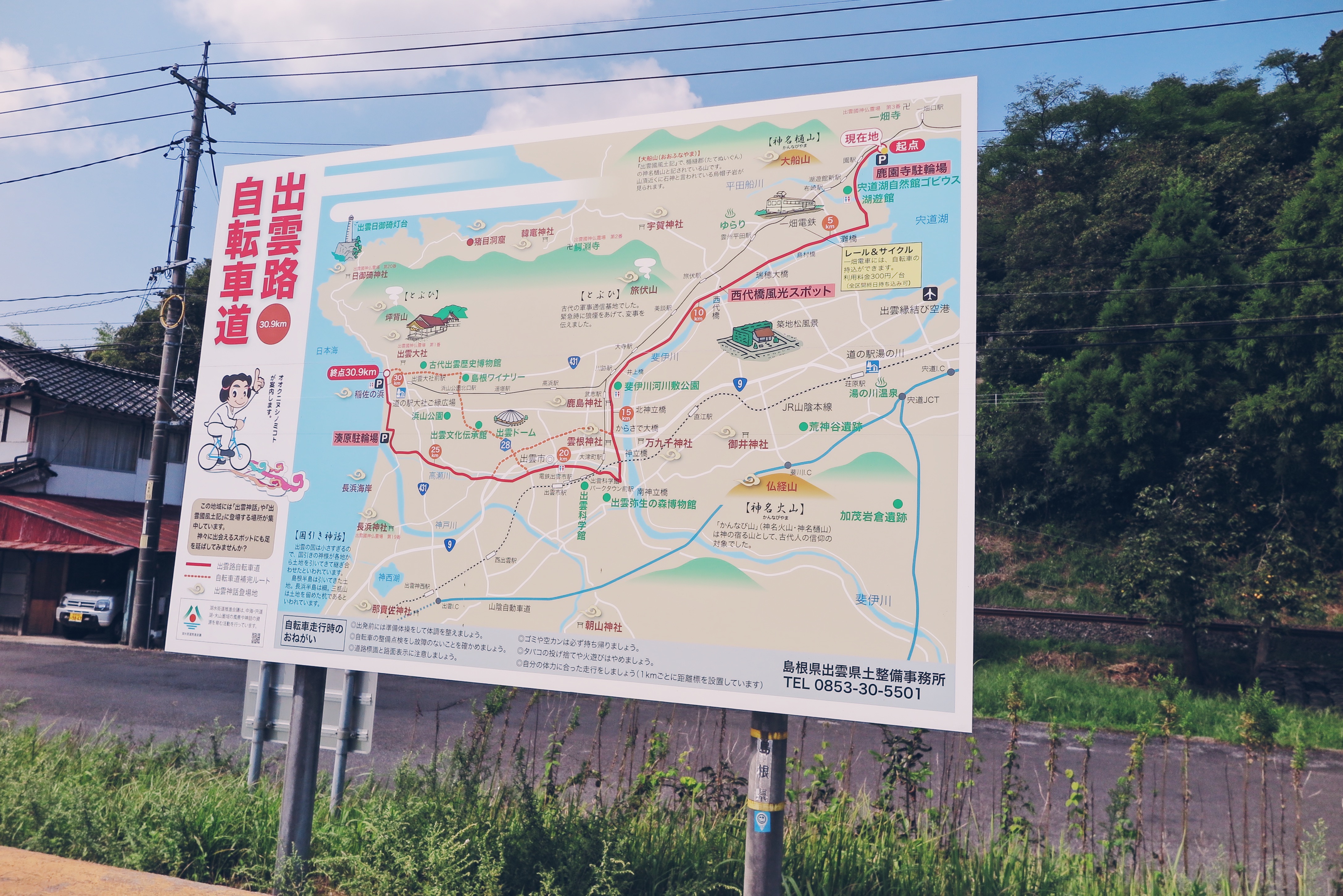
There is a planned cycle route all the way from Matsue Station to Izumo Taisha, and it actually continues farther. It is known as the Enmusubi (Good-Fortune) Cycling Route.

The comfortable, spacious Enmusubi Cycling Route runs beside rural rice fields all the way. It was a pleasure.
On the second day, we cycled around Daikon Island in Shimane. With so few people and cars, it felt like returning to an old family village, and before we knew it we had taken over the entire street (hey!).
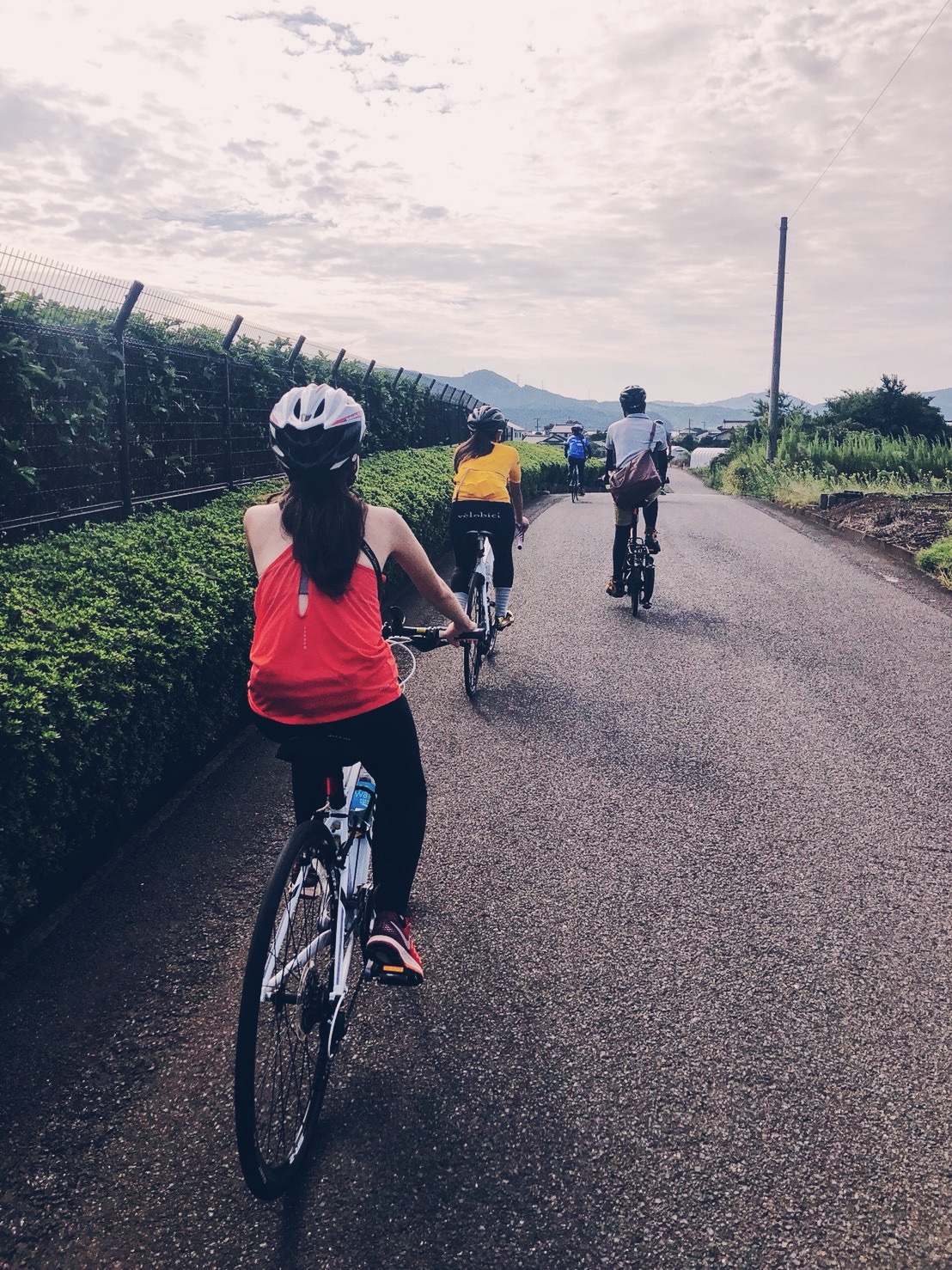
Even on busier roads, if you keep to the side and ride steadily, Japanese vehicles automatically give way. I never once felt pressured by a car. Small cars and even large trucks moved over to leave half a lane, which made me feel completely safe.

There was only one stretch I did not dare cycle: Eshima Ohashi Bridge. We had admired the famous bridge from Daikon Island, and its reputation comes from how steep it looks when compressed by perspective—almost like a roller coaster.
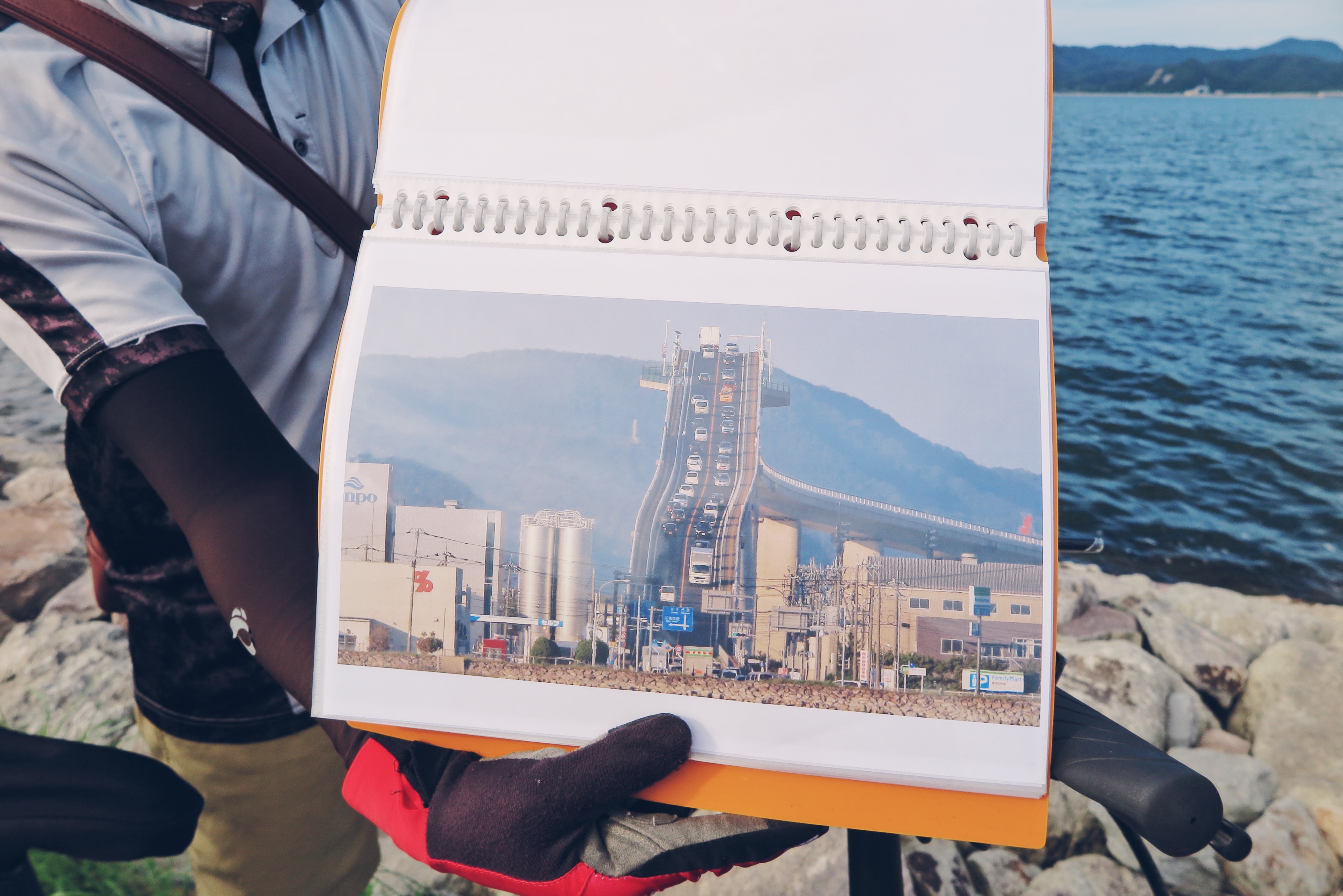
But beneath the bridge, it was not quite that dramatic. The lane is simply narrow, the shoulder is tiny, and the slope is fairly steep. In the end, I walked my bicycle across on the left-hand pavement. It was the only stretch where I did not ride with the group.


That side path is open to pedestrians only, so bicycles are not allowed. With such a clean separation between people and vehicles, I obediently walked the bike across.
The larger sights we visited, including Matsue Vogel Park and Izumo Taisha, all had bicycle racks. San’in is very bicycle-friendly, and as long as you remember to bring a lock, the roads and planning give riders a safe environment and thoughtful support.


Cycling in Shimane and Tottori is a pleasure. Between gentle exertion and slow-paced movement, you can savour the connection between yourself and the local landscape until you feel yourself become part of it.
It is my favourite way to plan a trip these days, whether by running, hiking, or cycling.
Why not try it yourself one day?
Follow me on Facebook and Instagram


